 HR, payroll & labour
Minimum Wages in Maharashtra (2026): Zone-wise Rates, Special Allowance and Employer Rules
Maharashtra minimum wages 2026: July–December rates for shops, factories and hotels by zone, the special allowance, daily and hourly pay, and employer rules.
 Edited by Sumeet YadavFounder & editor, MSMETOOLS · fact-checked against official sources
- Rates in force
- 1 July 2026 – 31 December 2026
- Last checked
- Against the official source on 7 October 2026
- Next revision due
- 1 January 2027
Contents (11)
- 1. Maharashtra minimum wage rates for shops and establishments (2026)
- 2. How the Maharashtra system works: basic plus special allowance
- 3. Zones I, II and III: where does your workplace fall?
- 4. Rates for other common scheduled employments
- 5. Worked payroll examples in ₹
- 6. Overtime, weekly rest and working hours
- 7. The Code on Wages and Maharashtra's draft rules
- 8. Employer obligations beyond the rate
- 9. Common mistakes Maharashtra employers make
- 10. What if a worker is underpaid?
- 11. What to do next
If you run a shop in Pune, a garage in Nashik, a restaurant in Thane or a factory in an MIDC estate, Maharashtra's minimum wage notification sets the least you can pay each worker. It is not one number. The state fixes a separate rate for each of 67 scheduled employments, split into three zones and three skill levels, and every six months the Labour Commissioner adds a fresh special allowance on top of the basic rate. This guide gives you the July–December 2026 figures, checked against the notification itself, with daily and hourly rates, ₹ payroll examples and the employer rules that sit around them.
Quick answer
From 1 July 2026 to 31 December 2026, the minimum wage for shops and commercial establishments in Maharashtra is ₹14,155 a month for an unskilled worker in Zone I, ₹13,559 in Zone II and ₹12,962 in Zone III. Each rate is a fixed basic plus a special allowance of ₹4,134, set by the Labour Commissioner's notification dated 5 August 2026.
Skilled shop staff in Zone I: ₹15,766 a month; daily rate = monthly ÷ 26
Other employments have their own rates — e.g. residuary factories ₹13,950 and engineering units ₹16,800 for unskilled workers in Zone I
The special allowance changes every January and July; the next revision is due from 1 January 2027
Draft Code on Wages rules (April 2026) propose moving revisions to April and October
Maharashtra minimum wage rates for shops and establishments (2026)
The schedule most employers need is "employment in shops and commercial establishments". It covers retail shops, offices, showrooms, travel agencies, clinics' front desks and most service businesses that don't fall under a more specific entry. The table below is taken from the notification dated 5 August 2026 (No. 7997, issued by the Deputy Labour Commissioner, Rural Wing, as competent authority). The basic rates in it were fixed in the 2019 revision of this schedule; the special allowance of ₹4,134 is the new part for the second half of 2026. Hourly and overtime figures are our own calculation, dividing the daily rate by an eight-hour day.
| Zone and category | Basic | Special allowance | Total per month | Per day (÷ 26) | Per hour (our calc.) | Overtime per hour (2×) |
|---|---|---|---|---|---|---|
| Zone I — skilled | ₹11,632 | ₹4,134 | ₹15,766 | ₹606.38 | ₹75.80 | ₹151.60 |
| Zone I — semi-skilled | ₹10,856 | ₹4,134 | ₹14,990 | ₹576.54 | ₹72.07 | ₹144.13 |
| Zone I — unskilled | ₹10,021 | ₹4,134 | ₹14,155 | ₹544.42 | ₹68.05 | ₹136.11 |
| Zone II — skilled | ₹11,036 | ₹4,134 | ₹15,170 | ₹583.46 | ₹72.93 | ₹145.87 |
| Zone II — semi-skilled | ₹10,260 | ₹4,134 | ₹14,394 | ₹553.62 | ₹69.20 | ₹138.40 |
| Zone II — unskilled | ₹9,425 | ₹4,134 | ₹13,559 | ₹521.50 | ₹65.19 | ₹130.38 |
| Zone III — skilled | ₹10,440 | ₹4,134 | ₹14,574 | ₹560.54 | ₹70.07 | ₹140.13 |
| Zone III — semi-skilled | ₹9,664 | ₹4,134 | ₹13,798 | ₹530.69 | ₹66.34 | ₹132.67 |
| Zone III — unskilled | ₹8,828 | ₹4,134 | ₹12,962 | ₹498.54 | ₹62.32 | ₹124.63 |
Two notes from the notification matter for classification. First, there is no separate "highly skilled" row for shops: a footnote says the skilled category includes highly skilled workers in every employment except the salt business. So a store manager and a sales assistant who works independently are both paid at least the skilled rate. Second, the basic rate and the special allowance together make up the minimum. You can't pay the basic alone and call it compliant, and you can't count house rent or conveyance allowance towards the total unless the notification says so.
Maharashtra minimum wages at a glance (Jul–Dec 2026)
₹14,155
Shops, unskilled, Zone I
per month
₹12,962
Shops, unskilled, Zone III
per month
₹4,134
Shops special allowance
same in every zone
67
Scheduled employments notified
Maharashtra minimum wage calculator
A full month is 26 working days; the daily rate is the monthly rate ÷ 26 where the order fixes only a monthly figure.
Overtime is paid at twice the ordinary rate (daily rate ÷ 8 hours). Arrears assume the same shortfall in every month since the rates took effect on 1 July 2026; a claim under the Code on Wages must generally be filed within 3 years. Estimates only — check the order for your employment.
How the Maharashtra system works: basic plus special allowance
Maharashtra still runs the structure it built under the Minimum Wages Act, 1948. For each scheduled employment the state government fixes basic rates by zone and skill, usually once every several years after an advisory board process. The shops basic, for example, was last revised in July 2019, when it roughly doubled; the residuary factories schedule has its own basic, and so does every other entry. Between those revisions, the Labour Commissioner's office recalculates a cost-of-living component — called the special allowance, and often written as VDA in payroll software — every six months, from 1 January and 1 July, using the consumer price index.
That is why the special allowance is so different from one employment to another. A schedule whose basic was revised recently carries a small allowance, because the basic already reflects recent prices. A schedule that has not been revised for many years carries a large allowance that has built up over time. In the July–December 2026 notification the allowance ranges from ₹782 a month (paper and cardboard box making) to ₹9,800 a month (local self-government bodies other than gram panchayats). For shops it is ₹4,134; for hotels and restaurants it is ₹8,176; for the engineering industry it is ₹2,790.
The practical lesson: never copy the shops allowance into a factory payroll, or a hotel allowance into an engineering unit. Look up your own employment's row.
Is the official PDF up to date?
Not always. When we last checked the Labour Commissioner's website (mahakamgar.maharashtra.gov.in), on 7 October 2026, its "minimum wages" link still opened the notification dated 20 February 2025, which covered January to June 2025. The July–December 2026 notification is a signed Marathi document dated 5 August 2026; we checked the figures here against a copy of that scan and an English translation circulated by compliance firms. Before an inspection, keep a copy of the Marathi original on file and re-check the department's website for a newer upload.
Recent Maharashtra minimum wage changes
28 Sep 2010
Shops & commercial establishments basic revised; zones I–III defined for that schedule
24 Jul 2019
Shops basic roughly doubled — Zone I unskilled ₹10,021
21 Nov 2025
Code on Wages in force; Minimum Wages Act repealed, old notifications saved by s.69(2)
28 Apr 2026
Draft Maharashtra Code on Wages Rules, 2026 published for objections (45 days)
5 Aug 2026
Special allowance notified for 1 Jul–31 Dec 2026 — shops ₹4,134
Jan 2027
Next half-yearly special allowance revision due
Zones I, II and III: where does your workplace fall?
Maharashtra's zones are defined schedule by schedule, so always read the explanation clause in the notification for your employment. For shops and commercial establishments, the 2010 notification placed the areas within "A" and "B" class municipal corporations in Zone I; "C" and "D" class corporations, "A" and "B" class municipal councils and cantonments in Zone II; and everything else in Zone III. In practice that puts Mumbai, Pune, Thane, Nagpur and similar large cities in Zone I, while district towns and rural areas fall into Zones II and III. Corporation classes change as cities grow, so if your town's corporation was upgraded, your zone may have moved too.
Other employments use different definitions. Some industrial schedules extend Zone I to industrial areas close to large corporations; some schedules, such as edible tobacco and SEEPZ, have only one zone; and the cinema schedule uses categories like multiplex and touring talkies instead. The zone is decided by where the employee actually works, not where your head office or GST registration is. A Mumbai company with a sales executive based in Sangli pays that person at least the Sangli zone rate for the right schedule.
Rates for other common scheduled employments
Here are Zone I monthly totals for some of the employments small businesses ask about most, from the same July–December 2026 notification. Zones II and III are lower; the full notification lists every row.
| Scheduled employment (Zone I) | Unskilled | Skilled | Special allowance |
|---|---|---|---|
| Factories as defined in s.2(m) of the Factories Act (residuary) | ₹13,950 | ₹16,205 | ₹3,600 |
| Engineering industry | ₹16,800 | ₹19,240 | ₹2,790 |
| Residential hotels and restaurants | ₹14,676 | ₹15,876 | ₹8,176 |
| Road construction and building operations | ₹22,463 | ₹25,058 | ₹3,198 |
| Readymade garments | ₹15,868 | ₹17,068 | ₹8,468 |
| Plastic industry | ₹13,889 | ₹16,694 | ₹884 |
| Hospitals | ₹16,495 | ₹19,085 | ₹1,020 |
| Bakery industry | ₹14,308 | ₹16,158 | ₹6,058 |
The residuary factories entry catches any factory that isn't covered by a more specific schedule. If your unit makes engineering goods, plastics or garments, use that schedule instead — the rates are different, sometimes by thousands of rupees. Construction carries a much higher basic than most other schedules. Where one establishment runs two activities, such as a bakery with a café counter, classify each worker by the work they actually do.
Some schedules use unusual units. Agriculture has daily, monthly and annual rates; bidi rolling and brick making are paid per thousand pieces with a monthly allowance; onion cleaning is a daily rate. Part-time sweepers working up to four hours a day must get 60% of the full-time sweeper rate, which works out to ₹10,508 a month in Zone I.
Worked payroll examples in ₹
Example 1 — a semi-skilled shop assistant in Pune (Zone I). Sneha works in a mobile phone store at the minimum of ₹14,990 (basic ₹10,856 + special allowance ₹4,134). In September she works 10 overtime hours and takes no unpaid leave.
- Overtime at twice the normal rate (Code on Wages s.14): 10 × ₹144.13 = ₹1,441.30
- Gross wages: ₹14,990 + ₹1,441.30 = ₹16,431.30
- Employee PF at 12% of wages on basic + special allowance (₹14,990, below the ₹25,000 a month ceiling): ₹1,798.80; you pay the same again
- ESI applies because gross wages are below ₹21,000/month: employee share at 0.75% ≈ ₹123.23; your share at 3.25% ≈ ₹534.02
- Professional tax: nil, because Maharashtra exempts women earning up to ₹25,000 a month
- Net pay ≈ ₹16,431.30 − ₹1,798.80 − ₹123.23 = ₹14,509.27
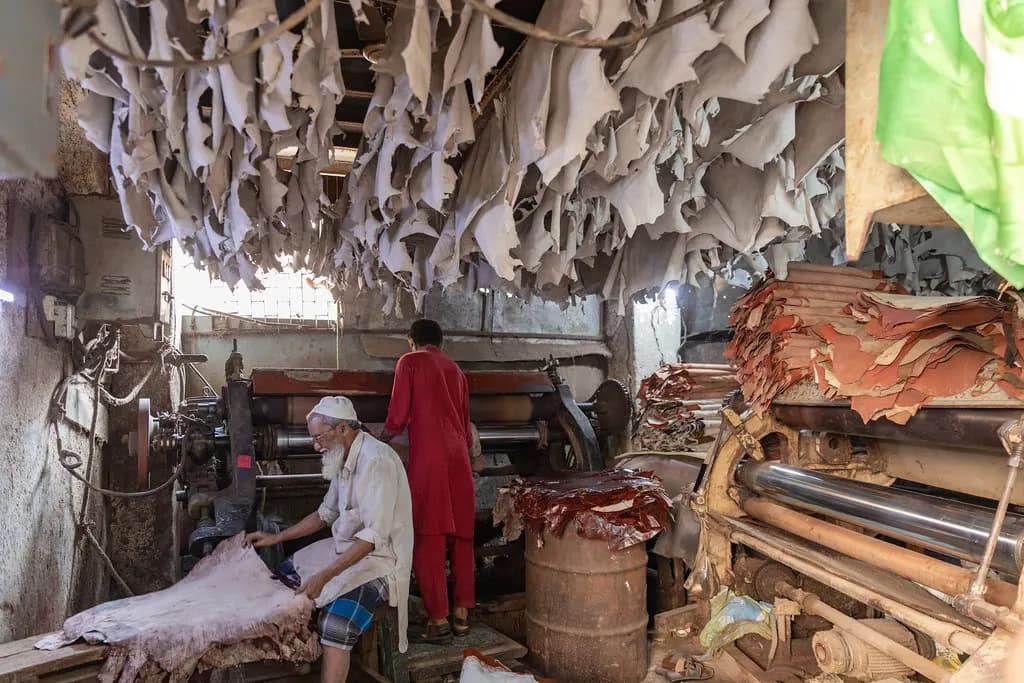
Example 2 — an unskilled helper in a Nagpur factory with unpaid leave. Raju is an unskilled worker under the residuary factories schedule in Zone I, so his minimum is ₹13,950. He takes 2 days of unpaid leave. Using the 26-day divisor that the notification uses for daily rates, one day is ₹13,950 ÷ 26 = ₹536.54, so the deduction is ₹1,073.08 and the month's wages are ₹12,876.92. A male worker earning above ₹10,000 pays professional tax of ₹200 (₹300 in February) under the Maharashtra slab — see our professional tax guide. Some employers deduct leave at monthly ÷ 30, which gives a smaller deduction; that is fine, because it never takes pay below the minimum for the days worked.
Example 3 — arrears after the August notification. Because the July–December allowance was notified on 5 August but applies from 1 July, a Zone III shop paying the old January–June total in July owes arrears. If your July payroll used last period's figure, calculate the difference for every day from 1 July, pay it in a separate line on the next wage slip and keep the working on file. The same thing will happen in early 2027: the January–June 2027 allowance is usually notified a few weeks into the period, with effect from 1 January.
Overtime, weekly rest and working hours
Maharashtra's minimum monthly rates include pay for the weekly day of rest, which is why the daily rate is the monthly figure divided by 26. If an employee works beyond normal hours, section 14 of the Code on Wages requires overtime at at least twice the normal rate of wages. Work on the weekly rest day needs a substituted rest day; the draft Maharashtra rules say that day's work is paid at the overtime rate when the daily rate is worked out on the ÷ 26 basis, because rest-day pay is already built into the monthly wage.
For part-time staff in shops, the old shops notification set the hourly rate at the daily rate divided by eight plus 15%. Check whether your schedule still carries that condition before you apply it. The draft rules proposed in April 2026 would set a common method instead: a daily rate divided by eight for the hourly rate and multiplied by 26 for the monthly rate, rounding half a rupee or more upward.
Maharashtra minimum wage compliance checklist
0/8The Code on Wages and Maharashtra's draft rules
The four Labour Codes, including the Code on Wages, 2019, came into force on 21 November 2025. The Code repeals the Minimum Wages Act, but section 69(2) says notifications made under the old Act continue as if made under the Code until they are replaced. That is the legal basis on which Maharashtra keeps issuing half-yearly special allowance notifications under the 1948 Act's machinery.
On 28 April 2026 the state published the draft Maharashtra Code on Wages Rules, 2026 for objections. The draft would replace the Maharashtra Minimum Wages Rules, 1963 and the Maharashtra Payment of Wages Rules, 1963. Three proposals stand out for payroll teams:
- New revision cycle. Draft rule 5 says the cost-of-living allowance will be computed before 1 April and before 1 October each year, using the Labour Bureau's CPI for Industrial Workers. If adopted, the January/July cycle will give way to April/October.
- Skill mapping. A technical committee chaired by the Labour Commissioner would advise on classifying occupations into unskilled, semi-skilled, skilled and highly skilled, with a Schedule A list that can be updated by notification.
- Weekly rest. Sunday is the default rest day in a six-day week, with rules on substituted rest days and a cap of ten consecutive working days.
When we last checked, on 7 October 2026, the rules had not been notified in final form. Until they are, continue to follow the existing schedules and the half-yearly allowance. The Central Government also has to fix a national floor wage under section 9 of the Code; we could not find a notification fixing it, and Maharashtra's rates are above any figure discussed so far.
Employer obligations beyond the rate
The Code on Wages adds duties around the number itself. Monthly wages must be paid before the end of the seventh day of the following month, and final dues within two working days when someone resigns or is removed (section 17). Men, women and transgender workers doing the same or similar work must get the same pay (section 3). You must keep registers of employees, attendance and wages, and give each employee a wage slip, physical or electronic (section 50). If you use a manpower or security contractor, make sure the contractor pays at least these rates; as principal employer you can end up paying the shortfall.
A wage slip that shows basic and special allowance on separate lines makes compliance easy to prove. Our free salary slip generator does that and includes PF, ESI and professional tax fields. If you are also working out exit costs, our gratuity guide uses the same wage definitions.
Unskilled shop worker, top zone — Maharashtra vs neighbouring states
| State | Monthly minimum | Period | Structure |
|---|---|---|---|
Maharashtra (Zone I) | ₹14,155 | Jul–Dec 2026 | Basic + special allowance, revised Jan and Jul |
Gujarat (Zone I) | ₹13,637 | Oct 2026–Mar 2027 | Daily basic + VDA, revised Apr and Oct |
Karnataka (Zone 1, Bengaluru) | ₹23,376.43 | From 22 May 2026 | Common rate for all schedules; VDA each April |
Maharashtra (Zone I)
- Monthly minimum
₹14,155
- Period
Jul–Dec 2026
- Structure
Basic + special allowance, revised Jan and Jul
Gujarat (Zone I)
- Monthly minimum
₹13,637
- Period
Oct 2026–Mar 2027
- Structure
Daily basic + VDA, revised Apr and Oct
Karnataka (Zone 1, Bengaluru)
- Monthly minimum
₹23,376.43
- Period
From 22 May 2026
- Structure
Common rate for all schedules; VDA each April
Common mistakes Maharashtra employers make
Using one allowance for everything. The shops allowance of ₹4,134 is often pasted into factory, hotel and hospital payrolls. As the table above shows, the correct figure can be several thousand rupees higher or lower.
Treating basic alone as the minimum. A Zone I unskilled shop worker on ₹10,021 basic with no allowance is underpaid by ₹4,134 a month. The minimum is the total.
Counting HRA or attendance bonus towards the minimum. The minimum is the basic plus special allowance. Other allowances sit on top.
Getting the zone wrong after a city grows. Workplaces on the edge of Pune, Nashik or Aurangabad can move zones when municipal limits or corporation classes change.
Waiting for the next notification before paying. Because each allowance applies from 1 January or 1 July but is notified later, employers who don't pay arrears end up with six months of underpayment by the next cycle.
Paying trainees and apprentices "stipends" below the rate. Unless someone is a genuine apprentice engaged under the Apprentices Act, 1961, they are a worker and the minimum applies from day one.
What if a worker is underpaid?
A worker or a trade union can file a claim with the authority under section 45 of the Code on Wages within 3 years. The authority can order payment of the difference plus compensation of up to 10 times the claim. Paying less than the minimum is also an offence under section 54: a fine of up to ₹50,000 for a first offence and up to ₹1 lakh fine and/or 3 months' imprisonment for a repeat within five years. Fixing underpayment quickly and paying arrears with a clear record is far cheaper than defending a claim.
Official links
- Office of the Commissioner of Labour, MaharashtraHome page — minimum wage PDF, circulars and the draft rules
- Minimum wages PDF on the Labour Commissioner's siteShowed the Jan–Jun 2025 notification in Oct 2026
- Notification dated 5 Aug 2026 — Jul–Dec 2026 rates (Marathi scan, secondary copy)
- Draft Maharashtra Code on Wages Rules, 2026Proposed April/October revision cycle
- The Code on Wages, 2019 (India Code)
What to do next
Check every employee against the right schedule, zone and skill row this week, and pay any arrears due since 1 July 2026. Then put a reminder in your calendar for mid-January 2027, when the next special allowance notification is expected, and watch for the final Maharashtra Code on Wages Rules, which could move revisions to April and October. If you employ people in other states too, compare with our guides to minimum wages in Gujarat, minimum wages in Karnataka and minimum wages in Delhi.
This is general information, not legal or tax advice — confirm on the official source or with a professional.
Frequently asked questions
It depends on the scheduled employment and the zone. For shops and commercial establishments, the rates from 1 July 2026 to 31 December 2026 are ₹14,155 a month for an unskilled worker in Zone I, ₹13,559 in Zone II and ₹12,962 in Zone III. Each figure is basic pay plus a special allowance of ₹4,134.
The Labour Commissioner's notification dated 5 August 2026 fixes a separate special allowance for each of 67 scheduled employments. It is ₹4,134 a month for shops and commercial establishments, ₹3,600 for residuary factories and ₹8,176 for hotels and restaurants. The allowance is the same in every zone and skill category within an employment.
Each schedule defines its own zones. For shops and commercial establishments, Zone I has historically covered the larger municipal corporations such as Mumbai, Pune, Thane and Nagpur, Zone II the smaller corporations, A and B class municipal councils and cantonments, and Zone III the rest of the state. Check the zone clause in the notification for your employment before you set pay.
Divide the monthly total (basic plus special allowance) by 26. For an unskilled shop worker in Zone I that is ₹14,155 ÷ 26 = ₹544.42 a day. The monthly rate already includes pay for the weekly rest day, which is why the divisor is 26 and not 30.
Yes. The Code on Wages came into force on 21 November 2025, but section 69(2) keeps notifications issued under the old Minimum Wages Act alive until they are replaced. Maharashtra's July–December 2026 special allowance was issued on that basis, and its draft Code on Wages rules, published on 28 April 2026, are still not final.
Under section 54 of the Code on Wages, paying less than the minimum is punishable with a fine of up to ₹50,000 for a first offence and up to ₹1 lakh fine and/or 3 months' imprisonment for a repeat within five years. The worker can also claim the shortfall within 3 years, with compensation of up to 10 times the claim.
Sources & verification
Figures on this page were checked against the sources below when it was last reviewed on 7 October 2026. Each rate and limit is stored once with its own official source and review date, and official update channels are monitored daily so changes are picked up. How we verify
- 1.Notification No. RD/MW Rules/Special Allowance/2026(2)/Karya-10/7997 dated 05.08.2026 — basic + special allowance w.e.f. 01.07.2026 to 31.12.2026 (English translation) — Office of the Commissioner of Labour, Maharashtra (translation reproduced by SGCMS) · accessed 7 October 2026
- 2.Notification dated 05.08.2026 — original Marathi scan — Office of the Commissioner of Labour, Maharashtra (copy reproduced by SGCMS) · accessed 7 October 2026
- 3.किमान वेतन (Minimum wages) — notification PDF on the Labour Commissioner's website — Office of the Commissioner of Labour, Government of Maharashtra · accessed 7 October 2026
- 4.Draft Maharashtra Code on Wages Rules, 2026 — Notification No. COW-0126/C.R.09/Lab-7 dated 28 April 2026 — Industries, Energy, Labour and Mining Department, Government of Maharashtra · accessed 7 October 2026
- 5.The Code on Wages, 2019 (No. 29 of 2019) — India Code, Legislative Department · accessed 7 October 2026
- 6.Government announces implementation of the four Labour Codes (21 Nov 2025) — PIB — Ministry of Labour & Employment · accessed 7 October 2026
- 7.Employment in shop or commercial establishment — Notification No. MWA.52010/CR-1334/Lab-7 dated 28 September 2010 — Industries, Energy and Labour Department, Maharashtra (copy hosted by Simpliance) · accessed 7 October 2026
- 8.Let's Talk Compliance — Minimum basic rate doubled in Maharashtra — Aparajitha Corporate Services · accessed 7 October 2026
- 9.Maharashtra Labour Commissioner revised minimum wages July to December 2026 — TeamLease RegTech · accessed 7 October 2026
MSMETOOLS is an independent platform and is not affiliated with any government agency, ministry or department.
Tools for this
Related guides
 Minimum Wages in Gujarat 2026: Zone Rates & New VDARead guide
 Minimum Wages in West Bengal 2026: Zone A & B RatesRead guide
 Minimum Wages in Karnataka 2026-27: New Zone Rates & VDARead guide
 Minimum Wages in Daman & Dadra Nagar Haveli 2026: RatesRead guide
Official links open the government site in a new tab.