 GST & indirect tax
GST Rate on Dry Fruits in 2026: Almonds, Cashew, Dates, Raisins, Walnuts and Pistachios — HSN Codes and Worked Bills
GST rate on dry fruits in 2026: 5% on almonds, cashew, dates, raisins, walnuts and pistachios after GST 2.0, HSN codes 0801–0813, loose vs packed and ₹ bills.
 Edited by Sumeet YadavFounder & editor, MSMETOOLS · fact-checked against official sources
Contents (10)
- 1. GST rate on dry fruits in 2026
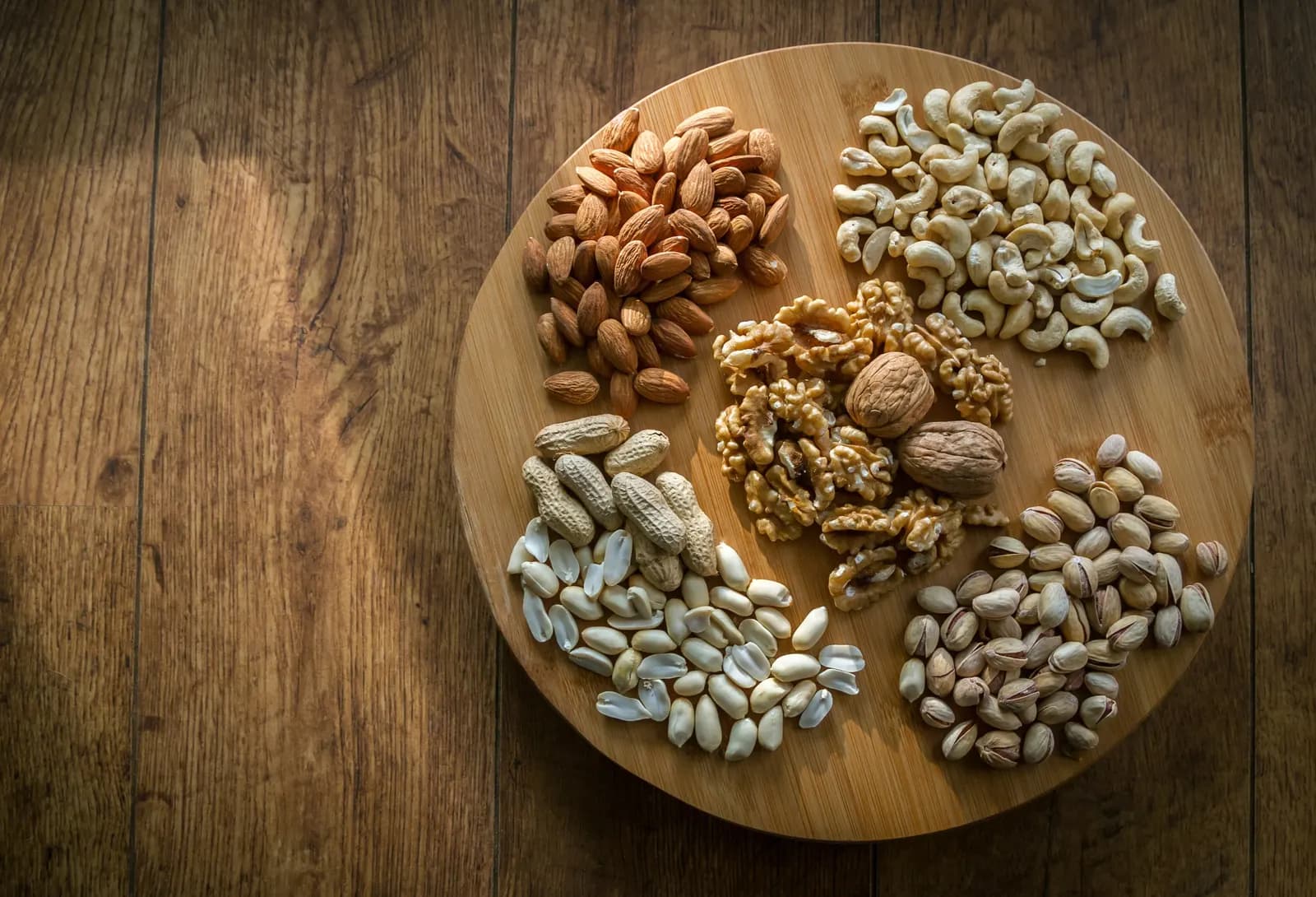
- 2. HSN codes for almonds, cashews, dates, raisins, walnuts and pistachios
- 3. Loose vs packed, fresh vs dried, raw vs roasted
- 4. Worked bills: GST on dry fruits in rupees
- 5. Raw cashew and reverse charge
- 6. Gift boxes and festive hampers
- 7. Imports, exports and online sales
- 8. Registration, composition and input tax credit for traders
- 9. Common mistakes with GST on dry fruits
- 10. What to do next
Dry fruits are one of the few grocery categories where Indian households regularly spend thousands of rupees in a single bill, especially around Diwali, Eid and weddings. That makes the GST line worth checking. This guide is for shoppers, kirana stores, dry fruit wholesalers in markets such as Khari Baoli, cashew processors and online sellers. It gives the 2026 GST rates on almonds, cashews, walnuts, pistachios, dates, raisins, figs and mixed dry fruits, their HSN codes, how fresh, loose, roasted and gift-boxed products are treated, reverse charge on raw cashew, and worked ₹ bills. Rates were checked against the notified schedule in October 2026.
Quick answer
Dried nuts and dried fruits attract 5% GST in 2026 — almonds, cashews, walnuts, pistachios, dates, figs, raisins, apricots and mixed dry fruits alike. Almonds, pistachios, dried dates, figs and mixtures fell from 12% to 5% on 22 September 2025 under GST 2.0. Fresh nuts and fruit are exempt, and roasted or salted nuts are also 5%.
On ₹2,000 of almonds, GST is ₹100
Loose and packed dry fruits are taxed the same
HSN: 0801 cashew, 0802 almonds/walnuts/pistachios, 0804 dates/figs, 0806 raisins, 0813 mixtures
Raw cashew bought from a farmer: buyer pays GST under reverse charge
A hamper with dry fruits and a perfume is taxed at 18%
GST rate on dry fruits in 2026
Notification 9/2025–Central Tax (Rate), which replaced the 2017 goods rate schedule from 22 September 2025, puts every common dry fruit in Schedule I — the 2.5% central tax schedule. With matching state tax, that is 5% on a sale within your state, or 5% IGST on an inter-state sale. The relevant entries are serial 22 (cashew nuts, desiccated coconut and Brazil nuts), 23 (almonds, pistachios, hazelnuts, macadamia, pine nuts, walnuts and other dried nuts), 26 (dried dates, figs and similar fruit), 28 (raisins and dried grapes) and 31 (other dried fruit such as apricots and prunes, and mixtures of nuts or dried fruits).
Before GST 2.0 the category was split. Cashews, walnuts and raisins were already at 5%, but almonds, pistachios, dried dates, dried figs and mixed dry fruits were at 12%. The 56th GST Council moved all of them to 5% as part of its food-rate cuts, so a festive box of mixed dry fruits now carries the same rate as a bag of cashews. There is no compensation cess on any dry fruit.
GST on dry fruits — before and after 22 September 2025
| Dry fruit (HSN) | Before | From 22 Sep 2025 |
|---|---|---|
Almonds / badam (0802 11, 0802 12) | 12% | 5% |
Pistachios / pista (0802 51, 0802 52) | 12% | 5% |
Hazelnuts, macadamia, pine nuts / chilgoza (0802) | 12% | 5% |
Walnuts / akhrot (0802 31, 0802 32) | 5% | 5% |
Cashew nuts / kaju (0801 31, 0801 32) | 5% | 5% |
Dried dates — khajur, chhuhara (0804 10) | 12% | 5% |
Dried figs / anjeer (0804 20) | 12% | 5% |
Raisins, kishmish, munakka (0806 20) | 5% | 5% |
Dried apricots, prunes, mixed dry fruits (0813) | 12% | 5% |
Roasted, salted or flavoured nuts (2008) | 12% | 5% |
Fresh nuts, fresh dates, figs and grapes | Nil | Nil (exempt) |
Almonds / badam (0802 11, 0802 12)
- Before
12%
- From 22 Sep 2025
5%
Pistachios / pista (0802 51, 0802 52)
- Before
12%
- From 22 Sep 2025
5%
Hazelnuts, macadamia, pine nuts / chilgoza (0802)
- Before
12%
- From 22 Sep 2025
5%
Walnuts / akhrot (0802 31, 0802 32)
- Before
5%
- From 22 Sep 2025
5%
Cashew nuts / kaju (0801 31, 0801 32)
- Before
5%
- From 22 Sep 2025
5%
Dried dates — khajur, chhuhara (0804 10)
- Before
12%
- From 22 Sep 2025
5%
Dried figs / anjeer (0804 20)
- Before
12%
- From 22 Sep 2025
5%
Raisins, kishmish, munakka (0806 20)
- Before
5%
- From 22 Sep 2025
5%
Dried apricots, prunes, mixed dry fruits (0813)
- Before
12%
- From 22 Sep 2025
5%
Roasted, salted or flavoured nuts (2008)
- Before
12%
- From 22 Sep 2025
5%
Fresh nuts, fresh dates, figs and grapes
- Before
Nil
- From 22 Sep 2025
Nil (exempt)
HSN codes for almonds, cashews, dates, raisins, walnuts and pistachios
Dry fruits sit in Chapter 8 of the customs tariff, "edible fruit and nuts". The first six digits follow the international Harmonised System, and the tariff splits most nuts into "in shell" and "shelled":
- 0801 — cashew nuts, Brazil nuts and coconuts. Cashew in shell is 0801 31; shelled cashew kernels are 0801 32. Desiccated coconut also falls under 0801.
- 0802 — other nuts. Almonds in shell 0802 11 and shelled almonds 0802 12; hazelnuts 0802 21/22; walnuts in shell 0802 31 and shelled 0802 32; chestnuts 0802 41/42; pistachios in shell 0802 51 and shelled 0802 52; macadamia 0802 61/62; and pine nuts (chilgoza) under the "other nuts" lines.
- 0804 — dates, figs and other fruit. Dates are 0804 10 and figs 0804 20. The Indian tariff further splits dates into soft (khajur or wet) and hard (chhuhara or kharek) lines.
- 0806 — grapes. Dried grapes, raisins, kishmish and munakka are 0806 20.
- 0813 — other dried fruit. Dried apricots (0813 10), prunes (0813 20), dried apples (0813 30), other dried fruit (0813 40) and mixtures of nuts or dried fruits (0813 50).
- 2008 — prepared nuts. Once nuts are roasted, salted, flavoured or otherwise prepared, they leave Chapter 8 for heading 2008.
For GST returns you don't need eight digits unless your turnover is large. Businesses with aggregate turnover up to ₹5 crore must show at least a 4-digit HSN on B2B invoices, and larger businesses a 6-digit HSN. Importers and exporters use the full eight-digit Indian tariff item on the bill of entry or shipping bill — for example, 0802 12 00 for shelled almonds — so take that from your customs broker. The HSN code finder and our HSN code guide help with less common items.
Loose vs packed, fresh vs dried, raw vs roasted
Three questions decide the GST on a dry fruit, and only two of them matter.
Loose or packed — it makes no difference. Since July 2022, many staples such as rice, atta, pulses and curd are exempt when sold loose but taxed when "pre-packaged and labelled". That condition does not appear in the dry fruit entries. Serial 22, 23, 26, 28 and 31 of Schedule I tax cashews, almonds, dates, raisins and mixtures without any packaging test, so a trader weighing out 250 grams of almonds from a sack charges the same 5% as a brand selling them in a sealed pouch. The one exception in this chapter is dried makhana (fox nut), which serial 25 taxes at 5% when pre-packaged and labelled.
Fresh or dried — this is the line that matters. Notification 2/2017–Central Tax (Rate) exempts fresh nuts and fresh fruit: coconuts (fresh or dried, in shell), fresh Brazil nuts, fresh almonds, hazelnuts and other fresh nuts, fresh dates and figs, and fresh grapes. Fresh dates — such as the yellow barhi dates sold in Kutch in the monsoon — therefore carry no GST, while the soft dried dates most shops sell are dried fruit at 5%. Grapes are nil-rated; raisins are 5%. Whole coconuts are exempt, but desiccated coconut is taxed at 5%.
Raw or roasted — the rate is the same, the HSN changes. Roasted, salted or flavoured nuts, including masala cashews and salted pistachios, move from Chapter 8 to heading 2008 (Schedule I serial 132). That entry was also cut from 12% to 5% in September 2025, so the rate now matches, but the HSN on the invoice should change. Chocolate-coated almonds and dry fruit chikki are classified as confectionery, both now at 5%, and traditional sweets made with dry fruits such as kaju katli are classified as sweetmeats; see our guide to GST on food.
Worked bills: GST on dry fruits in rupees
Prices below are illustrative round figures to show the arithmetic — not market quotes. Dry fruit prices move with crop size, import duty and the festive season.
| Purchase | Pre-tax value | GST rate | GST | Bill total |
|---|---|---|---|---|
| 1 kg almonds at ₹900 | ₹900 | 5% | ₹45 | ₹945 |
| 500 g cashew W320 at ₹1,000/kg | ₹500 | 5% | ₹25 | ₹525 |
| 1 kg raisins at ₹400 | ₹400 | 5% | ₹20 | ₹420 |
| 500 g dried dates at ₹500/kg | ₹250 | 5% | ₹12.50 | ₹262.50 |
| Household total | ₹2,050 | ₹102.50 | ₹2,152.50 |
In a shop in your own state, the ₹102.50 appears as ₹51.25 CGST and ₹51.25 SGST. An online order shipped from a seller's warehouse in another state shows ₹102.50 as IGST. To find the tax inside a price that includes GST, multiply by 5 and divide by 105: a pack priced at ₹525 including tax is ₹500 plus ₹25 of GST.
A wholesale order. A Delhi wholesaler sells 500 kg of shelled almonds at ₹750 a kilo to a retailer in Jaipur. The value is ₹3,75,000 and IGST at 5% is ₹18,750, so the invoice totals ₹3,93,750. Because the consignment value is above ₹50,000, an e-way bill is needed for the truck. The Jaipur retailer claims the ₹18,750 as input tax credit and charges 5% again on its own sales.
Try it — GST on a dry fruit bill
Raw cashew and reverse charge
Cashew is the one dry fruit where the GST collection point shifts. Under Notification 4/2017–Central Tax (Rate), "cashew nuts, not shelled or peeled" supplied by an agriculturist to any registered person are taxed under reverse charge. The farmer does not register — section 23 of the CGST Act says agriculturists supplying produce from their own cultivation don't need to — and the registered buyer pays the tax instead.
Here is how a processor in Kollam or Mangaluru handles it. It buys 10 tonnes of raw cashew nuts from local growers at ₹120 a kilo, so ₹12,00,000. It pays GST of ₹60,000 at 5% under reverse charge in cash through GSTR-3B — reverse-charge tax can't be paid from the credit ledger — and issues a self-invoice and a payment voucher for the purchase. The same ₹60,000 becomes input tax credit in the same return. After shelling, peeling and grading, it sells 2.5 tonnes of kernels at ₹800 a kilo, a value of ₹20,00,000, charging ₹1,00,000 of GST. It sets off the ₹60,000 credit and its credit on packing and services, and pays the balance.
Raw cashew to kernels — where GST is paid
Step 1
Farmer sells raw cashew
unregistered, no GST charged
Step 2
Processor pays 5% under RCM
in cash, self-invoice
Step 3
Same amount claimed as ITC
in the same GSTR-3B
Step 4
Kernels sold at 5%
forward charge, ITC set off
The reverse charge applies only when the seller is an agriculturist. Raw cashew imported from West Africa — which supplies a large share of what Indian factories process — carries IGST at 5% at customs instead, and raw cashew bought from a registered trader comes with a normal tax invoice. Our guide to the reverse charge mechanism covers self-invoicing and time of supply.
Gift boxes and festive hampers
Diwali and wedding gift boxes are where dry fruit billing most often goes wrong, because a box can be one product or several.
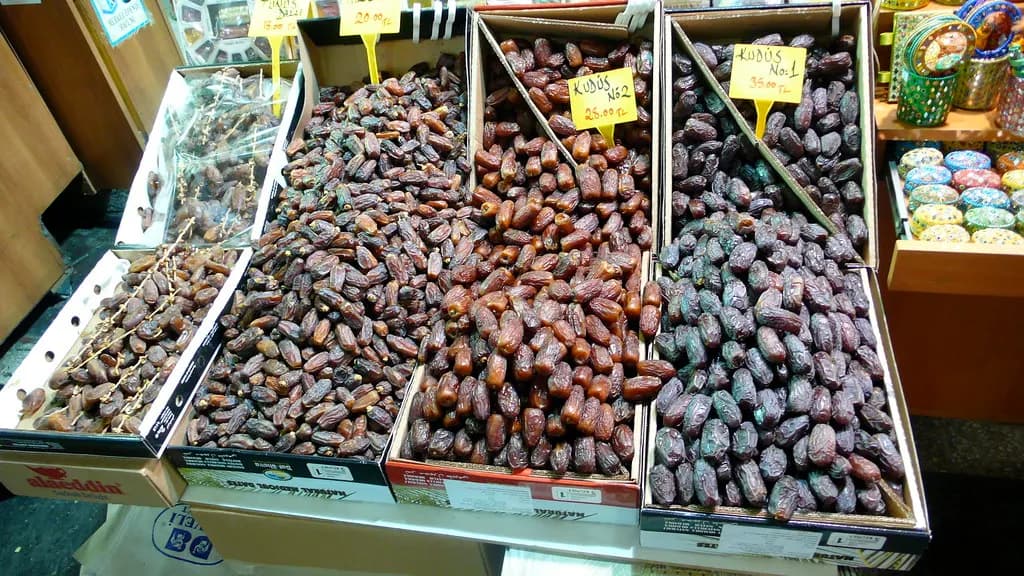
A box of dry fruits only. A decorative tin or wooden box holding almonds, cashews and raisins is a single product. Section 8 of the CGST Act treats goods supplied with their packing as a composite supply taxed at the rate of the principal supply — the dry fruits — so the whole price is taxed at 5%, including the box. The same holds for a mixed pack of nuts and dried fruit, which is classified under 0813 as a mixture.
A hamper with unrelated items. If the box also holds a perfume, a scented candle or a silver-plated tray, and the whole is sold for one price, it is a mixed supply: goods that could be sold separately, bundled for a single price. Section 8(b) taxes a mixed supply at the rate of the item with the highest rate. Add a perfume (HSN 3303, 18%) to a ₹2,000 dry fruit hamper and the whole ₹2,500 is taxed at 18% — ₹450 of GST, against ₹100 on the dry fruits and ₹90 on the perfume if billed separately. Bill the items on separate lines with separate prices and each takes its own rate.
Corporate gifting. A business buying dry fruit boxes as gifts for clients or staff usually cannot claim input tax credit: section 17(5)(h) of the CGST Act blocks credit on goods disposed of by way of gift. Suppliers should still issue a proper tax invoice with the buyer's GSTIN, because the buyer needs it for its accounts.
Imports, exports and online sales
India imports most of its almonds, walnuts, pistachios and dates. On imports, IGST at the same 5% is charged on the assessable value plus basic customs duty, and the importer claims it as input tax credit. Basic customs duty on dry fruits is a separate, often per-kilo, levy set by customs notifications; check the current rate on the bill of entry with your customs broker rather than relying on a table.
Exports of dry fruits — cashew kernels in particular — are zero-rated. Exporters normally file a Letter of Undertaking so they can ship without paying IGST and claim back the GST on packing and services; see what is LUT in GST.
Online sellers of goods on marketplaces generally need GST registration from their first sale, apart from limited relief for small sellers supplying within their own state, and the marketplace collects tax at source on their sales. The rate on the product does not change: a pouch of almonds on an app is 5%, just as in a shop.
Registration, composition and input tax credit for traders
A dry fruit trader selling only within its state must register once aggregate turnover crosses ₹40 lakh a year, or ₹20 lakh in the special-category states that opted for the lower limit. Inter-state sellers must register from the first sale. Because dry fruits are taxable goods, there is no exemption-based route around registration.
Small shops can choose the composition scheme up to ₹1.5 crore of turnover, paying 1% of turnover and issuing bills of supply without charging GST to customers. That suits retail counters that sell mainly to households. Wholesalers selling to registered retailers usually prefer the normal scheme, because composition dealers can't pass on credit and can't make inter-state sales.
A regular trader claims full credit on the 5% paid to its suppliers, plus credit on packing material, transport and rent where the landlord charges GST. The GST 2.0 cut did not create inverted-duty issues for most traders, since purchases and sales are both at 5%. Pouches and printed laminates at higher rates can leave a small credit balance for packers that sell only at 5%, which can be claimed as an inverted-duty refund.
Check your dry fruit invoice
0/7Common mistakes with GST on dry fruits
Still billing almonds or dates at 12%. Invoices and price lists printed before September 2025 often carried 12% on almonds, pistachios, dates and mixed dry fruits. Since 22 September 2025 the rate is 5%. Charging the old rate is an over-collection that must still be deposited with the government, and the buyer's credit is limited to the correct tax.
Exempting loose dry fruits. Traders who have heard that loose food is exempt sometimes stop charging GST on almonds sold by weight. That rule applies to cereals, pulses and flour, not to dry fruits.
Taxing fresh dates. Fresh dates and fresh grapes are exempt. Charging 5% on them in season is an error that customers and auditors both notice.
Ignoring reverse charge on raw cashew. A processor that buys from farmers and pays no reverse-charge tax faces a demand with interest, even though the tax would have been claimable as credit. Pay it monthly in cash and take the credit in the same return.
One price for a mixed hamper. Putting a perfume or candle into a dry fruit box and charging 5% on the whole price understates tax. Either itemise or apply the highest rate.
The 57th GST Council met in early October 2026; nothing changing these rates had been notified when this page was checked.
Official links
- Notification 9/2025–CT(Rate) — goods rate scheduleSchedule I S.No. 22, 23, 26, 28, 31, 132
- 56th GST Council — recommendationsDry fruits from 12% to 5%
- Notification 2/2017–CT(Rate) — exempt goodsFresh nuts and fruit, S.No. 47–53
- Section 8, CGST ActComposite and mixed supply
- CGST rate notificationsLater amendments, if any
What to do next
If you sell dry fruits, update your item master so every nut and dried fruit carries 5% and the right four- or six-digit HSN, separate fresh produce and roasted lines, and itemise festive hampers. Use the GST calculator to check a bill and the invoice generator for a compliant tax invoice. For the wider food picture, read our guides to GST on food and HSN codes.
This is general information, not legal or tax advice — confirm on the official source or with a professional.
Frequently asked questions
Dried nuts and dried fruits — almonds, cashews, walnuts, pistachios, dates, figs, raisins, apricots and mixed dry fruits — attract 5% GST. Almonds, pistachios, dried dates, figs and mixtures were cut from 12% to 5% on 22 September 2025 under GST 2.0. Cashews, walnuts and raisins were already at 5%. Fresh nuts and fresh fruit are exempt.
Almonds fall under heading 0802 of the customs tariff, which covers nuts other than coconuts, Brazil nuts and cashews. Almonds in shell are sub-heading 0802 11 and shelled almonds (almond kernels or giri) are 0802 12. Both attract 5% GST. A business with turnover up to ₹5 crore reports a 4-digit HSN code — 0802 — on B2B invoices.
Yes. Unlike rice, atta or pulses, the GST entries for dried nuts and dried fruit carry no 'pre-packaged and labelled' condition. Almonds sold loose from a sack attract the same 5% as a branded pouch. The difference that matters is fresh versus dried: fresh nuts and fresh fruit are exempt, dried ones are taxed.
Dried dates — soft dates such as khajur and hard dates such as chhuhara — attract 5% under heading 0804, down from 12% before 22 September 2025. Fresh dates, such as Kutch barhi dates sold in season, are exempt. Date paste, syrup or dates stuffed and coated with chocolate are classified differently, so check the HSN of the finished product.
The buyer. Raw cashew nuts that are not shelled or peeled, supplied by an agriculturist to a registered person, are taxed under reverse charge. The cashew processor pays 5% GST in cash, issues a self-invoice, and claims the same amount back as input tax credit to set off against tax on the kernels it sells.
It depends on what is in the box. A box of only dry fruits stays at 5%, with the packing taking the same rate. A hamper that combines dry fruits with an unrelated item, such as a perfume, for one price is a mixed supply and is taxed at the highest rate in the box — 18% in that example.
Sources & verification
Figures on this page were checked against the sources below when it was last reviewed on 9 October 2026. Each rate and limit is stored once with its own official source and review date, and official update channels are monitored daily so changes are picked up. How we verify
- 1.Notification No. 9/2025–Central Tax (Rate), 17 September 2025 (Gazette of India) — Ministry of Finance / Gazette of India · accessed 9 October 2026
- 2.Recommendations of the 56th GST Council meeting (press release with annexures) — GST Council / PIB · accessed 9 October 2026
- 3.Notification No. 2/2017–Central Tax (Rate) (nil-rated goods) — GST Council / CBIC · accessed 9 October 2026
- 4.Notification No. 4/2017–State Tax (Rate), Maharashtra — reverse charge on goods (consolidated) — Government of Maharashtra · accessed 9 October 2026
- 5.Section 8 – CGST Act, 2017 (composite and mixed supply) — CBIC · accessed 9 October 2026
- 6.Section 23 – CGST Act, 2017 (persons not liable for registration) — CBIC · accessed 9 October 2026
- 7.FAQs on GST rate rationalisation (56th GST Council) — PIB / Ministry of Finance · accessed 9 October 2026
MSMETOOLS is an independent platform and is not affiliated with any government agency, ministry or department.
Tools for this
GST Calculator (India)
Calculate GST for your sales and purchases with current rates.
HSN Code Finder (India)
Find the correct HSN/SAC code for your product.
Invoice Generator
Create professional invoices with tax, logo and custom details.
Related guides
 Reverse Charge Mechanism (RCM) in GST 2026: List & ExampleRead guide
 GST Composition Scheme 2026: Limit, Rates, CMP-08 & RulesRead guide
 GST on Cold Drinks 2026: 40% Rate, Juices, Water & RestaurantsRead guide
 GST on Diamonds 2026: 0.25% Rough, 1.5% Polished, 3% JewelleryRead guide
Official links open the government site in a new tab.