 GST & indirect tax
GST on Diamonds in 2026: Rough, Cut and Polished, Lab-Grown, Job Work and Diamond Jewellery
GST on diamonds in 2026: 0.25% on rough, 1.5% on cut and polished and lab-grown, 3% on diamond jewellery, 1.5% job work, HSN codes and worked ₹ examples.
 Edited by Sumeet YadavFounder & editor, MSMETOOLS · fact-checked against official sources

Contents (11)
- 1. GST rates on diamonds and gemstones in 2026
- 2. Why polished diamonds are 1.5% and not 0.25%
- 3. Lab-grown diamonds
- 4. Job work: cutting and polishing for others
- 5. Diamond jewellery: 3% on the whole price
- 6. Imports, exports and the Diamond Imprest Authorisation
- 7. E-way bills, registration and invoicing
- 8. Input tax credit for traders, polishers and jewellers
- 9. Worked examples in rupees
- 10. Common mistakes and how they are fixed
- 11. What to do next
India cuts and polishes most of the world's diamonds, and the GST rules for the trade are unusually fine-grained. A rough stone, the same stone after polishing, the labour that turned one into the other, and the ring it finally sits in each carry a different rate. This guide explains GST on diamonds in 2026 for polishing units, traders, jewellers and buyers: the rate for rough, cut and polished and lab-grown stones, job work, diamond jewellery, imports and exports, HSN codes, e-way bills, a short rate history and worked rupee examples, checked against the September 2025 notifications in October 2026.
Quick answer
Rough or simply sawn diamonds: 0.25%. Cut and polished diamonds: 1.5%. The same two rates apply to lab-grown diamonds (heading 7104). Diamond jewellery is taxed as jewellery at 3% on the full value. Job work on diamonds for a registered principal is 1.5% (0.75% CGST + 0.75% SGST). GST 2.0 on 22 September 2025 left all of these unchanged.
Coloured precious and semi-precious stones (7103): 0.25%, even when cut
Diamond dust and powder (7105): 3%
Imports pay IGST at the same rates; exports are zero-rated
No e-way bill for Chapter 71 goods except where a state, such as Kerala, requires one
GST rates on diamonds and gemstones in 2026
All goods rates now sit in one notification: Notification 9/2025-Central Tax (Rate), which replaced the 2017 goods-rate notification from 22 September 2025. It lists central tax in seven schedules; the state tax is the same again, and IGST on inter-state sales and imports is double. Diamonds and gemstones are spread across three of those schedules.
Schedule V (0.125% CGST, so 0.25% in all) covers rough diamonds or simply sawn diamonds, industrial or non-industrial (heading 7102); precious stones other than diamonds and semi-precious stones, whether or not worked or graded, but not strung, mounted or set (7103); and synthetic or reconstructed stones other than diamonds, plus synthetic diamonds that are unworked or simply sawn or roughly shaped (7104).
Schedule VI (0.75% CGST, so 1.5%) covers everything else under 7102 and 7104 — in practice, natural and synthetic diamonds that have been cut, polished or otherwise worked.
Schedule IV (1.5% CGST, so 3%) covers dust and powder of natural or synthetic precious stones (7105), articles of jewellery of precious metal (7113) and articles of pearls or precious stones (7116).
Note the asymmetry. A cut and polished emerald, ruby or sapphire stays at 0.25% because heading 7103 is in Schedule V "whether or not worked". Only diamonds move up to 1.5% once they are worked.
| Product | HSN | GST |
|---|---|---|
| Rough or simply sawn natural diamonds | 7102 10, 7102 21, 7102 31 | 0.25% |
| Cut and polished natural diamonds | 7102 29, 7102 39 | 1.5% |
| Lab-grown diamonds, unworked or simply sawn | 7104 | 0.25% |
| Lab-grown diamonds, cut and polished | 7104 | 1.5% |
| Precious (non-diamond) and semi-precious stones, worked or not | 7103 | 0.25% |
| Diamond dust and powder | 7105 | 3% |
| Diamond jewellery of gold, platinum or silver | 7113 | 3% |
| Job work on diamonds (registered principal) | SAC 9988 | 1.5% (0.75% CGST + 0.75% SGST) |
On an intra-state sale the tax splits equally between CGST and SGST — 0.75% each on a polished diamond. On an inter-state sale it is charged as IGST at the full rate. Because the rates are tiny compared with the value of the goods, rounding matters: a ₹50 lakh parcel of polished stones carries ₹75,000 of GST, and an invoice that rounds the rate or applies the wrong schedule is wrong by a meaningful sum.
Why polished diamonds are 1.5% and not 0.25%
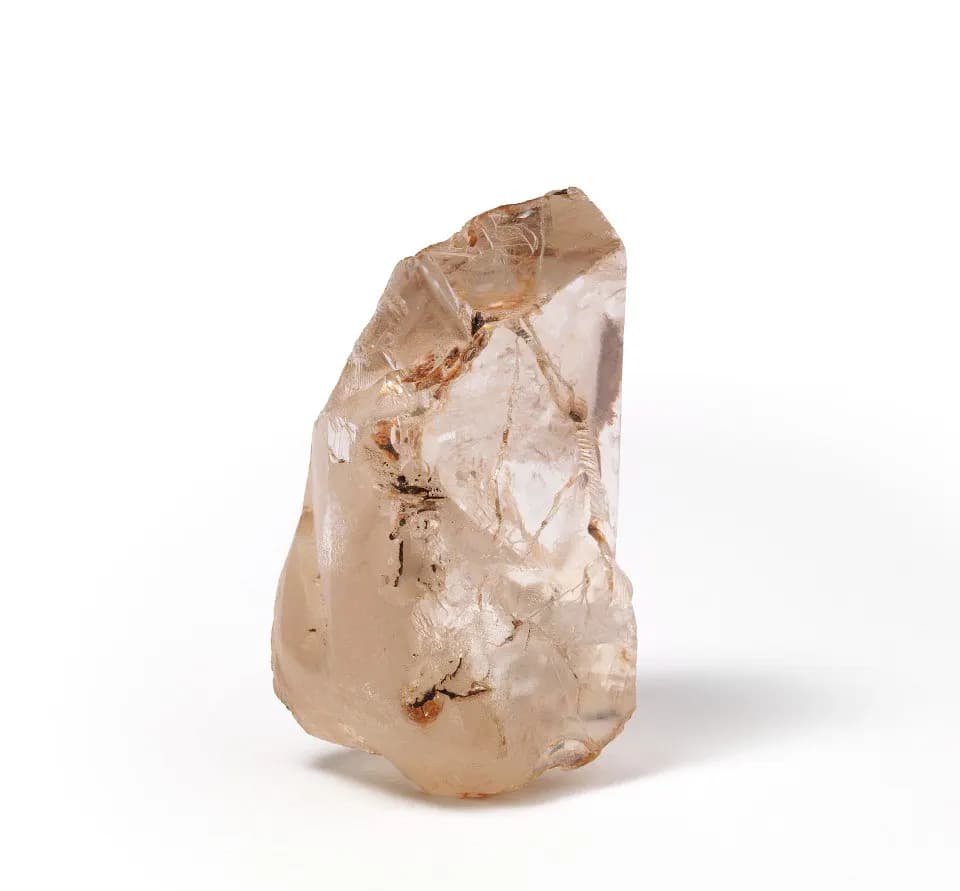
The rate for cut and polished diamonds has moved twice. At the start of GST in July 2017 it was 3%. From January 2018 the government cut it to 0.25%, matching rough diamonds. That looked like a concession, but it created an input tax credit problem: polishing units and traders paid GST at higher rates on job work, grading, certification, rent and other services, while their output tax at 0.25% was too small to absorb that credit. With no refund available for the accumulated credit on domestic sales, money got stuck.
The trade, through the Gem and Jewellery Export Promotion Council, asked for a higher rate. The 47th GST Council meeting in June 2022 agreed, and from 18 July 2022 cut and polished diamonds moved to 1.5%. The 56th Council's rate rationalisation in September 2025 did not change it; Notification 9/2025 simply carried the 0.75% CGST entry into the new Schedule VI. If you see a supplier still invoicing polished diamonds at 0.25%, the invoice is out of date by more than four years.
Lab-grown diamonds
Lab-grown diamonds, produced by chemical vapour deposition or high-pressure, high-temperature methods, are classified as synthetic diamonds under heading 7104, not as natural diamonds under 7102. Their GST rates are nevertheless the same: 0.25% for synthetic diamonds that are unworked, simply sawn or roughly shaped (Schedule V), and 1.5% for the rest (Schedule VI). Jewellery set with lab-grown stones is jewellery of precious metal under 7113 at 3%.
The practical difference is classification and disclosure. Invoices, stock records and certificates must show whether a stone is natural or laboratory-grown and use the right heading. Mixing the two in a parcel, or declaring lab-grown stones under 7102, is a classification error that can cause trouble with customs on export and with buyers relying on the invoice. The rate may be the same, but the HSN line is not.
Job work: cutting and polishing for others
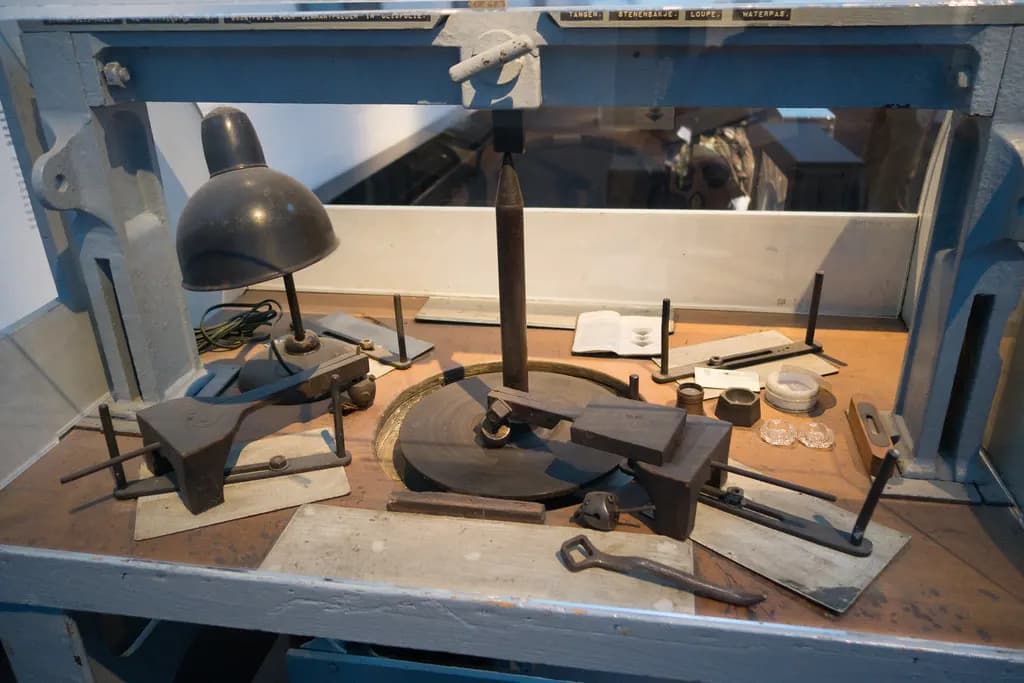
Much of India's polishing is done on job work: a diamond company hands rough stones to a unit that cuts and polishes them and returns them for a labour charge. Under section 2(68) of the CGST Act, job work means any treatment or process undertaken on goods belonging to another registered person. The principal sends the rough on a delivery challan without paying tax, and the job worker charges GST only on its labour.
From 22 September 2025, Notification 15/2025-CT(R) substituted serial 26 of Notification 11/2017. Item (i) now taxes job work in relation to diamonds falling under Chapter 71 at 1.5% (0.75% CGST + 0.75% SGST). Item (ii)(i) taxes job work on all other Chapter 71 products, such as gold jewellery, at 5%. The job worker can take credit on its own inputs and services. Our job work guide covers delivery challans, the one-year and three-year return limits and ITC-04.
Two qualifications matter. First, many polishing units are small. A unit whose aggregate turnover is below ₹20 lakh need not register and charges no GST on labour. Second, job work requires a registered owner. If an individual brings a family diamond to have it recut, the work is "treatment or process on goods belonging to another person" rather than job work, and falls under item (vii) of the same serial at 18%, unless the jeweller is unregistered. Setting a customer's own loose diamond into a ring raises the same question. Jewellers who quote the 5% job-work rate to retail customers should check this point with their adviser.
Diamond jewellery: 3% on the whole price
A diamond ring, pendant or bangle in gold, platinum or silver is an article of jewellery under heading 7113. The jeweller sells one good — the finished piece — and Schedule IV taxes it at 3% on the full transaction value. Gold or platinum value, diamond value, making charges, certification and hallmarking recovered on the bill all form part of that value under section 15 of the CGST Act. The bill should not show 1.5% on the diamonds and 3% on the metal.
Loose diamonds are different. A certified solitaire bought on its own is a cut and polished diamond under 7102 at 1.5%. If the buyer then pays a jeweller to set it, the setting is a separate service. A buyer comparing "buy the finished ring" with "buy the stone, then pay for setting" should compare the total tax, not just the headline rates, because the labour can attract a higher rate than the ring. Our GST on gold guide explains making charges and old-gold exchange, which work the same way for diamond pieces.
Old diamond jewellery sold by an individual to a jeweller is not a supply in the course of business, so the individual charges no GST. When the jeweller resells the piece or recovers the stones and sells them, GST applies to that sale.
Which rate applies?
Step 1
Is it set in jewellery of precious metal?
yes → 3% on the full price
Step 2
Is it a diamond (natural or lab-grown)?
no, coloured gemstone → 0.25%
Step 3
Cut, polished or otherwise worked?
yes → 1.5%
Step 4
Rough or simply sawn
0.25%
Imports, exports and the Diamond Imprest Authorisation
Rough diamonds are almost all imported. IGST on imports is charged at the same rate as a domestic supply: 0.25% on rough and 1.5% on cut and polished diamonds, alongside any customs duty. The importer can claim the IGST as input tax credit if it uses the stones in its taxable or zero-rated business.
Exports of polished diamonds and diamond jewellery are zero-rated supplies under section 16 of the IGST Act. Most exporters ship under a letter of undertaking without paying IGST and then claim refund of accumulated input tax credit, or pay IGST and claim a refund of that tax. Our LUT guide explains the filing and the conditions. Kimberley Process certification for rough diamonds remains a customs and trade requirement, separate from GST.
The Diamond Imprest Authorisation, introduced by the Directorate General of Foreign Trade from 1 April 2025, lets eligible exporters import natural cut and polished diamonds of up to a quarter carat (25 cents) duty-free for re-export after value addition. The 56th GST Council recommended exempting these imports from IGST. Trade publications report that DGFT Notification 49/2025-26 of 9 December 2025 amended paragraph 4.63 of the Foreign Trade Policy to add IGST and compensation cess to the exemption. The scheme carries value limits and export obligations; check the current DGFT notification and handbook before relying on it.
E-way bills, registration and invoicing
Rule 138(14) of the CGST Rules, read with its annexure, exempts precious stones, pearls, precious metals and jewellery (Chapter 71, except imitation jewellery under 7117) from e-way bills. A GSTN advisory in February 2025 confirmed this and withdrew the old voluntary "e-way bill for gold" facility. Rule 138F, however, allows a state to require an electronic bill for intra-state movement of these goods. Kerala does so for consignments above ₹10 lakh. If you move stones within or into Kerala, check the current state rule before dispatch. Our e-way bill guide covers the general rules.
For registration, a diamond trader supplies goods and is covered by the goods threshold of ₹40 lakh, while a polishing unit supplying job work services uses the services threshold of ₹20 lakh. Anyone making inter-state sales must register regardless of turnover. A trader with turnover up to ₹1.5 crore can technically opt for composition, but composition dealers cannot make inter-state sales or claim credit, which rules it out for most of the trade.
Invoices should show the HSN code, the carat weight and the per-carat or parcel value, and identify natural or lab-grown stones. Certificates from grading labs are usually supplied with the stone; the grading service itself, if billed separately by a lab, is a service at 18%.
GST position by type of diamond business
| Business | Output rate | Registration threshold | Typical credit position |
|---|---|---|---|
Rough importer or trader | 0.25% | ₹40 lakh (goods) | Small output tax; service costs can exceed it |
Polished diamond trader | 1.5% | ₹40 lakh (goods) | Usually balanced since 2022 |
Polishing job worker | 1.5% (0.75% CGST + 0.75% SGST) | ₹20 lakh (services) | Labour-heavy; few inputs |
Diamond jeweller | 3% | ₹40 lakh (goods) | Output above input rate on stones |
Exporter | Zero-rated | Must register | Refund of accumulated credit |
Rough importer or trader
- Output rate
0.25%
- Registration threshold
₹40 lakh (goods)
- Typical credit position
Small output tax; service costs can exceed it
Polished diamond trader
- Output rate
1.5%
- Registration threshold
₹40 lakh (goods)
- Typical credit position
Usually balanced since 2022
Polishing job worker
- Output rate
1.5% (0.75% CGST + 0.75% SGST)
- Registration threshold
₹20 lakh (services)
- Typical credit position
Labour-heavy; few inputs
Diamond jeweller
- Output rate
3%
- Registration threshold
₹40 lakh (goods)
- Typical credit position
Output above input rate on stones
Exporter
- Output rate
Zero-rated
- Registration threshold
Must register
- Typical credit position
Refund of accumulated credit
Input tax credit for traders, polishers and jewellers
Because the output rates are so low, credit planning matters more in this trade than in most. A trader buying polished stones at 1.5% and selling them at the same rate recovers its purchase tax in full, but the GST it pays on rent, security, insurance, software and courier services at 18% can still exceed its small output tax if margins are thin. A jeweller selling at 3% is in a better position, since its output rate is above the rate on the stones it buys.
Credit on IGST paid at import is available like any other input tax, provided the bill of entry is reflected on the portal and the stones are used for taxable or zero-rated supplies. Stones sent out on approval travel on a delivery challan; under section 31(7) of the CGST Act, the invoice is due when the buyer accepts them or six months after removal, whichever is earlier, so keep approval memos and return records to show which parcels came back. Exporters who build up credit should claim refunds regularly rather than letting the balance grow, because a refund must be claimed within two years from the relevant date.
Worked examples in rupees
A rough-to-polished chain. A Surat company imports rough diamonds worth ₹1,00,00,000 and pays IGST at 0.25%: ₹25,000. It sends the rough to a registered polishing unit, which bills ₹8,00,000 of labour at 1.5% (0.75% CGST + 0.75% SGST): ₹12,000. The company sells the polished stones to a Mumbai jeweller for ₹1,40,00,000 and charges IGST at 1.5%: ₹2,10,000. It sets off its ₹37,000 of input tax and pays ₹1,73,000 in cash. Under the old 0.25% output rate, output tax would have been only ₹35,000 — less than its input tax, which is why credit piled up before July 2022.
A diamond ring for a customer. A jeweller in Jaipur sells an 18-carat gold ring set with 0.5 carat of diamonds for ₹1,80,000, including making charges. GST at 3% is ₹5,400 — ₹2,700 CGST and ₹2,700 SGST — for a total of ₹1,85,400.
A loose solitaire. A customer buys a certified 1-carat polished diamond for ₹4,00,000. GST at 1.5% is ₹6,000.
An emerald. A gem dealer sells a cut and polished emerald for ₹2,00,000. Heading 7103 is in Schedule V whether worked or not, so GST is 0.25%: ₹500.
Work out GST on a diamond purchase
Common mistakes and how they are fixed
Charging 0.25% on polished diamonds. This rate ended on 17 July 2022. The fix is to raise a supplementary invoice for the difference, pay it with interest and correct GSTR-1 for the period.
Splitting a jewellery bill by component. A diamond ring is one good at 3%. Showing the diamonds at 1.5% under-collects tax.
Using job-work rates for unregistered owners. Recutting or setting an individual's own stone is not job work. Price the labour at the residual rate unless your adviser concludes otherwise.
Declaring lab-grown as natural, or the reverse. The GST rate may match, but customs, buyers and certification bodies rely on the heading. Keep the classification consistent from the import bill of entry to the sale invoice.
Forgetting state e-way bill rules. The national exemption does not cover states that have notified rule 138F requirements.
Diamond GST checklist
0/7Official links
What to do next
If you trade or polish diamonds, check that your billing software maps 7102 and 7104 to the right schedule and that job-work invoices to registered principals use 1.5% (0.75% CGST + 0.75% SGST). Jewellers should confirm that diamond pieces are billed at 3% on the whole value. Read our GST on gold guide for making charges and old-gold rules, the job work guide for challans and returns, and use the GST calculator to check any invoice.
This is general information, not legal or tax advice — confirm on the official source or with a professional.
Frequently asked questions
Rough or simply sawn diamonds (HSN 7102) attract 0.25% and cut and polished diamonds attract 1.5%, under Schedules V and VI of Notification 9/2025-Central Tax (Rate). Diamond jewellery is taxed as jewellery at 3% on its full value. GST 2.0 in September 2025 did not change any of these rates.
Diamond-studded jewellery of gold, platinum or silver falls under HSN 7113 and is taxed at 3% on the whole price — metal, diamonds, making charges and certification together. The jeweller does not split the bill into 1.5% for the stones and 3% for the metal. On a ₹2,00,000 diamond ring the GST is ₹6,000.
Lab-grown (synthetic) diamonds are classified under heading 7104 and taxed at the same rates as natural ones: 0.25% when unworked or simply sawn and 1.5% once cut and polished. Jewellery set with lab-grown diamonds is taxed at 3%, like any other jewellery of precious metal.
Job work on diamonds owned by a registered principal is taxed at 1.5% (0.75% CGST + 0.75% SGST) under serial 26(i) of Notification 11/2017-CT(R), as substituted from 22 September 2025. Small job workers below the registration threshold of ₹20 lakh charge nothing. Processing a diamond owned by an unregistered individual is not job work in the legal sense and falls under the residual treatment entry at 18%.
Yes. Imports attract IGST at the same rate as a domestic sale — 0.25% on rough diamonds and 1.5% on cut and polished. The main exception is the Diamond Imprest Authorisation: natural cut and polished diamonds up to 25 cents imported under it were exempted from IGST by a DGFT notification of December 2025, as reported by trade publications.
Natural diamonds fall under heading 7102: 7102 10 for unsorted, 7102 21 and 7102 29 for industrial, and 7102 31 and 7102 39 for non-industrial diamonds, the first being unworked or simply sawn and the second worked. Synthetic or lab-grown diamonds are under heading 7104. Diamond jewellery is 7113 and diamond dust or powder is 7105.
Sources & verification
Figures on this page were checked against the sources below when it was last reviewed on 11 October 2026. Each rate and limit is stored once with its own official source and review date, and official update channels are monitored daily so changes are picked up. How we verify
- 1.Notification No. 9/2025–Central Tax (Rate), Gazette of India, 17 September 2025 (G.S.R. 641(E)) — Ministry of Finance (Gazette of India) · accessed 11 October 2026
- 2.Notification No. 15/2025–Central Tax (Rate), Gazette of India, 17 September 2025 (G.S.R. 663(E)) — Ministry of Finance (Gazette of India) · accessed 11 October 2026
- 3.56th GST Council press release — rate changes, September 2025 — GST Council · accessed 11 October 2026
- 4.DGFT amendment to para 4.63 of FTP 2023 on Diamond Imprest Authorisation (Notification 49/2025-26, 9 December 2025) — TeamLease RegTech · accessed 11 October 2026
- 5.Increase in GST on cut & polished diamonds to 1.5% resolves the issue of ITC accumulation for the sector — GJEPC (Solitaire International) · accessed 11 October 2026
- 6.Advisory on e-way bill generation for goods under Chapter 71 (GSTN, February 2025) — Taxheal (copy of GSTN advisory) · accessed 11 October 2026
- 7.CGST Act, 2017 — section 2(68) (job work) and section 17 — CBIC Tax Information Portal · accessed 11 October 2026
MSMETOOLS is an independent platform and is not affiliated with any government agency, ministry or department.
Tools for this
GST Calculator (India)
Calculate GST for your sales and purchases with current rates.
Invoice Generator
Create professional invoices with tax, logo and custom details.
Related guides
 GST on Gold 2026: 3% Rate, Making Charges & Old Gold RulesRead guide
 GST on Job Work 2026: Rates, Section 143 & ITC-04 RulesRead guide
 What is LUT in GST? 2026 Guide to RFD-11 and Export RefundsRead guide
 GST Rate on Dry Fruits 2026: 5% on Almonds, Cashew, HSNRead guide
Official links open the government site in a new tab.