 Government schemes & funding
Loan for a Women's Business in 2026: Government Schemes, Bank Options and How to Apply
Business loan for women in 2026: Mudra up to ₹20 lakh, CGTMSE 90% cover, PMEGP subsidy, Stand-Up India status, state schemes, documents and fintech red flags.
 Edited by Sumeet YadavFounder & editor, MSMETOOLS · fact-checked against official sources
Contents (14)
- 1. Is there a special business loan for women in India?
- 2. Mudra loans for women
- 3. CGTMSE: the biggest real advantage for women
- 4. PMEGP: a loan plus a subsidy for new units
- 5. Stand-Up India and the ₹2 crore scheme: where things stand
- 6. Mahila Udyam Nidhi, Cent Kalyani and other names you'll see
- 7. State schemes for women: two examples
- 8. Who counts as a "women entrepreneur"
- 9. Documents you'll need
- 10. How to apply, step by step
- 11. NBFCs, fintech apps and what to watch out for
- 12. Common reasons women's loan applications get rejected — and fixes
- 13. After the loan is sanctioned
- 14. What to do next
If you are a woman planning to start or grow a business in India, you have probably seen dozens of "special loans for women" online. Some are real, some ended years ago, and some are marketing names for ordinary loans. This guide sorts them out. It covers the central schemes that are actually open in 2026, what each one gives you in rupees, which perks really are women-only, how Stand-Up India and its planned successor stand, examples of state schemes, the documents banks ask for, and how to avoid expensive app loans. Everything was checked against official sources in October 2026.
Quick answer
There is no single "women's business loan" from the government. Women get the best deal by using the general MSME schemes, which give women extra benefits: a Mudra loan up to ₹20 lakh without collateral, PMEGP with a higher subsidy for women, and a CGTMSE-guaranteed bank loan where women get the highest cover (90%) and a 10% lower guarantee fee.
No collateral on micro and small enterprise loans up to ₹20 lakh (RBI rule from 1 April 2026)
PMEGP for women: own share only 5%, subsidy up to 35% of project cost
Stand-Up India's approved period ended on 31 March 2025; its ₹2 crore successor is not yet notified
Interest rates are set by each bank; no central scheme fixes a lower rate for women
Is there a special business loan for women in India?
Short answer: not as a separate central scheme you can walk into a bank and ask for by name. The Government of India runs credit schemes for micro and small enterprises in general, and women get extra benefits inside them — a higher subsidy under PMEGP, the highest guarantee cover under CGTMSE, a lower guarantee fee, and a reserved place in Stand-Up India while it ran. On top of that, some states run their own women-only schemes, and individual banks sell women-entrepreneur products under their own brand names.
This matters because many search results still list names like Mahila Udyam Nidhi or Dena Shakti as if they were national schemes open to everyone today. When you ask for one at a branch and the staff look blank, it is easy to give up. Ask instead for the scheme the bank actually operates — usually Mudra, PMEGP or a CGTMSE-covered MSME loan — and then ask what women-specific concession the bank adds.
Women already borrow a great deal through these routes. A Lok Sabha reply in March 2025 showed public sector banks' credit to women grew from 207.60 lakh accounts in March 2020 to 387.24 lakh accounts in March 2024, with outstanding credit rising to about ₹11.69 lakh crore. That growth came mainly from Mudra and self-help group lending, not from any single "women's loan".
| Route | Loan size | Collateral | What women get extra | Where to apply |
|---|---|---|---|---|
| Mudra (PMMY) | Up to ₹20 lakh | None | No scheme-wide rate cut; banks may add their own | Any bank, NBFC or MFI; JanSamarth |
| PMEGP | Project up to ₹50 lakh (mfg) / ₹20 lakh (service) | None up to ₹20 lakh | Own share 5%; subsidy 25%–35% | KVIC PMEGP portal |
| CGTMSE-covered loan | Up to ₹10 crore | None — guarantee instead | 90% cover; fee 10% lower | Any member bank or NBFC |
| Stand-Up India | ₹10 lakh–₹1 crore | Bank's choice | Reserved for women and SC/ST founders | Bank branch; Stand-Up Mitra (status uncertain) |
| State schemes | Varies (e.g. Karnataka Udyogini ₹1 lakh–₹3 lakh) | Usually none | Subsidy or grant | State women's corporation, DIC |
| Bank women products | Bank-specific | Bank-specific | Small rate or fee concessions | The bank |
Mudra loans for women
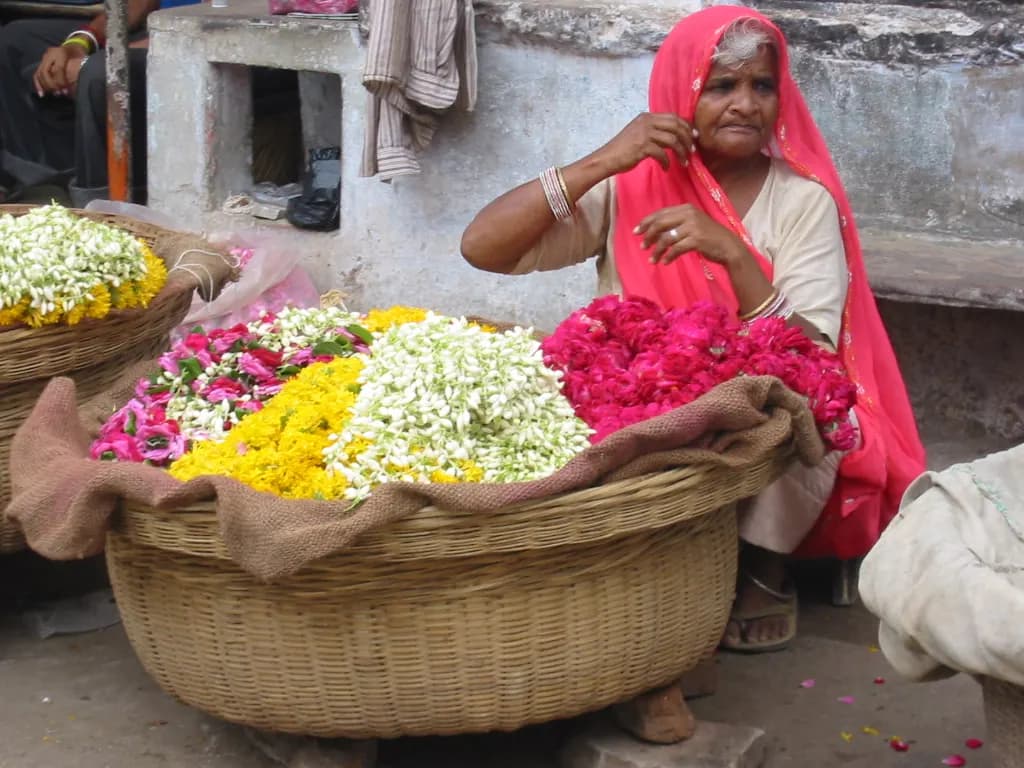
The Pradhan Mantri Mudra Yojana is where most women's business loans start. It covers non-farm income-generating activity — manufacturing, trading, services and allied agriculture such as dairy, poultry and beekeeping. Loans come in four tiers: Shishu up to ₹50,000, Kishore up to ₹5 lakh, Tarun up to ₹10 lakh, and Tarun Plus up to ₹20 lakh for borrowers who have fully repaid an earlier Tarun loan. Mudra's official FAQ lists "any individual including women" and proprietary concerns, partnerships and companies as eligible.
A Mudra loan needs no collateral and no third-party guarantor. The bank covers itself through the Credit Guarantee Fund for Micro Units, and the annual guarantee fee of 1% a year on the outstanding amount may be passed on to you. Check whether your sanction letter includes it, because it adds to the real cost.
Do women get a lower Mudra interest rate?
This is the most common question, and the honest answer is: not by scheme rule. Mudra's FAQ says interest rates are deregulated and that banks have been advised to charge reasonable rates within RBI's guidelines. We found no current official Mudra or Ministry of Finance document that fixes a lower rate for women. Blogs that promise "0.25% off for women under Mudra" are usually describing an individual bank's policy from years ago.
What you can do is ask. Several banks offer women-owned units a small concession on the spread or a processing fee waiver on their MSME loans. Ask the branch to write any concession into the sanction letter or the Key Facts Statement. If it is not written down, assume it does not exist.
How your interest rate is actually set
Bank loans to micro and small enterprises on a floating rate must be linked to an external benchmark — usually the RBI repo rate, which is 5.50% as of October 2026. The bank adds a spread based on your credit score, the loan size, collateral and its own costs. Your rate resets when the benchmark changes, at least once every three months. An NBFC or microfinance lender sets its own rate and is usually costlier than a bank. Compare offers by the annual percentage rate on the Key Facts Statement, not by the headline rate in an advertisement.
For a worked example, take a ₹5 lakh Kishore loan over five years. At an illustrative 10% a year the EMI is about ₹10,600 and total interest about ₹1.37 lakh; at 14% the EMI rises to about ₹11,630 and interest to about ₹1.98 lakh. That ₹60,000 gap is why it pays to start with a bank, keep your credit score clean and negotiate. These rates are only examples, not quotes — ask your bank for its current rate in writing.
Our Mudra loan guide covers each tier, the project note and the application in detail.
CGTMSE: the biggest real advantage for women
The Credit Guarantee Fund Trust for Micro and Small Enterprises does not lend. It guarantees loans that banks and NBFCs give to micro and small enterprises, so the lender can skip property and third-party guarantees. The cap is ₹10 crore per borrower, and retail and wholesale traders are covered.
Women get two concrete benefits written into the CGTMSE scheme document:
- Higher cover. Since CGTMSE Circular 241 of 10 December 2024, guarantees for women entrepreneurs cover 90% of the amount in default, against 75% for most other borrowers. When the guarantee covers more of the risk, a branch manager is more willing to sanction without asking for property.
- Lower fee. The annual guarantee fee is 10% lower than the standard rate for women entrepreneurs. The scheme document's own example: the standard rate for a ₹10 lakh guarantee is 0.37%, and a woman entrepreneur pays 0.33%.
Here is what that means in rupees. On a ₹40 lakh CGTMSE-covered term loan, the standard annual fee for that slab is 0.55%, or ₹22,000 in the first year. With the women's concession the rate drops to about 0.495%, or ₹19,800 — a saving of about ₹2,200 in year one, and more over the life of the loan. The fee in later years is charged on the outstanding amount, and a lender's risk premium or discount can shift the rate a little either way.
RBI's own rule already bars collateral on micro and small enterprise loans up to ₹20 lakh for loans sanctioned or renewed from 1 April 2026. CGTMSE matters most above that amount. If a bank asks you to mortgage your house for a ₹35 lakh machinery loan, ask why it cannot cover the loan under CGTMSE instead. Details are in our CGTMSE guide.
Women-specific benefits at a glance (2026)
90%
CGTMSE guarantee cover for women
vs 75% standard
10%
Lower CGTMSE guarantee fee
5%
Own contribution under PMEGP
vs 10% general
35%
PMEGP subsidy, rural women
25% urban
PMEGP: a loan plus a subsidy for new units
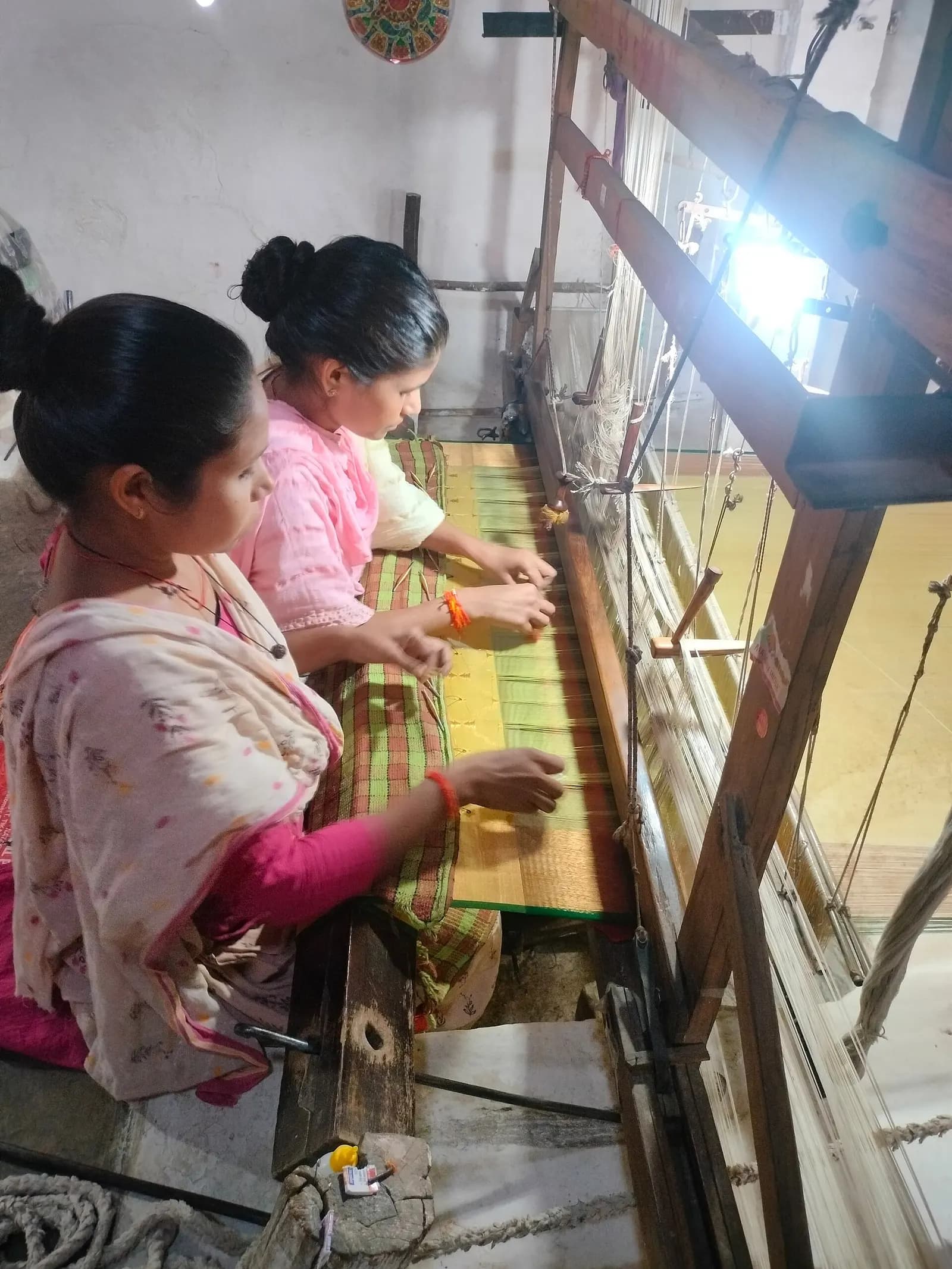
The Prime Minister's Employment Generation Programme helps you set up a new micro enterprise. Women are a "special category", which brings two benefits. You put in only 5% of the project cost instead of 10%, and the government's margin-money subsidy is 25% of project cost in urban areas and 35% in rural areas, against 15–25% for general applicants. The maximum project cost is ₹50 lakh for manufacturing and ₹20 lakh for service units.
Worked example: a woman in a village sets up a ₹10 lakh tailoring and garment unit. She contributes 5%, or ₹50,000. The bank lends ₹9.5 lakh. The 35% subsidy — ₹3.5 lakh — sits in a term deposit in her name for 3 years, after which it is adjusted against the loan if the unit is running. Effectively she repays about ₹6 lakh of principal on a ₹10 lakh unit. The same project in a city would get a 25% subsidy, or ₹2.5 lakh.
The catch is time. PMEGP applications go through the KVIC portal, a task-force interview at the District Industries Centre or KVIB, bank appraisal, and a short entrepreneurship training before the subsidy is released. Plan for weeks to months rather than days. The approved cycle ran to 2025-26, and the Union Budget 2026-27 still funds the scheme; check the portal for current guidelines. See our PMEGP loan guide.
Stand-Up India and the ₹2 crore scheme: where things stand
Stand-Up India asked every scheduled commercial bank branch to lend to at least one woman and one SC or ST borrower for a greenfield enterprise — their first venture — with loans of ₹10 lakh to ₹1 crore. A company, LLP or partnership qualified if at least 51% of the shareholding and control was with women or SC/ST entrepreneurs. By 28 February 2025, the Department of Financial Services reported 2.67 lakh accounts sanctioned, of which about 1.99 lakh were for women.
The Department of Financial Services' own scheme page says the scheme ran "upto 31.03.2025". In the Union Budget 2025-26, the Finance Minister announced a new scheme for 5 lakh first-time women, SC and ST entrepreneurs, with term loans of up to ₹2 crore over five years, plus online training in entrepreneurship and management. The DFS page says the note for the new scheme's appraisal was still under preparation, and in March 2026 the Finance Minister told the Lok Sabha a redesigned scheme would go to the Cabinet. As of October 2026, we found no notification launching it.
Stand-Up India and its successor
5 Apr 2016
Stand-Up India launched for women and SC/ST greenfield founders
1 Feb 2025
Budget announces ₹2 crore term-loan scheme for 5 lakh first-time founders
28 Feb 2025
2.67 lakh accounts sanctioned, about 1.99 lakh for women
31 Mar 2025
Stand-Up India's approved period ends
16 Mar 2026
FM tells Lok Sabha a redesigned scheme will go to Cabinet
October 2026
No notification of the new scheme found
In practice, some banks still show Stand-Up India products on their websites. If you qualify, ask your branch directly whether it is sanctioning new loans on Stand-Up India terms today, and get the answer in writing. If it is not, a CGTMSE-covered term loan gives you a similar collateral-free structure. Our Stand-Up India guide tracks the scheme's status.
Mahila Udyam Nidhi, Cent Kalyani and other names you'll see
Search for a women's business loan and you will meet a list of scheme names copied from site to site. Here is what we found when we checked them against official pages in October 2026:
- Mahila Udyam Nidhi. Originally a SIDBI soft-loan scheme for women, later run by a few banks. We found no current SIDBI page for it, and secondary sources say SIDBI no longer operates it. Some loan blogs say Punjab National Bank still offers a product of this name; ask PNB directly before you rely on it.
- Cent Kalyani. Still live: Central Bank of India's loan for women entrepreneurs, with its own scheme page and a listing on the bank's MSME rate page and Women Entrepreneur Cell (re-checked 9 October 2026). It lends up to ₹1 crore with CGTMSE cover instead of collateral — see our Cent Kalyani scheme guide for limits, margin and the published rate range.
- Dena Shakti. Dena Bank merged into Bank of Baroda in 2019, so this product name no longer applies.
- Annapurna. The old women's catering loan is not listed by banks today; the name now mostly refers to West Bengal's cash-transfer scheme. Our Annapurna scheme guide explains the three different "Annapurna" schemes.
- Udyogini. A real scheme, but only in Karnataka (see below).
The lesson: a scheme name on a blog is not proof that a bank will process it today. The schemes you can count on in every state are Mudra, PMEGP and CGTMSE-covered loans. And applying for them is free: an agent who charges a fee to "sanction" a government loan for women, or an app that wants a processing fee before approval, is a warning sign, not a shortcut.
State schemes for women: two examples
Several states run their own women's enterprise schemes, usually through a state women's development corporation or the District Industries Centre. These change with state budgets, so always check the current year's guidelines. Two examples verified in October 2026:
Karnataka — Udyogini. Run by the Karnataka State Women's Development Corporation, it gives women aged 18 to 55 years a bank loan of ₹1 lakh–₹3 lakh for a small business, with a state subsidy of 30% (up to ₹90,000) for general-category women and 50% for SC/ST women, subject to family income limits. It is Karnataka-only. Full details are in our Udyogini scheme guide.
Maharashtra — Punyashlok Ahilyadevi Holkar Mahila Startup Yojana. This is a grant, not a loan. The Maharashtra State Innovation Society gives women-led startups ₹1 lakh to ₹25 lakh. To qualify, the startup must be DPIIT-recognised and registered in Maharashtra, women must hold more than 51% of it, it must have run for over a year, and its turnover must be between ₹10 lakh and ₹1 crore. Applications open in calls on msins.in, so watch the portal for the next one.
If you live elsewhere, ask your District Industries Centre and your state women's development corporation which schemes are open this year. Many states also run a chief minister's self-employment scheme open to all, often with a higher subsidy for women — Maharashtra's CMEGP is one example.
Who counts as a "women entrepreneur"
Each scheme defines it slightly differently, and the definition decides whether you get the women's benefits:
- Proprietorship: the proprietor is a woman. This is the simplest case and the easiest to prove.
- Partnership, LLP or company: Stand-Up India required at least 51% of the shareholding and controlling stake with women; the Maharashtra startup grant uses the same 51% test. Banks generally apply a similar majority-ownership test for CGTMSE's women category, and your Udyam registration records the owner's gender.
- Name-lending doesn't work. If the business is run by a husband or father and registered in the woman's name only to get the benefit, banks treat it as a red flag at the interview stage. A bank will want to see that you understand the business, the costs and the customers.
Get your Udyam registration done before you apply — it's free and records the enterprise as women-owned where that applies. Our Udyam registration guide walks through it.
Documents you'll need
Most banks ask for the same core papers. Larger loans add financial statements and a project report.
Documents to keep ready
0/10If you are starting from scratch with no business bank account, open one first and run the business's money through it for a few months. Bank statements are the evidence most banks rely on when there are no tax returns yet.
How to apply, step by step
From plan to sanction
- 1
Work out how much you need
List machinery, stock, rent deposit and three months of running costs. Borrow for the gap, not a round number.
- 2
Get Udyam registration and check your credit score
Udyam registration portalRegister free on the Udyam portal. Pull your CIBIL report and fix errors before you apply.
- 3
Pick the scheme that fits
Mudra for small, quick, collateral-free loans; PMEGP for a new unit with a subsidy; a CGTMSE-covered loan for larger amounts.
- 4
Apply online or at a branch
JanSamarthUse JanSamarth for Mudra, PMEGP and other linked government schemes, the KVIC portal for PMEGP, or your bank's branch.
- 5
Ask for women's concessions in writing
Ask whether the loan will be CGTMSE-covered at the women's rate and whether the bank offers any women-owned fee or rate concession.
- 6
Compare the Key Facts Statements
Every lender must give you a KFS with the annual percentage rate, fees and repayment schedule. Compare those before you sign.
RBI's Master Direction says banks should decide on loan applications up to ₹25 lakh from micro and small enterprises within 14 working days of receiving a complete application. If your file stalls, ask for the status in writing and escalate to the bank's MSME grievance officer.
NBFCs, fintech apps and what to watch out for
Many women turn to app-based lenders because a bank branch felt intimidating or slow. Some of these lenders are regulated NBFCs and offer reasonable products, especially for businesses with GST and digital sales records. Others are expensive, aggressive or outright illegal.
Under RBI's Digital Lending Directions, 2025, every app must be tied to a bank or NBFC regulated by RBI, and lenders report their apps to RBI, which publishes a directory of digital lending apps deployed by regulated entities in the Citizen's Corner of its website. Since October 2024 every retail and MSME term loan — from a bank, NBFC or app — must come with a Key Facts Statement showing the all-in annual percentage rate.
Red flags before you borrow from any app or agent
0/5Use an app loan only for short, specific needs where speed is worth the cost, and repay it fast. For anything you will repay over years, start with a bank. If a bank turns you down, ask why — it may be a fixable issue such as a credit report error or a missing document.
Common reasons women's loan applications get rejected — and fixes
No credit history. Many women have never had a loan or credit card in their own name, so their credit score is blank rather than bad. Fix: start with a small Shishu loan or a secured credit card, repay on time for six to twelve months, and apply for the bigger loan after that.
Weak project report. "Boutique — ₹10 lakh" is not a plan. Fix: show the rent, machine costs, number of pieces you expect to sell a month, price per piece and the margin. A break-even calculation helps — our break-even guide shows how.
Guarantor or collateral demanded on a small loan. For micro and small enterprise loans up to ₹20 lakh, RBI says banks must not ask for collateral, and Mudra loans need none. Fix: politely point to the rule, and escalate to the branch head or the bank's grievance portal if needed.
Ownership doubts. If the business is clearly run by someone else, the bank may refuse the women's category or the loan itself. Fix: be the person who answers the questions at the interview, and keep the business bank account and registrations in your name.
Stand-Up India refused because the scheme lapsed. Fix: ask the bank to consider a CGTMSE-covered term loan for the same project instead.
After the loan is sanctioned
Use the money only for the purpose in the sanction letter, keep bills for every purchase, and route sales through the business account. Pay EMIs on time — your next loan, a Tarun Plus upgrade or a bigger CGTMSE limit depends on this record. Keep a copy of the CGTMSE or CGFMU guarantee details and check each year what fee is being debited from your account.
Official links
- MUDRA — official site and FAQsScheme tiers, eligibility, interest rate policy
- JanSamarthApply online for Mudra, PMEGP and other linked schemes
- KVIC PMEGP e-portalPMEGP application and status
- CGTMSEGuarantee scheme document, fees and member lenders
- Stand-Up India (DFS)Scheme status and successor scheme
- Udyam registrationFree MSME registration
- Maharashtra State Innovation SocietyWomen startup grant calls
- RBI SachetCheck whether an entity is regulated; report illegal lenders
What to do next
Decide on the amount first, then the scheme. Run your numbers through our EMI calculator and loan eligibility calculator, register on Udyam, and apply for a Mudra or CGTMSE-covered loan at a bank where you already hold an account. For a deeper comparison of interest rates and lenders, read our MSME loan guide, and for every central scheme side by side, see government loans for business.
This is general information, not legal or tax advice — confirm on the official source or with a professional.
Frequently asked questions
For most first-time women founders it is a Mudra loan from a bank, because it needs no collateral and goes up to ₹20 lakh. If you are setting up a new unit and want a subsidy, apply under PMEGP, where women get 25% (urban) or 35% (rural) of project cost as margin money. Bigger collateral-free loans run on a CGTMSE guarantee with 90% cover for women.
Not automatically. Mudra's official FAQ says interest rates are deregulated and banks set them within RBI rules, and no central scheme fixes a lower rate for women. Some banks run women-only MSME products with small concessions, so ask in writing. The one concession built into a central scheme is CGTMSE's guarantee fee, which is 10% lower for women entrepreneurs.
Yes, for small amounts. A Shishu or Kishore Mudra loan is assessed on a simple project note, KYC and expected cash flows, and Mudra's FAQ says income-tax returns are not insisted on for small loans. You still need a bank account, Aadhaar, PAN for larger amounts and a credible plan. Joining a self-help group or getting Udyam registration first also helps the bank assess you.
We could not find Mahila Udyam Nidhi on SIDBI's current product pages or on the MSME menus of the large public sector banks as of October 2026. Many loan websites still describe it, but treat it as a legacy name. Ask your bank for its current women-entrepreneur MSME product or apply under Mudra, PMEGP or a CGTMSE-covered loan instead.
Its approved period ended on 31 March 2025. The Department of Financial Services says a new scheme for first-time women, SC and ST entrepreneurs with term loans up to ₹2 crore is being prepared, but it had not been notified as of October 2026. Some banks still show Stand-Up India products, so ask your branch whether it is sanctioning new loans under those terms.
RBI tells banks not to take collateral on loans up to ₹20 lakh to micro and small enterprises sanctioned or renewed from 1 April 2026. Mudra loans up to ₹20 lakh are collateral-free. Above that, a CGTMSE guarantee can replace property up to ₹10 crore, with the highest cover, 90%, for women entrepreneurs.
Sources & verification
Figures on this page were checked against the sources below when it was last reviewed on 8 October 2026. Each rate and limit is stored once with its own official source and review date, and official update channels are monitored daily so changes are picked up. How we verify
- 1.MUDRA — Frequently Asked Questions — Micro Units Development & Refinance Agency (MUDRA) · accessed 8 October 2026
- 2.Government has taken several initiatives to facilitate ease of access to credit to women entrepreneurs (Lok Sabha reply, 24 March 2025) — PIB — Ministry of Finance · accessed 8 October 2026
- 3.Stand Up India Scheme (SUPI) — Department of Financial Services, Ministry of Finance · accessed 8 October 2026
- 4.CGTMSE — Scheme Document CGS-I (updated as on 1 April 2026) — Credit Guarantee Fund Trust for Micro and Small Enterprises · accessed 8 October 2026
- 5.RBI Master Direction — Lending to MSME Sector — Reserve Bank of India · accessed 8 October 2026
- 6.Key Facts Statement (KFS) for Loans & Advances — RBI/2024-25/18 (15 April 2024) — Reserve Bank of India · accessed 8 October 2026
- 7.RBI issues Reserve Bank of India (Digital Lending) Directions, 2025 — Reserve Bank of India · accessed 8 October 2026
- 8.Punyashlok Ahilya Devi Holkar Mahila Startup Yojana — District Administration Nashik, Government of Maharashtra · accessed 8 October 2026
- 9.Udyogini Scheme — Karnataka State Women's Development Corporation — Karnataka State Women's Development Corporation · accessed 8 October 2026
- 10.Pradhan Mantri Mudra Yojana loan limit raised to ₹20 lakh — PIB — Ministry of Finance · accessed 8 October 2026
- 11.Central Bank of India — Women Entrepreneur Cell and MSME product menu — Central Bank of India · accessed 9 October 2026
- 12.Mahila Udyam Nidhi Scheme (secondary, for status corroboration) — Paisabazaar · accessed 8 October 2026
MSMETOOLS is an independent platform and is not affiliated with any government agency, ministry or department.
Tools for this
EMI Calculator
Calculate loan EMIs for business and personal loans.
Loan Eligibility Calculator
Check your business loan eligibility based on income and existing loans.
Related guides
 Loan for a Small Business (2026): Schemes & How to ApplyRead guide
 MSME Loan 2026: How to Apply, Interest Rates & LimitsRead guide
 Stand-Up India Loan 2026: Eligibility, Limits & StatusRead guide
 Cent Kalyani Scheme 2026: Loan Limit, Rate & EligibilityRead guide
Official links open the government site in a new tab.