 Finance & accounting
What Is Break-Even Point? Formula, Contribution Margin and Worked Examples (2026)
What is break-even point? Formula in units and ₹, contribution margin, P/V ratio and margin of safety, with 2026 examples for a kirana, factory and cloud kitchen.
 Edited by Sumeet YadavFounder & editor, MSMETOOLS · fact-checked against official sources
Contents (10)
- 1. What break-even point means
- 2. The break-even formulas
- 3. Example 1: a kirana store (break-even in rupees)
- 4. Example 2: a small spice-packing unit (break-even in units)
- 5. Example 3: a cloud kitchen (break-even in orders)
- 6. Break-even for businesses that sell many products
- 7. Getting the inputs right
- 8. Break-even point vs payback period
- 9. Limitations to keep in mind
- 10. What to do next
Before you sign a shop lease, buy a machine or launch a menu, one question decides whether the plan can work: how much do you need to sell just to stop losing money? That number is your break-even point. This guide explains it in plain terms, gives the formula in units and in rupees, shows how contribution margin, P/V ratio and margin of safety fit in, and works through three Indian examples — a kirana store, a small spice-packing unit and a cloud kitchen — with a calculator you can use on your own numbers. It also covers the GST and loan-interest questions most explanations skip.
Quick answer
The break-even point is the level of sales at which total revenue equals total costs, so profit is zero. Break-even in units = fixed costs ÷ (selling price − variable cost per unit). Break-even in ₹ = fixed costs ÷ contribution margin ratio. Sell more than this and every extra unit adds its contribution to profit.
Contribution = selling price − variable cost; it pays fixed costs first, then profit
Contribution margin (P/V) ratio = contribution ÷ selling price
Margin of safety = actual sales − break-even sales
Use prices before GST if you can claim input tax credit
What break-even point means
Every business has two kinds of cost. Fixed costs stay the same whether you sell a lot or a little in a month: rent, salaried staff, loan interest, insurance, software subscriptions, depreciation on machines. Variable costs rise and fall with each sale: the goods you buy for resale, raw material, packaging, piece-rate wages, delivery charges, payment-gateway fees, platform commission.
When you sell one unit, its price first pays for that unit's variable cost. Whatever is left over is the contribution — the amount that unit contributes towards paying your fixed costs. Once enough contributions have piled up to cover every fixed cost for the month, you have reached the break-even point. From there on, each unit's contribution is profit.
So the break-even point answers a practical question: how many plates, kilos, units or rupees of sales do I need each month before I make a single rupee? It does not tell you whether the business is worth doing — you also need profit, cash flow and a return on what you invested — but if you can't realistically get past break-even, nothing else matters.
The break-even formulas
Here are the formulas you need. They all come from the same idea: total contribution must equal total fixed costs.
| What you want | Formula | What it tells you |
|---|---|---|
| Contribution per unit | Selling price − variable cost per unit | What each unit adds towards fixed costs |
| Contribution margin (P/V) ratio | Contribution ÷ selling price × 100 | Share of each ₹100 of sales left after variable costs |
| Break-even point in units | Fixed costs ÷ contribution per unit | Units to sell to cover all costs |
| Break-even point in ₹ | Fixed costs ÷ P/V ratio | Sales value needed to cover all costs |
| Units for a target profit | (Fixed costs + target profit) ÷ contribution per unit | Sales needed to earn a set profit |
| Margin of safety | Actual sales − break-even sales | How far sales can fall before a loss |
| Margin of safety % | Margin of safety ÷ actual sales × 100 | The cushion as a share of sales |
| Cash break-even | (Fixed costs − depreciation) ÷ contribution per unit | Sales needed to cover cash costs |
| Break-even as % of capacity | Break-even units ÷ capacity × 100 | How hard the plant must run to break even |
Use the unit formula when you sell one main product at one price — a manufacturer, a single-item food stall. Use the rupee formula when you sell hundreds of items at different margins, like a kirana or a pharmacy, where "units" make no sense but your average margin does.
A useful identity links the pieces: profit = margin of safety × P/V ratio. If your sales are ₹1 lakh above break-even and your P/V ratio is 20%, your profit is ₹20,000.
Example 1: a kirana store (break-even in rupees)
A neighbourhood grocery store sells thousands of items at different margins, so we work in rupees. All numbers below are illustrative estimates for a small urban store; your own margins and costs will differ.
Monthly fixed costs:
- Shop rent: ₹25,000
- One helper's salary: ₹15,000
- Electricity, including the fridge and freezer: ₹4,000
- Phone, internet, billing software and sundries: ₹3,000
- Interest on a ₹3 lakh working-capital loan and other bank charges: ₹3,000
- Total fixed costs: ₹50,000
Contribution margin. Suppose the store's average gross margin — selling price minus purchase price — is about 15% across its range (staples carry less, snacks and personal care more). Carry bags, expired stock and breakage cost another 1% of sales. That leaves a contribution margin ratio of about 14%.
Break-even sales = ₹50,000 ÷ 0.14 = ₹3,57,143 a month, or about ₹11,900 a day over 30 days.
If the store actually sells ₹4,50,000 a month, its margin of safety is ₹4,50,000 − ₹3,57,143 = ₹92,857, or about 21%. Profit is ₹92,857 × 14% ≈ ₹13,000 a month — before paying the owner anything for their own time. That last point is easy to miss: if the owner wants to draw ₹25,000 a month to run the household, treat it as a fixed cost and break-even jumps to ₹75,000 ÷ 0.14 ≈ ₹5.36 lakh a month.
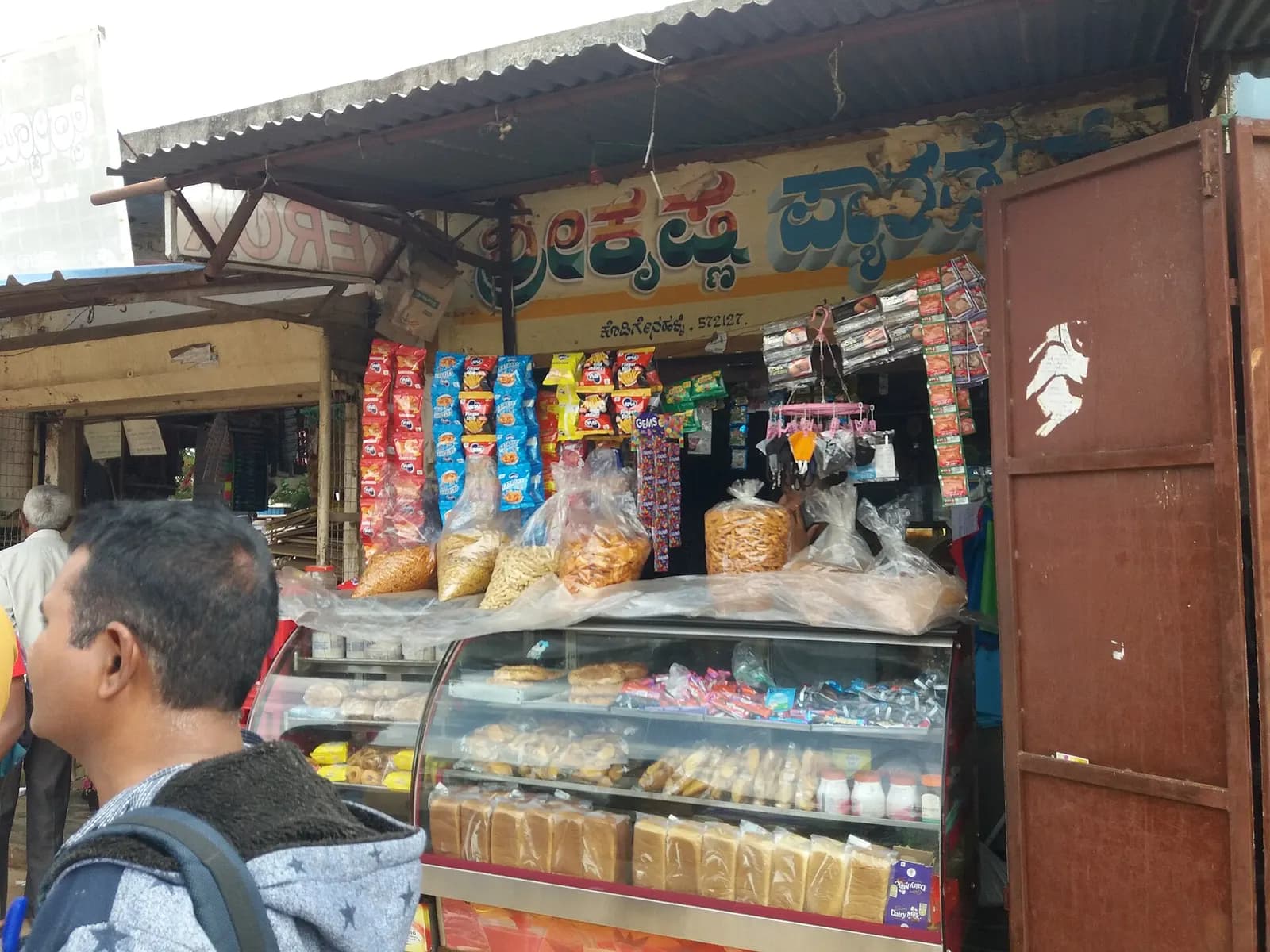
Two levers change a kirana's break-even dramatically. Raising the average margin from 14% to 16% — by stocking more high-margin items or buying directly from distributors — cuts break-even from ₹3.57 lakh to ₹3.13 lakh. Cutting rent by ₹5,000 cuts it by about ₹36,000 of monthly sales. That's why location and buying terms matter as much as footfall.
Example 2: a small spice-packing unit (break-even in units)
A manufacturer usually knows its cost per unit, so the unit formula works well. Take a micro unit that buys whole spices, grinds and packs them, and sells to distributors at ₹300 a kg (before GST).
Variable cost per kg:
- Raw spices: ₹190
- Pouches and cartons: ₹12
- Power for grinding: ₹5
- Piece-rate packing labour: ₹8
- Freight and distributor incentive: ₹15
- Total variable cost: ₹230 a kg
Contribution = ₹300 − ₹230 = ₹70 a kg. P/V ratio = 70 ÷ 300 = 23.3%.
Monthly fixed costs:
- Factory rent: ₹30,000
- Salaried staff (operator, helper, accounts): ₹45,000
- Depreciation on ₹12 lakh of machinery over 10 years: ₹10,000
- Interest on a ₹10 lakh term loan at an illustrative 10.5%: about ₹8,750
- Insurance, licences, telephone and admin: about ₹6,250
- Total fixed costs: ₹1,00,000
Break-even in units = ₹1,00,000 ÷ ₹70 = 1,429 kg a month. Break-even in rupees = 1,429 × ₹300, or ₹1,00,000 ÷ 23.3% = about ₹4.29 lakh a month.
If the unit's capacity is 3,000 kg a month, it breaks even at about 48% capacity. That is how bank appraisals and government model project reports often present it — the National Horticulture Board's model reports, for instance, show break-even as a percentage alongside a separate cash break-even figure. Bankers are more comfortable when a project breaks even well below full capacity, because new units rarely run flat out in their first year.
Cash break-even leaves out the ₹10,000 of depreciation, which isn't a cash payment: ₹90,000 ÷ ₹70 = 1,286 kg. Below that level the unit is not even covering its cash bills. Note that loan principal repayment isn't in either figure — it isn't an expense in the profit and loss account, but it does need cash. A lender will look at whether profit plus depreciation covers principal repayments, so plan for that too.
Target profit. To earn ₹50,000 a month, the unit needs (₹1,00,000 + ₹50,000) ÷ ₹70 = 2,143 kg.
Try it — spice-packing unit break-even
What a small price cut does
Small changes in price hit break-even hard because they come straight out of contribution. If a large distributor pushes the unit to cut its price by 5%, from ₹300 to ₹285, contribution falls from ₹70 to ₹55. Break-even rises from 1,429 kg to 1,819 kg — 27% more volume just to stand still. Conversely, a ₹10 a kg saving on raw material through better buying raises contribution to ₹80 and lowers break-even to 1,250 kg. Before agreeing to any discount, recalculate break-even at the new price.
Example 3: a cloud kitchen (break-even in orders)
A delivery-only kitchen sells "orders", each with an average value. This example uses the same figures as our cloud kitchen guide, where aggregator commission and GST are explained in detail. The commission rate is an estimate; it is negotiated per contract.
Variable cost per order on a ₹350 average order (menu price before the platform adds GST):
- Food cost at 32%: ₹112
- Packaging: ₹20
- Aggregator commission at an estimated 25%: ₹87.50
- GST at 18% on that commission, which a restaurant can't claim back: ₹15.75
- Other payment and platform charges (estimate): ₹10
- Total: about ₹245, leaving ₹105 contribution per order (a 30% P/V ratio)
Monthly fixed costs: rent ₹35,000; a cook and two helpers ₹55,000; LPG, power and water ₹20,000; in-app advertising ₹15,000; software and sundries ₹5,000 — ₹1,30,000.
Break-even = ₹1,30,000 ÷ ₹105 ≈ 1,238 orders a month, or about 41 a day. In sales terms that's about ₹4.33 lakh a month.
The GST here works differently from a shop. Restaurant services are taxed at 5% (no input tax credit), and for orders through Swiggy, Zomato or other e-commerce operators, the platform pays that GST under section 9(5) of the CGST Act, as CBIC's Circular 167/23/2021-GST explains. So the ₹350 menu price is your revenue, not price-plus-tax. But because the 5% rate comes without input tax credit, the 18% GST the platform charges on its commission is a real cost — which is why it sits in variable costs above.
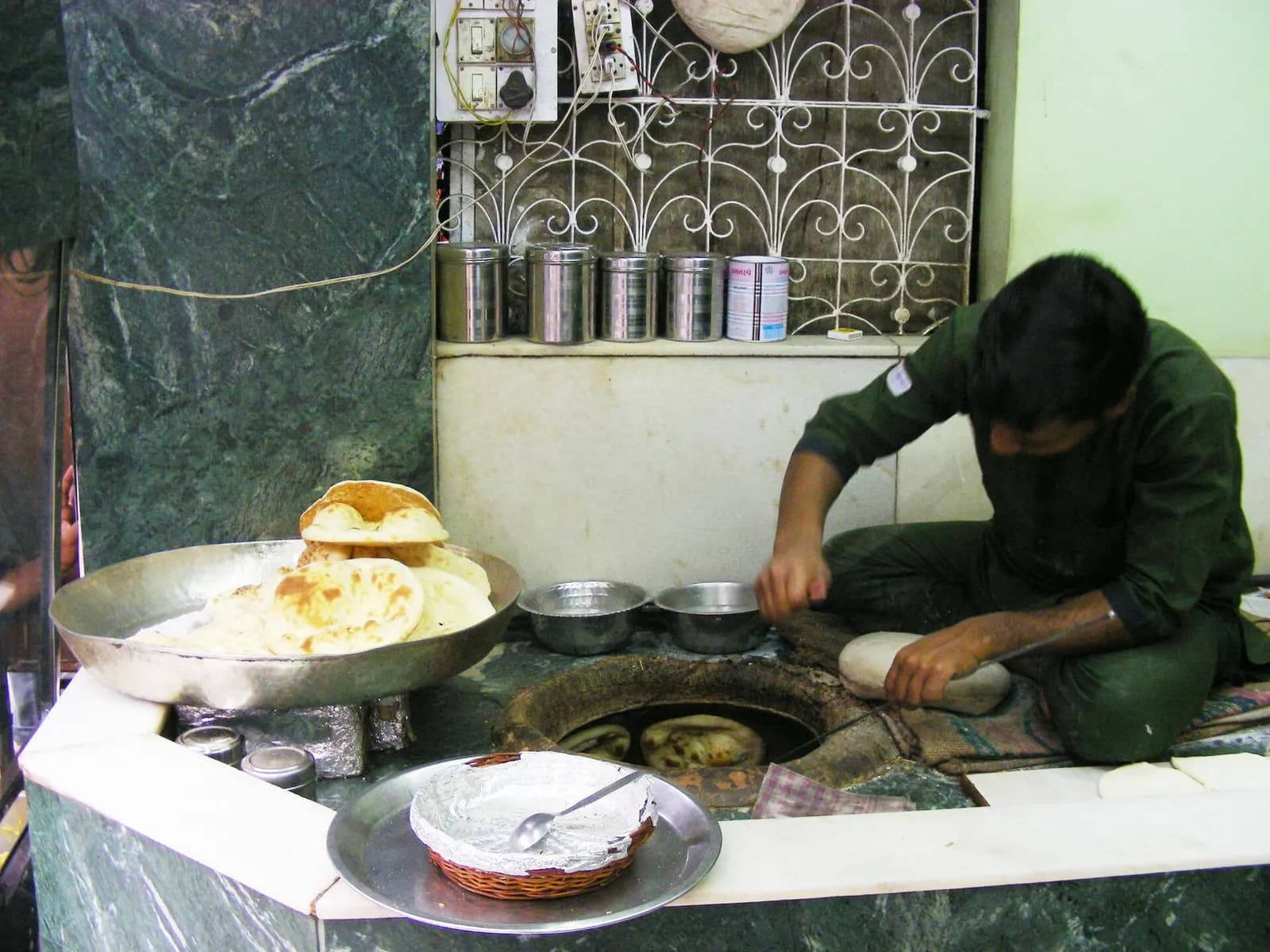
Sensitivity. If the platform's commission rises from 25% to 30%, commission and its GST together go from about ₹103 to about ₹124 per order. Contribution drops to about ₹84, and break-even jumps to about 1,546 orders a month — 52 a day instead of 41. That's the single biggest risk in the model, and why many kitchens push direct orders, where there is no commission (though you then collect and pay the GST yourself).
Break-even for businesses that sell many products
Most small businesses sell more than one thing. You have two practical options.
Use an average contribution margin. Work out total contribution across all products for a typical month (sales minus all variable costs) and divide by total sales. That gives a blended P/V ratio; break-even in rupees is fixed costs divided by that ratio. This is what we did for the kirana.
Use a weighted contribution per "basket". If a bakery sells bread, cakes and biscuits in a fairly steady mix — say 50%, 30% and 20% of units — calculate the weighted average contribution per unit using those shares, then divide fixed costs by it. If the mix shifts towards lower-margin bread, break-even rises even if total units stay the same.
The weakness of both methods is the assumption that your mix stays constant. Recalculate when you add a product line or when seasons change what customers buy.
Fixed or variable? Common costs by business type
| Business | Typical fixed costs | Typical variable costs |
|---|---|---|
Kirana / retail | Rent, helper salary, electricity base, billing software | Purchase cost of goods, carry bags, expiry and breakage |
Small manufacturer | Factory rent, salaried staff, loan interest, depreciation | Raw material, packaging, power per unit, piece-rate wages, freight |
Cloud kitchen | Kitchen rent, cooks' salaries, fixed ad budget, software | Food cost, packaging, aggregator commission and its GST, payment fees |
Service business (salon, clinic) | Rent, salaried staff, equipment EMIs | Consumables per client, commission to stylists, card fees |
Kirana / retail
- Typical fixed costs
Rent, helper salary, electricity base, billing software
- Typical variable costs
Purchase cost of goods, carry bags, expiry and breakage
Small manufacturer
- Typical fixed costs
Factory rent, salaried staff, loan interest, depreciation
- Typical variable costs
Raw material, packaging, power per unit, piece-rate wages, freight
Cloud kitchen
- Typical fixed costs
Kitchen rent, cooks' salaries, fixed ad budget, software
- Typical variable costs
Food cost, packaging, aggregator commission and its GST, payment fees
Service business (salon, clinic)
- Typical fixed costs
Rent, salaried staff, equipment EMIs
- Typical variable costs
Consumables per client, commission to stylists, card fees
Getting the inputs right
Break-even is only as good as your split between fixed and variable costs. Common judgement calls:
- GST. If you're registered under the regular scheme and can claim input tax credit, leave GST out of both price and cost — it passes through you. If you're under the composition scheme or in a sector without input tax credit, the tax you pay on purchases is a cost, and the tax on your sales is a deduction from what you keep.
- Loan interest is fixed; principal is not an expense. Take the monthly interest from your loan's repayment schedule in the Key Facts Statement. Floating-rate MSME loans move with the RBI repo rate (5.50% as of October 2026), so recheck break-even when your rate resets.
- Your own salary. Many owners leave it out and call the result "profit". Put in a realistic monthly drawing as a fixed cost to see if the business can actually support you.
- Semi-variable costs. Electricity has a fixed demand charge and a usage charge; a phone plan has a base fee and extras. Split them as best you can, or use the average and accept some error.
- Staff. Salaried staff are fixed; piece-rate workers, delivery partners paid per drop and sales commission are variable. Overtime is variable.
- Marketing. A fixed monthly ad budget is fixed; per-order discounts and cashback are variable and reduce your effective price.
Break-even point vs payback period
People often mix up break-even with payback. Break-even is about a month (or a year) of operations: the sales level at which that period's revenue covers that period's costs. Payback is about your investment: how many months of profit it takes to earn back the money you put in to start or expand.
In the cloud kitchen example, the kitchen breaks even at about 41 orders a day. At 60 orders a day it earns roughly ₹59,000 a month before the owner's salary, so a ₹9 lakh setup takes about 15 months to pay back. A business can be comfortably above break-even and still have a long payback if the setup was expensive, which is why lenders look at both. A project that breaks even at 45% of capacity but needs eight years to repay its investment is weaker than one that breaks even at 60% and pays back in three.
Limitations to keep in mind
Simple break-even analysis assumes a straight line: one price, a constant variable cost per unit, fixed costs that don't change, and no change in stock levels. Real businesses bend those assumptions. Prices fall when you offer volume discounts. Variable costs fall when you buy in bulk. Fixed costs step up when you hire another person or rent a second room. And break-even ignores timing — you can be above break-even on paper while running out of cash because customers pay in 60 days. Pair it with a cash-flow forecast; our working capital guide and cash flow statement guide explain how.
Despite these limits, it is the fastest sanity check on any plan. Banks look for it in project reports for PMEGP and MSME loans, and it shows you which lever — price, cost or volume — moves your profit the most.
Work out your own break-even in 5 steps
- 1
List every monthly fixed cost
Rent, salaries, loan interest, insurance, subscriptions, depreciation and your own drawing.
- 2
Work out variable cost per unit or per ₹100 of sales
Purchase or material cost, packaging, piece-rate labour, freight, commission, payment fees — excluding GST you can claim back.
- 3
Calculate contribution and the P/V ratio
Price minus variable cost; then divide by price.
- 4
Divide fixed costs by contribution
Open the break-even calculatorPer unit for a single product, by the P/V ratio for many products.
- 5
Test the what-ifs
Recalculate for a 5% price cut, a rent increase and a commission change to see how fragile the plan is.
What to do next
Run your own numbers in our break-even calculator, then check pricing with the profit margin calculator. If you're preparing a project report for a loan, include break-even in units, in rupees, as a percentage of capacity and as cash break-even — our MSME loan guide and PMEGP guide explain what banks look for.
This is general information, not legal or tax advice — confirm on the official source or with a professional.
Frequently asked questions
It is the level of sales at which your business makes neither profit nor loss. Every rupee of sales first covers the variable cost of what you sold; what is left (the contribution) goes towards fixed costs such as rent and salaries. When total contribution equals total fixed costs, you have broken even. Every sale after that adds to profit.
In units: fixed costs ÷ (selling price per unit − variable cost per unit). In rupees: fixed costs ÷ contribution margin ratio, where the ratio is contribution ÷ selling price. For example, with ₹1,00,000 fixed costs, a ₹300 price and ₹230 variable cost, break-even is 1,00,000 ÷ 70 ≈ 1,429 units, or about ₹4.29 lakh of sales.
Margin of safety is how far your actual or expected sales are above break-even sales — the cushion before you start losing money. It is usually shown in rupees (actual sales − break-even sales) or as a percentage of actual sales. A shop selling ₹4.5 lakh a month with break-even at ₹3.57 lakh has a margin of safety of about ₹93,000, or roughly 21%.
No, if you are GST-registered under the regular scheme. The GST you collect belongs to the government, so use the selling price before GST. Input GST you can claim back is not a cost either. If you cannot claim input tax credit — for example as a restaurant paying 5% (no input tax credit) or a composition dealer — the tax you pay on purchases is part of your cost.
The profit-volume (P/V) ratio is the same as the contribution margin ratio: contribution divided by sales, shown as a percentage. A 23% P/V ratio means every ₹100 of sales leaves ₹23 to cover fixed costs and profit. Break-even sales in rupees equal fixed costs divided by the P/V ratio.
Cash break-even leaves out non-cash fixed costs, mainly depreciation, so it shows the sales needed to cover cash outgoings. It is lower than the accounting break-even point. Banks and project reports often show both, and sometimes express break-even as a percentage of the plant's capacity.
Sources & verification
Figures on this page were checked against the sources below when it was last reviewed on 8 October 2026. Each rate and limit is stored once with its own official source and review date, and official update channels are monitored daily so changes are picked up. How we verify
- 1.National Horticulture Board — Model project report, Annexure XII: Break-even analysis — National Horticulture Board, Ministry of Agriculture & Farmers Welfare · accessed 8 October 2026
- 2.Circular No. 167/23/2021-GST — restaurant services through e-commerce operators — CBIC · accessed 8 October 2026
- 3.GST Council — 56th meeting press release (September 2025) — GST Council / PIB · accessed 8 October 2026
- 4.Reserve Bank of India — current policy repo rate — Reserve Bank of India · accessed 8 October 2026
- 5.Break-Even Analysis — Managerial Economics course notes — Vivekananda College, Kolkata (Department of Economics) · accessed 8 October 2026
- 6.How much Swiggy and Zomato cost Indian restaurants (secondary, estimate basis) — Dinehere · accessed 8 October 2026
- 7.Key Facts Statement (KFS) for Loans & Advances — RBI/2024-25/18 — Reserve Bank of India · accessed 8 October 2026
MSMETOOLS is an independent platform and is not affiliated with any government agency, ministry or department.
Tools for this
Break Even Calculator
Find your break even point and units.
Profit Margin Calculator
Calculate profit, markup and margin for your products or services.
Related guides
 What Is Working Capital? Formula, Cycle & Bank Limits 2026Read guide
 What Is a Cash Flow Statement? AS 3, Ind AS 7 & Example 2026Read guide
 What Is Variable Cost? Formula & Examples in ₹ (2026)Read guide
 What Is Statutory Audit? Rules, CARO & Tax Audit (2026)Read guide
Official links open the government site in a new tab.