 Government schemes & funding
Cent Kalyani Scheme (2026): Central Bank of India's Loan for Women Entrepreneurs
Cent Kalyani in 2026: Central Bank of India's loan for women entrepreneurs — up to ₹1 crore, 20% margin, CGTMSE cover, the published rate range and how to apply.
 Edited by Sumeet YadavFounder & editor, MSMETOOLS · fact-checked against official sources
Contents (11)
- 1. What Cent Kalyani is
- 2. Key features in 2026
- 3. Interest rate: what the bank publishes
- 4. Who is eligible
- 5. Documents to keep ready
- 6. A worked example: ₹30 lakh for a food-processing unit
- 7. How to apply
- 8. Cent Kalyani compared with other options for women
- 9. Common mistakes and how to avoid them
- 10. After sanction
- 11. What to do next
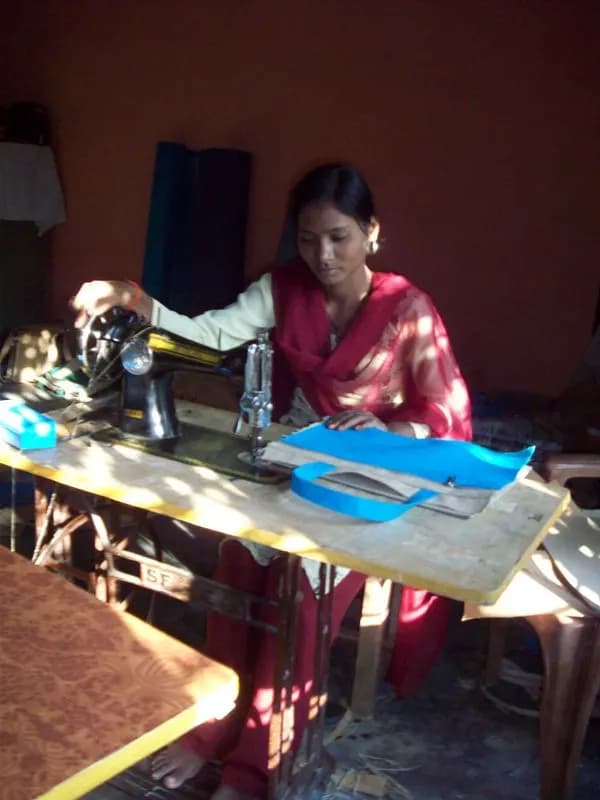
Cent Kalyani is the loan Central Bank of India runs specifically for women entrepreneurs, and it is one of the few bank-branded women's schemes that is still live in 2026. It is also one of the most misdescribed: much of what you find online quotes terms from the bank's old base-rate era. This guide is for women who own or run a micro or small business — or plan to start one — and want to know what Cent Kalyani offers today, what it costs, who qualifies and how to apply. Every figure was read on Central Bank's own website on 9 October 2026.
Quick answer
Cent Kalyani gives women entrepreneurs working capital, term loans or guarantees of up to ₹1 crore, with a 20% margin, term loans of up to 84 months including a 6-month moratorium, and no collateral or third-party guarantee because the loans are covered under CGTMSE. Central Bank's MSME rate page lists it at 8.25% to 9.20% a year.
Rates are linked to the bank's repo-based lending rate, raised to 8.50% from 9 October 2026
Term loans carry an extra tenor premium; the range applies to borrowers rated up to CBI-6
CGTMSE covers 90% of loans to women-owned micro and small units
Apply at a branch with the bank's common MSME application; Women Entrepreneur Cell nodal officers can help
What Cent Kalyani is
Central Bank of India describes Cent Kalyani as a scheme to meet the business needs of women entrepreneurs and generate continuous, sustainable employment. In practice it is a flexible MSME credit line reserved for women: the same branch can sanction a working-capital limit such as a cash credit or overdraft, a term loan for machinery or premises, or non-fund facilities such as a bank guarantee or letter of credit — or a mix of all three — under one scheme.
The bank lists it as its "special scheme for women entrepreneurs" on the page of its Women Entrepreneur Cell, which it set up at its corporate office in Mumbai on International Women's Day, 8 March 2013. The cell now works through 93 nodal officers across zonal and regional offices, and the bank publishes their names and contact details by state. If a branch is unfamiliar with the scheme, the zonal nodal officer is the person to call.
Cent Kalyani appears in Central Bank's current MSME scheme menu and on its MSME interest-rate page, alongside newer products such as Cent EV Connect, Cent Solar and Cent Toys. Some comparison sites — and even some lender blogs — say it has been withdrawn. As of October 2026, the bank's own website says otherwise.
Key features in 2026
The current scheme page is short. It sets out the facility types, the ceiling, the margin, the tenor and the security, and leaves the rest to the bank's general MSME policy and your sanction letter.
Cent Kalyani at a glance (2026)
₹1 crore
Maximum loan
20%
Margin you contribute
84 months
Maximum term loan
incl. 6-month moratorium
8.25% to 9.20% a year
Published rate range
ratings up to CBI-6
Nil
Collateral
CGTMSE cover
Facilities. Working capital, term loan and non-fund-based limits. A boutique might take a cash-credit limit against stock; a food unit might take a term loan for machinery plus a working-capital limit; a contractor might need a performance guarantee.
Amount. Up to ₹1 crore. There is no published minimum, so smaller loans are possible, though below ₹10 lakh many women will find a Mudra loan simpler.
Margin. 20%. The bank finances 80% of the assessed requirement and you bring the rest — in cash, in assets already in the business or, for working capital, in the stock and receivables you already hold.
Tenor. Term loans can run up to 84 months including a moratorium of up to six months. Working-capital limits are typically reviewed and renewed every year.
Security. The scheme page is explicit: no collateral or third-party guarantee, because the advances are covered under CGTMSE. The assets you buy or build with the loan — machinery, stock, book debts — are hypothecated to the bank as primary security.
Interest rate: what the bank publishes
Central Bank prices MSME loans off its Repo Based Lending Rate (RBLR), which it builds as the RBI repo rate plus a fixed spread of 3.00% plus a credit risk premium for your rating. On its MSME rate page, the bank lists Cent Kalyani at 8.25% to 9.20% a year for borrowers with an internal rating of up to CBI-6, and notes that an additional tenor premium applies to term loans. The same page lists the bank's general MSME lending at 8.25% to 9.20% a year, so Cent Kalyani is priced like the bank's standard MSME book rather than at a special discount.
There is a timing issue you should know about. The rate page still states that the RBLR is 8.25%, with repo at 5.25%. The RBI raised repo by 25 basis points to 5.50% on 7 October 2026, and Central Bank's RBLR page shows the benchmark revised to 8.50% from 9 October 2026. Because Cent Kalyani is RBLR-linked, the scheme range is likely to move up by the same amount once the rate page is updated. Ask the branch for the current figure and for a Key Facts Statement showing the annual percentage rate before you sign.
You will also see very different numbers on other websites — commonly "base rate of 9.70% plus 0.25% up to ₹10 lakh and 0.50% above". Those describe the scheme as it was priced before banks moved MSME loans to external benchmarks in October 2019. They are out of date and should be ignored.

Who is eligible
The bank's current page addresses the scheme to women entrepreneurs, both for new ventures and for existing businesses, and the CGTMSE backing means the enterprise must be a micro or small enterprise under the MSMED Act classification. In practice, the branch will check four things.
Ownership and control. The business should be owned and run by a woman — a proprietorship in her name, or a firm or company in which women hold the controlling stake. The scheme page doesn't print a percentage, so ask the branch how it defines a women-owned unit for your constitution before you restructure anything.
Udyam registration. CGTMSE cover is available only to registered micro and small enterprises, and Central Bank's MSME schemes are built around the Udyam Registration Certificate. Register first if you haven't; it's free and takes minutes on the government portal. Our Udyam registration guide walks through it.
Activity. Manufacturing and services are the core. Some older third-party summaries say retail trade, educational and training institutes and self-help groups are excluded; the bank's current page doesn't repeat that list. If your business is a shop or a coaching centre, ask the branch directly rather than relying on old exclusions either way.
Creditworthiness. The published rate range applies to borrowers rated up to CBI-6 on the bank's internal scale. The rating draws on your credit report, the viability of your project or the track record of your existing business, and how you have handled other loans. A clean credit report matters more than collateral here, because there isn't any.
Documents to keep ready
Central Bank publishes a common loan application form for MSME loans up to ₹2 crore, with a checklist, on its loan-application page. Expect the branch to ask for most of the following.
Documents for a Cent Kalyani application
0/8The project report is where most applications are won or lost. It should show how much stock or machinery you need, how quickly sales will pay back the loan, and how you arrived at those numbers. A realistic monthly cash-flow forecast does more than a glossy document.
A worked example: ₹30 lakh for a food-processing unit
Take an illustrative woman entrepreneur in Indore setting up a spice-grinding and packaging unit. She needs ₹25 lakh of machinery and about ₹12.5 lakh of working capital for raw spices, packaging and receivables.
- Term loan: ₹25 lakh machinery × 80% = ₹20 lakh from the bank; she brings ₹5 lakh
- Working capital: ₹12.5 lakh requirement × 80% = ₹10 lakh cash-credit limit; she funds ₹2.5 lakh
- Total Cent Kalyani exposure: ₹30 lakh, well inside the ₹1 crore ceiling, with no collateral
Now the cost, using the top of the published range, 9.20%, and ignoring the unpublished tenor premium. If she takes the full six-month moratorium and services interest during it, she pays about ₹92,000 in interest on the term loan in those six months. The term loan is then repaid over the remaining 78 months at an EMI of about ₹34,163, with total interest after the moratorium of about ₹6.65 lakh. At the bottom of the range, 8.25%, the EMI would be about ₹33,214. If the scheme range rises by the 0.25-point RBLR increase, the top-end EMI becomes about ₹34,415.
The cash-credit limit costs interest only on what she draws. If she uses the whole ₹10 lakh all year at 9.20%, that is about ₹92,000 a year; if she draws ₹6 lakh on average, about ₹55,200. On top of interest, she should budget for the CGTMSE annual guarantee fee, which runs from 0.37% a year to 1.20% a year of the guaranteed amount depending on loan size, less a 10% discount for women entrepreneurs, and for documentation and processing charges, which for schematic MSME loans are fixed by the scheme and shown in the sanction letter.
Try it — Cent Kalyani term loan EMI
How to apply
Cent Kalyani is a branch-sanctioned scheme. There's no dedicated online journey for it, but you can start digitally and finish at the branch.
Applying for Cent Kalyani
- 1
Register on Udyam and prepare your numbers
Udyam registration guideGet your Udyam certificate, put together 12 months of bank statements (or a project report for a new unit) and machinery quotations.
- 2
Download the common MSME application
Central Bank — MSME loan applicationsCentral Bank's loan-application page has a common form for MSME loans up to ₹2 crore, with a checklist.
- 3
Meet the branch and name the scheme
Women Entrepreneur CellAsk specifically for Cent Kalyani. If the branch is unsure, contact the Women Entrepreneur Cell nodal officer for your zone.
- 4
Or start online
PSB Loans in 59 Minutes guideYou can lodge an MSME loan request through Jan Samarth or PSB Loans in 59 Minutes and choose Central Bank; the branch then processes it.
- 5
Check the sanction letter
Confirm the rate (RBLR + premium), tenor premium, moratorium, margin, CGTMSE fee, processing and documentation charges, and the reset terms.
Under the RBI's code for lending to micro and small enterprises, banks are expected to acknowledge loan applications and decide them within set timelines; ask for a written acknowledgement with the date you submitted a complete file. If an application is rejected, you are entitled to know why.
Cent Kalyani compared with other options for women
Cent Kalyani isn't the only route, and depending on your loan size and whether your business is new, another product may fit better.
Women entrepreneurs — Cent Kalyani and the main alternatives
| Cent Kalyani | Cent Stand Up India | Canara Mahila Vikas | Mudra | |
|---|---|---|---|---|
Who | Women entrepreneurs, new or existing | SC/ST or women, first greenfield unit | Women-owned MSMEs, 2-year track record | Any micro unit, men or women |
Amount | Up to ₹1 crore | ₹10 lakh–₹1 crore | Above ₹10 lakh | Up to ₹20 lakh |
Margin | 20% | 10% to 15% | 20% | Bank's discretion |
Collateral | None — CGTMSE | Collateral or CGTMSE | Collateral by risk rating | None — guarantee fund |
Moratorium | Up to 6 months | Up to 18 months | Within 84-month tenor | As sanctioned |
Who
- Cent Kalyani
Women entrepreneurs, new or existing
- Cent Stand Up India
SC/ST or women, first greenfield unit
- Canara Mahila Vikas
Women-owned MSMEs, 2-year track record
- Mudra
Any micro unit, men or women
Amount
- Cent Kalyani
Up to ₹1 crore
- Cent Stand Up India
₹10 lakh–₹1 crore
- Canara Mahila Vikas
Above ₹10 lakh
- Mudra
Up to ₹20 lakh
Margin
- Cent Kalyani
20%
- Cent Stand Up India
10% to 15%
- Canara Mahila Vikas
20%
- Mudra
Bank's discretion
Collateral
- Cent Kalyani
None — CGTMSE
- Cent Stand Up India
Collateral or CGTMSE
- Canara Mahila Vikas
Collateral by risk rating
- Mudra
None — guarantee fund
Moratorium
- Cent Kalyani
Up to 6 months
- Cent Stand Up India
Up to 18 months
- Canara Mahila Vikas
Within 84-month tenor
- Mudra
As sanctioned
Cent Stand Up India suits a woman starting her first enterprise who needs a longer moratorium — 18 months against Cent Kalyani's six — and a lower margin. But Stand-Up India's approved period ended on 31 March 2025 and a revamped scheme was still awaited in October 2026, so check whether the branch is sanctioning under it. Our Stand-Up India guide tracks the status.
Mudra is simpler for small amounts, and a Shishu or Kishore loan usually carries no processing fee at public sector banks. See our Mudra loan guide. For loans above ₹10 lakh without property, Cent Kalyani's explicit "no collateral" promise is its main advantage over women's schemes at other banks, such as Canara Mahila Vikas, which asks for collateral according to your risk rating. Our Canara Bank MSME loan guide and our broader business loan for women guide compare concessions across banks, including state schemes such as Karnataka's Udyogini.
Common mistakes and how to avoid them
Relying on old terms. If an agent or website quotes a base rate, a rate below the current RBLR or a "subsidy" under Cent Kalyani, it is out of date or wrong. Cent Kalyani is a bank loan, not a grant; there is no capital subsidy attached to it. Subsidies come from schemes such as PMEGP or state programmes, which can sometimes be combined with a bank loan.
Putting the business in a male relative's name. Banks check ownership. If the GST registration, Udyam certificate or shop licence is in a husband's or father's name, the unit may not qualify as women-owned. Align the registrations before applying.
Underestimating working capital. Many first-time borrowers ask only for machinery. The unit then runs short of cash for raw materials within months. Size your working-capital need with a working capital calculator and ask for both facilities together.
Ignoring rate resets. The loan is floating and RBLR-linked. The October 2026 repo increase will raise your EMI at the next reset, and future changes will too. Model your repayment at least half a percentage point higher than the sanctioned rate.
Paying intermediaries. You don't need an agent to apply. The bank's forms are free on its website and branches are expected to help. Anyone demanding money to "guarantee" a Cent Kalyani sanction is a red flag.
After sanction
Once the loan is running, keep the account clean. Submit stock statements on time for the cash-credit limit, route sales through the account, and file GST and income-tax returns on schedule — the bank reviews all of this at the annual renewal, and a good year can earn a better rating and a lower premium. Keep the CGTMSE guarantee alive by paying the annual fee when the bank debits it; a lapsed guarantee can lead the bank to ask for other security.
If you run into a dispute with the branch — on rates, charges or delays — escalate through the bank's grievance channel and the Women Entrepreneur Cell first. If the complaint isn't resolved within 30 days, you can approach the RBI Ombudsman through cms.rbi.org.in.
Official links
- Central Bank — Cent KalyaniScheme features
- Central Bank — MSME interest ratesPublished rate range by scheme
- Central Bank — Base Rate / RBLRCurrent benchmark
- Central Bank — Women Entrepreneur CellNodal officers by zone
- Central Bank — MSME loan applicationsCommon application up to ₹2 crore
- Central Bank — Cent Stand Up IndiaFor first-time SC/ST and women entrepreneurs
- Udyam Registration portalFree MSME registration
- RBI Complaint Management SystemOmbudsman complaints
What to do next
Get your Udyam registration and ownership papers in order, work out how much machinery and working capital you really need, and book a meeting at your nearest Central Bank branch asking for Cent Kalyani by name. Run your numbers through our EMI calculator and loan eligibility calculator first, and compare the sanction with at least one other bank's offer before you sign.
This is general information, not legal or tax advice — confirm on the official source or with a professional.
Frequently asked questions
Cent Kalyani is Central Bank of India's loan scheme for women entrepreneurs. It funds working capital, term loans and non-fund facilities such as guarantees, up to ₹1 crore, with a 20% margin and term loans of up to 84 months including a 6-month moratorium. The bank takes no collateral or third-party guarantee because the loans are covered under CGTMSE.
Central Bank's MSME rate page lists Cent Kalyani at 8.25% to 9.20% a year for borrowers rated up to CBI-6, with an extra tenor premium on term loans. That range was set when the bank's repo-based lending rate was 8.25%. The bank raised its RBLR to 8.50% from 9 October 2026, so confirm the revised rate with the branch.
No. The bank's scheme page says no collateral or third-party guarantee is required because the advances are covered under CGTMSE. You still offer the assets bought with the loan — machinery, stock and receivables — as primary security, and the CGTMSE annual guarantee fee usually falls on the borrower. Women-owned units get 90% cover and a fee discount.
The maximum is ₹1 crore. The bank lends after keeping a 20% margin, so you fund one-fifth of the project or working-capital requirement yourself. For a ₹25 lakh machine, for example, the loan would be ₹20 lakh and your contribution ₹5 lakh. The actual amount depends on the bank's assessment of your cash flows.
Apply at a Central Bank of India branch using the bank's common MSME loan application, available on its website for loans up to ₹2 crore, with KYC, Udyam registration, a project report or financials and quotations. Each zone has a Women Entrepreneur Cell nodal officer who can help. You can also start on Jan Samarth or PSB Loans in 59 Minutes.
No. Cent Kalyani is Central Bank's own scheme for women entrepreneurs, new or existing, with a 20% margin and CGTMSE cover. Stand-Up India is a central government scheme for a first, greenfield enterprise by an SC/ST or woman entrepreneur, from ₹10 lakh to ₹1 crore. Central Bank runs it as Cent Stand Up India with a 10% to 15% margin.
Sources & verification
Figures on this page were checked against the sources below when it was last reviewed on 9 October 2026. Each rate and limit is stored once with its own official source and review date, and official update channels are monitored daily so changes are picked up. How we verify
- 1.Central Bank of India — Cent Kalyani — Central Bank of India · accessed 9 October 2026
- 2.Central Bank of India — Rate of interest for MSME loans — Central Bank of India · accessed 9 October 2026
- 3.Central Bank of India — Base Rate / RBLR — Central Bank of India · accessed 9 October 2026
- 4.Central Bank of India — Women Entrepreneur Cell — Central Bank of India · accessed 9 October 2026
- 5.Central Bank of India — Cent Stand Up India — Central Bank of India · accessed 9 October 2026
- 6.Central Bank of India — Loan application of MSME products — Central Bank of India · accessed 9 October 2026
- 7.Central Bank of India — Online MSME loan application — Central Bank of India · accessed 9 October 2026
- 8.Central Bank of India — Service Charges Circular No. 4814 dated 10.06.2026 — Central Bank of India · accessed 9 October 2026
- 9.Central Bank of India — Cent Business Loan — Central Bank of India · accessed 9 October 2026
- 10.CGTMSE Scheme Document CGS-I (updated 1 April 2026) — CGTMSE · accessed 9 October 2026
- 11.Canara Bank — Canara Mahila Vikas — Canara Bank · accessed 9 October 2026
- 12.BankBazaar — Central Bank of India Cent Kalyani — BankBazaar · accessed 9 October 2026
- 13.Reserve Bank of India — current policy repo rate — Reserve Bank of India · accessed 9 October 2026
MSMETOOLS is an independent platform and is not affiliated with any government agency, ministry or department.
Tools for this
EMI Calculator
Calculate loan EMIs for business and personal loans.
Loan Eligibility Calculator
Check your business loan eligibility based on income and existing loans.
Working Capital Calculator
Check working capital, current and quick ratios.
Related guides
 Stand-Up India Loan 2026: Eligibility, Limits & StatusRead guide
 Loan for Women's Business in India (2026): Schemes & TipsRead guide
 CGTMSE Scheme 2026: ₹10 Crore Cover, Fees & How to ApplyRead guide
 Udyogini Scheme 2026: Eligibility, Subsidy & How to ApplyRead guide
Official links open the government site in a new tab.