 Starting & growing a business
Hardware Shop Business Plan (2026): Investment, Licences, GST Rates and a Worked P&L
Hardware shop business plan for India in 2026: stock and setup cost, licences, GST on cement, paint and sanitaryware after GST 2.0, contractor credit and break-even.
 Edited by Sumeet YadavFounder & editor, MSMETOOLS · fact-checked against official sources
Contents (12)
- 1. Pick a format and location
- 2. Setup cost and opening stock
- 3. Licences and registrations for a hardware shop
- 4. GST on hardware items after GST 2.0
- 5. Margins by category and pricing
- 6. Inventory: buying, reordering and dead stock
- 7. Credit to contractors without losing your cash
- 8. Worked example: monthly P&L and break-even
- 9. Funding a hardware shop
- 10. Hardware shop business plan checklist
- 11. Mistakes that sink new hardware shops
- 12. What to do next
A hardware shop is a stock business. You make money on hundreds of small, high-margin items — taps, locks, hinges, fasteners, tools, paint — and you bring customers in with heavy, low-margin items like cement, steel and pipes. Get the mix wrong and your cash sits in slow stock or in contractors' unpaid bills. This hardware shop business plan is for first-time owners in India: a building-material trader's son opening his own counter, a plumber or electrician turning a trade into a shop, or a retailer adding hardware to a growing township. It covers location and format, an estimated setup and stock cost with its basis, licences, GST rates after GST 2.0 on cement, paint, sanitaryware and fittings, category margins, credit to contractors, a worked profit-and-loss and break-even, and a fill-in plan. Rules were checked against CBIC, GST Council and Ministry of MSME sources in October 2026.
Quick answer
A hardware shop business plan sets out your format (fittings counter, full hardware store or building-material depot), your stock mix by category, your licences and a monthly sales target that covers rent, staff and interest. A 500–800 sq ft shop needs roughly ₹18–40 lakh to open (our estimate), mostly stock. Since 22 September 2025 cement carries 18% GST, and paints, sanitaryware, tiles, pipes and fittings are mostly 18%.
Licences: Shops and Establishments, municipal trade licence, GST, Legal Metrology for packaged goods
GST: cement 18%, paint 18%, sanitaryware 18%, marble/granite blocks 5%
Margins: cement and steel about 3–6%, fittings and tools 20–35% (our estimates)
Worked example: break-even at about ₹12 lakh of sales a month
Pick a format and location
"Hardware shop" means different things in different towns. Decide which of these you are, because it sets your space, stock and customers:
- Fittings and tools counter (200–400 sq ft) — plumbing and electrical fittings, locks, hinges, fasteners, hand tools, adhesives and small paint packs. Sells to households, plumbers, electricians and carpenters. Low capital, high margin per item, and fast-moving stock.
- Full hardware store (500–1,000 sq ft) — everything above plus paint with a tinting machine, sanitaryware, pipes, wires and cables, and power tools. Sells to households, small contractors and interior workers. This is the format in our worked plan.
- Building-material depot (with a yard) — cement, steel bars, sand, aggregate, bricks and blocks, pipes and tiles, delivered to sites. Huge volumes, very thin margins, credit-heavy contractor sales, and a need for a godown, a loading vehicle and labour.
Location matters more than signage. Hardware customers buy when they have a problem or a site running: look for a main road near new housing, a growing township, a market of construction trades, or a cluster of contractors. Count new building sites within 2–3 km, note which brands the nearest three shops stock and whether they offer delivery, and check that trucks can unload in front of your shop. A shop that contractors can't reach with a pickup will lose the large orders.
Setup cost and opening stock
The table is a MSMETOOLS estimate for a 600 sq ft full hardware store in a tier-2 town in 2026, built from typical rents, fixtures and the opening stock a dealer would expect you to carry across 8–10 categories. Stock is the line that moves most: a fittings-only counter can open with ₹4–6 lakh of stock, while a depot carrying cement and steel can need far more. Replace every line with quotes from distributors and landlords.
| Setup item | Estimated range | Worked plan | Basis / notes |
|---|---|---|---|
| Shop deposit and advance rent | ₹1,00,000 – ₹3,00,000 | ₹2,00,000 | 3–6 months' rent |
| Racks, bins, counter, signboard, lighting | ₹1,50,000 – ₹4,00,000 | ₹2,50,000 | Slotted-angle racks and small-part bins |
| Billing computer, software, barcode printer | ₹40,000 – ₹1,00,000 | ₹60,000 | Software with stock and credit ledgers |
| Paint tinting machine | ₹0 – ₹3,00,000 | ₹0 | Often placed by the paint company against a sales target |
| Opening stock (fittings, tools, paint, sanitaryware, pipes, wires, cement) | ₹12,00,000 – ₹25,00,000 | ₹17,00,000 | Depends on brands and categories |
| Delivery vehicle (used three-wheeler or pickup) | ₹1,50,000 – ₹6,00,000 | ₹2,50,000 | Many shops hire instead |
| Licences, GST, legal, launch | ₹20,000 – ₹60,000 | ₹40,000 | |
| Working capital for contractor credit | ₹2,00,000 – ₹6,00,000 | ₹4,00,000 | Grows with credit sales |
| Total | ₹18,60,000 – ₹48,60,000 | ₹29,00,000 |
Build your stock list by category, then by brand and size. For each item, estimate monthly sales and order enough for about one month plus a safety buffer. The inventory turnover calculator tells you how many times a year your stock turns; a healthy hardware shop turns its stock five or more times a year on fast-moving items. Ask distributors about dealership terms — credit periods, minimum orders, schemes, display support and whether they take back slow stock — before you commit.
Licences and registrations for a hardware shop
A hardware shop doesn't need a specialised trade licence like a pharmacy or a food business, but it does need the usual retail registrations:
- Shops and Establishments registration (or online intimation) under your state's Shops and Establishments Act, through the state labour department portal. Rules on opening hours, weekly off, staff records and wages apply even if it's only you and two helpers.
- Municipal trade licence where your city or panchayat requires one — many municipal corporations treat hardware and building-material trade as a licensable trade, and storing cement or paint in bulk may need fire-safety clearance.
- GST registration — a trader in goods registers once aggregate turnover crosses ₹40 lakh in most states (₹20 lakh in some special-category states). You must register regardless of turnover if you sell to another state. Almost every hardware shop registers early anyway, because contractors and builders want GST invoices to claim input credit. See our GST registration guide.
- Legal Metrology — packaged goods such as paint, adhesives, putty and cement bags must carry the manufacturer's declarations (MRP, net quantity, manufacturer). If you sell loose goods by weight or length — nails, wire, chain, rope — your weighing scale must be verified and stamped by the Legal Metrology department.
- Udyam registration — free and online, but note what it does for a trader. A Ministry of MSME office memorandum of 2 July 2021 allowed retail and wholesale traders to register on Udyam, with benefits restricted to priority sector lending. That helps with bank loans, but traders are excluded from the public procurement policy for MSEs. See the Udyam guide.
GST on hardware items after GST 2.0
GST 2.0 took effect on 22 September 2025. For a hardware shop, the headline change was cement, cut from 28% to 18%. Most other hardware lines already sat at 18% and stayed there, while some stone blocks and sand-lime bricks moved down to 5%. The rates below come from Notification 9/2025-Central Tax (Rate).
| What you sell | HSN | GST from 22 Sep 2025 |
|---|---|---|
| Cement (OPC, PPC, PSC) | 2523 | 18% (was 28%) |
| Paints, varnishes, enamels, distempers | 3208–3210 | 18% |
| Wall putty, sealants, caulking compounds | 3214 | 18% |
| Plastic pipes and fittings | 3917 | 18% |
| Plastic and ceramic sanitaryware (basins, WCs, sinks) | 3922, 6910 | 18% |
| Ceramic floor and wall tiles | 6907 | 18% |
| Steel bars and rods (TMT) | 7213–7215 | 18% |
| Nails, screws, bolts, nuts | 7317–7318 | 18% |
| Hand tools — saws, pliers, spanners | 8202–8205 | 18% |
| Locks, hinges, door and furniture fittings | 8301–8302 | 18% |
| Taps, cocks and valves | 8481 | 18% |
| Marble/travertine and granite blocks | 2515, 2516 | 5% (polished slabs remain 18%) |
| Sand-lime bricks | 68 | 5% |
Two practical points. Rate changes on old stock: after a rate change, the rate applies on the date of supply, so cement sold on or after 22 September 2025 is billed at 18% even if you bought it at 28% — your input credit on the old purchase is still usable, but large unused balances block cash. Mixed bills: contractors often buy items at different rates on one invoice; your billing software must apply HSN-wise rates and print HSN codes as the law requires. Read our GST on cement and input tax credit guides.
Composition scheme. A trader with turnover up to ₹1.5 crore (₹75 lakh in some states) can opt for composition and pay 1% of turnover. It suits a small neighbourhood fittings counter selling mostly to households. It doesn't suit a shop serving contractors: composition dealers can't charge GST on their invoices, so business buyers can't claim credit, and you can't sell to other states.
Margins by category and pricing
Your overall margin is an average of very different categories, so plan the mix deliberately. The ranges below are MSMETOOLS estimates from typical dealer price lists and trade discounts; your distributor terms and local competition will move them.
Typical gross margin by category (our estimates)
| Category | Gross margin | Stock speed | Role in the shop |
|---|---|---|---|
Cement, TMT steel | 3–6% | Very fast | Brings contractors and volume |
Pipes, wires and cables | 8–15% | Fast | Repeat site orders |
Paints and putty | 12–18% | Medium | Brand schemes and tinting add margin |
Sanitaryware and tiles | 15–25% | Slow | High ticket, needs display |
Fittings, locks, fasteners | 20–35% | Fast | The profit engine |
Hand and power tools | 15–30% | Medium | Trade customers return for them |
Cement, TMT steel
- Gross margin
3–6%
- Stock speed
Very fast
- Role in the shop
Brings contractors and volume
Pipes, wires and cables
- Gross margin
8–15%
- Stock speed
Fast
- Role in the shop
Repeat site orders
Paints and putty
- Gross margin
12–18%
- Stock speed
Medium
- Role in the shop
Brand schemes and tinting add margin
Sanitaryware and tiles
- Gross margin
15–25%
- Stock speed
Slow
- Role in the shop
High ticket, needs display
Fittings, locks, fasteners
- Gross margin
20–35%
- Stock speed
Fast
- Role in the shop
The profit engine
Hand and power tools
- Gross margin
15–30%
- Stock speed
Medium
- Role in the shop
Trade customers return for them
Price the fast-moving branded items close to your competitors — plumbers and contractors know the rates — and earn your margin on unbranded fittings, accessories, small-pack paint and service: delivery, colour matching, cutting pipes and wires to length, and helping a homeowner find the right part. Track margin by category every month in your billing software; if cement and steel creep above 40% of sales, your average margin falls fast.
Inventory: buying, reordering and dead stock
A hardware shop may carry 3,000 to 8,000 different items, and the owner who knows which 300 of them make most of the money wins. Sort your items into three groups after the first three months: the fast movers that sell every week (elbows, tees, screws, tape, solvent cement and wood adhesive, small paint packs), the steady items that sell every month, and the slow items that sell a few times a year. Reorder fast movers on a fixed weekly cycle so you never say "out of stock" to a plumber, and buy slow items only against a customer order or in the smallest pack the distributor allows.
Set a reorder level for each fast mover — the quantity at which you place the next order — based on how many you sell in the time the distributor takes to deliver, plus a few days' buffer. The EOQ calculator helps you choose order sizes that balance delivery costs against the cash tied up in stock. Watch for dead stock every quarter: anything unsold for six months should be returned to the distributor under its scheme, bundled into a combo, or sold at cost. Dead stock is cash you can't use for the next season's paint order.
Credit to contractors without losing your cash
Contractors, builders and plumbers will be your biggest customers, and nearly all of them will ask for credit. Handled well, credit wins loyalty; handled badly, it turns your profit into a list of unpaid bills.
- Set a written limit and period for every credit customer — for example ₹50,000 and 30 days — based on how long you've known them and how they've paid.
- Bill every supply with a GST invoice or delivery challan signed at the site, and send a monthly statement.
- Stop supply at the limit. The easiest bad debt to avoid is the next delivery to someone who hasn't paid the last three.
- Price credit in. A cash price and a slightly higher credit price, or a small discount for payment within seven days, rewards customers who pay on time.
Work out what credit costs you. In our example, half of ₹14 lakh of monthly sales — ₹7 lakh — is on credit. At 30 days' credit you carry about ₹7 lakh in receivables; at 40 days, about ₹9.3 lakh. Those extra ten days lock up ₹2.3 lakh more of working capital, which at an 11% overdraft rate costs about ₹2,100 a month — and that's before any bad debts.
Note that the MSMED Act's 45-day payment rule doesn't help most hardware shops, because Udyam benefits for traders are limited to priority sector lending. Your protection is your own credit policy. Large buyers may also deduct income-tax TDS on their purchases from you once their annual purchases from you cross ₹50 lakh; reconcile these in your accounts.
Worked example: monthly P&L and break-even
Here's an illustrative plan for "Balaji Hardware & Sanitary", a 600 sq ft store in a tier-2 town, open 26 days a month. All figures are MSMETOOLS estimates.
Revenue assumption: ₹14 lakh of sales a month (about ₹54,000 a working day, or ₹1.68 crore a year), excluding GST.
Blended gross margin: 14% after trade discounts and schemes. Treat each ₹100 of sales as a unit: cost of goods ₹86, contribution ₹14.
| Fixed monthly cost | Amount (estimate) |
|---|---|
| Rent (600 sq ft) | ₹35,000 |
| Three counter staff and a loader | ₹55,000 |
| Electricity and phone | ₹5,000 |
| Delivery vehicle running and driver allowance | ₹15,000 |
| Accountant and billing software | ₹5,000 |
| Interest on a ₹15 lakh overdraft at about 11% | ₹13,750 |
| Shop maintenance, packing, small expenses | ₹5,000 |
| Owner's salary | ₹35,000 |
| Total fixed costs | ₹1,68,750 |
- Monthly contribution = ₹14 lakh × 14% = ₹1,96,000
- Profit after owner's salary = ₹1,96,000 − ₹1,68,750 = about ₹27,250 a month
- Break-even = ₹1,68,750 ÷ ₹14 = about 12,050 units of ₹100 — roughly ₹12 lakh of sales a month, or about ₹46,000 a working day
The lesson for your plan: one percentage point of margin is worth ₹14,000 a month at this volume. Shifting sales towards fittings, paint and sanitaryware — and away from bulk cement sold at a ₹5-a-bag margin — moves you further from break-even than any rent negotiation. Try your own numbers below.
Try it — hardware shop break-even (unit = ₹100 of sales)
Funding a hardware shop
- Mudra loans — collateral-free loans for trading businesses up to ₹10 lakh (Tarun Plus up to ₹20 lakh for repeat borrowers), suitable for opening stock and fixtures. See the Mudra loan guide.
- Cash-credit or overdraft against stock and receivables — the most useful facility for a hardware shop, because it rises and falls with your stock. Udyam registration as a trader helps the bank count your loan as priority-sector lending.
- CGTMSE — banks can cover loans to eligible micro and small enterprises, including retail trade, under the credit guarantee scheme instead of asking for collateral.
- Stand-Up India — for women and SC/ST founders of a first enterprise, loans from ₹10 lakh to ₹1 crore; the scheme covers trading activities.
- Distributor credit — 15–45 days of credit from paint, pipe and sanitaryware distributors is the cheapest money you have. Pay on time to keep it.
Compare options in our business loan guide.
Hardware shop business plan checklist
Fill-in hardware shop business plan
0/11Mistakes that sink new hardware shops
- Overstocking slow items. Ten colours of designer basins tie up more cash than a year's supply of pipe elbows. Start narrow and add what customers ask for.
- Running on cement volume. Big cement and steel sales look good on the turnover line but barely cover their own handling and credit cost.
- Unlimited contractor credit. Credit without limits is the fastest way to close a profitable shop.
- Old GST rates in the software. Cement is 18%, not 28%, and marble and granite blocks are 5%. Wrong rates mean wrong invoices for your customers' input credit.
- No stock count. Small parts walk away. Count fast-moving categories monthly and the whole shop at least twice a year.
Official links
- GST Council — 56th meeting press releaseCement and building-material rate changes
- GST portal — registrationRegister or opt for composition
- Udyam Registration portalFree registration; traders get priority-sector lending
- MSME OM on retail and wholesale traders (2 July 2021)Scope of Udyam benefits for traders
- Shram Suvidha portalLabour registrations; Shops and Establishments is on your state labour portal
What to do next
List your top 50 items by category and price them from distributor quotes, then use the profit margin calculator to check each category's margin. Put your rent, staff and interest into the break-even calculator to find the daily sales you need, and plan reorder quantities with the EOQ calculator. Register for GST before you open, and if contractors will be your main customers, read our construction business plan to understand how they buy and pay.
This is general information, not legal or tax advice — confirm on the official source or with a professional. Check the HSN code and rate for unusual items with your CA or supplier.
Frequently asked questions
Our estimate for a 500–800 sq ft hardware and building-material shop in a tier-2 town is about ₹18 lakh to ₹40 lakh, of which opening stock is the largest part — often ₹12–25 lakh. Add deposit, racks, a billing system, a delivery vehicle and working capital for contractor credit. A small fittings-only shop can start with ₹6–10 lakh. These are estimates; your stock list drives the real figure.
Since 22 September 2025 cement is 18% (cut from 28%). Paints and varnishes are 18%, ceramic and plastic sanitaryware 18%, ceramic tiles 18%, plastic pipes 18% and steel bars 18%. Marble and granite blocks dropped to 5%, but polished slabs stay at 18%.
Margins vary sharply by category. In our estimate, cement and steel earn only about 3–6% gross, paints around 12–18%, and sanitaryware, fittings, locks and hand tools 20–35%. A mixed shop typically lands near 13–16% gross. Our worked example earns about ₹27,000 a month after the owner's salary on ₹14 lakh of monthly sales.
You need Shops and Establishments registration or intimation under your state's law, a municipal trade licence where your city requires one, GST registration once turnover crosses ₹40 lakh (or earlier if you buy or sell across states), and Legal Metrology compliance for weighed and packaged goods. Udyam registration is optional for traders and helps only with priority-sector bank lending.
Most do, because contractors and builders buy the largest volumes. Keep it controlled: a written credit limit per customer, a fixed credit period such as 30 days, monthly statements, and no new supply when the limit is crossed. In our example, every 10 extra days of credit on ₹7 lakh of monthly credit sales ties up about ₹2.3 lakh more working capital.
Sources & verification
Figures on this page were checked against the sources below when it was last reviewed on 7 October 2026. Each rate and limit is stored once with its own official source and review date, and official update channels are monitored daily so changes are picked up. How we verify
- 1.Notification No. 9/2025-Central Tax (Rate), 17 September 2025 (compiled copy) — ICAI GST & Indirect Taxes Committee · accessed 7 October 2026
- 2.Recommendations of the 56th GST Council meeting (press release) — GST Council / PIB · accessed 7 October 2026
- 3.Office Memorandum on inclusion of retail and wholesale trade under Udyam (2 July 2021) — Ministry of MSME · accessed 7 October 2026
- 4.FAQs on Public Procurement Policy for MSEs (25 March 2022) — Office of the DC (MSME) · accessed 7 October 2026
- 5.CGST Act 2017, section 22 — persons liable for registration — CBIC · accessed 7 October 2026
- 6.CGST Act 2017, section 10 — composition levy — CBIC · accessed 7 October 2026
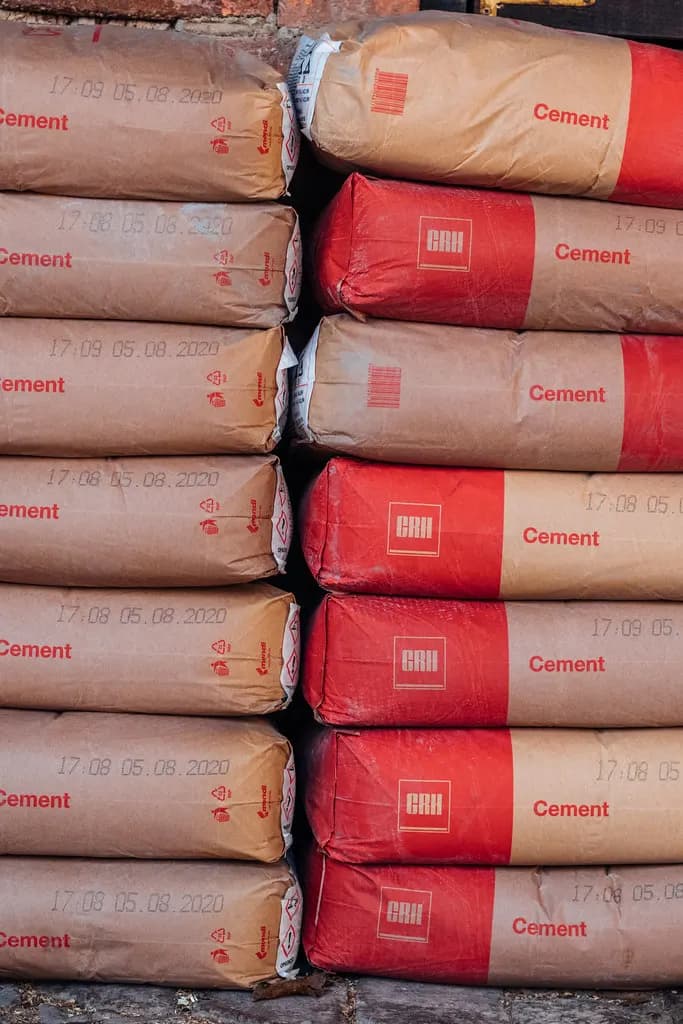
- 7.Close up of stacked cement bags (photo) — Ivan Radic / Flickr · accessed 7 October 2026
MSMETOOLS is an independent platform and is not affiliated with any government agency, ministry or department.
Tools for this
Break Even Calculator
Find your break even point and units.
Inventory Turnover Calculator
See how fast stock sells through.
EOQ Calculator
Find the most economical order quantity.
Profit Margin Calculator
Calculate profit, markup and margin for your products or services.
Related guides
 Construction Business Plan 2026: Costs, CPWD Classes & GSTRead guide
 Construction Cost per Sq Ft 2026: CPWD Rates & EstimateRead guide
 Laundry Machine Business 2026: Setup Cost, Price List & GSTRead guide
 Plant Nursery Business 2026: Subsidy, Licence & ProfitRead guide
Official links open the government site in a new tab.