 Starting & growing a business
Construction Business Plan (2026): Contractor Registration, GST, Labour Cess and a Worked ₹ P&L
Construction business plan for India in 2026: setup costs, CPWD contractor classes, 18% GST on works contracts, 1% labour cess and a worked break-even.
 Edited by Sumeet YadavFounder & editor, MSMETOOLS · fact-checked against official sources
Contents (12)
- 1. Choose your construction niche first
- 2. Setup cost: equipment, office and working capital
- 3. Business structure and basic registrations
- 4. Contractor registration: CPWD classes and state PWDs
- 5. GST on works contracts after GST 2.0
- 6. Labour cess, labour laws and site safety
- 7. Finding work: private leads, CPPP and GeM
- 8. Worked example: monthly P&L and break-even
- 9. Funding a construction business
- 10. Construction business plan checklist
- 11. Mistakes that sink new contractors
- 12. What to do next
A construction business is really two businesses at once: an estimating desk that wins work at the right price, and a cash machine that keeps paying for cement, steel and labour while clients take their time to pay you. This construction business plan is for first-time civil contractors in India — a site engineer going independent, a family building-material trader moving into contracting, or a small builder who wants government work. It covers the setup cost (labelled estimates with their basis), CPWD and state PWD registration classes, GST on works contracts after GST 2.0, the welfare cess, GST TDS, working capital, tendering on CPPP and GeM, and a worked monthly profit-and-loss with break-even. Rules were checked against CPWD, CBIC, GST Council and labour-law sources in October 2026.
Quick answer
A construction business plan sets out the work you will chase (private houses, commercial fit-outs or government tenders), the registrations that let you bid, the equipment you will own versus hire, and — most important — how much working capital you need while bills are pending. A small civil contractor needs roughly ₹18–45 lakh to start (our estimate), most of it working capital. Works contracts carry 18% GST, and a 1% of the cost of construction welfare cess applies to the cost of construction.
CPWD Enlistment Rules 2026: Class V bids up to ₹40 lakh, Class IV up to ₹1.30 crore
GST on composite works contracts: 18% with input tax credit, including government work since 22 September 2025
Government clients deduct GST TDS of 2% (1% CGST + 1% SGST, or 2% IGST) on contracts above ₹2.5 lakh
Worked example: break-even at about ₹18 lakh of billing a month
Choose your construction niche first
"Construction" covers very different businesses, and banks, clients and tender committees all want to know which one you are. Pick one or two lines you can do well and grow from there.
- Residential contractor — independent houses, floors and renovation for private owners. Payment is in stages (plinth, slab, brickwork, finishing), so cash flow is manageable if you collect each stage before starting the next. Most first-time contractors start here.
- Commercial and interior fit-out — shops, offices, clinics and showrooms. Faster jobs with tighter deadlines, and clients who need GST invoices so they can claim input tax credit.
- Government civil works — roads, drains, school buildings and repairs for CPWD, state PWDs, municipalities and boards. Steady volume and transparent tenders, but you need registration, bid capacity, security deposits and patience with payment cycles.
- Specialist sub-contracting — waterproofing, RCC labour, shuttering, plumbing or electrical packages under a larger contractor. Low capital and a good way to build the completed-work certificates you need for registration later.
A useful rule: your first year should produce completion certificates. Government enlistment, bank limits and bigger private clients all look at the value of work you have completed, not the work you have started.
Setup cost: equipment, office and working capital
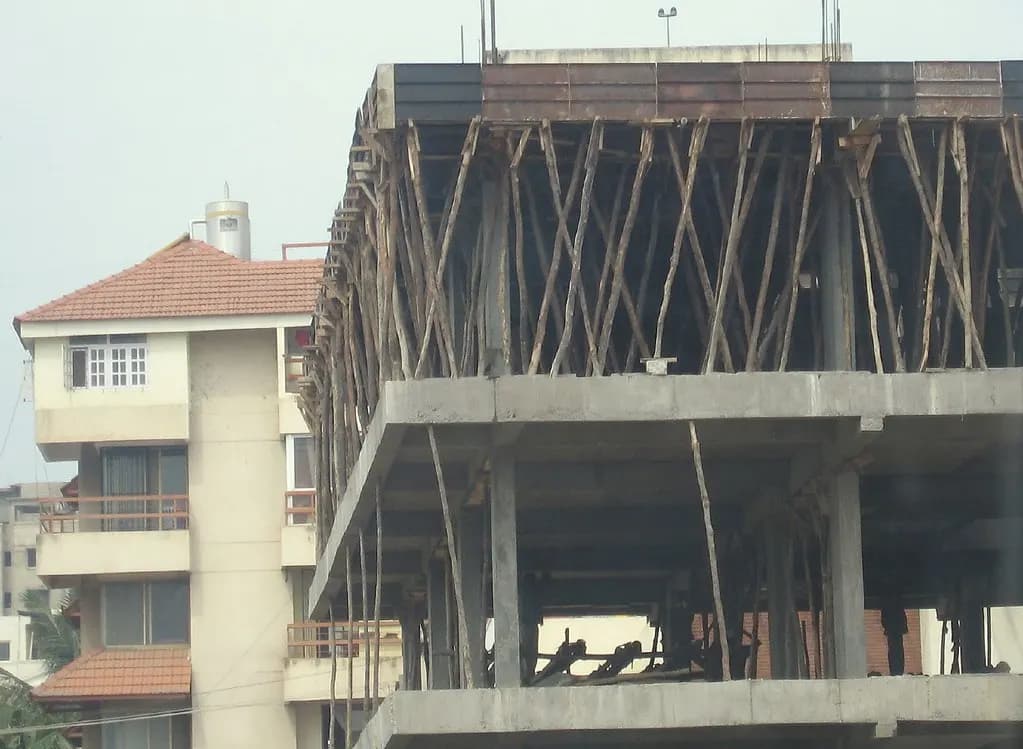
The table is a MSMETOOLS estimate for a small civil contractor in a tier-2 city taking residential and small government jobs of ₹10–40 lakh each in 2026. The mixer and shuttering lines are based on current IndiaMART listings: half-bag concrete mixers are listed at about ₹35,000–₹52,000 and one-bag diesel mixers at about ₹95,000–₹1.45 lakh, while mild-steel centering plates sell at roughly ₹60–₹80 per kg. Everything else should be replaced with local quotes before you show the plan to a bank.
| Setup item | Estimated range | Worked plan | Basis / notes |
|---|---|---|---|
| One-bag concrete mixer (diesel) | ₹95,000 – ₹1,50,000 | ₹1,20,000 | IndiaMART listings |
| Centering plates, props, scaffolding (starter set) | ₹2,00,000 – ₹6,00,000 | ₹3,50,000 | Plates at ₹60–₹80/kg; hire extra for big slabs |
| Small tools: vibrator, cutter, drill, levels, wheelbarrows, pumps | ₹75,000 – ₹2,00,000 | ₹1,20,000 | Buy what you use daily, hire the rest |
| Site vehicle (used pickup or loader) | ₹3,00,000 – ₹8,00,000 | ₹5,00,000 | Often financed |
| Office, computer, estimating software, signboard | ₹50,000 – ₹1,50,000 | ₹80,000 | A small rented office is enough |
| Registrations, legal set-up, CPWD/PWD enlistment | ₹15,000 – ₹75,000 | ₹30,000 | Partnership deed or company, GST, enlistment fee |
| Insurance: contractor's all-risk, workmen's compensation | ₹30,000 – ₹1,00,000 | ₹50,000 | Many contracts make this compulsory |
| Working capital: 2–3 months of material, labour and deposits | ₹10,00,000 – ₹25,00,000 | ₹15,00,000 | The line most plans underestimate |
| Total | ₹18,00,000 – ₹45,00,000 | ₹27,50,000 |
Notice that working capital is more than half of the plan. On a ₹30 lakh job you may buy ₹8 lakh of cement and steel and pay ₹4 lakh of wages before the first running bill is even measured, and government clients can take several weeks to pass it. A cash-credit or overdraft limit from a bank, sanctioned against your plan and order book, is usually more useful than a term loan for equipment. The working capital calculator shows how much you need on hand.
Business structure and basic registrations
Most small contractors start as a proprietorship or partnership, then convert to a private limited company or LLP once they bid for larger work or take on partners with capital. Government enlistment rules let you choose — CPWD's rules accept individuals, partnerships, companies and LLPs — but the constitution you enlist under is the one whose experience counts, so think before you change it.
The registrations nearly every contractor needs are:
- PAN and a current account in the business name, so that payments, TDS certificates and bank statements all match.
- GST registration in each state where you have a site office or execute work. A contractor supplying a service registers once aggregate turnover crosses ₹20 lakh (₹10 lakh in special-category states), but almost every government department and business client will insist on a GSTIN from day one. See our GST registration guide.
- Udyam registration — free and online. It helps with bank finance and collateral-free credit guarantees under CGTMSE. Note, though, that the Public Procurement Policy for Micro and Small Enterprises covers goods and services, not works contracts, so Udyam does not exempt you from earnest money on works tenders. See the Udyam guide.
- Shops and Establishments registration for your office, and a labour licence from the state labour department if you engage contract labour above the threshold your state applies under the new Labour Codes, which took effect on 21 November 2025.
- EPF and ESI registration once your headcount crosses the applicable limits, and welfare-board registration of your workers where your state requires it.
Contractor registration: CPWD classes and state PWDs
To bid for government work you usually need to be enlisted (registered) with the department, and your class decides the largest tender you can bid for. CPWD issued new Rules for Enlistment of Contractors in CPWD, 2026, effective 1 January 2026. Under them, civil contractors enlist in the Buildings & Roads category, which lets you take building work, road work or any mix up to your class limit. Applications go through CPWD's CEMS/ERP portal.
CPWD Buildings & Roads classes (Enlistment Rules 2026)
| Class | Tendering limit | Enlistment fee | Completed-work experience needed (any one) |
|---|---|---|---|
Class V | ₹40 lakh | ₹3,000 | 3 works of ₹6 lakh, 2 of ₹8 lakh or 1 of ₹16 lakh |
Class IV | ₹1.30 crore | ₹5,000 | 3 works of ₹20 lakh, 2 of ₹30 lakh or 1 of ₹60 lakh |
Class III | ₹4 crore | ₹10,000 | 3 works of ₹70 lakh, 2 of ₹1 crore or 1 of ₹2 crore |
Class II | ₹15 crore | ₹15,000 | 3 works of ₹2.2 crore, 2 of ₹3.2 crore or 1 of ₹6.4 crore |
Class I | ₹50 crore | ₹20,000 | 3 works of ₹8 crore, 2 of ₹12 crore or 1 of ₹24 crore |
Class V
- Tendering limit
₹40 lakh
- Enlistment fee
₹3,000
- Completed-work experience needed (any one)
3 works of ₹6 lakh, 2 of ₹8 lakh or 1 of ₹16 lakh
Class IV
- Tendering limit
₹1.30 crore
- Enlistment fee
₹5,000
- Completed-work experience needed (any one)
3 works of ₹20 lakh, 2 of ₹30 lakh or 1 of ₹60 lakh
Class III
- Tendering limit
₹4 crore
- Enlistment fee
₹10,000
- Completed-work experience needed (any one)
3 works of ₹70 lakh, 2 of ₹1 crore or 1 of ₹2 crore
Class II
- Tendering limit
₹15 crore
- Enlistment fee
₹15,000
- Completed-work experience needed (any one)
3 works of ₹2.2 crore, 2 of ₹3.2 crore or 1 of ₹6.4 crore
Class I
- Tendering limit
₹50 crore
- Enlistment fee
₹20,000
- Completed-work experience needed (any one)
3 works of ₹8 crore, 2 of ₹12 crore or 1 of ₹24 crore
Above Class I there are I(A), I(AA), I(AAA) and I(Super) classes with limits running up to ₹650 crore. Enlistment is valid for five years, after which you revalidate. The work-experience values count the gross value of completed work including GST, and CPWD inspects the works you submit and marks their quality — a poorly built job can sink an application even if its value qualifies.
A route for new engineers. The 2026 rules let unemployed civil, electrical or mechanical engineers and architects with annual income up to ₹5 lakh enlist as individuals in Buildings & Roads without the work-experience and financial-soundness tests the first time: diploma holders in Class V and degree holders in Class IV. If you are an engineer starting out, this is the fastest way into government work.
State PWDs, municipalities and boards run their own registration systems with their own class names (often A to E, or I to V) and limits, and many accept CPWD or other state enlistment as supporting evidence. Check the latest rules with the Chief Engineer's office of the department you want to work for; fees, solvency certificates and experience thresholds differ from state to state, and some states still register contractors only in person.
GST on works contracts after GST 2.0
A works contract under GST is a contract to build, fabricate, repair, renovate or commission immovable property where goods (material) pass to the client along with your service. It is always treated as a supply of service — you don't split the bill into material and labour for tax.
Since 22 September 2025, composite works contracts are taxed at 18% with full input tax credit, for private and government clients alike. The concessional rates that once applied to government civil works were removed from 18 July 2022, and Notification 15/2025-Central Tax (Rate) moved the last 12% entries — earthwork-heavy contracts for government (where earthwork is more than 75% of the value), sub-contracts under them, and offshore oil and gas works — to 18%.
| Contract type | GST from 22 Sep 2025 | Before |
|---|---|---|
| Works contract for a private house, shop, office or factory | 18% with ITC | 18% |
| Works contract for Central/State Government or a local authority (buildings, roads, bridges) | 18% with ITC | 18% since July 2022 (12% before) |
| Earthwork-dominant works contract for government, and its sub-contracts | 18% with ITC | 12% |
| Cement you buy for the job | 18% (input credit available) | 28% |
Two practical points follow. First, input tax credit on cement, steel, hired machinery and sub-contractor bills is your friend: the cut in cement GST from 28% to 18% lowered your input cost, and a contractor who files clean returns and chases supplier compliance keeps that credit. Read our guides to GST on cement and input tax credit. Second, on a fixed-price contract signed before a rate change, check the contract's tax clause — most government contracts adjust for changes in statutory levies, private contracts often don't.
GST TDS on government work. Government departments, local authorities and notified bodies deduct GST TDS of 2% (1% CGST + 1% SGST, or 2% IGST) from payments under contracts worth more than ₹2.5 lakh (excluding tax). It appears in your electronic cash ledger once the deductor files its return, and you can use it to pay GST. Income-tax TDS on contract payments also applies — 1% for individuals and HUFs, 2% for others — now under section 393 of the Income-tax Act, 2025 (formerly section 194C); see what is TDS.
Labour cess, labour laws and site safety
The old Building and Other Construction Workers' Welfare Cess Act was repealed when the Labour Codes took effect; the cess now sits in section 100 of the Code on Social Security, 2020. The Code allows a rate between 1% and 2% of the cost of construction; notification S.O. 2322(E) dated 8 May 2026 fixed it at 1% of the cost of construction, the same rate as before. Cost of land is excluded.

How it is collected depends on the work. On government and public-sector projects the cess is usually deducted at source from your bills; where a building plan needs local-authority approval, the authority may collect it in advance; otherwise the employer pays it directly with an advance assessment and a final self-assessment after completion. Late payment carries interest of 1% a month. Price the cess into every private estimate — if you forget it, it comes out of your margin.
An individual building a house for their own residence is exempt where the total cost is up to ₹50 lakh (the old limit was ₹10 lakh). That helps your small residential clients, but the exemption belongs to the owner's project, so keep a copy of their declaration on file.
Beyond the cess, plan for: wage rates at or above the notified minimum wage for your state, payment through bank transfer, attendance and wage registers, safety equipment (helmets, harnesses, shoes) and first aid, and insurance. Contractor's all-risk and workmen's compensation policies are cheap compared with the cost of one serious accident.
Finding work: private leads, CPPP and GeM
Most small contractors get their first jobs through architects, structural engineers, building-material dealers and word of mouth. Keep a simple portfolio — photos, client names, completion letters — and register on the bigger online lead platforms only if you can respond within the day.
For government work:
- Central Public Procurement Portal (CPPP) at eprocure.gov.in publishes tenders of central ministries, CPWD and many PSUs; most states run their own e-procurement portals on the same NIC platform. You need a Class 3 digital signature certificate to bid.
- GeM is mainly for goods and services such as maintenance, housekeeping and facility management, rather than civil works. Seller registration is Free; see our GeM registration guide.
- Bid capacity and security. Larger works tenders test your bid capacity, a formula based on your recent turnover and the work you already have in hand. Expect to deposit earnest money or sign a bid-securing declaration with each bid, give a performance guarantee when you win, and accept that a slice of each running bill is held as retention until the defect-liability period ends. These amounts are set in each tender document — read them before you bid, because they lock up cash.
The usual path from first lead to first government bill runs like this:
- Build completion certificates — finish two or three private or sub-contract jobs and get signed completion letters showing the gross value of work.
- Register and enlist — get GST, Udyam, a digital signature and enlistment with CPWD or your state PWD in the class your experience supports.
- Bid within your limit — download tender documents, visit the site, price the bill of quantities and submit before the deadline.
- Execute and measure — keep the measurement book, quality tests and photos up to date so running bills pass quickly.
- Collect and reconcile — match each payment against GST TDS, income-tax TDS, cess and retention deductions, and claim them in your returns.
Worked example: monthly P&L and break-even
Here's an illustrative plan for "Shree Ram Constructions", a two-partner civil contractor in a tier-2 city doing private houses and small Class V government works. All figures are MSMETOOLS estimates.
Revenue assumption: ₹20 lakh of work billed a month (about ₹2.4 crore a year), excluding GST.
Variable cost per ₹1 lakh billed: material (cement, steel, sand, aggregate, bricks) ₹50,000; labour ₹24,000; equipment hire and fuel ₹6,000; sub-contracted packages ₹5,000; welfare cess and site consumables ₹3,000 — ₹88,000. Contribution = ₹12,000 per ₹1 lakh billed (12%).
| Fixed monthly cost | Amount (estimate) |
|---|---|
| Site engineer | ₹40,000 |
| Site supervisor | ₹25,000 |
| Accountant and office staff | ₹20,000 |
| Office rent and utilities | ₹15,000 |
| Site vehicle running cost | ₹20,000 |
| Equipment and vehicle EMI | ₹25,000 |
| Insurance (all-risk, workmen's compensation) | ₹10,000 |
| Interest on a ₹30 lakh cash-credit limit at about 11% | ₹27,500 |
| Partners' drawings | ₹35,000 |
| Total fixed costs | ₹2,17,500 |
- Monthly contribution = ₹20 lakh × 12% = ₹2,40,000
- Profit after partners' drawings = ₹2,40,000 − ₹2,17,500 = about ₹22,500 a month
- Break-even = ₹2,17,500 ÷ ₹12,000 = about 18 units of ₹1 lakh — roughly ₹18 lakh of billing a month
The lesson: a 2% overrun in material or labour cost on this volume wipes out the month's profit. That is why good contractors estimate from drawings rather than per-square-foot rules of thumb, buy cement and steel against confirmed orders, track wastage, and refuse jobs where the client won't pay stage advances. Try your own numbers below, treating each "unit" as ₹1 lakh of billing.
Try it — contractor break-even (unit = ₹1 lakh billed)
Funding a construction business
- Cash-credit or overdraft limit — the most important facility. Banks size it on your projected turnover, order book and receivables, and usually want stock and book-debt statements each month.
- Equipment and vehicle loans — financed by banks and NBFCs against the asset itself.
- Mudra — loans up to ₹10 lakh (Tarun Plus up to ₹20 lakh for repeat borrowers) without collateral, useful for a small contractor's first equipment and working capital. See the Mudra loan guide.
- CGTMSE — a bank can cover loans to Udyam-registered micro and small enterprises, up to ₹10 crore, under the credit guarantee scheme instead of asking for collateral.
- Stand-Up India — for women and SC/ST founders of a first enterprise, loans from ₹10 lakh to ₹1 crore.
- Bank guarantees — for performance security, banks issue guarantees against a margin deposit, so build that margin into your working-capital plan.
Compare options in our business loan guide.
Construction business plan checklist
Fill-in construction business plan
0/11Mistakes that sink new contractors
- Bidding low to win. A rate below your cost isn't a strategy — it's a loss you've signed for. Price from your own rate analysis and walk away from tenders where L1 is consistently below cost.
- Ignoring deductions. On a government bill, GST TDS, income-tax TDS, cess, retention and security can leave you with well under the gross amount. Reconcile every payment the week it arrives.
- Running sites on one bank account without job costing. Track material, labour and hire by site, so you know which jobs make money.
- Old tax templates. Government works contracts are not 12% any more, and cement is 18%, not 28%.
- Letting enlistment lapse. CPWD enlistment runs for five years; revalidate before it expires and keep your performance reports satisfactory.
- Skipping insurance and safety. One accident without workmen's compensation cover can cost more than a year's profit.
Official links
- CPWD Enlistment Rules 2026 (PDF)Classes, limits, fees, experience
- CPWD CEMS portalApply for enlistment or revalidation
- Central Public Procurement PortalCentral government tenders
- GeM seller registrationGoods and services procurement
- GST Council — 56th meeting press releaseWorks contract and cement rate changes
- CBIC — SOP for TDS under GST2% TDS on government contracts
- Udyam Registration portalFree MSME registration
What to do next
Start by writing your rate analysis for the three items you'll do most often — RCC, brickwork and plastering — and use the concrete calculator to check your material quantities. Then put your overheads and expected margin into the break-even calculator, build your first estimate in the quotation generator, and take the finished plan to your bank to discuss a cash-credit limit. Register for GST and Udyam before your first government bid.
This is general information, not legal or tax advice — confirm on the official source or with a professional. Tender conditions, state PWD rules and contract tax clauses vary, so read each document before you price it.
Frequently asked questions
Our estimate for a small civil contractor taking ₹10–40 lakh jobs in a tier-2 city is about ₹18 lakh to ₹45 lakh: equipment and shuttering, a site vehicle, office set-up, registrations, insurance and, above all, working capital to carry two to three months of bills. Government work needs more cash because payments, retention and security deposits are held back. These are estimates, not quotes.
Composite works contracts, where you supply both material and labour for building, civil or repair work, are taxed at 18% with input tax credit. The last concessional 12% entries — earthwork-heavy contracts for government, their sub-contracts and offshore oil and gas work — moved to 18% from 22 September 2025. Affordable-housing promoters and some pure-labour contracts have separate rules.
Apply online on CPWD's CEMS/ERP portal under the Enlistment Rules 2026, which took effect on 1 January 2026. Choose the Buildings & Roads category and the class your completed work experience and financial soundness support. Class V lets you bid up to ₹40 lakh and costs ₹3,000; enlistment is valid for five years. State PWDs run their own registration.
Employers carrying out building or other construction work pay a welfare cess of 1% of the cost of construction under section 100 of the Code on Social Security, 2020, which replaced the old BOCW Cess Act. Government departments usually deduct it from your bills. An individual building their own house is exempt if the total cost is up to ₹50 lakh.
It can be, but net margins are thin and cash is tight. In our worked example a contractor billing ₹20 lakh a month keeps about 12% after material, labour and site costs, and earns roughly ₹22,500 a month after paying overheads and the owner. Break-even is about ₹18 lakh of billing a month. Better margins come from repeat private clients and accurate estimating.
Sources & verification
Figures on this page were checked against the sources below when it was last reviewed on 7 October 2026. Each rate and limit is stored once with its own official source and review date, and official update channels are monitored daily so changes are picked up. How we verify
- 1.Rules for Enlistment of Contractors in CPWD, 2026 — Central Public Works Department · accessed 7 October 2026
- 2.Recommendations of the 56th GST Council meeting (press release) — GST Council / PIB · accessed 7 October 2026
- 3.Notification No. 15/2025-Central Tax (Rate), 17 September 2025 — CBIC (copy) · accessed 7 October 2026
- 4.Notification No. 11/2017-State Tax (Rate) as amended — Telangana consolidated copy — Commercial Taxes Department, Telangana · accessed 7 October 2026
- 5.Standard Operating Procedure for TDS under GST — CBIC · accessed 7 October 2026
- 6.The Code on Social Security, 2020 — India Code (Legislative Department) · accessed 7 October 2026
- 7.[Analysis] BOCW Cess under Code on Social Security 2020 — Taxmann · accessed 7 October 2026
- 8.FAQs on Public Procurement Policy for MSEs (25 March 2022) — Office of the DC (MSME) · accessed 7 October 2026
- 9.Concrete mixers — price listings — IndiaMART · accessed 7 October 2026
- 10.Centering plates — price listings — IndiaMART · accessed 7 October 2026
MSMETOOLS is an independent platform and is not affiliated with any government agency, ministry or department.
Tools for this
Break Even Calculator
Find your break even point and units.
Working Capital Calculator
Check working capital, current and quick ratios.
Construction Material Calculator
Estimate cement, sand and aggregate for slabs.
Quotation Generator
Create professional quotes for clients.
Related guides
 Interior Design Business in India 2026: GST, Pricing & P&LRead guide
 Hardware Shop Business Plan 2026: Cost, GST & MarginsRead guide
 Construction Cost per Sq Ft 2026: CPWD Rates & EstimateRead guide
 What Is Bill of Quantities (BOQ)? Format & Example (2026)Read guide
Official links open the government site in a new tab.