 Starting & growing a business
How to Start a Boutique Business in India (2026): Costs, Registrations, GST, Pricing and Name Ideas
How to start a boutique in India in 2026: setup costs, Udyam and shop registration, GST on clothes and tailoring, pricing, a worked P&L and name ideas.
 Edited by Sumeet YadavFounder & editor, MSMETOOLS · fact-checked against official sources
Contents (11)
- 1. What a boutique business is, and which kind to start
- 2. How much it costs to start a boutique
- 3. Registrations and licences for a boutique
- 4. GST for a boutique: rates, threshold and composition
- 5. Pricing: the maths that decides your margin
- 6. A worked monthly P&L
- 7. Sourcing and production
- 8. Boutique name ideas — and how to protect yours
- 9. Funding a boutique
- 10. Mistakes new boutique owners make
- 11. What to do next
A boutique is a small clothing shop with a point of view: a tight range chosen or designed by the owner, often with stitching, alterations and made-to-measure outfits under one roof. That mix is what makes it different from a general garment store — and it changes your costs, your GST and how you price. This guide is for anyone planning a boutique in India, from a home studio with one sewing machine to a 300 sq ft shop on a busy road. You'll get estimated setup costs, the registrations you need, GST on clothes and on tailoring, pricing maths, a worked monthly P&L, and how to pick and protect a name.
Quick answer
To start a boutique, choose one customer and one style, decide whether you'll sell ready-to-wear, stitch to order or both, and budget roughly ₹8–19 lakh for a small shop with in-house stitching or ₹0.75–2.5 lakh from home (our estimates). Register on Udyam (Free), complete your state's shops registration, and plan GST around the ₹20 lakh threshold if you charge for stitching.
Clothes up to ₹2,500 a piece: 5% GST; above: 18%; tailoring services: 5%
Composition at 1% works only if stitching stays within 10% of turnover or ₹5 lakh
Price ready-to-wear at about 2–2.5× cost; price stitching on labour hours
Check your name in trade mark Classes 25 and 35 before printing labels — ₹4,500 per class to file
What a boutique business is, and which kind to start
In business terms, a boutique is a specialist retailer: a small store selling a curated range to a defined customer, usually at a higher price per piece than mass retail because of design, fit and service. In India the word covers several quite different businesses, and you should pick one before you spend anything.
- Curated ready-to-wear boutique. You buy kurtis, co-ord sets, dresses or occasion wear from manufacturers and designers, and sell a selection that fits your customer. Income comes from markup. It's closest to a clothing shop; our clothing business guide covers wholesale hubs in detail.
- Designer and made-to-measure boutique. You design outfits, buy fabric and trims, and get them stitched by your own tailors or a karigar. Blouses, lehengas, salwar suits and Indo-western wear are typical. Margins are higher and stock risk is lower, but you're running a small workshop.
- Stitching-and-alterations boutique. Customers bring their own fabric — a saree blouse, a suit piece — and pay for stitching. This is a service business; you hold almost no stock.
- Bridal boutique. High-value lehengas and trousseau pieces, long appointment-based sales, and heavy working capital.
- Home or online boutique. One of the above, run from home and sold through WhatsApp, Instagram and exhibitions.
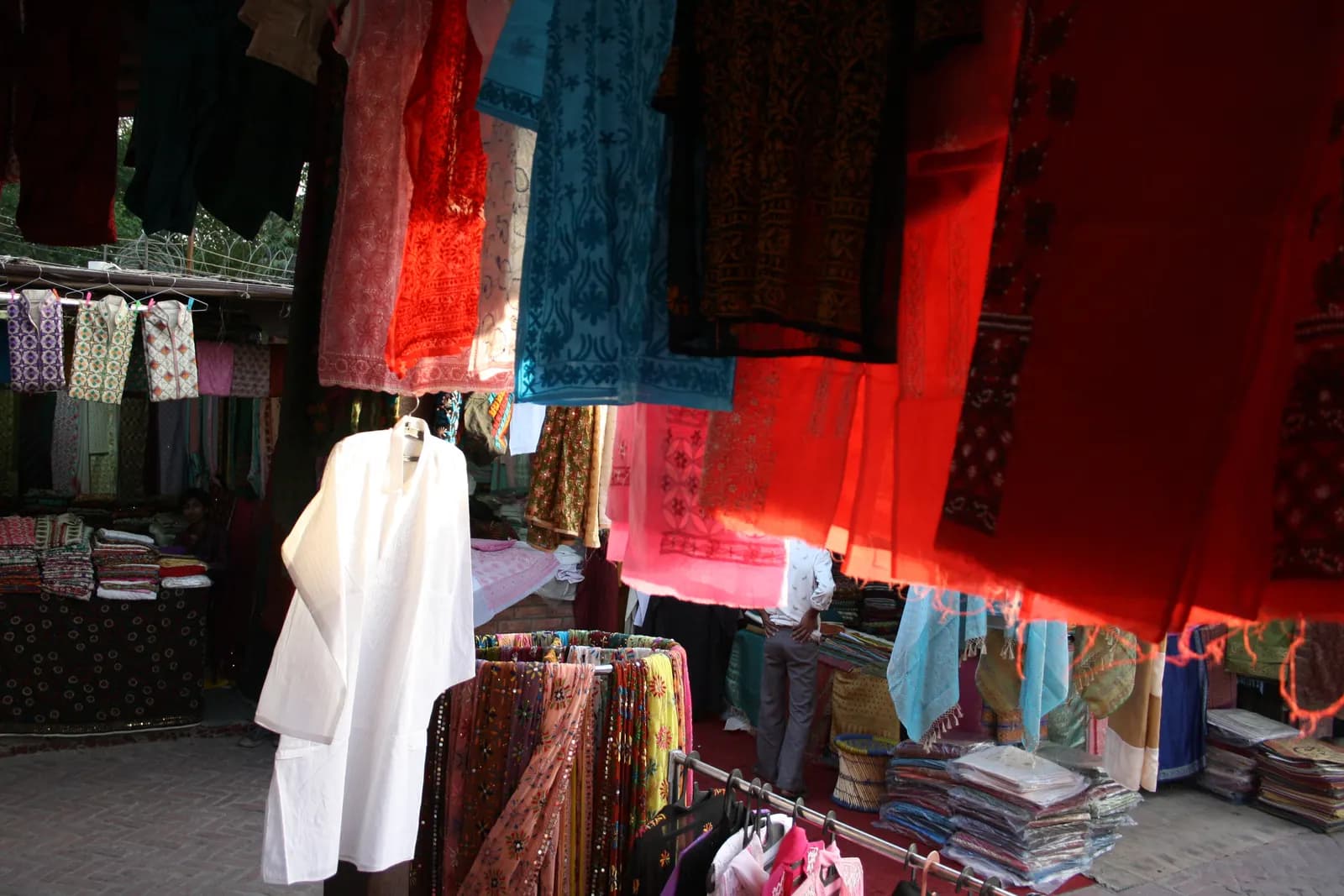
Most successful small boutiques combine two of these: a ready-to-wear rack that brings people in, and stitching that brings them back. The combination is also what makes the GST rules below matter.
Pick a customer as precisely as you can — "working women in our area who want cotton kurtas that fit, under ₹1,500", or "brides from our community who want blouses stitched in a week". A precise customer tells you what to stock, how to price and what to name the business.
How much it costs to start a boutique
These are MSMETOOLS estimates for 2026, built on typical dealer prices for industrial sewing machines, common rent-deposit terms and fit-out costs for a small shop in a tier-2 city. Metros cost more; small towns less. Replace every line with your own quotes in the startup cost calculator.
| Item | Home boutique (stitching + small range) | Shop boutique, 250–350 sq ft with stitching |
|---|---|---|
| Deposit and advance rent | — | ₹1,00,000 – ₹2,50,000 |
| Interiors, lighting, trial room, mirrors | ₹5,000 – ₹20,000 (corner set-up) | ₹1,50,000 – ₹3,50,000 |
| Racks, mannequins, display | ₹5,000 – ₹15,000 | ₹40,000 – ₹1,20,000 |
| Sewing machines (lockstitch, overlock), cutting table, steam iron | ₹30,000 – ₹70,000 | ₹60,000 – ₹1,50,000 |
| Opening ready-to-wear stock | ₹20,000 – ₹80,000 | ₹2,00,000 – ₹5,00,000 |
| Fabric, trims and samples | ₹10,000 – ₹30,000 | ₹30,000 – ₹80,000 |
| Billing software, card machine, phone | ₹0 – ₹10,000 | ₹10,000 – ₹40,000 |
| Registrations, CA set-up, trade mark | ₹3,000 – ₹15,000 | ₹10,000 – ₹25,000 |
| Signage, photos, launch marketing | ₹5,000 – ₹20,000 | ₹30,000 – ₹80,000 |
| Working capital (about two months) | ₹0 – ₹20,000 | ₹1,00,000 – ₹2,00,000 |
| Estimated total | ₹75,000 – ₹2,50,000 | ₹8,00,000 – ₹19,00,000 |
Two lines deserve care. Stock: buy depth in a few styles you believe in, not one of everything, and keep a third of your stock budget back for re-orders of what sells. Machines: domestic machines wear out under daily use; a boutique doing ten blouses a day needs industrial lockstitch machines and an overlock for finishing.
Registrations and licences for a boutique
You will need, in roughly this order: a business structure (most start as a sole proprietor) and a current account in the business name; Udyam registration; your state's shops and establishments registration or intimation; a municipal trade licence where the city requires one; GST registration when you cross the threshold or sell inter-state; professional tax registration once you employ staff; and a trade mark application for the name.
Udyam. Registration on the government portal costs Free and needs only the owner's Aadhaar and the business PAN. It gives you an MSME certificate that banks ask for and that protects you under the delayed-payment rules if you supply to businesses. Our Udyam guide walks through it.
Shops and establishments. Every state has its own Shops and Establishments Act, and the requirement depends on headcount. In Maharashtra, for example, an establishment with fewer than 20 workers only files an online intimation in Form F and gets a receipt in Form G; 20 or more workers need full registration (the line moved from ten to twenty from 1 October 2025 — see our Maharashtra shop act guide). Other states use different limits and fees, so check your state labour department's portal. A home boutique may also need its housing society's no-objection, and some municipal bodies require a trade licence for any shop.
Staff. Once you hire tailors and sales staff, minimum wages for shops or tailoring in your state apply, and so does professional tax in states that levy it — for example ₹200 a month on salaries from ₹25,000 in Karnataka or above ₹12,000 in Gujarat.
GST for a boutique: rates, threshold and composition
GST is where boutiques most often go wrong, because they sell both goods (clothes) and a service (stitching).
GST on what a boutique sells (from 22 September 2025)
| What you sell | Treated as | GST rate |
|---|---|---|
Ready-to-wear kurta, dress or lehenga, sale value up to ₹2,500 a piece | Goods (Ch. 61/62) | 5% |
Ready-to-wear or made-to-measure garment above ₹2,500 a piece | Goods (Ch. 61/62) | 18% |
Sarees, dress material, unstitched fabric | Goods (woven fabric) | 5% at any price |
Stitching or altering the customer's own fabric | Tailoring service (heading 9988) | 5% |
Composition boutique (any of the above) | Turnover-based tax | 1% of turnover, no GST on the bill |
Ready-to-wear kurta, dress or lehenga, sale value up to ₹2,500 a piece
- Treated as
Goods (Ch. 61/62)
- GST rate
5%
Ready-to-wear or made-to-measure garment above ₹2,500 a piece
- Treated as
Goods (Ch. 61/62)
- GST rate
18%
Sarees, dress material, unstitched fabric
- Treated as
Goods (woven fabric)
- GST rate
5% at any price
Stitching or altering the customer's own fabric
- Treated as
Tailoring service (heading 9988)
- GST rate
5%
Composition boutique (any of the above)
- Treated as
Turnover-based tax
- GST rate
1% of turnover, no GST on the bill
The garment slab changed with GST 2.0: the 56th GST Council raised the lower-rate limit from ₹1,000 to ₹2,500 a piece and moved more expensive garments from 12% to 18%. Tailoring stayed at 5% — Notification 15/2025-Central Tax (Rate) lists "tailoring services" separately under heading 9988 at 2.5% central tax plus 2.5% state tax. When you make an outfit from your own fabric and sell it, that is a sale of a garment, so the per-piece slab applies, not the tailoring rate. Our GST on garments guide has the HSN details.
Which threshold applies. The higher ₹40 lakh registration limit is only for businesses that supply goods exclusively. The moment you charge for stitching or alterations, you're no longer exclusively a goods supplier and the ₹20 lakh limit applies to your whole turnover (lower in special-category states). Shipping to customers in another state needs registration from the first such sale, whatever your turnover.
Composition — and the stitching trap. A boutique with turnover up to ₹1.5 crore can opt for composition and pay 1% of turnover, with simple quarterly payments and no GST on customer bills. But section 10 of the CGST Act lets a composition taxpayer supply services only up to 10% of the previous year's turnover or ₹5 lakh, whichever is higher. A boutique earning ₹6 lakh a year from stitching on ₹30 lakh of sales is over both limits and can't use goods composition. The alternative composition for service-heavy businesses — 6% up to ₹50 lakh — rarely beats regular GST for a boutique whose ready-to-wear is taxed at only 5%. Composition also bars inter-state sales and input tax credit. See our composition scheme guide before choosing.
Boutique GST numbers at a glance
₹20 lakh
Registration limit if you stitch
most states
5%
Tailoring services
heading 9988
₹2,500
Garment price line
5% below, 18% above
₹5 lakh
Max services on goods composition
or 10% of turnover if higher
Pricing: the maths that decides your margin
Boutiques price two things differently: products by markup, and stitching by time.
Ready-to-wear. Most small boutiques mark up 2 to 2.5 times landed cost (purchase price plus freight and packing). A kurta bought for ₹650 with ₹30 of freight lands at ₹680; at 2.3× it retails at about ₹1,560, which you'd round to ₹1,549 or ₹1,599. That looks generous until you account for end-of-season discounts on a third of your stock, alterations you do free, and pieces that never sell. Use the markup calculator to check what margin a given markup really gives you after discounts.
Stitching. Work out what a tailor's hour costs you — wage plus a share of rent and power — then price each job on the hours it takes. If a tailor costs ₹16,000 a month for about 200 working hours, that's ₹80 an hour before overheads; with rent, power and thread, call it ₹130. A plain blouse taking two hours should then be priced well above ₹260 — most boutiques charge ₹450–₹900 for a lined blouse with padding, more for designer necklines and hand work (our estimate of typical tier-2 rates; check five local tailors).
Made-to-measure outfits and the ₹2,500 line. Suppose a custom anarkali uses ₹900 of fabric, ₹200 of lining and trims, ₹450 of tailoring labour and ₹350 of embroidery: ₹1,900 direct cost. Priced at ₹2,450 before GST, it attracts 5% and the customer pays ₹2,573; your margin is ₹550. Priced at ₹2,900, it attracts 18% and the customer pays ₹3,422; your margin is ₹1,000. Crossing the line costs the customer 13 percentage points of extra tax, so decide deliberately whether a piece sits just under ₹2,500 or clearly above it with enough design value to justify the jump.
A worked monthly P&L
Here is an illustrative month for a 300 sq ft boutique in a tier-2 city, combining ready-to-wear, stitching and custom outfits. All figures are our estimates.
| Line | Amount (₹) |
|---|---|
| Ready-to-wear: 120 pieces × ₹1,400 average | 1,68,000 |
| Stitching orders: 60 × ₹900 average | 54,000 |
| Custom outfits: 15 × ₹4,000 average | 60,000 |
| Sales (before GST) | 2,82,000 |
| Cost of ready-to-wear sold (about 50% of price) | 84,000 |
| Fabric and trims for custom outfits (about 40%) | 24,000 |
| Thread, linings and consumables for stitching | 6,000 |
| Gross profit | 1,68,000 (about 60%) |
| Rent | 30,000 |
| Two tailors | 32,000 |
| Sales assistant | 13,000 |
| Electricity, phone, software | 6,000 |
| Marketing and packaging | 11,000 |
| Alteration losses and sundries | 4,000 |
| Loan EMI (about ₹5 lakh over five years) | 11,000 |
| Owner's profit before income tax | 61,000 |
The fixed costs total about ₹1.07 lakh a month. With a 60% gross margin, the boutique breaks even at about ₹1.8 lakh of sales a month — around ₹6,000 a day over 30 days. The break-even calculator lets you test your own numbers.
Two things follow from the GST rules. Annual sales of about ₹34 lakh are above the ₹20 lakh limit that applies because of stitching, so this boutique must register. And its stitching income (about ₹6.5 lakh a year) is above both 10% of turnover and ₹5 lakh, so goods composition is not available; it charges 5% on most ready-to-wear, 5% on stitching and 18% on custom outfits above ₹2,500, and claims credit on purchases.
Sourcing and production
For ready-to-wear and fabric, most boutiques buy from the big textile hubs — Surat for synthetic sarees and dress material, Jaipur for block prints, Lucknow for chikankari, Tiruppur for knitwear — either by visiting or through wholesalers' WhatsApp catalogues. Ask for a sample, check colour-fastness and stitching, and insist on a GST invoice so you can claim credit. Our clothing business guide lists the hubs.
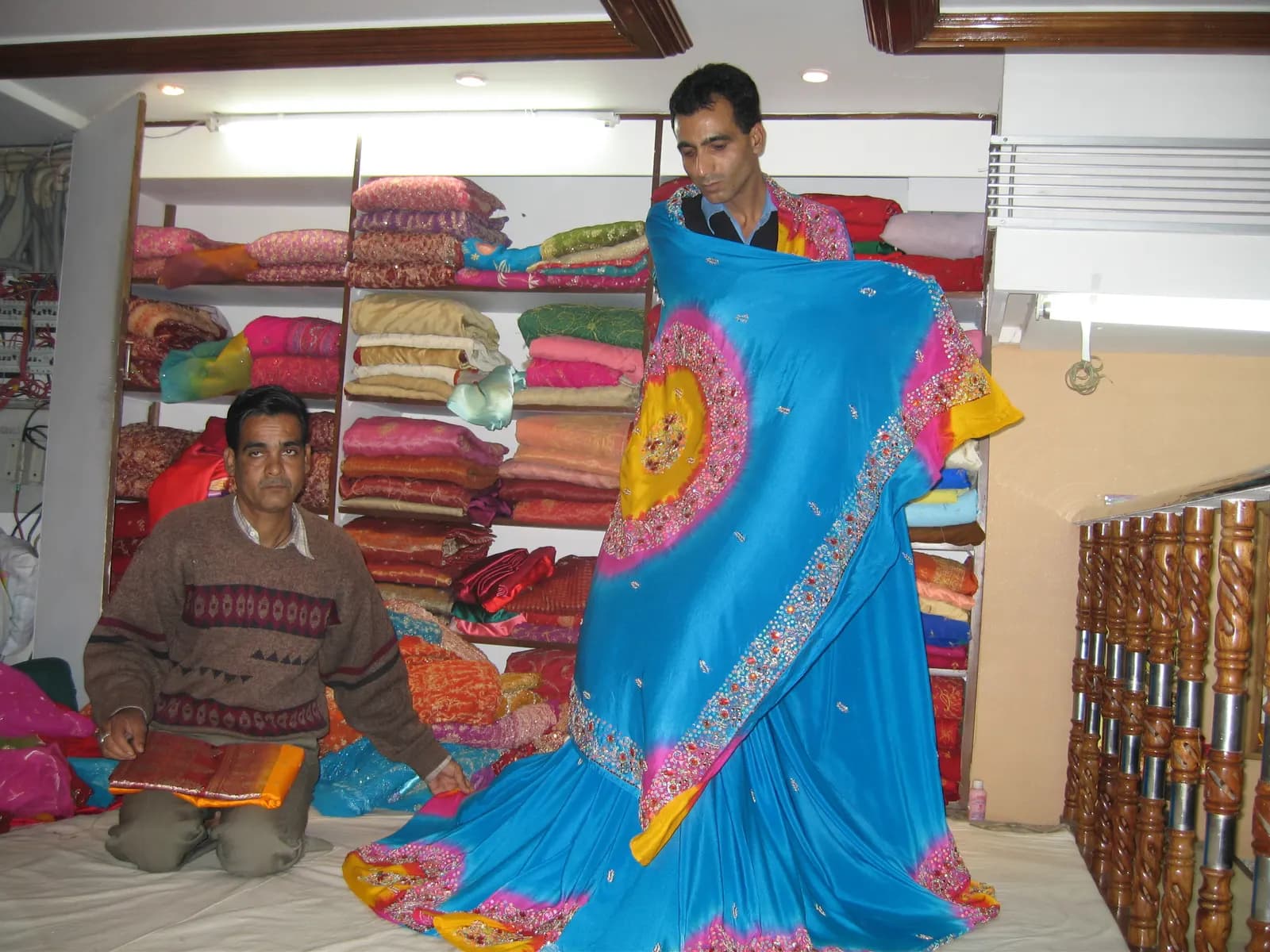
For made-to-measure work you need reliable tailoring capacity. Options are salaried tailors in your shop, piece-rate karigars working from their own units, or a mix. In-house tailors give you control over finish and deadlines; outside karigars keep your fixed costs low but add travel and delay. Whichever you use, keep a measurement card for every customer, a written delivery date, and a trial before the final finish — remakes are the biggest hidden cost in a stitching business.
Boutique name ideas — and how to protect yours
A boutique's name goes on the board, the labels, the bags, the Instagram handle and the GST invoice, so it is worth an evening's thought. The best names are short, easy to say over the phone, suggest the style without describing it, and can be protected. Here are starting points by style. They are ideas to adapt, not names we've checked — some may already be registered, so search every one.
- Indian and heritage: Dhaaga Studio, Kesariya Threads, Mulmul Lane, Silai Ghar, Rang Mahal Couture, Chikan Katha.
- Founder-led: Ananya by Design, Studio Meera, Ritu's Atelier, House of Kavya, Label Nidhi.
- Modern and minimal: The Fitting Room, Seam & Story, Drape Edit, Loom Room, Hemline Studio.
- Bridal and festive: Shagun Bridal Studio, Zari Lane, Mehfil Couture, Phera Trousseau.
- Local and community: your street, town or river in the name — for example "Ganga Ghat Weaves" or "MG Road Atelier".
Five checks before you finalise a name
Step 1
Distinctive, not descriptive
Step 2
IP India search
Class 25 and 35
Step 3
Handle and domain free
Step 4
Easy to say and spell
Step 5
File TM-A
use ™ after filing
Use our business name generator for more combinations, then run the shortlist through five checks:
- Distinctive, not descriptive. "Ladies Boutique" or "Fashion Point" describes the trade and can't be registered as a trade mark. An invented or suggestive word can.
- Trade mark search. Search the IP India public trade mark database for identical and similar marks. A boutique should check Class 25 (clothing, footwear and headwear) and Class 35 (bringing together goods for retail, in shops or online). If someone has a similar mark for clothing, choose again.
- Handle and domain. Check that the Instagram handle and a .in or .com domain are free, or close enough.
- Say it aloud. If customers can't spell it after hearing it once, they won't find you online.
- File. Apply on Form TM-A. E-filing costs ₹4,500 per class for individuals, startups and small enterprises (a Udyam certificate helps prove small-enterprise status) and ₹9,000 for others. You can use the ™ symbol once you've applied; ® only after registration. Our trademark registration guide covers objections and timelines.
Funding a boutique
Most boutiques are funded by the owner's savings plus a small loan. Under the PM Mudra Yojana, banks and NBFCs lend for non-farm businesses including retail and tailoring: Shishu up to ₹50,000, Kishore up to ₹5 lakh, Tarun up to ₹10 lakh, and Tarun Plus up to ₹20 lakh for those who have repaid an earlier Tarun loan — without collateral. A boutique that designs and manufactures its own label may also look at PMEGP, which treats manufacturing projects differently from trading. See our Mudra loan guide for documents and the application.
PM Mudra loan limits for a boutique
₹50,000
Shishu
home boutique, first machines
₹5 lakh
Kishore
small shop fit-out and stock
₹10 lakh
Tarun
larger shop or second outlet
₹20 lakh
Tarun Plus
after repaying a Tarun loan
Lenders want to see a simple business plan: your customer, the range, the cost table above with real quotes, a monthly P&L for the first year, and how the loan will be repaid. A plan that shows stitching income steadying cash flow in slow retail months is far more convincing than one built only on stock sales.
Mistakes new boutique owners make
Buying too wide. One piece in six colours and four sizes ties up cash in stock that won't sell through. Start with fewer styles in more depth.
Underpricing stitching. If you charge less than a tailor-hour costs you, every order loses money. Raise prices before you add a third tailor.
Ignoring the GST line. Assuming the ₹40 lakh limit when you also stitch, or staying on composition after stitching income grows, leads to back tax and interest. Review your GST position every year in April.
No trial, no measurement card. Remakes eat margin and customers. A recorded measurement and a trial before finishing pay for themselves.
Naming without searching. Printing labels and bags under a name someone else owns in Class 25 can mean a legal notice and a rebrand.
What to do next
Write down your customer and your format in one sentence, then build your cost sheet with real quotes in the startup cost calculator. Shortlist three names and search them before anything is printed, register on Udyam, and work out from your expected stitching income which GST threshold applies to you. If you are leaning towards your own label rather than a boutique, the clothing manufacturing business guide covers the factory side.
This is general information, not legal or tax advice — confirm on the official source or with a professional.
Frequently asked questions
Our estimate for a 250–350 sq ft boutique with in-house stitching in a tier-2 city is about ₹8 lakh to ₹19 lakh, covering deposit, interiors, display, two or three sewing machines, opening stock, registrations, launch marketing and two months' working capital. A home boutique that takes stitching orders and sells a small curated range can start at roughly ₹75,000 to ₹2.5 lakh. Get local quotes before you commit.
A boutique that only sells clothes within its state needs GST registration once turnover crosses ₹40 lakh in most states. If you also charge for stitching or alterations, the lower ₹20 lakh limit applies, because the higher limit is only for businesses supplying goods exclusively. Selling to customers in another state requires registration from the first sale.
Readymade garments sold at up to ₹2,500 a piece carry 5% GST and those above carry 18%, from 22 September 2025. Sarees and unstitched fabric are 5%. Stitching a customer's own fabric is a tailoring service taxed at 5%. A boutique on the composition scheme pays 1% of turnover instead and cannot collect GST from customers.
It can be. Boutiques earn on two lines — a markup of roughly 2 to 2.5 times on ready-to-wear and labour margin on stitching. In our worked example, a boutique selling about ₹2.8 lakh a month keeps around ₹60,000 for the owner after rent, two tailors, an assistant and a loan EMI, and breaks even at about ₹1.8 lakh of monthly sales. Unsold stock and slow seasons are the main risks.
Pick a short name that is easy to say on the phone, hints at your style, and is not descriptive on its own — 'Ladies Boutique' can't be protected. Search the IP India trade mark database in Class 25 (clothing) and Class 35 (retail services), check the Instagram handle and domain, then file a trade mark application. E-filing costs ₹4,500 per class for individuals and small enterprises.
Yes. Many boutiques start with one or two sewing machines at home, taking stitching orders and selling a small range through WhatsApp and Instagram. Check whether your housing society or local body allows commercial activity, register on Udyam for free, and get GST registration if you ship to other states or cross the threshold. Move to a shop once repeat orders fill your calendar.
Sources & verification
Figures on this page were checked against the sources below when it was last reviewed on 9 October 2026. Each rate and limit is stored once with its own official source and review date, and official update channels are monitored daily so changes are picked up. How we verify
- 1.Notification No. 15/2025-Central Tax (Rate), 17 September 2025 (Gazette of India) — Ministry of Finance (Department of Revenue) · accessed 9 October 2026
- 2.Recommendations of the 56th GST Council — rate changes on goods (PIB press release) — GST Council / Press Information Bureau · accessed 9 October 2026
- 3.CGST Act, 2017 — section 10 (composition levy) — CBIC · accessed 9 October 2026
- 4.Trade Marks — Forms and official fees — Office of the Controller General of Patents, Designs and Trade Marks · accessed 9 October 2026
- 5.Nice Classification — Class 25 and Class 35 — World Intellectual Property Organization · accessed 9 October 2026
- 6.Maharashtra Shops and Establishments (Regulation of Employment and Conditions of Service) Rules, 2018 — Labour Department, Government of Maharashtra · accessed 9 October 2026
MSMETOOLS is an independent platform and is not affiliated with any government agency, ministry or department.
Tools for this
Startup Cost Calculator
Estimate how much capital you need to launch.
Break Even Calculator
Find your break even point and units.
Markup Calculator
Turn cost and markup into a selling price.
Business Name Generator
Find unique business names.
Related guides
 How to Start a Clothing Business in 2026: Costs & GSTRead guide
 Tiffin Service Business 2026: FSSAI, GST, Cost & ProfitRead guide
 Clothing Manufacturing Business 2026: Costs, Licences & ProfitRead guide
 Management Consulting Business 2026: GST, TDS & PricingRead guide
Official links open the government site in a new tab.