 Starting & growing a business
Cost of a Mineral Water Plant in 2026: Setup Cost by Capacity, Licences and a Real Monthly P&L
Cost of a mineral water plant in 2026: estimates for 20 L jar, 1000 and 2000 LPH plants, FSSAI licence and new testing scheme, BIS status, CGWA NOC, GST and a ₹ P&L.
 Edited by Sumeet YadavFounder & editor, MSMETOOLS · fact-checked against official sources
Contents (8)
- 1. "Mineral water" or packaged drinking water — which plant are you building?
- 2. Cost of a mineral water plant by capacity
- 3. Licences and approvals in 2026
- 4. GST on packaged and mineral water
- 5. Worked example: monthly P&L of a 20-litre jar plant
- 6. Funding a water plant
- 7. Common mistakes and how to avoid them
- 8. What to do next
The cost of a mineral water plant in India ranges from about ₹12 lakh for a small 20-litre jar unit to well over ₹1 crore for an automatic bottling line — and the machinery is only part of the bill. What decides whether you can start at all is groundwater permission, and what decides whether you survive is the monthly testing, distribution and price competition. This guide gives estimated setup costs by plant capacity, the licences you need in 2026 (the rules changed: BIS certification is no longer compulsory, and FSSAI's own testing scheme replaced it from 1 January 2026), the CGWA groundwater rules, GST after GST 2.0, and a worked monthly P&L for a jar plant. Rules were checked against FSSAI, CGWB and Gazette sources in October 2026; cost figures are labelled estimates with their basis.
Quick answer
Our estimate: a 20-litre jar plant (500–1,000 LPH) costs about ₹12–25 lakh in total; a 1,000 LPH semi-automatic bottling plant about ₹30–45 lakh; a 2,000 LPH automatic plant about ₹60–90 lakh, excluding land. You need an FSSAI licence (high-risk category, inspected before grant), groundwater NOC, pollution consent, GST and Legal Metrology registration. BIS certification is no longer mandatory — FSSAI's compulsory testing scheme applies from 1 January 2026.
Groundwater: no NOC for new packaged water units in over-exploited areas — check your block first
Testing: microbiology once a month, full panel once every six months, at an FSSAI-notified NABL lab
GST on all packaged and mineral water (HSN 2201): 5%, including 20-litre jars
Worked example: a jar plant breaks even near 337 jars a day at ₹30 ex-factory
"Mineral water" or packaged drinking water — which plant are you building?
Almost every "mineral water plant" advertised in India is really a packaged drinking water plant. It takes borewell or municipal water, purifies it through sand and carbon filters, reverse osmosis (RO), ultraviolet light and ozone, adds back permitted minerals if needed, and fills it into bottles, jars or pouches. FSSAI regulates this product under regulation 2.10.8 of the Food Products Standards regulations, and the matching Indian Standard is IS 14543.
Natural mineral water is a different product, regulated under FSSAI regulation 2.10.7 (Indian Standard IS 13428). It must come from a natural underground source such as a spring, with a stable mineral composition, and only limited treatments are allowed — you can't make it by adding minerals to RO water. It needs a protected natural source and far more investment, so this guide focuses on packaged drinking water, which is what searchers usually mean. Labelling packaged drinking water as "mineral water" is misbranding.
Within packaged drinking water there are three business models, and they need very different plants:
- 20-litre jar plants supply homes, offices, shops and events with refillable jars. Low capital, low price per litre, local delivery is the business.
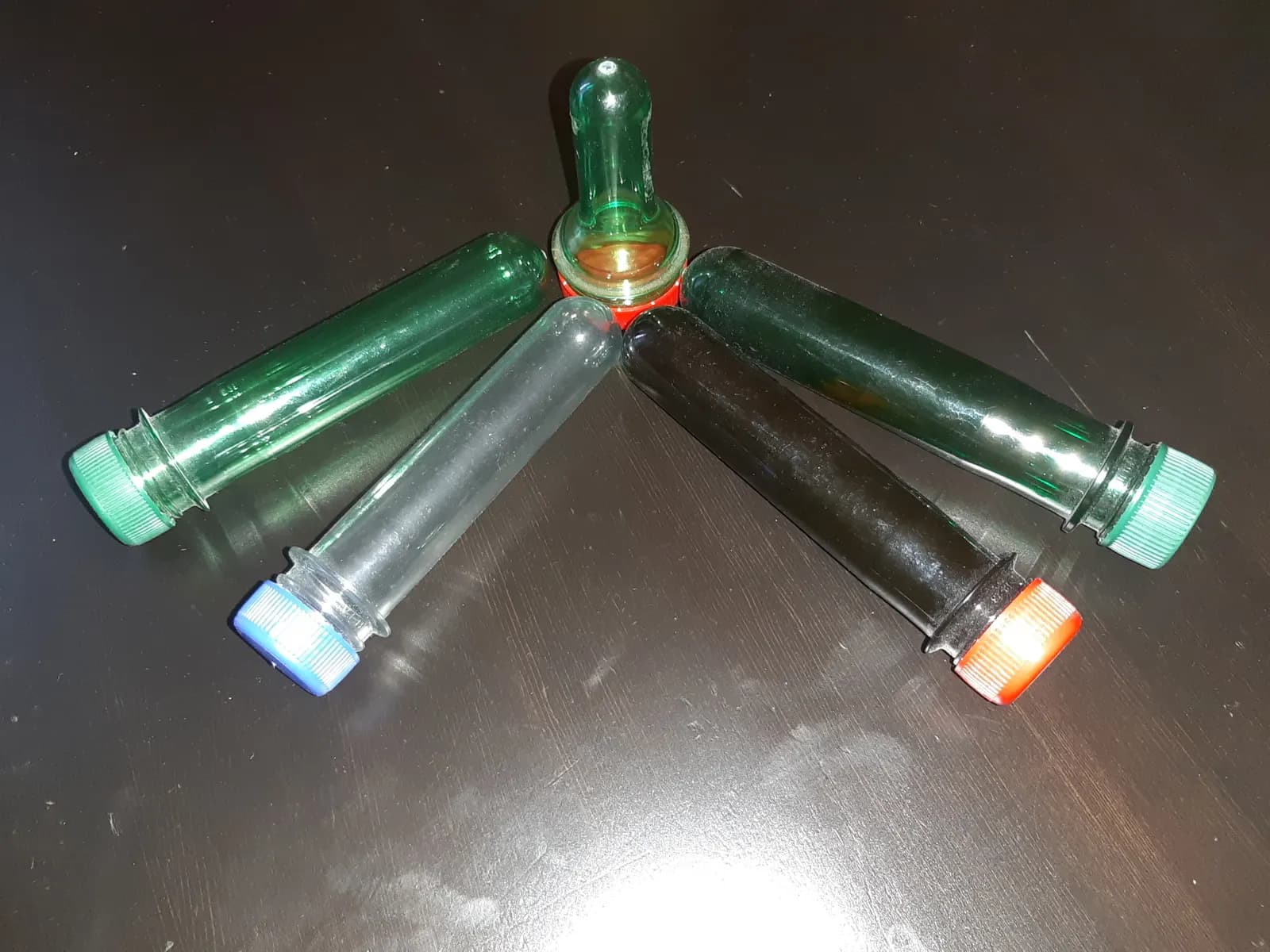
- Bottling plants fill 200 ml to 2 litre PET bottles, usually with their own blow-moulding machine making bottles from preforms. Higher price per litre, but you compete with national brands for shelf space.
- Mixed plants run both, typically starting with jars and adding a bottling line once the brand is known locally.
Cost of a mineral water plant by capacity
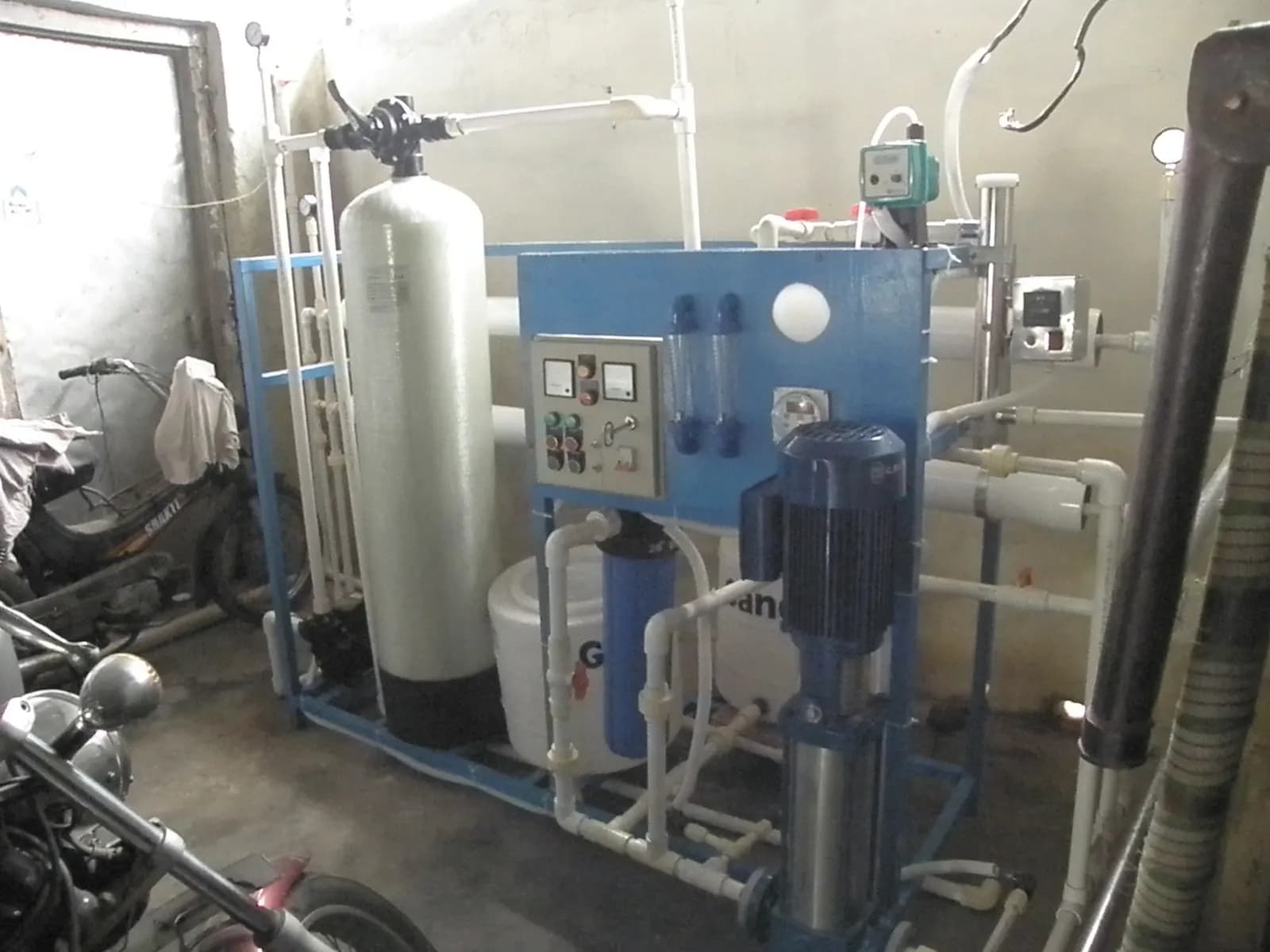
Plant capacity is quoted in LPH (litres per hour of treated water) and, for bottling, BPH (bottles per hour). A 1,000 LPH plant running an eight-hour shift produces about 8,000 litres — 400 twenty-litre jars or 8,000 one-litre bottles — before downtime. Raw-water demand is higher than output, because RO rejects part of the feed: one consultant's 2,000 LPH design assumes about 3,000 litres per hour of raw water at 70% recovery.
The table below gives our estimates. They are not official figures. The basis: turnkey machinery packages listed by vendors on B2B marketplaces in October 2026 (about ₹5–20 lakh for basic 1,000–5,000 LPH packages, usually without building, lab or working capital), and a water-treatment consultant's costing of about ₹75 lakh for a complete 2,000 LPH plant including machinery, utilities and furniture. Land is excluded everywhere.
| Plant type | Capacity | Machinery (est.) | Total project cost (est., excl. land) | Space (est.) |
|---|---|---|---|---|
| 20-litre jar plant, semi-automatic | 500–1,000 LPH | ₹6–12 lakh | ₹12–25 lakh | 1,500–2,500 sq ft |
| Small bottling plant, semi-automatic | 1,000 LPH | ₹15–25 lakh | ₹30–45 lakh | 2,500–3,500 sq ft |
| Automatic bottling plant | 2,000 LPH | ₹30–50 lakh | ₹60–90 lakh | about 5,000 sq ft (3,000 covered) |
| Automatic bottling + jar lines | 5,000 LPH and above | ₹70 lakh–₹1.5 crore | ₹1.2–2.5 crore | 8,000 sq ft and above |
Why vendor quotes look so much cheaper than this table: a "₹10 lakh turnkey plant" listing usually covers the RO system, a filling and capping machine and some conveyors. It rarely includes the building and civil work, the borewell and raw-water tanks, a generator or electrical upgrades, the in-house laboratory, the cold room or storage area, delivery vehicles, the first stock of jars, preforms, caps and labels, licence and testing costs, and three to six months of working capital. Those items often equal or exceed the machinery bill.
What goes into the project cost
For a typical 1,000 LPH semi-automatic plant, an estimated breakdown looks like this:
- Water treatment (raw-water tank, sand and carbon filters, softener if needed, RO, UV, ozonator, stainless steel product tanks): ₹6–10 lakh
- Filling line (rinsing–filling–capping machine for bottles, or a jar washing and filling machine; batch coder; shrink wrapper): ₹5–10 lakh
- Blow-moulding machine for PET bottles, if you make your own: ₹3–8 lakh
- Laboratory equipment for daily in-house checks (TDS, pH, microbiology incubator, autoclave): ₹1.5–3 lakh
- Civil work, flooring, drainage and electrical: ₹6–12 lakh on a rented shed
- Borewell, pump and power backup: ₹2–5 lakh
- Licences, initial testing and consultancy: ₹1–3 lakh
- Working capital (jars, preforms, caps, labels, salaries, fuel for three months): ₹4–8 lakh
Licences and approvals in 2026
FSSAI licence and the high-risk category
Packaged drinking water and mineral water are food under the Food Safety and Standards Act, so you need FSSAI approval before production. FSSAI placed both products in its High Risk Food Category by an order of 29 November 2024. That means an inspection before your licence or registration is granted, annual risk-based inspections afterwards, and — for units with a central licence — an annual audit by an FSSAI-recognised third-party agency.
The tier depends on turnover: units up to ₹50 crore take a state licence (₹2,000 – ₹5,000/year for manufacturers, depending on capacity), larger units a central licence (₹7,500/year). Apply on FoSCoS with your layout plan, list of machinery, water test report from an accredited laboratory, source of water, and the identity and address documents. The statutory processing time is up to 60 days. Our FSSAI registration guide covers the application.
Packaged water rules at a glance (2026)
Not required
BIS mark
Omitted 17 October 2024
1 January 2026
FSSAI testing scheme applies from
once a month
Microbiological tests
5%
GST on HSN 2201 water
BIS certification — no longer mandatory
For two decades, packaged drinking water and natural mineral water could be sold only with the BIS ISI mark under IS 14543 or IS 13428. That changed. FSSAI gazette-notified the omission of mandatory BIS certification on 17 October 2024, and its order of 17 December 2025 states that the BIS certification mark is no longer required for packaged drinking water and mineral water. In its place, every manufacturer must comply with FSSAI's Scheme of Testing from 1 January 2026.
Many vendor and consultant pages — and older project reports banks still circulate — say you need a BIS licence costing lakhs and months of waiting. If you're starting now, that step is gone. Some institutional buyers and older tender documents may still refer to the ISI mark, so check what your buyers ask for, but it is no longer a legal requirement for sale. Our BIS certification guide explains how BIS licensing works for products where it is still compulsory.
What FSSAI's Scheme of Testing requires
The testing scheme is the new core compliance burden, so price it in from day one:
- Microbiological tests — coliforms, faecal streptococci and Staphylococcus aureus, sulphite-reducing anaerobes, Pseudomonas aeruginosa, aerobic count, yeast and mould, Salmonella and Shigella, Vibrio — once a month.
- Undesirable substances such as barium, copper, iron, manganese, nitrate, nitrite, zinc, aluminium, calcium and magnesium — once every three months.
- Pesticide residues — once every six months.
- All parameters of FSSR 2.10.8 — once every six months, as a licence condition.
These tests must be done at an FSSAI-notified, NABL-accredited laboratory. Source water must be tested for all parameters before use and again whenever you change or add a source. If a six-monthly test fails, testing goes up to monthly until three consecutive batches pass. A microbiological failure means rechecking stock, investigating the cause, and restarting dispatch only after five consecutive batches pass — with records kept for five years. Containers you reuse must be plastic of 5 litres and above or glass, and soiled or deformed jars must be discarded.
Old BIS regime vs FSSAI testing scheme
| Before 17 October 2024 | From 1 January 2026 | |
|---|---|---|
Legal requirement to sell | BIS licence and ISI mark (IS 14543 / IS 13428) | FSSAI licence + compliance with FSSAI Scheme of Testing |
Who checks the product | BIS inspections and market samples | FSSAI pre-licence and annual risk-based inspections |
Routine testing | In-house lab under BIS scheme of testing | FSSAI-notified NABL lab: micro once a month, full panel once every six months |
Extra for central licensees | — | Annual third-party food safety audit |
Legal requirement to sell
- Before 17 October 2024
BIS licence and ISI mark (IS 14543 / IS 13428)
- From 1 January 2026
FSSAI licence + compliance with FSSAI Scheme of Testing
Who checks the product
- Before 17 October 2024
BIS inspections and market samples
- From 1 January 2026
FSSAI pre-licence and annual risk-based inspections
Routine testing
- Before 17 October 2024
In-house lab under BIS scheme of testing
- From 1 January 2026
FSSAI-notified NABL lab: micro once a month, full panel once every six months
Extra for central licensees
- Before 17 October 2024
—
- From 1 January 2026
Annual third-party food safety audit
Groundwater NOC from CGWA
Groundwater permission is the approval most likely to stop your project. Groundwater use by industry is regulated by the Central Ground Water Authority (CGWA) under guidelines notified on 24 September 2020 and amended on 29 March 2023, applied online through its NOCAP portal; some states run their own groundwater authority and issue permissions themselves.
The guidelines classify each block (assessment unit) as safe, semi-critical, critical or over-exploited. Clause 4.1 is blunt: no NOC will be granted to new packaged water industries in over-exploited areas, even if they are MSMEs, although other new MSMEs can get one. In safe, semi-critical and critical areas you can get an NOC but pay groundwater abstraction charges based on how much you draw and how stressed the area is, and you must submit self-compliance reports. In August 2019 CGWA directed FSSAI and BIS to make sure packaged drinking water units using groundwater hold a CGWA NOC before they are licensed, so expect your FSSAI application to be checked against your groundwater permission. NOC holders also have to fit digital flow meters and follow rainwater-harvesting conditions.
Check your block's category in the latest groundwater resource assessment before you sign a lease or pay a machinery advance. If the block is over-exploited, consider a site in a safe block or a source such as a municipal bulk connection where permitted.
Pollution consent, Legal Metrology and other registrations
- State Pollution Control Board — Consent to Establish before construction and Consent to Operate before production. RO reject water and washing effluent are the main concerns; your board's category list decides the fees and validity, so confirm the classification with your SPCB.
- Legal Metrology — manufacturers and packers of pre-packaged commodities must register with the state Legal Metrology department and print the mandatory declarations: name and address, net quantity, MRP, month and year of manufacture and consumer-care details.
- Plastic EPR — producers and brand owners using plastic packaging must register on the CPCB EPR portal for plastic packaging and meet collection and recycling obligations.
- GST registration, Udyam registration (free), a trade licence from the local body, and a factory licence once your workforce and power use cross the Factories Act thresholds.
- Trademark — register your brand name early; water brands are crowded and copycat names are common.
Setting up a packaged drinking water plant
- 1
Check groundwater status and site
Confirm the block is not over-exploited, test the raw water, and check power, road access and drainage.
Tip: Do this before paying any machinery advance.
- 2
Prepare the project report and finance
Fix capacity and product mix (jars, bottles), get two or three machinery quotations, and apply for a term loan or PMEGP.
- 3
Apply for groundwater NOC and pollution consent
CGWA NOC portalFile on NOCAP (or your state authority) and with the State Pollution Control Board for Consent to Establish.
- 4
Build and install
Civil work, hygienic flooring and drainage, then machinery installation and trial runs.
- 5
Test water and apply for FSSAI licence
FoSCoSGet source and product water tested at an FSSAI-notified NABL lab, then apply on FoSCoS. Expect a pre-licence inspection.
- 6
Register GST, Legal Metrology and EPR; start production
Then follow the monthly, quarterly and six-monthly testing calendar from day one.
GST on packaged and mineral water
GST 2.0 cut the tax on drinking water sharply. Since 22 September 2025, Notification 9/2025–Central Tax (Rate) places all "waters, including natural or artificial mineral waters and aerated waters, not containing added sugar or other sweetening matter nor flavoured" under HSN 2201 in its 5% schedule. So packaged drinking water, mineral water and 20-litre jars all attract 5%. Before that, bottled water was taxed at 18% and 20-litre jars at 12%. Flavoured or sweetened water falls under other headings and rates.
Your inputs often carry higher rates — machinery, preforms and plastic packaging generally at 18% — so a water plant can accumulate input tax credit it can't use against 5% output tax. Refund of unutilised credit on inputs (not on capital goods or services) is available under the inverted duty structure rules, so keep purchase records clean. Below the GST registration threshold of ₹40 lakh, a small local jar plant may not need to register, but most plants supplying distributors register anyway to claim credit on machinery. See our guide to GST on food items for related rates.
Worked example: monthly P&L of a 20-litre jar plant
Here is an illustrative month for a 1,000 LPH jar plant in a tier-2 town, selling to distributors and offices. Every figure is our assumption for illustration; replace it with local quotes.
Assumptions. Sales of 400 jars a day for 26 days = 10,400 jars a month, at ₹30 per jar ex-factory (excluding GST). Variable cost per jar ₹10: electricity and RO consumables ₹3, cap, seal and label ₹3, jar washing and replacement allowance ₹2, delivery fuel ₹2.
| Monthly line | Basis | Amount |
|---|---|---|
| Sales (excl. GST) | 10,400 jars × ₹30 | ₹3,12,000 |
| Variable costs | 10,400 × ₹10 | −₹1,04,000 |
| Contribution | ₹20 per jar | ₹2,08,000 |
| Salaries | 5 staff (operator, lab assistant, 2 helpers, driver) | −₹75,000 |
| Rent | Shed of 2,000 sq ft | −₹30,000 |
| Loan EMI | ₹15 lakh term loan | −₹33,000 |
| External lab tests | Monthly micro + quarterly and six-monthly panels, averaged | −₹10,000 |
| Groundwater charges, licences, insurance (averaged) | −₹7,000 | |
| Repairs, admin, phone, misc. | −₹20,000 | |
| Fixed costs | −₹1,75,000 | |
| Profit before tax | ₹33,000 |
Break-even is ₹1,75,000 ÷ ₹20 = 8,750 jars a month, about 337 jars a day. At 300 jars a day the plant loses about ₹19,000 a month; at 500 a day it earns about ₹85,000. That's why jar plants live and die by their delivery routes and collection of empty jars, not by their machinery.
Try it — your jar plant's break-even
A bottling line changes the economics: a one-litre bottle fetches several times more per litre than a jar, but the PET preform, cap, label and shrink-wrap add several rupees per bottle, distributors and retailers take a large cut, and you compete with national brands for shelf space. Many small plants start with jars for steady cash flow and add bottles under their own brand for local events, hotels and institutions once distribution is in place.
Funding a water plant
Most small plants are financed with a bank term loan for machinery and building plus a working-capital limit. Under PMEGP, a new manufacturing unit can have a project cost of up to ₹50 lakh, with a margin-money subsidy of 15% to 35% depending on location and category — enough for a jar plant or a small bottling unit. Loans for micro and small enterprises can also be covered under the CGTMSE credit guarantee, so you may not need collateral. Several states add capital or interest subsidies for food processing units; Uttar Pradesh's MSME portal, for example, lists packaged drinking water as a food-processing business category with linked state and central schemes. Register on Udyam before applying, since most schemes ask for it.
Common mistakes and how to avoid them
Buying machinery before groundwater clearance. A plant in an over-exploited block can't get an NOC for a new packaged water unit. Check first.
Planning around a BIS licence. Old project reports budget lakhs and months for BIS. Budget instead for the FSSAI testing calendar: monthly micro tests and periodic full panels at an FSSAI-notified NABL lab.
Under-sizing the RO for your raw water. High-TDS borewell water lowers recovery and raises membrane costs. Test raw water before choosing the plant, and size pre-treatment accordingly.
Ignoring jar losses. Jars go missing, crack and get soiled; the testing scheme bans reusing deformed or soiled containers. Take a deposit per jar and track jars by route.
Pricing below cost to win distributors. Water is a volume game with thin margins; a price war at ₹25 a jar can wipe out the contribution in our example. Compete on reliability and hygiene instead.
Calling it "mineral water". Unless you have a natural mineral water source and approval under FSSR 2.10.7, label it packaged drinking water.
Official links
- FSSAI — Scheme of Testing for PDW & Mineral Water (17 Dec 2025)BIS omission and testing frequencies
- FoSCoS — FSSAI licensing portalApply for FSSAI licence
- CGWA NOCAP portalGroundwater NOC applications
- Notification 9/2025–Central Tax (Rate)GST rate on HSN 2201 water
- UP MSME 1-Connect — Packaged Drinking WaterBusiness profile and linked schemes
- PMEGP portal (KVIC)Apply for PMEGP loan with subsidy
What to do next
Start with the two checks that can sink the project — your block's groundwater category and a raw-water test — then size the plant to the jars or bottles you can realistically sell each day. Put your own fixed costs and per-unit costs into our break-even calculator, and use the startup cost calculator to total machinery, civil work and working capital before you approach a bank or apply for PMEGP.
This is general information, not legal or tax advice — confirm on the official source or with a professional.
Frequently asked questions
Our estimate for a small 20-litre jar plant of 500–1,000 litres per hour is ₹12–25 lakh in total, of which machinery is roughly ₹6–12 lakh; a semi-automatic 1,000 LPH bottling unit is closer to ₹30–45 lakh. These are estimates from vendor quotations and a consultant's project costing, excluding land. Your figure depends on automation, building, borewell and the bottle sizes you fill.
Not any more. FSSAI omitted the mandatory BIS certification for packaged drinking water and mineral water on 17 October 2024. Instead, from 1 January 2026 every manufacturer must follow FSSAI's compulsory Scheme of Testing, with monthly microbiological tests and a full-parameter test once every six months at an FSSAI-notified NABL lab. Many guides online are out of date on this.
You need an FSSAI licence (with a pre-licence inspection, as packaged water is a high-risk category), groundwater permission from CGWA or your state groundwater authority, consent from the State Pollution Control Board, GST registration, Legal Metrology packer registration, and local trade and building approvals. Plastic packaging also brings EPR registration duties on the CPCB portal.
Since 22 September 2025, all waters under HSN 2201 — packaged drinking water, natural or artificial mineral water and unsweetened, unflavoured aerated water — attract 5% GST, including 20-litre jars. Earlier, bottles were taxed at 18% and 20-litre jars at 12%. Flavoured or sweetened water is classified differently.
No. CGWA's groundwater guidelines say no objection certificates will not be granted to new packaged water industries in over-exploited assessment units, even if they are MSMEs. Check your block's groundwater category before buying land or machinery. In safe, semi-critical and critical areas you can get an NOC but pay abstraction charges based on the volume you draw.
Thin margins, driven by volume. In our worked example a 1,000 LPH jar plant selling 400 jars a day at ₹30 ex-factory earns about ₹33,000 a month before tax after ₹1.75 lakh of fixed costs; it breaks even near 337 jars a day. Bottled water earns more per litre but needs preforms, a brand and a distribution network.
Sources & verification
Figures on this page were checked against the sources below when it was last reviewed on 9 October 2026. Each rate and limit is stored once with its own official source and review date, and official update channels are monitored daily so changes are picked up. How we verify
- 1.Compliance of Scheme of Testing for Packaged Drinking Water & Mineral Water (FSSAI order, 17 December 2025) — Food Safety and Standards Authority of India · accessed 9 October 2026
- 2.Notification No. 9/2025–Central Tax (Rate) — Ministry of Finance (Gazette of India) · accessed 9 October 2026
- 3.Counter affidavit of the Central Ground Water Board in OA No. 37 of 2025 (NGT, Western Zone) — Central Ground Water Board / National Green Tribunal · accessed 9 October 2026
- 4.FSSAI classifies packaged drinking water as 'high-risk' category; imposes new inspection norms — Storyboard18 · accessed 9 October 2026
- 5.BIS mark for packaged water replaced with compulsory testing scheme — Fox Mandal · accessed 9 October 2026
- 6.CGWA notice of 5 August 2019 — directions to FSSAI and BIS on packaged drinking water units — Central Ground Water Authority · accessed 9 October 2026
- 7.Packaged drinking water plant system requirements — Netsol Water Solutions · accessed 9 October 2026
- 8.Mineral water turnkey projects — vendor listing — IndiaMART (vendor listing) · accessed 9 October 2026
- 9.Packaged Drinking Water — business category and project report — MSME Department, Government of Uttar Pradesh (UP MSME 1-Connect) · accessed 9 October 2026
MSMETOOLS is an independent platform and is not affiliated with any government agency, ministry or department.
Tools for this
Break Even Calculator
Find your break even point and units.
Startup Cost Calculator
Estimate how much capital you need to launch.
EMI Calculator
Calculate loan EMIs for business and personal loans.
GST Calculator (India)
Calculate GST for your sales and purchases with current rates.
Related guides
 Bakery Business Plan 2026: Costs, FSSAI, GST & ProfitRead guide
 Restaurant Business Plan India (2026): Costs, Licences & P&LRead guide
 How to Start a Cloud Kitchen in India (2026): Costs & LicencesRead guide
 Flour Mill Business in India 2026: Chakki Cost, GST & ProfitRead guide
Official links open the government site in a new tab.