 Starting & growing a business
Poultry Farming Business Plan (2026): Broiler vs Layer, Costs, Subsidy and a Worked P&L
Poultry farming business plan for 2026: broiler vs layer, NABARD unit costs, NLM subsidy status, biosecurity, licences, GST and a worked 5,000-bird broiler P&L.
 Edited by Sumeet YadavFounder & editor, MSMETOOLS · fact-checked against official sources
Contents (11)
- 1. Broiler or layer: choosing your model
- 2. Independent or contract farming
- 3. Setup costs: what NABARD's unit costs tell you
- 4. Subsidy and loans: what is actually available
- 5. Site, shed and equipment
- 6. Biosecurity: protecting the flock
- 7. Licences and approvals
- 8. GST and tax on poultry
- 9. Worked P&L: a 5,000-bird broiler farm
- 10. Common mistakes in poultry farm plans
- 11. What to do next
A poultry farming business looks simple from outside — a shed, some chicks, feed and a buyer. In practice it is a volume game with thin margins, where a 2% rise in mortality or a ₹10 fall in the live-bird price can turn a profitable batch into a loss. This plan is for farmers, rural youth and small investors in India deciding between broilers and layers, planning a first shed, or preparing a project report for a bank. It uses NABARD's 2025-26 unit costs, the National Livestock Mission guidelines, CPCB's poultry rules and the current GST notifications, all checked in October 2026, and ends with a worked 5,000-bird broiler P&L you can adapt.
Quick answer
A poultry farming business plan should fix your model (broiler, layer or breeder), flock size, whether you farm independently or on contract, shed and equipment cost, biosecurity, licences and the price at which you break even. NABARD's 2025-26 costs put a 1,000-bird broiler farm at ₹5,30,000 and a 5,000-bird layer farm at ₹43,30,000. The NLM subsidy of 50% of project cost, up to ₹25 lakh covers only parent farm-cum-hatchery units, not regular broiler sheds.
Broilers: 5–6 week batches, low capital, price risk — or contract farming for steadier income
Layers: high capital for cages, 18–20 weeks before eggs, daily cash flow afterwards
Live birds, eggs in shell, fresh chicken and poultry feed carry Nil GST
Pollution consent: CPCB's 5,000-bird clause is stayed by the Supreme Court — ask your SPCB
Biosecurity is the single biggest profit lever
Broiler or layer: choosing your model
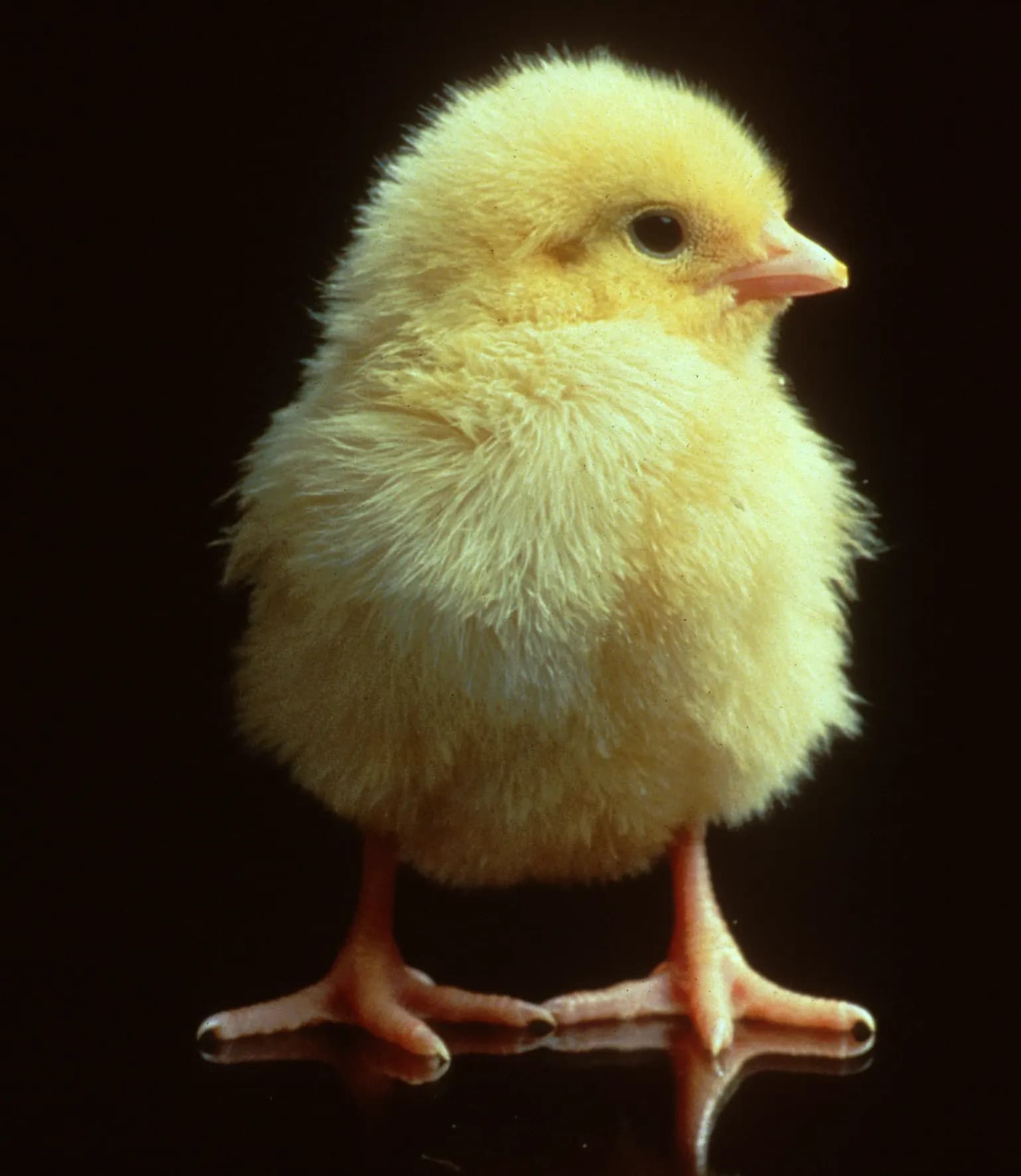
Broiler farming raises meat birds from day-old chicks to about 2–2.5 kg live weight in roughly five to six weeks. The standard method is all-in, all-out on deep litter: the whole shed is filled with chicks of the same age, emptied when they are sold, then cleaned and disinfected before the next batch. With a cleaning gap of about two weeks, a shed manages roughly six batches a year. Capital needs are modest — an open-sided shed, feeders, drinkers, brooders and a generator — and income arrives in lumps at the end of each batch.
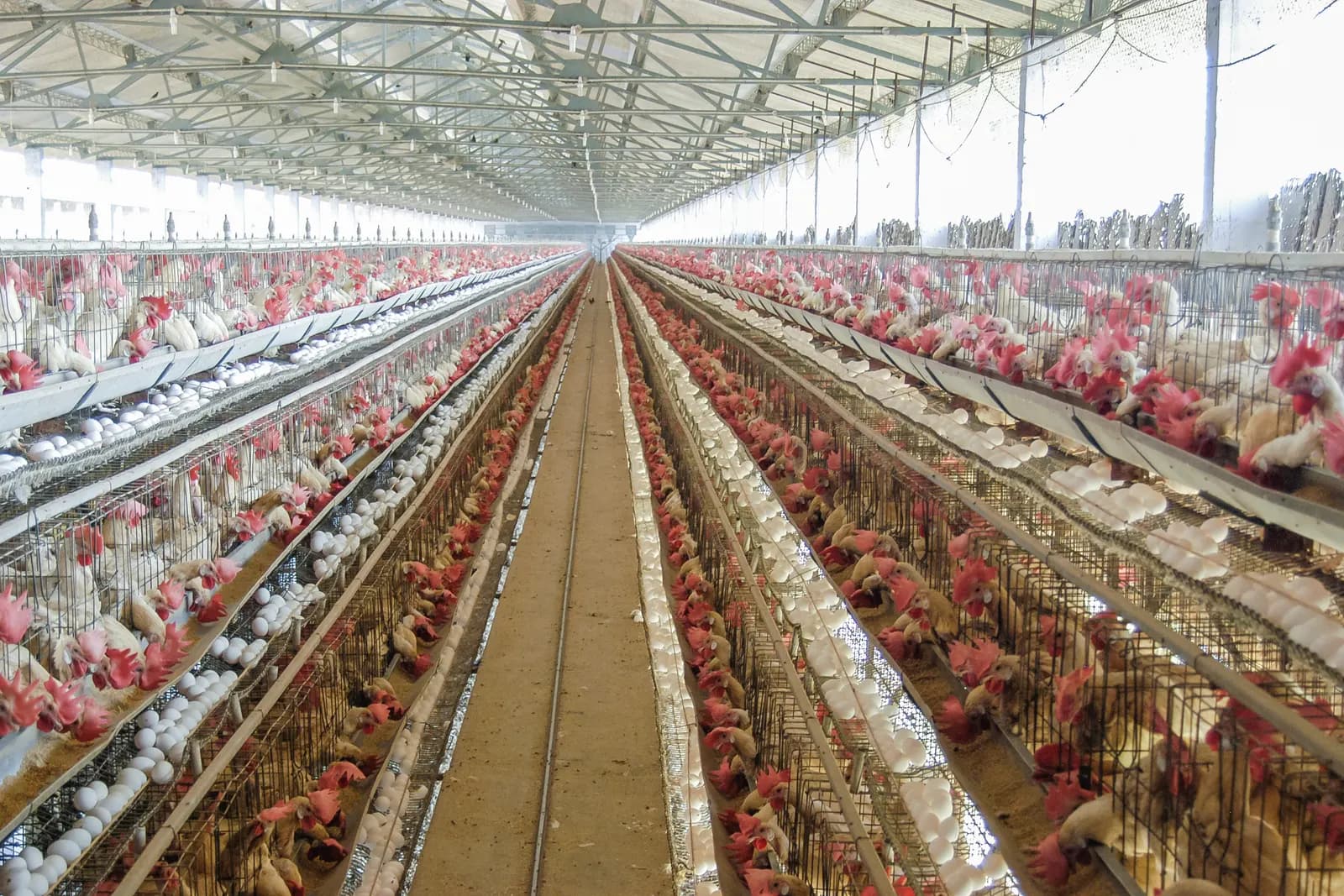
Layer farming keeps hens for eggs. Chicks are brooded and grown for about 18–20 weeks, then lay for around a year before being sold as spent hens. Most commercial layer farms use cages, as in the Namakkal belt of Tamil Nadu, which raises the capital cost sharply but makes feeding, egg collection and disease control easier. Income is daily, but you carry five months of feed and care before the first egg is sold.
Breeder and hatchery units keep parent birds to produce hatching eggs and day-old chicks. They need the most skill and capital, and they are the only poultry model the National Livestock Mission subsidises — for low-input, backyard-type breeds rather than commercial broilers.
Rural and backyard poultry — Vanaraja, Kuroiler, Kadaknath, Gramapriya and similar coloured birds — are raised semi-free-range on lower-cost feed and sell at a premium to local buyers. Volumes are small, but so is the risk, and it is a sensible way to learn before committing to a commercial shed.
| Factor | Broiler (5,000 birds) | Layer (5,000 birds, cage) | Rural/backyard (low-input birds) |
|---|---|---|---|
| NABARD 2025-26 unit cost basis | ₹5,30,000 per 1,000 birds (Arunachal); ₹2,87,500 per 500 (Rajasthan) | ₹43,30,000 for 5,000 birds (Arunachal) | Breeding farms for low-input birds: ₹30.6 lakh (Arunachal) |
| Cycle | About 6 weeks + 2 weeks cleaning | 18–20 weeks rearing, ~12 months laying | 3–5 months for meat birds |
| Cash flow | Lump sum after each batch | Daily, after rearing | Irregular, local sales |
| Main risk | Live-bird price swings | Egg price, disease, cage capital | Small scale, predators |
| Contract option | Common (integrators) | Less common | Rare |
Independent or contract farming
In much of south and west India, and increasingly in the north and east, broilers are grown under contract for an integrator. The integrator supplies day-old chicks, feed, medicines and technical supervision, and lifts the grown birds. You provide the land, shed, equipment, labour, electricity, water and litter, and you are paid a growing charge per kilogram of live weight, usually adjusted for mortality and feed conversion against targets. The terms vary between companies and regions, so treat any figure you hear as negotiable and get the agreement in writing.
Contract farming takes most of the market risk off you: if the live-bird price crashes, the integrator absorbs it. It also removes the need for ₹8–9 lakh of working capital per 5,000-bird batch. The trade-off is a lower and capped income, dependence on one buyer, and penalties if your mortality or feed conversion is worse than the integrator's standard. Read the clauses on chick quality, delayed lifting (birds that stay longer eat more feed), and how disputes over weight are settled.
Independent farming means you buy chicks and feed yourself and sell to traders, retailers or processors. You keep the whole margin in good months and lose money in bad ones. Most independent farmers start with one shed, sell to two or three traders, and build a price history before expanding.
Setup costs: what NABARD's unit costs tell you
Banks appraise poultry loans against NABARD's state-wise unit costs, so these are the numbers your project report needs to be close to. NABARD's Arunachal Pradesh sheet for 2025-26 builds a 1,000-bird broiler farm (all-in, all-out on deep litter) like this:
| Cost head (1,000 broilers) | Basis | Amount |
|---|---|---|
| Shed, local materials | 1 sq ft per bird at about ₹255 per sq ft | ₹2,55,000 |
| Equipment (feeders, drinkers, brooders) | ₹16 per bird | ₹16,000 |
| Day-old chicks | ₹35 per chick | ₹35,000 |
| Feed | 6 kg per bird at ₹35 per kg | ₹2,10,000 |
| Medicines | ₹7 per bird | ₹7,000 |
| Insurance | ₹2 per bird | ₹2,000 |
| Miscellaneous | — | ₹5,000 |
| Total | ₹5,30,000 |
Rajasthan's 2025-26 sheet uses a simpler figure of ₹575 per bird for a 500-bird unit — ₹2,87,500 — with repayment over two years including six months' gestation. For layers, the Arunachal sheet budgets separate brooder, grower and layer sheds at ₹710 per sq ft, cages at ₹2.04 lakh, chicks at ₹48 each, and initial feed and medicines, for a total of ₹43,30,000 for 5,000 birds.
Three cautions when you use these figures. First, they exclude land. Second, shed costs differ widely: a bamboo-and-thatch shed in the north-east is far cheaper than a steel-truss shed with insulated roofing in Haryana or Telangana. Third, NABARD's feed allowance of 6 kg per broiler is conservative; a well-managed modern broiler flock usually eats less to reach market weight, which is why our P&L below uses a lower figure. Ask your bank for the current sheet for your own state's NABARD regional office.
Subsidy and loans: what is actually available
National Livestock Mission (NLM) — rural poultry. Under the NLM's breed development sub-mission, the Centre gives a one-time 50% of project cost, up to ₹25 lakh to individuals, self-help groups, FPOs, farmer cooperatives, joint liability groups and Section 8 companies setting up a parent farm, rural hatchery and brooder-cum-mother unit with at least 1,000 parent layers. The birds must be low-input technology breeds suited to free-range rearing, bought from government poultry organisations, research institutes or certified suppliers. The model in the guidelines keeps 1,100 parent birds to produce about 500 hatching eggs a day, a hatchery for 3,000 eggs a week, and a mother unit that rears chicks to four weeks before supplying them to village farmers.
Subsidy is routed through SIDBI to your lending bank in two halves: the first after you have spent 25% of the project cost on infrastructure and the state implementing agency has verified it, the second after completion. Self-financed projects must still be appraised by a bank and give a bank guarantee. You apply on nlm.udyamimitra.in.
NLM rural poultry subsidy at a glance
50% of project cost, up to ₹25 lakh
Capital subsidy
one time, via SIDBI
1,000 parent layers
Minimum parent flock
low-input breeds
25% spent
Before first instalment
verified by state agency
Status in 2026. The NLM portal's notice says beneficiaries who received a first instalment between 2023-24 and 2025-26 had to complete their projects and submit documents by 30 September 2026, or face cancellation and refund of the subsidy with 10% interest. Whether fresh applications are being sanctioned after the 2021-26 cycle depends on the scheme's continuation, so check the portal and your state animal husbandry department before counting on the money. Our goat farming business plan explains the same NLM process for sheep and goat units, which run under identical rules.
What NLM does not cover. A regular commercial broiler shed or cage layer farm is not eligible. Many websites and agents blur this; if someone promises "50% NLM subsidy" on a broiler shed, ask them to show the scheme component in the guidelines.
Loans. Banks lend for poultry as agriculture-allied activity. Kisan Credit Card limits for animal husbandry are collateral-free up to ₹2 lakh, and Mudra loans for allied activities go up to ₹10 lakh under the Tarun category without collateral (see our Mudra loan guide). For bigger sheds, expect the bank to ask for land documents, a project report based on the NABARD unit cost, and 15–25% of the cost as your own margin. Some states run their own poultry schemes with capital or interest subsidy for SC/ST or women farmers; ask the district animal husbandry office.
Site, shed and equipment
Choose a site on high, well-drained ground with reliable water and power, a road that trucks can use in the monsoon, and distance from other poultry farms, villages and water bodies. Distance from other farms is a biosecurity measure — disease spreads between farms through people, vehicles and wild birds — and distance from homes reduces complaints about smell and flies, which is the most common reason panchayats and pollution boards act against poultry farms.
For broilers in most of India, an open-sided shed running east–west, with a width of about 25–30 feet and length to suit the flock, keeps the sun off the birds and lets air flow through. Allow roughly 1 sq ft per broiler, as NABARD does. Curtains on the sides help in winter and rain. In hot regions an insulated roof, foggers and fans pay for themselves by cutting heat-stress deaths in April–June. Rice husk, groundnut hulls or sawdust make the litter, and litter must stay dry — wet litter breeds disease and ammonia.
Equipment for a broiler shed is basic: brooders (electric or gas) for the first two weeks, chick and adult feeders and drinkers, a weighing scale, a generator for power cuts, and a footbath at the door. Layer farms add cages, egg trays, and often automatic feeding and nipple drinkers. Poultry-keeping machinery, incubators and brooders attract only 5% GST since 22 September 2025, which lowers the equipment bill compared with the old 12% rate.
Biosecurity: protecting the flock
Most poultry farms that fail don't fail on price — they fail on disease. Ranikhet (Newcastle disease), Gumboro (infectious bursal disease), Marek's disease, coccidiosis, chronic respiratory disease and, in some years, avian influenza can kill a large share of a flock or stunt growth so badly that the batch never pays. Biosecurity means keeping disease out, and stopping it from spreading if it gets in.
Biosecurity basics for every poultry shed
0/9Avian influenza is notifiable. When an outbreak is confirmed, the state animal husbandry department follows the national action plan: birds and eggs around the infected site are culled, movement is restricted in the surrounding zone, and states pay compensation for culled birds at the rates they notify. You cannot insure against a cull order being made, but you can insure birds against death from disease through general insurers — compare policies and keep the records insurers ask for.
Licences and approvals
Local body. Most states expect a no-objection certificate or licence from the gram panchayat (or municipality, near towns) before you build. Some panchayats charge an annual fee per bird or per shed. Building rules for farm structures vary; ask the panchayat secretary and your tehsil office whether the land needs conversion for a poultry shed in your state, because some states treat poultry as an agricultural use and others don't.
Pollution control board. Poultry farms are in CPCB's Green category. CPCB's August 2021 environmental guidelines required farms with more than 25,000 birds at one location to get consent to establish (CTE) and consent to operate (CTO) from the state pollution control board. After a National Green Tribunal order, CPCB revised the guidelines in January 2022 to require consent for farms above 5,000 birds. That clause was stayed by the Supreme Court on 28 April 2023, and the stay was continued on 26 November 2024 until the appeal is decided. CPCB told the NGT in March 2026 that the other requirements of the 2022 guidelines — on manure and litter, dead birds, wastewater, flies and rodents — apply to all poultry farms regardless of size. Some states also impose their own consent requirement for farms below 25,000 birds, so ask your SPCB's regional office what it currently enforces.
Electricity and water. Apply early for a power connection; farms often get an agricultural or commercial tariff depending on the state. If you plan a borewell, check your state's groundwater rules.
FSSAI. Farming operations at the farm level generally sit outside FSSAI licensing, but once you slaughter, dress, pack or retail chicken or eggs, you need FSSAI registration or a licence. See our FSSAI registration guide.
Approvals before your first batch
Step 1
Land papers / lease
Step 2
Panchayat NOC
plus land-use check
Step 3
SPCB consent
if your state requires it
Step 4
Power + water connection
Step 5
Bank appraisal
NABARD unit cost basis
Step 6
Shed ready → first chicks
GST and tax on poultry
Most of a poultry farm's sales and inputs are outside GST. Live poultry (HSN 0105) is Nil. Birds' eggs in shell (0407) are Nil. Fresh or chilled chicken (0207) is exempt. Poultry feed is Nil. Because a person supplying only exempt goods is not required to register, a farmer selling live birds or eggs usually needs no GST registration.
Things change once you add value. From 22 September 2025, meat that is not fresh or chilled — frozen chicken — that is pre-packaged and labelled is taxed at 5%. If you start a frozen, branded product line and your turnover from taxable supplies crosses the registration threshold, you need to register (see our GST registration guide). On the input side, poultry machinery, incubators and brooders are at 5%, while cement, steel and most building materials for the shed attract GST you can't recover if you only make exempt supplies.
Growing charges paid by an integrator to a contract farmer are generally treated as exempt, under the entry for services relating to rearing of animals for food by way of agricultural operations in Notification 12/2017. Integrators structure contracts differently, though, so check how yours invoices and take a CA's view if the contract includes other services.
For income tax, profit from poultry farming is normally treated as business income, not agricultural income, so keep books, depreciation schedules and batch-wise records as you would for any business.
Worked P&L: a 5,000-bird broiler farm
Here is an independent 5,000-bird broiler shed in a typical plains district. All prices are our assumptions for illustration — chick, feed and live-bird prices change week to week, so replace them with your local figures. Chick, medicine and insurance costs follow NABARD's per-bird figures; feed use is set at 3.8 kg per bird rather than NABARD's conservative 6 kg.
Capital cost (one time): shed of 5,000 sq ft at ₹255 per sq ft = ₹12,75,000; equipment at ₹16 per bird = ₹80,000; generator and water system, say ₹1,20,000. Total ≈ ₹14,75,000, excluding land.
Per batch (5,000 chicks):
| Item | Assumption | Amount |
|---|---|---|
| Birds sold | 5% mortality → 4,750 birds × 2.2 kg = 10,450 kg | — |
| Sales | 10,450 kg × ₹100 per kg live weight | ₹10,45,000 |
| Day-old chicks | 5,000 × ₹35 | ₹1,75,000 |
| Feed | 5,000 × 3.8 kg × ₹35 | ₹6,65,000 |
| Medicines and vaccines | 5,000 × ₹7 | ₹35,000 |
| Insurance | 5,000 × ₹2 | ₹10,000 |
| Litter, electricity, diesel, misc. | Lump sum | ₹30,000 |
| Labour | 2 workers for ~6 weeks | ₹40,000 |
| Total batch cost | ₹9,55,000 | |
| Batch margin | ₹90,000 |
At six batches a year that is about ₹5,40,000. Take off depreciation on shed and equipment (about 10% a year, ₹1,47,500) and interest on a ₹10 lakh term loan (₹1,00,000 at an assumed 10%), and the farm earns roughly ₹2.9 lakh a year before tax — about 20% on the capital invested, in a normal year.
The price sensitivity is the real lesson. If the live-bird price drops from ₹100 to ₹90 per kg for one batch, sales fall by ₹1,04,500 and the batch margin turns into a loss of ₹14,500. If mortality rises from 5% to 10%, you sell 550 kg less and lose about ₹55,000 of sales. Two bad batches can wipe out a year's profit, which is why independent farmers need at least one batch of working capital in reserve.
The same shed on contract. Suppose the integrator pays a growing charge of ₹7 per kg (our assumption — rates vary by company and region) on 10,450 kg = ₹73,150 per batch. You still pay labour, litter, electricity and misc. (about ₹70,000), so the batch nets only a few thousand rupees beyond your own family labour in this example. Contract farming usually works when the family does the work itself and the shed loan is small — run your own numbers with the actual contract rate.
Use the break-even calculator below to find the live weight you must sell per batch at your own price. The preset uses fixed costs of ₹1,11,000 per batch (labour, misc. and a sixth of annual depreciation and interest) and a variable cost of ₹84.70 per kg (chicks, feed, medicines and insurance spread over 10,450 kg).
Try it — broiler batch break-even (kg live weight)
At ₹100 per kg, the batch breaks even at about 7,250 kg — roughly 69% of the expected output. Change the price to ₹90 and the break-even jumps beyond what the shed can produce, which is the loss case above.
Common mistakes in poultry farm plans
Counting on the wrong subsidy. Building a broiler shed on the promise of NLM money that the scheme doesn't offer for broilers is the most expensive mistake on this list.
Ignoring working capital. The shed is the visible cost; feed for one batch is often more than half of it again. Banks expect a working capital limit or proof of funds.
Overstocking. Squeezing 6,000 birds into a 5,000-bird shed raises heat stress, wet litter and mortality, and usually lowers total kilos sold.
Skipping records. Daily mortality, feed and weight records are how you spot disease early, negotiate with integrators and convince a bank to fund your second shed.
Building too close to houses. Smell and fly complaints lead to panchayat notices and pollution-board action. Keep a buffer and manage litter and dead birds properly from the first batch.
One buyer only. Independent farmers who sell to a single trader take whatever price they are offered. Build relationships with two or three buyers, and track prices daily.
Official links
- National Livestock Mission portal (apply, notices)
- NLM Operational Guidelines (DAHD, PDF)Rural poultry entrepreneurship: para 6.1.1, Annexure I
- NABARD unit costs 2025-26 — Rajasthan (PDF)
- NABARD unit costs 2025-26 — Arunachal Pradesh (PDF)
- CPCB reply to NGT on poultry farm consent (March 2026, PDF)
- GST exempt goods — Notification 2/2017-CT(Rate)
What to do next
Visit two working farms in your district — one independent, one on contract — and ask about their last six batches, not their best one. Get your state's NABARD unit-cost sheet from your bank, and draft the plan with our free business plan generator. If you are weighing poultry against other livestock, compare the numbers in our goat farming and dairy farm plans.
This is general information, not legal or tax advice — confirm on the official source or with a professional.
Frequently asked questions
NABARD's 2025-26 unit costs put a 500-bird broiler unit in Rajasthan at ₹2,87,500 and a 1,000-bird broiler farm in Arunachal Pradesh at ₹5,30,000, including the first batch's chicks and feed. A 5,000-bird cage layer farm is costed at ₹43,30,000. Land is extra, and shed costs vary a lot by state and material.
The main central scheme is the National Livestock Mission's rural poultry entrepreneurship programme, which gives 50% of project cost, up to ₹25 lakh for a parent farm, rural hatchery and mother unit with at least 1,000 parent layers. It does not fund ordinary commercial broiler or layer farms. Check the NLM portal for whether new sanctions are open after March 2026.
It can be, but margins are thin and swing with chick, feed and bird prices. In our 5,000-bird broiler example, an independent farmer earns roughly ₹5.4 lakh a year before depreciation and interest at ₹100 per kg live weight — and a ₹10 per kg price drop wipes out about ₹1 lakh per batch. Contract farming pays less but steadier.
Usually not, if you only sell live birds, eggs in shell or fresh chicken. Live poultry, eggs in shell and fresh or chilled meat are exempt, and a person supplying only exempt goods isn't required to register. You may need GST registration if you sell frozen, packed and labelled chicken at 5% or other taxable items above the threshold.
Typically a no-objection or trade licence from the gram panchayat or municipality, an electricity connection, and — for larger farms — consent to establish and operate from the State Pollution Control Board. CPCB's 2022 guidelines set the consent threshold at above 5,000 birds, but that clause has been stayed by the Supreme Court, so ask your SPCB. FSSAI applies once you slaughter, pack or retail.
Broilers suit beginners with limited money: the cycle is about six weeks, the shed is simple, and contract farming lets you start without buying chicks or feed. Layers need far more capital for cages and an 18–20 week rearing period before the first egg, but give daily cash flow for over a year once laying starts.
Sources & verification
Figures on this page were checked against the sources below when it was last reviewed on 8 October 2026. Each rate and limit is stored once with its own official source and review date, and official update channels are monitored daily so changes are picked up. How we verify
- 1.Comprehensive Operational Guidelines for National Livestock Mission (January 2025) — Department of Animal Husbandry and Dairying · accessed 8 October 2026
- 2.National Livestock Mission portal — Important Notice — DAHD / SIDBI · accessed 8 October 2026
- 3.Unit costs for FY 2025-26 — Rajasthan Regional Office — NABARD · accessed 8 October 2026
- 4.Unit cost for investment in agriculture and allied activities — Arunachal Pradesh 2025-26 — NABARD · accessed 8 October 2026
- 5.Reply by CPCB in EA No. 87 of 2025 in OA No. 158 of 2025 (17 March 2026) — Central Pollution Control Board (filed before the National Green Tribunal) · accessed 8 October 2026
- 6.Notification No. 2/2017-Central Tax (Rate) — exempt goods — Ministry of Finance (via GST Council) · accessed 8 October 2026
- 7.Notification No. 9/2025 – State Tax (Rate), Maharashtra (mirrors central Notification 9/2025) — Finance Department, Government of Maharashtra · accessed 8 October 2026
- 8.Notification No. 12/2017-Central Tax (Rate) — exempt services, entry 54 — CBIC · accessed 8 October 2026
- 9.Environmental guidelines for poultry farms (document listing) — India Environment Portal · accessed 8 October 2026
MSMETOOLS is an independent platform and is not affiliated with any government agency, ministry or department.
Tools for this
Break Even Calculator
Find your break even point and units.
Business Plan Generator (US)
Create a professional business plan for US investors and banks.
EMI Calculator
Calculate loan EMIs for business and personal loans.
Related guides
 Goat Farming Business Plan 2026: Costs, NLM Subsidy & ProfitRead guide
 Dairy Farm Business Plan 2026: 10-Cow Costs, Loans & ProfitRead guide
 Organic Farming Business in India 2026: Certification & ProfitRead guide
 Plant Nursery Business 2026: Subsidy, Licence & ProfitRead guide
Official links open the government site in a new tab.