 Business registration & legal
Trade License in Gurgaon and Haryana (2026): What the 2022 Amendments Changed, How to Apply and Renew, and the Penalties
Trade licence in Gurgaon and Haryana for 2026: who still needs one after the 2022 amendments, Saral/ULB portal steps, Family ID documents, 15-day timeline and fines.
 Edited by Sumeet YadavFounder & editor, MSMETOOLS · fact-checked against official sources

Contents (13)
- 1. What changed in 2022
- 2. Who needs a trade licence in Gurugram now
- 3. How to apply
- 4. Documents
- 5. Renewal
- 6. Factories and workshops after section 330
- 7. Corporations, councils and committees across Haryana
- 8. Licences issued before 2022
- 9. Penalties
- 10. Worked example: two businesses on Golf Course Road
- 11. Other permits Gurugram businesses need
- 12. Common mistakes and how to fix them
- 13. What to do next
Gurugram is full of agents offering to "get your MCG trade licence" for a café, salon, office or warehouse. Some of those businesses need one; many no longer do. In 2022 Haryana rewrote the licensing sections of both its municipal laws, narrowing the licence to activities the State Government lists as dangerous or a nuisance and taking the power to set fees away from individual corporations. This guide is for owners and accountants in Gurugram, Manesar, Faridabad, Sonipat, Panipat, Karnal, Hisar, Ambala and Haryana's municipal councils and committees. It explains who still needs a trade licence, how the 2022 amendments work, how to apply and renew through Saral and the ULB portal, the documents (including Family ID), timelines, fees and penalties. Checked against the amending Acts and the Urban Local Bodies Department's own checklists in October 2026.
Quick answer
Since August 2022, Haryana's municipal laws require a trade licence only for premises used for purposes the State Government specifies as dangerous to life, health or property or likely to create a nuisance. Where you do need one in Gurugram, apply through Saral or a CSC; the verifier sets the fee, you pay on the ULB portal, and the licence is due within 15 days.
Law: s.331 of the Haryana Municipal Corporation Act (corporations); s.128 of the Haryana Municipal Act (councils)
Fees and licence periods are now set by the State Government — no notified schedule found online
Individuals need a Family ID (PPP) plus rent, lease or ownership proof
Service charge ₹100; renewal in 12 days
Councils: up to up to six months in jail or ₹1,000 to ₹5,000 fine for trading without a required licence
What changed in 2022
Haryana's municipal licensing used to follow the old Punjab pattern. Section 330 of the Haryana Municipal Corporation Act, 1994 required the commissioner's permission to set up a factory or workshop using mechanical power, and section 331 required a licence for every purpose in the Act's Second Schedule — a long list of trades and stored goods — plus anything the commissioner thought dangerous or a nuisance. Each corporation fixed its own fees by House resolution.
The government's statement of objects for the 2022 amendment was unusually frank about the result. Fees varied from one corporation to the next and confused the public; corporations were charging licence fees "on various trades even where obtaining of trade licence is not mandatory"; and many activities were already regulated by the Pollution Control Board, the factories inspectorate or the explosives authorities.
Haryana trade licensing before and after August 2022
| Before | After | |
|---|---|---|
Which uses need a licence | Second Schedule list + anything the commissioner finds dangerous | Only purposes the State Government specifies as dangerous or a nuisance |
Factories using power (s.330) | Commissioner's prior permission | Section omitted |
Who sets the fee | Each corporation, by House resolution | State Government — rate and period |
Councils and committees | Old ss.128–130, Haryana Municipal Act | New s.128 and s.131A |
Which uses need a licence
- Before
Second Schedule list + anything the commissioner finds dangerous
- After
Only purposes the State Government specifies as dangerous or a nuisance
Factories using power (s.330)
- Before
Commissioner's prior permission
- After
Section omitted
Who sets the fee
- Before
Each corporation, by House resolution
- After
State Government — rate and period
Councils and committees
- Before
Old ss.128–130, Haryana Municipal Act
- After
New s.128 and s.131A
The Haryana Municipal Corporation (Amendment) Act, 2022 (Haryana Act No. 25 of 2022), published on 22 August 2022, changed that:
- Section 330 omitted — no separate municipal permission for factories using power.
- New section 331 — no one may use any place or premises "for the purpose specified by the Government as dangerous to life, health or property or likely to create nuisance" without the commissioner's licence, and the commissioner can add conditions.
- Second Schedule omitted — the old list of licensable trades is gone; sections 335 and 336 were also dropped.
- Section 352(2) — for every licence or written permission, the corporation may charge a fee "at such rate and for such period, as specified by the Government from time to time".
The Haryana Municipal (Amendment) Act, 2022 (Haryana Act No. 24 of 2022) made the same change for municipal councils and committees through a new section 128 and a new section 131A on fees and licence periods. Both Acts also added a ban on keeping cattle and other animals within municipal limits, with exceptions for pets under licence, milch animals in peripheral villages and gaushalas.
Haryana trade licensing — key dates
4 March 2022
Amendment Bills published in the Haryana Gazette
18 August 2022
Governor's assent to Haryana Acts 24 and 25 of 2022
22 August 2022
Acts published; s.330 omitted, new s.331 and s.128 in force
2026
Check the ULB Department for the notified list of purposes and fees
Who needs a trade licence in Gurugram now
After the amendments, the test is simple: is your activity on the list the State Government has specified as dangerous to life, health or property, or likely to create a nuisance? If yes, you need the commissioner's licence. If no, the municipal Acts no longer require one, even if a corporation used to charge for it.
The problem is that we couldn't find the specified list on the Urban Local Bodies Department's website or in a gazette copy online in October 2026. The bill's reasoning suggests the list is meant to be narrow. It said there was "no justification" for municipalities to license businesses already regulated by other authorities — it named the Pollution Control Board, factory safety inspectors and the separate regulation of inflammable articles — and that licences were being charged on trades where they weren't mandatory. So don't assume your trade is covered just because it used to be, and don't assume it isn't: get the answer from the corporation.
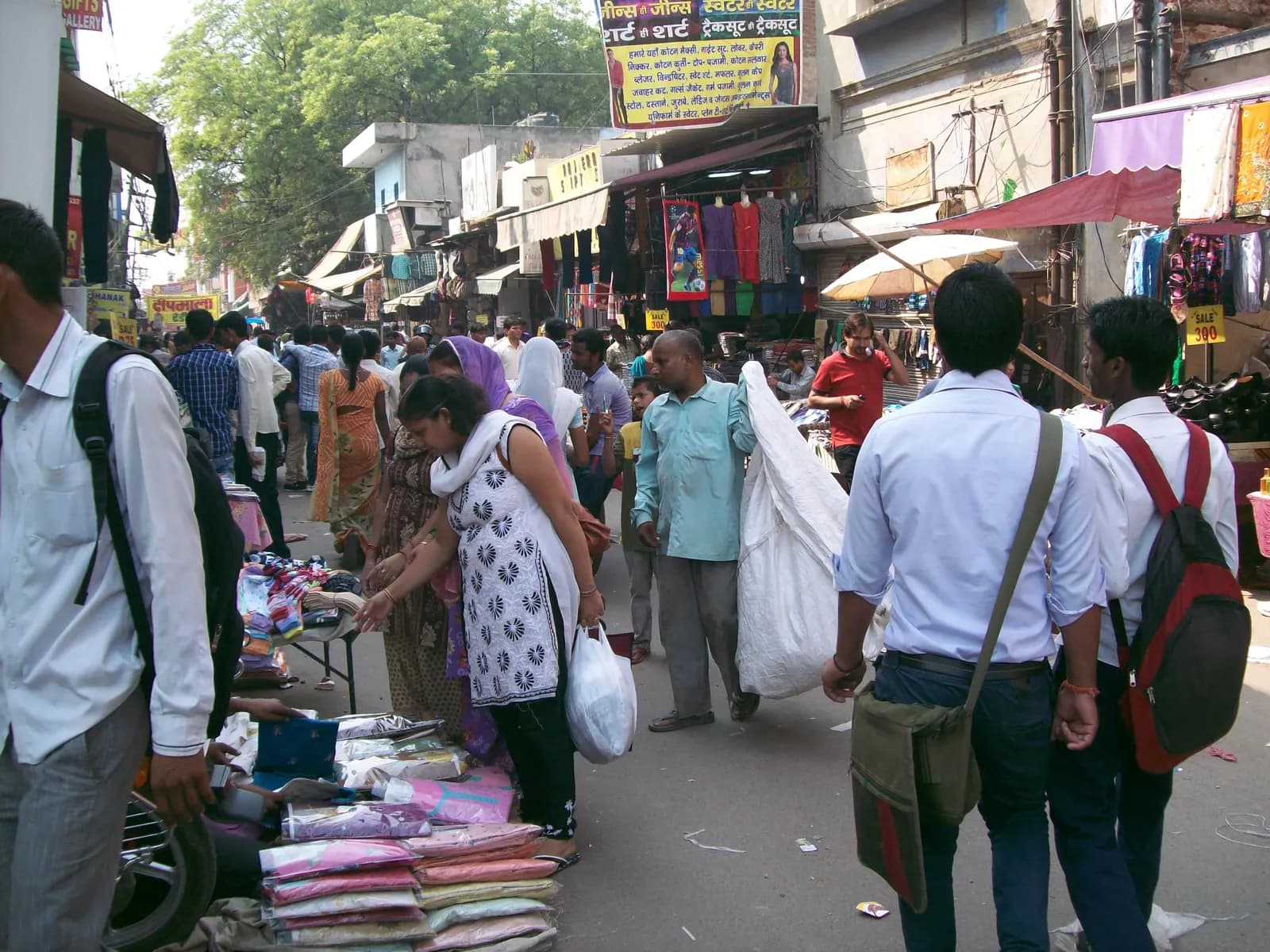
The safest approach is to ask the Zonal Taxation Officer of your MCG zone, in writing, whether your activity is on the specified list. If the answer is no, keep the reply on file. If the answer is yes, apply. Paying for a licence you don't need costs money every year; skipping one you do need risks penalties and sealing.
Gurugram has two municipal corporations to keep in mind: the Municipal Corporation of Gurugram (MCG) for the city and the Municipal Corporation of Manesar for the industrial belt. Both follow the same Act.
How to apply
New trade licence in a Haryana corporation or council
- 1
Get your Family ID ready
Individual applicants need a Parivar Pehchan Patra. If you don't have one, create it on meraparivar.haryana.gov.in before you start.
- 2
Apply on Saral or at a CSC
Saral HaryanaLog in to saralharyana.gov.in, choose the trade licence service of your corporation or council, and fill the form — or ask a CSC/Saral Kendra operator to do it for you.
- 3
Upload documents
Individuals: Family ID and rent/lease/ownership proof of the premises. Firms: one identity proof of the applicant (Aadhaar, passport, voter ID, driving licence, ration card with photo or government ID) and premises proof.
- 4
Verification and fee
The department's verifier checks your application. If something's missing you'll get an SMS or email to fix it. Once it's in order, the verifier sets the fee and tells you to pay.
- 5
Pay online
ULB Haryana online paymentsPay the demand on online.ulbharyana.gov.in.
- 6
Approval and certificate
The file goes to the approver, who issues the licence online — within 15 days of submission under the department's checklist.
Who decides. The ULB checklists name the Zonal Taxation Officer as the designated officer for new licences and renewals. The 15 days timeline is counted from submission of the application, and a verifier's query sends the file back to you, so a quick reply keeps it moving.
Service charge versus licence fee. The checklist lists a fee of ₹100 "to be paid to get the service". The licence fee itself is defined by the verifier after scrutiny, depending on your activity and premises. The 2022 Acts gave the State Government the power to set licence fees and periods; we couldn't find the notified schedule online, so pay only the demand raised on the ULB portal and keep the receipt.
Documents
Documents for a Haryana trade licence
0/5The Family ID requirement trips up many first-time applicants. It's Haryana's household database, and the ULB systems pull your details from it. Migrant entrepreneurs from other states who don't have a Haryana Family ID should check with the Saral helpdesk or a CSC on how to proceed; firms can apply with an ordinary identity proof instead.
Renewal
New licence vs renewal (ULB Haryana checklists)
| New licence | Renewal | |
|---|---|---|
Designated officer | Zonal Taxation Officer | Zonal Taxation Officer |
Service charge | ₹100 | ₹100 |
Timeline | 15 days | 12 days |
Extra document | — | Previous licence number |
Where to apply | Saral or CSC/Saral Kendra | Saral or CSC/Saral Kendra |
Designated officer
- New licence
Zonal Taxation Officer
- Renewal
Zonal Taxation Officer
Service charge
- New licence
₹100
- Renewal
₹100
Timeline
- New licence
15 days
- Renewal
12 days
Extra document
- New licence
—
- Renewal
Previous licence number
Where to apply
- New licence
Saral or CSC/Saral Kendra
- Renewal
Saral or CSC/Saral Kendra
Renewal follows the same route as a new application: apply on Saral or at a CSC with your premises proof and previous licence number, wait for the verifier to set the renewal fee, pay on the ULB portal, and download the renewed certificate once approved. The checklist gives 12 days for the whole process.
Before 2022, the statement of objects notes, licences were renewed on a yearly basis. The amended Acts now leave the licence period to the State Government. Check the validity printed on your certificate and apply for renewal well before it ends — and if your activity is no longer on the specified list, ask whether you need to renew at all.
Factories and workshops after section 330
The repeal of section 330 is easy to miss but matters to manufacturers in Manesar, IMT areas within corporation limits and Faridabad's industrial sectors. Before August 2022, setting up, altering or extending a factory, workshop or trade premises using mechanical power needed the commissioner's prior written permission, which corporations could refuse on grounds of population density or nuisance. That separate municipal permission no longer exists.
It doesn't mean a factory needs nothing. The building still needs an approved plan and occupation certificate from whichever authority controls the land — the corporation, HSVP, HSIIDC or the Town and Country Planning Department. The unit still needs Haryana State Pollution Control Board consent to establish and operate, registration or a licence under the factories law, a fire NOC where the building or process requires it, and any PESO licence for petroleum, gas or explosives. And if the process is on the government's specified list of dangerous or nuisance purposes, the section 331 licence applies on top.
Haryana trade licence at a glance (2026)
15 days
New licence timeline
ULB checklist
12 days
Renewal timeline
ULB checklist
₹100
Service charge
licence fee set by verifier
₹1,000 to ₹5,000
Fine, councils (s.128)
+ ₹100 a day
Corporations, councils and committees across Haryana
Haryana's larger cities — Gurugram, Manesar, Faridabad, Sonipat, Panipat, Karnal, Rohtak, Hisar, Yamunanagar, Ambala and Panchkula — are municipal corporations under the 1994 Act. Smaller towns are municipal councils (for example Rewari, Jind, Kaithal, Sirsa and Thanesar) or municipal committees, governed by the Haryana Municipal Act, 1973. Since 2022 both laws say the same thing on licensing: a licence is needed only for the government's specified purposes, and fees and licence periods are set by the government rather than each body.
In practice the application route is the same everywhere — Saral or a CSC, verification, payment on the ULB portal — so the main difference you'll notice is who the designated officer is and how quickly your local office clears files. The penalty for trading without a required licence is spelled out most clearly for councils and committees, in section 128(3) of the 1973 Act.
Licences issued before 2022
If you took a licence under the old Second Schedule — say for a shop or office that isn't hazardous — and it has been renewed every year since, ask the zone office whether your activity is now on the specified list before the next renewal. If it isn't, you may not need to renew; get that in writing so that a future inspector or landlord can see why you stopped. If it is, keep renewing on the same portal with your old licence number. Either way, don't simply let a licence lapse without an answer from the zone office.
Penalties
Municipal councils and committees. The new section 128(3) of the Haryana Municipal Act, 1973 is explicit: anyone who uses premises without a required licence, or breaks its conditions, can be punished with imprisonment up to six months, or a fine of ₹1,000 to ₹5,000, with a further fine of ₹100 a day for every day the offence continues. For a shop in a council town that keeps trading for 60 days after being caught, the daily fine alone could reach ₹6,000 on top of the base fine.
Municipal corporations. In Gurugram, Faridabad and the other corporations, penalties sit in the Haryana Municipal Corporation Act's penalty schedule and the corporation's bye-laws. The 2022 amendment removed the old entries for the omitted sections. Corporations can also refuse or cancel licences and act against premises used in breach of conditions.
Worked example: two businesses on Golf Course Road
Aman is opening a design studio with eight staff in an office tower in Gurugram. His work is drawing and client meetings — nothing hazardous, nothing that creates a nuisance. Before paying an agent's quoted fee for an "MCG trade licence", he writes to the Zonal Taxation Officer asking whether a design studio is a specified purpose under section 331. The answer is no. He keeps the reply, registers under the Shops and Establishments law, enrols for GST and gets on with the business.
Down the road, Sana is opening a 50-seat restaurant with a tandoor and an LPG bank. She asks the same question in writing, because eateries were licensed under the old Second Schedule and she wants to know whether restaurants are on the new specified list. If MCG says yes, she applies on Saral with her Family ID and lease, the verifier sets the fee, she pays on the ULB portal and the licence is due within the 15 days window. Either way, she lines up the fire NOC for the gas bank and kitchen and an FSSAI licence, because those regulators are the ones the 2022 amendment deferred to.
Other permits Gurugram businesses need
The trade licence was never the only permit, and after 2022 it's often not the main one. Most businesses also need registration under the Haryana Shops and Commercial Establishments law with the Labour Department, and must pay at least the Haryana minimum wages. Food businesses need FSSAI. Restaurants, hotels, hospitals, schools, malls and taller buildings need a fire NOC. Industrial units need Haryana State Pollution Control Board consent, and storage of petroleum, gas or explosives needs the relevant PESO licence. And once you cross the threshold, you need GST registration.
Haryana doesn't levy a professional tax, unlike Punjab, Gujarat or Karnataka, so there's no municipal profession-tax enrolment to add.
Permit check for a new Gurugram business
Step 1
Specified purpose?
ask the Zonal Taxation Officer
Step 2
Trade licence
only if yes
Step 3
Shops & Establishments
Labour Department
Step 4
FSSAI / fire NOC / pollution consent
as the activity needs
Step 5
GST
above the threshold
Common mistakes and how to fix them
Paying for a licence you don't need. Ask the Zonal Taxation Officer in writing whether your activity is on the specified list.
Applying without a Family ID. Create one on meraparivar.haryana.gov.in first, or apply as a firm with ordinary ID.
Ignoring other regulators. The 2022 change happened because other authorities regulate hazardous activities. Dropping the trade licence doesn't drop the fire NOC, pollution consent or PESO licence.
Missing the verifier's query. The timeline runs only when your application is complete. Watch your SMS and email after you submit.
Assuming Delhi's rules apply. If you also trade across the border, see our Delhi trade licence guide — MCD's system is different.
Official links
- Saral HaryanaApply for new trade licences and renewals
- ULB Haryana online paymentsPay the licence fee set by the verifier
- New trade licence checklist (ULB Haryana)Documents, fee and 15-day timeline
- Trade licence renewal checklist (ULB Haryana)Documents, fee and 12-day timeline
- Meri Parivar (Family ID)Create a Parivar Pehchan Patra
What to do next
Start by finding out whether your activity is a specified purpose: ask your zone's Taxation Officer in writing. If it is, get your Family ID or firm ID and premises papers together and apply on Saral. Either way, line up the permits that do apply — Shops and Establishments registration, FSSAI, fire NOC and GST — and consider Udyam registration for MSME benefits. Our startup cost calculator helps you budget the first year's fees.
This is general information, not legal or tax advice — confirm on the official source or with a professional.
Frequently asked questions
Only for some businesses. Since Haryana's 2022 amendments, section 331 of the Haryana Municipal Corporation Act requires the commissioner's licence only for purposes the State Government specifies as dangerous to life, health or property or likely to create a nuisance. Ordinary shops and offices that aren't on that list don't need one, though Gurugram's corporation still runs the trade licence service for the trades that do.
Apply online through the Saral portal (saralharyana.gov.in) or at a CSC or Saral Kendra. Individuals give their Family ID (Parivar Pehchan Patra) and proof of the premises; firms give an identity proof and premises proof. A verifier checks the papers and sets the fee, which you pay on online.ulbharyana.gov.in. The licence should be issued within 15 days.
The ULB checklist shows a service charge of ₹100, but the licence fee itself is fixed by the verifier after scrutiny. Since 2022 the law lets the State Government set fees and licence periods, but we couldn't find a notified uniform fee schedule on an official page in October 2026, so pay only the demand raised on the ULB portal.
The Urban Local Bodies Department's checklist gives 12 days from submission for a renewal. You apply on the same portal with your previous licence number and premises proof, the verifier sets the renewal fee, you pay online and the approver issues the renewed certificate.
In municipal councils and committees, section 128 of the Haryana Municipal Act, 1973, as amended in 2022, punishes using premises without a required licence with imprisonment up to six months or a fine of ₹1,000 to ₹5,000, plus ₹100 a day while the offence continues. Corporations act under their own Act and bye-laws.
Yes, if you apply as an individual. The ULB checklists make the Parivar Pehchan Patra (Family ID) mandatory for individual applicants, alongside rent, lease or ownership proof of the premises. If you don't have one, create it on meraparivar.haryana.gov.in first. Firms apply with an identity proof of the applicant instead.
Sources & verification
Figures on this page were checked against the sources below when it was last reviewed on 12 October 2026. Each rate and limit is stored once with its own official source and review date, and official update channels are monitored daily so changes are picked up. How we verify
- 1.The Haryana Municipal Corporation (Amendment) Act, 2022 (Haryana Act No. 25 of 2022) — Haryana Government Gazette (Extraordinary), 22 August 2022 (copy) · accessed 12 October 2026
- 2.The Haryana Municipal (Amendment) Act, 2022 (Haryana Act No. 24 of 2022) — Haryana Government Gazette (Extraordinary), 22 August 2022 (copy) · accessed 12 October 2026
- 3.The Haryana Municipal Corporation (Amendment) Bill, 2022 — statement of objects and reasons — Haryana Vidhan Sabha (via PRS Legislative Research) · accessed 12 October 2026
- 4.Issue of new trade license — checklist and procedure — Urban Local Bodies Department, Haryana · accessed 12 October 2026
- 5.Renewal of trade license — checklist and procedure — Urban Local Bodies Department, Haryana · accessed 12 October 2026
- 6.Trade Licenses for Gurugram Municipal Corporation, Haryana — National Government Services Portal · accessed 12 October 2026
- 7.Trade License in Haryana — Apply Online, Renewal & Fees — RegisterKaro (consultancy) · accessed 12 October 2026
MSMETOOLS is an independent platform and is not affiliated with any government agency, ministry or department.
Tools for this
Startup Cost Calculator
Estimate how much capital you need to launch.
Invoice Generator
Create professional invoices with tax, logo and custom details.
Related guides
 Trade License Punjab 2026: mSeva Apply, Renewal & PenaltyRead guide
 Trade License Delhi 2026: MCD Health & General Licence FeesRead guide
 Trade License Ranchi 2026: RMC Fees by Area, Apply & RenewRead guide
 Trade License Telangana 2026: GHMC Fees, Renewal & PenaltyRead guide
Official links open the government site in a new tab.