 Business registration & legal
Trade License in Delhi (2026): MCD Health Trade Licence, General Trade Licence, Fees and Online Steps
Trade licence in Delhi for 2026: MCD health trade licence fees, general trade licence rates, online steps, 6-year validity and free Shops Act registration.
 Edited by Sumeet YadavFounder & editor, MSMETOOLS · fact-checked against official sources
Contents (10)
- 1. Who issues trade licences in Delhi
- 2. Health trade licence: who needs it and what it costs
- 3. General trade and storage licence
- 4. How to apply online
- 5. Renewal, changes and closure
- 6. Delhi Shops and Establishments Act registration
- 7. Worked example: a 30-seat café in Lajpat Nagar
- 8. Penalties, sealing and recent changes
- 9. Common mistakes and how to fix them
- 10. What to do next
Opening a shop, restaurant, salon or godown in Delhi usually means two separate registrations: a trade licence from the municipal body that covers your area, and a registration with the Labour Department under the Delhi Shops and Establishments Act. Fees went up in April 2025, validity rules changed, and police licensing for eateries ended the same year, so most guides online are out of date. This page is for owners and accountants setting up in Delhi. It explains which licence your trade needs, the current fees, how to apply online, how long the licence lasts and what usually gets an application rejected.
Quick answer
In MCD areas, trades that affect public health (eating houses, food shops, hotels, salons, gyms, laundries) need a health trade licence from MCD's Public Health Department; other commercial trades and godowns need a general trade or storage licence, priced by floor area and locality. Apply online on etl.mcdonline.nic.in (eating and lodging) or mcdonline.nic.in (other trades). Separately, register the business free on labourcis.nic.in under the Delhi Shops and Establishments Act.
Health trade fees for FY 2025-28: e.g. ₹11,500 a year for an eating house up to 20 seats, plus a one-time registration charge
Processing fee ₹1,000 per health trade application; fees rise 15% every three financial years
Health trade licences can run for up to six financial years
Delhi Shops Act registration: no fee, certificate issued instantly
Who issues trade licences in Delhi
Delhi has three civic bodies, and the one that covers your premises issues your trade licence. The Municipal Corporation of Delhi (MCD), re-unified in 2022 from the North, South and East corporations, covers most of the city. The New Delhi Municipal Council (NDMC) covers Lutyens' Delhi and areas such as Connaught Place and Khan Market. The Delhi Cantonment Board covers the cantonment. If your property tax bill comes from NDMC or the Cantonment Board, apply to them, not to MCD.
Within MCD, the licence you need depends on what you do:
- Health trade licence (HTL) from the Public Health Department, for eating houses, dhabas, banquet halls, hotels, guest houses, food manufacturing and storage, sweet shops, kiryana and dry-fruit shops, chemists, salons and beauty parlours, gyms, laundries and dry cleaners, cinemas, spas and swimming pools.
- General trade or storage licence from the Central Licensing department, for other commercial trades such as cloth, hardware or electronics, and for godowns and warehouses.
- Factory licence from MCD for manufacturing units, priced by the horsepower of installed machines, in addition to any registration under the factories law. Our factory licence guide covers the labour side.
All three are issued under the Delhi Municipal Corporation Act, 1957 and MCD's bye-laws. None of them replaces your FSSAI licence, GST registration or the Labour Department's Shops Act registration.
Health trade licence: who needs it and what it costs
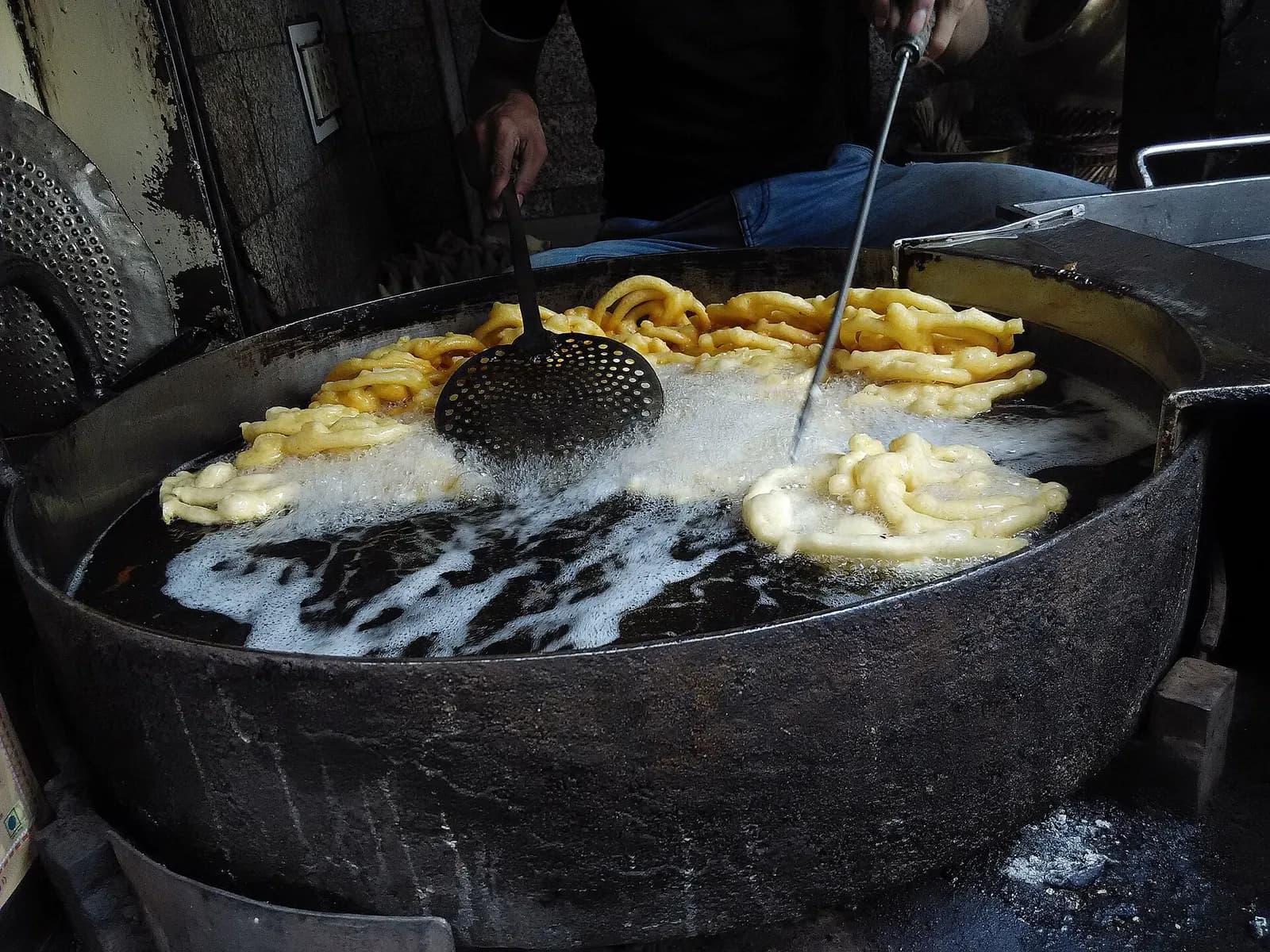
MCD splits health trades into two streams. HTL-1 covers eating establishments, boarding and lodging, and amusement, which need sign-off from several agencies. HTL-2 covers manufacturing, storage and sale of food, hawking, entertainment and miscellaneous trades such as salons and laundries. The citizen charter says category A and B health trades are licensed instantly once you pay, while category C trades (eating, lodging, guest houses, spas, swimming pools and cinemas) need an officer's approval.
Fees from 1 April 2025. By an office order dated 28 March 2025, MCD applied a 15% increase to the annual health trade licence fee for every trade, fresh and renewal, for FY 2025-28. The one-time registration charge did not change. The same order says the annual fee will rise by 15% every three financial years, so the next increase is due on 1 April 2028. Each application also carries a processing fee of ₹1,000.
| Trade (MCD health trade licence) | One-time registration | Annual fee FY 2025-28 |
|---|---|---|
| Eating house up to 20 seats | ₹10,000 | ₹11,500 |
| Eating house 21–50 seats | ₹15,000 | ₹23,000 |
| Eating house above 50 seats | ₹20,000 | ₹28,750 |
| Take-away / other eating establishment | ₹15,000 | ₹6,900 |
| Retail store selling eatables up to 20 sq m | ₹10,000 | ₹11,500 |
| Kiryana goods and dry fruits / chemist shop | ₹10,000 | ₹5,750 |
| Barber shop or beauty parlour up to 5 chairs | ₹2,000 | ₹5,750 |
| Health club or gym | ₹15,000 | ₹23,000 |
| 3-star hotel | ₹25,000 | ₹1,15,000 |
The full schedule lists 95 trades, from a ₹230 annual fee for a washerman (per person) and a Mayur jug water hawker to ₹5,75,000 for a five-star hotel. Cloud kitchens ("independent food house/kitchen") are charged ₹575 per square foot a year, which makes a large central kitchen expensive. Pick the exact trade name on the portal; choosing the wrong one is a common reason for rejection.
Validity: up to six years. Office orders of 18 March 2025 changed how long a licence lasts. For trades where inspection is mandatory, you can take a licence for six financial years at once, or take three years and later extend to the fourth, fifth and sixth years by self-certification without a fresh inspection. Instant-category trades can now take up to six years instead of three. You pay the annual fee for each year you choose. After the six-year cycle, inspection becomes compulsory again.
Fire safety comes first. The general terms say an applicant for a trade that needs a fire safety certificate must get it before applying, and the health trade licence lapses automatically when that certificate expires, even if you paid MCD for more years. Our fire NOC guide explains when Delhi requires one; for restaurants it usually turns on whether 50 or more people can gather.
General trade and storage licence
Shops and businesses that are not health trades, such as cloth, footwear, electronics or hardware, and godowns and warehouses, take a general trade or storage licence from MCD's Central Licensing department. The citizen charter says it is applied for online and issued instantly after payment, and that it is annual.
The fee depends on two things: the floor area and the category of the locality. MCD classifies colonies into categories A to H for property tax, with A the most expensive. The charter's table, labelled FY 2023-25, sets these annual fees:
MCD general trade licence — annual fee by area (citizen charter, FY 2023-25 table)
| Floor area | Categories A, B | Categories C, D | Categories E–H |
|---|---|---|---|
Up to 10 sq m | ₹3,968 | ₹2,645 | ₹1,323 |
10–20 sq m | ₹9,919 | ₹6,613 | ₹3,306 |
21–400 sq m | ₹166 per sq m | ₹132 per sq m | ₹99 per sq m |
Above 400 sq m | ₹83 per sq m | ₹66 per sq m | ₹50 per sq m |
Up to 10 sq m
- Categories A, B
₹3,968
- Categories C, D
₹2,645
- Categories E–H
₹1,323
10–20 sq m
- Categories A, B
₹9,919
- Categories C, D
₹6,613
- Categories E–H
₹3,306
21–400 sq m
- Categories A, B
₹166 per sq m
- Categories C, D
₹132 per sq m
- Categories E–H
₹99 per sq m
Above 400 sq m
- Categories A, B
₹83 per sq m
- Categories C, D
₹66 per sq m
- Categories E–H
₹50 per sq m
Showrooms of 250 sq m or more, department stores, convenience stores, godowns, cold-store-linked stores and gas or petroleum storage pay a higher rate: the greater of a flat amount (₹66,125 in categories A and B, ₹52,900 in C and D, ₹39,675 in E to H) or the per-square-metre rate.
The 2025 increase. MCD raised trade licence fees across health, general trade and storage categories by 15% from 1 April 2025, according to press reports quoting MCD officials. The citizen charter still shows the FY 2023-25 table. If the 15% applies to these rates, a 15 sq m shop in a category C colony would pay about ₹7,600 instead of ₹6,613; that is our estimate, so rely on the amount the portal calculates when you apply.
Area and locality category. Your colony's category is on your property tax record. Measure the trade area carefully and use the same figure across your documents; the fee scales with it, and a licence obtained on wrong particulars can be revoked under the general terms.
How to apply online
The route depends on your trade. Eating houses, lodging and amusement establishments use the unified portal, where one application reaches MCD, Delhi Fire Service and the Delhi Pollution Control Committee (DPCC) together. Other health trades and general trade licences are applied for under Online Services on mcdonline.nic.in.
MCD trade licence online
- 1
Register on the right portal
Unified health trade licensing portalEating and lodging: create an account on etl.mcdonline.nic.in. Other health trades and general trade: open mcdonline.nic.in, choose Online Services and the licence you need.
- 2
Choose trade type and nature of trade carefully
Every field is mandatory and the trade you select decides the fee. Save a draft and review it; a submitted application cannot be edited.
- 3
Upload self-attested documents
PDFs up to 5 MB each, each document in its own slot. Uploading a medical certificate in the police clearance slot is a listed rejection reason.
- 4
Respond to deficiencies within 15 days
Each agency scrutinises the application and posts deficiencies to your dashboard and by SMS. If you do not fix them within 15 days, the application can be summarily rejected.
- 5
Pay the processing and licence fees
Pay the ₹1,000 processing fee when the application is accepted, then the registration charge and annual fee for the years you choose. Fees are non-refundable.
- 6
Download the licence and display it
Download the digitally issued licence and display it prominently at the premises. Instant-category trades get it as soon as payment is confirmed.
Documents to keep ready
For most trades, the citizen charter asks for proof of legal occupation, photo ID, PAN and a site plan. Eating and lodging establishments need a longer list.
Documents for an MCD trade licence
0/9Renewal, changes and closure
Renewal. You can apply for renewal of a health trade licence up to 75 days before it expires. MCD opened renewals for FY 2026-27 and later years on 1 January 2026. On the unified portal, details from your previous application are pre-filled, and you upload only documents that have expired or changed. A general trade licence is renewed every year.
Changes. Since 11 March 2025 the unified portal has an amendment feature for changes in the authorised signatory, partners or directors, and for a reduction in capacity that does not change the sanctioned plan. A change of ownership, or an increase in capacity that changes the structure or occupant load, needs a fresh licence after you surrender the old one.
Closure. The licence is premises-specific and not transferable. When you vacate, inform MCD and surrender it. The general terms warn that if you do not, you will not get a licence in future until old dues are cleared.
Delhi Shops and Establishments Act registration
The trade licence is municipal. The Shops Act registration is a separate labour-law registration with the Delhi Labour Department, and it is free. The department's FAQ says registration is made on labourcis.nic.in, needs no documents, costs nothing and is granted in real time: you fill in the establishment details, click Register and download the certificate at once. Keep the certificate at the premises and a copy with your business records; it is a quick way to show the establishment exists under labour law.
The Act governs hours, holidays, leave and wages for employees of shops and commercial establishments in Delhi. On 7 August 2025 the Labour Department added two entries to the Act's exemption schedule. All establishments except liquor shops may employ women at night and stay open beyond the normal opening and closing hours, subject to conditions:
- no employee works more than 9 hours a day (including meal and rest), 48 hours a week or 5 hours at a stretch, and overtime is paid at double the normal rate;
- weekly offs are given by rotation, and staff working on national holidays get compensatory leave plus double wages;
- wages are paid by cheque or electronic transfer, and CCTV recordings are kept for at least a month;
- women work night shifts only with their consent, with safe transport, and an Internal Committee under the POSH Act must be working;
- the employer files its details and an undertaking with the Labour Department and displays the notification at the staff entrance.
Pay must meet the Delhi minimum wages, which the Labour Department revises every April and October.
Worked example: a 30-seat café in Lajpat Nagar
Meher opens a 30-seat café in an MCD area of Lajpat Nagar with eight staff.
Licences she needs. An FSSAI state licence or registration depending on turnover, GST registration, the free Shops Act certificate from labourcis.nic.in, and an MCD health trade licence as an eating house above 20 and up to 50 seats. With 30 seats she is below the 50-person assembly line, but her landlord's building is a four-storey shop-cum-office block, so she checks with Delhi Fire Service whether the building already holds a fire safety certificate.
Cost of the health trade licence. She chooses three years now and plans to extend by self-certification later.
| Item | Amount |
|---|---|
| Processing fee | ₹1,000 |
| One-time registration charge (eating house 21–50 seats) | ₹15,000 |
| Annual licence fee × 3 years (FY 2025-28 rate ₹23,000) | ₹69,000 |
| Total paid to MCD up front | ₹85,000 |
What happens next. Her application goes to MCD and DPCC through the unified portal; CPCB's July 2026 list puts restaurants with up to 100 seats in the white category, which needs only a written intimation instead of consent, so she asks DPCC to confirm it has applied that change to her case. MCD posts a deficiency: the pest control certificate was uploaded in the structural safety slot. She fixes it within the 15 days, pays and downloads the licence. In April 2028 the annual fee rises by 15% for anyone renewing or extending, so taking six years now would have fixed more of her cost at the current rate, if her fire certificate also runs that long.
Penalties, sealing and recent changes
Running a licensable trade without a licence lets MCD act under the Delhi Municipal Corporation Act and its bye-laws, which can include challans, sealing of the premises and recovery of unpaid fees. The general terms also say MCD can revoke a licence without further notice if the activity turns out not to be permitted at that location under the Master Plan, if statements in the undertaking prove false, or if the premises are altered or change hands. A licence does not regularise unauthorised construction or settle any ownership dispute.
Delhi trade licensing changes since 2025
11 Mar 2025
Amendment feature goes live on the unified health trade portal
18 Mar 2025
Health trade licence validity extended to up to six financial years
1 Apr 2025
Trade licence fees rise 15% for FY 2025-28
Jun 2025
Delhi Police licensing of eating houses, hotels and similar trades withdrawn
7 Aug 2025
Shops Act exemption for night work and opening hours, with conditions
1 Jan 2026
Renewals open for FY 2026-27 onwards
Feb 2026
NDMC announces FSSAI and GST as deemed licences, pending notification
Three changes since 2025 matter for new businesses:
- Police licensing abolished (June 2025). The Lieutenant Governor withdrew Delhi Police's power to license eating houses, hotels, guest houses, swimming pools, discotheques, video game parlours and amusement parks, and the police regulations were repealed. Older portal guidance still mentions Delhi Police; you no longer need a police eating-house licence.
- Restaurant licensing under review. In July 2025 the Lieutenant Governor said restaurants would no longer need an MCD health trade licence. MCD had not notified any such change when we checked in October 2026, and its portal was still accepting fresh and renewal applications for FY 2026-27. Keep applying until a formal order says otherwise.
- NDMC deemed licences (2026). In February 2026 NDMC announced that a valid FSSAI licence would be treated as the health trade licence for restaurants and cafés in its area, and GST registration as the general trade licence for other establishments, with inspections continuing. Check NDMC's notification before relying on it.
Common mistakes and how to fix them
Applying to the wrong body. Premises in NDMC or Cantonment areas are licensed by those bodies. Check your property tax bill.
Picking the wrong trade. A bakery that also serves customers may be an eating house as well as a bakery. Read the schedule and pick the trade that matches what you actually do, or apply for each.
Duplicate applications. MCD now blocks a new application if the trade name and address match an open one by 90%. Use the amendment feature to correct errors instead of applying again.
Letting the fire certificate lapse. The health trade licence ends with it. Renew the fire certificate first.
Ignoring the labour side. The free Shops Act registration takes ten minutes. Without it, you will struggle to show the labour compliance that banks and inspectors expect.
Official links
- Unified Health Trade Licensing portal (MCD, DFS, DPCC, NDMC, DCB)Eating, lodging, amusement — new, renew, amend
- MCD online servicesOther health trades, general trade and storage licence, factory licence
- MCD citizen charterTimelines, documents and fee tables
- Health trade licence fee structure FY 2025-28 (PDF)All 95 trades
- Delhi Shops Act registration (labourcis.nic.in)Free, instant certificate
- Labour Department — Delhi Shops and Establishments Act, 1954Act, exemption notifications
What to do next
Work out which civic body covers your premises and whether your trade is a health trade. Register free under the Shops Act on labourcis.nic.in today, get your FSSAI and GST registrations in place if you sell food, and then apply for the MCD licence with the right trade name and area. Our startup cost calculator helps you budget the licence fees with your other set-up costs, and food businesses can price their menu with the food cost calculator. If you make or process goods, read our pollution NOC guide as well, because DPCC consent often comes up in the same application.
This is general information, not legal or tax advice — confirm on the official source or with a professional.
Frequently asked questions
A health trade licence comes from MCD's Public Health Department for trades that affect public health: eating houses, hotels, food manufacturing and storage, salons, gyms, laundries and similar. A general trade or storage licence comes from MCD's Central Licensing department for other commercial trades and godowns, with the fee based on floor area and the locality's category. Most businesses need one or the other, not both.
It depends on the trade. For FY 2025-28 an eating house up to 20 seats pays a one-time registration charge of ₹10,000 and an annual licence fee of ₹11,500. A kiryana or chemist shop pays ₹5,750 a year, and a salon with up to five chairs ₹5,750. A processing fee of ₹1,000 applies to each application.
Health trade licences can now be taken for up to six financial years by paying the annual fee for each year in advance. Where inspection is mandatory, you can take six years at once or three years first and extend to the fourth, fifth and sixth years by self-certification. The licence cannot outlast your fire safety certificate where one is required. General trade licences are annual.
Yes. Eating, lodging and amusement establishments apply on the unified portal etl.mcdonline.nic.in, which routes one application to MCD, Delhi Fire Service and DPCC. Other health trades and general trade licences are applied for under Online Services on mcdonline.nic.in; most are issued instantly once the fee is paid. NDMC and the Delhi Cantonment Board license businesses in their own areas.
Yes. The Delhi Labour Department's FAQ says registration under the Delhi Shops and Establishments Act, 1954 has no fee, needs no documents and is granted in real time on labourcis.nic.in. You can download the certificate immediately. It is separate from the MCD trade licence, and most businesses need both.
No. In June 2025 the Lieutenant Governor withdrew Delhi Police's licensing powers for eating houses, hotels, guest houses, swimming pools, discotheques, amusement parks and similar activities, and the police regulations were repealed. Restaurants now need the MCD (or NDMC or Cantonment) health trade licence, FSSAI licence and, where applicable, fire and pollution clearances.
Sources & verification
Figures on this page were checked against the sources below when it was last reviewed on 9 October 2026. Each rate and limit is stored once with its own official source and review date, and official update channels are monitored daily so changes are picked up. How we verify
- 1.Health Trade License fee structure FY 2025-28 and office order PA/MHO/MCD/2025/D-193 (28 March 2025) — Municipal Corporation of Delhi, Public Health Department · accessed 9 October 2026
- 2.General terms and conditions of the Health Trade License and validity office orders (18 March 2025) — Municipal Corporation of Delhi, Public Health Department · accessed 9 October 2026
- 3.MCD Citizen Charter — Health Trade License and General Trade/Storage License — Municipal Corporation of Delhi · accessed 9 October 2026
- 4.Unified Health Trade Licensing portal — home page, guidelines, checklist and rejection reasons — Municipal Corporation of Delhi · accessed 9 October 2026
- 5.FAQ for Registration under the Shops and Establishment Act — Labour Department, Government of NCT of Delhi · accessed 9 October 2026
- 6.Notification dated 07/08/2025 on sections 14, 15 and 16 of the Delhi Shops and Establishments Act, 1954 — Labour Department, Government of NCT of Delhi · accessed 9 October 2026
- 7.MCD defends hike in trade licence fee by 15% amid backlash — Millennium Post · accessed 9 October 2026
- 8.Delhi businesses will no longer need police licence for running operations — The Week (PTI) · accessed 9 October 2026
- 9.NRAI welcomes NDMC move to treat FSSAI licence as deemed health trade permit for restaurants — Storyboard18 · accessed 9 October 2026
- 10.List of sectors classified by CPCB (as on 24 August 2026) — Central Pollution Control Board · accessed 9 October 2026
MSMETOOLS is an independent platform and is not affiliated with any government agency, ministry or department.
Tools for this
Startup Cost Calculator
Estimate how much capital you need to launch.
Food Cost Calculator
Calculate food cost, menu pricing and profit margins.
Related guides
 Trade License Mumbai 2026: BMC Section 394 Fees & RenewalRead guide
 Fire NOC in India 2026: Who Needs It, Documents & FeesRead guide
 Trade License Punjab 2026: mSeva Apply, Renewal & PenaltyRead guide
 Trade License Ahmedabad 2026: AMC Section 376, Gumasta & MoreRead guide
Official links open the government site in a new tab.