 Business registration & legal
Pollution NOC (2026): Consent to Establish and Operate, CPCB Categories, White-Category Exemption and Fees
Pollution NOC in 2026: when you need Consent to Establish and Operate, CPCB's red, orange, green and white categories, the 87 exempt sectors, state fees and steps.
 Edited by Sumeet YadavFounder & editor, MSMETOOLS · fact-checked against official sources
Contents (10)
- 1. What a pollution NOC is, legally
- 2. CPCB's 2025 categories: red, orange, green, white and blue
- 3. White category: no consent, but you must tell the board
- 4. Pollution NOC fees by state
- 5. How to apply for CTE and CTO online
- 6. Worked example: a furniture unit in Bengaluru
- 7. Gensets, dairies, clinics and other edge cases
- 8. Penalties and what happens if you skip consent
- 9. Common mistakes and how to fix them
- 10. What to do next
If you are setting up a factory, workshop, hotel, hospital, food unit or anything else that uses water, burns fuel or generates waste, your bank, landlord, electricity company or industrial-area authority will ask for a "pollution NOC". What they mean is consent from the State Pollution Control Board. The rules changed a lot in 2025–26: CPCB rewrote its red, orange, green and white categories, added a blue category, and the Centre exempted white-category units from consent altogether. This guide is for MSME owners and consultants. It explains when you need consent, how to find your category, what it costs in different states, how to apply and how to keep it valid.
Quick answer
A pollution NOC is consent from your State Pollution Control Board under the Water Act, 1974 (s.25) and the Air Act, 1981 (s.21): Consent to Establish (CTE) before construction and Consent to Operate (CTO) before production. Whether you need it depends on CPCB's category for your activity. Red, orange and green units need both; the 87 white-category sectors are exempt but must inform the board in writing.
Categories come from a pollution index: red PI of 80 or more, orange PI 55 to under 80, green PI 25 to under 55, white PI under 25
CTO validity up to 5 years (red), 10 years (orange) and 15 years (green)
Fees are set by each state by capital investment, e.g. ₹6,000 a year per Act in Karnataka for ₹25–50 lakh
Apply online on your board's consent portal (OCMMS, XGN or the board's own system)
What a pollution NOC is, legally
There is no document called a "pollution NOC" in the law. The Water (Prevention and Control of Pollution) Act, 1974 says no one may establish or take steps to establish an industry, operation or process, or a treatment and disposal system, likely to discharge sewage or trade effluent without the previous consent of the State Board (section 25). The Air (Prevention and Control of Pollution) Act, 1981 requires the same consent to establish or operate an industrial plant in an air pollution control area (section 21). Most boards process both together and issue a combined consent order.
Consent comes in two stages:
- Consent to Establish (CTE), sometimes called NOC or Consent for Establishment, is needed before you start construction or install machinery. The board checks the site, the process and the pollution control equipment you plan.
- Consent to Operate (CTO) is needed before you begin production or discharge. The board checks that the promised equipment is in place and works. It is renewed periodically.
Two other approvals often get mixed up with it. Environmental clearance (EC) under the EIA Notification, 2006 is for large or specified projects and comes from the Centre or a state authority; a plant that already has prior EC is exempt from the separate CTE under the 2024 notifications, though it still needs CTO. Authorisations under the waste rules (hazardous waste, bio-medical waste, plastic and e-waste) are separate permissions from the same board.
CPCB's 2025 categories: red, orange, green, white and blue
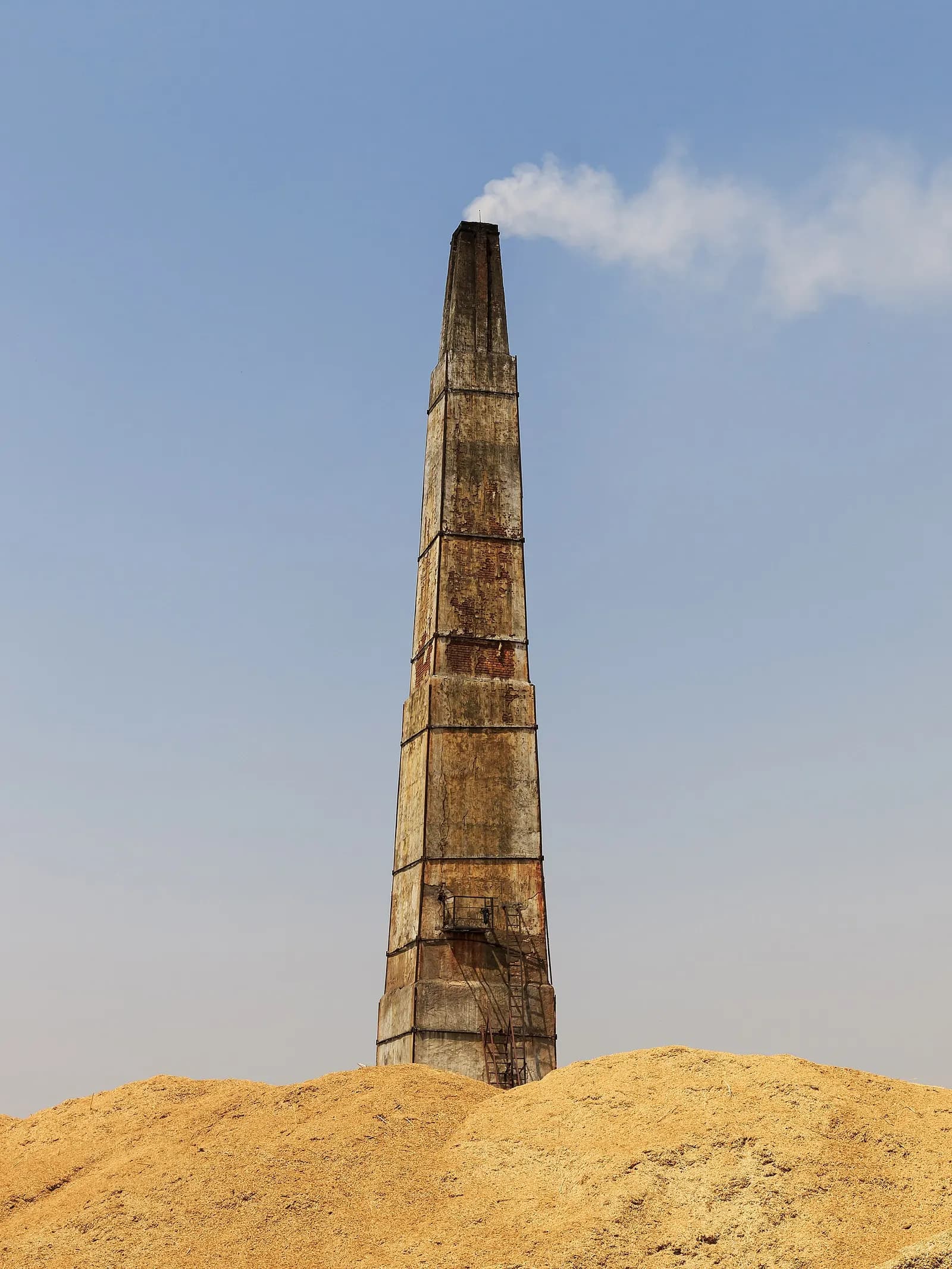
CPCB first sorted industries into colour categories in 2016. In 2025 it rewrote the method. Each sector now gets scores for water pollution, air pollution and hazardous waste, which are combined into a cumulative pollution index (PI) out of 100. The category follows the score: a PI of 80 or more is red, 55 to under 80 orange, 25 to under 55 green, and under 25 white. The 2025 report classified 419 sectors (125 red, 137 orange, 94 green, 54 white and 9 blue). CPCB has kept adding to it, and its list stood at 464 sectors on 24 August 2026.
The new blue category is for essential environmental services, such as waste-processing facilities for domestic or industrial waste. They get two more years of CTO validity than their pollution index would otherwise allow, as an incentive.
The category decides almost everything that follows: whether you need consent at all, how much scrutiny the application gets, how long the CTO lasts, how often you are inspected, and where you may locate. CPCB's directions require boards to inspect red units at least once every six months, orange units once a year and green units once every two years.
| Category | Pollution index | Consent | Max CTO validity (CPCB) | Inspection at least |
|---|---|---|---|---|
| Red | PI of 80 or more | CTE + CTO | 5 years | Every 6 months |
| Orange | PI 55 to under 80 | CTE + CTO | 10 years | Every year |
| Green | PI 25 to under 55 | CTE + CTO | 15 years | Every 2 years |
| White | PI under 25 | Written intimation only (listed sectors) | Not applicable | — |
| Blue | By PI, essential services | CTE + CTO | PI-based + 2 years | By PI |
Some examples from the current list. Metal surface treatment such as electroplating, pickling or galvanising is red. Automobile service stations, brick kilns and printing ink are orange. Dry-process flour mills, steel furniture with spray painting and wooden furniture with spray painting are green. Wooden furniture and steel furniture without spray painting are white. Bakeries producing 1 tonne a day or more are orange, but drop to green if they use cleaner or gaseous fuel.
Restaurants and hotels (July 2026). CPCB's direction of 20 July 2026 reclassified eating places by seats: restaurants, dhabas and eateries with up to 100 seats are white, those with 101 to 200 seats green, and above 200 seats orange, provided small units fit an oil-and-grease trap at the kitchen outlet, use compliant or gas-based gensets and manage wastewater properly. Hotels are graded by rooms, from white for small guest houses meeting conditions up to red for the largest.
Existing units. The 2025 directions say the new classification applies to existing units at their next CTO renewal, or within one year of CPCB's directions, whichever is earlier; annual or cumulative fees for the rest of the period follow the new category.
White category: no consent, but you must tell the board
On 12 November 2024 the Ministry of Environment used new powers in both Acts to exempt white-category industries from consent. Notifications G.S.R. 702(E) (Air Act) and G.S.R. 703(E) (Water Act) listed the exempt sectors, subject to one condition: the unit must inform the State Board or Pollution Control Committee in writing. The same notifications exempt projects that already hold prior environmental clearance from the separate CTE.
The list has been replaced three times since: in July 2025 (G.S.R. 511 and 512), in October 2025 to 86 sectors (G.S.R. 761 and 762), and on 8 July 2026 to 87 sectors (G.S.R. 598 and 599). The current list includes:
Examples from the 87 white-category sectors (July 2026)
0/10How to intimate. Boards handle this differently. Tamil Nadu runs a separate online intimation form for white-category industries; Maharashtra has published its own extra list of white activities (agarbatti and dhoop without solvents, candle making, computer assembly and dozens more); others take the intimation through their consent portal. Keep the acknowledgement: it is what you show a bank, the electricity company or an industrial-area authority instead of a consent order.
Read the description carefully. Most entries carry conditions in brackets. A furniture unit that adds a spray booth becomes green. A food unit above the stated capacity, or using a boiler, is not white. If you change your process, you may need consent from that date.
Pollution NOC fees by state
There is no national fee. Each state's Water and Air rules set a consent fee, usually by the unit's capital investment (land, building, plant and machinery). Some states also vary it by category. Two examples from official schedules:
Karnataka (KSPCB). The 2021 amendment rules set a consent fee per year, by capital investment, under each Act, and it applies to CTE, expansion and CTO. KSPCB counts ten times the annual lease value as capital investment for leased land or buildings.
Consent fee examples by capital investment
| Capital investment | Karnataka (per year, each Act) | Maharashtra (CTE and CTO each) |
|---|---|---|
Up to ₹1 lakh | ₹400 | ₹500 (below ₹10 lakh) |
₹25–50 lakh | ₹6,000 | ₹1,500 (₹10–60 lakh) |
₹50 lakh–₹1 crore | ₹12,000 | ₹5,000 (₹60 lakh–₹1 crore) |
₹1–5 crore | ₹30,000 | ₹15,000 |
₹5–10 crore | ₹40,000 | ₹25,000 |
Up to ₹1 lakh
- Karnataka (per year, each Act)
₹400
- Maharashtra (CTE and CTO each)
₹500 (below ₹10 lakh)
₹25–50 lakh
- Karnataka (per year, each Act)
₹6,000
- Maharashtra (CTE and CTO each)
₹1,500 (₹10–60 lakh)
₹50 lakh–₹1 crore
- Karnataka (per year, each Act)
₹12,000
- Maharashtra (CTE and CTO each)
₹5,000 (₹60 lakh–₹1 crore)
₹1–5 crore
- Karnataka (per year, each Act)
₹30,000
- Maharashtra (CTE and CTO each)
₹15,000
₹5–10 crore
- Karnataka (per year, each Act)
₹40,000
- Maharashtra (CTE and CTO each)
₹25,000
Maharashtra (MPCB). A 2011 Government Resolution, still the fee revision posted on MPCB's consent page, sets separate fees for CTE and CTO in slabs from ₹500 for investment under ₹10 lakh to 0.02% of investment above ₹100 crore. Local bodies pay fixed amounts.
KSPCB's fee page also reproduces a 2020 government order that sets lower, category-wise fees for red, orange and green units, so read the board's current instructions or let the portal calculate the amount. In other states, look for "consent fee" on the board's website; Tamil Nadu, for example, publishes its 2018 Water and Air fee notifications on its consent fee page. Budget separately for the professional who prepares your application, stack or effluent analysis by a recognised laboratory, and the pollution control equipment itself, which usually costs far more than the fee.
How to apply for CTE and CTO online
Many boards use NIC-built online consent systems: the Online Consent Management and Monitoring System (OCMMS) in states such as Tamil Nadu and Delhi, and XGN in Karnataka. Maharashtra uses its own portal. Some states also accept consent applications through their single-window systems.
Pollution NOC — CTE to CTO
- 1
Confirm your category
CPCB categorisation pageFind your activity on CPCB's list and your state board's list. If it is a listed white sector, file the written intimation instead and stop here.
- 2
Check the site
Boards apply siting rules, especially for red and orange units: industrial areas, distance from water bodies and homes, and eco-sensitive zones. A residential plot is rarely acceptable for anything above white.
- 3
Apply for Consent to Establish
Register on your board's portal, fill in the CTE form with process flow, raw materials, water use, effluent and emission sources, proposed treatment and stack details, and pay the fee.
- 4
Respond to the inspection and queries
Officers may visit the site and ask for clarifications through the portal. Reply within the time the board gives, or the application can be closed.
- 5
Build, install the controls, then apply for Consent to Operate
Before starting production, apply for CTO with photos and details of the installed treatment, monitoring reports where needed, and compliance with CTE conditions.
- 6
Run to the conditions and renew on time
File the annual environmental statement or returns your board requires, keep monitoring records, and apply for renewal well before the CTO expires.
Documents usually needed
Typical CTE application documents
0/8Worked example: a furniture unit in Bengaluru
Ravi runs a wooden furniture workshop in an industrial estate on the edge of Bengaluru. His investment in the leased shed and machines is ₹40 lakh.
Today. The unit uses electric planers and saws and finishes furniture with hand-applied polish. That matches "carpentry and wooden furniture manufacturing without spray painting (excluding saw mill)", a white-category sector. He needs no CTE or CTO; he files a written intimation with KSPCB and keeps the acknowledgement with his Udyam and GST certificates.
After adding a spray booth. A large hotel order needs a lacquer finish, so he installs a spray-painting booth. Under CPCB's list, the same activity with spray painting is green. Before installing the booth, he applies for CTE (strictly, a consent for expansion), describing the booth, its exhaust and filters, and how thinners and paint sludge are stored and disposed of.
| Item | Ravi's furniture unit |
|---|---|
| Category before | White — intimation only |
| Category after spray painting | Green — CTE (or expansion), then CTO |
| KSPCB fee slab (₹25–50 lakh) | ₹6,000 per year under each Act, per the 2021 table |
| CTO validity available | Up to 15 years under CPCB's guideline, as KSPCB grants |
| Other permissions | Hazardous waste authorisation for paint sludge and used thinners, if generated |
If the fee for a green unit is charged per year of validity, a longer CTO costs more up front but saves repeated renewals. Ask the board how its portal computes the total before choosing the period.
Gensets, dairies, clinics and other edge cases
Some activities trip people up because they do not look like "industry".
Diesel generators. CPCB classifies standalone gensets of 1 MVA or more as orange if they run on liquid fuel and green if they run on cleaner or gaseous fuel. Gensets totalling less than 1,000 kVA do not need a separate classification, but used oil from their servicing must go to an authorised recycler. A data centre whose only pollution comes from gensets is classified by genset capacity and fuel. A restaurant's or shop's backup generator does not usually make it a separate consent case, but it must meet CPCB's current emission norms.
Dairy farms. Farms with fewer than 15 animals do not need a separate classification. From 15 to 100 animals a dairy farm is orange, and above 500 it is red. Milk processing plants are classified separately by capacity.
Health care. Clinics, nursing homes and hospitals generate bio-medical waste, so they need authorisation under the Bio-Medical Waste Management Rules from the same board. CPCB grades health care facilities by beds: even non-bedded clinics and facilities with up to 50 beds are green, 201 to 500 beds orange, and above 500 beds red, so a clinic is not white-category.
Buildings and construction. Large building and construction projects are classified by built-up area and sewage arrangements, and projects above the EIA thresholds need environmental clearance first. Building projects of 5,000 to 20,000 sq m connected to a terminal sewage treatment plant may not need a separate classification.
Do I need a pollution NOC?
Step 1
Find your activity on CPCB and state lists
Step 2
White?
file written intimation
Step 3
Green, orange or red
CTE before building
Step 4
Install controls
then apply for CTO
Step 5
Renew before expiry
file annual returns
Penalties and what happens if you skip consent
Running without consent, or breaking its conditions, lets the board issue directions under section 33A of the Water Act and section 31A of the Air Act, including closure of the unit and disconnection of electricity or water. Boards also levy environmental compensation, and CPCB's 2025 report says the pollution index may be used to fix the amount. The Jan Vishwas (Amendment of Provisions) Act, 2023 replaced imprisonment with monetary penalties for many Air Act offences, and the Water Act was amended in 2024 along similar lines, but closure orders remain the board's strongest tool and the one that hurts an MSME most.
Banks, power distribution companies and industrial development corporations commonly ask for the consent order or white-category acknowledgement before sanctioning loans, releasing a power connection or allotting land, so the practical cost of skipping consent shows up long before any penalty.
Common mistakes and how to fix them
Assuming 'small' means exempt. Size alone does not decide the category; the process does. A tiny electroplating shop is red.
Using the old 2016 list. Many sectors moved in 2025 and 2026. Check CPCB's current list and your board's adoption of it.
Skipping the white-category intimation. The exemption is conditional on telling the board in writing. Without proof that you did, you may struggle to show a bank or inspector that you are exempt.
Applying for CTO without CTE. Boards treat a unit that was built without CTE as having violated the Act. If you are already running, ask the board about its regularisation route rather than filing a plain CTO.
Letting the CTO lapse. A late renewal can leave you operating without valid consent, and some boards charge extra for it. Several boards, including MPCB, offer simplified auto-renewal on self-declaration for compliant units; use it if you qualify.
Official links
- CPCB — Categorization of Industrial Sectors2025 report, current sector list, exemption notifications
- List of sectors classified by CPCB (as on 24.08.2026)Find your activity and category
- White-category exemption — Water Act notificationsG.S.R. 703(E) as amended to 8 July 2026
- White-category exemption — Air Act notificationsG.S.R. 702(E) as amended to 8 July 2026
- KSPCB consent fee scheduleKarnataka fees by capital investment
- MPCB consent fee revision (2011 GR)Maharashtra CTE and CTO fees
- TNPCB consent portal (OCMMS)Tamil Nadu applications; white-category intimation on tnpcb.gov.in
What to do next
Look up your exact activity on CPCB's list and your state board's list. If it is white, file the intimation and keep the receipt. If not, apply for Consent to Establish before you sign for machinery or start construction, and plan for the Consent to Operate before your first production run. Our startup cost calculator helps you budget consent fees and pollution control equipment, and the break-even calculator shows how those costs affect your payback. You will usually need Udyam registration, a factory licence and a fire NOC alongside the consent.
This is general information, not legal or tax advice — confirm on the official source or with a professional.
Frequently asked questions
It is the everyday name for the consent a State Pollution Control Board (or a Pollution Control Committee in a Union Territory) grants under section 25 of the Water Act, 1974 and section 21 of the Air Act, 1981. There are two stages: Consent to Establish (CTE) before you build or install machinery, and Consent to Operate (CTO) before you start production or discharge anything.
No CTE or CTO is needed for the 87 white-category sectors listed in the Centre's exemption notifications, last revised on 8 July 2026. The condition is that you inform your State Pollution Control Board or Committee in writing. Several boards run an online intimation form for this. Your unit must match the listed description exactly, for example furniture making without spray painting.
Each state sets its own fees, usually by capital investment. In Karnataka the consent fee is ₹6,000 a year under each Act for an investment of ₹25–50 lakh. In Maharashtra the fee for each of CTE and CTO is ₹1,500 for ₹10–60 lakh and ₹15,000 for ₹1–5 crore. Check your board's current schedule before paying.
CPCB's 2025 guidelines let state boards grant a CTO for up to 5 years for red, 10 years for orange and 15 years for green category units. Blue-category essential environmental services get two extra years. Units that show better environmental performance can earn longer validity. Each state decides the exact period it grants.
CPCB scores each sector's water, air and hazardous-waste pollution into a pollution index: PI of 80 or more is red, PI 55 to under 80 orange, PI 25 to under 55 green and PI under 25 white. Its list had 464 sectors as of August 2026. State boards may adopt it with changes, so check your board's own list as well.
Under CPCB's July 2026 direction, restaurants, dhabas and eateries with up to 100 seats are white category, provided they install an oil-and-grease trap, use compliant gensets and manage wastewater properly. Those with 101–200 seats are green and need consent; above 200 seats they are orange. Check whether your state board has adopted the change.
Sources & verification
Figures on this page were checked against the sources below when it was last reviewed on 9 October 2026. Each rate and limit is stored once with its own official source and review date, and official update channels are monitored daily so changes are picked up. How we verify
- 1.Report on Classification of Sectors into Red, Orange, Green, White and Blue Categories (2025) — Central Pollution Control Board (hosted by Pollution Control Board, Assam) · accessed 9 October 2026
- 2.List of sectors classified by CPCB (as on 24 August 2026) — Central Pollution Control Board · accessed 9 October 2026
- 3.CTE/CTO exemption to white category sectors under the Water Act — G.S.R. 703(E), 511(E), 762(E) and 599(E) — Ministry of Environment, Forest and Climate Change (via CPCB) · accessed 9 October 2026
- 4.CTE/CTO exemption to white category sectors under the Air Act — G.S.R. 702(E), 512(E), 761(E) and 598(E) — Ministry of Environment, Forest and Climate Change (via CPCB) · accessed 9 October 2026
- 5.Categorization of Industrial Sectors — Central Pollution Control Board · accessed 9 October 2026
- 6.Consent Fee — Water and Air Act — Karnataka State Pollution Control Board · accessed 9 October 2026
- 7.Revision of consent fees (Government Resolution dated 25 August 2011) — Environment Department, Government of Maharashtra (via MPCB) · accessed 9 October 2026
- 8.MPCB — list of additional white category industries (2 June 2025) — Maharashtra Pollution Control Board · accessed 9 October 2026
- 9.Tamil Nadu Pollution Control Board — consent management and white category online intimation — Tamil Nadu Pollution Control Board · accessed 9 October 2026
MSMETOOLS is an independent platform and is not affiliated with any government agency, ministry or department.
Tools for this
Startup Cost Calculator
Estimate how much capital you need to launch.
Break Even Calculator
Find your break even point and units.
Related guides
 Fire NOC in India 2026: Who Needs It, Documents & FeesRead guide
 Factory License in India 2026: OSH Code Rules, Fees & StepsRead guide
 Trade License Delhi 2026: MCD Health & General Licence FeesRead guide
 Trade License Raipur 2026: Fees, Rules & 43-Trade ExemptionRead guide
Official links open the government site in a new tab.