 Business registration & legal
Trade License in Ahmedabad and Gujarat (2026): The Section 376 Licence, BU Permission, Gumasta and the Other Permits a Business Needs
Trade licence in Ahmedabad for 2026: when AMC's section 376 licence applies, the BU permission rule for eateries, gumasta, FSSAI and fire NOC, and Surat's process.
 Edited by Sumeet YadavFounder & editor, MSMETOOLS · fact-checked against official sources
Contents (12)
- 1. Why Gujarat is different
- 2. What section 376 covers
- 3. The building-use (BU) rule for restaurants and hotels
- 4. The permits an Ahmedabad business actually needs
- 5. How to apply for a section 376 licence
- 6. Documents to keep ready
- 7. Worked example: a café in Navrangpura
- 8. Surat, Vadodara, Rajkot and smaller towns
- 9. After you get the licence
- 10. What changed in 2025–26
- 11. Common mistakes and how to fix them
- 12. What to do next
People searching for a "trade licence in Ahmedabad" usually expect one municipal permit that every shop must buy and renew each year, as in Bengaluru, Hyderabad or Delhi. Gujarat doesn't work that way. Its municipal corporations license particular trades — eateries, lodging, storage of hazardous goods, offensive or noisy trades — under section 376 of the Gujarat Provincial Municipal Corporations Act, and most other businesses rely on the gumasta registration and a few other permits instead. This guide is for owners and accountants in Ahmedabad, Surat, Vadodara, Rajkot and Gujarat's other cities. It explains which trades need the commissioner's licence, the building-use rule that blocks many restaurant licences, how Surat processes applications, the permits an ordinary shop needs, and what changed in 2025–26. Checked against the Act, corporation documents and the Labour Department's rules in October 2026.
Quick answer
Ahmedabad has no general trade licence for every shop. The municipal licence comes from section 376 of the Gujarat Provincial Municipal Corporations Act, 1949, and applies to trades listed in rules or that the commissioner considers dangerous or a nuisance — in practice eateries, lodging, storage of hazardous goods and similar trades. An ordinary shop or office needs the gumasta filing, professional tax and GST instead.
Gumasta: register if you have 20 or more workers; free intimation if fewer than 20 workers
Restaurants and hotels: AMC licence only for buildings with BU (building use) permission
Food businesses also need FSSAI; AMC's food department ran sealing drives in 2025 and 2026
AMC doesn't publish a section 376 fee schedule — pay only the demand the corporation raises
Surat: free section 376 form to the zone's Deputy Health Officer; site report in 7 days
Why Gujarat is different
The law that governs Ahmedabad, Surat, Vadodara, Rajkot, Bhavnagar, Jamnagar, Junagadh, Gandhinagar and Gujarat's newer municipal corporations started life as the Bombay Provincial Municipal Corporations Act, 1949 — still called the "BPMC Act" on some forms — and is now the Gujarat Provincial Municipal Corporations Act (GPMC Act). Unlike the Karnataka or Delhi laws, it doesn't require a licence for every trade carried on in the city. It lists what needs the commissioner's permission.
That's why consultancy pages that promise an "AMC trade licence for every shop" and print a single fee table are misleading. A tailoring shop on CG Road with four staff doesn't need the same municipal licence as a 60-seat restaurant on SG Highway, a godown storing chemicals or a dairy keeping cattle. Getting this right saves you money on licences you don't need — and keeps you out of trouble on the ones you do.
What section 376 covers
Section 376(1) says that, except under a licence granted by the commissioner and on its terms, nobody may:
- keep in a premises any article specified in the rules, above the quantity the rules allow without a licence, or for sale or non-domestic use where the rules say so;
- keep cotton, pressed or loose, above four hundredweight in or within fifteen feet of a dwelling;
- keep horses, cattle or other four-footed animals for sale, hire or any paid purpose, or to sell their produce;
- carry on any trade specified in the rules, or any trade the commissioner considers dangerous to life, health or property, or likely to create a nuisance, or allow premises to be used for it;
- carry on a farrier's trade.
The commissioner can grant the licence with conditions or refuse it. The licence must be kept at the premises it covers, and the commissioner's officers can enter and inspect licensed premises at any time. Cotton, jute, wool and silk spinning and weaving mills are exempt, and so are other large mills or factories the commissioner exempts with the Standing Committee's approval.
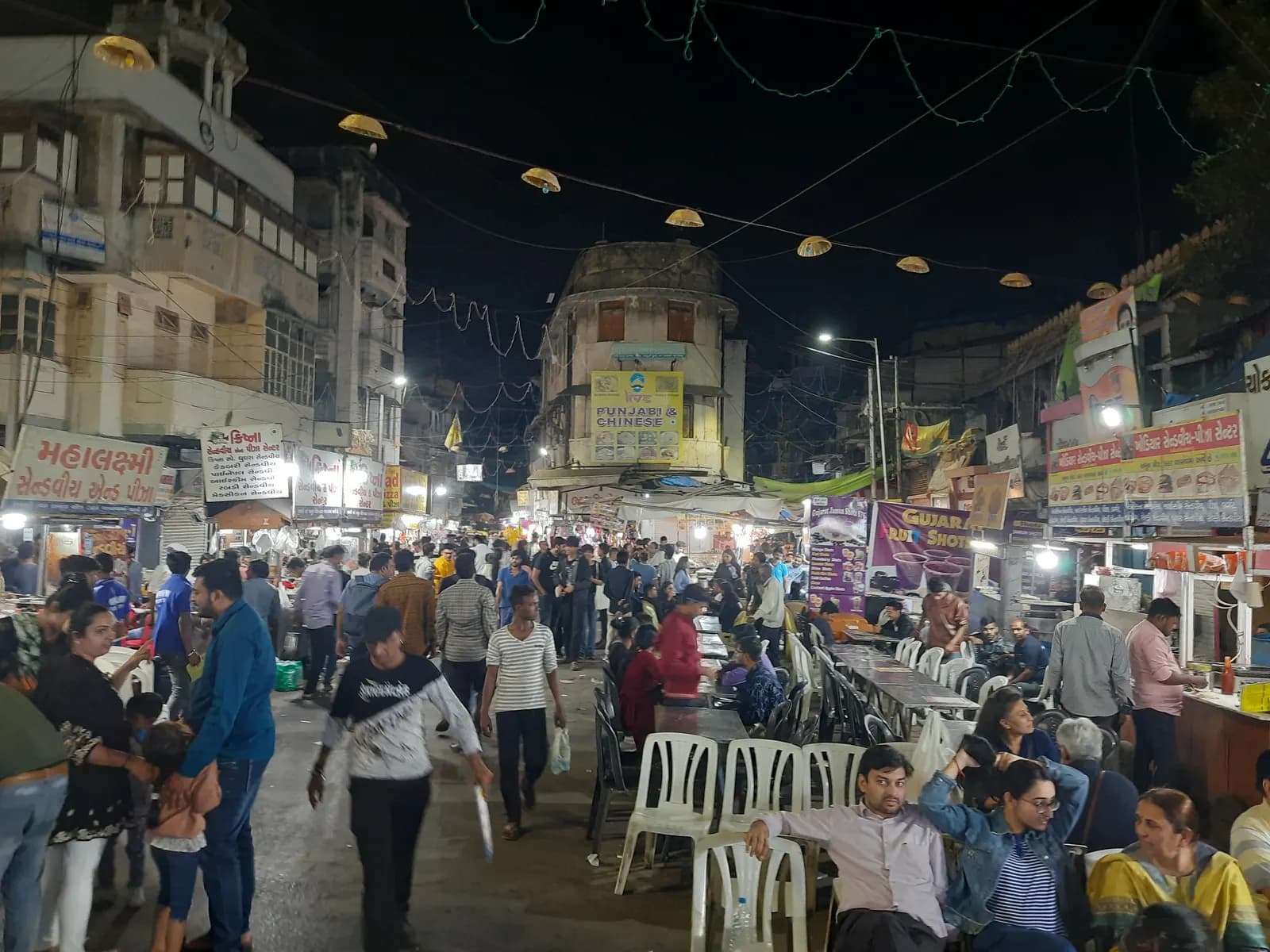
In practice, the corporations' health departments administer these licences. Reading the section's wording, the businesses most likely to be caught are eating houses and restaurants, hotels and lodging houses, bakeries and food manufacturing, meat and fish sale, dairies and cattle stables, storage of fuel, chemicals, firecrackers and other hazardous goods, and workshops using noisy or polluting machinery. The exact list is in rules and standing orders made under the Act, and we couldn't find a current consolidated list on AMC's website. If your trade is close to any of these, ask your zone's health office in writing whether you need a licence.
The building-use (BU) rule for restaurants and hotels
The biggest practical hurdle for an Ahmedabad eatery isn't the application; it's the building. After the 2001 earthquake, according to press reports, the Gujarat High Court directed that hotel and restaurant licences should not be issued for premises without BU permission — the building use certificate the corporation issues once a building is completed in line with its approved plan. AMC's Standing Committee passed a resolution to the same effect in 2001, and reportedly also asked for a structural engineer's certificate for buildings under 200 sq m.
That rule became news in 2022, when it emerged that AMC's health department had issued restaurant licences in 2021 to 54 establishments without BU permission, on the commissioner's approval alone. For a new business, the lesson is simple: before you sign a lease for a restaurant, café, bakery with seating or a lodge, ask the landlord for the BU certificate and check that the use it allows matches yours.
If the building lacks BU because of unauthorised construction, the Gujarat Regularisation of Unauthorised Development Act, 2022 (GRUDA), which AMC publishes on its website, offers a route to regularise some structures. That's the owner's job and can take months, so factor it into the lease negotiations.
The permits an Ahmedabad business actually needs
Which permits apply to which Ahmedabad business
| Permit | Who needs it | Issued by |
|---|---|---|
Section 376 licence | Eateries, lodging, hazardous storage, offensive or nuisance trades, animal-keeping | AMC health department |
Gumasta registration / intimation | Every shop and establishment — Form A at 20 or more workers, Form D below | AMC Shops & Establishment office / eNagar |
Professional tax enrolment | Most businesses and professionals; employers deduct from staff | AMC professional tax department |
FSSAI registration or licence | Any food business | Food safety officers / FSSAI |
Fire NOC | Larger or high-risk buildings and premises | AMC Fire & Emergency Services |
GST registration | Above the turnover threshold or for inter-state supply | GST department |
Section 376 licence
- Who needs it
Eateries, lodging, hazardous storage, offensive or nuisance trades, animal-keeping
- Issued by
AMC health department
Gumasta registration / intimation
- Who needs it
Every shop and establishment — Form A at 20 or more workers, Form D below
- Issued by
AMC Shops & Establishment office / eNagar
Professional tax enrolment
- Who needs it
Most businesses and professionals; employers deduct from staff
- Issued by
AMC professional tax department
FSSAI registration or licence
- Who needs it
Any food business
- Issued by
Food safety officers / FSSAI
Fire NOC
- Who needs it
Larger or high-risk buildings and premises
- Issued by
AMC Fire & Emergency Services
GST registration
- Who needs it
Above the turnover threshold or for inter-state supply
- Issued by
GST department
Gumasta (Shops and Establishments). Since 16 December 2025, an establishment with 20 or more workers registers in Form A and gets a certificate, while one with fewer than 20 workers files a free intimation in Form D. Either is due within 60 days of starting, and neither needs renewal. Registration costs ₹500 for a shop or office and ₹1,000 for a restaurant or eating house. Our Gujarat gumasta licence guide has the full process.
Professional tax. AMC collects profession tax within the city. Businesses enrol and pay an annual amount, and employers deduct tax from salaries above ₹12,000 a month. See professional tax in Gujarat.
FSSAI. Every food business — a cloud kitchen, sweet shop or tea stall included — needs FSSAI registration or a licence depending on turnover and activity. In Ahmedabad the corporation's food safety officers enforce it, and in August 2026 they sealed outlets operating without a valid FSSAI licence or registration. See our FSSAI registration guide.
Fire NOC. AMC's Fire and Emergency Services accept fire NOC applications online through the corporation's website and publish a list of NOCs nearing expiry. Restaurants with kitchens on upper floors, lodges, hospitals, schools and larger commercial buildings are the usual cases. See our fire NOC guide.
How to apply for a section 376 licence
Section 376 licence in an Ahmedabad or Surat zone
- 1
Confirm the licence applies
Ask the health department of your zone whether your trade or storage needs a section 376 licence. Get the answer in writing if it says no.
- 2
Check the building
For eateries and lodging, get the BU certificate and confirm its permitted use. Collect the property tax bill, the lease or ownership papers and, for food, the FSSAI certificate.
- 3
Apply to the zone's health office
SMC section 376 form (PDF)Fill the corporation's form — in Surat, the free section 376 form addressed to the Deputy Health Officer of your zone — or the corporation's online module where one is available.
- 4
Site inspection
A sanitary inspector visits and reports on the premises, water, drainage and waste arrangements. Surat's form gives the inspector 7 days to report.
- 5
Pay the fee and collect the licence
Once approved, pay the fee the corporation demands and collect the licence card or book. Keep it at the premises — the Act requires it.
What the form asks. Surat's form is a good guide to what any Gujarat corporation wants to know: the establishment's name and address with ward, the owner (and every partner for a firm) and manager, the type of trade, whether it's retail or wholesale, the floor area in square metres, the goods kept and their quantities, the electric horsepower used, the number of workers, and whether the premises have a municipal or private water connection and a drainage connection (or what other arrangement). You sign an undertaking to follow the corporation's rules and conditions, and false details make the licence liable to cancellation.
Fees. Neither AMC nor SMC publishes its section 376 fee schedule on its website. The SMC form leaves the fee blank for the office to fill in. Several agency websites quote "AMC trade licence fees", but none cite an official schedule, so we've left their numbers out. Pay only against a corporation challan or online demand, and keep the receipt.
Documents to keep ready
Documents for a section 376 licence in Gujarat
0/9Worked example: a café in Navrangpura
Riya is opening a 40-seat café on the ground floor of a commercial complex in Navrangpura with 12 staff. Before signing the lease she asks for the complex's BU certificate and checks that it allows commercial use on the ground floor. She also asks for the latest property tax receipt.
She files a Form D intimation under the Shops Act, because with 12 workers she is below the 20-worker line and pays nothing. She enrols for professional tax with AMC, gets an FSSAI licence for the kitchen, and checks with AMC Fire whether her kitchen and seating need a fire NOC. She then applies to the zone's health department for the eating-house licence under section 376, attaching the BU certificate, lease, FSSAI certificate and layout. The sanitary inspector checks the kitchen, water supply, drainage and waste storage before the licence is issued.
Compare a stationery shop two doors down with three staff. It files a free Form D intimation, enrols for professional tax and registers for GST when it crosses the threshold. It doesn't store anything hazardous and isn't a nuisance trade, so it doesn't need a section 376 licence — and an agent offering to sell it one is selling paperwork it doesn't need.
Surat, Vadodara, Rajkot and smaller towns
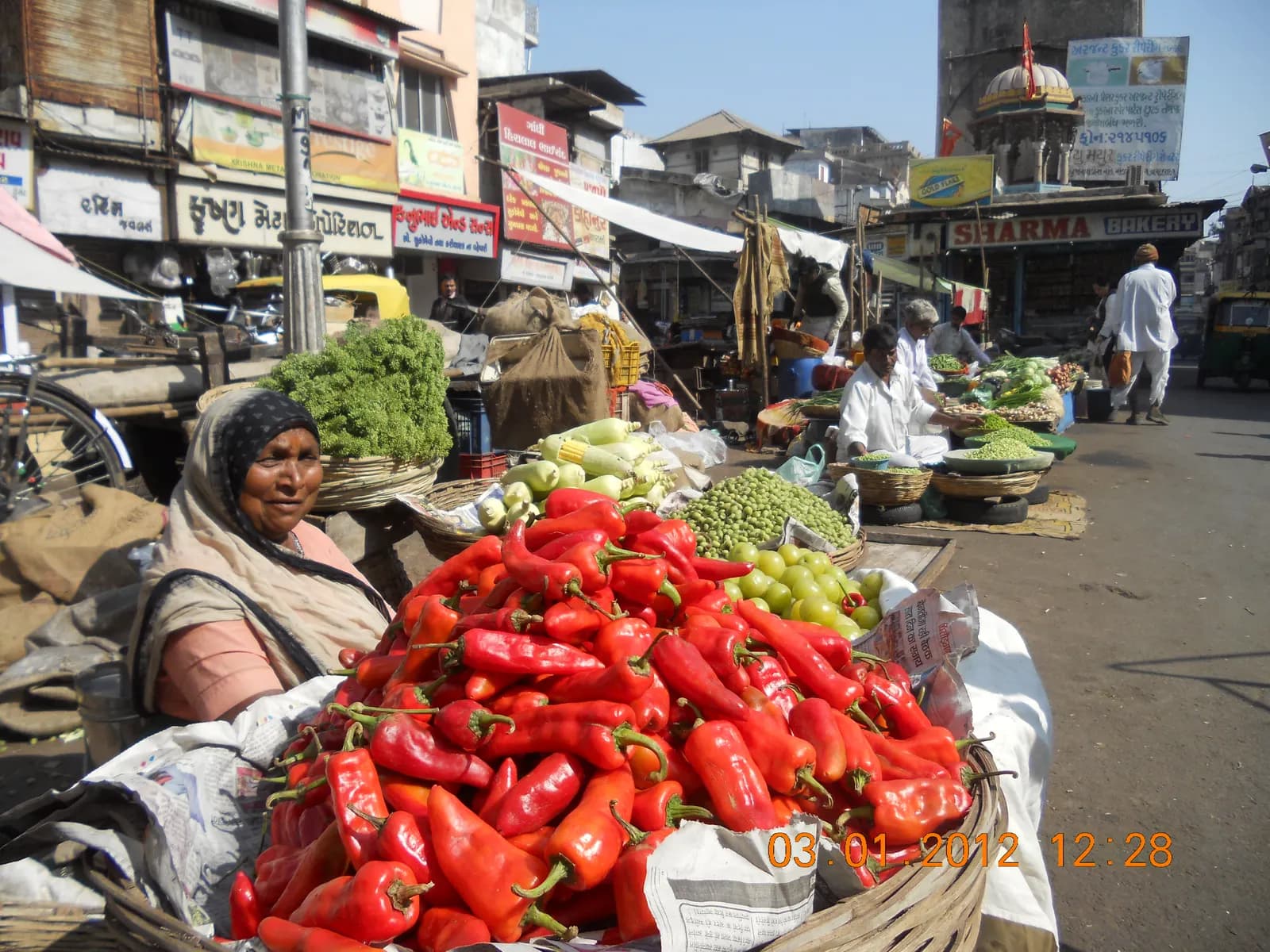
Surat. SMC is the most transparent about the process. Its online forms page lists the section 376 licence form under Public Health, separate forms for Shops and Establishments registration, and Form B under the Food Safety and Standards Act. The section 376 application goes to the Deputy Health Officer of the zone, the form is free if downloaded from SMC's website, and a sanitary or chief sanitary inspector reports on the site before the Deputy Health Officer approves or rejects it. The same form is used for renewals.
Vadodara, Rajkot and other corporations. They work under the same GPMC Act, so the same section 376 logic applies. Their health departments administer the licences, and Shops Act services in Ahmedabad, Surat, Rajkot and Vadodara are offered through the state's eNagar portal. Each corporation fixes its own fees, so ask the zone office.
Municipalities (nagarpalikas). Towns that aren't municipal corporations are governed by the Gujarat Municipalities Act, 1963 and their own bye-laws. Ask the municipality's sanitation or health branch which trades need a licence, and get the Shops Act intimation done through the Labour Department or the local body notified for your area.
Industrial estates. Units in GIDC estates deal with GIDC for their plot and building approvals, and with the Gujarat Pollution Control Board for consent. If you're inside a municipal corporation's limits, the section 376 question still applies to trades and storage that fall within it.
After you get the licence
Renewals. Surat's form is marked for both new licences and renewals, which tells you a section 376 licence isn't a one-time permit. Note the validity printed on your licence card, diary the date a month ahead, and apply for renewal on the same form or online module with the latest property tax receipt and any updated FSSAI or fire documents.
Changes. The licence covers the trade, the premises and the goods or machinery you declared. If you add a trade, increase storage, install more horsepower or expand the floor area, tell the zone health office and get the licence amended before the change, not after an inspector notices it. A new owner or a move to a new address usually means a fresh application.
Inspections. The Act lets the commissioner's officers inspect licensed premises at any time, and conditions on the licence — on cleanliness, storage, waste or working hours — are enforceable. Keep a simple file at the premises with the licence, BU certificate, FSSAI certificate, fire NOC and pest-control records so you can show everything in one go.
What changed in 2025–26
Gujarat business licensing changes, 2025–26
16 December 2025
Shops Act amendment: registration only from 20 workers; 10-hour day
December 2025
AMC seals eateries lacking licences, health permits and fire clearances
27 February 2026
Gujarat Act No. 1 of 2026 replaces the Shops Act ordinance
August 2026
AMC food department notices 11,123 food businesses on live kitchen CCTV; more sealings
The Shops Act change matters most for small businesses: a shop with fewer than 20 workers now files only a free intimation, with no certificate fee and no renewal.
Enforcement on eateries has tightened. In December 2025 AMC sealed eateries found running without the required licences, health permits or fire clearances, or beyond the permissions granted for their address. In August 2026 its food department sent digital notices to 11,123 food business operators asking them to install CCTV in kitchens and show the live feed in the reception or dining area, and sealed outlets for adulteration, poor hygiene and running without a valid FSSAI licence or registration. If you run an eatery, keep the section 376 licence, FSSAI certificate, fire NOC and BU certificate together at the premises.
Common mistakes and how to fix them
Buying an "AMC trade licence" you don't need. If your trade isn't in section 376 or its rules and isn't a nuisance or hazardous trade, there's nothing to buy. Ask the zone's health office in writing.
Leasing a building without BU. For eateries and lodging this can block the licence entirely. Get the BU certificate before you pay a deposit.
Confusing gumasta with the municipal licence. They're separate laws for separate purposes. A Form D receipt doesn't license a restaurant, and a section 376 licence doesn't satisfy the Shops Act.
Ignoring labour rules. Pay at least the Gujarat minimum wages and follow the Shops Act's working-hours limits.
Not keeping the licence at the premises. Section 376 requires it, and inspectors in 2025–26 have sealed first and asked questions later.
Official links
- Ahmedabad Municipal CorporationFire NOC online, professional tax, GRUDA
- AMC Fire NOC — apply onlineFire & Emergency Services
- Surat Municipal Corporation — online formsSection 376 licence form, Shops Act, FSS Act Form B
- Gujarat Shops and Establishments Act and RulesLabour Department, as amended to 2026
- eNagarShops & Establishment services for municipal corporations
What to do next
Start with the building: check its BU certificate and property tax status. Then decide whether your trade is one section 376 covers, and ask the zone health office if you're unsure. File the gumasta registration or intimation, enrol for professional tax, and add FSSAI and a fire NOC where they apply. Register for GST when you need to, and consider Udyam registration for MSME benefits. Our startup cost calculator helps you budget the first-year fees and deposits.
This is general information, not legal or tax advice — confirm on the official source or with a professional.
Frequently asked questions
Not in the sense most other states use the word. Gujarat's municipal corporations license only the trades in section 376 of the Gujarat Provincial Municipal Corporations Act — trades specified in rules, trades the commissioner considers dangerous or a nuisance, and storing listed goods. An ordinary shop's core filing is the gumasta (Shops Act) registration or intimation, plus professional tax, GST and FSSAI if it sells food.
Section 376 of the Gujarat Provincial Municipal Corporations Act, 1949 (formerly the BPMC Act) bars certain trades and storage without the municipal commissioner's licence. It covers rule-listed trades and any trade the commissioner considers dangerous to life, health or property or a nuisance, storing rule-listed articles, cotton above four hundredweight near homes, keeping animals for sale or hire, and farriery.
AMC doesn't publish its section 376 licence fee schedule on its website, and we couldn't find one on any official page in October 2026. Consultancy sites quote figures with no official source, so we've left them out. Official fees we can confirm are the gumasta registration of ₹500 for a shop or office and ₹1,000 for a restaurant, and the AMC professional tax rates.
It shouldn't. Press reports describe a Gujarat High Court direction after the 2001 earthquake, and an AMC Standing Committee resolution, that hotel and restaurant licences must not be issued for premises without building use (BU) permission. When licences were issued to 54 eateries without BU in 2021, it became a controversy. Check the building's BU certificate before you sign a lease.
Surat Municipal Corporation publishes a free application form for licences under section 376(1), addressed to the Deputy Health Officer of your zone. You give the trade, whether retail or wholesale, floor area, goods stored, electric horsepower, number of workers, and water and drainage arrangements. The sanitary inspector inspects and reports within 7 days, and the licence card is issued after the fee is paid.
No. The gumasta licence is a registration under the Gujarat Shops and Establishments Act, 2019 that deals with employment conditions. Since 16 December 2025, only establishments with 20 or more workers register; smaller ones file a free intimation. The section 376 licence is a municipal health licence for particular trades. Some businesses need both.
Sources & verification
Figures on this page were checked against the sources below when it was last reviewed on 12 October 2026. Each rate and limit is stored once with its own official source and review date, and official update channels are monitored daily so changes are picked up. How we verify
- 1.Gujarat Provincial Municipal Corporations Act, 1949 — section 376 — Indian Kanoon (statute text) · accessed 12 October 2026
- 2.Surat Municipal Corporation — Online Forms (Public Health; Shops & Establishments; Food Safety) — Surat Municipal Corporation · accessed 12 October 2026
- 3.SMC application form for licence for trades under section 376(1), BPMC Act 1949 — Surat Municipal Corporation · accessed 12 October 2026
- 4.Ahmedabad Municipal Corporation — website (Fire NOC online, GRUDA Act 2022, professional tax) — Ahmedabad Municipal Corporation · accessed 12 October 2026
- 5.Gujarat Shops and Establishments Act and Rules (as amended to 2026) — Labour, Skill Development and Employment Department, Gujarat · accessed 12 October 2026
- 6.Gujarat Shops and Establishments Rules, 2020 — Labour, Skill Development and Employment Department, Gujarat · accessed 12 October 2026
- 7.Disregarding High Court directive, AMC issues restaurant licences to 54 establishments not having BU permission — Vibes of India · accessed 12 October 2026
- 8.AMC seals 6 eateries over severe hygiene breaches, orders live kitchen cameras across 11,000 food hubs — News Bharati · accessed 12 October 2026
- 9.AMC cracks down on unlicensed eateries across Ahmedabad — PropNewsTime · accessed 12 October 2026
MSMETOOLS is an independent platform and is not affiliated with any government agency, ministry or department.
Tools for this
Startup Cost Calculator
Estimate how much capital you need to launch.
Invoice Generator
Create professional invoices with tax, logo and custom details.
Related guides
 Trade License Jaipur 2026: Rajasthan Fees & How to ApplyRead guide
 Gumasta License Gujarat 2026: 20-Worker Rule, Fee, Form DRead guide
 Professional Tax Gujarat 2026: Slab, AMC/SMC & Due DatesRead guide
 Trade License Mumbai 2026: BMC Section 394 Fees & RenewalRead guide
Official links open the government site in a new tab.