 Sales tax
Illinois Sales Tax Rate in 2026: State Rate, Chicago and Local Rates, Groceries and Filing
Illinois sales tax rate 2026: the 6.25% state rate, Chicago at 10.5%, the 2026 grocery tax repeal, city rates and filing.
 Edited by Sumeet YadavFounder & editor, MSMETOOLS · fact-checked against official sources
Contents (10)
- 1. How Illinois sales tax works: occupation tax, use tax and service tax
- 2. Illinois sales tax rates by city and county (2026)
- 3. What changed in 2026
- 4. The grocery tax repeal: who still pays tax on food
- 5. Worked examples in dollars
- 6. Who must register and how to do it
- 7. Filing frequency, due dates and the discount
- 8. Use tax: when the buyer owes Illinois tax
- 9. Common Illinois sales tax mistakes and how to fix them
- 10. What to do next
If you sell goods in Illinois, whether from a corner shop in Pilsen, a hardware store in Bloomington or an online store shipping into the state, you need the right rate on every receipt. Illinois makes that harder than most states. There are three different state rates depending on what you sell, a layer of transit, county and city taxes on top, and two big changes in 2026: groceries lost their state tax on January 1, and the Chicago-area transit tax went up on August 1. This guide covers the current rates for the main cities and counties, how the grocery repeal really works, worked examples, registration on MyTax Illinois and filing Form ST-1. Rates were checked against the Illinois Department of Revenue's rate files in October 2026.
Quick answer
The Illinois state sales tax rate is 6.25% on general merchandise and 1% on qualifying medicines. Groceries have had no state tax since January 1, 2026. With local taxes, the combined rate runs from 6.25% to 11.25%. Chicago is 10.5% from August 1, 2026.
Chicago groceries are still taxed at 1.5% because the transit tax on food was not repealed
Cities and counties may add a local grocery tax of exactly 1%; hundreds have
Registration on MyTax Illinois has no fee and usually takes 1–2 business days
Form ST-1 is due on the 20th of the month after each period
Remote sellers must collect once Illinois sales reach $100,000 a year
How Illinois sales tax works: occupation tax, use tax and service tax
What everyone calls "Illinois sales tax" is legally a bundle of four taxes. The main one is the Retailers' Occupation Tax (ROT), a tax on the seller for the privilege of selling goods at retail. The matching Use Tax falls on the buyer for using goods in Illinois, and retailers collect it from customers as a reimbursement. Two parallel taxes, the Service Occupation Tax and Service Use Tax, cover goods transferred as part of a service, such as the parts a repair shop installs. In practice you add one combined percentage to the price and send it to the Illinois Department of Revenue (IDOR) on one return, Form ST-1.
The state rate depends on what you sell. General merchandise, which is almost everything including clothing, electronics, furniture, soft drinks, candy, alcohol and hot or prepared food, carries the 6.25% high rate. Qualifying drugs and medical appliances, including prescription and non-prescription medicines, carry a 1% low rate. Groceries, which until the end of 2025 shared that low rate, now carry no state tax at all.
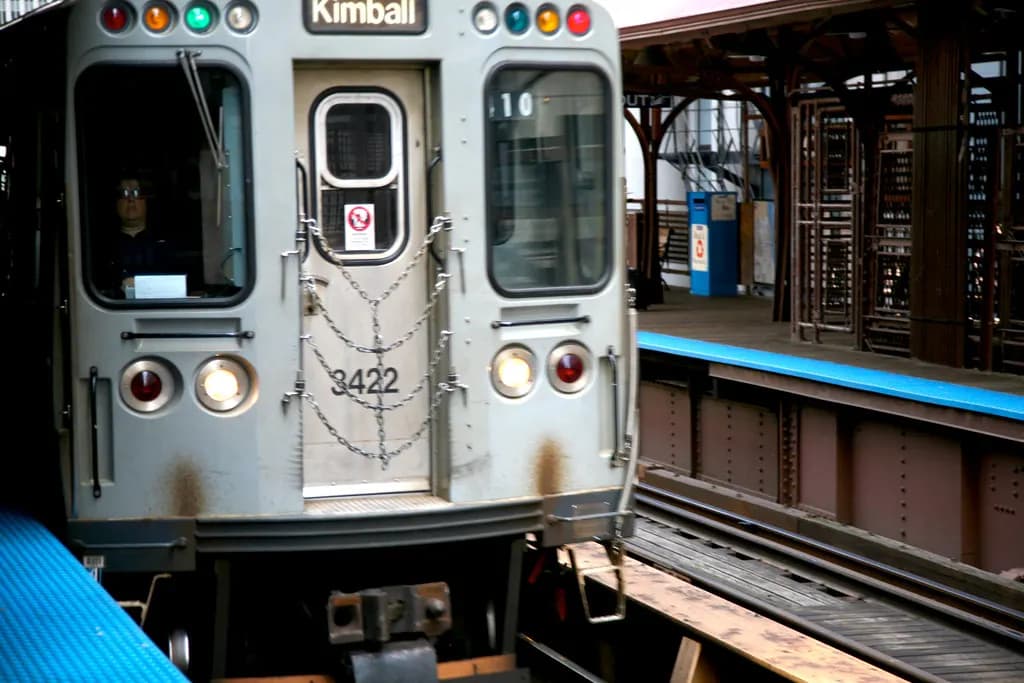
Local taxes stack on top, and IDOR collects most of them for local governments. They include home rule and non-home rule city taxes, county taxes, the Northern Illinois Transit Authority (NITA) tax in Cook, DuPage, Kane, Lake, McHenry and Will counties, the Metro-East Mass Transit District (MED) tax in Madison and St. Clair counties, and smaller school-facility, public-safety and business-district taxes. Most of these local taxes do not apply to groceries, medicines or vehicles. The transit taxes do, which is why food bought in Chicago or Naperville is still taxed. NITA took over from the Regional Transportation Authority (RTA) on June 1, 2026, so older paperwork still says RTA.
Because local taxes vary street by street, IDOR's own Tax Rate Finder on MyTax Illinois is the final word for any address. Several cities, including Springfield, Peoria, Naperville and Joliet, have business districts or other address-level taxes, so there is no single rate for the whole city.
Illinois sales tax rates by city and county (2026)
The table shows the combined rate on general merchandise, state plus all IDOR-collected local taxes, from IDOR's current rate file. Rates for Chicago-area places reflect the August 1, 2026 transit increase. A "county" row is the rate in unincorporated parts of that county. Where a city spans two counties, the rate depends on which side of the line you are on.
| Location | County | Combined rate |
|---|---|---|
| Chicago | Cook | 10.5% |
| Cook County (unincorporated) | Cook | 9.25% |
| Evanston | Cook | 10.5% |
| Oak Park | Cook | 10.25% |
| Schaumburg (Cook part) | Cook | 10.25% |
| Cicero | Cook | 11% |
| DuPage County (unincorporated) | DuPage | 7.25% |
| Lake County (unincorporated) | Lake | 7.25% |
| Will County (unincorporated) | Will | 7.25% |
| McHenry County (unincorporated) | McHenry | 7.5% |
| Aurora (Kane part) | Kane | 8.5% |
| Elgin (Kane part) | Kane | 8.75% |
| Rockford (Winnebago part) | Winnebago | 8.75% |
| Champaign | Champaign | 9.25% |
| Urbana | Champaign | 9% |
| Bloomington | McLean | 9.75% |
| Decatur | Macon | 9.25% |
| Carbondale | Jackson | 9.75% |
| Sangamon County (unincorporated) | Sangamon | 7.75% |
| Madison County (unincorporated) | Madison | 6.85% |
Chicago's 10.5% breaks down as 6.25% state, 1.75% Cook County, 1.25% City of Chicago and 1.25% NITA. Several Cook County suburbs go higher: Cicero, Berwyn and Bartlett charge 11%, and East Dundee's Cook County portion, Glenwood and River Grove reach 11.25%, the highest standard rates in the file. At the other end, about 130 small towns and rural counties charge only the 6.25% state rate.
Downstate rates moved too. Champaign went from 9% to 9.25% on January 1, 2026, and unincorporated Sangamon County, around Springfield, rose from 7.25% to 7.75% on July 1, 2026. IDOR publishes a summary bulletin before every January 1 and July 1 change, and those two dates are when you should re-check any rate you have hard-coded into a till.
What changed in 2026
Three changes matter for almost every Illinois seller this year, and a fourth for anyone selling from outside the state.
Illinois sales tax changes in 2026
0%
State tax on groceries
from January 1, 2026
+0.25%
Transit tax, six northern counties
from August 1, 2026
10.5%
Chicago general rate
was 10.25%
$100,000
Only remote-seller test
200-sale test ended Jan 1, 2026
Grocery tax repeal (January 1). Public Act 103-0781 ended the state's grocery tax and allowed cities, and counties for their unincorporated areas, to impose their own tax of exactly 1%. The next section explains who still pays.
NITA transit increase (August 1). The transit funding law signed in December 2025 created the Northern Illinois Transit Authority and raised its sales tax by 0.25%. In Cook County the NITA rate is now 1.25% on general merchandise and 1.5% on groceries and medicines. In DuPage, Kane, Lake, McHenry and Will counties it is 1% on everything. That one change lifted Chicago from 10.25% to 10.5%, a rate that had not moved since 2016.
Destination sales and remote sellers (January 1). Public Act 104-0006 removed the 200-transaction test, so out-of-state sellers now collect Illinois tax only if their Illinois sales reach $100,000 over the previous four quarters. It also lets IDOR tax destination sales at a flat 15% when a seller cannot show where the goods were delivered, a rate that can be applied in audits of earlier periods too. Servicepersons shipping parts into Illinois from outside the state now follow the same destination rules.
Back-to-school holiday (August). For the first time in years, Illinois ran a state sales tax holiday from August 7–16, 2026. The state portion on qualifying clothing and shoes under $125 an item and on school supplies dropped from 6.25% to 1.25%, while local taxes still applied. Check IDOR's bulletins each summer to see whether the legislature repeats it.
The grocery tax repeal: who still pays tax on food
The headline "Illinois ends the grocery tax" is only partly true. The state's share is gone, but three local layers can still apply to the same bag of food. First, more than 600 cities and counties filed ordinances to keep a 1% local grocery tax from January 1, 2026, and another wave, including Kane, Jackson and Wayne counties, started on July 1. Second, the NITA transit tax on food continues in the six northern counties. Third, the Metro-East transit tax on food continues in Madison and St. Clair counties.
So a shopper's rate on groceries now depends entirely on location. In Chicago, which did not adopt a local grocery tax, groceries carry only the NITA rate of 1.5%. In a DuPage County town that kept a local grocery tax, the rate is 2%: 1% NITA plus 1% local. In a downstate city that did not adopt one, such as Springfield, groceries are tax-free. A county grocery tax only reaches unincorporated areas, so a city and its county can never stack two local grocery taxes; the most is 1%.
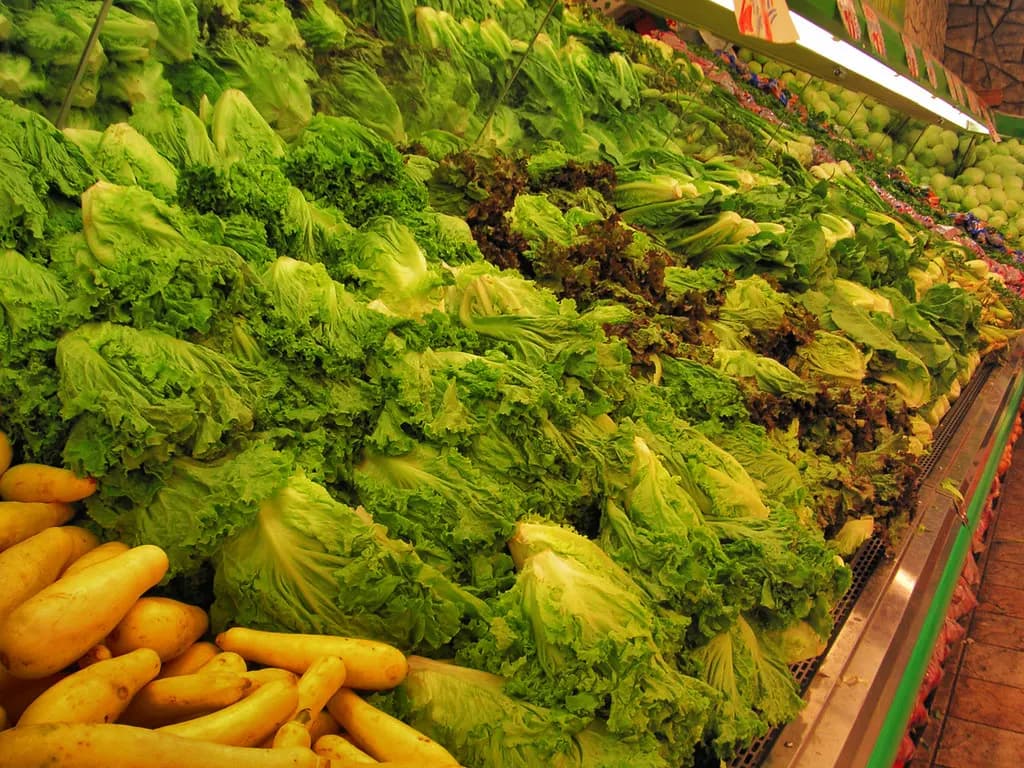
What counts as groceries did not change. IDOR defines groceries as food for human consumption that is eaten off the premises where it is sold. The definition excludes alcoholic beverages, food containing adult-use cannabis, soft drinks, candy and food prepared for immediate consumption, all of which stay at the full general merchandise rate. Packaged food, bakery items to take home, whole cakes and pies, deli salads, infant formula, cold precooked meals, bagged ice, milk drinks, juices that are more than 50% juice, and coffee or tea all count as groceries.
Two practical rules trip up food businesses. A seller with on-site seating is presumed to sell all its food at the high rate unless it can show a separate eating area and tracks those sales separately. Hot food is always treated as prepared for immediate consumption. A bakery with three café tables, for example, needs to split its till between take-away bread (grocery rate) and coffee and pastries eaten in (general rate), or IDOR will treat it all as general merchandise.
Medicines were not part of the repeal. Items that would be food but carry medicinal claims on the label, such as cough drops claiming to relieve sore throats, remain qualifying drugs at the 1% state rate plus any transit tax.
Which rate applies in Chicago (from August 1, 2026)
| Item | Category | Chicago rate |
|---|---|---|
Bread, milk, fresh produce, frozen dinners | Groceries | 1.5% |
Ibuprofen, prescription medicine, crutches | Drugs and medical appliances | 2.5% |
Soda, candy, beer | General merchandise | 10.5% plus city soft-drink or liquor taxes |
Hot rotisserie chicken, café sandwich eaten in | Prepared food (general) | 10.5% plus city restaurant tax |
Clothing, electronics, furniture | General merchandise | 10.5% |
Bread, milk, fresh produce, frozen dinners
- Category
Groceries
- Chicago rate
1.5%
Ibuprofen, prescription medicine, crutches
- Category
Drugs and medical appliances
- Chicago rate
2.5%
Soda, candy, beer
- Category
General merchandise
- Chicago rate
10.5% plus city soft-drink or liquor taxes
Hot rotisserie chicken, café sandwich eaten in
- Category
Prepared food (general)
- Chicago rate
10.5% plus city restaurant tax
Clothing, electronics, furniture
- Category
General merchandise
- Chicago rate
10.5%
Worked examples in dollars
The examples use the rates in force on October 2026. Round tax to the nearest cent per transaction.
A Chicago clothing boutique. A customer buys a $200 jacket. Tax at 10.5% is $21.00, so the total is $221.00. The same jacket sold in July, before the transit increase, would have carried $20.50 of tax at 10.25%.
A mixed grocery basket in Chicago. A shopper buys $80 of groceries, $10 of soda and candy, and a $20 bottle of ibuprofen. Groceries at 1.5% come to $1.20, the soda and candy at 10.5% to $1.05, and the ibuprofen at 2.5% to $0.50. Total tax is $2.75 on a $110 bill, an effective rate of 2.5%. The point-of-sale system has to tag each line correctly; one rate for the whole basket is wrong in either direction.
A Bloomington hardware store. A contractor buys $1,000 of tools at the counter. At 9.75% the tax is $97.50. If the contractor is buying lumber for resale to a customer, they can give the store a Certificate of Resale (Form CRT-61) and pay no tax; tools they keep and use are taxable.
An Ohio online shop shipping to Evanston. The store made $140,000 of sales to Illinois customers last year, so it is over the $100,000 threshold and must collect at the destination. A $500 order shipped to Evanston carries 10.5%, or $52.50. The same order shipped to a farm address in unincorporated Madison County carries 6.85%, or $34.25. A store under the threshold collects nothing, and the customer owes Illinois use tax instead.
The timely-filing discount. A retailer that files and pays on time may keep a discount of 1.75% of the tax. A shop collecting $30,000 of tax a month keeps $525. A larger store collecting $80,000 a month would work out to $1,400, but the discount has been capped at $1,000 a month for returns due from January 1, 2025, so it keeps $1,000.
Try it — a $250 sale in Chicago
Who must register and how to do it
Any business selling tangible goods at retail from an Illinois location must register with IDOR before its first sale. That includes shops, restaurants, food trucks, e-commerce sellers keeping stock in Illinois, craft-fair sellers and service businesses that transfer parts or materials. Out-of-state retailers with a place of business in Illinois register too, and so do remote sellers and marketplace facilitators once they pass the $100,000 test. A business that only buys for resale and never sells at retail registers as a reseller rather than a retailer.
Registration has no fee. You apply on Form REG-1, the Illinois Business Registration Application, which covers sales tax, withholding and other IDOR accounts in one go. Sole proprietors must use REG-1 even if they already have another IDOR account. After approval, IDOR issues a Certificate of Registration showing your account ID, business name, address and expiry date. You need it to sell at retail, and each extra location gets its own sub-certificate.
How to register for Illinois sales tax
- 1
Get your federal and state basics in order
EIN application guideForm your LLC or corporation with the Illinois Secretary of State if you are using one, and get an EIN from the IRS. Sole proprietors can register with a Social Security number.
- 2
Open MyTax Illinois and choose Register a New Business
On mytax.illinois.gov, select Register a New Business (Form REG-1). Enter your legal name, ownership, NAICS code, start date and every location you will sell from.
Tip: List each store or kiosk as a separate location — each gets its own local rate on Form ST-2.
Open MyTax Illinois - 3
Wait for approval and the Certificate of Registration
Online applications are usually processed in 1–2 business days. Paper REG-1 forms take several weeks. Your certificate appears under Letters and Messages in MyTax Illinois.
- 4
Activate your MyTax Illinois logon
Allow 24 hours after the confirmation email, then sign up for a logon using the owner's Social Security number or another validation option IDOR lists.
- 5
Set up your till and invoices
Create an invoiceLoad the combined rate for each location from the Tax Rate Finder, tag items as general, grocery or drug, and keep resale certificates for tax-free sales.
If you sell from several locations, each one is registered separately and reported on Form ST-2 with its own rate. Cities such as Chicago also run their own taxes outside IDOR, for example on restaurant meals, parking and amusements, and these need a separate registration with the city's Department of Finance.
Filing frequency, due dates and the discount
IDOR assigns a filing frequency when you register, usually monthly or quarterly, and reviews it each year. The rule of thumb in the Form ST-1 instructions is based on average monthly tax: above $200 you file monthly, from $50 to $200 quarterly, and under $50 annually. Every return is due on the 20th day of the month after the period ends, moving to the next business day for weekends and state holidays.
| Average monthly tax | Filing frequency | Return due |
|---|---|---|
| More than $200 | Monthly | 20th of the next month |
| $50 to $200 | Quarterly | April 20, July 20, October 20, January 20 |
| Under $50 | Annual | January 20 |
| $20,000 or more | Monthly plus quarter-monthly payments | Payments on the 7th, 15th, 22nd and last day |
You must file a return for every period even with no sales. Big sellers face two extra rules. If your average tax is $20,000 or more a month, you make quarter-monthly payments, electronically, on the 7th, 15th, 22nd and last day of each month. And businesses above IDOR's electronic-filing threshold must file ST-1 online; if they file on paper, they lose the discount.
The discount for paying on time is 1.75% of the tax due or $5 a year, whichever is greater, capped at $1,000 a month. File late or pay late and you lose it, then face late-filing and late-payment penalties plus interest under IDOR's Publication 103. If you discover a mistake, file Form ST-1-X; if you collected too much tax and cannot refund it to the customer, report it as excess tax on the return rather than keeping it.
From January 2026 the ST-1 changed. Grocery sales now go on Line 5c if your location has a local grocery tax or is inside NITA or MED. If neither applies, you report the gross receipts and then deduct grocery sales on Schedule A. IDOR requires the revised January 2026 versions of Forms ST-1 and ST-2 for these periods; MyTax Illinois loads the right one automatically, but paper filers must use the new form.
Use tax: when the buyer owes Illinois tax
Use tax covers purchases where no Illinois tax was charged. The state use tax rate mirrors the state sales tax: 6.25% on general merchandise and 1% on qualifying drugs and medical appliances. A business that buys equipment or supplies from an out-of-state seller who did not collect Illinois tax owes use tax on the purchase. Registered retailers report it on the Form ST-1 for the month of the purchase.
Use tax also catches inventory you take for your own use. If a furniture store moves a desk from stock into its own office, it owes use tax on the cost of the desk in the month it removed it. Restaurants that give meals to employees or customers no longer owe use tax on those meals, but still owe it on general merchandise they give away, such as candy and soda.
Individuals and businesses that are not registered retailers report use tax on their Illinois income tax return or on IDOR's use tax return. For small purchases this rarely gets enforced, but a business audit almost always checks fixed-asset purchases for unpaid use tax.
Common Illinois sales tax mistakes and how to fix them
Most problems IDOR finds come from rates that were right once and never updated, or from food and medicine coded at the wrong rate.
Before you file, check these
0/8Stale Chicago rates. Many point-of-sale systems updated automatically on August 1, but manual tills, invoice templates and e-commerce plug-ins often did not. If you under-collected, you still owe the difference. Correct the rate now and pay the shortfall on your next return or an amended ST-1-X.
Over-collecting on groceries. If your till still charges the old 1% on food in a town outside NITA and MED that never adopted a local grocery tax, you are over-collecting. That money is excess tax: refund it to customers where you can, or report it on the excess-tax line.
Mixing up the city and county. Aurora, Elgin, Schaumburg and Chicago itself all cross county lines, and the rate changes at the line. Register each location by its exact address and let the Tax Rate Finder supply the rate.
Missing destination detail. Sellers shipping from outside Illinois must report each Illinois destination on Form ST-2. Without delivery records, IDOR can tax the sales at 15%. Remote retailers with past exposure have an amnesty window from August 1 – October 31, 2026 that waives penalties and interest.
Official links
- MyTax Illinois (register, file ST-1, Tax Rate Finder)REG-1 registration and online filing
- IDOR sales tax rate filesCurrent and prior combined rates for every jurisdiction
- FY 2026-03: grocery tax changesState grocery tax repeal and local option
- FY 2026-34: NITA rate changeAugust 1, 2026 transit increase
- PIO-115: food and medicine ratesWhat counts as groceries
- Form ST-1 instructions (2026)Filing frequency, lines and discount
- Publication 113, Retailer's OverviewRegistration, rates and records
What to do next
Look up the exact rate for each address you sell from in the MyTax Illinois Tax Rate Finder, then load it into your till and invoices. If you are not yet registered, file Form REG-1 online before your first sale. Use our sales tax calculator to check receipts, and read how to calculate sales tax for mixed baskets and discounts. If you also sell into other states, compare the rules in our California and New York guides, and set a reminder for every January 1 and July 1, when Illinois local rates change.
This is general information, not legal or tax advice — confirm on the official source or with a professional.
Frequently asked questions
The state rate is 6.25% on general merchandise and 1% on qualifying drugs and medical appliances. Groceries carry no state tax from January 1, 2026. Local taxes push the combined rate on general merchandise from 6.25% in places with no local tax up to 11.25% in a few Cook County suburbs, and higher inside some business districts.
Since August 1, 2026, Chicago charges 10.5% on general merchandise: the 6.25% state rate, 1.75% Cook County, 1.25% City of Chicago and 1.25% for the Northern Illinois Transit Authority. Groceries are taxed at 1.5% and qualifying medicines at 2.5%. Chicago also has separate city taxes on items such as soft drinks and restaurant meals.
The State of Illinois stopped taxing groceries on January 1, 2026, ending its 1% grocery rate. The same law lets cities and counties impose their own grocery tax of exactly 1%, and more than 600 did so from day one. The transit-district grocery tax in the Chicago region and the Metro East also stayed, so many shoppers still pay some tax on food.
There is no fee to register for Retailers' Occupation Tax with the Illinois Department of Revenue. You apply on Form REG-1 through MyTax Illinois, and online applications are usually processed in 1–2 business days. You then receive a Certificate of Registration, which must be displayed at your place of business. Some specialised activities, such as cigarette distribution, carry separate licence fees.
Form ST-1 is due on the 20th day of the month after each reporting period. Monthly filers file by the 20th of the next month, quarterly filers by the 20th after each quarter, and annual filers by January 20. IDOR assigns the frequency based on average monthly liability: monthly above $200, quarterly from $50 to $200, annual below $50.
Yes, once they make $100,000 or more in gross receipts from sales to Illinois buyers over the preceding four quarters. From January 1, 2026 the old 200-transaction test no longer applies. Remote sellers who qualify collect state and local tax at the destination rate, the rate where the goods are delivered, and file Form ST-1 with Form ST-2.
Sources & verification
Figures on this page were checked against the sources below when it was last reviewed on 9 October 2026. Each rate and limit is stored once with its own official source and review date, and official update channels are monitored daily so changes are picked up. How we verify
- 1.Sales Tax Rate Machine-Readable Files (general merchandise and grocery rate files, current) — Illinois Department of Revenue · accessed 9 October 2026
- 2.Informational Bulletin FY 2026-34, NITA Occupation and Use Tax Rate Change, Effective August 1, 2026 — Illinois Department of Revenue · accessed 9 October 2026
- 3.Informational Bulletin FY 2026-03, Illinois Grocery Tax Changes Effective January 1, 2026 — Illinois Department of Revenue · accessed 9 October 2026
- 4.Informational Bulletin FY 2026-25, Municipal and County Grocery Occupation Tax Rate Changes, Effective July 1, 2026 — Illinois Department of Revenue · accessed 9 October 2026
- 5.PIO-115, Tax Rate Information for Retail Sales of Food and Medicine — Illinois Department of Revenue · accessed 9 October 2026
- 6.Informational Bulletin FY 2026-12, Destination-Based Retailers' Occupation Tax Changes — Illinois Department of Revenue · accessed 9 October 2026
- 7.Publication 113, Retailer's Overview of Sales and Use Tax (R-12/25) — Illinois Department of Revenue · accessed 9 October 2026
- 8.ST-1 Instructions for reporting periods January 2026 and after — Illinois Department of Revenue · accessed 9 October 2026
- 9.Do I need to register my business with the Illinois Department of Revenue? — Illinois Department of Revenue · accessed 9 October 2026
- 10.Informational Bulletin FY 2026-30, Back-to-School State Sales Tax Holiday — Illinois Department of Revenue · accessed 9 October 2026
- 11.Informational Bulletin FY 2026-28, 2026 Illinois Remote Retailer Tax Amnesty Program — Illinois Department of Revenue · accessed 9 October 2026
- 12.Chicago's 2026 budget takes effect — WTTW News · accessed 9 October 2026
MSMETOOLS is an independent platform and is not affiliated with any government agency, ministry or department.
Tools for this
Sales Tax Calculator (US)
Calculate sales tax for all US states and cities.
Invoice Generator
Create professional invoices with tax, logo and custom details.
Related guides
 Illinois Business License 2026: Chicago, Cook & State StepsRead guide
 New York City Sales Tax Rate 2026: 8.875% ExplainedRead guide
 Alabama Sales Tax Rate 2026: 4% State, Groceries 2% & CitiesRead guide
 North Carolina Sales Tax 2026: 4.75% Rate, County RatesRead guide
Official links open the government site in a new tab.