 Business registration & legal
Illinois Business License in 2026: State Registration, Chicago Licenses, Cook County and Assumed Names
Illinois business license guide for 2026: no statewide licence, IDOR REG-1 registration, Chicago BACP licence fees, Cook County's licence and assumed names.
 Edited by Sumeet YadavFounder & editor, MSMETOOLS · fact-checked against official sources
Contents (11)
- 1. How business licensing works in Illinois
- 2. State registration: IDOR, Form REG-1 and the Certificate of Registration
- 3. Chicago business licenses: types and 2026 fees
- 4. How to get a Chicago business license, step by step
- 5. Renewing a Chicago licence
- 6. Cook County and other local licences outside Chicago
- 7. Assumed business names in Illinois
- 8. Forming an LLC or corporation
- 9. Worked examples
- 10. Common mistakes and how to fix them
- 11. What to do next
If you are opening a shop in Chicago, a bakery in Peoria or a consulting practice from your apartment in Evanston, the first question is usually "where do I get my Illinois business license?" The short answer surprises many people: there isn't one at the state level. Illinois handles business permission through a mix of state tax registration, professional licences for certain trades, and local licences from cities, villages and counties. This guide walks through each layer, with the City of Chicago's new 2026 licence fees, Cook County's licence for unincorporated areas, assumed names, and worked examples. Fees were checked against official city, county and state pages in October 2026.
Quick answer
Illinois has no general statewide business license. Most businesses register with the Illinois Department of Revenue on Form REG-1 through MyTax Illinois (no fee), add any profession-specific state licence, and then get a local licence from their city or village. In Chicago, most shops and offices need a Limited Business License costing $500 for two years since January 1, 2026.
Chicago Regulated Business License: $1,000; Retail Food Establishment: $660–$1,650 by floor area
Unincorporated Cook County: General Business License $40 for March 1, 2025 – February 28, 2027
Sole proprietors using a trade name file with the county clerk ($50 in Cook County)
LLCs cost $150 to form and $75 a year to keep active
Sales tax starts at 6.25%; Chicago's combined rate is 10.5%
How business licensing works in Illinois
Think of Illinois licensing as three separate questions, each answered by a different office.
Is your activity taxed or regulated by the state? If you sell goods, rent certain items, hire employees or deal in products such as tobacco, alcohol or motor fuel, you register with the Illinois Department of Revenue (IDOR) and receive an Illinois Account ID. That registration is the closest thing Illinois has to a "state business license" for ordinary retailers, and it is free. The state's own start-up handbook from the Department of Commerce and Economic Opportunity (DCEO) is clear that registering your business entity does not by itself give you permission to operate.
The three layers of Illinois business permission
| Layer | Who issues it | Who needs it | Cost |
|---|---|---|---|
Tax registration (Illinois Account ID) | Illinois Department of Revenue | Sellers of taxable goods, employers, excise taxpayers | no fee |
Professional or industry licence | IDFPR, DCFS, Liquor Control Commission and others | Licensed trades and regulated industries | Varies by licence |
Local business licence | City, village or county | Depends on location and activity | Chicago from $500; Cook County $40 |
Tax registration (Illinois Account ID)
- Who issues it
Illinois Department of Revenue
- Who needs it
Sellers of taxable goods, employers, excise taxpayers
- Cost
no fee
Professional or industry licence
- Who issues it
IDFPR, DCFS, Liquor Control Commission and others
- Who needs it
Licensed trades and regulated industries
- Cost
Varies by licence
Local business licence
- Who issues it
City, village or county
- Who needs it
Depends on location and activity
- Cost
Chicago from $500; Cook County $40
Is your profession licensed? Many occupations need a personal or business licence from a state agency regardless of where you work. The Illinois Department of Financial and Professional Regulation (IDFPR) is the main one, covering everything from barbers, cosmetologists and nail technicians to accountants, real estate brokers, home inspectors and roofing contractors. Other agencies license childcare (DCFS), liquor (the Liquor Control Commission), cannabis, and transport. If your trade is on one of these lists, the state licence is mandatory before you open, and local offices will often ask to see it.
Does your city, village or county license businesses? This is where the "business license" most people mean comes from. Chicago has a large licensing system run by its Department of Business Affairs and Consumer Protection (BACP). Many suburbs and downstate cities have their own general or activity-specific licences, and Cook County licenses businesses in its unincorporated areas. Some towns have no general licence at all and only regulate particular activities through zoning, health or building permits.
The DCEO handbook recommends checking with both your city or village hall and your county clerk before you open. That is good advice, because the rules really do change at the municipal boundary, and the address on your lease decides which set applies.
State registration: IDOR, Form REG-1 and the Certificate of Registration
If you will sell tangible goods at retail in Illinois, whether in a store, at a market stall or online to Illinois buyers, you must register with IDOR before your first sale. You apply on Form REG-1 through MyTax Illinois, the department's online portal. There is no fee, and online applications are usually processed in 1–2 business days. Once approved, you receive a Certificate of Registration with your account number, which must be displayed at your place of business. Other states call this a seller's permit or sales tax licence; in Illinois it is simply your registration.
The same REG-1 application covers withholding income tax if you have employees, and several excise taxes. Employers also register separately with the Illinois Department of Employment Security for unemployment insurance. Corporations, partnerships and LLCs taxed as partnerships file state income and replacement tax returns, and that is handled through the same IDOR account.
Registration matters well beyond tax. Wholesalers generally will not sell to you tax-free for resale without your Illinois account number on a resale certificate, and Chicago's licensing staff and many landlords ask for it. If you sell from more than one location, each site needs its own registration under your account.
Once registered, you collect Illinois sales tax on taxable sales. The state rate is 6.25% on general merchandise, with local taxes on top; in Chicago the combined rate is 10.5% since August 1, 2026. Groceries lost their state tax on January 1, 2026, but local and transit taxes on food remain in many places. Our Illinois sales tax guide has the rates for major cities, the filing schedule for Form ST-1 and worked receipts.
Chicago business licenses: types and 2026 fees
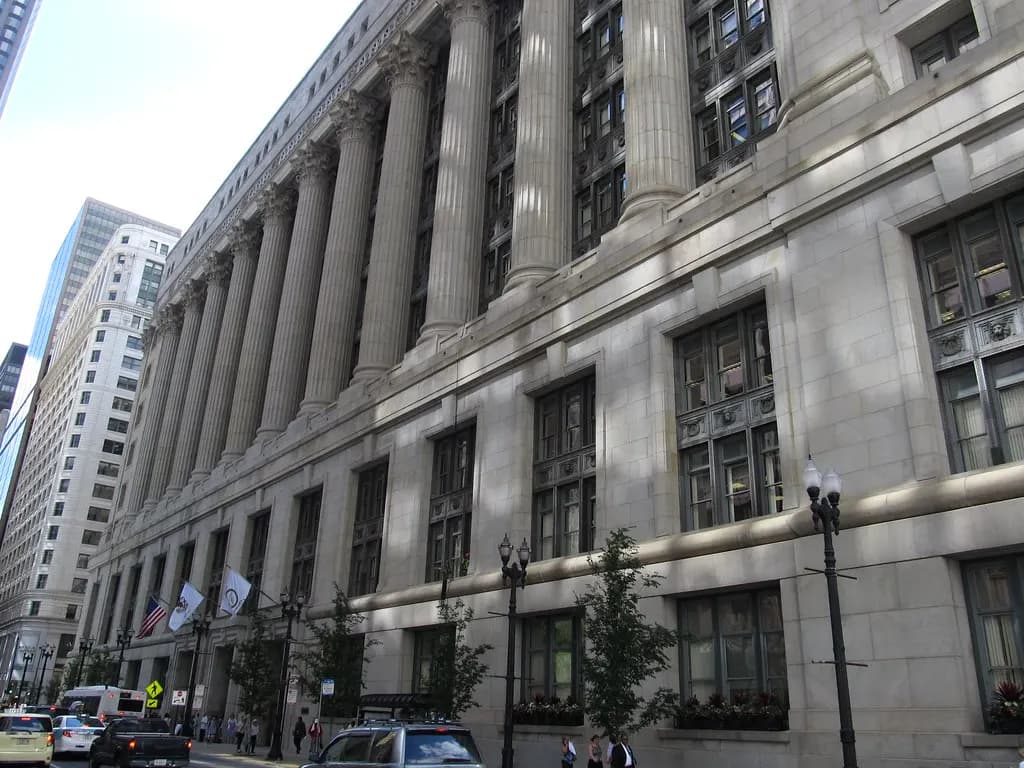
Inside Chicago city limits, almost every business needs a City of Chicago business licence. BACP decides which licence you need from a description of what you actually do at the location, not from your company type, so a hair salon, a clothing boutique and a design studio can all end up on the same licence while a café next door needs something entirely different.
On January 1, 2026 the city raised several licence fees as part of its budget. The two general licences now cost $500 (Limited Business License) and $1,000 (Regulated Business License), each for a two-year term. Most licences in Chicago run for two years, so the fee is effectively half that amount per year.
| Licence | Typical businesses | Fee | Term |
|---|---|---|---|
| Limited Business License | Brick-and-mortar retail, salons and barber shops, offices, most services | $500 | 2 years |
| Regulated Business License | Activities the code regulates more closely | $1,000 | 2 years |
| Retail Food Establishment, up to 1,000 sq ft | Café, bakery, small restaurant, corner grocery | $660 | 2 years |
| Retail Food Establishment, 1,001–2,500 sq ft | Mid-size restaurant or market | $940 | 2 years |
| Retail Food Establishment, 2,501–4,500 sq ft | Larger restaurant | $1,110 | 2 years |
| Retail Food Establishment, 4,501–10,000 sq ft | Large restaurant or grocery | $1,320 | 2 years |
| Retail Food Establishment, over 10,000 sq ft | Supermarket, food hall | $1,650 | 2 years |
| Home Occupation | Permitted home-based businesses | $1,000 | 2 years |
| Massage Establishment | Any business offering massage | $550 | 2 years |
| Retail Tobacco Dealer | Any sale of tobacco or e-cigarettes | $500 per location plus $330 per cash register | 1 year |
Limited Business License. This is the default licence for general retail sold from a storefront, for nail salons, hair salons and barber shops, and for many service businesses. Retail sales under this licence must take place at a brick-and-mortar location, and retail sales are not allowed in residentially zoned districts.
Food licences. Any business that prepares, serves, stores, sells or distributes food from a fixed location needs a Retail Food Establishment licence, priced by floor area. Before the licence is issued, the Chicago Department of Public Health inspects the premises, and businesses serving prepared food must have at least one person on site at all times with a City of Chicago Food Service Sanitation Certificate. Restaurants with seating also face a Department of Buildings inspection that is triggered at each renewal. Food trucks and carts need a Mobile Food licence, temporary food businesses a Pop-Up Food licence, and wholesalers a Wholesale Food Establishment licence. Serving alcohol requires a separate liquor licence.
Home occupation. A Chicago resident can license a business run from home, but only for activities the code allows. Food preparation in a home kitchen, barber shops, massage, animal care, vehicle repair, medical uses, childcare and construction-related uses are among those excluded. The business must stay secondary to living in the home, with no exterior sign, no more than one non-resident employee, no more than two customers at a time and ten in any 24 hours, and one bulk delivery a day between 8 a.m. and 6 p.m. Applications are in person, and the government ID you present must show the home address. Some limited home food production is handled instead by a cottage food registration with the Department of Public Health.
Specialised licences. Entertainment venues, karaoke bars, arcades and event spaces need a Public Place of Amusement licence. That process includes fingerprinting of anyone with a 25% or larger stake, inspections by Buildings and Fire, and a notice to the alderman and registered voters within 250 feet, who have 35 days to object. Tobacco sellers pay $500 per location plus $330 per cash register a year plus a $250 pre-measurement fee credited to the licence, and may buy only from Chicago-licensed wholesalers. Vehicle services, children's services, animal care, tattooing and short-term rentals each have their own licence types.
How to get a Chicago business license, step by step
Getting licensed in Chicago
- 1
Describe your business activity
Use BACP's guide to license types or call 312-74-GOBIZ to confirm which licence fits what you will actually do at the address.
Tip: If you do two things, such as retail plus food, you may need two licences.
- 2
Submit initial business information
Chicago business licensingApply online through Chicago Business Direct, or in person at the Small Business Center in City Hall, 121 N. LaSalle, Room 805.
- 3
Get zoning approval
The city checks that your business type is allowed at that address before you sign up for anything else. Do this before you sign a lease if you can.
- 4
File the full application and documents
Entity documents, lease or proof of ownership, IDOR account number, and licence-specific items such as a food sanitation certificate.
- 5
Pay and clear any City debt
Pay the licence fee. A debt check runs on owners; unpaid tickets, water bills or taxes owed to the City block issuance.
- 6
Pass inspections, if required
Food, amusement and some other licences need health, building or fire inspections after payment and before the licence is issued.
The zoning step catches more applicants than any other. Chicago's zoning ordinance controls which uses are allowed on each lot, and a space that housed a shop may not be zoned for a restaurant or a gym. Because BACP checks zoning near the start, you can learn whether a site works before you commit, but only if you apply before signing the lease rather than after.
Documents vary by entity type. A sole proprietor generally needs government ID; an LLC or corporation needs its Illinois Secretary of State filing and details of its owners and officers. Every application also needs your lease or proof of ownership for the location. If you are not sure what to bring, BACP's required-documents page lists them by entity type.
Renewing a Chicago licence
BACP sends a renewal notice sixty days before your licence expires, by email if you have a Chicago Business Direct profile and otherwise by post to the business address. You renew online through Chicago Business Direct. A licence will not renew while you have holds on the account, which can come from City debt, overdue permit fees for signs or awnings, or overdue filings with the Department of Finance. Late payment can add late fees and interest, and some licence types, including restaurants with seating, need a renewal inspection before the new certificate is issued.
It pays to keep the address, ownership and contact details on your licence current between renewals. A change of location usually needs a new licence, not an update, because zoning has to be checked again for the new site.
Cook County and other local licences outside Chicago
Unincorporated Cook County. Businesses outside any city or village in Cook County fall under the county's own General Business License. You need it if you keep a fixed place of business there, own or lease real property there for business purposes, or regularly keep stock there for sale. The fee is $40 for the two-year period running March 1, 2025 – February 28, 2027, and buying after the deadline adds a $40 penalty. Applications are accepted online only. If another county ordinance already requires you to hold a county licence, you are generally exempt, but you still register for an exemption certificate.
Suburbs and downstate cities. Each of Illinois's municipalities decides for itself whether to license businesses. Some issue a general business licence or registration for every business, others only license specific activities such as food service, liquor, contractors, massage or solicitors, and many require a certificate of occupancy before any business opens in a commercial space. Home businesses often need a home occupation permit from the zoning office even where there is no general licence. Ask the clerk at your city or village hall, and if your address is in an unincorporated area, ask the county.
Health departments. Outside Chicago, food businesses are usually permitted by the local health department, often run by the county, rather than by the city. Expect a plan review for new kitchens and an opening inspection.
Assumed business names in Illinois
Using a name other than your own legal name or your company's registered name triggers a filing, and where you file depends on your structure.
Sole proprietors and general partnerships file under the Assumed Business Name Act with the county clerk of each county where they do business. In Cook County the fee is $50, and the notice must be published in a local newspaper once a week for 3 consecutive weeks. Banks will usually ask for the certified filing before opening an account in the business name.
LLCs and corporations file an assumed name with the Illinois Secretary of State instead of the county. The fee follows a sliding scale tied to the five-year renewal cycle: it is highest in years ending in 0 or 5 and falls each year after. In 2026 the application costs $120, and each renewal costs $150. A Chicago licence application asks for your complete "doing business as" name, so register the name first. For more on the trade-name process nationally, see our DBA guide.
Where to file an assumed name in Illinois
| Sole proprietor or general partnership | LLC or corporation | |
|---|---|---|
Office | County clerk in each county of business | Illinois Secretary of State |
Fee | $50 in Cook County | $120 in 2026; renewal $150 |
Newspaper publication | once a week for 3 consecutive weeks | Not required |
Office
- Sole proprietor or general partnership
County clerk in each county of business
- LLC or corporation
Illinois Secretary of State
Fee
- Sole proprietor or general partnership
$50 in Cook County
- LLC or corporation
$120 in 2026; renewal $150
Newspaper publication
- Sole proprietor or general partnership
once a week for 3 consecutive weeks
- LLC or corporation
Not required
Forming an LLC or corporation
You do not need an LLC or corporation to get licensed, but most owners form one for liability protection. Articles of organization for an Illinois LLC cost $150 with the Secretary of State, or $250 in total for 24-hour service. Every LLC files an annual report costing $75 before the first day of its anniversary month, and a late report draws a $100 penalty. Each company must keep a registered agent in Illinois; our Illinois registered agent guide covers who can serve and how to change one. Get your free EIN from the IRS once the company exists.
Worked examples
A boutique in Logan Square. Maria forms an LLC ($150), gets her EIN, and registers with IDOR for sales tax (no fee). Her storefront is zoned for retail, so BACP issues a Limited Business License for $500, covering two years. Her start-up licensing cost is $150 plus $500, or $650, and her ongoing cost is the $75 annual report each year and the licence renewal every second year. She charges 10.5% sales tax on a $80 sweater, which comes to $8.40.
A café in Pilsen. Dev leases a 1,800-square-foot space for a café with seating. He needs a Retail Food Establishment licence in the 1,001–2,500 sq ft tier at $940, a Food Service Sanitation Certificate holder on every shift, and a CDPH inspection before he opens. If he wants to sell beer, the liquor licence is a separate and longer process. His food licence costs nearly twice what a retail licence would, and the seating triggers a building inspection at each renewal.
First licensing bill in the worked examples
$650
Logan Square boutique
LLC + Limited Business License
$940
Pilsen café food licence
1,001–2,500 sq ft tier
$1,050
Home-based bookkeeper
Home occupation + Cook County DBA
$40
Unincorporated landscaper
Cook County licence to Feb 2027
A home-based bookkeeper on the Northwest Side. Aisha works from her apartment and meets the occasional client there. Bookkeeping is a permitted home occupation, so she applies in person for a home occupation licence at $1,000, bringing ID that shows her home address. Trading as a sole proprietor under "Northwest Books," she files an assumed name with the Cook County Clerk ($50) and publishes the notice for three weeks. Illinois sales tax falls mainly on goods rather than professional services, so she does not need a sales tax account unless she starts selling taxable products.
A landscaping contractor in unincorporated Cook County. A two-person landscaping business keeps its trucks and equipment yard on leased land outside any village. It buys the county's General Business License for $40, valid through February 28, 2027. Any village where it works may have its own contractor registration, so it checks with each one before taking on jobs there.
Common mistakes and how to fix them
Signing a lease before zoning is checked. Zoning is checked near the start of every Chicago application, and a space can be wrong for your use even if a similar business was there before. Ask BACP to check the address first, or make the lease conditional on licence approval.
Assuming an LLC filing is a licence. Forming an LLC with the Secretary of State creates the company; it does not license it to trade. You still need IDOR registration and a local licence.
Using the old $250 Chicago fee in your budget. Older guides show the pre-2026 price. The Limited Business License has been $500 since January 1, 2026.
Skipping the county clerk. Sole proprietors operating under a trade name must register it with the county clerk. Banks and payment processors will ask for the filing, and a Chicago licence application needs the full trade name.
Letting City debt block a renewal. Unpaid parking tickets or water bills attached to an owner can hold up a licence renewal. Clear them before your renewal notice arrives.
Illinois business licensing checklist
0/9Official links
- Chicago business licensing (BACP)Licence types, application steps, renewals
- Chicago 2026 business license fee updates (PDF)
- Cook County General Business LicenseUnincorporated Cook County
- MyTax IllinoisForm REG-1 registration with IDOR
- Cook County Clerk — assumed business names
- DCEO Starting Your Business in Illinois handbook
What to do next
Start with the address: confirm zoning and which local office licenses your location, because that decides the rest. Then register with IDOR, file any assumed name, and apply for the local licence. Use our startup cost calculator to budget licence fees alongside rent and equipment, and the sales tax calculator to price items at the 10.5% Chicago rate. If you sell goods, read the Illinois sales tax guide next, and if you are forming a company, see how to register an LLC.
This is general information, not legal or tax advice — confirm on the official source or with a professional.
Frequently asked questions
No. Illinois has no general statewide business license. Most businesses instead register with the Illinois Department of Revenue for an Illinois Account ID, which is free, and get any profession-specific licence from a state agency such as IDFPR. The general licence, where one exists, comes from your city, village or, in unincorporated areas, your county.
It depends on the licence type. Since January 1, 2026, a Limited Business License, which covers most shops, salons and offices, costs $500 for two years, and a Regulated Business License costs $1,000. Retail Food Establishment licences run from $660 to $1,650 by floor area, and a home occupation licence costs $1,000.
Illinois does not call it a seller's permit. If you sell taxable goods, you register with the Department of Revenue on Form REG-1 through MyTax Illinois and receive a Certificate of Registration, which you display at your business. Registration has no fee and online applications are usually processed in 1–2 business days.
Usually, yes. Cook County requires a General Business License if you keep a fixed place of business, own or lease business property, or regularly keep stock for sale in unincorporated Cook County. It costs $40 for the current two-year period, March 1, 2025 – February 28, 2027, and you apply online. Businesses holding another county licence are generally exempt but must still register.
Sole proprietors and general partnerships using a name other than the owner's file an assumed business name with their county clerk; in Cook County the fee is $50 and the notice must be published once a week for 3 consecutive weeks. LLCs and corporations file an assumed name with the Secretary of State instead, which costs $120 in 2026.
There is no fixed time. Simple licences such as a Limited Business License can be issued once zoning approves the location and you pay. Licences that need inspections, like a Retail Food Establishment licence, wait for the Chicago Department of Public Health inspection, and a Public Place of Amusement licence includes a 35-day window for neighbours to object.
Sources & verification
Figures on this page were checked against the sources below when it was last reviewed on 9 October 2026. Each rate and limit is stored once with its own official source and review date, and official update channels are monitored daily so changes are picked up. How we verify
- 1.Business License Fee Updates, effective January 1, 2026 — City of Chicago, Department of Business Affairs and Consumer Protection · accessed 9 October 2026
- 2.Business License Types — City of Chicago, BACP · accessed 9 October 2026
- 3.Restaurants, Cafes, Grocery Stores, and Markets — City of Chicago, BACP · accessed 9 October 2026
- 4.Home Based Business — City of Chicago, BACP · accessed 9 October 2026
- 5.Renewing a Business License — City of Chicago, BACP · accessed 9 October 2026
- 6.General Business License — Cook County Government · accessed 9 October 2026
- 7.Starting Your Business in Illinois Handbook (2026) — Illinois Department of Commerce and Economic Opportunity · accessed 9 October 2026
- 8.Do I need to register my business with the Illinois Department of Revenue? — Illinois Department of Revenue · accessed 9 October 2026
- 9.805 ILCS 180/50-10 — Limited Liability Company Act fees — Illinois Compiled Statutes (text via FindLaw) · accessed 9 October 2026
- 10.Assumed Business Name Registration — Cook County Clerk · accessed 9 October 2026
MSMETOOLS is an independent platform and is not affiliated with any government agency, ministry or department.
Tools for this
Startup Cost Calculator
Estimate how much capital you need to launch.
Sales Tax Calculator (US)
Calculate sales tax for all US states and cities.
LLC Name Checker (US)
Check business name availability in your state.
Related guides
 Illinois Sales Tax Rate 2026: Chicago, Groceries & FilingRead guide
 How to Get a Business License in 2026: Steps, Costs & StatesRead guide
 Indiana Business License 2026: Retail Merchant & Local PermitsRead guide
 Montana Business License 2026: State & City Rules ExplainedRead guide
Official links open the government site in a new tab.