 Sales tax
North Carolina Sales Tax in 2026: State and County Rates, Food, Registration and Filing
North Carolina sales tax 2026: the 4.75% state rate, 6.75%–8.25% county totals, Charlotte's July 2026 rise, 2% on groceries, free registration and examples.
 Edited by Sumeet YadavFounder & editor, MSMETOOLS · fact-checked against official sources
Contents (12)
- 1. How North Carolina's sales tax is built
- 2. The July 2026 change in Mecklenburg County
- 3. Which county rate to charge
- 4. Food, groceries and prepared meals
- 5. Services: repairs, installation and other taxable services
- 6. Vacation rentals and accommodations
- 7. Worked examples in dollars
- 8. Registering for a Certificate of Registration
- 9. Filing returns, due dates and penalties
- 10. Remote sellers and marketplaces
- 11. Common mistakes and how to fix them
- 12. What to do next
North Carolina's sales tax looks simple at the top: one state rate of 4.75%. The work is underneath it. Every county adds its own rate, four counties add a transit tax, and Mecklenburg County, home to Charlotte, added another 1% on July 1, 2026. Groceries pay a separate low rate, and many services that are untaxed in other states, such as repairs and installation, are taxed here. This guide is for shop owners, restaurants, contractors, vacation rental hosts and online sellers who need the 2026 rules with dollar examples. We checked every figure against the North Carolina Department of Revenue (NCDOR) in October 2026.
Quick answer
North Carolina's state sales tax rate is 4.75%. With county and transit taxes, the rate you charge is 6.75% to 8.25%, depending on the county where the buyer receives the item. Charlotte (Mecklenburg) is 8.25% from July 1, 2026, Raleigh (Wake) is 7.25%, and Durham and Chapel Hill are 7.5%.
Groceries pay only a 2% local rate; prepared food, candy and soda pay the full rate
Repair, maintenance and installation services are taxable, even when the labor is itemized
Registration is free on the NCDOR website
Monthly returns are due on the 20th
Remote sellers register after $100,000 of North Carolina sales
How North Carolina's sales tax is built
North Carolina taxes retail sales, leases and rentals of tangible personal property, certain digital property, and a list of services that the law names. The total rate on a sale is the sum of up to four layers. The state takes 4.75% on every taxable sale. Each of the 100 counties then levies a local rate of either 2% or 2.25%. Durham, Orange, Wake and Mecklenburg counties add a 0.5% transit tax. Finally, Mecklenburg County levied an additional 1% county tax from July 1, 2026.
That adds up to four rates in practice. On NCDOR's current rate table, 50 counties charge 6.75% and 46 charge 7%. Wake is 7.25%, Durham and Orange are 7.5%, and Mecklenburg is now the highest in the state at 8.25%. Cities don't levy their own general sales tax, so the county is the unit that matters: Asheville takes Buncombe County's rate, Greensboro takes Guilford's, and Wilmington takes New Hanover's.
Use tax is the mirror image. When a North Carolina business buys taxable goods or services and the seller doesn't charge North Carolina tax, the buyer owes use tax at the same combined rate for the county where the item is used. A Charlotte company that orders office furniture from a seller in another state with no North Carolina registration owes 8.25% use tax on the purchase. Registered businesses report use tax on the same return as their sales tax.
North Carolina sales tax at a glance (2026)
4.75%
State rate
Applies everywhere
6.75%–8.25%
Combined county rates
2%
Groceries (qualifying food)
Local rate only
8.25%
Charlotte / Mecklenburg
From July 1, 2026
$100,000
Remote seller threshold
The July 2026 change in Mecklenburg County
The biggest rate change of 2026 hit the state's largest market. Mecklenburg County voters approved an additional 1% sales and use tax, and NCDOR's notice of March 2, 2026 confirmed it would start on July 1, 2026. The county's total general rate went from 7.25% to 8.25%: the 4.75% state rate, a 2% county rate, a 0.5% transit rate and the new 1% county rate.
The extra 1% doesn't touch everything. NCDOR lists the items that keep their own special rates and skip the increase: qualifying food at 2%; aircraft, qualified jet engines, manufactured homes and modular homes at 4.75%; boats at 3%; and electricity, piped natural gas, aviation gasoline and jet fuel, video programming, telecommunications and spirituous liquor at 7%. Everything else that is taxable and sourced to Mecklenburg, from clothing and electronics to restaurant meals, repairs and hotel rooms, now carries 8.25%.
The change also came with new forms. Returns for periods starting on or after July 1, 2026 use updated versions, which NCDOR said would be available from August 1, 2026; the online filing system was updated to match. If your business is in Cabarrus, Union or Gaston County but delivers into Charlotte, the new rate applies to those deliveries too, because North Carolina taxes most sales where the buyer receives them.

Which county rate to charge
North Carolina follows the Streamlined Sales Tax sourcing rules in G.S. 105-164.4B. For a sale made over the counter, the rate is the one for the county where your store is. When you deliver or ship the item, or the buyer picks it up somewhere other than your store, the rate is the one for the county where the buyer receives it. A Raleigh furniture store therefore charges 7.25% on a sofa sold in the showroom, but 8.25% on a sofa it trucks to a customer in Charlotte, and 6.75% on one delivered to a customer in Johnston County.
That's why multi-county sellers file Form E-536, the county schedule, alongside the main Form E-500 return. It allocates the local tax to each county where sales were sourced, and NCDOR uses it to distribute local revenue. A seller with sales in one county reports that county; a seller with deliveries across the state reports each one. Getting the county wrong doesn't usually change your total by much, but it shortchanges one county and overpays another, and auditors look for it.
| County (main city) | County rate | Transit | Extra county | Total |
|---|---|---|---|---|
| Mecklenburg (Charlotte) | 2% | 0.5% | 1% | 8.25% |
| Durham (Durham) | 2.25% | 0.5% | — | 7.5% |
| Orange (Chapel Hill) | 2.25% | 0.5% | — | 7.5% |
| Wake (Raleigh) | 2% | 0.5% | — | 7.25% |
| Forsyth (Winston-Salem) | 2.25% | — | — | 7% |
| Buncombe (Asheville) | 2.25% | — | — | 7% |
| Guilford (Greensboro) | 2% | — | — | 6.75% |
| Dare (Outer Banks) | 2% | — | — | 6.75% |
Food, groceries and prepared meals
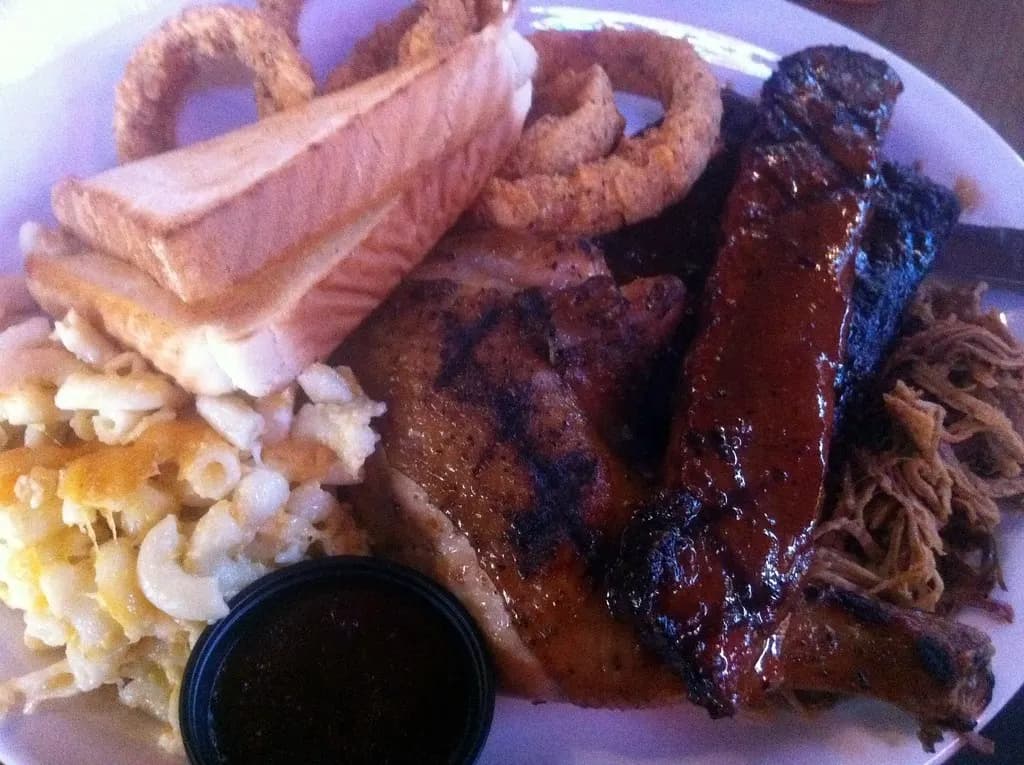
North Carolina taxes groceries at a much lower rate than other goods. Qualifying food pays only a 2% local rate; the state and transit rates don't apply at all. NCDOR defines qualifying food as all food except six categories: candy, soft drinks, prepared food (with an exception for some artisan bakery items sold without utensils), dietary supplements, food sold through vending machines, and prepaid meal plans at colleges. Those non-qualifying items pay the full combined rate for the county.
The definitions decide a lot of receipts. Candy is a sweetened product in bars, drops or pieces, but anything containing flour isn't candy, so a chocolate-covered pretzel or a cookie is qualifying food. A soft drink is a sweetened non-alcoholic drink, but drinks containing milk or a milk substitute such as soy or rice are not soft drinks. Food becomes prepared food in three ways: the retailer sells it hot or heats it, the retailer mixes two or more foods to sell as one item, or the retailer provides utensils such as plates, forks, cups or straws. Slicing, repackaging or pasteurizing alone doesn't make food prepared.
Restaurant meals, takeout and catering are therefore taxed at the full county rate. Some cities and counties also charge a local prepared meals tax on top. NCDOR doesn't administer those and leaves them out of its rate tables, so restaurants register and file them with the local government. Check with your county or city finance office before you open.
Services: repairs, installation and other taxable services
North Carolina taxes more services than most states, and contractors are often caught out. Since the state broadened the base, repair, maintenance and installation services (NCDOR calls them RMI) are taxable at the full combined rate when performed on tangible goods, motor vehicles, certain digital property or real property. That covers cleaning and polishing property to keep it working, restoring or refinishing it, troubleshooting a problem, and installing or connecting items. Floor refinishing and installing carpet, windows, doors, cabinets and countertops that replace similar existing items are listed as RMI.
The key difference from many states is that installation charges are part of the sales price. NCDOR says plainly that installation charges are taxable even if the retailer lists them separately on the invoice. Itemizing labor doesn't save tax here the way it does in Maine or Virginia. The main exception is a capital improvement to real property, such as building a new deck or adding a room, which is a real property contract. The contractor pays tax on materials it buys and does not charge sales tax to the customer. NCDOR's Bulletin 75 and its chart of services to real property help sort the borderline jobs.
Other taxable services named by NCDOR include admission charges to entertainment and events, dry cleaning and laundry, apparel and linen rental, service contracts and extended warranties, prepaid calling services, satellite radio, telecommunications and video programming. Digital property, such as downloaded music, e-books, movies and digital photos, is taxed at the general combined rate whether the buyer owns it permanently or streams it under a subscription. Professional services, such as legal, accounting, consulting, design and medical care, generally are not taxable.
Is it taxable in North Carolina?
| Sale | Rate | Why |
|---|---|---|
Clothing, furniture, electronics | County combined rate | Tangible goods |
Groceries (qualifying food) | 2% | Local food rate only |
Restaurant meal or hot deli food | County combined rate | Prepared food (plus any local meals tax) |
Candy, soda, supplements | County combined rate | Non-qualifying food |
HVAC or appliance repair, parts and labor | County combined rate | RMI service; installation is taxable |
New room addition by a contractor | Not taxed to customer | Capital improvement |
Hotel room or beach cottage | County combined rate + occupancy tax | Rental of accommodation |
Boat | 3%, max $1,500 | Special rate |
Legal or accounting fees | Not taxed | Untaxed professional service |
Clothing, furniture, electronics
- Rate
County combined rate
- Why
Tangible goods
Groceries (qualifying food)
- Rate
2%
- Why
Local food rate only
Restaurant meal or hot deli food
- Rate
County combined rate
- Why
Prepared food (plus any local meals tax)
Candy, soda, supplements
- Rate
County combined rate
- Why
Non-qualifying food
HVAC or appliance repair, parts and labor
- Rate
County combined rate
- Why
RMI service; installation is taxable
New room addition by a contractor
- Rate
Not taxed to customer
- Why
Capital improvement
Hotel room or beach cottage
- Rate
County combined rate + occupancy tax
- Why
Rental of accommodation
Boat
- Rate
3%, max $1,500
- Why
Special rate
Legal or accounting fees
- Rate
Not taxed
- Why
Untaxed professional service
Vacation rentals and accommodations
Rentals of hotel rooms, motel rooms, residences, cottages and similar lodging are taxed at the state, county and transit rates, plus any local occupancy tax the county or town levies. Occupancy taxes are set and collected locally, so a host on the Outer Banks or in the mountains will usually deal with two tax offices: NCDOR for sales tax and the county or town for occupancy tax.
The taxable price is broad. NCDOR lists credit card fees, damage fees, early or late departure fees, extra person charges, cleaning and linen fees, pet fees, reservation and administrative fees, security deposits, smoking fees, crib and roll-away charges and accommodation facilitator fees as part of the gross receipts. A few separately stated charges are not taxed, including cancellation fees, internet service, returned check charges and banquet room rental with no food. Beach chairs, umbrellas, kayaks and similar equipment rented separately are taxed as rentals of goods.
When a guest books through an accommodation facilitator, such as a booking platform or a rental agency, the facilitator's own fees are part of the taxable gross receipts. Confirm in writing whether the platform collects and remits North Carolina tax on your bookings; owners remain responsible for anything they book directly, so keep the channels separate in your records.
Worked examples in dollars
A Raleigh electronics shop. A customer buys a $400 television in the store. Wake County's 7.25% rate gives $29.00 of tax and a total of $429.00.
A laptop delivered to Charlotte. An online retailer registered in North Carolina ships a $1,200 laptop to a buyer in Charlotte after July 1, 2026. Tax at 8.25% is $99.00. Before July 1 it would have been $87.00 at 7.25%.
A Durham grocery run. A shopper buys $150 of groceries, a $5 bag of candy, a $4 bottle of soda and an $8 hot rotisserie chicken. The groceries pay 2%: $3.00. The candy, soda and hot chicken, $17 in all, pay 7.5%: $1.28 after rounding. Total tax is $4.28.
A Greensboro HVAC repair. A technician bills $180 of labor and $120 of parts to fix a furnace. Because RMI services are taxable, the whole $300 is taxed at Guilford's 6.75%: $20.25. Splitting the labor out on the invoice doesn't change that.
An Outer Banks cottage. A family rents a Dare County cottage for a week at $2,000 plus a $250 cleaning fee they must pay. Sales tax at 6.75% applies to $2,250: $151.88. The local occupancy tax is added on top and paid to the county or town.
A boat sale. A dealer in Wilmington sells an $80,000 fishing boat. Tax at 3% would be $2,400, but the cap limits it to $1,500.
Try it — Charlotte sales tax on $1,200
Registering for a Certificate of Registration
Anyone engaged in business in North Carolina who makes taxable sales must register with NCDOR before the first sale. That includes stores, restaurants, contractors that perform RMI services, vacation rental owners who aren't covered by a facilitator, flea market and craft show vendors, and remote sellers over the threshold. Wholesale-only merchants must register too, though they don't file returns unless they make taxable sales to end users or owe use tax on two or more occasions in twelve months.
Registration is free. Apply online through the NCDOR website; you'll need your federal employer identification number or Social Security number, legal and trade names, business addresses, the counties where you'll make sales, and your expected start date. NCDOR warns that some private websites charge a fee for a "sales tax number" and calls them often inaccurate or misleading. You never need one.
A certificate belongs to one owner. A new owner of an existing business needs a new certificate, and a sole proprietor or partnership that incorporates must apply under the corporation and close the old account. If you move, update your address with Form NC-AC rather than re-registering. A seasonal business open six months or fewer each year can register as a seasonal filer and skip returns for the off-season.
When you buy inventory for resale, give your supplier a completed Form E-595E, the Streamlined Sales and Use Tax Certificate of Exemption, instead of paying tax. You keep it on file; it isn't sent to NCDOR. Our resale certificate guide explains good-faith acceptance and record keeping.
Getting set up in North Carolina
- 1
Register free with NCDOR
NCDOR registrationApply online for a Certificate of Registration before your first taxable sale.
- 2
Map your counties
Set tax codes for each county you deliver into, plus the 2% grocery rate if you sell food.
- 3
Check local meals and occupancy taxes
Restaurants and rental hosts may owe taxes collected by the county or town, not NCDOR.
- 4
File on time
Form E-500 with the E-536 county schedule, by the 20th for monthly filers.
Filing returns, due dates and penalties
NCDOR assigns a filing frequency based on your tax liability, reviews it each year using the twelve months ending March 31, and mails a letter if it changes; the most recent changes took effect on October 1, 2025. Quarterly filing applies when tax is consistently under $100 a month, and those returns are due by the last day of January, April, July and October. Monthly filing applies from $100 up to $20,000 a month, with returns due by the 20th of the next month. Businesses owing $20,000 or more a month file monthly with a prepayment of the next month's tax, and must file and pay electronically. A due date on a weekend or holiday moves to the next business day.
You file Form E-500, with the E-536 schedule when tax is due in more than one county, online or on paper. A retailer with no sales in a period still files and enters zero. Gross receipts go on the first line, followed by exempt receipts such as sales for resale and lottery tickets, the receipts subject to the general rate by county, and the receipts at special rates such as the 2% food rate.
Late returns cost 5% a month, up to 25% of the tax, and late payment adds a 5% penalty plus interest from the due date until paid. Tax you collect from customers is the state's money, so keep it separate from operating cash.
A North Carolina filing year (2026)
20th of every month
Monthly E-500 return and payment due
Jan 31, Apr 30, Jul 31, Oct 31
Quarterly returns due
July 1, 2026
Mecklenburg rate rises to 8.25%
July 2, 2026
60-day start rule for new remote sellers
October 1
Filing frequency changes from the annual review take effect
Remote sellers and marketplaces
An out-of-state seller must register and collect once its gross sales sourced to North Carolina exceed $100,000 in the current or previous calendar year, counting sales made through marketplaces. The old alternative test of 200 separate transactions was repealed by Session Law 2024-28, effective July 1, 2024, as NCDOR's Directive SD-24-1 explains. Sellers that registered only because of the transaction test may now be able to close their accounts; check your figures before you cancel.
A newer rule sets the start date. From July 2, 2026, a seller whose only connection to the state is crossing the threshold is treated as engaged in business on the first day of the first calendar month that falls at least 60 days after its sales exceed $100,000. A seller crossing the line on August 15, 2026, for example, must collect from November 1, 2026. Sellers with a physical presence, such as inventory in a North Carolina warehouse or employees in the state, must collect from day one regardless of sales.
Marketplace facilitators that are engaged in business in North Carolina are the retailer for each sale they facilitate, so they collect and remit the tax on those sales; NCDOR names online marketplaces, boat brokers and some auctioneers and consignors as examples. Remote sellers charge the combined rate for the delivery county, the same as in-state retailers. Read our economic nexus guide to compare thresholds across states.
Common mistakes and how to fix them
Still charging 7.25% in Charlotte. Since July 1, 2026, Mecklenburg sales are 8.25%. Update your point-of-sale and e-commerce tax tables, and amend any returns that under-collected.
Itemizing installation to avoid tax. In North Carolina, separately stated installation charges are still taxable as part of the sales price. Only true capital improvements to real property escape.
Charging the store's county rate on deliveries. When you deliver, use the county where the buyer receives the item and report it on Form E-536.
Taxing all food at 2%. Candy, soda, supplements and prepared food pay the full county rate. Check that hot foods and items sold with utensils are coded as prepared.
Forgetting local meals and occupancy taxes. NCDOR doesn't collect them. Ask the county or town finance office whether one applies to you.
Skipping zero returns. File every period, even with no sales, to avoid the 5% a month, up to 25% failure-to-file penalty.
Official links
- Current sales and use tax ratesCombined rate for every county
- Mecklenburg County 1% increase noticeFrom July 1, 2026
- Sales and use tax registrationFree Certificate of Registration
- File and pay (E-500)Online returns and payments
- Food and prepared food rules2% food rate
- Remote salesThreshold and 60-day rule
- Repair, maintenance and installation servicesRMI rules
What to do next
Register free with NCDOR, build tax codes for each county you sell into, and add the 2% food rate if you sell groceries. If you do business in or deliver to Charlotte, confirm your systems switched to 8.25% on July 1, 2026. Use the sales tax calculator to check any receipt, and our guide to calculating sales tax for tax-included prices. Selling across the Southeast? Compare our South Carolina, Virginia and Tennessee guides, and see the North Carolina LLC guide if you're still forming the business.
This is general information, not legal or tax advice — confirm on the official source or with a professional.
Frequently asked questions
The state rate is 4.75%. Every county adds a local rate of 2% or 2.25%, and a few add transit or extra county taxes, so the combined rate is 6.75% to 8.25%. Fifty counties sit at 6.75% and 46 at 7%. Wake County is 7.25%, Durham and Orange are 7.5%, and Mecklenburg rose to 8.25% on July 1, 2026.
Charlotte is in Mecklenburg County, where the combined rate has been 8.25% since July 1, 2026. That is the 4.75% state rate, a 2% county rate, a 0.5% transit rate and a new 1% county rate. The extra 1% doesn't apply to groceries, boats, aircraft, manufactured homes, electricity, piped gas, telecom, video programming or liquor sold by ABC stores.
Groceries, which North Carolina calls qualifying food, pay only a 2% local rate; the state and transit rates don't apply. Candy, soft drinks, dietary supplements, vending machine food and prepared food are non-qualifying and pay the full combined rate. Hot food, food mixed by the seller and food sold with utensils the seller provides all count as prepared food.
Nothing. The NC Department of Revenue issues a Certificate of Registration free, and it warns that third-party websites charging for a sales tax number are not affiliated with the state. Register online on the NCDOR website before your first taxable sale. A new owner of an existing business, or a sole proprietor who incorporates, needs a new certificate.
Monthly returns are due by the 20th of the following month. Quarterly returns are due by the last day of the month after the quarter: January 31, April 30, July 31 and October 31. NCDOR assigns the frequency from your tax liability: quarterly under $100 a month, monthly from $100 to under $20,000, and monthly with prepayment at $20,000 or more.
Yes, once gross sales sourced to North Carolina exceed $100,000 in the current or previous calendar year, counting marketplace sales. The 200-transaction test was repealed on July 1, 2024. From July 2, 2026, a seller whose only link is crossing the threshold must start collecting on the first day of the first month at least 60 days after crossing it.
Some are. North Carolina taxes repair, maintenance and installation services on goods, vehicles and real property, and installation charges are taxable even when listed separately. It also taxes admission charges, laundry and dry cleaning, service contracts, hotel and vacation rentals, telecom and video programming. Professional services such as legal, accounting and consulting are generally not taxed.
Sources & verification
Figures on this page were checked against the sources below when it was last reviewed on 12 October 2026. Each rate and limit is stored once with its own official source and review date, and official update channels are monitored daily so changes are picked up. How we verify
- 1.Current Sales and Use Tax Rates (effective July 1, 2026) — North Carolina Department of Revenue · accessed 12 October 2026
- 2.Important Notice: Mecklenburg County Sales and Use Tax Increase (March 2, 2026) — North Carolina Department of Revenue · accessed 12 October 2026
- 3.Sales and Use Tax Rates & Other Information — North Carolina Department of Revenue · accessed 12 October 2026
- 4.Food, Non-Qualifying Food, and Prepaid Meal Plans — North Carolina Department of Revenue · accessed 12 October 2026
- 5.Taxable Items — North Carolina Department of Revenue · accessed 12 October 2026
- 6.Repair, Maintenance, and Installation Services — North Carolina Department of Revenue · accessed 12 October 2026
- 7.Rentals of Accommodations — North Carolina Department of Revenue · accessed 12 October 2026
- 8.Boats — North Carolina Department of Revenue · accessed 12 October 2026
- 9.Remote Sales and Remote Sales FAQs — North Carolina Department of Revenue · accessed 12 October 2026
- 10.Directive SD-24-1: Repeal of Transaction Threshold — North Carolina Department of Revenue · accessed 12 October 2026
- 11.Marketplace Facilitators and Marketplace Sellers — North Carolina Department of Revenue · accessed 12 October 2026
- 12.Sales and Use Tax Frequently Asked Questions — North Carolina Department of Revenue · accessed 12 October 2026
- 13.Sales and Use Tax Registration — North Carolina Department of Revenue · accessed 12 October 2026
- 14.North Carolina Eliminates Economic Nexus Transaction Threshold — Avalara · accessed 12 October 2026
MSMETOOLS is an independent platform and is not affiliated with any government agency, ministry or department.
Tools for this
Sales Tax Calculator (US)
Calculate sales tax for all US states and cities.
Invoice Generator
Create professional invoices with tax, logo and custom details.
Related guides
 South Carolina Sales Tax 2026: 6% State & Local RatesRead guide
 Virginia Sales Tax Rate 2026: Regional Rates, Food & FilingRead guide
 How to Start an LLC in North Carolina (2026): Fees & StepsRead guide
 North Dakota Sales Tax 2026: 5% Rate, City Rates, FilingRead guide
Official links open the government site in a new tab.