 Sales tax
California Sales Tax Rate in 2026: Base Rate, District Taxes by City and How to Collect It
California sales tax rate 2026: the 7.25% statewide base, district taxes for LA, San Francisco, San Diego and San Jose, permits and filing.
 Edited by Sumeet YadavFounder & editor, MSMETOOLS · fact-checked against official sources
Contents (11)
- 1. How the California sales tax rate is built
- 2. California sales tax rates by city and county (2026)
- 3. What changed in 2026: Los Angeles, San Jose and new city taxes
- 4. When district tax applies: counter sales, deliveries and online orders
- 5. Worked examples in dollars
- 6. Who needs a California seller's permit
- 7. Filing frequency, due dates and penalties
- 8. What is exempt from California sales tax
- 9. Resale certificates and use tax
- 10. Common California sales tax mistakes and how to fix them
- 11. What to do next
If you sell physical goods in California, from a café counter in Oakland to an online store shipping to Los Angeles, the price on your receipt needs the right sales tax rate. That rate is never just one number. This guide explains the statewide base, the district taxes that cities and counties add on top, the current rate for the state's biggest cities, and how to get a seller's permit, file returns and handle use tax. Every rate was checked against the CDTFA rate file effective October 1, 2026, in October 2026.
Quick answer
California's statewide sales tax rate is 7.25%. Most cities and counties add voter-approved district taxes, so the combined rate runs from 7.25% to 11.75%. Los Angeles is 10.25% from October 1, 2026, San Francisco 8.625% and San Diego 7.75%.
A seller's permit from CDTFA is free — you need one before your first taxable sale
Each district tax is between 0.10% to 2.00%; some places stack several
LA County rose by 0.5% on October 1, 2026 (Measure ER)
Out-of-state sellers must register once California sales top $500,000 a year
Returns are due the last day of the month after each period; late filing costs 10%
How the California sales tax rate is built
California's sales tax is a tax on retailers for the privilege of selling tangible goods at retail. You are allowed to pass it on to customers as "sales tax reimbursement", and nearly every business does. When the seller does not collect it, for example on an online purchase from an out-of-state store, the buyer owes the matching use tax instead. The California Department of Tax and Fee Administration (CDTFA) runs both taxes.
The 7.25% statewide rate applies everywhere in the state, including unincorporated rural areas. It is really several taxes bundled together. According to CDTFA's rate breakdown, 3.9375% goes to the state general fund, 0.5% to a local public safety fund, 0.5% and 1.0625% to two local revenue funds for health, social services and realigned programs, and 1.25% to local government: 1% for city or county operations and 0.25% for county transportation. You never charge these pieces separately. They simply explain why the base looks so high compared with states like Colorado or Georgia.
On top of the base, cities, counties and special districts may levy their own transactions and use taxes, which CDTFA calls district taxes. Voters approve each one, usually for transportation, public safety, libraries, hospitals or general services. A single district tax ranges from 0.10% to 2.00%, and many places carry several at once. That is why two shops a few miles apart can charge different rates, and why a city often charges more than the surrounding county.
California sales tax rates by city and county (2026)
The table lists the combined rate, base plus all district taxes, for the state's largest cities and some fast-growing ones, taken from CDTFA's rate file effective October 1, 2026. A "countywide" rate applies in unincorporated areas and in cities inside that county that have no district tax of their own.
| Location | County | Combined rate |
|---|---|---|
| Los Angeles (city) | Los Angeles | 10.25% |
| Los Angeles County (countywide) | Los Angeles | 10.25% |
| Long Beach | Los Angeles | 11% |
| Glendale | Los Angeles | 11% |
| Pasadena | Los Angeles | 11% |
| Santa Monica | Los Angeles | 11.25% |
| Lancaster | Los Angeles | 11.75% |
| San Diego (city) | San Diego | 7.75% |
| San Diego County (countywide) | San Diego | 7.75% |
| San Jose | Santa Clara | 10% |
| Santa Clara County (countywide) | Santa Clara | 9.75% |
| San Francisco | San Francisco | 8.625% |
| Oakland | Alameda | 10.75% |
| Berkeley | Alameda | 10.25% |
| Fremont | Alameda | 10.25% |
| Alameda County (countywide) | Alameda | 10.25% |
| Contra Costa County (countywide) | Contra Costa | 8.75% |
| San Mateo County (countywide) | San Mateo | 9.375% |
| Sonoma County (countywide) | Sonoma | 9.25% |
| Sacramento (city) | Sacramento | 8.75% |
| Sacramento County (countywide) | Sacramento | 7.75% |
| Fresno (city) | Fresno | 8.35% |
| Fresno County (countywide) | Fresno | 7.975% |
| Bakersfield | Kern | 8.25% |
| Kern County (unincorporated) | Kern | 8.25% |
| Stockton | San Joaquin | 9% |
| Anaheim | Orange | 7.75% |
| Irvine | Orange | 7.75% |
| Santa Ana | Orange | 9.25% |
| Orange County (countywide) | Orange | 7.75% |
| Riverside (city) | Riverside | 8.75% |
| Riverside County (countywide) | Riverside | 7.75% |
| San Bernardino County (countywide) | San Bernardino | 7.75% |
| Ventura County (countywide) | Ventura | 7.25% |
The highest rate in the state is now 11.75%, charged in Lancaster and Palmdale in the Antelope Valley. At the other end, more than 40 locations charge only the 7.25% base, including all of Ventura, Placer, Shasta and Yolo counties' unincorporated areas and cities such as Thousand Oaks, Simi Valley, Camarillo, Redding and Rocklin.
Use the table as a guide, not as your point-of-sale setting. City names do not always match city limits. A mailing address that says "Los Angeles" can sit in an unincorporated pocket or in a neighboring city with its own district tax. CDTFA's address lookup tool returns the correct rate for a specific street address, and that is the rate to set up for each store or delivery zone.
What changed in 2026: Los Angeles, San Jose and new city taxes
California rates change on four dates a year, January 1, April 1, July 1 and October 1, because new district taxes start at the beginning of a calendar quarter after an election. 2026 has been an unusually busy year, and many rate websites have not caught up.
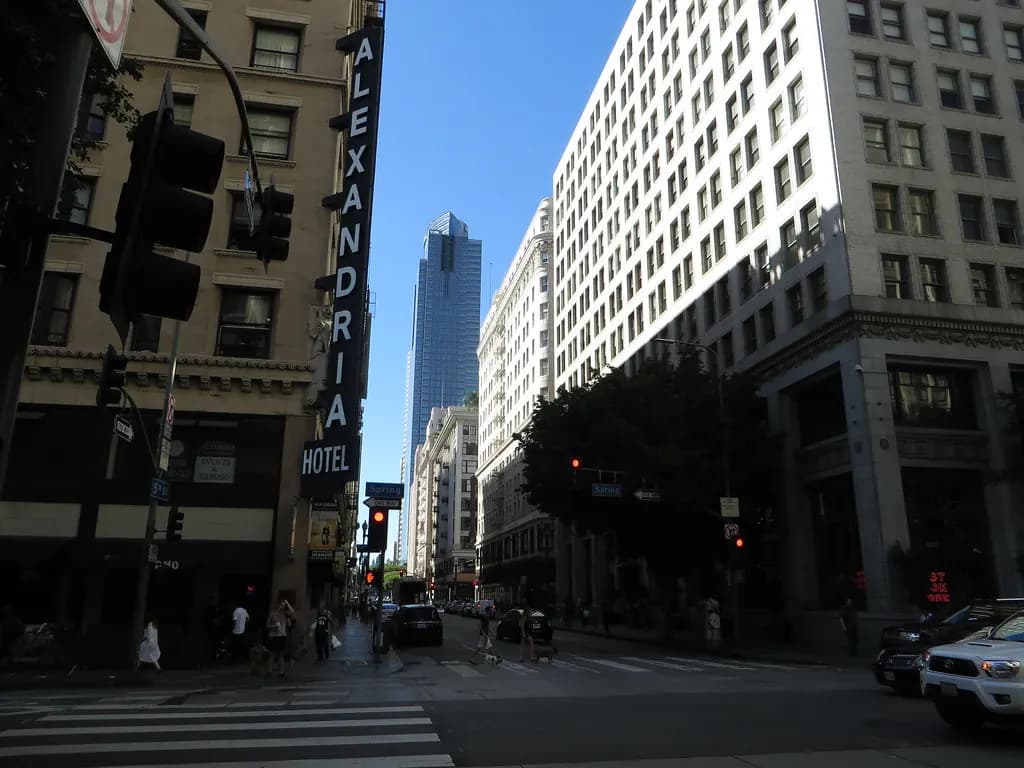
The biggest change came on October 1, 2026. Los Angeles County voters approved Measure ER on June 2, 2026, adding a new 0.5% countywide tax. The countywide rate, which also applies in the City of Los Angeles because the city has no district tax of its own, rose from 9.75% to 10.25%. Every city in the county moved up by the same half point, so Long Beach, Pasadena, Glendale and Burbank are now at 11%. Several cities also added their own taxes at the same election. Calabasas and San Marino each added a 1% city tax, Temple City a 0.75% tax, Covina and Gardena 0.25% each, and El Segundo started a 0.5% tax, so their combined rates jumped by more than the countywide increase.
Earlier in the year, Santa Clara County's Measure A, passed in November 2025, added a 0.625% countywide tax from April 1, 2026. San Jose moved from 9.375% to 10%, Milpitas to 10%, Campbell to 10.5% and the countywide rate to 9.75%. In Riverside County, Perris added a 1% city tax on October 1, and Red Bluff in Tehama County did the same.
If you run a point-of-sale system or an online store, these changes do not apply themselves. Update the rate for each location on the operative date, and check any invoice templates or quotes that hard-code a rate. Tax you collect at the old, lower rate is still owed at the new rate, so an undercharge comes out of your margin.
California rates at a glance (from October 1, 2026)
7.25%
Statewide base rate
Applies everywhere
10.25%
Los Angeles
Up 0.5% on Oct 1 (Measure ER)
10%
San Jose
Up 0.625% on Apr 1 (Measure A)
11.75%
Highest rate
Lancaster and Palmdale
When district tax applies: counter sales, deliveries and online orders
For a sale across the counter, the rule is simple. Charge the combined rate for the location of your store, because that is where the sale happens. A boutique in Pasadena charges 11% whether the buyer lives in Pasadena or Fresno.
Deliveries are where California differs from many states. The base 7.25% always applies, but a district tax applies to a delivered sale only if you are "engaged in business" in the district where the goods are delivered. CDTFA's Publication 73 lists what counts. You are engaged in business in a district if you have a store, office, warehouse or other place of business there, own or lease property there (a server counts), have salespeople, agents, installers or delivery staff operating there, or lease goods used there. Since April 2019, you are also treated as engaged in business in every district if your total combined California sales, together with related companies, exceed $500,000 in the current or previous calendar year.
Your own district's tax also drops away when you ship. CDTFA's Publication 44 explains that when you send goods to a customer outside your district, the sale is generally not subject to your district's transactions tax, unless you know the buyer will actually use the goods inside your district. District use tax is owed where the customer first uses the goods, and you collect it only if you are engaged in business there. If you are not, the buyer is responsible for reporting it.
In practice, a small furniture maker in Sacramento with no presence elsewhere that ships a $1,500 table to a customer in Oakland charges only the 7.25% base, $108.75. Sacramento's district tax does not apply because the table left the district, and Oakland's does not fall on the maker because it is not engaged in business in Alameda County. Once that same business crosses $500,000 in California sales, it must charge the Oakland rate of 10.75% on deliveries there, which is $161.25 on the same table. Vehicles, undocumented vessels and aircraft are always taxed at the rate of the place where they will be registered.
Which rate to charge in California
| Type of sale | Rate to charge | Why |
|---|---|---|
Counter sale at your shop | Combined rate of the shop's location | Sale takes place at the store |
Delivery into a district where you have staff, a store or inventory | Combined rate of the delivery address | You are engaged in business there |
Shipment into a district where you have no presence, sales under $500,000 | 7.25% base only | Your district tax does not apply to goods shipped out; buyer owes any district use tax |
Any delivery once California sales exceed $500,000 | Combined rate of the delivery address | Engaged in business in every district |
Vehicle, boat or aircraft | Rate where it will be registered | Special registration rule |
Counter sale at your shop
- Rate to charge
Combined rate of the shop's location
- Why
Sale takes place at the store
Delivery into a district where you have staff, a store or inventory
- Rate to charge
Combined rate of the delivery address
- Why
You are engaged in business there
Shipment into a district where you have no presence, sales under $500,000
- Rate to charge
7.25% base only
- Why
Your district tax does not apply to goods shipped out; buyer owes any district use tax
Any delivery once California sales exceed $500,000
- Rate to charge
Combined rate of the delivery address
- Why
Engaged in business in every district
Vehicle, boat or aircraft
- Rate to charge
Rate where it will be registered
- Why
Special registration rule
Worked examples in dollars
Seeing the numbers helps. These examples use the rates in force from October 1, 2026.
A coffee shop in San Francisco sells a $25 bag of beans and a $40 mug. Coffee beans are food products for home consumption, so they are exempt. The mug is taxable at 8.625%: $3.45 of tax. The customer pays $68.45. If the same shop sold a hot latte to go, that would usually be taxable as a hot prepared food.
An electronics store in the City of Los Angeles sells a $1,200 laptop. At 10.25% the tax is $123. The same laptop bought in Ventura County, at 7.25%, carries $87 of tax. A buyer who drives across county lines does not owe the difference, because the sale took place in Ventura.
A contractor-supply company in San Jose with a warehouse there, a showroom in Fresno and $3 million a year of California sales delivers a $10,000 commercial refrigerator to a restaurant in Long Beach. Because its sales exceed $500,000, it is engaged in business in every district and charges Long Beach's 11%: $1,100. California has no per-item cap on district tax like Florida's $5,000 surtax limit, so the full price is taxed.
Try it — sales tax on a $1,000 sale in Los Angeles
The calculator's "local" field holds the district portion only. For Los Angeles that is 3% (10.25% minus the 7.25% base); for San Francisco it is 1.375% and for San Diego 0.5%.
Who needs a California seller's permit
You need a seller's permit if you are engaged in business in California and sell or lease tangible personal property that would normally be subject to sales tax at retail. That covers shops, restaurants, food trucks, online stores with California inventory, crafters at fairs and wholesalers. Wholesalers need one even though they mostly sell for resale. A business with more than one location needs a permit for each place of business, and a warehouse used to fulfill orders counts as a location.
Service businesses that never sell goods, such as consultants, accountants and most repair technicians who charge only for labor, usually do not need a permit. The line can be fine. A hair salon that sells shampoo, a photographer who sells prints, or a repair shop that bills parts separately is selling tangible goods and does need one.
If you only sell at short events, such as a holiday market or a weekend craft fair, and you do not already hold a permit, CDTFA issues a temporary seller's permit for the event. Event organizers often ask to see it before you set up.
Out-of-state and online sellers with no physical presence must register and collect California use tax once their total combined sales of tangible goods into California exceed $500,000 in the current or previous calendar year. California counts all sales into the state, taxable and exempt, and there is no transaction-count test. Sales through a marketplace such as Amazon or Etsy count toward your total, but the marketplace collects and pays the tax on those orders itself.
How to get a California seller's permit
- 1
Form your business and get an EIN
How to get an EINRegister an LLC or corporation with the Secretary of State if you want one, and get a free EIN from the IRS. Sole proprietors can register with their Social Security number.
- 2
Register on CDTFA Online Services
Choose 'Register a New Business Activity' and select the seller's permit. You will enter your ownership type, owners' details, business address, start date, products sold and estimated monthly sales.
Tip: The permit is free. Websites that charge a 'permit fee' are third-party filing services, not CDTFA.
CDTFA Online Services - 3
Answer any security deposit request
CDTFA may require a security deposit in some cases, such as a prior revoked permit or a history of non-payment. The law caps it at $50,000 or a multiple of typical liability, whichever is less.
- 4
Display your permit and note your filing basis
Post the permit at your place of business. Your registration confirmation tells you whether you file monthly, quarterly, quarterly-prepay or annually.
- 5
Collect tax from your first sale
Set up rates for each location in your POS or store platform and keep resale certificates for any tax-free sales to resellers.
Filing frequency, due dates and penalties
CDTFA assigns a reporting basis when you register, based mainly on the sales you estimate. Most new small businesses start on quarterly returns. Very small sellers may be placed on annual or fiscal-year returns, and larger sellers on monthly returns. The Department reviews accounts and can change your basis as your sales grow or shrink.
Every return is due on the last day of the month after the period ends. A quarterly return for April to June is due July 31, and a calendar-year annual return is due January 31. If the due date falls on a weekend or a state holiday, the return is due the next business day. You file and pay online through CDTFA Online Services. You must file a return even for a period with no sales.
Businesses whose average taxable sales are $17,000 or more a month are moved to quarterly prepayments. They make prepayments during the quarter and file a quarterly return to settle the balance. CDTFA sends written notice when this applies, and Publication 73 asks sellers not to start prepayments on their own. Businesses averaging $10,000 or more a month in sales and use tax payments are required to pay by electronic funds transfer.
Late returns and late payments each carry a penalty of 10% of the tax under Revenue and Taxation Code section 6591, capped at 10% for any single return, plus interest for every month the money is late. If you pay in full on time but file the return late, the late-filing penalty can still apply. CDTFA can grant up to one extra month to file if you ask before the deadline, which removes the penalty though interest still runs. On the return you may round to whole dollars.

What is exempt from California sales tax
California taxes the sale of tangible personal property, so most services are outside the tax unless they are part of a sale of goods. Labor to repair or install something is usually not taxed when it is stated separately on the invoice, while charges to make or fabricate a product are. Shipping charges are exempt when stated separately and the goods are sent by common carrier or mail, but only up to your actual cost; any markup on shipping is taxable.
The exemptions small businesses meet most often are food products for human consumption (groceries, not hot or restaurant food), prescription medicines, sales to the US government, and sales for resale. Sales delivered to a customer outside California, by your own vehicle or by a carrier, are also exempt. Restaurants are the sector that gets caught most often, because whether food is hot, eaten on site, or sold in a place that charges admission changes the result.
Manufacturers and certain research and development businesses can claim a partial exemption on qualifying machinery and equipment bought for manufacturing, R&D or electric power generation. The exemption was extended to June 30, 2030. It reduces the state portion of the rate, not district taxes, and you claim it by giving the seller a partial exemption certificate.
Quick taxability check for California sellers
0/8Resale certificates and use tax
When you buy goods to resell, you give your supplier a resale certificate instead of paying tax. CDTFA does not require a specific form, but most businesses use CDTFA-230, the General Resale Certificate. A valid certificate must show your name and address, your seller's permit number, a description of the goods, a statement that they are bought "for resale", the date and a signature. Words like "exempt" or "non-taxable" are not enough. Sellers should verify the permit number on CDTFA's website and keep the certificate on file.
Misusing a resale certificate is expensive. If you buy items tax-free for resale and then use them yourself, you owe the tax and interest. If you knew at the time that you would not resell them, add a penalty of 10% of the tax or $500, whichever is greater for each purchase, possible permit revocation, and a misdemeanor charge in serious cases.
Use tax is the other half of the system. If your business buys equipment or supplies from an out-of-state seller who does not charge California tax, you owe use tax at the rate where the goods are used. Permit holders report it on their sales and use tax return as "purchases subject to use tax". Businesses without a permit that buy more than $10,000 a year of goods subject to use tax must register as qualified purchasers and file an annual return with CDTFA; that $10,000 test runs from 2024 through 2028. Individuals can pay use tax on their state income tax return; the Franchise Tax Board's lookup table can be used only for individual non-business items costing less than $1,000 each. California gives credit for sales tax paid to another state, so you pay only the difference.
California rate changes, 2025–2026
Apr 1, 2025
LA County Measure A replaces the 0.25% homelessness tax with 0.5%; county rate reaches 9.75%
Jan 1, 2026
Culver City adds a 0.25% city tax
Apr 1, 2026
Santa Clara County Measure A adds 0.625%; San Jose reaches 10%
Oct 1, 2026
LA County Measure ER adds 0.5%; Los Angeles reaches 10.25%, Lancaster and Palmdale 11.75%
Oct 1, 2026
Perris and Red Bluff each add a 1% city tax
Jan 1, 2027
Next quarterly date for new district taxes approved at the November 2026 election
Common California sales tax mistakes and how to fix them
The first mistake is using an out-of-date rate. With rate changes four times a year, a POS set up in 2025 for Los Angeles at 9.75% is now undercharging by half a point. Set a reminder for the first of January, April, July and October, and check CDTFA's "Explanation of Tax Rate Changes" page a few weeks before each date.
The second is charging every customer the rate on their mailing address. If you are not engaged in business in the delivery district and are under the $500,000 threshold, you may be overcharging. Over-collected tax cannot be kept: you must refund it to the customer or pay it to CDTFA. The reverse mistake is more common for growing online sellers, who cross the threshold and keep charging only their home rate.
The third is taxing separately stated labor, or failing to tax fabrication. A sign shop that makes a custom banner is selling a product, and its design and production charges are taxable. A computer technician who only repairs is not.
The fourth is missing returns in quiet periods. A seasonal pumpkin patch or summer pop-up that files nothing for its off months still owes zero returns, and the late penalties add up. Close your permit online if you stop selling, and request a CDTFA-471 clearance when you sell a business so the buyer is not held liable for your unpaid tax.
If you discover that you should have registered years ago, CDTFA runs an In-State Voluntary Disclosure Program and an out-of-state equivalent, which can limit how far back you must pay and waive some penalties. Coming forward before CDTFA contacts you is what makes you eligible.
Official California links
- City & county sales tax ratesCurrent rate for every city and county
- Rate information and downloadable rate fileAddress lookup, Excel file
- Explanation of tax rate changesWhat changes each quarter
- Publication 73 — Your California Seller's Permit
- CDTFA Online ServicesRegister, file and pay
- FTB — use tax on your income tax return
What to do next
Look up the exact rate for each address you sell from, register for your free seller's permit before your first sale, and diary the four quarterly rate-change dates. If you are still setting up the business itself, start with how to form an LLC and the business licenses most new companies need. Selling in more than one state? Compare with our Florida sales tax guide. Check any invoice total with the sales tax calculator and send it with the free invoice generator.
This is general information, not legal or tax advice — confirm on the official source or with a professional.
Frequently asked questions
The statewide base rate is 7.25%. Voter-approved district taxes add between 0.10% to 2.00% each, so the rate you actually charge runs from 7.25% in places such as Ventura County and Redding up to 11.75% in Lancaster and Palmdale. Check the exact address with the CDTFA rate lookup, because city limits matter.
From October 1, 2026, the City of Los Angeles and unincorporated Los Angeles County charge 10.25%. Measure ER, approved on June 2, 2026, added a 0.5% countywide tax. Many other cities in the county are higher: Long Beach and Pasadena charge 11%, Santa Monica 11.25% and Lancaster 11.75%.
The seller's permit is free from the California Department of Tax and Fee Administration. CDTFA can ask for a security deposit in some cases, for example if a permit was revoked before or there is a history of non-payment, and the deposit is capped by law at $50,000 or a multiple of average liability, whichever is less. Ignore websites that charge a fee to file for you.
The 7.25% base always applies. District tax follows the delivery address only if you are engaged in business in that district, for example because you have a store, staff, inventory or sales reps there, or your California sales exceed $500,000 a year. Otherwise you charge only the base rate on goods you ship out of your own district, and the buyer reports any district use tax.
Returns are due on the last day of the month after each reporting period. A quarterly filer's April–June return is due July 31. CDTFA assigns monthly, quarterly, quarterly-prepay or annual filing when you register, and businesses averaging $17,000 or more of taxable sales a month must make prepayments. A late return or payment costs a 10% penalty plus interest.
Most cold grocery food for home consumption is exempt, as are prescription medicines. Hot prepared food, meals served at restaurants, soda, candy marketed as non-food items, alcohol and most packaged non-food goods are taxable. Combination packages and food sold where customers eat on site have special rules, so restaurants and caterers should read CDTFA's food industry guides.
Sources & verification
Figures on this page were checked against the sources below when it was last reviewed on 8 October 2026. Each rate and limit is stored once with its own official source and review date, and official update channels are monitored daily so changes are picked up. How we verify
- 1.California City & County Sales & Use Tax Rates (effective October 1, 2026) — California Department of Tax and Fee Administration · accessed 8 October 2026
- 2.California City & County Sales & Use Tax Rate Information — California Department of Tax and Fee Administration · accessed 8 October 2026
- 3.Detailed Description of the Sales & Use Tax Rate — California Department of Tax and Fee Administration · accessed 8 October 2026
- 4.Explanation of Tax Rate Changes — California Department of Tax and Fee Administration · accessed 8 October 2026
- 5.Publication 73, Your California Seller's Permit (January 2026) — California Department of Tax and Fee Administration · accessed 8 October 2026
- 6.Publication 44, District Taxes — Sales across district lines — California Department of Tax and Fee Administration · accessed 8 October 2026
- 7.Revenue and Taxation Code section 6591 — California Department of Tax and Fee Administration (law guide) · accessed 8 October 2026
- 8.Revenue and Taxation Code section 6701 — California Department of Tax and Fee Administration (law guide) · accessed 8 October 2026
- 9.Use tax — California Franchise Tax Board · accessed 8 October 2026
- 10.Tax Guide for Manufacturing, and Research & Development, and Electric Power Generation — California Department of Tax and Fee Administration · accessed 8 October 2026
MSMETOOLS is an independent platform and is not affiliated with any government agency, ministry or department.
Tools for this
Sales Tax Calculator (US)
Calculate sales tax for all US states and cities.
Invoice Generator
Create professional invoices with tax, logo and custom details.
Related guides
 Florida Sales Tax Rate 2026: County Rates, Filing & RulesRead guide
 Texas Sales Tax Permit 2026: Who Needs One & How to ApplyRead guide
 Kansas Sales Tax Rate 2026: 6.5% State, 0% on FoodRead guide
 Nebraska Sales Tax 2026: 5.5% Rate, Omaha 7%, PermitsRead guide
Official links open the government site in a new tab.