 Starting & growing a business
White Label Meaning: How White Labeling Works, How It Differs from Private Label, and the US Rules That Apply
White label meaning for 2026: how it differs from private label and OEM, contract terms that protect you, FTC Made in USA and FDA label rules, and margins.
 Edited by Sumeet YadavFounder & editor, MSMETOOLS · fact-checked against official sources
Contents (9)
- 1. What white label means in practice
- 2. White label vs private label vs OEM vs dropshipping
- 3. Common white-label products and services
- 4. The white-label agreement: clauses that protect you
- 5. US labeling rules once your name is on the product
- 6. White-label margins: a worked example
- 7. How to start a white-label brand, step by step
- 8. Common white-label mistakes
- 9. What to do next
If you have looked at launching a skincare line, a coffee brand, a software product or a marketing agency without building everything yourself, you have come across the term "white label". This guide is for founders and small business owners who want to know what white label means, how it differs from private label, OEM and dropshipping, and what the US rules require once your name is on the box. It also covers the clauses to insist on in a supplier agreement, the labeling laws enforced by the FTC and FDA, and a worked margin example so you can test whether the numbers work. Everything was checked against official sources in October 2026.
Quick answer
White label means a product or service made by one company and sold by other companies under their own brand. The maker sells the same standard item to many resellers. Each reseller adds its own name, packaging and price, and the customer never sees the maker's name.
White label = standard product, many brands. Private label = made for one brand, often to its spec
You own your brand and customers; the maker usually keeps the formula or code
Your name on the label brings legal duties: FDA, FTC Made in USA and textile rules
Register your trademark with the USPTO from $350 per class
Profit depends far more on marketing cost than on factory cost
What white label means in practice
A white-label product starts as an unbranded item. A contract manufacturer develops a face serum, a protein powder, a scented candle or a software dashboard, makes it in volume, and offers it to businesses that want to sell it under their own name. You pick from the maker's catalog, choose your packaging and label artwork, place an order that meets the minimum order quantity (MOQ), and the product arrives looking like your brand made it. The name comes from the idea of a blank label that the seller fills in.
Services work the same way. A marketing agency can resell search engine optimization, ad management or website builds delivered by a specialist firm behind the scenes, with reports carrying the agency's logo. A small payroll bureau can run its clients on a white-labeled payroll platform. A fintech startup can offer accounts or cards through a bank partner's white-labeled infrastructure, and a gym can sell a branded app built on a generic fitness platform. Customers deal only with the brand on the front.
White labeling suits businesses whose strength is marketing, customer relationships or distribution rather than manufacturing or engineering. It cuts the time to launch from years to weeks and avoids research and development costs and factory overhead. The trade-off is that you don't control the product's design, and your competitors can buy exactly the same thing from the same supplier. Your brand, your customer experience and your marketing are what set you apart.
White label vs private label vs OEM vs dropshipping
People often use these terms interchangeably, but suppliers use them to mean different deals, and the difference affects your costs, your exclusivity and what you own.
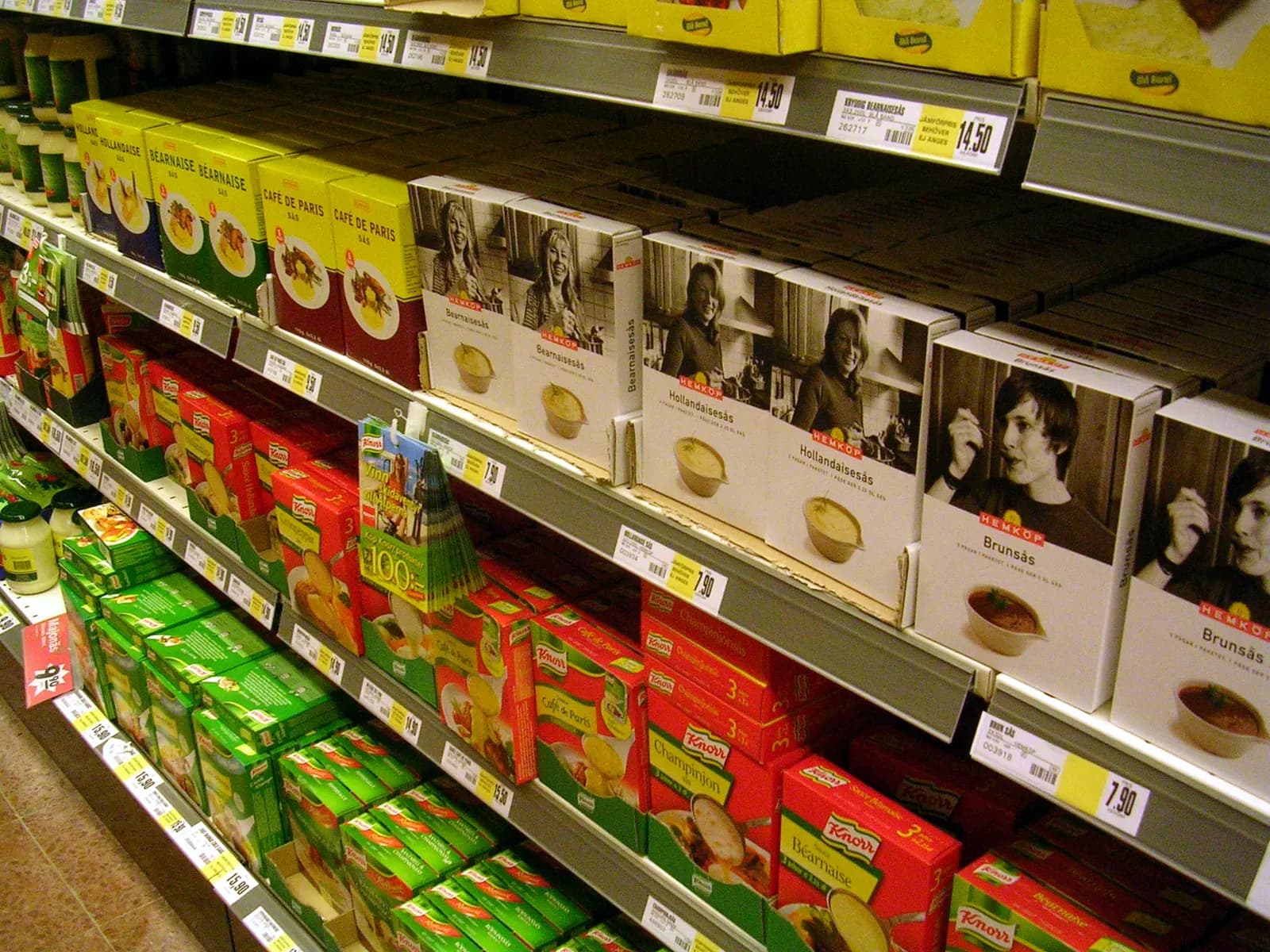
White label is a standard product that the maker sells to many brands. You can usually change only the label, packaging and sometimes a scent or color. MOQs are low, often a few hundred units, and launch is quick. The downside is that the same formula may already be on Amazon under ten other names.
Private label is made for one brand exclusively. The product may be built to your recipe or specification, or adapted from the maker's base formula with changes that belong to you. Supermarket store brands are classic private label. Development takes longer and MOQs are higher, but no competitor can buy the identical item.
OEM (original equipment manufacturer) usually means the factory builds to the buyer's own design and specifications, common in electronics, machinery and parts. ODM (original design manufacturer) means the factory owns a design you can brand and lightly customize, which is close to white label for physical goods. The terms shift by industry, so define them in your contract instead of relying on the label.
Dropshipping is a fulfillment model, not a product model. You sell a product and a supplier ships it directly to your customer. You can dropship white-label goods, but plenty of dropshippers resell other companies' branded goods. See our dropshipping guide for how that model works.
White label vs private label vs OEM vs dropshipping
| White label | Private label | OEM / ODM | Dropshipping | |
|---|---|---|---|---|
Who designs it | Maker | Maker or you, to your spec | You (OEM) or maker (ODM) | Supplier or another brand |
Sold to other brands? | Yes, identical | No, exclusive | OEM no; ODM often yes | Often yes |
Typical minimum order | Low | Medium to high | High | None |
Time to launch | Weeks | Months | Months to a year+ | Days |
What you own | Brand, customers | Brand, often the spec | Design (OEM) | Store and customers |
Main risk | Copycat sellers | Development cost | Tooling and inventory | Thin margins, shipping control |
Who designs it
- White label
Maker
- Private label
Maker or you, to your spec
- OEM / ODM
You (OEM) or maker (ODM)
- Dropshipping
Supplier or another brand
Sold to other brands?
- White label
Yes, identical
- Private label
No, exclusive
- OEM / ODM
OEM no; ODM often yes
- Dropshipping
Often yes
Typical minimum order
- White label
Low
- Private label
Medium to high
- OEM / ODM
High
- Dropshipping
None
Time to launch
- White label
Weeks
- Private label
Months
- OEM / ODM
Months to a year+
- Dropshipping
Days
What you own
- White label
Brand, customers
- Private label
Brand, often the spec
- OEM / ODM
Design (OEM)
- Dropshipping
Store and customers
Main risk
- White label
Copycat sellers
- Private label
Development cost
- OEM / ODM
Tooling and inventory
- Dropshipping
Thin margins, shipping control
Common white-label products and services
Consumer products: skincare and haircare, supplements and protein powders, coffee and tea, snacks and sauces, candles and home fragrance, pet food and treats, cleaning products, phone accessories, and apparel blanks such as T-shirts and hoodies. These categories have many contract manufacturers that publish catalogs and accept small first orders.
Software and digital services: website builders, customer relationship management (CRM) tools, email marketing platforms, booking systems, mobile apps, chatbots, and analytics dashboards that agencies rebrand. White-label SaaS usually charges a platform fee plus a per-client or per-seat fee, and lets you set your own retail price.
Professional services: SEO, pay-per-click management, content writing, web design, bookkeeping and payroll, IT support, and customer support handled by specialist firms that never contact your clients directly.
Financial services: payment processing resold by independent sales organizations, branded prepaid and debit cards, and banking-as-a-service. These come with heavy regulatory obligations, including state money transmitter licensing and bank partner compliance requirements. Get legal advice before you launch one.
The white-label agreement: clauses that protect you
A purchase order is not enough. Before your first production run, sign a written supply agreement, or a reseller agreement for services, that covers at least these points. Share recipes, pricing and launch plans only after an NDA is in place.
Product specification and quality. Attach the exact formula version, materials, tolerances and test standards. Require the maker to tell you before changing any ingredient or supplier, and give yourself the right to inspect, audit and reject non-conforming batches. For cosmetics, supplements and food, ask for certificates of analysis for each batch.
Intellectual property. Spell out that your trademarks, logo, label artwork and packaging design belong to you. Set out who owns any custom changes you pay for, and whether the maker may sell them to others. For software, say who owns your client data and configuration, and how you can export it.
Exclusivity and non-circumvention. True white label is not exclusive, but you can negotiate exclusivity in a channel, a region or a variant. A non-circumvention clause stops the maker from approaching your customers or retailers directly.
Clauses to check before you sign
0/9Pricing, MOQ and lead times. Fix unit prices for a set period, price breaks by volume, MOQ for reorders, deposit terms and production lead times. Agree in advance what happens if the maker raises prices or can't deliver.
Regulatory responsibility. Decide who handles FDA facility registration, product listing, label review, adverse-event reports and recalls, and who pays for them. Your name is on the label, so regulators and customers will come to you first.
Liability, indemnity and insurance. Require the maker to indemnify you for defects in manufacturing, and to carry product liability insurance that names you as an additional insured. Carry your own policy too. If a product harms someone, the injured customer will sue the brand on the box.
Term, termination and transition. Set the contract term, renewal, how either side can exit, and what happens to remaining inventory, molds and artwork files. For SaaS and services, require a transition period and data handover so your clients aren't left without service.
US labeling rules once your name is on the product
Putting your brand on someone else's product makes you responsible, in law and in customers' eyes, for what the label says. Rules depend on the product category. These are the federal ones small brands run into most.
Made in USA claims (FTC)
The FTC's standard for an unqualified "Made in USA" claim is that the product is all or virtually all made in the United States: final assembly or processing here, all significant processing here, and all or virtually all components and ingredients made and sourced here. Since August 2021, the FTC's Made in USA Labeling Rule (16 CFR Part 323) lets it seek civil penalties for unqualified claims on labels, including online listings, of up to $53,088 per violation per violation.
White-label sellers are exposed because the factory may be in the US while key ingredients or parts come from abroad. If a US lab blends an imported active ingredient into a serum, an unqualified "Made in USA" claim is risky. A qualified claim such as "Made in USA with imported ingredients" or "Made in USA of US and imported parts" is permitted when it is accurate. "Assembled in USA" requires substantial final assembly here, not simply screwing together imported parts. Ask your supplier for written sourcing details for every component, and update your claim if they change suppliers.
Federal label rules by product type
| Product | What your label must show | Regulator |
|---|---|---|
Any product claiming US origin | Made in USA only if all or virtually all US-made; otherwise a qualified claim | FTC |
Packaged food and supplements | Your name and place of business with 'Manufactured for' or 'Distributed by' | FDA |
Cosmetics | Name of the responsible person, who reports serious adverse events within 15 business days | FDA |
Clothing and textiles | Fiber content, country of origin, and company name or RN number | FTC |
Any product claiming US origin
- What your label must show
Made in USA only if all or virtually all US-made; otherwise a qualified claim
- Regulator
FTC
Packaged food and supplements
- What your label must show
Your name and place of business with 'Manufactured for' or 'Distributed by'
- Regulator
FDA
Cosmetics
- What your label must show
Name of the responsible person, who reports serious adverse events within 15 business days
- Regulator
FDA
Clothing and textiles
- What your label must show
Fiber content, country of origin, and company name or RN number
- Regulator
FTC
Food and supplements (FDA)
Packaged food labels must state the name and place of business of the manufacturer, packer or distributor. Under 21 CFR 101.5, if your name appears but you didn't make the product, it must be qualified with a phrase showing your connection, such as "Manufactured for" or "Distributed by". Many white-label food and supplement brands use "Distributed by [Your Company], [City, State]." Dietary supplements have their own labeling and adverse-event rules, and health claims need solid evidence, so have a regulatory consultant review your first labels.
Cosmetics (FDA, MoCRA)
Under the Modernization of Cosmetics Regulation Act of 2022, the responsible person is the manufacturer, packer or distributor whose name appears on the cosmetic's label. If that is your brand, you take on the duties. These include reporting serious adverse events to FDA within 15 business days, listing each product with its ingredients and updating the listing every year, and keeping safety substantiation records. The manufacturing facility must register with FDA. Your agreement should say who files what.
Clothing and textiles (FTC)
Textile and wool product labels must show fiber content, country of origin, and the name or RN number of the manufacturer, importer or another business that markets or handles the product. A white-label apparel brand based in the US can apply to the FTC for its own RN and use it in place of a company name. RNs aren't transferable, and the FTC can cancel one that is misused. If you buy blanks and add your print, make sure the original fiber and origin information stays accurate on the finished label.
White-label margins: a worked example
Factory cost is the easy number. The costs that decide profit come later. Here is an illustrative example for a white-label skincare serum sold direct to consumers online. All costs are estimates for illustration, based on typical small-batch quotes and published payment processor fees. Your quotes will differ.
| Per unit | Amount |
|---|---|
| Retail price | $34.00 |
| White-label serum from the lab (MOQ 1,000) | $6.50 |
| Upgraded bottle, box and custom label | $1.20 |
| Inbound freight to your warehouse | $0.60 |
| Landed cost | $8.30 |
| Gross margin | $25.70 (75.6%) |
| Pick, pack and ship (3PL) | $3.80 |
| Card processing (2.9% + $0.30) | $1.29 |
| Contribution before marketing | $20.61 (60.6%) |
| Paid ads per sale (assumed) | $14.00 |
| Profit per unit | $6.61 (19.4%) |
A 75% gross margin looks generous, but advertising takes most of it. If ad costs rise to $20 a sale, each unit makes only 61 cents. That is why successful white-label brands work on repeat purchases, subscriptions, email lists and wholesale accounts, which lower the cost of each sale. To run your own numbers, use the profit margin calculator and our guide to contribution margin.
Services work differently. A marketing agency that buys white-label SEO at $400 a month per client and charges $1,000 has $600 of gross profit. After four hours of account management at a $30 loaded hourly cost ($120), it keeps $480, or 48% of revenue. There's no inventory risk, but if the provider misses deadlines, your client blames you.
Upfront cash for a product launch. For the serum, a 1,000-unit first order costs about $8,300 landed. Add trademark filing at $350 per class, label design, product liability insurance, samples and a launch ad budget, and a lean launch typically needs $12,000 to $20,000 in cash. That range is an estimate, not a quote. Our startup cost calculator helps you list your own costs.
How to start a white-label brand, step by step
Launching a white-label product
- 1
Pick a category where brand matters more than the product
Skincare, coffee, supplements, pet treats and agency services all reward branding and customer loyalty. Avoid commodities where buyers shop only on price.
- 2
Shortlist and vet suppliers
Ask for catalogs, MOQs, lead times, certifications (such as GMP for supplements), insurance certificates and client references. Order samples from at least three.
Tip: Check that the supplier is registered with FDA where required, and ask how many other brands sell the same formula.
- 3
Clear and register your brand name
USPTO trademark feesSearch the USPTO database, then file a trademark application. The base fee is $350 per class, plus $100 per class if the application is missing required information.
- 4
Sign the supply agreement
Cover spec, IP, pricing, MOQ, regulatory duties, indemnity, insurance and termination before paying a deposit.
- 5
Get your labels reviewed
Check the distributor statement, ingredient or fiber content, net quantity, country-of-origin and any Made in USA claims against FDA and FTC rules.
- 6
Set up selling and taxes
Form your business, get an EIN, register for sales tax where you have nexus and use resale certificates when buying stock.
- 7
Launch small and reorder on data
Start at the MOQ, track repeat purchase and cost per sale, and only scale or move to exclusive private label once the numbers hold.
Before you sell, set up the business itself. Most new brands form an LLC, get an EIN and register for sales tax in their home state. Inventory you buy for resale is normally exempt from sales tax at purchase if you give the supplier a resale certificate, and you collect tax from your customers instead. Our guides on how to start a business and how to calculate sales tax cover these steps. If you plan to sell on marketplaces, Amazon has its own Brand Registry and category approval rules. See our Amazon selling guide.
Common white-label mistakes
Copying the manufacturer's claims. Supplier sell sheets often include health or performance claims that wouldn't survive FTC or FDA scrutiny. You are responsible for every claim in your marketing. Keep only claims you can back with evidence.
Assuming you own the formula. Unless the contract says so, you don't. If you leave the supplier, you may have to reformulate, and customers may notice the change.
Ordering too much. Big MOQ discounts are tempting, but unsold stock that expires or goes out of fashion wipes out the saving. Model your sell-through before the first order.
Ignoring identical competitors. Search marketplaces for your supplier's formula under other brand names. If ten sellers already compete on price, you need a clear angle: a niche audience, better content, bundles or a stronger guarantee.
Relying on a single supplier. A fire, recall or price rise at one factory can stop your business. Once you have traction, qualify a second source for your best sellers.
Mislabeling origin. "Made in USA" printed on packaging for a product with imported ingredients is a common and expensive mistake. If in doubt, qualify the claim or leave it off.
What to do next
Choose one product, get samples and quotes from three suppliers, and put the numbers into the margin table above using your real ad cost estimate. If the profit per unit still works at twice your expected ad cost, the idea is worth testing. Then clear the brand name, sign the agreement and have your label checked before you order. Use the markup calculator to set wholesale and retail prices, and keep the contribution margin guide handy as you scale.
This is general information, not legal or tax advice — confirm on the official source or with a professional.
Frequently asked questions
A white-label product or service is made by one company and sold by others under their own brand. The maker sells the same generic item to many resellers, and each puts its own name, logo and packaging on it. Customers see the reseller's brand, not the maker's. Common examples include skincare, supplements, coffee, software platforms, SEO services and payment processing.
White label is a ready-made, standard product sold to many brands with little or no change. Private label is made exclusively for one retailer or brand, often to its own specification or recipe. White label is faster and needs lower minimum orders. Private label costs more to develop but gives you something competitors can't buy from the same supplier.
Yes. Selling a product made by another company under your own brand is legal and common. You must follow labeling laws: food labels must show who it was manufactured for or distributed by, cosmetic labels name a responsible person with FDA duties, textile labels need your name or RN number, and Made in USA claims must meet the FTC's all-or-virtually-all standard.
Usually you own your brand, not the product. The manufacturer keeps the formula, design or software code and can sell the same item to other brands. Register your trademark with the USPTO, from $350 per class, and use the supply agreement to set out who owns custom changes, packaging artwork and customer data.
It varies widely. In our worked example, a $34 skincare serum with an $8.30 landed cost has a gross margin of about 76%, but after fulfillment, card fees and an assumed $14 of advertising per sale the profit falls to about $6.61 a unit. Marketing cost, not factory cost, usually decides whether a white-label brand makes money.
Only if all or virtually all of the product is made in the United States, including significant parts and processing, with final assembly here. If the product or key ingredients are imported, use a qualified claim such as Made in USA of US and imported parts, or say nothing. The FTC can seek civil penalties of up to $53,088 per violation for false labels.
Sources & verification
Figures on this page were checked against the sources below when it was last reviewed on 9 October 2026. Each rate and limit is stored once with its own official source and review date, and official update channels are monitored daily so changes are picked up. How we verify
- 1.Complying with the Made in USA Standard — Federal Trade Commission · accessed 9 October 2026
- 2.Adjustments to Civil Penalty Amounts (FR 2025-01361) — Federal Register / Federal Trade Commission · accessed 9 October 2026
- 3.21 CFR 101.5 — Food; name and place of business of manufacturer, packer, or distributor — Code of Federal Regulations (via Cornell LII) · accessed 9 October 2026
- 4.Modernization of Cosmetics Regulation Act of 2022 (MoCRA) — US Food and Drug Administration · accessed 9 October 2026
- 5.Threading Your Way Through the Labeling Requirements Under the Textile and Wool Acts — Federal Trade Commission · accessed 9 October 2026
- 6.Trademark fee information — US Patent and Trademark Office · accessed 9 October 2026
MSMETOOLS is an independent platform and is not affiliated with any government agency, ministry or department.
Tools for this
Profit Margin Calculator
Calculate profit, markup and margin for your products or services.
Markup Calculator
Turn cost and markup into a selling price.
Startup Cost Calculator
Estimate how much capital you need to launch.
Related guides
 How to Start a Business in 2026: 12 Steps, Costs & TaxesRead guide
 How to Start a Dropshipping Business (2026): US RulesRead guide
 B2B Meaning vs B2C Meaning: Differences & Examples (2026)Read guide
 How to Start a Vending Machine Business in 2026: CostsRead guide
Official links open the government site in a new tab.