 Starting & growing a business
How to Start a Vending Machine Business in 2026: Costs, Locations, Permits and Sales Tax
Start a vending machine business in 2026: machine costs, location agreements, food permits, sales tax by state, cashless reader fees and a worked break-even.
 Edited by Sumeet YadavFounder & editor, MSMETOOLS · fact-checked against official sources
Contents (12)
- 1. Choose the type of vending business
- 2. How to start a vending machine business, step by step
- 3. Finding vending locations and writing a location agreement
- 4. Vending machine licenses and food permits
- 5. Sales tax on vending machine sales by state
- 6. Cashless payments and card reader fees
- 7. Startup costs for a vending machine business
- 8. Pricing products and your margin
- 9. Worked example: vending machine profit and break-even
- 10. Taxes and insurance for a vending business
- 11. Mistakes to avoid when starting a vending business
- 12. What to do next
A vending machine business looks simple from the outside: buy a machine, put it somewhere busy, collect the cash. In practice the profit is decided by four things most beginners underestimate: the location deal, the cost of the products, the fees on card payments and the way your state taxes vended food. This guide is for anyone in the US starting a snack, drink, combo or candy machine route in 2026. It covers which machines to buy, how to find and sign locations, the permits you may need, how sales tax works on vending in four large states, what cashless readers really cost, and a worked profit and break-even per sale. Rules were checked against state tax regulations, the FDA and the FTC in October 2026.
Quick answer
To start a vending machine business, register the business and get a sales tax permit, choose machines that match your locations, sign a written location agreement for each site, check whether your state or county needs a food permit, add a card reader, and price products so each sale covers product cost, commission, card fees and sales tax.
Prepackaged snacks and canned drinks are often exempt from health permits; fresh food and brewed coffee usually aren't
Vending sales tax is special: Texas taxes non-candy food on 50% of receipts, California cold food on 33%
Card readers commonly cost about $8–$15 a month plus around 5–6% of small sales (dealer estimates)
Operators with 20 or more machines must show calories under FDA rules
Turnkey sellers must give you a disclosure document at least 7 days before you pay (FTC)
Choose the type of vending business
The machine decides your startup cost, how often you restock and how much each location must sell. Most new operators pick one of four models.
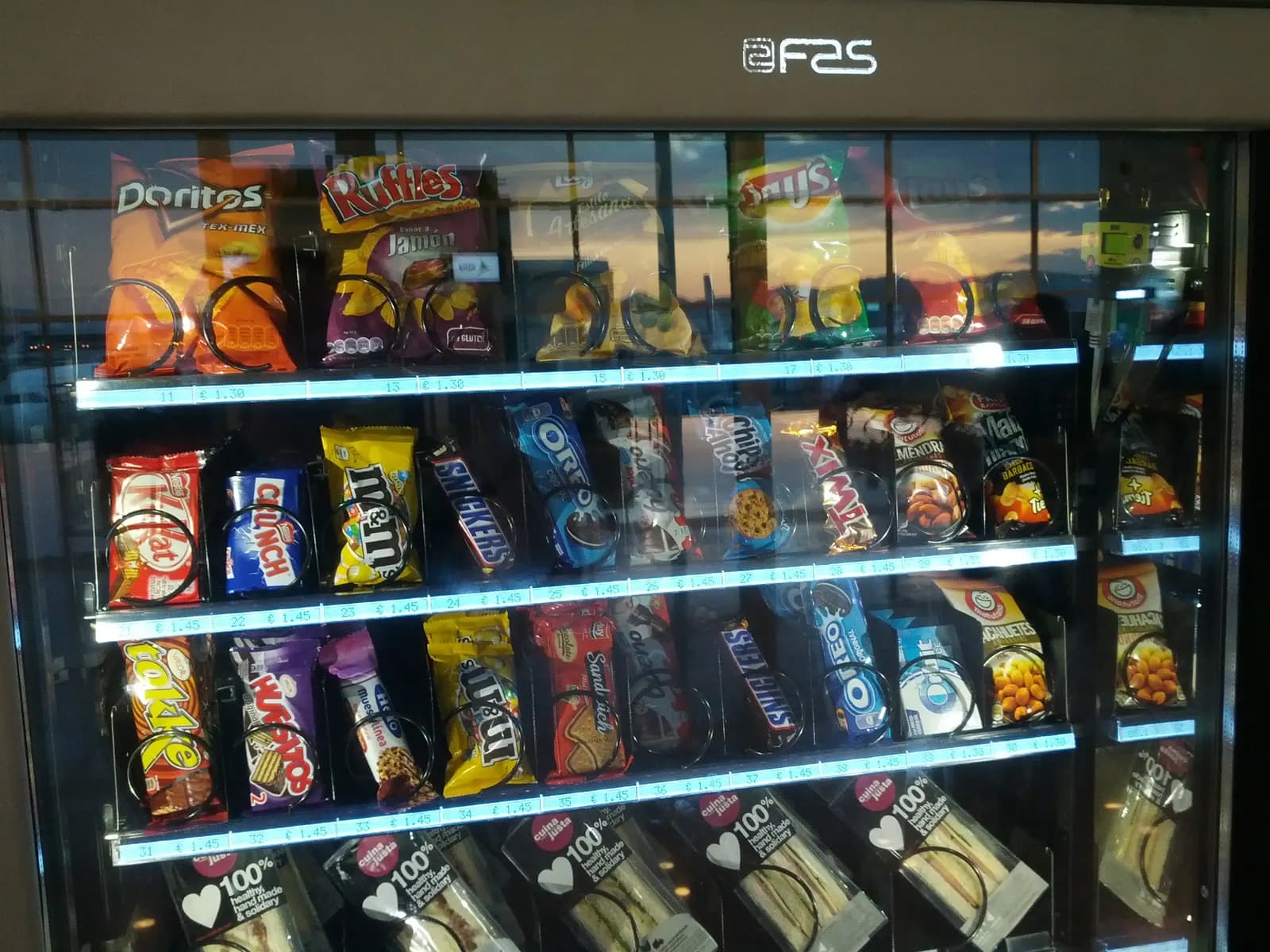
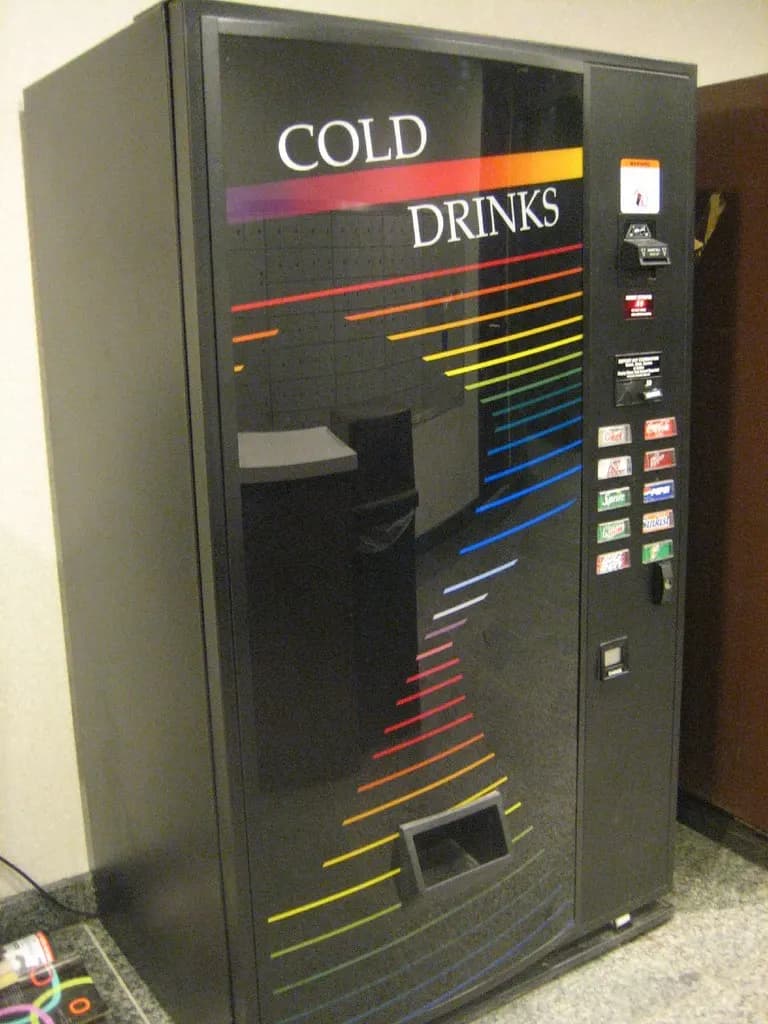
Snack and soda machines are the classic office and workplace setup: a glass-front spiral machine for chips, candy and pastries, and a separate can or bottle machine. Combo machines put snacks and cold drinks in one cabinet, which suits smaller sites that won't give you floor space for two machines. Bulk candy and gumball machines are cheap, mechanical and usually coin-operated, selling a handful of candy, gum or toy capsules for a small price; they need little maintenance but earn a few dollars a week each. Specialty machines cover fresh food, coffee, ice cream, healthy snacks and micro-market kiosks; they earn more per sale but cost more, need refrigeration or brewing and usually bring food permits with them.
Vending machine types compared
| Bulk candy / gumball | Snack or soda | Combo | Fresh food / coffee | |
|---|---|---|---|---|
Typical new price | Hundreds of dollars | Several thousand dollars | About $3,650–$6,950 | Often $7,000+ |
Payment | Coins | Coins, bills, cards | Coins, bills, cards | Mostly cards |
Restocking | Every few weeks | Weekly at busy sites | Weekly | Several times a week |
Food permit | Rarely | Usually not (prepackaged) | Usually not (prepackaged) | Usually yes |
Best locations | Restaurants, laundromats, shops | Offices, plants, schools | Small workplaces | Hospitals, large employers |
Typical new price
- Bulk candy / gumball
Hundreds of dollars
- Snack or soda
Several thousand dollars
- Combo
About $3,650–$6,950
- Fresh food / coffee
Often $7,000+
Payment
- Bulk candy / gumball
Coins
- Snack or soda
Coins, bills, cards
- Combo
Coins, bills, cards
- Fresh food / coffee
Mostly cards
Restocking
- Bulk candy / gumball
Every few weeks
- Snack or soda
Weekly at busy sites
- Combo
Weekly
- Fresh food / coffee
Several times a week
Food permit
- Bulk candy / gumball
Rarely
- Snack or soda
Usually not (prepackaged)
- Combo
Usually not (prepackaged)
- Fresh food / coffee
Usually yes
Best locations
- Bulk candy / gumball
Restaurants, laundromats, shops
- Snack or soda
Offices, plants, schools
- Combo
Small workplaces
- Fresh food / coffee
Hospitals, large employers
The combo price range comes from one national dealer's current catalog and is a market estimate, not a fixed price. Refurbished machines from local distributors cost less and are how many operators start, but check that the bill validator, coin mechanism and refrigeration work, and that the machine can take a modern card reader.
A useful rule when you're choosing: buy the machine for the location, not the other way round. A 15-person office won't support a two-machine bank, and a 300-worker plant on three shifts won't be served by one combo that empties by Wednesday.
How to start a vending machine business, step by step
From idea to first restock
- 1
Research locations before you buy
Count people on site, shifts, existing machines and what's sold nearby. Line up at least one location before you order a machine.
- 2
Register the business
LLC registrationSole proprietorship or LLC ($35 – $500 state filing fee). Get a free EIN (Free ($0)) and open a business bank account.
- 3
Get a sales tax permit and local license
Business licensesRegister with your state revenue department and check city or county business license rules for each place you'll operate.
- 4
Check food permit rules
Prepackaged, non-perishable products are often exempt; perishable food, brewed coffee and post-mix drinks usually need a permit.
- 5
Sign a location agreement
Commission, placement, power, access hours, term and how either side can end it, in writing.
- 6
Buy machines, card readers and insurance
General liability before the first install; a card reader on every machine that sells above a dollar or two.
- 7
Stock, price and track
Start with best sellers, track sales per slot, and swap slow items every restock.
Finding vending locations and writing a location agreement
Location is the business. A good machine in a weak location loses money every month; a basic refurbished machine in the right break room can pay for itself within a year. The best sites have a captive audience that can't easily walk to a store: workplaces with 50 or more people on site, manufacturing plants, warehouses, auto repair shops and dealerships with waiting customers, apartment buildings, hotels, gyms, hospitals and schools where contracts allow. Places where people are passing through quickly, or where a convenience store is next door, usually sell less than the foot traffic suggests.
Approach a location the way a business would: ask for the office manager, facilities manager or owner, explain that the machine costs them nothing, that you'll keep it stocked and clean, take product requests and fix problems quickly. Many small sites accept a machine with no commission because it's a staff perk. Larger or busier locations often ask for a share of sales. One national dealer describes commissions of roughly 5% to 10% as typical, rising to about 15% for exceptional sites; those figures are market estimates, and some operators pay a flat monthly fee instead.
Every location needs a written agreement, even a one-page one. It should cover:
- Commission — the percentage, whether it's on gross sales or sales after sales tax and card fees, how often it's paid and how sales are reported.
- Placement and power — the exact spot, a dedicated outlet, and who pays if the location moves the machine.
- Access — the hours you can restock and service, and who to call if the machine is blocked.
- Exclusivity — whether the location can bring in a competitor's machine or a micro market.
- Term and exit — length, renewal, notice to end it, and that the machines stay your property.
- Damage and liability — who is responsible for vandalism, power failures and spoiled stock, and your insurance certificate.
Commission on gross sales sounds small, but it comes off the top. At a $2.00 average price, a 10% commission is $0.20 a sale, often more than the profit left after product and card fees. Agree it on sales after sales tax at the least, and run the numbers in the profit example below before you sign.
Vending machine licenses and food permits
There's no federal vending license, but a vending route needs the same registrations as any small business, plus a few that are specific to food. Start with business registration and an EIN, then a sales tax permit from your state, because most vended products are taxable somewhere in the chain. In California, for example, the CDTFA says you generally need a seller's permit to sell through vending machines and one permit covers all your machines; the person who stocks the machine and collects the money is the retailer. Cities and counties may also want a general business license, and a few require a decal or registration for each machine placed within their limits, so check every jurisdiction where you install. Our business licenses guide explains how to find them.
Food permits depend on what the machine sells. Health codes based on the FDA Food Code treat machines that dispense perishable, time and temperature-controlled food differently from those selling sealed, shelf-stable products. Iowa is a clear example: machines that dispense only prepackaged, non-hazardous food don't need a license, while machines selling items such as post-mix soft drinks, coffee, soup or refrigerated food do. The Iowa fee is $50 for the first machine and $10 for each additional one. Other states license vending through the state health department, the agriculture department or county health offices, and fees and exemptions differ, so ask the agency before you buy a refrigerated food machine.
FDA calorie labeling for larger operators
Once you own or operate 20 or more machines, federal rules under 21 CFR 101.8 require you to show calories for items whose Nutrition Facts label a buyer can't see before purchase. Usually that means a sign, sticker or electronic display near the item or the selection button. Operators with fewer machines aren't covered unless they register voluntarily. If you're growing quickly, plan the labeling when you reach about 15 machines rather than after.
Turnkey vending offers and the FTC
Many people start by buying a "turnkey" package that bundles machines with promised locations. Some are legitimate; some are the oldest business opportunity scam in the book. The FTC's Business Opportunity Rule requires sellers it covers to give you a one-page disclosure document at least seven days before you sign or pay anything. It lists lawsuits, the refund policy, references and, if the seller claims you'll earn a certain amount, a separate earnings claim statement. If a seller won't provide it, or the references only praise the seller, walk away. Visit the locations yourself and ask the site managers whether they agreed to host a machine.
Sales tax on vending machine sales by state
Vending is one of the few businesses where sales tax is calculated differently from a normal shop. You usually can't add tax at the register, so states either treat the machine price as tax-included or tax only part of the receipts. Here are four large states as examples.
| State | How vending sales are taxed | What it means for you |
|---|---|---|
| Texas | Candy and soft drinks taxed on 100% of receipts; other food (snacks, milk, juice, coffee) on 50% of receipts; plain water exempt; bulk vending items at $0.50 or less exempt | Track sales by category; post a sign that prices include tax |
| California | 33% of receipts from cold food and hot coffee, tea and cocoa is taxable; carbonated drinks fully taxable; operator is the consumer for food sold at 15 cents or less | One seller's permit covers all machines |
| Florida | Machine receipts treated as tax-included; divide by 1.0645 for food and drinks or 1.0659 for other items where no county surtax applies | One registration per county; use the highest divisor if you can't split sales |
| New York | Candy, soda and fruit drinks exempt when sold for $1.50 or less; heated drinks exempt; bottled water taxable at any price | Price points around $1.50 change your tax |
The Texas rule is in the Comptroller's food regulation. The vending operator owes tax on all receipts from candy and soft drinks with no deduction for spoilage, and on half of receipts from other food, because much of that food would be tax-free in a grocery store. Flavored water counts as a soft drink. In California, Regulation 1574 sets the 33% figure for cold food, while carbonated beverages are taxed in full. The California approach means a $2.00 bag of chips carries tax on only about a third of its price, but a $2.00 soda is taxed on all of it.
Florida's divisor works backwards from the cash. If a Florida machine in a county with no surtax takes $1,064.50 from food and drink sales, $1,064.50 ÷ 1.0645 = $1,000 of taxable sales, and the remaining $64.50 is the tax you remit. Counties with a discretionary surtax use higher divisors from the Department of Revenue's table, and Florida wants one registration for all your machines in each county. Our Florida sales tax guide covers rates and filing. New York's $1.50 threshold took effect on June 1, 2014, and it's a pricing decision as much as a tax one: a soda at $1.50 is tax-free, at $1.75 it's taxable.
In every state, the tax is usually built into the price on the machine, so it comes out of your margin. Set prices so the amount left after tax still covers product, commission and card fees. You can check the tax inside a price with the sales tax calculator.
Cashless payments and card reader fees
Many buyers no longer carry coins, so a card reader that takes cards and phone wallets is close to essential at any site selling items above a dollar. Readers also bring telemetry: you can see sales by slot from your phone and restock only the machines that need it, which cuts drive time.
The cost has three parts. Hardware for a common reader runs around $399 to $499, according to one national dealer. There's a monthly service fee per reader, quoted at about $7.95 to $14.95 depending on the plan. And there's a transaction fee, often around 5.95% on small sales or a lower percentage plus about 10 cents per transaction on larger ones. These are dealer estimates, not published rate cards; get a written quote and read the contract term and early-termination clause before you sign.
On a $2.00 snack, a 5.95% fee is about 12 cents. That's why some operators charge slightly more for card purchases where state rules and card network rules allow, or set card-only prices a little higher than coin prices. The bigger effect is usually positive: card readers tend to lift sales because buyers aren't limited by the change in their pocket. Budget the fees in your pricing either way.
Startup costs for a vending machine business
Here's what a small route of three new combo machines typically costs to start. The figures are estimates based on dealer prices, Insureon's average premiums and state filing fees.
| Startup item | Estimated cost | Basis |
|---|---|---|
| Business registration | $35 – $500 for an LLC | State filing fee; a sole proprietorship pays little or nothing |
| Three new combo machines | $10,950–$20,850 | $3,650–$6,950 each (dealer catalog); refurbished costs less |
| Three card readers | About $1,200–$1,500 | Around $399–$499 each (dealer estimate) |
| Opening inventory | $600–$1,200 | Roughly $200–$400 to fill each machine |
| General liability insurance (first year) | About $442 | Insureon average for vending operators |
| Food permits, local licenses, sales tax permit | $0–$300 | Often free for prepackaged-only routes |
| Hand truck, locks, keys, cleaning supplies | $200–$500 | Retail prices |
| Total | About $13,000–$25,000 | Before a vehicle |
You can start much smaller with one refurbished machine or a few bulk candy machines, and many operators do, to learn the trade before borrowing. If you need finance, equipment loans secured by the machines are common, and SBA microloans of up to $50,000 can cover equipment and stock; see our guide to SBA loan requirements.
Pricing products and your margin
Price each product from its cost, not from what the last machine charged. Start with what you pay at a wholesale club or distributor, then build up to a price that leaves enough after every cost that comes off a sale: sales tax built into the price, location commission, card fees and spoilage. One dealer suggests keeping product cost below about 45% of the selling price, with wholesale-club buying often landing between 45% and 55% and distributor or bottler accounts lower; treat that as a guide, not a rule.
Snacks, candy and drinks in vending are sold at fixed price points, usually in 25-cent steps, so buyers can choose quickly. Keep similar items at the same price, put higher-margin items at eye level, and test a price increase on one machine before rolling it out. Track sales per slot: in most machines a small number of products sell most of the volume, and the empty space is worth more holding another best seller.
Worked example: vending machine profit and break-even
Here's a worked month for an imagined part-time route: six combo machines in workplaces, owner-operated with no employees. The figures are illustrative assumptions, not industry averages.
The average sale brings in $2.00 after sales tax. Variable costs per sale come to $1.22: product at 45% ($0.90), location commission of 10% ($0.20), card fees on the roughly two-thirds of sales paid by card ($0.08) and spoilage and theft ($0.04). That leaves $0.78 per sale toward fixed costs.
Fixed monthly costs are $868: card reader service for six readers ($60), general liability insurance ($37), fuel and vehicle use for weekly restocks ($150), a loan payment on $24,000 of machines over five years at about 7.5% interest ($481), bookkeeping ($50), phone ($30) and a maintenance reserve ($60).
The worked route at a glance
$2.00
Average sale after sales tax
$1.22
Variable cost per sale
product, commission, card fees, spoilage
$868
Fixed costs a month
1,113
Sales a month to break even
Break-even is $868 ÷ $0.78, or about 1,113 sales a month: roughly 186 per machine, or six a day. If each machine averages 300 sales a month, the route sells 1,800 items, earns $1,404 in contribution and keeps about $536 a month before income tax and before paying the owner for perhaps 25 to 30 hours of restocking, driving and buying. Once the machines are paid off, the same route keeps about $1,017 a month.
Try it — vending route break-even (sales per month)
Two lessons stand out. Commission and card fees together take $0.28 of every sale, more than a third of the margin, so they're worth negotiating. And the weakest location in a route costs as much in fixed costs as the strongest, so relocating a machine that sells under about six items a day usually beats waiting for it to improve.
Taxes and insurance for a vending business
As a sole proprietor or single-member LLC, you report vending income on Schedule C and pay self-employment tax of 15.3% on net profit, on top of income tax. Machines are equipment you can depreciate, and Section 179 lets many small businesses deduct the cost of qualifying equipment in the year it's placed in service, up to a limit of $2,560,000. You can also deduct up to $5,000 of startup costs in your first year. Keep mileage records for restocking trips, and keep sales records by machine and by product category, because your state may tax categories differently.
On insurance, general liability covers injuries and damage involving your machines, such as a machine tipping over or a spill from a leaking drinks machine. Insureon reports vending operators pay an average of about $37 a month for general liability, $58 a month for a business owner's policy that also covers your equipment, and $171 a month for commercial auto if you use a vehicle for the business. Locations, especially larger employers, often ask for a certificate of insurance naming them as an additional insured. Workers' compensation applies once you hire, in almost every state.
Mistakes to avoid when starting a vending business
- Buying machines before locations. Line up a location first, then buy the machine that suits it.
- Agreeing commission on gross sales. Tie it to sales after tax, and model it at your real margin before signing.
- Ignoring vending sales tax rules. Texas, California, Florida and New York all tax vending differently from shops; you owe the tax whether you priced for it or not.
- Buying a turnkey package without the FTC disclosure. No disclosure document seven days before payment is a red flag.
- Skipping the food permit check. Fresh food, brewed coffee and post-mix drinks usually need one.
- No card reader. Coin-only machines lose sales to buyers who don't carry change.
- Never moving weak machines. A machine that doesn't reach break-even after a few months is better somewhere else.
Official links
- Texas — 34 TAC §3.293 (vending provisions)Candy, soft drinks, food at 50%, water and bulk vending
- California CDTFA — Regulation 1574Vending machine operators
- California CDTFA — Publication 118Vending machine food sales and seller's permits
- Florida Statutes §212.0515Vending machine divisors
- New York TSB-M-14(7)S$1.50 vending exemption
- FDA — 21 CFR 101.8Vending machine calorie labeling
- FTC — Bogus business opportunitiesDisclosure document and red flags
- IRS — Apply for an EIN onlineFree, issued immediately
What to do next
Visit five possible locations this week and count people, shifts and nearby competition before you price a single machine. Then register the business, get an EIN and a sales tax permit, and read your state's vending tax rule so your prices already include it. Model your route in the break-even calculator with your own product costs and commission, and only then buy the machines.
This is general information, not legal or tax advice — confirm on the official source or with a professional.
Frequently asked questions
A small route of three new combo machines usually lands between about $13,000 and $25,000 once you add card readers, opening stock, registration, insurance and a hand truck. New combo machines sell for roughly $3,650 to $6,950 each from one national dealer; refurbished machines cost less. A single bulk candy machine can start for a few hundred dollars, but it earns far less.
You need the same basics as any business: registration, a local business license where your city requires one, and a sales tax permit in most states. Machines selling only prepackaged, non-perishable snacks and canned drinks are exempt from health licensing in many states, such as Iowa. Machines selling perishable food, fresh-brewed coffee or post-mix drinks usually need a food permit.
In most states, yes, but the rules are special. Texas taxes candy and soft drinks on full receipts and other food on 50% of receipts. California taxes 33% of receipts from cold food. Florida treats the cash in the machine as tax-included and uses a divisor. New York exempts candy and soda sold for $1.50 or less.
It's negotiated. Many small locations such as offices and auto shops accept a machine with no commission because it's an amenity for staff or customers. Busier sites often ask for a share of sales, commonly quoted at around 5% to 15% of gross. Put the rate, whether it's on gross or net-of-tax sales, and how it's paid in a written location agreement.
It can be a solid side income, but rarely a full-time salary from a handful of machines. In our worked example, six combo machines averaging about 300 sales a month each make roughly $536 a month after product, commissions, card fees, insurance and equipment financing, and break even near 1,113 sales a month. Location quality decides almost everything.
Only if you own or operate 20 or more machines, or you register voluntarily. FDA rules then require calories to be visible before purchase for items whose Nutrition Facts label can't be seen through the glass, usually with a sign or sticker near the item or selection button. Smaller operators aren't covered, though some states and cities have their own rules for public buildings.
Sources & verification
Figures on this page were checked against the sources below when it was last reviewed on 8 October 2026. Each rate and limit is stored once with its own official source and review date, and official update channels are monitored daily so changes are picked up. How we verify
- 1.34 Tex. Admin. Code §3.293 — Food; Food Products; Meals; Food Service — Texas Comptroller of Public Accounts (via LII) · accessed 8 October 2026
- 2.Regulation 1574 — Vending Machine Operators — California Department of Tax and Fee Administration · accessed 8 October 2026
- 3.Publication 118 — Vending Machine Food Sales — California Department of Tax and Fee Administration · accessed 8 October 2026
- 4.Florida Statutes §212.0515 — Sales from vending machines — Florida Legislature · accessed 8 October 2026
- 5.Fla. Admin. Code R. 12A-1.044 — Vending Machines — Florida Department of Revenue (via LII) · accessed 8 October 2026
- 6.TSB-M-14(7)S — Increase in the exemption for vending machine sales of certain food and drink — New York State Department of Taxation and Finance · accessed 8 October 2026
- 7.21 CFR 101.8 — Vending machines — U.S. Food and Drug Administration (via LII) · accessed 8 October 2026
- 8.Iowa Admin. Code r. 481-30.4 — License fees — Iowa Department of Inspections, Appeals and Licensing (via LII) · accessed 8 October 2026
- 9.Bogus business opportunities — Federal Trade Commission · accessed 8 October 2026
- 10.Vending machine business insurance cost — Insureon · accessed 8 October 2026
- 11.Nayax vending card reader guide — VMFS USA (secondary) · accessed 8 October 2026
- 12.Vending machine revenue split: operator vs location vs supplier — VMFS USA (secondary) · accessed 8 October 2026
MSMETOOLS is an independent platform and is not affiliated with any government agency, ministry or department.
Tools for this
Break Even Calculator
Find your break even point and units.
Sales Tax Calculator (US)
Calculate sales tax for all US states and cities.
Startup Cost Calculator
Estimate how much capital you need to launch.
Profit Margin Calculator
Calculate profit, markup and margin for your products or services.
Related guides
 How to Start a T-Shirt Business in 2026: Full GuideRead guide
 How to Start a Bakery Business in 2026: Home to StorefrontRead guide
 How to Start a Property Management Business in 2026Read guide
 How to Start an Airbnb Business in 2026: Permits & TaxesRead guide
Official links open the government site in a new tab.