 Starting & growing a business
How to Start a Dropshipping Business in 2026: Setup, Sales Tax, Platform Rules and Real Margins
Start a dropshipping business in 2026: sales tax nexus, resale certificates, Shopify and Amazon rules, FTC shipping and review rules, costs and margin math.
 Edited by Sumeet YadavFounder & editor, MSMETOOLS · fact-checked against official sources
Contents (14)
- 1. What a dropshipping business is and how the money moves
- 2. Is dropshipping still a good business in 2026?
- 3. How to start a dropshipping business, step by step
- 4. Dropshipping business license and registration
- 5. Sales tax for dropshippers: nexus and resale certificates
- 6. Overseas suppliers after the end of de minimis
- 7. Platform rules: Shopify, Amazon and eBay
- 8. FTC rules: shipping promises, reviews and advertising
- 9. Returns, refunds and chargebacks
- 10. How much it costs to start dropshipping
- 11. Worked example: profit per order and break-even
- 12. Taxes on dropshipping income
- 13. Common dropshipping mistakes and how to fix them
- 14. What to do next
Dropshipping lets you sell products online without buying stock up front: a customer orders from your store, you pay a supplier, and the supplier ships straight to the customer. That makes it one of the cheapest ways into e-commerce, and also one of the easiest to get wrong. This guide is for anyone in the US starting a dropshipping business in 2026. It covers the legal setup, the sales tax rules that trip up most new stores, Shopify, Amazon and eBay policies, the FTC rules on shipping times and reviews, and a worked profit-and-loss with break-even per order. Rules were checked against FTC, CBP and state tax agency pages in October 2026.
Quick answer
To start a dropshipping business, pick a niche and a supplier, form a business (sole proprietorship or LLC), get a free EIN, register for sales tax in states where you have nexus, give your supplier a resale certificate, then open a store or marketplace account with clear shipping and returns policies. You are the seller in law, so delivery times, refunds and product claims are your responsibility, not your supplier's.
Startup costs are low (often $800–$2,500), but ad spend per order decides profit
Collect sales tax where you have nexus; California and Texas use $500,000 thresholds
FTC: ship within the time you state, or within 30 days if you state none
Overseas parcels lost duty-free de minimis treatment on August 29, 2025
Amazon and eBay ban buying from another retailer to fulfil your orders
What a dropshipping business is and how the money moves
In a dropshipping business you are the retailer. You set the price, run the store, take the payment and handle customer service, while a wholesaler or manufacturer holds the inventory and ships each order. You never touch the product, but you still carry the legal duties of a seller: the customer bought from you, so the delivery promise, the refund and any claim about the product are yours.
The money flows in a fixed order. The customer pays you the retail price plus any shipping and sales tax. Your payment processor takes its fee. You then pay the supplier the wholesale price plus its shipping or handling charge, usually by card or account balance within minutes of the order. What's left has to cover advertising, apps, returns and your own time.
One dropshipping order, start to finish
Step 1
Customer pays your store
Step 2
Processor takes its fee
Step 3
You order from supplier (resale certificate on file)
Step 4
Supplier ships under your name
Step 5
You handle tracking, returns, refunds
you are the seller of record
That last step is where dropshipping differs from affiliate marketing. An affiliate sends traffic to someone else's checkout and earns a commission. A dropshipper owns the sale. That ownership is why sales tax, consumer protection law and platform policies all apply to you directly.
Is dropshipping still a good business in 2026?
It can be, but the easy period is over. Three changes since 2024 matter. First, the FTC's rule on fake reviews took effect on October 21, 2024, so the old trick of importing supplier reviews or paying for five-star ratings now carries civil penalties of up to $53,088 per violation. Second, duty-free entry for low-value parcels ended on August 29, 2025, which raised costs and delivery times for products shipped individually from China and elsewhere. Third, advertising costs on social platforms have kept climbing, so stores that relied on cheap ads to sell a single trending product have a harder time.
What still works is treating the store as a real retail brand: a focused niche, suppliers with US warehouses or reliable fast shipping, honest product pages, and enough repeat customers that you aren't paying for every sale with ads. Margins are thinner than many online courses suggest. In practice, many stores keep somewhere between 10% and 30% of revenue after product, shipping, fees, ads and returns, and new stores often lose money for the first few months while they find a product that converts.
How to start a dropshipping business, step by step
Setting up a compliant dropshipping store
- 1
Pick a niche and test demand
Choose a category you understand, with products that are light, hard to break, not regulated (no supplements, cosmetics with drug claims, children's products needing testing) and priced high enough to absorb ad costs, usually $25 or more.
- 2
Vet two or three suppliers
Order samples, time the delivery, check packaging for supplier branding and ask for written terms on defects, returns and blind shipping (no supplier invoices or logos in the box).
- 3
Choose a structure and register it
LLC registration guideA sole proprietorship needs no state filing; an LLC costs $35 – $500 to form depending on the state. Register a DBA if you trade under a brand name.
- 4
Get an EIN and a business bank account
EIN application guideThe EIN is Free ($0) from the IRS and lets you open a separate bank account, apply for a seller's permit and keep personal and business money apart.
- 5
Register for sales tax where you have nexus
Start with your home state, then give your supplier a resale certificate so it doesn't charge you tax on goods you resell.
- 6
Build the store and write your policies
Shipping times, returns, refunds and contact details on their own pages, linked from every product page and the checkout.
- 7
Launch with a small test budget
Test a few products with a fixed ad budget, track cost per order and refund rate, and drop anything that doesn't clear your break-even.
Dropshipping business license and registration
There is no federal license for dropshipping, and no state has a license specific to it. What you need is the same set of registrations any online retailer needs. Most cities and counties require a general business license or home occupation permit even if you never meet a customer, and some charge an annual tax on gross receipts. Our business licenses guide shows how to find the city, county and state requirements for your address.
Selling under a brand name rather than your own legal name needs a DBA filing in most states; the DBA guide covers fees. An LLC doesn't change your income tax, but it separates business debts from personal assets, which matters when a defective product leads to a claim against the seller.
Marketplaces must verify bank, tax and contact details from high-volume sellers (200+ sales and $5,000+ in 12 months) under the INFORM Consumers Act. Payment processors report your gross sales to the IRS on Form 1099-K once you pass $20,000 and more than 200 transactions, but your income is taxable from the first dollar whether or not you receive a form.
Sales tax for dropshippers: nexus and resale certificates
Sales tax is where dropshipping gets genuinely complicated, because three parties in up to three states touch every sale: you, your supplier and your customer. Two questions decide who collects tax: who has nexus in the customer's state, and whether the supplier has a valid resale certificate from you.
Nexus. You have nexus in a state if you have a physical presence there (your home office, an employee, inventory in a warehouse) or if your sales into the state pass its economic threshold. Since the Supreme Court's 2018 Wayfair decision, every state with a sales tax has adopted one. California counts total sales of tangible goods delivered into the state by you and related businesses, including non-taxable sales for resale, and requires registration once they exceed $500,000 in the current or preceding calendar year. Texas uses a $500,000 safe harbor measured over the preceding twelve calendar months, and once you cross it you must hold a permit and start collecting by the first day of the fourth month after. Many other states use a lower $100,000 threshold, so check each state where you sell in volume.
Resale certificates. When you buy goods to resell, you don't pay sales tax on the purchase; your customer pays it on the retail sale. To prove that, you give your supplier a resale or exemption certificate, typically your state's form or a multistate form, showing your seller's permit number. A US supplier with nexus in the customer's state will often ask for one, and if it doesn't get one it may charge you tax.
Shopify's tax guidance sets out the four combinations every dropshipper should know:
| Who has nexus in the customer's state | What happens |
|---|---|
| Neither you nor your supplier | No one collects sales tax on that sale |
| Only your supplier | Supplier may ask for a resale certificate; without one it may charge you tax |
| Only you | You charge the customer tax and file the return |
| Both of you | You charge the customer; the supplier asks for your resale certificate |
California adds a twist that catches out-of-state stores. If you are a "true retailer" with no California seller's permit and you use a California supplier to ship to a California customer, the supplier becomes the "drop shipper" and must pay tax on the retail price. Under CDTFA Regulation 1706 it may estimate that price as its own price to you plus a 10% markup, and it will usually pass that cost to you. If you hold a California permit and give the supplier a resale certificate, the supplier is relieved and you collect from the customer instead.
Marketplaces simplify this. Amazon, eBay, Etsy and Walmart Marketplace act as marketplace facilitators and collect and remit sales tax on sales made through them in every state with a sales tax. Your own Shopify or WooCommerce store gets no such cover: you register, collect and file yourself, although the platform can calculate tax once you've registered. Shopify's help center is explicit that you must register with each state agency before you switch on collection. Use our sales tax calculator to check what a given order should carry.
Overseas suppliers after the end of de minimis
For years, single parcels worth $800 or less entered the US duty-free under the de minimis rule, which is what made shipping individual orders from overseas factories so cheap. That ended for all countries on August 29, 2025. CBP now treats these parcels as subject to all applicable duties, taxes and fees; non-postal shipments must be formally entered by a qualified party, and from February 28, 2026 all postal shipments use the ad valorem duty method. CBP codified the suspension in interim final rules published in June 2026, and the statutory repeal for commercial shipments takes effect July 1, 2027.
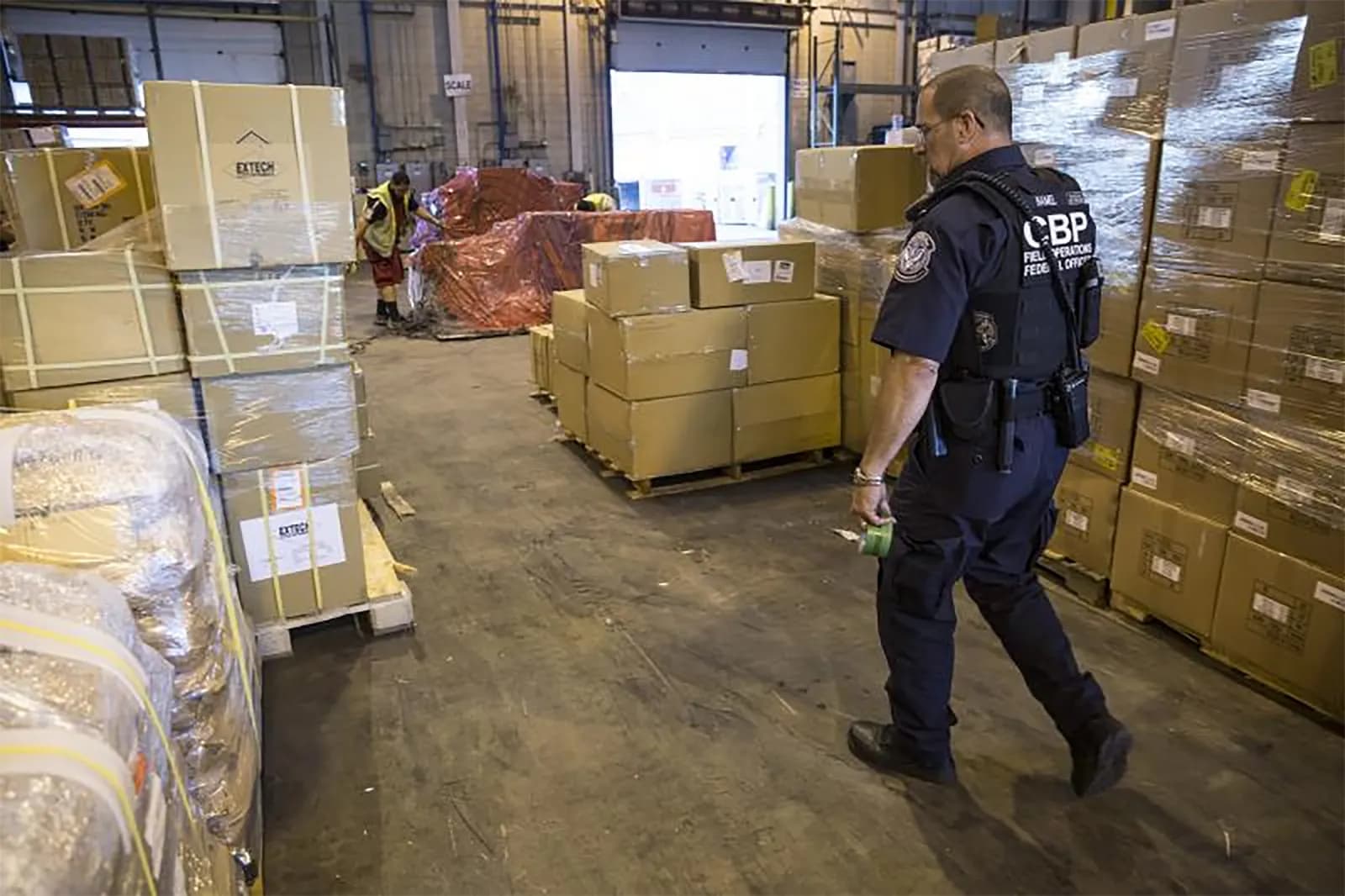
For a dropshipper this has three consequences. Your landed cost now includes duty and a customs brokerage charge on every parcel, so ask overseas suppliers for a delivered-duty-paid price and get it in writing. Delivery estimates need more padding, because customs processing adds days. And when the paperwork goes wrong, the customer may be asked to pay duty on delivery, which almost always turns into a refund request. Many stores responded by switching to suppliers that hold stock in US warehouses, paying a higher unit price in exchange for faster, more predictable delivery.
Platform rules: Shopify, Amazon and eBay
Shopify allows dropshipping and has a large app ecosystem that connects stores to suppliers. The obligations are mostly yours: publish shipping, refund and contact policies, register for sales tax before you collect it, and avoid prohibited products. Third-party reporting puts the Basic plan at about $39 a month billed monthly, with online card payments through Shopify Payments at 2.9% plus 30 cents; check the current US pricing page before you budget.
Amazon permits dropshipping only if you are the seller of record. Every packing slip, invoice and outer box must identify you, not the supplier; you must remove anything that names the supplier before shipment; and you handle returns. Buying from another online retailer, such as ordering from a big-box store's website and having it ship to your Amazon customer, is prohibited. Amazon fees run alongside this: a Professional plan costs $39.99 a month and most categories carry a 15% referral fee. Our Amazon selling guide walks through the full fee stack.
eBay allows dropshipping from a wholesale supplier but says listing an item and then buying it from another retailer or marketplace that ships to your customer is not allowed. eBay also reminds sellers that they remain responsible for delivery within the time stated in the listing.
Where you can dropship, and on what terms
| Channel | Dropshipping allowed? | Who collects sales tax | Key restriction |
|---|---|---|---|
Your own Shopify store | Yes | You, where you have nexus | Publish policies; register before collecting |
Amazon | Yes, as seller of record | Amazon (marketplace facilitator) | Your name only on slips, invoices, boxes; no retail arbitrage |
eBay | Yes, from wholesale suppliers | eBay (marketplace facilitator) | No buying from other retailers or marketplaces |
Etsy | Only for your own designs made by a production partner | Etsy (marketplace facilitator) | Reselling mass-produced goods isn't allowed |
Your own Shopify store
- Dropshipping allowed?
Yes
- Who collects sales tax
You, where you have nexus
- Key restriction
Publish policies; register before collecting
Amazon
- Dropshipping allowed?
Yes, as seller of record
- Who collects sales tax
Amazon (marketplace facilitator)
- Key restriction
Your name only on slips, invoices, boxes; no retail arbitrage
eBay
- Dropshipping allowed?
Yes, from wholesale suppliers
- Who collects sales tax
eBay (marketplace facilitator)
- Key restriction
No buying from other retailers or marketplaces
Etsy
- Dropshipping allowed?
Only for your own designs made by a production partner
- Who collects sales tax
Etsy (marketplace facilitator)
- Key restriction
Reselling mass-produced goods isn't allowed
FTC rules: shipping promises, reviews and advertising
The FTC's Mail, Internet, or Telephone Order Merchandise Rule applies to every online sale. You must have a reasonable basis for any shipping time you state, and if you state none you must be able to ship within 30 days. If you can't ship on time, you must promptly tell the customer and offer the option to cancel. A new date of 30 days or less can go ahead if the customer doesn't respond; anything longer, or an indefinite delay, needs the customer's express consent or the order is cancelled. Refunds for cancelled orders paid by card must be issued within seven working days, and they must include shipping and handling charges.
The FTC is clear that the seller who takes the order is liable even when a fulfillment house ships it. For a dropshipper, that means your supplier's delays are your legal problem. The practical fix is to state delivery windows you can hit for your slowest supplier, not your fastest, and to set up an automatic delay email.
The Consumer Reviews and Testimonials Rule, in force since October 21, 2024, bans fake reviews and testimonials, buying reviews conditioned on a positive or negative sentiment, undisclosed reviews by employees or relatives, suppressing negative reviews through threats or false accusations, and buying fake followers or engagement. Copying reviews from a supplier's listing onto your product page, or posting reviews of a different product as if they were for yours, is exactly the kind of misrepresentation the rule targets. Knowing violations can bring civil penalties of up to $53,088 per violation each. Influencers you pay must disclose the relationship under the FTC's endorsement guides.
Product claims carry the same weight. Health claims, "made in USA" labels and "eco-friendly" claims all need evidence you hold before you publish them, and copying a supplier's description doesn't shift responsibility for it.
Returns, refunds and chargebacks
Returns are the hidden cost of dropshipping. Your supplier's return policy may be stricter than the one you advertise, it may not accept returns at all from overseas, and the customer will hold you to your own policy. Before you launch, get each supplier's written terms for defective, damaged and wrong items, and decide which returns you will simply refund without asking for the item back because return shipping costs more than the product.
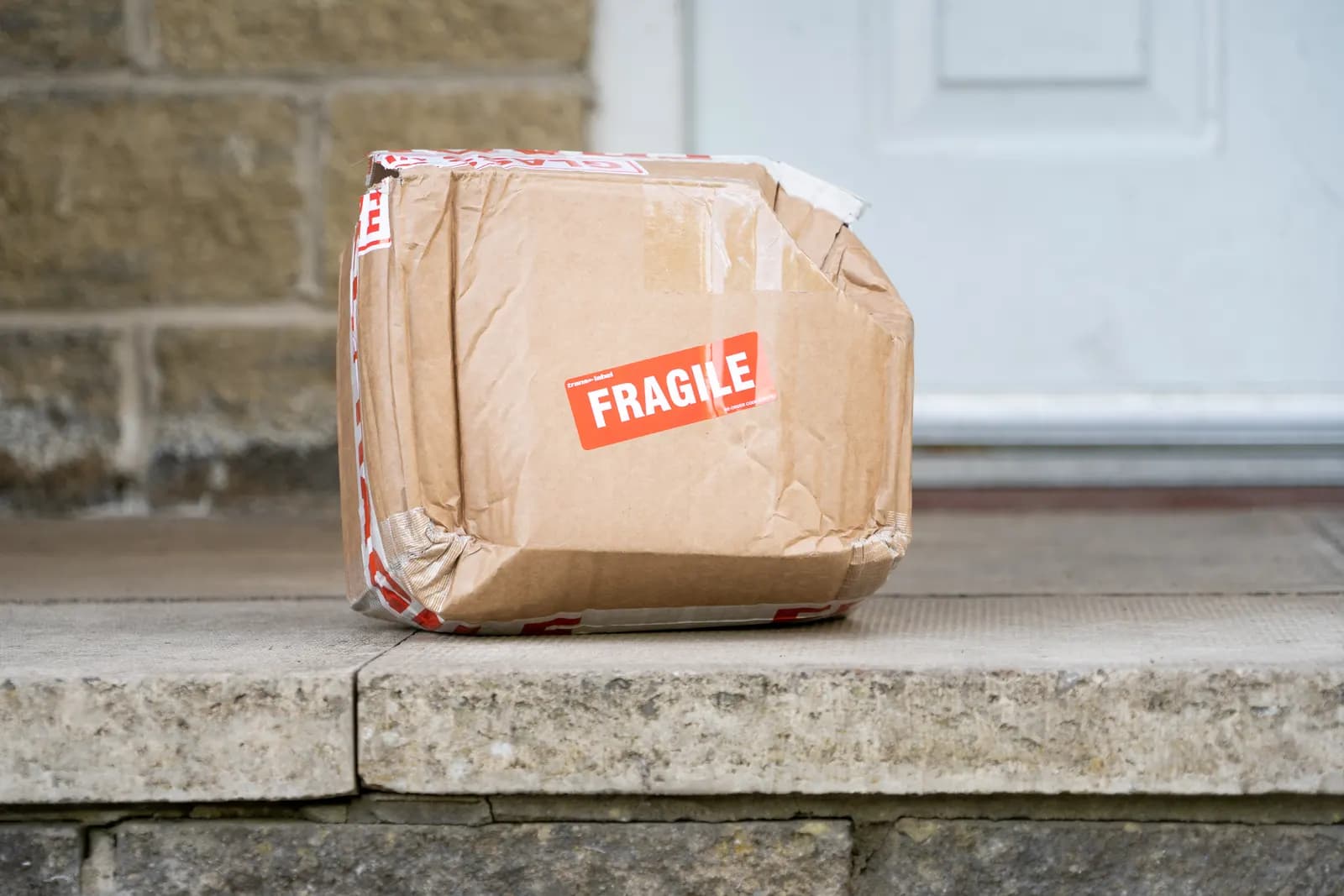
Chargebacks are the other risk. If a customer disputes a charge with their card issuer, you lose the sale, often pay a dispute fee, and need tracking and delivery proof to win. Stores whose dispute rates climb can have their payment accounts reviewed or frozen. Reduce disputes by using a recognizable billing descriptor, sending tracking automatically, answering emails within a day and refunding quickly when you can't deliver. Budget a reserve of a few percent of sales for refunds and disputes in your pricing.
How much it costs to start dropshipping
These are estimates for a single-person US store selling through its own website, based on typical published platform prices and state filing fees. Your numbers will vary by state, tools and how much you test.
| Startup item | Estimated cost | Basis |
|---|---|---|
| LLC formation (optional) | $35 – $500 | State filing fee; a sole proprietorship has none |
| EIN | Free ($0) | IRS online application |
| Seller's permit | Free in most states | California and Texas charge no fee |
| Store platform, first month | About $39 | Shopify Basic billed monthly (secondary source) |
| Domain name | $10–$25 a year | Typical registrar pricing |
| Sample orders from 2–3 suppliers | $100–$300 | Two to five products at wholesale plus shipping |
| Apps, email tool, logo | $50–$300 | Supplier connector, reviews app, email marketing |
| Test advertising budget | $500–$1,500 | Enough to get 1,000–3,000 visitors to a few products |
| Total | About $800–$2,500 | Before ad spend scales |
Plug your own figures into the startup cost calculator. The single biggest variable is how long you test before finding a product that pays for its ads.
Worked example: profit per order and break-even
Here is a realistic example for an imagined store selling an insulated dog-walking water bottle from a US-warehouse supplier. The figures are illustrative assumptions, not benchmarks, and you should replace them with your supplier quote and actual ad results.
The product sells for $34.99 with free shipping. The supplier charges $9.50 for the product and $5.50 to ship it, so cost of goods is $15.00. Card processing at 2.9% plus 30 cents takes $1.31. Advertising averages $9.00 per order once the ads are tuned. A reserve of 4% of the price for refunds and disputes is $1.40. That leaves $8.28 per order, about 24% of the price.
Fixed monthly costs are modest: $39 for the store plan, $60 for apps, $20 for email, $2 for the domain, $50 for bookkeeping software and $40 for a general liability policy, or $211 a month. Break-even is $211 ÷ $8.28, about 26 orders a month. At 300 orders a month the store turns over $10,497 and keeps about $2,273 before income tax and before paying you for your time.
Sales tax you collect from customers isn't in these numbers: it passes through your account to the state and is never your revenue. Keep it in a separate account so it's there when the return is due.
Try it — dropshipping break-even per month
The lesson most new stores learn the hard way: if advertising rises from $9 to $15 per order, contribution drops to $2.28 and break-even jumps to about 93 orders a month. Track cost per order for every product weekly, and price new products with the marketplace profit calculator before you list them.
Taxes on dropshipping income
Your dropshipping profit is business income. As a sole proprietor or single-member LLC you report it on Schedule C and pay self-employment tax of 15.3% on 92.35% of net earnings, on top of income tax. If you expect to owe $1,000 or more for the year, make quarterly estimated payments to avoid penalties. Deductible costs include product cost, shipping, platform and app fees, advertising, samples, software and a home office if you qualify. Many owners also qualify for the qualified business income deduction of up to 20% of qualified profit. See our tax filing guide for the forms and deadlines.
Common dropshipping mistakes and how to fix them
- Promising delivery times your supplier can't meet. State the window for your slowest route, and send delay notices with a cancellation option as the FTC rule requires.
- Skipping the resale certificate. Without one, a supplier with nexus may charge you sales tax that you can't recover from the customer.
- Collecting sales tax without registering. Collecting tax you haven't registered to remit is a serious problem in every state. Register first, then switch on collection.
- Copying supplier reviews or photos. Fake or borrowed reviews breach the FTC rule, and supplier photos may be copyrighted. Use your own photos from samples.
- Selling regulated products. Supplements, cosmetics with drug claims, children's products and electrical goods carry testing and labelling duties that you inherit as the seller.
- Ignoring landed cost after de minimis. Price overseas products on a delivered-duty-paid basis or switch to US-warehoused stock.
- No separation of money. Run every sale and expense through a business bank account so your books, taxes and any LLC protection hold up.
Official links
- FTC — Mail, Internet, or Telephone Order Merchandise Rule guideShipping times, delay notices, refunds
- FTC — Consumer Reviews and Testimonials Rule Q&AWhat counts as a fake or suppressed review
- CBP — Suspension of duty-free de minimis treatmentLow-value import rules from Aug 29, 2025
- CDTFA — Drop shipments (Publication 121)California drop-shipper and resale certificate rules
- CDTFA — Remote seller (Wayfair) FAQCalifornia economic nexus threshold
- Texas Comptroller — Remote sellersTexas safe harbor and registration timing
- IRS — Apply for an EIN onlineFree; issued immediately online
What to do next
Order samples from your shortlisted suppliers this week and time how long they take to arrive; that number sets the shipping promise on your store. While you wait, form your business, get your EIN, register for sales tax in your home state and send your supplier a resale certificate. Then model your first products in the break-even calculator so you know the maximum you can pay for an order before you spend a dollar on ads.
This is general information, not legal or tax advice — confirm on the official source or with a professional.
Frequently asked questions
There is no federal dropshipping license, but most cities and counties require a general business license for any business run from a home address, and almost every state with a sales tax requires a seller's permit before you collect tax. If you trade under a name other than your own, you also need a DBA. Check your city and state requirements before your first sale.
Yes. Dropshipping is a legal fulfillment method. What gets sellers into trouble is how they run it: shipping late without notice under the FTC Mail Order Rule, using fake reviews, selling unsafe or counterfeit products, or breaking marketplace rules such as Amazon's requirement that you be the seller of record on every packing slip and invoice.
You collect sales tax in states where you have nexus, either a physical presence or sales above the state's economic threshold, such as $500,000 a year in California or Texas. Marketplaces like Amazon and Etsy collect for you on their sales. Give your supplier a resale certificate so it doesn't charge you tax on goods you resell.
After product cost, shipping, payment fees, advertising and returns, many stores keep somewhere between 10% and 30% of each sale. In our worked example a $34.99 product leaves about $8.28, or roughly 24%, before fixed costs. Advertising cost per order is the number that most often wipes out the margin, so track it per product.
A lean US setup usually costs between about $800 and $2,500 before advertising scales up: state LLC filing fees of $35 – $500, a store subscription, a domain, sample orders and a first test ad budget. The EIN is free from the IRS. Advertising, not setup, is where most of the money goes.
Yes. Since August 29, 2025, parcels valued at $800 or less no longer enter the US duty-free, from any country. Products shipped one at a time from overseas suppliers now carry duties and customs processing costs, which raises landed cost and slows delivery. Many sellers moved to suppliers with US warehouses.
Sources & verification
Figures on this page were checked against the sources below when it was last reviewed on 7 October 2026. Each rate and limit is stored once with its own official source and review date, and official update channels are monitored daily so changes are picked up. How we verify
- 1.Business Guide to the FTC's Mail, Internet, or Telephone Order Merchandise Rule — Federal Trade Commission · accessed 7 October 2026
- 2.Consumer Reviews and Testimonials Rule: Questions and Answers — Federal Trade Commission · accessed 7 October 2026
- 3.Adjustments to Civil Penalty Amounts (FR Doc. 2025-01361) — Federal Trade Commission / Federal Register · accessed 7 October 2026
- 4.Suspension of Duty-Free De Minimis Treatment (CBP Publication 5129-0825) — U.S. Customs and Border Protection · accessed 7 October 2026
- 5.Frequently Asked Questions — Use Tax Collection Requirements Based on Sales into California (Wayfair) — California Department of Tax and Fee Administration · accessed 7 October 2026
- 6.Publication 121, Drop Shipments — Drop shippers and resale certificates — California Department of Tax and Fee Administration · accessed 7 October 2026
- 7.Regulation 1706 — Drop Shipments — California Department of Tax and Fee Administration · accessed 7 October 2026
- 8.Remote Sellers — Texas Comptroller of Public Accounts · accessed 7 October 2026
- 9.Drop shipping policy — eBay · accessed 7 October 2026
- 10.Navigating US tax regulations — Shopify Help Center · accessed 7 October 2026
- 11.Amazon Dropshipping Policy and Seller Requirements — AutoDS (secondary, summarising Amazon Seller Central policy) · accessed 7 October 2026
- 12.Shopify Pricing (2026): Plans, Fees and Real Costs — Shero Commerce (secondary) · accessed 7 October 2026
MSMETOOLS is an independent platform and is not affiliated with any government agency, ministry or department.
Tools for this
Marketplace Profit Calculator
Profit after Amazon, Etsy, Shopify and Flipkart fees.
Break Even Calculator
Find your break even point and units.
Sales Tax Calculator (US)
Calculate sales tax for all US states and cities.
Startup Cost Calculator
Estimate how much capital you need to launch.
Related guides
 How to Sell on Etsy in 2026: Fees, Setup & What SellsRead guide
 How to Sell on Amazon in 2026: Fees, FBA & First StepsRead guide
 Ecommerce Business Platforms 2026: Fees & How to ChooseRead guide
 How to Start a T-Shirt Business in 2026: Full GuideRead guide
Official links open the government site in a new tab.