 Income tax
Small Business Tax Filing & Deductions in 2026: Forms, Deadlines and Write-Offs
Small business tax deductions and filing for 2026: which form your entity files, quarterly estimate dates, the new $2,000 1099-NEC rule and top write-offs.
 Edited by Sumeet YadavFounder & editor, MSMETOOLS · fact-checked against official sources
Contents (9)
- 1. Which tax form does your small business file?
- 2. Small business tax deadlines in 2026
- 3. Quarterly estimated taxes: who pays and how much
- 4. The 1099-NEC threshold change under the One Big Beautiful Bill Act
- 5. Top small business tax deductions for 2026
- 6. Worked example: Schedule C deductions in dollars
- 7. How to file your small business taxes, step by step
- 8. Common mistakes that cost small businesses money
- 9. What to do next
If you run a sole proprietorship, LLC, partnership or small corporation in the US, this guide shows which federal return you file, when everything is due in 2026, and which small business tax deductions cut your bill the most. It reflects the One Big Beautiful Bill Act (OBBBA, signed July 4, 2025) and the IRS inflation figures for 2026, with a worked example in dollars.
Quick answer
Your entity type decides the form: Schedule C with Form 1040 for sole proprietors and single-member LLCs, Form 1065 for partnerships, Form 1120-S for S corporations and Form 1120 for C corporations. Pay tax during the year through quarterly estimates, and cut taxable profit with ordinary and necessary business expenses.
Calendar-year 1065 and 1120-S returns were due March 16, 2026; Form 1040 and Form 1120 April 15, 2026 (October 15 if extended)
2026 estimated tax dates: April 15, June 15, September 15, 2026 and January 15, 2027
1099-NEC threshold rose from $600 to $2,000 for payments made after December 31, 2025
Big deductions: Section 179 up to $2,560,000, 100% bonus depreciation, mileage at 72.5 cents per mile (Jan–Jun) / 76 cents per mile (Jul–Dec 2026), home office, and the 20% QBI deduction
Which tax form does your small business file?
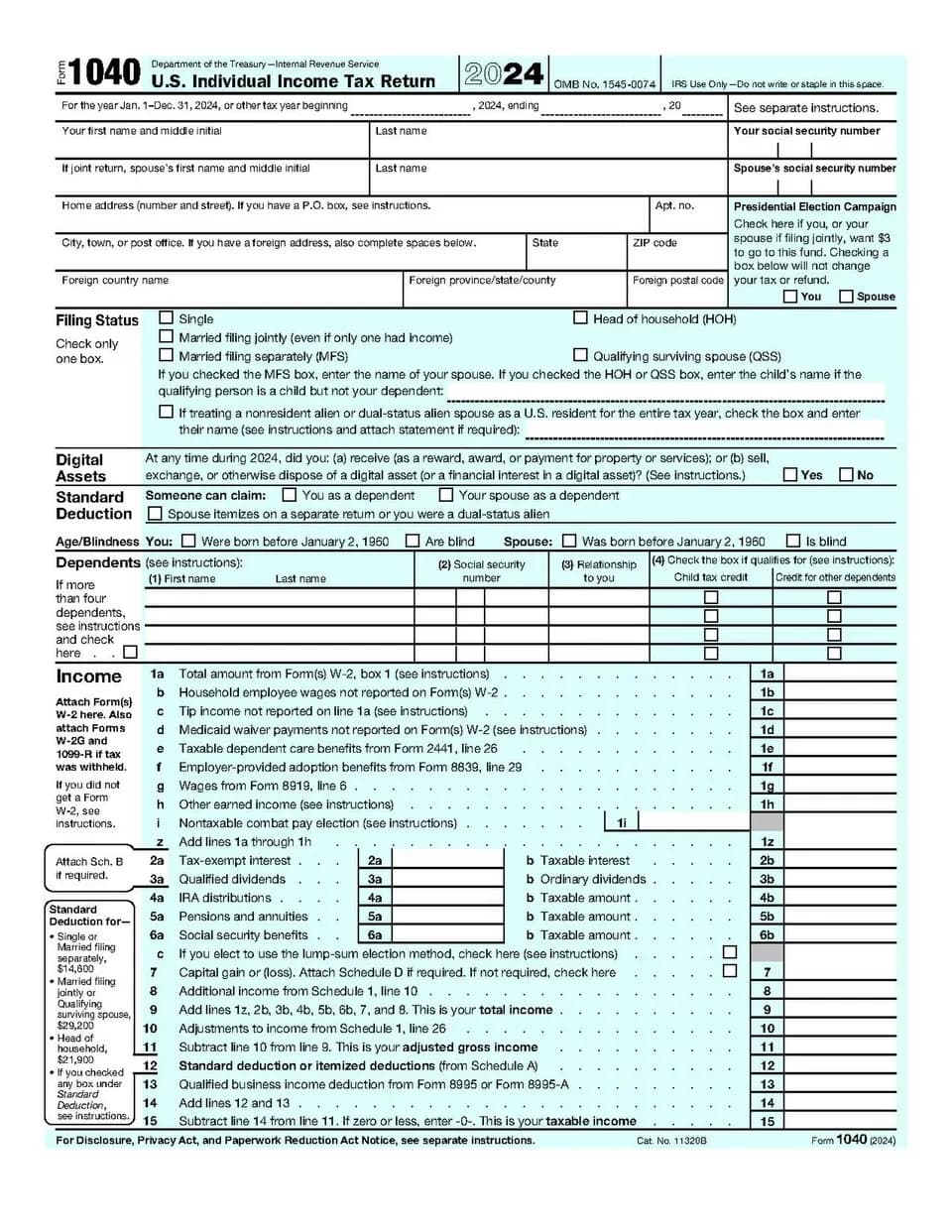
Federal tax filing follows the entity's tax classification, not what the state calls it. An LLC is a state-law label; the IRS treats it as a sole proprietorship, partnership or corporation depending on its owners and any election it made on Form 8832 or Form 2553.
Pass-through businesses (sole proprietors, partnerships and S corporations) don't pay federal income tax at the entity level. Profit flows to the owners' Form 1040, where it is taxed at their individual rates and qualifies for the QBI deduction. A C corporation pays a flat 21% on its own taxable income, and shareholders are taxed again on dividends.
| Entity (tax classification) | Federal return | Owner reporting | Calendar-year due date |
|---|---|---|---|
| Sole proprietor / single-member LLC | Schedule C + Schedule SE with Form 1040 | Same return | April 15 |
| Partnership / multi-member LLC | Form 1065 | Schedule K-1 to each partner | 15th day of 3rd month (March 16 in 2026) |
| S corporation (incl. LLC electing S status) | Form 1120-S | Schedule K-1 to each shareholder | 15th day of 3rd month (March 16 in 2026) |
| C corporation | Form 1120 | Dividends on Form 1099-DIV | 15th day of 4th month (April 15) |
Owners need their K-1 figures for their own Form 1040, which is why the pass-through deadline sits a month earlier.
Self-employment tax on Schedule C profit
Sole proprietors and general partners also owe self-employment (SE) tax on Schedule SE once net earnings reach $400. The rate is 15.3% — 12.4% for Social Security and 2.9% for Medicare — applied to 92.35% of net profit. The Social Security portion stops at the 2026 wage base of $184,500. Half of the SE tax is deductible on Schedule 1, which reduces income tax but not the SE tax itself.
S corporation owners who work in the business take a reasonable salary through payroll, so FICA applies to wages rather than all profit — the main reason profitable sole proprietors consider an S election. Payroll and a separate return add cost, so run the numbers first.
Small business tax deadlines in 2026
These are the federal dates for calendar-year businesses, taken from IRS Publication 509 (2026) and Form 1040-ES. When a due date lands on a weekend or legal holiday, it moves to the next business day — that is why the March deadline was the 16th and the January 31 information-return deadline became February 2 in 2026. States set their own dates, so check your state revenue department as well.
Federal tax calendar for 2026 (calendar-year businesses)
Jan 15, 2026
Fourth 2025 estimated tax installment (Form 1040-ES)
Feb 2, 2026
Forms 1099-NEC (2025 payments) to contractors and the IRS; W-2s to employees
Mar 16, 2026
Form 1065 and Form 1120-S for 2025, with K-1s; Form 2553 to be an S corp for 2026
Apr 15, 2026
Form 1040 with Schedule C; Form 1120; first 2026 estimate; Form 4868 or 7004 for a six-month extension
Jun 15, 2026
Second 2026 estimated tax installment
Sep 15, 2026
Third 2026 estimate; extended Form 1065 and Form 1120-S
Oct 15, 2026
Extended Form 1040 and Form 1120
Jan 15, 2027
Fourth 2026 estimated tax installment
An extension gives you more time to file, not to pay. Tax still owed after April 15 picks up interest and late-payment penalties, so pay your best estimate with Form 4868 or Form 7004.
Quarterly estimated taxes: who pays and how much
No employer withholds tax from business profit, so the IRS expects you to pay as you go. You generally need to make estimated payments for 2026 if you expect to owe at least $1,000 after withholding and refundable credits.
To avoid an underpayment penalty, each installment should add up to the smaller of:
- 90% of your 2026 tax, or
- 100% of your 2025 tax (110% if your 2025 adjusted gross income was over $150,000, or $75,000 if married filing separately).
The prior-year safe harbor is easiest: divide last year's total tax by four and pay that on each due date. If income is lumpy, the annualized income method on Form 2210 can lower early installments. Pay through IRS Direct Pay, EFTPS or your IRS Online Account.
You can skip the January 15, 2027 payment if you file your 2026 return by February 1, 2027 and pay the full balance with it.
Estimate your self-employment tax
The 1099-NEC threshold change under the One Big Beautiful Bill Act
For more than a decade, businesses had to issue Form 1099-NEC to any non-employee paid $600 or more in a year for services. The OBBBA raised that statutory threshold to $2,000 for payments made after December 31, 2025, and it applies to Form 1099-MISC as well. After 2026 the amount will be indexed for inflation. The backup withholding threshold moves in step.
What that means in practice:
- Payments made in 2025 (reported in early 2026) still used the $600 threshold.
- Payments made in 2026 (reported by January 31, 2027, or the next business day) need a 1099-NEC only if the contractor received $2,000 or more from you in the year.
- The deduction for the contractor's fee is unchanged. You can deduct a $1,500 payment to a freelancer even though no 1099 is required — keep the invoice.
- Collect a Form W-9 from every contractor before you pay them. Without a valid TIN you may have to withhold backup tax.
Contractors still owe tax on every dollar they earn, whether or not a 1099 arrives.
Top small business tax deductions for 2026
A cost is deductible when it is ordinary (common in your trade) and necessary (helpful and appropriate for the business). Personal spending is not deductible, and mixed-use items must be split. These are the deductions that matter most for small businesses, with the 2026 figures.
| Deduction | 2026 rule | Example |
|---|---|---|
| Vehicle — standard mileage | 72.5 cents per mile for business miles to June 30, 2026, 76 cents per mile from July 1 (plus parking and tolls) | 6,000 Jan–Jun miles × $0.725 = $4,350 |
| Home office — simplified | $5 per sq ft up to 300 sq ft (max $1,500) | 200 sq ft × $5 = $1,000 |
| Section 179 expensing | Up to $2,560,000; phases out above $4,090,000 of purchases | $8,000 of computers and a camera written off in year one |
| Bonus depreciation | 100% for qualified property acquired after Jan 19, 2025 | A $45,000 machine fully deducted, even if it creates a loss |
| Business meals | 50% of the cost with a client or on travel | $1,600 of meals → $800 deduction |
| Contract labor | 100%, no 1099 needed under $2,000 | $12,000 paid to two freelancers |
| QBI (Section 199A) | 20% of qualified business income, now permanent | See the worked example below |
Vehicle and mileage
You can deduct either the standard mileage rate or the actual costs (fuel, repairs, insurance, depreciation) times the business-use percentage. For 2026 the IRS set 72.5 cents per mile from January 1 (Notice 2026-10), up from 70 cents in 2025, then raised it mid-year to 76 cents per mile for miles driven from July 1 to December 31 (IR-2026-29). Apply each rate to the miles driven in its half of the year — your mileage log needs dates for this. Commuting from home to a regular workplace doesn't count. Keep a log with date, destination, purpose and miles — a mileage app is fine.
Home office
The space must be used regularly and exclusively for business, and be your principal place of business or where you meet clients. A spare bedroom that is also a guest room fails the exclusive-use test. The simplified method needs no expense records. The regular method on Form 8829 deducts the business share of rent or mortgage interest, utilities, insurance and depreciation, and suits larger spaces or high-cost homes.

Section 179 and bonus depreciation
Equipment, computers, furniture, machinery and off-the-shelf software normally depreciate over several years. Two rules let you deduct them in year one instead:
- Section 179. The OBBBA lifted the limit to $2.5 million for 2025 (phase-out from $4 million). For tax years beginning in 2026, Rev. Proc. 2025-32 sets the limit at $2,560,000, reduced dollar for dollar once qualifying purchases pass $4,090,000. SUVs are capped at $32,000. Section 179 can't create a loss — it is limited to business taxable income.
- Bonus depreciation. Qualified property acquired and placed in service after January 19, 2025 gets 100% first-year depreciation, and the OBBBA made it permanent. Unlike Section 179, bonus depreciation can create or increase a loss. For the first tax year ending after January 19, 2025, you could elect 40% instead.
Claim both on Form 4562. If you expect higher profits next year, you can choose ordinary depreciation and spread the deduction — the rules are optional.
The QBI deduction
The Section 199A deduction lets owners of sole proprietorships, partnerships, S corporations and LLCs deduct up to 20% of qualified business income. The OBBBA made it permanent and, from 2026, added a minimum deduction of $400 for anyone with at least $1,000 of QBI from an active business.
Below the 2026 taxable-income threshold — $201,750 for single filers, $403,500 for joint filers — the full 20% is generally available. Above it, wage-and-property limits and the specified service business rules phase in. The deduction is also capped at 20% of taxable income before QBI, which is often the binding limit for smaller businesses. Claim it on Form 8995 (or 8995-A above the threshold).
Other deductions worth checking
- Self-employed health insurance premiums for you and your family, if you aren't eligible for an employer plan.
- Retirement contributions to a SEP-IRA, SIMPLE IRA or solo 401(k).
- Start-up costs — up to $5,000 in the first year, with the rest amortized over 15 years.
- Software, subscriptions, phone and internet (business share), advertising, professional fees, insurance, bank and card fees, and interest on business loans.
Worked example: Schedule C deductions in dollars
Maria is a single, self-employed photographer filing Schedule C for 2026. Her gross receipts are $120,000. Here is how her deductions reduce the tax bill.
| Item | Amount |
|---|---|
| Gross receipts | $120,000 |
| Contract editors (2 × $6,000) | −$12,000 |
| Camera and laptop (Section 179 / bonus) | −$8,000 |
| Business mileage (6,000 miles, all driven Jan–Jun, × $0.725) | −$4,350 |
| Software and subscriptions | −$2,400 |
| Home office, simplified (200 sq ft × $5) | −$1,000 |
| Client meals ($1,600 × 50%) | −$800 |
| Net profit (Schedule C) | $91,450 |
Then:
- SE tax: $91,450 × 92.35% = $84,454 → × 15.3% ≈ $12,921. Half ($6,461) is deductible.
- Adjusted gross income: $91,450 − $6,461 = $84,989.
- Before QBI: $84,989 − $16,100 standard deduction = $68,889.
- QBI deduction: 20% of QBI ($84,989) would be $16,998, but the cap is 20% of $68,889 = $13,778.
- Taxable income: $68,889 − $13,778 = $55,111.
Without the $28,550 of deductions, Maria's SE tax alone would be about $4,034 higher. She paid 2026 estimates on the prior-year safe harbor and owes little in April. The two editors each received $6,000, above the $2,000 line, so she issues them each a 1099-NEC by early 2027.
How to file your small business taxes, step by step
Filing your federal business return
- 1
Confirm your tax classification
Get an EINCheck whether the business is a sole proprietorship, partnership, S corporation or C corporation for tax. Your IRS EIN letter or Form 2553/8832 acceptance shows any election.
- 2
Close the books for the year
Reconcile bank and card accounts, categorise every expense and separate personal spending. Run a profit and loss statement and a list of assets bought.
- 3
Issue information returns
Send 1099-NEC forms to contractors paid $2,000 or more in 2026, and W-2s to employees, by January 31 (next business day if it falls on a weekend).
- 4
Prepare the return and schedules
Schedule C and SE for sole proprietors; Form 1065 or 1120-S plus K-1s for pass-throughs; Form 1120 for C corporations. Add Form 4562 for depreciation, Form 8829 for a regular-method home office and Form 8995 for QBI.
- 5
E-file and pay
E-file through IRS-authorised software or a preparer and pay through Direct Pay or EFTPS. Request an extension with Form 4868 or 7004 by the original due date if you need it.
Tip: File your state return too — most states with an income tax follow similar deadlines but have their own forms.
- 6
Set up next year's estimates
Use this year's tax to set four equal estimated payments under the prior-year safe harbor.
Common mistakes that cost small businesses money
- Mixing personal and business money. A separate bank account and card make every deduction easy to prove.
- No mileage log. The IRS can deny vehicle deductions if you can't show business miles at the time of the trip.
- Claiming a shared room as a home office. Exclusive use is a hard test.
- Deducting 100% of meals. Most business meals stay at 50%.
- Using last year's 1099 rule. Sending 1099-NECs for $600–$1,999 of 2026 payments isn't required. Missing one for a $2,000+ payment can bring penalties.
- Ignoring estimates. Underpayment penalties apply quarter by quarter, even if you pay in full in April.
- Missing the S election deadline. Form 2553 for a calendar year is due by the 15th day of the 3rd month (March 16 in 2026). Late-election relief exists but takes extra paperwork.
Keep bank statements, receipts, the mileage log, asset invoices, W-9s and proof of every estimated payment for at least three years after filing — longer for assets (three years after you sell them) and employment tax records (four years).
Official IRS links
- Publication 334 — Tax Guide for Small BusinessDeductions, forms and recordkeeping
- Publication 509 — Tax Calendars (2026)Every federal due date
- Form 1040-ES — Estimated TaxWorksheet and payment dates
- Form 1099-NEC FAQs$2,000 threshold from 2026 payments
- Simplified home office deduction$5 per sq ft method
- Publication 946 — How To Depreciate PropertySection 179 and bonus depreciation
- IRS Direct PayPay estimates and balances online
What to do next
Estimate your SE tax with the federal tax calculator, then diary the January 15, 2027 estimate and the early-2027 1099-NEC deadline. If you haven't set up the business yet, start with forming an LLC and getting an EIN. Send invoices that hold up as records with the free invoice generator.
This is general information, not legal or tax advice — confirm on the official source or with a professional.
Frequently asked questions
Any cost that is ordinary and necessary for your trade: rent, software, supplies, contractor pay, insurance, advertising, business mileage (72.5 cents per mile for January–June 2026 and 76 cents per mile from July 1), a home office, equipment (often fully expensed under Section 179 or 100% bonus depreciation) and 50% of business meals. Owners of pass-through businesses may also take the 20% QBI deduction.
Not for payments made in 2026. The One Big Beautiful Bill Act raised the 1099-NEC and 1099-MISC reporting threshold from $600 to $2,000 for payments made after December 31, 2025. Payments you made during 2025 still used the $600 threshold, and the new amount is indexed for inflation after 2026.
For the 2026 tax year the four Form 1040-ES installments are due April 15, June 15 and September 15, 2026, and January 15, 2027. You generally must pay estimates if you expect to owe at least $1,000 after withholding and credits. Corporations follow a similar quarterly schedule using Form 1120-W.
It depends on how the LLC is taxed. A single-member LLC is a disregarded entity by default and reports on Schedule C with the owner's Form 1040. A multi-member LLC files Form 1065 as a partnership. An LLC that elected S corporation status files Form 1120-S, and one that elected C corporation status files Form 1120.
Usually yes, if a part of your home is used regularly and exclusively for business. The simplified method gives $5 per sq ft for up to 300 square feet — a maximum of $1,500 — with no expense tracking. The regular method (Form 8829) can be larger if your rent, utilities and insurance are high.
Self-employment tax is 15.3% — 12.4% Social Security plus 2.9% Medicare — charged on 92.35% of your net earnings once they reach $400. The Social Security part stops at the 2026 wage base of $184,500. You deduct half of the tax when working out adjusted gross income.
Sources & verification
Figures on this page were checked against the sources below when it was last reviewed on 7 October 2026. Each rate and limit is stored once with its own official source and review date, and official update channels are monitored daily so changes are picked up. How we verify
- 1.Publication 334 (2025), Tax Guide for Small Business — IRS · accessed 7 October 2026
- 2.Publication 509 (2026), Tax Calendars — IRS · accessed 7 October 2026
- 3.Form 1040-ES (2026), Estimated Tax for Individuals — IRS · accessed 7 October 2026
- 4.Rev. Proc. 2025-32 — 2026 inflation adjustments including OBBBA amendments — IRS · accessed 7 October 2026
- 5.IRS sets 2026 business standard mileage rate at 72.5 cents per mile — IRS · accessed 7 October 2026
- 6.IRS standard mileage rates — 2026 (July 1 – Dec. 31): 76 cents for business (IR-2026-29) — Internal Revenue Service · accessed 9 October 2026
- 7.Form 1099-NEC & independent contractors (FAQs) — IRS · accessed 7 October 2026
- 8.Publication 946 (2025), How To Depreciate Property — IRS · accessed 7 October 2026
- 9.Simplified option for home office deduction — IRS · accessed 7 October 2026
- 10.Topic no. 554, Self-employment tax — IRS · accessed 7 October 2026
- 11.IRS releases tax inflation adjustments for tax year 2026 — IRS · accessed 7 October 2026
- 12.Instructions for Form 1120 — IRS · accessed 7 October 2026
- 13.FAQ: The One Big Beautiful Bill Act tax changes — Tax Foundation · accessed 7 October 2026
MSMETOOLS is an independent platform and is not affiliated with any government agency, ministry or department.
Tools for this
Federal Tax Calculator (US)
Estimate federal income tax for individuals and businesses.
Invoice Generator
Create professional invoices with tax, logo and custom details.
Freelance Hourly Rate Calculator
Work out the hourly rate you need to charge.
Sales Tax Calculator (US)
Calculate sales tax for all US states and cities.
Related guides
 How to File Quarterly Taxes in 2026: Dates & Safe HarborRead guide
 1099 vs W-2 in 2026: Contractor or Employee? Tests & TaxesRead guide
 Form 1099-K (2026): $20,000 Threshold, Apps & ReportingRead guide
 W-8 vs W-9 Form (2026): W-8BEN, W-8BEN-E & Who SignsRead guide
Official links open the government site in a new tab.