 Starting & growing a business
How to Start a Lash Business in 2026: Licensing, Adhesive Safety, Suite Rent and Pricing
How to start a lash business in 2026: eyelash extension licensing in Texas and California, FDA adhesive and tint rules, sanitation, suite rent and pricing math.
 Edited by Sumeet YadavFounder & editor, MSMETOOLS · fact-checked against official sources
Contents (9)
- 1. Licensing: what your state requires
- 2. Where you'll work: establishment, suite or booth
- 3. Register the business
- 4. Adhesives, tints and the FDA
- 5. Sanitation and chemical safety
- 6. How much it costs to start a lash business
- 7. Pricing lash services: a worked example
- 8. Common mistakes new lash artists make
- 9. What to do next
A lash business is one of the lowest-cost ways into the beauty industry: one bed, a lamp, tweezers, lashes and adhesive, and clients who come back every two to three weeks for fills. It's also one of the most misunderstood. Many new lash artists take a weekend certification course and assume they can start working, then learn that their state board doesn't recognize it. This guide is for anyone starting an eyelash extension business in 2026, from a solo artist renting a suite to an owner opening a lash studio. It covers state licensing with Texas and California as examples, FDA rules for adhesives and tints, sanitation, startup costs, suite and booth rent, and a worked pricing example. Rules were checked against state board and federal agency pages in October 2026.
Quick answer
To start a lash business, get the license your state requires for eyelash extensions (a lash, esthetician or cosmetology license), work from a licensed establishment or a licensed suite, form an LLC or register a DBA, and get liability insurance. Use properly labeled adhesives, follow your board's sanitation rules, and price each service from the time it takes and your costs.
Texas: eyelash extension specialist license after 320 hours of training plus written and practical exams; fee $50
California: no lash license, so you need a cosmetology, esthetician or manicurist license
A certificate from a private lash course doesn't replace a state license
FDA treats lash adhesives as cosmetics; almost no color additives are allowed for lash tinting
Our worked example: $180 full set, $75 fill, about $68,000 a year before income tax
Licensing: what your state requires
There's no federal lash license. State boards of cosmetology regulate eyelash extensions, and they take three different approaches. A few states have a lash-specific license with its own shorter training program. Most treat lash extensions as part of esthetics or cosmetology, so you need one of those full licenses. A small number of states have historically had limited or no specific rules, but that list keeps shrinking as boards add lash services to their scope rules. Always check your own board before paying for training, and make sure the school is approved by that board.
| Texas (TDLR) | California (BBC) | |
|---|---|---|
| License for lash extensions | Eyelash Extension Specialist license (or cosmetology license) | Cosmetology, esthetician or manicurist license; no lash-only license |
| Training | 320 hours at a licensed school | Esthetician 600 hours; cosmetologist 1,000 hours |
| Exams | Written and practical | Written exam (SB 803 removed the practical) |
| Application fee | $50, minimum age 17 | See the board's fee schedule |
| Where you work | Licensed establishment, specialty establishment or mini-establishment | Licensed establishment |
| License term | two years | Set by the board; renew on time |
Texas: the eyelash extension specialist license
Texas is the clearest example of a lash-specific license. The Texas Department of Licensing and Regulation (TDLR) requires a 320 hours eyelash extension specialist course at a licensed school, during which you hold a student permit. After the hours are verified, you take written and practical exams through TDLR's testing vendor. The application fee is $50, non-refundable, and you must be at least 17. If you apply after you're notified you're eligible for the written exam but before you take it, a temporary license prints with your score report when you pass the practical, so you can start working that day while the two-year license is mailed. TDLR runs a criminal history check on every applicant and reviews convictions case by case.
A licensed cosmetologist in Texas can already perform lash extensions, so if you plan to offer brows, facials or makeup too, compare the longer cosmetology or esthetics course before you choose the lash-only route.
Texas lash license path
Step 1
320 hours course at a licensed school
Step 2
Eligibility verified by TDLR
Step 3
Apply and pay $50
Step 4
Written and practical exams
Step 5
Temporary license
valid 60 days
Step 6
Two-year license
mailed by TDLR
California: no lash license, so a full license is required
California takes the opposite approach. The Board of Barbering and Cosmetology says plainly that California doesn't have an eyelash extension license, and that anyone performing eyelash extension services for pay needs a cosmetology, manicuring or esthetician license unless an exemption applies. The board also doesn't approve lash-only schools: lash training has to be part of a full cosmetology program at an approved school. For most new lash artists in California, the practical route is the 600 hours esthetician program. Working before you're licensed, even while waiting for an exam date, can bring a citation and a $1,000 fine.
California's SB 803 also reshaped training: it cut cosmetology hours to 1,000 hours, removed the practical exam and added lash and brow tinting and perming to the esthetician scope of practice. Tinting brings in FDA rules covered below.
Other states
Before you enroll anywhere, call or email your state board and ask three questions: which license covers eyelash extensions, whether the course you're considering is approved for that license, and whether you need an establishment license for the space you'll work in. Boards in many states have disciplined people who relied on private certification courses alone. If you're licensed in one state and moving, ask about license by endorsement or reciprocity; California, for example, can only issue license types that exist in California, so an out-of-state lash-only license won't transfer there.
Where you'll work: establishment, suite or booth
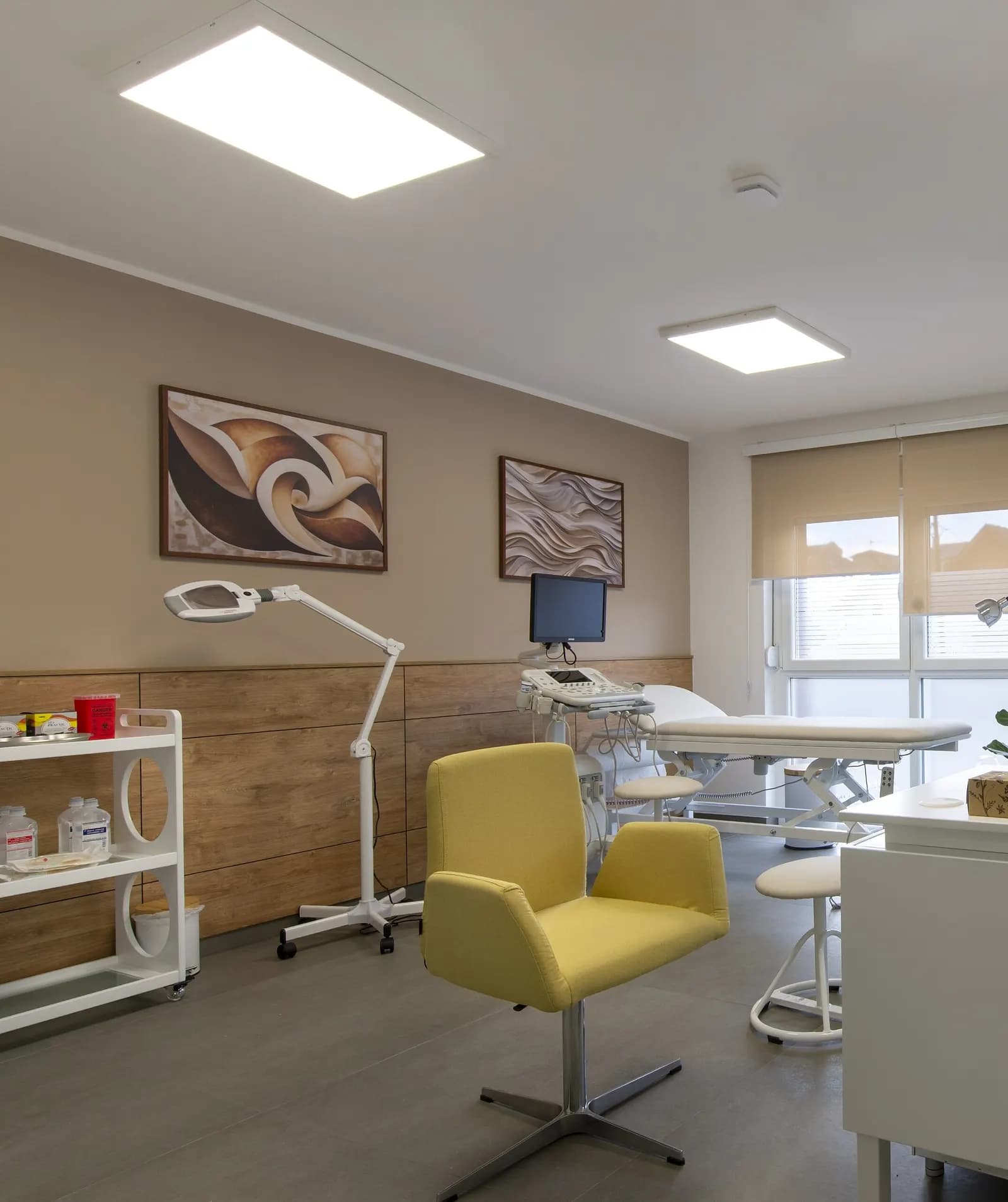
Your individual license lets you perform lashes; the place you work needs its own license in most states. You have four common options.
Renting a room or chair in a salon. You pay weekly rent and run your own business, with the salon owner's establishment license covering the space. In Texas, a licensed establishment can lease space to licensed practitioners, but it must keep a list of every renter with their license number and show it to inspectors on request, and failing to do so is among the board's most common violations.
Renting a salon suite. Suites are private rooms inside a larger building. In Texas, a suite operator can hold a mini-establishment license ($70), which must be inside a licensed full-service or specialty establishment. The building owner holds the main license and keeps common areas compliant.
Opening your own studio. You need an establishment license for the premises. In Texas, a specialty establishment license is $78 and lasts two years; the space must meet TDLR's equipment, restroom and sanitation rules.
Working from home. Possible in some states, but the home space still has to be licensed and inspected. Texas doesn't allow licensed premises to be used for living or sleeping, and an establishment attached to a home must have its own entrance, with any connecting door closed during business hours. Check your city's zoning and home occupation rules too.
If you'll employ lash artists rather than rent to them, the staffing decision is the same one hair salons face: booth rent gives predictable income with no payroll, while commission or hourly pay gives you control of prices, schedules and the brand. Our beauty salon business plan guide works through booth rent versus commission with numbers, and our 1099 vs W-2 guide explains when a "renter" is really an employee.
Register the business
Once your license is in hand, register the business itself. Many solo artists start as sole proprietors under their own name, but an LLC is worth considering because an allergic reaction or eye injury claim can be costly. State LLC filing fees run $35 – $500, and an EIN from the IRS is Free ($0). If you use a business name other than your own, register a DBA. Then get the city or county business license and, if you sell aftercare products, a sales tax permit. Our guides to LLC registration, the EIN application and business licenses cover each step.
As a self-employed lash artist, you'll pay self-employment tax on your profit and should make quarterly estimated tax payments. Keep receipts for lashes, adhesive, tools, rent, education and insurance; they're deductible business expenses.
Lash business launch checklist
0/8Adhesives, tints and the FDA
The FDA considers false eyelashes, eyelash extensions and their adhesives to be cosmetics. That means they must be safe when used as labeled and properly labeled, but the FDA doesn't approve them before they're sold. Responsibility for safety sits with the company whose name is on the label, and in practice with you as the person applying them.
Most lash adhesives are cyanoacrylate-based. They release fumes as they cure, which can irritate eyes, and some clients develop allergic reactions over time. Good practice that also protects you in a claim: record each client's adhesive brand and batch, ask about allergies and reactions on your intake form, offer a patch test to new clients and anyone with sensitivities, keep the client's eyes closed during application, and work in a well-ventilated room. If a client reports a reaction, tell them to stop and see a doctor. FDA encourages consumers to report bad reactions, so keep good records in case one is reported about a product you used.
Selling your own brand of adhesive or aftercare
Many lash artists start a private-label line of adhesive, cleanser or aftercare. Under the Modernization of Cosmetics Regulation Act (MoCRA), the manufacturer, packer or distributor whose name appears on the label is the responsible person. That person must report serious adverse events to FDA within 15 business days, keep safety substantiation and follow labeling rules. MoCRA has a small business exemption from facility registration, product listing and good manufacturing practice rules, but it doesn't cover products that regularly contact the mucous membrane of the eye under normal use. Ask your manufacturer in writing who handles registration, listing and adverse event reporting, and whether your products qualify for any exemption.
Lash and brow tinting
Tinting is where FDA rules are strictest. Permanent eyelash and eyebrow dyes have caused serious eye injuries, including blindness. The only color additive FDA has provided for to dye lashes and brows is silver nitrate, in professional-use-only products, at no more than 4% by weight, not for people under 16 and applied for no more than one minute. FDA also has an import alert on lash and brow dyes containing coal tar colors. Even where your state board allows tinting, as California now does for estheticians, check every tint's label and ingredients before you use it.
Sanitation and chemical safety
State boards inspect lash businesses like any other salon, and sanitation is where most citations come from. TDLR's list of the most common establishment violations is a useful checklist even outside Texas: dirty or damaged surfaces, no restroom near the premises or chemicals stored in it, missing renter lists, disinfectant not mixed fresh daily, clean and dirty implements stored together, no photo on the displayed license, and products not labeled to OSHA standards.
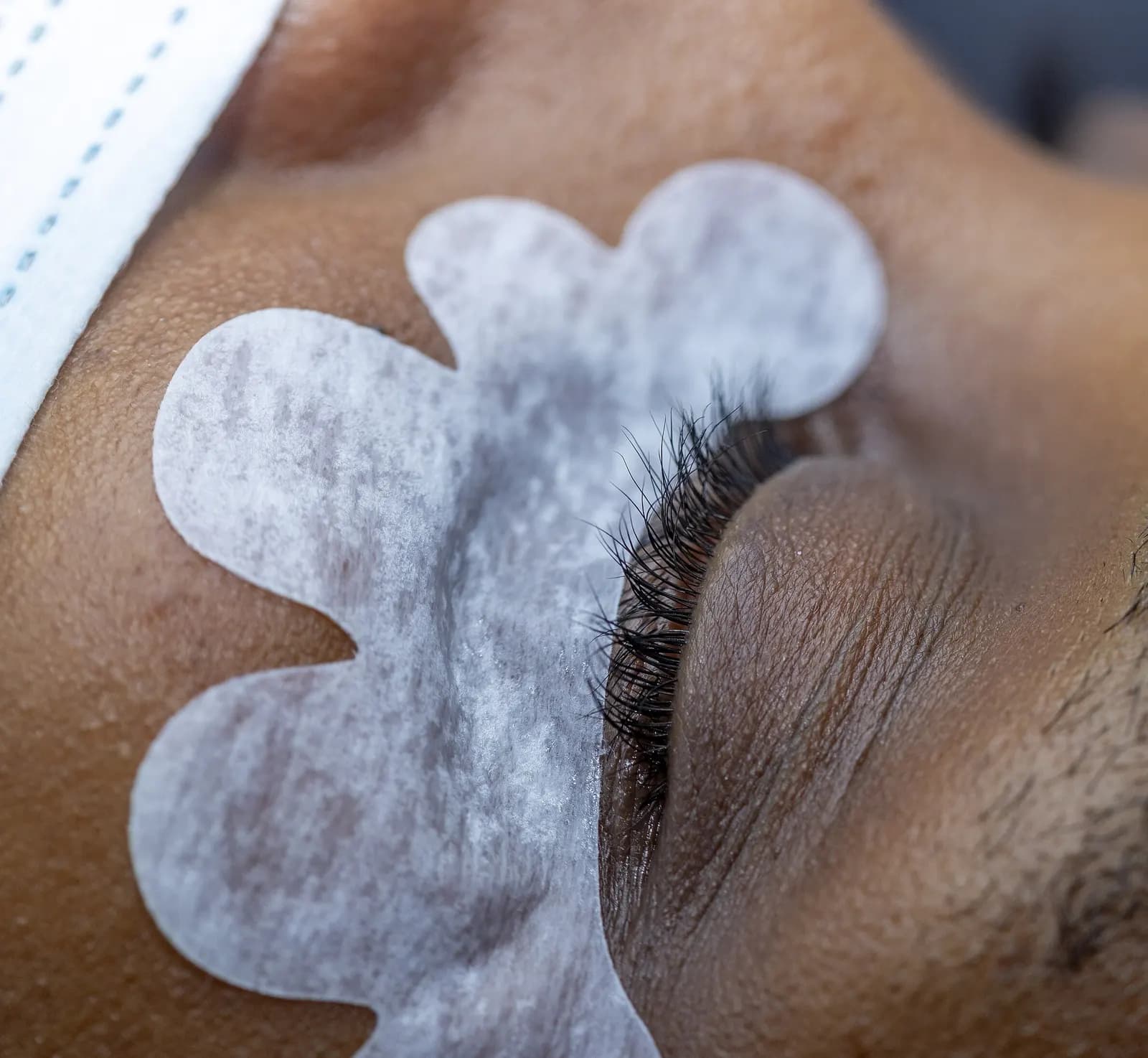
For lash work, that translates into a simple routine. Clean and disinfect tweezers after every client, following the disinfectant label's contact time, and store them in a clean, dry, closed container away from used tools. Treat mascara wands, microbrushes, under-eye pads, tape and adhesive rings as single-use. Change the bed cover or paper for every client, and keep adhesive and remover containers closed and labeled.
If you employ anyone, OSHA's Hazard Communication Standard applies to the chemicals in your studio. You need labels on containers, safety data sheets (SDSs) available for each hazardous product, such as adhesive, primer and remover, and training for workers on how to handle them. OSHA updated the standard in 2024 to align with the latest globally harmonized system, with phased compliance dates that OSHA later extended by four months. Ask your suppliers for current SDSs and keep them in a binder or shared folder.
How much it costs to start a lash business
There's no official figure for lash startup costs, so the table below is our estimate, based on typical retail prices for lash supplies and furniture and on suite rents in mid-size US metros. Replace each line with your own quotes.
| Item (solo artist renting a suite) | Estimate | Notes |
|---|---|---|
| Lash bed, stool, lamp, trolley | $800–$2,500 | Ergonomic stool and good light matter for your back and eyes |
| Starter lashes, adhesive, primer, remover, tools | $500–$1,500 | Several lengths, curls and diameters; adhesive has a short shelf life once opened |
| Sanitation supplies and single-use items | $150–$400 | Disinfectant, closed tool storage, pads, wands, bed covers |
| License, LLC, local permits | $150–$900 | Board fees above plus $35 – $500 LLC filing |
| Liability insurance (first year) | $300–$900 | Professional and general liability |
| Booking software, website, photos, launch marketing | $500–$1,500 | Online booking and reviews drive new clients |
| First month's suite rent and deposit | $800–$2,000 | Varies widely by city |
| Total | About $3,000–$8,000 | Training, if not yet licensed, is extra |
Training is usually the bigger number. A lash-only course in a state like Texas is far shorter than a full esthetics or cosmetology program, but in California you'll need the full esthetician or cosmetology program at an approved school, so budget for tuition and the months of training before you earn.
Pricing lash services: a worked example
Price from time and costs, not from the cheapest competitor on social media. The example below is illustrative; every figure is an assumption to replace with your own.
Assumptions. A solo artist rents a suite for $350 a week and works 48 weeks a year. Each week she does 4 classic full sets at $180 (about 2.5 hours each) and 18 fills at $75 (about an hour each), so about 28 service hours and $2,070 of service revenue a week, or $99,360 a year. Supplies cost about $10 per full set and $5 per fill. Card processing is about 3% of sales. Fixed costs a year: suite rent $18,200 (52 weeks), insurance $600, booking software $480, marketing $2,400, license renewals and continuing education $500, for $22,180.
Result. Supplies come to $6,240 and card fees to $2,981. Profit before income and self-employment tax is about $99,360 − $6,240 − $2,981 − $22,180 = $67,959, roughly $50 per service hour. For comparison, the BLS median pay for skincare specialists, which includes many estheticians, was $21.79 an hour in May 2025.
Try it — fills a year to cover your fixed costs
With $22,180 of fixed costs, a $75 fill and about $7.25 of variable cost per fill (supplies and card fees), the suite pays for itself after about 328 fills a year, roughly 7 a week. Everything after that is profit for your time. That's why retention matters so much: a client who comes in for fills every two to three weeks is worth around $1,300 to $1,900 a year at these prices, while a client who never returns after a full set is worth $180.
Price volume and hybrid sets higher than classic sets, because they take longer. Charge a full-set price, or a removal fee plus a full set, when a client arrives with less than about 40% to 50% of extensions left, and say so on your booking page. A clear cancellation and late policy with a card on file protects the hours you've set aside.
Common mistakes new lash artists make
Relying on a private certificate. A certificate from a brand or private academy is useful training, but it isn't a state license. Working on it alone can lead to fines and makes insurance claims harder.
Working from an unlicensed space. Even a licensed artist usually needs to work in a licensed establishment. Ask for the salon's or suite building's license before you sign.
Skipping intake and records. An intake form, a record of the adhesive batch used and photos before and after each service are your best defense when a client blames a reaction or lash loss on you.
Underpricing to build a book. Low prices attract clients who leave for the next discount. Price at a level that pays you properly at the hours you can actually work, and build loyalty through retention and service.
Official links
- TDLR — Eyelash Extension Specialist licenseTexas training, exams and fee
- TDLR — Establishment licensesSpecialty and mini-establishment licenses
- TDLR — Most common code violationsSanitation checklist
- California Board of Barbering and Cosmetology — FAQsWhich licenses cover lash services
- FDA — Eye cosmetic safetyAdhesives, extensions and tints
- OSHA — Hazard communicationLabels, safety data sheets, training
What to do next
Confirm your state's license path first, since everything else depends on it. Then price a few suites or salon rooms near your clients, and use the hourly rate calculator and the break-even calculator to set prices that pay you properly. If you plan to grow into a studio with several artists, our beauty salon business plan walks through staffing models, startup costs and projections, and our nail salon guide covers a closely related business.
This is general information, not legal or tax advice — confirm on the official source or with a professional.
Frequently asked questions
In most states, yes. Lash extensions usually fall under the cosmetology or esthetician license, and a few states have a lash-specific license. Texas licenses eyelash extension specialists after 320 hours of training and written and practical exams. California has no lash license, so you need a cosmetology, esthetician or manicurist license; working unlicensed risks a $1,000 fine.
There's no official figure. Our estimate is about $3,000 to $8,000 for a licensed lash artist renting a room or suite: a lash bed, stool, lamp, starter lash and adhesive inventory, sanitation supplies, insurance, booking software and launch marketing. Training is the larger cost if you're not licensed yet, and opening your own multi-room studio can run $25,000 to $80,000 or more.
Sometimes, but it depends on your state board and city zoning. In Texas the space still needs an establishment license, may not be used for living or sleeping, and an establishment attached to a home needs its own separate entrance. Check your city's home occupation rules as well, since client parking and signage are often restricted.
Yes, as cosmetics. FDA treats false eyelashes, eyelash extensions and their adhesives as cosmetic products that must be safe and properly labeled, but it doesn't approve them before sale. If you sell adhesive or aftercare under your own brand, you become the responsible person under MoCRA and must report serious adverse events within 15 business days.
Build the price from your time and costs. In our worked example, a solo artist renting a suite charges $180 for a classic full set and $75 for a fill, works about 28 service hours a week, and clears roughly $68,000 a year before income tax. Volume and hybrid sets take longer and should cost more.
It can be, because fills create recurring revenue every two to three weeks and supply costs are low. Profit depends on how many hours you can fill and on client retention. A full book of regular fill clients is worth far more than a stream of one-time full sets, so aftercare, rebooking and reliable retention drive the business.
Sources & verification
Figures on this page were checked against the sources below when it was last reviewed on 9 October 2026. Each rate and limit is stored once with its own official source and review date, and official update channels are monitored daily so changes are picked up. How we verify
- 1.Apply for an Eyelash Extension Specialist License — Texas Department of Licensing and Regulation · accessed 9 October 2026
- 2.Apply for a New Establishment License — Texas Department of Licensing and Regulation · accessed 9 October 2026
- 3.Ten most common code violations in establishment inspections — Texas Department of Licensing and Regulation · accessed 9 October 2026
- 4.Frequently asked questions — California Board of Barbering and Cosmetology · accessed 9 October 2026
- 5.Eye cosmetic safety — U.S. Food and Drug Administration · accessed 9 October 2026
- 6.Modernization of Cosmetics Regulation Act of 2022 (MoCRA) — U.S. Food and Drug Administration · accessed 9 October 2026
- 7.Hazard communication — Occupational Safety and Health Administration · accessed 9 October 2026
- 8.Skincare specialists — U.S. Bureau of Labor Statistics · accessed 9 October 2026
MSMETOOLS is an independent platform and is not affiliated with any government agency, ministry or department.
Tools for this
Break Even Calculator
Find your break even point and units.
Freelance Hourly Rate Calculator
Work out the hourly rate you need to charge.
Startup Cost Calculator
Estimate how much capital you need to launch.
Invoice Generator
Create professional invoices with tax, logo and custom details.
Related guides
 Beauty Salon Business Plan 2026: Licenses & NumbersRead guide
 Starting a Nail Salon Business in 2026: Licenses & CostsRead guide
 Med Spa Business Plan 2026: Ownership Rules & NumbersRead guide
 How to Start a Dog Grooming Business in 2026: GuideRead guide
Official links open the government site in a new tab.