 Starting & growing a business
Med Spa Business Plan (2026): Ownership Rules, Medical Director, Staffing and Financial Projections
Write a med spa business plan for 2026: corporate practice of medicine rules by state, medical director, who can inject, FDA device rules and sample projections.
 Edited by Sumeet YadavFounder & editor, MSMETOOLS · fact-checked against official sources
Contents (8)
- 1. The med spa business plan outline
- 2. Corporate practice of medicine: who can own a med spa
- 3. The medical director and who can perform treatments
- 4. FDA rules: devices, neurotoxins and compounded drugs
- 5. Startup costs for a med spa
- 6. Financial projections: a labelled worked example
- 7. Common mistakes in med spa business plans
- 8. What to do next
A med spa sits between a day spa and a doctor's office, and its business plan has to cover both halves. Beyond the usual market, location, prices and path to profit, it must answer questions most businesses never face: who legally owns the clinical side, what the medical director does, and who may inject neurotoxins, use a laser or start an IV. This guide is for nurses, physicians, aestheticians and investors writing a med spa business plan in 2026. It covers the outline, corporate practice of medicine rules by state, scope of practice, FDA rules, startup costs and labelled projections. Laws were checked in October 2026.
Quick answer
A med spa business plan follows the SBA's nine-section format, but it must also show a legal structure that complies with your state's corporate practice of medicine rules, a signed medical director arrangement, who will perform each treatment under state scope-of-practice rules, how prescription devices and drugs are sourced, and financial projections built from treatments per month.
California: medical spas offering medical procedures must be physician-owned; RNs and PAs may hold up to 49% combined
New York: professional corporation shares go only to licensed professionals in that profession
Texas: elective IV therapy delegation rules in force since September 1, 2025
Lasers and similar devices are often prescription devices, sold only to or on the order of a licensed practitioner
Our worked example breaks even at about 113 treatments a month on a $450 average ticket
The med spa business plan outline
The SBA describes a traditional plan with nine common sections (executive summary, company description, market analysis, organization and management, service line, marketing and sales, funding request, financial projections and an appendix) and a one-page lean plan for testing an idea quickly. Lenders, including SBA lenders, expect the traditional version. Our general guide to how to write a business plan walks through each section.
Two sections carry most of the risk in a med spa plan. Section 2, the company description, is where many med spa plans fail a lender's review, because the ownership structure doesn't match the state's rules on who may own a medical practice. Section 5 is where the profit is decided: a treatment menu priced without the product cost, chair time and provider pay for each service can look busy and still lose money. The table shows what each section needs to say for a med spa.
| Section | What to include for a med spa | What a lender or landlord checks |
|---|---|---|
| 1. Executive summary | Concept, location, services, opening date, startup cost, funding request, year-one revenue | That the ownership structure is legal in your state |
| 2. Company description | Legal entities (practice and management company if used), owners and their licenses | Who controls clinical decisions |
| 3. Market analysis | Competitors within 10–15 minutes with prices for neurotoxin, filler and laser packages; local demographics | Evidence of demand at your price point |
| 4. Organization and management | Medical director, injectors and their licenses, aestheticians, front desk; supervision model | Clinical experience on the team |
| 5. Services | Treatment menu with price, product cost, time per treatment and who performs it | Product cost and chair-time math |
| 6. Marketing and sales | Launch plan, memberships, packages, referral program, reviews, compliant advertising | Customer acquisition cost and retention plan |
| 7. Funding request | Build-out, devices (buy or lease), inventory, legal setup, working capital | Owner equity and realistic contingency |
| 8. Financial projections | Three-year profit and loss, 12-month cash flow, break-even in treatments per month | Assumptions you can defend |
| 9. Appendix | Medical director agreement, management services agreement, licenses, lease, device quotes | Signed documents, not intentions |
Market analysis and the treatment menu
The market analysis for a med spa is local and price-driven. List every med spa, dermatology and plastic surgery practice within a 10- to 15-minute drive, with their published prices for a unit of neurotoxin, a syringe of filler and a laser package, their opening hours and whether they offer memberships. Note who performs the treatments at each, because clients increasingly ask whether their injector is a nurse, nurse practitioner, physician assistant or physician. Then explain where you fit: lower price with high volume, a premium physician-led practice, or a niche such as men's aesthetics or skin of color.
Build the treatment menu from that research and your costs. For each service, record the price, the product cost, the minutes of provider time and who can legally perform it in your state. A filler appointment that takes 45 minutes of a nurse practitioner's time at a 30% product cost earns very differently from a 15-minute neurotoxin touch-up, and the plan should show which services fill the schedule and which pay the rent.
Corporate practice of medicine: who can own a med spa
The corporate practice of medicine (CPOM) doctrine means that in many states only physicians, or entities owned by them, can practice medicine or employ physicians to do so. Injecting neurotoxins and fillers, using medical lasers and prescribing drugs are medical treatments, so CPOM decides who can own the part of a med spa that provides them. The rules come from state statutes, court decisions and medical board opinions, and they differ widely.
Ownership rules in four large states (summary)
| State | Who may own the clinical practice | What it means for your plan |
|---|---|---|
California | Physician-owned; RNs, PAs and other listed licensees up to 49% of a medical corporation's shares combined | Lay investors typically own a management company, not the practice |
New York | Professional service corporations may issue shares only to licensees in that profession | Medical services sit in a physician-owned PC; management through a separate company |
Texas | Medical acts are delegated by a physician; elective IV therapy delegation codified from September 1, 2025 | Plan delegation and supervision in the medical director agreement |
Florida | Lay ownership is generally possible; clinics that need a license must appoint a medical or clinic director | Check whether you need an AHCA health care clinic license or qualify for the practitioner-owned exemption |
California
- Who may own the clinical practice
Physician-owned; RNs, PAs and other listed licensees up to 49% of a medical corporation's shares combined
- What it means for your plan
Lay investors typically own a management company, not the practice
New York
- Who may own the clinical practice
Professional service corporations may issue shares only to licensees in that profession
- What it means for your plan
Medical services sit in a physician-owned PC; management through a separate company
Texas
- Who may own the clinical practice
Medical acts are delegated by a physician; elective IV therapy delegation codified from September 1, 2025
- What it means for your plan
Plan delegation and supervision in the medical director agreement
Florida
- Who may own the clinical practice
Lay ownership is generally possible; clinics that need a license must appoint a medical or clinic director
- What it means for your plan
Check whether you need an AHCA health care clinic license or qualify for the practitioner-owned exemption
California is the clearest example of a strict state. The Medical Board of California's guidance on medical spas says that if they offer medical procedures, they must be owned by physicians, and that a medical spa is a marketing term for what is, in reality, the practice of medicine. California's Corporations Code lets certain other licensees, including registered nurses and physician assistants, hold shares in a medical corporation as long as their combined holdings don't exceed 49% of the shares and they don't outnumber the physician shareholders. A nurse practitioner who wants to own a California med spa therefore usually needs a physician partner holding the majority.
New York reaches a similar result through its professional corporation law: a professional service corporation may issue shares only to people licensed to practice the profession the corporation provides, and shares issued in breach of that rule are void. Medical services therefore sit in a physician-owned professional corporation.
Florida takes a different approach. Instead of barring lay ownership outright, it licenses health care clinics through the Agency for Health Care Administration. The statute defines a clinic as an entity providing health care services that tenders charges for reimbursement, and exempts entities wholly owned by licensed health care practitioners, among others. A clinic that needs a license must appoint a medical director, or in some cases a clinic director, who agrees in writing to take legal responsibility for the clinic's compliance. Whether your med spa needs a license depends on its ownership and how it bills, so get advice before you sign a lease.
The management services organization (MSO) model
In strict CPOM states, the common structure splits the business in two. A professional corporation owned by a physician (or by licensees in the proportions the state allows) provides all medical services, employs or contracts with the clinicians and holds patient records. A management services organization, which a non-physician can own, leases the premises and equipment, employs non-clinical staff, runs marketing, billing and bookkeeping, and charges the practice a management fee. The physician-owned practice must keep control of clinical decisions: who is treated, how, by whom and with what products.
Put both entities and the management services agreement in your plan, with the fee basis. Some states restrict fee-splitting, which can make management fees calculated as a percentage of the practice's revenue risky, so a flat fair-market-value fee is often preferred. This is the section where a healthcare attorney earns their fee; budget for one in your startup costs.

The medical director and who can perform treatments
The medical director is the physician who supervises the clinical side: setting protocols, delegating procedures to nurses and physician assistants, being available when something goes wrong, and in many arrangements examining patients or reviewing charts. The Medical Board of California warns patients to check whether nurses and PAs are really supervised or acting alone with a "paper-only" supervisor, and notes that while the supervising physician doesn't have to be on site, they must be immediately reachable. Your plan should name the medical director, show their specialty and experience with aesthetic procedures, and summarize the agreement: hours, chart review, availability, protocols, fees and malpractice coverage.
Who can inject and use lasers is a state scope-of-practice question. In California, the Medical Board says injections, lasers and medical-level peels must be done by a physician, or by a registered nurse or physician assistant under physician supervision, and that cosmetologists, although licensed and qualified for superficial treatments such as facials and microdermabrasion, may never inject the skin or use lasers. Texas codified one area in 2025: under Jenifer's Law, in force from September 1, 2025, a physician may delegate prescribing elective IV therapy to a physician assistant or advanced practice registered nurse, and administering it to a PA, APRN or registered nurse, each under adequate physician supervision. Nurse practitioners have more independence in some states than others, so ask your state medical and nursing boards who may perform the initial patient assessment, issue the order and perform each treatment on your menu.
Clinical setup your plan should document
0/7FDA rules: devices, neurotoxins and compounded drugs
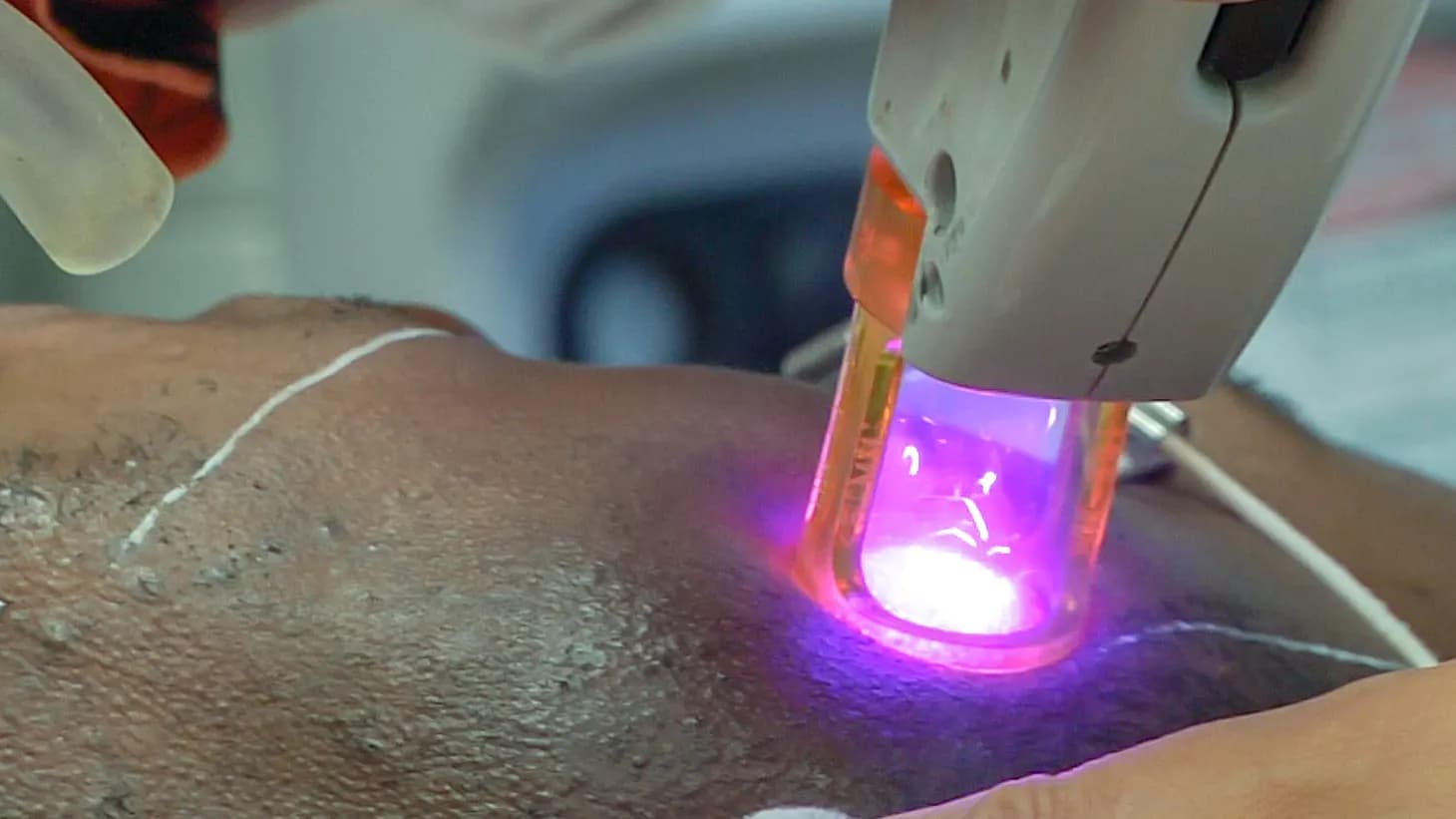
Many aesthetic lasers, energy-based devices and similar equipment are prescription devices. Under FDA labeling rules, a prescription device must be sold only to, or on the prescription or other order of, a practitioner licensed by state law to use or order its use, and its label must carry an "Rx only" statement or similar caution. That's why device makers ask for a physician's license number before they'll sell you a laser, and why your plan should show the medical director or a licensed practitioner as the buyer or ordering practitioner. Check each device's FDA clearance and the uses it was cleared for, because marketing a device for an uncleared use creates regulatory and liability risk.
Neurotoxins and dermal fillers must come from authorized distributors. The Medical Board of California warns that genuine products are expensive and that cut-price injections can mean counterfeit or unapproved products; buying grey-market product to protect margins puts patients and your license at risk.
Many med spas added weight-loss programs using GLP-1 drugs in 2023 and 2024, often with compounded versions. FDA continues to warn that compounded drugs aren't FDA-approved and haven't been reviewed for safety, effectiveness or quality. Its guidance page, updated October 1, 2026, reports dosing errors and hospitalizations, says it knows of no lawful basis for compounding semaglutide salt forms, and lists 990 adverse event reports for compounded semaglutide and more than 730 for compounded tirzepatide as of May 31, 2026. If weight loss is part of your plan, build it around FDA-approved products prescribed after a proper medical evaluation, and don't count on compounded supply.
Startup costs for a med spa
There's no official benchmark for med spa startup costs, so build yours from quotes. The table shows our estimate for a small leased med spa with two treatment rooms, one laser and an injector, to help you structure the funding request.
| Item | Our estimate | Notes |
|---|---|---|
| Lease deposit and build-out (2 treatment rooms, reception) | $60,000–$150,000 | Plumbing, electrical for devices, finishes; much less in an existing clinic space |
| Laser or energy device | $40,000–$120,000 to buy | Leasing spreads the cost into monthly fixed costs |
| Treatment chairs, carts, lighting, sterilization, emergency kit | $15,000–$30,000 | Include supplies for complications |
| First inventory (neurotoxin, filler, skincare) | $10,000–$20,000 | Buy from authorized distributors |
| Legal setup (practice entity, MSO, agreements), licenses | $10,000–$25,000 | Healthcare attorney fees vary by state |
| Practice management and booking software, website | $5,000–$10,000 | Plus monthly subscriptions |
| Pre-opening marketing | $10,000–$20,000 | Launch events, ads, photography |
| Working capital (3–6 months) | $60,000–$120,000 | Covers losses while you build a client base |
That adds up to roughly $200,000 to $400,000 depending on build-out and whether you buy or lease the laser. Formation fees for the entities themselves are modest by comparison: LLC filing fees run $35 – $500 by state, though many states require a professional corporation or PLLC for the clinical entity. If you're seeking an SBA-backed loan, our SBA 7(a) loan guide explains equity injection and collateral expectations.
Financial projections: a labelled worked example
Lenders read financial projections for their assumptions, so show yours. The example below is illustrative: every price, volume and cost is an assumption to replace with your own quotes and local prices. It assumes a nurse practitioner or RN injector, an aesthetician, front desk staff, a contracted medical director and a leased laser.
Revenue assumptions (year one, monthly average): 60 neurotoxin treatments at $450 ($27,000), 15 filler syringes at $750 ($11,250), laser and energy treatments of $4,500 and facials and peels of $2,250, for $45,000 a month or $540,000 a year. Variable costs: product and consumables at 22% of revenue and card processing at 3%, so 25% in total. Fixed costs: staff $219,600 a year, rent $84,000, laser lease $26,400, marketing $48,000, medical director $30,000 and other overhead (insurance, software, utilities, supplies) $48,000, totaling $456,000.
| Year 1 | Year 2 | Year 3 | |
|---|---|---|---|
| Revenue | $540,000 | $780,000 | $960,000 |
| Product and consumables (22%) | $118,800 | $171,600 | $211,200 |
| Card processing (3%) | $16,200 | $23,400 | $28,800 |
| Staff | $219,600 | $260,000 | $300,000 |
| Rent, laser lease, marketing, medical director, overhead | $236,400 | $240,000 | $250,000 |
| Profit before owner pay and tax | −$51,000 | $85,000 | $170,000 |
The first-year loss is normal for a new med spa and is what the working capital line in the startup budget pays for. Year two assumes a part-time second injector and repeat clients on memberships; year three assumes the schedule fills. If you're the owner and the injector, decide whether your pay sits in the staff line or comes out of profit, and say so in the plan.
Try it — treatments a year to break even
With $456,000 of fixed costs, a $450 average ticket and $112.50 of variable cost per treatment, the med spa needs about 1,351 treatments a year, roughly 113 a month, or monthly revenue of about $50,700. In year one's assumptions, it averages 100 treatments a month, which is why it loses money until volume grows. Run the same calculation with your numbers, and show the lender how many treatments per provider per day that means; if it requires a pace your injector can't sustain, the plan needs a second provider or a higher average ticket.
Common mistakes in med spa business plans
The most serious mistake is an ownership structure that's illegal in your state, such as a lay-owned company employing nurses to inject without a properly structured physician practice. It can void contracts and put clinicians' licenses at risk, and lenders increasingly ask about it. The second is a "paper" medical director who never reviews charts or sets protocols. The third is pricing treatments without the product cost and provider time behind each one, which hides which services actually make money.
The fourth is building the plan around a device bought on a sales rep's projections before you've proven demand; leasing or starting with injectables lowers that risk. The fifth is relying on compounded drugs or grey-market products to protect margins. Finally, don't skip the cash-flow forecast: memberships and packages bring cash in early, but they're liabilities until you deliver the treatments.
Official links
- SBA — write your business planTraditional and lean plan formats
- Medical Board of California — medical spasOwnership and who may perform treatments
- Texas HB 3749 (Jenifer's Law)Elective IV therapy delegation
- Florida Statutes §400.9905Clinic definition and exemptions
- 21 CFR 801.109 — prescription devicesRx-only device rules
- FDA — concerns with unapproved GLP-1 drugsCompounded weight-loss drugs
What to do next
Start with the legal structure, because it shapes everything else in the plan. Talk to a healthcare attorney in your state and line up a medical director before you sign a lease. Then draft the plan with our business plan generator, test your numbers in the break-even calculator, and price each treatment with the profit margin calculator. Our how to write a business plan guide covers each section in detail, and the nail salon guide covers state cosmetology licensing for the non-medical side of the spa.
This is general information, not legal or tax advice — confirm on the official source or with a professional.
Frequently asked questions
It depends on the state. In corporate practice of medicine states such as California, a business offering medical treatments must be owned by physicians, with other licensees such as RNs and PAs allowed to hold no more than 49% of a medical corporation's shares. Lay investors often own a management company instead. Florida generally allows lay ownership but may require a clinic license and a medical director.
The SBA's traditional format: executive summary, company description, market analysis, organization and management, services, marketing and sales, funding request, financial projections and an appendix. For a med spa, add the legal structure that complies with your state's corporate practice of medicine rules, the medical director agreement, who will perform each treatment, device and drug sourcing, and a break-even in treatments per month.
State law decides. The Medical Board of California says injections and lasers must be done by a physician, or a registered nurse or physician assistant under physician supervision, and that cosmetologists may never inject or use lasers. Other states allow nurse practitioners to practice more independently. Estheticians are generally limited to non-medical skin treatments everywhere.
In practice, yes, whenever it offers medical treatments such as injectables, prescription lasers or IV therapy, because a physician must supervise or delegate the work. Florida law requires clinics that need a license to appoint a medical or clinic director who takes legal responsibility for compliance, including billing reviews and checking every practitioner's license.
There's no official figure. Our estimate for a small leased med spa with one laser and an injector is about $200,000 to $400,000 including build-out, equipment, first inventory, legal setup and three to six months of working capital. Leasing the laser instead of buying it lowers the upfront cost but raises the monthly fixed costs in your projections.
Yes, under rules in force since September 1, 2025. Texas's Jenifer's Law lets a physician delegate prescribing elective IV therapy to a PA or APRN, and administering it to a PA, APRN or registered nurse, each under adequate physician supervision. Plan your staffing and medical director agreement around those limits.
Sources & verification
Figures on this page were checked against the sources below when it was last reviewed on 9 October 2026. Each rate and limit is stored once with its own official source and review date, and official update channels are monitored daily so changes are picked up. How we verify
- 1.Write your business plan — U.S. Small Business Administration · accessed 9 October 2026
- 2.Medical spas — what you need to know — Medical Board of California · accessed 9 October 2026
- 3.California Corporations Code §13401.5 — California Legislature (via Public.Law) · accessed 9 October 2026
- 4.New York Business Corporation Law §1507 — New York State Senate · accessed 9 October 2026
- 5.Texas HB 3749 (89R), enrolled — Jenifer's Law — Texas Legislature · accessed 9 October 2026
- 6.Florida Statutes §400.9905 and §400.9935 — Florida Legislature · accessed 9 October 2026
- 7.21 CFR 801.109 — Prescription devices — U.S. FDA (eCFR) · accessed 9 October 2026
- 8.FDA's concerns with unapproved GLP-1 drugs used for weight loss — U.S. Food and Drug Administration · accessed 9 October 2026
MSMETOOLS is an independent platform and is not affiliated with any government agency, ministry or department.
Tools for this
Business Plan Generator (US)
Create a professional business plan for US investors and banks.
Break Even Calculator
Find your break even point and units.
Startup Cost Calculator
Estimate how much capital you need to launch.
Profit Margin Calculator
Calculate profit, markup and margin for your products or services.
Related guides
 Starting a Nail Salon Business in 2026: Licenses & CostsRead guide
 How to Write a Business Plan (2026): Sections & SampleRead guide
 How to Start a Barbershop in 2026: Licenses & CostsRead guide
 Pharmaceutical Wholesale Business (2026): Licenses & DSCSARead guide
Official links open the government site in a new tab.