 Starting & growing a business
Starting a Nail Salon Business in 2026: Licenses, Costs, Staffing and Pricing
Starting a nail salon business in 2026: state nail tech and salon licenses with fees (CA, TX, NY, FL), OSHA chemical safety, booth rental vs staff and pricing.
 Edited by Sumeet YadavFounder & editor, MSMETOOLS · fact-checked against official sources

Contents (11)
- 1. Choose your nail salon model
- 2. Nail technician and salon licenses by state
- 3. Sanitation, inspections and pedicure tubs
- 4. OSHA chemical safety in a nail salon
- 5. Booth rental vs employees in a nail salon
- 6. Startup costs for a nail salon
- 7. Nail salon pricing
- 8. Worked example: nail salon profit and break-even
- 9. Taxes for a nail salon
- 10. Mistakes to avoid when starting a nail salon
- 11. What to do next
Nail salons are one of the most common small businesses in America, and starting one is more regulated than it looks from the reception desk. Every technician needs a state license, the premises needs its own establishment license, the products carry real chemical hazards, and the way you pay technicians is one of the most closely watched classification issues in any industry. This guide is for anyone starting a nail salon business in the US in 2026, whether you're a licensed nail tech opening your first suite or an investor building a multi-station salon. It covers licenses and fees in California, Texas, New York and Florida, OSHA chemical safety, booth rental versus employees, startup costs, pricing and a worked break-even. Rules were checked against state boards, OSHA and the BLS in October 2026.
Quick answer
To start a nail salon, make sure every technician holds a state nail license, get an establishment (salon) license for the premises, register the business and get local permits, set up ventilation and chemical safety, decide whether technicians are employees or genuine booth renters, and price each service from its real cost.
Two licenses: one for each nail tech, one for the salon itself
Salon license fees: CA $50, TX $78, NY $60, FL $40 + $50 application
New York requires a wage bond of at least $25,000 once you have 2–5 employees
OSHA hazard communication applies as soon as you have employees using nail products
A six-station salon commonly costs about $56,000–$151,000 to open (estimate)
Choose your nail salon model
Before you sign a lease, decide what kind of nail business you're building, because it sets your budget, your licensing and your staffing.
A salon suite is a private room inside a suite building. You hold your own license, often your own establishment license, and pay weekly rent; it's the cheapest way to start if you're a licensed nail tech with a client list. A small salon of four to eight stations in a strip mall or street-front unit is the classic model: pedicure spa chairs, manicure tables, a reception area and a team of technicians. A full-service or luxury nail spa adds private rooms, higher-end finishes and a longer menu, with higher rent and build-out costs. Mobile and home-based nail services are allowed in some states under specific rules, but many states don't permit services in a home unless the space is separately licensed as an establishment, so check your board before advertising.
Nail salon models compared
| Salon suite | Small salon (4–8 stations) | Nail spa | |
|---|---|---|---|
Typical startup | A few thousand dollars | About $56,000–$151,000 | $150,000+ |
Licenses | Your nail license; establishment license where required | Establishment license; every tech licensed | Same, plus more inspections for added services |
Staffing | You alone | Employees or booth renters | Mostly employees |
Revenue driver | Your own clients | Walk-ins and repeat clients | Higher ticket and memberships |
Biggest risk | Your own time is the ceiling | Rent and staffing gaps | Build-out cost |
Typical startup
- Salon suite
A few thousand dollars
- Small salon (4–8 stations)
About $56,000–$151,000
- Nail spa
$150,000+
Licenses
- Salon suite
Your nail license; establishment license where required
- Small salon (4–8 stations)
Establishment license; every tech licensed
- Nail spa
Same, plus more inspections for added services
Staffing
- Salon suite
You alone
- Small salon (4–8 stations)
Employees or booth renters
- Nail spa
Mostly employees
Revenue driver
- Salon suite
Your own clients
- Small salon (4–8 stations)
Walk-ins and repeat clients
- Nail spa
Higher ticket and memberships
Biggest risk
- Salon suite
Your own time is the ceiling
- Small salon (4–8 stations)
Rent and staffing gaps
- Nail spa
Build-out cost
Most first-time owners who aren't technicians should think hard about a small salon only with an experienced licensed manager. Most technicians who want to own a business do better starting in a suite, building a list of repeat clients, and then opening a salon once they can fill at least half the stations from day one.
Nail technician and salon licenses by state
Every state licenses nail work through a cosmetology or barbering board, and most require two licenses: an individual license for each technician and an establishment license for the salon. The owner doesn't always need a nail license to own the business, but the establishment answers for every technician who works there. Hours, fees and exam rules differ widely, as these four large states show.
| State | Regulator | Nail tech license | Salon license |
|---|---|---|---|
| California | Board of Barbering and Cosmetology | Manicurist: about 400 hours; $75 application and exam + $35 initial license | Establishment license $50; renewal $40 |
| Texas | Texas Department of Licensing and Regulation | Manicurist: 600 hours; $50 application; written and practical exams | Beauty or specialty salon $78 (mini-salon $70) |
| New York | Department of State, Division of Licensing Services | Nail specialty: 250 hours course; $40 application; written and practical exams | Appearance enhancement business $60, four-year term, plus wage bond and insurance |
| Florida | Board of Cosmetology (DBPR) | Nail specialist registration: 180 hours of training | Salon license $40 plus $50 application fee; inspection before opening |
California. The Board of Barbering and Cosmetology licenses manicurists and the establishments where they work. A manicurist course is about 400 hours, and since SB 803 took effect in 2022 candidates take a written exam rather than a practical one. The establishment application and initial license fee is $50, renewed for $40. The establishment application also asks you to certify that you've read the Board's workers' rights information, which explains employee and booth renter rules.
Texas. TDLR issues manicurist specialty licenses after a 600 hours course at a Texas-licensed school and both exams; applicants must be at least 17, and the license lasts two years. A beauty or specialty salon license is $78, with a cheaper mini-salon license for very small premises. Texas also allows a combined manicurist/esthetician license if you want to offer skin services.
New York. The Department of State licenses nail specialty practitioners after a 250 hours approved course and written and practical exams, with a trainee route for people who already have a year's experience. The business needs an appearance enhancement business license, $60 for a four-year term. New York is the strictest state on wage protection: businesses must carry a wage bond or wage-payment insurance of at least $25,000 with 2–5 employees, rising in tiers to $125,000 with 26 or more. They also need accident and professional liability insurance of at least $25,000 per occurrence and $75,000 aggregate, and a sign at the entrance saying the business and its operators are licensed.
Florida. Nail specialists register with the Board of Cosmetology after a nail specialty program of at least 180 hours. The salon license costs $40 plus a non-refundable $50 application fee, and the salon is inspected before or soon after opening.
On top of the board licenses you'll need the usual business registrations: an LLC or DBA, an EIN, a city or county business license, a certificate of occupancy for the unit, and a sales tax permit if your state taxes retail products you sell (polish, cuticle oil, gift cards in some states) or services. See our business licenses guide for how to find the local ones.
Sanitation, inspections and pedicure tubs
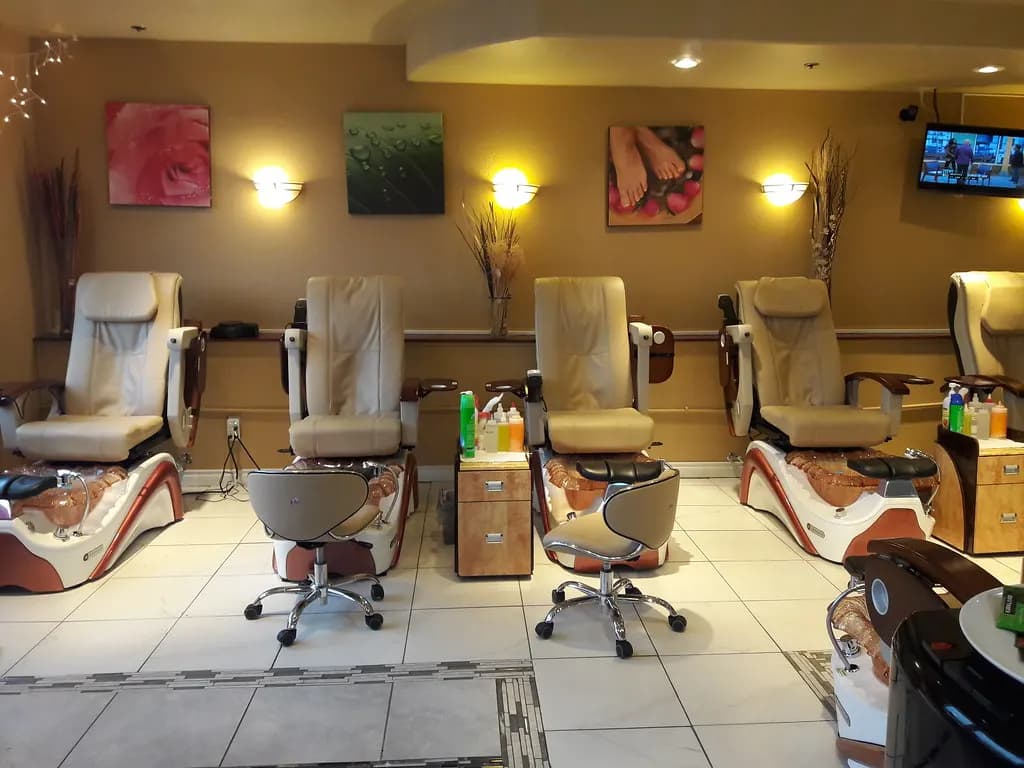
Board inspectors focus on the same things in every state: current licenses posted at each station, disinfection of reusable tools between clients, single-use items thrown away, clean pedicure basins, and labelled products. Pedicure spa basins get special attention because of past outbreaks of skin infections linked to poorly cleaned whirlpool foot spas. Most boards require cleaning and disinfecting the basin after every client and a more thorough clean at the end of each day, with a written log. Read your state's sanitation rules before you buy chairs: pipeless or liner-based basins are easier to clean and some owners choose them for that reason.
Build disinfection into the layout. Each station needs enough space for a closed container of disinfected tools, a separate container for used tools, and a covered trash can. Plan a back-of-house sink and disinfection area where staff can clean, rinse and immerse tools for the contact time on the disinfectant's label. A clean, organised salon passes inspection faster and is the thing clients notice first.
Ready for the first inspection
0/6OSHA chemical safety in a nail salon
Nail products contain chemicals that matter for both staff and clients. OSHA's nail salon guidance highlights toluene, formaldehyde, dibutyl phthalate and methacrylate compounds as the main concerns, linking long-term exposure to breathing problems, skin disorders such as allergic contact dermatitis, and other health effects. Acrylic liquids, polish removers and disinfectants also bring fire and inhalation hazards.
Once you have employees, OSHA's Hazard Communication Standard applies. You need a safety data sheet for every hazardous product, labels on every container (including bottles you decant into), and training so staff know the hazards and how to protect themselves. OSHA's recommendations for nail work are practical: ventilate well with local extraction at the table, keep bottles closed when not in use, use metal trash cans with self-closing lids, wear nitrile gloves, and don't eat or drink at stations. Never use liquid methyl methacrylate (MMA) monomer for acrylic nails: the FDA considers it unsafe for nail use, and California and many other states prohibit it.
OSHA draws a clear line on responsibility: employers must protect their employees, while independent contractors are responsible for their own safety. If you rent booths to genuinely independent technicians, they're responsible for their own protection, but you still control the building, its ventilation and fire safety. In practice, a salon with good extraction at every table is safer for everyone and easier to staff.
Booth rental vs employees in a nail salon
How you pay technicians is the biggest structural decision in the business, and it's also where nail salons most often get into legal trouble.
With booth rental, technicians rent a station for a weekly or monthly fee, run their own book, set their own prices and hours, buy their own products and collect their own payments. You're a landlord with a front desk. It's steady income with little payroll work, but you have limited control over service quality, hours or brand. With employees, you set the schedule, menu and prices, supply products, and pay hourly wages or commission (with at least minimum wage for every hour worked). You get control and a consistent brand, and you take on payroll taxes, workers' compensation and overtime.
Booth rental vs employees
| Booth rental | Employees (commission or hourly) | |
|---|---|---|
Who sets prices and hours | The technician | The salon |
Who buys products | The technician | The salon |
Salon income | Fixed rent per station | Service revenue minus pay |
Payroll taxes and workers' comp | No | Yes |
Brand and service control | Low | High |
Classification risk | High if you control the work | Low |
Who sets prices and hours
- Booth rental
The technician
- Employees (commission or hourly)
The salon
Who buys products
- Booth rental
The technician
- Employees (commission or hourly)
The salon
Salon income
- Booth rental
Fixed rent per station
- Employees (commission or hourly)
Service revenue minus pay
Payroll taxes and workers' comp
- Booth rental
No
- Employees (commission or hourly)
Yes
Brand and service control
- Booth rental
Low
- Employees (commission or hourly)
High
Classification risk
- Booth rental
High if you control the work
- Employees (commission or hourly)
Low
The label in the contract doesn't decide the question; the working relationship does. The IRS looks at behavioral control (who decides how and when the work is done), financial control (who supplies products, sets prices and bears the risk of loss) and the relationship. A technician you schedule, who uses your products, follows your price list and hands payments to your front desk is an employee no matter what the contract says. Our guide to 1099 vs W-2 workers explains the tests.
California applies the stricter ABC test to most workers. Under AB 5, licensed manicurists can still be treated as independent contractors if they meet specific conditions, such as setting their own rates, handling their own payments, receiving payment directly from clients and holding their own business license. The California Board says that exemption for manicurists expires on January 1, 2029 unless the Legislature extends it, after which the ABC test would decide. If you plan to rent booths in California, build the arrangement to meet the conditions and watch that date.
Startup costs for a nail salon
Here's what a six-station salon in a second-generation space (one that already has plumbing and basic finishes) typically costs. The figures are estimates based on Booksy's 2026 cost guide, Insureon's average premiums and state license fees.
| Startup item | Estimated cost | Basis |
|---|---|---|
| Lease deposit and first month's rent | $6,000–$12,000 | Typical retail strip deposit and rent |
| Build-out (pre-plumbed space) | $15,000–$30,000 | Booksy; a bare shell runs $100–$120 per sq ft |
| Four pedicure spa chairs | $8,000–$44,000 | $2,000–$11,000 each (Booksy) |
| Six manicure tables | $900–$4,800 | $150–$800 each (Booksy) |
| Table-top ventilation / extraction | $2,000–$8,000 | $1,000 single-station to $4,000 quad-station units (Booksy) |
| Licenses, LLC, permits | $300–$1,500 | Board fees above, $35 – $500 LLC filing, local permits |
| Opening supplies and retail stock | $3,000–$6,000 | Polish, gels, acrylics, disposables, disinfectant |
| Reception, furniture, booking system | $3,000–$8,000 | POS hardware, sofa, retail display |
| Insurance (first months) | $700–$1,500 | Insureon averages |
| Opening marketing | $2,000–$5,000 | Signage, launch offers, listings |
| Working capital (about 3 months) | $15,000–$30,000 | Rent, payroll and supplies before you're busy |
| Total | About $56,000–$151,000 | Booksy's six-station range: $41,700–$177,500 |
Insureon reports nail salons pay average premiums of about $91 a month for a business owner's policy, $48 for general liability, $47 for professional liability and $55 for workers' compensation. If you need financing, SBA 7(a) and microloans can cover equipment and working capital; see our SBA loan requirements guide. Model your own numbers in the startup cost calculator.
Nail salon pricing
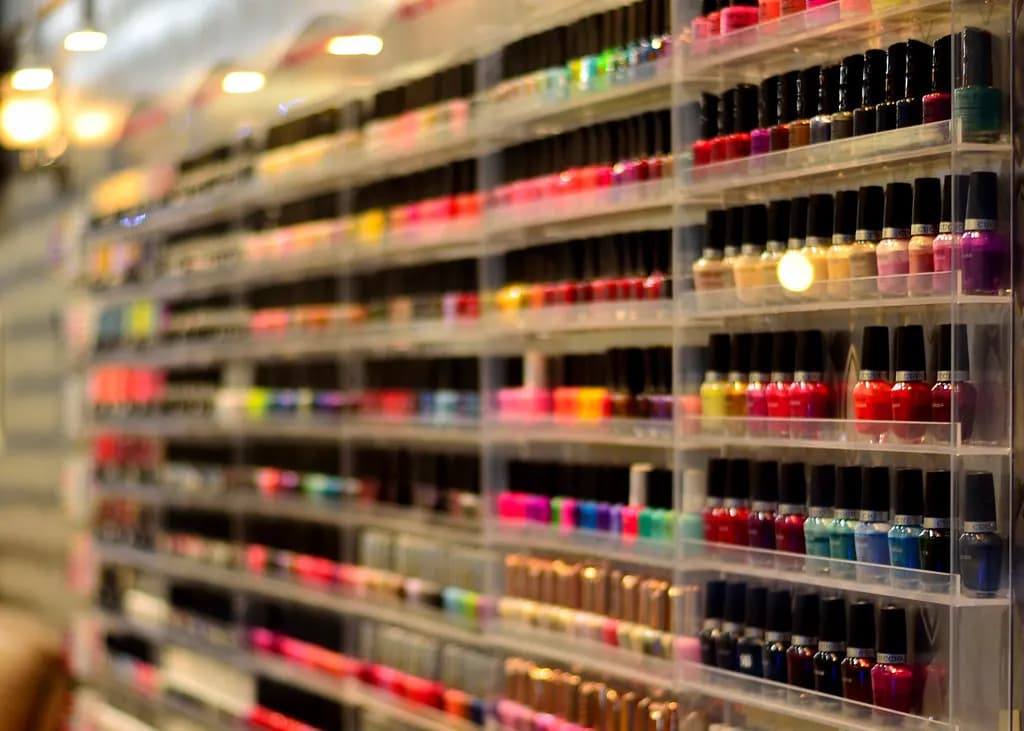
Most salons copy the price list down the street, then wonder why a busy week doesn't leave any money. Price from your costs instead. For each service, add the technician's pay for the time it takes (including payroll taxes if they're employees), the product used, card processing fees and a share of rent and overhead. Then compare the result with five nearby salons so your menu sits within the local range, and adjust the service mix rather than undercutting.
A few pricing habits make a big difference. Price by time: a gel full set that takes 75 minutes must earn more than a 30-minute polish change. Charge separately for removal, nail art, extended length and repairs, because these take real time. Use a clear menu with three tiers for pedicures, and sell gift cards and memberships to smooth the slow months. The BLS puts the median wage for manicurists and pedicurists at $17.19 an hour, and good technicians in big metros earn much more with tips; your pricing has to leave room to pay them well enough to stay.
Worked example: nail salon profit and break-even
Here's a worked month for an imagined six-station salon with four employed technicians on commission, plus the owner managing and covering busy times. The figures are illustrative assumptions, not industry averages.
The average ticket is $45. Direct cost per service is $27.22: technician commission of 45% ($20.25), employer payroll taxes on that pay at about 8% ($1.62), products and disposables ($4.00) and card fees at 3% ($1.35). That leaves $17.78 per service toward overhead. The salon must also make sure every technician earns at least the minimum wage for all hours worked, topping up on slow days.
Fixed monthly costs are $10,045: rent for 1,200 sq ft ($3,000), utilities ($600), insurance ($338, including workers' comp for four employees), booking software ($150), marketing ($500), a loan payment on $80,000 over 10 years at about 10% ($1,057), laundry and cleaning supplies ($200), bookkeeping ($200) and an owner's salary of $4,000.
Try it — nail salon break-even (services per month)
Break-even is $10,045 ÷ $17.78, or about 565 services a month: roughly 22 a day over 26 opening days, or five or six per technician. At 750 services a month (about 29 a day), the salon earns $13,335 toward overhead and keeps about $3,290 a month after paying the owner, before income tax. Retail sales, add-on services and a higher ticket move this quickly: a $5 increase in the average ticket adds about $1,800 a month at the same volume after commission and fees.
Taxes for a nail salon
Nail salons have a few tax points that catch new owners. Tips are wages for tax purposes: employees must report tips to you, and you withhold and pay payroll taxes on them. Restaurants and other businesses where tipping is customary can claim a credit for employer Social Security and Medicare tax on certain tips, and the One Big Beautiful Bill Act, signed on July 4, 2025, extended that credit to beauty service businesses, including nail care, for tax years beginning after December 31, 2024. Ask your accountant how much your salon can claim. If you rent booths, issue Form 1099 only where you pay a renter for something; rent flows the other way, so the renter reports their own income.
As a sole proprietor or single-member LLC you report profit on Schedule C and pay self-employment tax of 15.3%. Section 179 lets you deduct qualifying equipment such as pedicure chairs in the year you place it in service, and you can deduct up to $5,000 of startup costs in the first year. Retail product sales are subject to sales tax in most states; a few states also tax some personal services, so check with your state revenue department.
Mistakes to avoid when starting a nail salon
- Opening before the establishment license and inspection. Doing services in an unlicensed salon brings fines for the owner and the technicians.
- Calling employees booth renters. If you set the schedule, prices and products, they're employees.
- Skimping on ventilation. Staff turnover and complaints cost more than extraction units.
- Unlabelled bottles and missing safety data sheets. OSHA requires both once you have employees.
- Pedicure basin shortcuts. Follow the cleaning protocol and keep the log every day.
- Pricing by copying competitors. Work out cost per service and price long services by time.
- Ignoring New York's wage bond. It's a licensing condition, not optional insurance.
Official links
- California Board of Barbering and CosmetologyManicurist and establishment licenses
- California — 16 CCR §998 fee scheduleBoard fees
- TDLR — Apply for a Manicurist LicenseTexas hours, exams and fees
- NY DOS — Become an Appearance Enhancement BusinessBusiness license, wage bond, insurance
- NY DOS — Get a Nail Specialty LicenseCourse, exams and fees
- Florida DBPR — CosmetologyNail specialist registration and salon license
- OSHA — Health hazards in nail salonsChemical hazards and protection
- OSHA — Hazard CommunicationSafety data sheets, labels and training
What to do next
Decide between a suite and a salon, then check your state board's establishment rules before you look at a single lease. Register the business, get an EIN, and price your five most common services from their real cost. Run your month through the break-even calculator with your own rent and pay structure, and make the booth rental or employee decision on paper before you hire anyone.
This is general information, not legal or tax advice — confirm on the official source or with a professional.
Frequently asked questions
A six-station salon in a space that already has plumbing typically needs about $56,000 to $151,000 including the lease deposit, build-out, pedicure chairs, ventilation, licenses, opening supplies and three months of working capital. Booksy's 2026 estimate for a six-station salon is $41,700 to $177,500. A suite or home-based setup can start for a few thousand dollars.
Usually two: an individual nail technician license for everyone doing services, and an establishment (salon) license for the premises. In California the establishment license costs $50; in Texas a specialty salon license is $78; New York's appearance enhancement business license is $60; Florida's salon license is $40 plus a $50 application fee. Add local business licenses and a certificate of occupancy.
In most states the owner doesn't need a nail license to own the business, but everyone who performs services must be licensed, and the salon itself needs an establishment license. Owners who aren't licensed should hire an experienced licensed manager, because the establishment answers for every technician's sanitation and licensing at inspection.
Booth rental gives steady rent with less control and fewer payroll duties; employees on commission or hourly pay let you control service, pricing and the brand. The choice must match reality: if you set the schedule, supply products and set prices, technicians are employees. California's independent contractor exemption for manicurists runs only until January 1, 2029.
Work out your cost per service first: technician pay and payroll taxes, product use, card fees and a share of rent and overhead, then add your margin. In our example, a $45 average ticket covers $27.22 of direct cost and leaves $17.78 toward overhead. Check five nearby salons so your menu sits in the local range, then price add-ons like gel removal and nail art separately.
If you have employees, OSHA's Hazard Communication Standard requires safety data sheets for each hazardous product, labels on every container, and training. OSHA highlights toluene, formaldehyde, dibutyl phthalate and methacrylates as the main chemical hazards, and recommends good ventilation, gloves and closed containers. Booth renters who are truly independent are responsible for their own protection.
Sources & verification
Figures on this page were checked against the sources below when it was last reviewed on 8 October 2026. Each rate and limit is stored once with its own official source and review date, and official update channels are monitored daily so changes are picked up. How we verify
- 1.16 CCR §998 — Schedule of fees — California Board of Barbering and Cosmetology (via LII) · accessed 8 October 2026
- 2.Understanding workers' rights and responsibilities — establishment owners — California Board of Barbering and Cosmetology · accessed 8 October 2026
- 3.16 Tex. Admin. Code §83.201 — Fees — Texas Department of Licensing and Regulation (via LII) · accessed 8 October 2026
- 4.Apply for a Manicurist License — Texas Department of Licensing and Regulation · accessed 8 October 2026
- 5.Become an Appearance Enhancement Business — New York Department of State · accessed 8 October 2026
- 6.Get a Nail Specialty License — New York Department of State · accessed 8 October 2026
- 7.Fla. Admin. Code R. 61G5-24.005 — Salon license fee — Florida Board of Cosmetology (via LII) · accessed 8 October 2026
- 8.Fla. Admin. Code R. 61G5-22.016 — Specialty curriculum — Florida Board of Cosmetology (via LII) · accessed 8 October 2026
- 9.Health Hazards in Nail Salons — Occupational Safety and Health Administration · accessed 8 October 2026
- 10.Hazard Communication — Occupational Safety and Health Administration · accessed 8 October 2026
- 11.Manicurists and Pedicurists — Occupational Outlook Handbook — U.S. Bureau of Labor Statistics · accessed 8 October 2026
- 12.Independent contractor (self-employed) or employee? — Internal Revenue Service · accessed 8 October 2026
- 13.Nail salon insurance cost — Insureon · accessed 8 October 2026
- 14.Cost to open a nail salon — Booksy (secondary) · accessed 8 October 2026
- 15.California cosmetology license requirements — Pabau (secondary) · accessed 8 October 2026
- 16.Methyl methacrylate (MMA) fact sheet — California Board of Barbering and Cosmetology · accessed 8 October 2026
- 17.OBBB tax credits and deductions: what employers need to know — OneDigital (secondary) · accessed 8 October 2026
MSMETOOLS is an independent platform and is not affiliated with any government agency, ministry or department.
Tools for this
Break Even Calculator
Find your break even point and units.
Startup Cost Calculator
Estimate how much capital you need to launch.
Freelance Hourly Rate Calculator
Work out the hourly rate you need to charge.
Profit Margin Calculator
Calculate profit, markup and margin for your products or services.
Related guides
 How to Open a Hair Salon in 2026: Licenses & CostsRead guide
 Beauty Salon Business Plan 2026: Licenses & NumbersRead guide
 How to Start a Barbershop in 2026: Licenses & CostsRead guide
 Med Spa Business Plan 2026: Ownership Rules & NumbersRead guide
Official links open the government site in a new tab.