 Income & corporation tax
UK Business Tax Rates in 2026: Every Tax Your Business Pays, With Worked Examples
UK business tax rates for 2026: Corporation Tax 19–25%, sole trader income tax and NI, employer NI 15%, VAT, business rates, CGT and dividends, with £ examples.
 Edited by Sumeet YadavFounder & editor, MSMETOOLS · fact-checked against official sources
Contents (14)
- 1. UK business tax rates at a glance (2026)
- 2. Which business taxes you pay depends on your structure
- 3. Corporation Tax: 19%, 25% and marginal relief
- 4. Self-employed tax rates: income tax and Class 4 National Insurance
- 5. Dividend tax and paying yourself from a limited company
- 6. Employer National Insurance and the Employment Allowance
- 7. VAT: registration threshold and rates
- 8. Business rates: the tax on business premises
- 9. Capital Gains Tax and Business Asset Disposal Relief
- 10. Other taxes and deductions your business may meet
- 11. Key business tax deadlines in 2026
- 12. Business tax changes in 2025 and 2026
- 13. Common business tax mistakes and how to avoid them
- 14. What to do next
"Business tax" in the UK isn't one tax with one rate. A limited company pays Corporation Tax on its profits; a sole trader pays income tax and National Insurance on theirs; anyone who employs staff pays employer National Insurance; most businesses with premises pay business rates; and once turnover passes the threshold, you collect VAT for HMRC as well. When you sell the business, Capital Gains Tax comes into play. This guide puts every one of those business tax rates for 2026 to 2027 on a single page, explains who pays which, and works through the numbers in pounds so you can see what a real business actually hands over. Rates were checked against GOV.UK and HMRC in October 2026.
Quick answer
UK business tax rates depend on your structure. Limited companies pay Corporation Tax of 19% to 25% on profits. Sole traders and partners pay income tax (20%/40%/45%) plus Class 4 NI on profits. Employers pay 15% NI on wages, VAT-registered businesses charge 20%, and business rates apply to most premises.
Corporation Tax: 19% up to £50,000, 25% over £250,000, marginal relief between
Sole traders: Class 4 NI 6% on profits £12,570–£50,270, 2% above
Employer NI 15% above £5,000 a year; Employment Allowance up to £10,500
VAT registration compulsory over £90,000 taxable turnover
Dividends 10.75% / 35.75% / 39.35%; BADR 18% from 6 April 2026
UK business tax rates at a glance (2026)
The table below is the short version of this whole page. It lists each tax, the headline rate for the 2026 to 2027 tax year (or the financial year from 1 April 2026 for Corporation Tax and business rates), and who it falls on. Rates are for England unless the row says otherwise; Scotland sets its own income tax bands on non-savings, non-dividend income, and the devolved nations run their own business rates.
| Tax | 2026–27 rate | Who pays it |
|---|---|---|
| Corporation Tax | 19% up to £50,000; 25% above £250,000; marginal relief between | Limited companies and other corporate bodies |
| Income tax on trading profit | 20% / 40% / 45% after the £12,570 Personal Allowance | Sole traders and partners |
| Class 4 National Insurance | 6% on profits £12,570–£50,270; 2% above | Sole traders and partners |
| Employer (secondary Class 1) NI | 15% on pay above £5,000 a year | Any employer, including a company paying its director |
| Employee (primary Class 1) NI | 8% between £12,570 and £50,270, 2% above | Employees and directors, deducted through PAYE |
| VAT | 20% standard, 5% reduced, 0% zero rate | Registered businesses charge it; final customers bear it |
| Business rates (England) | 43.2p to 50.8p per £1 of rateable value | Occupiers of non-domestic property |
| Dividend tax | 10.75% / 35.75% / 39.35% above the £500 allowance | Shareholders, including owner-directors |
| Capital Gains Tax | 18% / 24%; 18% with Business Asset Disposal Relief | Individuals selling a business or business assets |
Two things catch people out. First, VAT isn't a tax on your profit at all: you add it to your prices and pass it on, so it costs you cash flow and admin rather than margin (unless your customers can't reclaim it and you absorb it to stay competitive). Second, a company owner pays tax twice on the same profit: Corporation Tax inside the company, then income tax on the salary or dividends they take out. That double layer is why comparing structures needs the full calculation, not just the headline rate.
Which business taxes you pay depends on your structure
Most small businesses in the UK are either sole traders, partnerships or private limited companies, and the legal form decides which profit tax applies. A sole trader and the business are the same legal person. The profit of the business is the owner's income, whether or not they draw it out, and it's taxed through Self Assessment at income tax rates with Class 4 National Insurance on top. A partnership works the same way, with each partner taxed on their share of the profit.
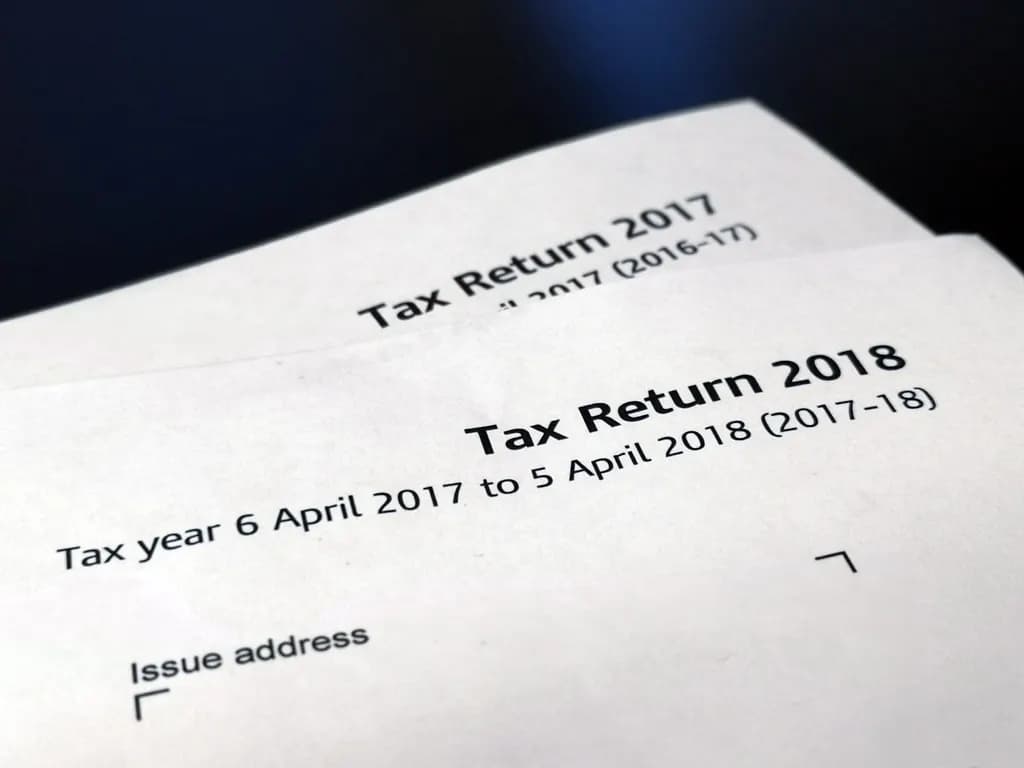
A limited company is a separate legal person. It pays Corporation Tax on its own taxable profit, files a CT600 return and pays the tax 9 months and 1 day after the end of the accounting period. The owner only pays personal tax on what they actually take out, as salary (through PAYE, with income tax and NI) or as dividends (through Self Assessment at dividend rates). Profit left in the company is taxed once, at Corporation Tax rates, until it's paid out. Our sole trader vs limited company guide covers the non-tax differences, such as limited liability and filing with Companies House.
The other taxes cut across structures. Any business with employees runs payroll and pays employer National Insurance, and a company paying its own director a salary is an employer too. VAT registration depends on turnover, not structure: a sole trader and a company with the same sales face the same £90,000 threshold. Business rates follow the property, so a home-based consultant usually pays none, while a café pays them from day one unless a relief applies.
Corporation Tax: 19%, 25% and marginal relief
Corporation Tax is charged on a company's taxable profit: trading profit after allowable expenses and capital allowances, plus investment income such as bank interest, plus chargeable gains. For financial years from 1 April 2023 onwards there are two rates. Profits of £50,000 or less pay the small profits rate of 19%; profits above £250,000 pay the main rate of 25%. A company in between pays the main rate on everything, then deducts marginal relief worked out with a fraction of 3/200 (3/200).
The formula is: marginal relief = 3/200 × (upper limit − profits) × (taxable profits ÷ augmented profits). For most small companies with no dividends received from outside their group, taxable and augmented profits are the same figure, so the last part equals one.
Worked example — £60,000 profit. Tax at 25% would be £15,000. Marginal relief is 0.015 × (£250,000 − £60,000) = £2,850. The bill is £12,150, an effective rate of 20.25%. At £100,000 the bill is £25,000 − £2,250 = £22,750, an effective 22.75%. At £45,000 the whole profit falls under the lower limit, so the bill is £45,000 × 19% = £8,550.
Corporation Tax on three profit levels (FY from 1 April 2026)
£8,550
£45,000 profit
19% small profits rate
£12,150
£60,000 profit
effective 20.25% after marginal relief
£22,750
£100,000 profit
effective 22.75% after marginal relief
25%
Profits over £250,000
main rate, no relief
Both limits are divided by the number of associated companies plus one, so two companies under common control share a lower limit of £25,000 each. They're also cut proportionately for an accounting period shorter than 12 months. The marginal rate inside the band is the trap: every extra pound of profit between £50,000 and £250,000 is taxed at 26.5%, higher than the main rate, because the relief is being withdrawn. That's why the timing of a pension contribution or equipment purchase matters more for companies in that band. Capital allowances help here: the Annual Investment Allowance gives a 100% deduction for up to £1 million a year of most plant and machinery. Our full Corporation Tax guide covers deadlines, quarterly instalments for large companies and the end of HMRC's free filing service on 31 March 2026.
Self-employed tax rates: income tax and Class 4 National Insurance
A sole trader's taxable profit is turnover minus allowable expenses (or the £1,000 trading allowance instead of expenses, if that's higher). It's added to any other income and taxed through Self Assessment. In England, Wales and Northern Ireland, the first £12,570 is tax-free, the next £37,700 is taxed at 20%, income from £50,270 to £125,140 at 40%, and above that at 45%. The Personal Allowance shrinks by £1 for every £2 of income over £100,000, which creates an effective 60% band.
Class 4 National Insurance comes on top: 6% on profits between £12,570 and £50,270, and 2% on profits above. Class 2 contributions stopped being compulsory from April 2024. If your profits are above the small profits threshold of £7,105 you get a National Insurance credit towards the State Pension automatically; if they're below it, you can choose to pay voluntary Class 2 at £3.65 a week.
Worked example — sole trader with £45,000 profit in England. Income tax: (£45,000 − £12,570) × 20% = £6,486. Class 4 NI: (£45,000 − £12,570) × 6% = £1,945.80. Total £8,431.80, or 18.7% of profit, leaving £36,568.20. At £60,000 profit the bill rises to £11,432 income tax (£7,540 at basic rate plus £3,892 at higher rate on the £9,730 above £50,270) and £2,456.60 Class 4 NI (£2,262 at 6% plus £194.60 at 2%), a total of £13,888.60.
Sole trader tax in England (2026–27)
£8,432
Tax on £45,000 profit
£6,486 income tax + £1,946 Class 4
£13,889
Tax on £60,000 profit
£11,432 income tax + £2,457 Class 4
26%
Set aside on basic-rate profit
20% income tax + 6% Class 4
42%
Set aside on higher-rate profit
40% income tax + 2% Class 4
In Scotland, non-savings income tax uses six bands: starter 19%, basic 20%, intermediate 21%, higher 42%, advanced 45% and top 48%. Class 4 NI is the same UK-wide, but the Scottish higher rate starts lower, so a Scottish sole trader on £60,000 pays noticeably more income tax than one in Manchester. Dividend and savings income are taxed at UK rates wherever you live.
The tax is paid by 31 January after the tax year, and if your bill was more than £1,000 you'll also make payments on account towards next year, due 31 January and 31 July. From 6 April 2026, sole traders and landlords with qualifying income above £50,000 must keep digital records and send quarterly updates under Making Tax Digital for Income Tax; the threshold falls to £30,000 from April 2027. The self-employed tax guide covers allowable expenses and simplified expenses in depth.
Dividend tax and paying yourself from a limited company
Company owners usually take a small salary and the rest as dividends. Dividends aren't a business expense, so they come out of profit that has already borne Corporation Tax, but they carry no National Insurance. For 2026 to 2027 the first £500 of dividends is tax-free; above that, dividends in the basic rate band are taxed at 10.75%, in the higher rate band at 35.75% and in the additional rate band at 39.35%. The first two rates rose by two percentage points from 6 April 2026, from 8.75% and 33.75%, which changes the maths many owner-directors relied on.
Here's the same £60,000 business run as a one-person company in England, compared with the sole trader figures above. The director takes a salary of £12,570 and the rest of the post-tax profit as dividends. Because the director is the only employee, the company can't claim the Employment Allowance, so it pays employer NI on the salary above £5,000.
£60,000 profit — sole trader vs one-person company (England, 2026–27)
| Sole trader | Limited company | |
|---|---|---|
Salary / drawings | All profit is income | £12,570 salary |
Employer NI (15% over £5,000) | — | £1,135.50 |
Corporation Tax | — | £8,795.96 (19% of £46,294.50) |
Dividends paid | — | £37,498.54 |
Income tax / dividend tax | £11,432.00 | £3,977.34 (10.75% after £500 allowance) |
Class 4 NI | £2,456.60 | — |
Total tax | £13,888.60 | £13,908.80 |
Owner keeps | £46,111.40 | £46,091.20 |
Salary / drawings
- Sole trader
All profit is income
- Limited company
£12,570 salary
Employer NI (15% over £5,000)
- Sole trader
—
- Limited company
£1,135.50
Corporation Tax
- Sole trader
—
- Limited company
£8,795.96 (19% of £46,294.50)
Dividends paid
- Sole trader
—
- Limited company
£37,498.54
Income tax / dividend tax
- Sole trader
£11,432.00
- Limited company
£3,977.34 (10.75% after £500 allowance)
Class 4 NI
- Sole trader
£2,456.60
- Limited company
—
Total tax
- Sole trader
£13,888.60
- Limited company
£13,908.80
Owner keeps
- Sole trader
£46,111.40
- Limited company
£46,091.20
At this level the two structures now leave the owner with almost exactly the same money, and the company still has to pay for accounts, a confirmation statement and payroll. The company comes out ahead mainly when you don't need all the profit and can leave some in the business at 19%, or when employer pension contributions replace part of the dividends, since those are deductible for Corporation Tax and free of NI. The dividend tax guide shows the calculation for higher-rate directors, and pension tax relief explains the employer contribution route.
Employer National Insurance and the Employment Allowance
When you employ anyone, including yourself as a company director, you pay secondary Class 1 National Insurance on their earnings above the secondary threshold. Since 6 April 2025 that rate has been 15% and the threshold £5,000 a year (£96 a week), down from £9,100. You also deduct employee NI and income tax through PAYE and pay them over to HMRC, but those are the employee's taxes, not the business's.
The Employment Allowance cuts your employer NI bill by up to £10,500 a year. Since April 2025, eligibility is no longer limited to employers whose previous-year NI bill was under £100,000, so most small employers qualify. The main exclusions are companies where the director is the only employee paid above the secondary threshold, and employers doing more than half their work in the public sector, such as for councils or NHS services.
Worked example — café with four staff on £24,000. Employer NI per worker is (£24,000 − £5,000) × 15% = £2,850, so £11,400 for four. The Employment Allowance absorbs £10,500, leaving £900 to pay over the year. Hire a fifth person on the same salary and the bill jumps to £3,750, because the allowance is already used up. Employers also pay at least 3% of qualifying earnings into a workplace pension for eligible staff, which isn't a tax but behaves like one in your costings. Register as an employer with HMRC before the first payday; our employer registration guide walks through it.
VAT: registration threshold and rates
VAT is charged on most goods and services at 20%, with a 5% rate on items such as domestic fuel and a 0% rate on most food, children's clothes and books. You must register if your taxable turnover for the last 12 months goes over £90,000, or if you expect it to pass that figure in the next 30 days alone. It's a rolling 12 months, not the tax year, so check every month-end as you approach it. You can deregister if turnover drops below £88,000.

Once registered, you charge VAT on your sales (output tax), reclaim VAT on business purchases (input tax) and pay HMRC the difference, usually quarterly, with returns and payment due 1 calendar month and 7 days after the period end. Returns are filed through Making Tax Digital-compatible software.
A plumber who turns over £95,000 a year mostly from homeowners can't pass VAT on without effectively cutting margin, because the customers can't reclaim it: a £300 job either becomes £360 or the plumber keeps £250 of it. A consultant whose clients are all VAT-registered companies, by contrast, simply adds 20% and the client reclaims it. Small businesses with turnover up to £150,000 can use the VAT Flat Rate Scheme, paying a fixed percentage of gross turnover instead, but businesses that spend little on goods fall into the 16.5% limited-cost trader rate, which is rarely worth it. Start with our VAT registration guide, and use the VAT calculator to add or strip out VAT from prices.
Business rates: the tax on business premises
Business rates are charged on most non-domestic property: shops, offices, warehouses, pubs, workshops and some holiday lets. In England the bill is rateable value × multiplier − reliefs. The rateable value is the Valuation Office Agency's estimate of the annual open-market rent on the valuation date of 1 April 2024, which took effect in the April 2026 revaluation. Your council sends the bill and you usually pay it in ten monthly instalments.
England moved to five multipliers on 1 April 2026. Properties with a rateable value under £51,000 pay 43.2p, or 38.2p if they're qualifying retail, hospitality or leisure premises. From £51,000 to £499,999 the multipliers are 48p and 43p, and properties worth £500,000 or more pay 50.8p. The lower retail rates replaced the old 40% retail, hospitality and leisure relief, which ended on 31 March 2026.
Worked example. A gift shop with a rateable value of £20,000 pays £20,000 × 0.382 = £7,640 a year before reliefs. An office with the same value pays £8,640. If either were the business's only property and the value were under £12,000, small business rate relief would cut the bill to nothing, tapering away up to £15,000.
Wales, Scotland and Northern Ireland run separate systems. Wales uses a standard multiplier of 50.2p and gives full small business relief up to £6,000; Scotland's basic poundage is 48.1p with the Small Business Bonus Scheme giving 100% relief up to £12,000. Our business rates guide covers appeals and every relief.
| Nation | Main multiplier / poundage (2026–27) | Full small business relief up to |
|---|---|---|
| England | 43.2p (under £51,000), 38.2p retail, hospitality and leisure | £12,000 |
| Wales | 50.2p standard | £6,000 |
| Scotland | 48.1p basic | £12,000 (Small Business Bonus Scheme) |
If you rent premises, the tenant normally pays business rates, not the landlord. Empty property is still chargeable in most cases after a short rent-free period, so budget for rates during a fit-out or before you open.
Capital Gains Tax and Business Asset Disposal Relief
When you sell or give away a business, shares in your company or a business asset such as a property, the gain is taxed. Individuals pay Capital Gains Tax at 18% on gains that fit within their unused basic rate band and 24% above it, after an annual exempt amount of £3,000. Companies don't pay CGT: their gains are added to profits and taxed at Corporation Tax rates.
Business Asset Disposal Relief (BADR) lowers the rate on qualifying gains to 18% for disposals from 6 April 2026, up from 14% in 2025 to 2026 and 10% before that, on up to £1 million of gains over your lifetime. To qualify on company shares you must, for at least two years before the sale, be an employee or officer of a trading company and hold at least 5% of its shares and voting rights, plus a 5% economic interest. Sole traders qualify when they sell all or part of a business they've owned for two years.
Worked example. You sell your company shares for a £400,000 gain. After the £3,000 exempt amount, £397,000 is taxable. With BADR the tax is £397,000 × 18% = £71,460. Without it, for a higher-rate taxpayer, it would be £397,000 × 24% = £95,280. The relief is now worth £23,820 on this sale, against £39,700 when the rate was 14%. Closing a company with a members' voluntary liquidation can also qualify; see closing a limited company.
Other taxes and deductions your business may meet
A few more charges apply only to certain trades or situations. None of them is a tax on profit, but each one changes your costs or cash flow.
| Charge | Rate or rule | Who it hits |
|---|---|---|
| Construction Industry Scheme (CIS) | 20% deduction for registered subcontractors, 30% if unregistered | Construction subcontractors (an advance on their own tax) |
| Insurance Premium Tax | 12% built into most premiums | Any business buying insurance |
| Climate Change Levy | 0.801p per kWh on electricity in 2026–27 | Business energy users, via the bill |
| Off-payroll working (IR35) | Client decides status since 6 April 2021 | Contractors working through their own company for medium and large clients |
| Stamp Duty Land Tax | Non-residential rates on purchases and leases | Buying or leasing property in England and NI (Scotland and Wales have their own land taxes) |
CIS deductions are credited against the subcontractor's own income tax and NI, so registering and keeping statements matters; see CIS registration.
If you're comparing with the United States, which some searchers do: the US federal corporate income tax rate is a flat 21%, with state corporate taxes on top, and owners of pass-through businesses pay individual rates plus self-employment tax. The UK's 25% main rate is higher, but most UK small companies pay the 19% rate or sit in the marginal relief band.
Key business tax deadlines in 2026
Business tax calendar (typical small business)
Monthly, 22nd
PAYE and NI for the previous tax month paid to HMRC (19th by post)
1 month + 7 days after each VAT quarter
VAT return filed and VAT paid
31 January
Self Assessment online return; balance of tax and first payment on account
31 July
Second Self Assessment payment on account
9 months + 1 day after year end
Corporation Tax payment for most small companies
12 months after year end
Company Tax Return (CT600) filing deadline
1 April
New business rates bills and multipliers take effect
Business tax changes in 2025 and 2026
Several rate changes in the last 18 months mean older guides give the wrong answer. Employer National Insurance rose from 13.8% to 15% on 6 April 2025, the secondary threshold dropped from £9,100 to £5,000, and the Employment Allowance rose from £5,000 to £10,500. The dividend ordinary and upper rates rose to 10.75% and 35.75% from 6 April 2026. BADR rose to 18% on the same date. England's business rates moved to five multipliers and a new valuation list on 1 April 2026, and HMRC closed its free online Company Tax Return service on 31 March 2026.
More is coming. Making Tax Digital for Income Tax started for sole traders and landlords over £50,000 in April 2026 and widens to £30,000 in April 2027 and £20,000 in April 2028. From 6 April 2027, tax rates on savings interest rise to 22%, 42% and 47%, which matters for any sole trader holding business cash in savings, and property income gets its own rates. Corporation Tax rates themselves haven't changed since April 2023. Income tax thresholds remain frozen, so rising profits push more owners into the 40% band each year.
Common business tax mistakes and how to avoid them
The most expensive mistake is not setting money aside. A sole trader's first tax bill often arrives with a payment on account attached, so the first 31 January can demand 150% of a year's tax in one go. Put 25–30% of profit into a separate account as you're paid. Our business savings account guide explains where to hold that money and how the interest is taxed.
The second is mixing structures. Directors sometimes pay personal bills from the company account, which creates a director's loan; if it isn't repaid within nine months of the year end, the company owes a temporary tax charge on it. The third is missing the VAT threshold: registering late means paying VAT on sales you made without charging it, plus penalties. The fourth is assuming the cheaper structure: as the comparison above shows, the limited company's tax advantage at modest profits is now small, so incorporate for liability or growth reasons, not tax alone. Finally, don't ignore the devolved differences. A Scottish taxpayer using an English calculator will underestimate their income tax.
Official links
- Corporation Tax rates and reliefs19%, 25% and marginal relief
- Income Tax rates and allowancesBands and dividend rates by year
- National Insurance rates and allowancesClass 1, Class 2 and Class 4
- Claim Employment AllowanceUp to £10,500 off employer NI
- VAT registrationWhen you must register
- Calculate your business ratesRateable value and multipliers
- Business Asset Disposal ReliefRates and conditions
What to do next
Work out which of these taxes apply to you, then start with the one that has the nearest deadline. If you're deciding on a structure, run your own numbers through the sole trader vs limited company guide rather than relying on the old rule of thumb. If you already trade, check your VAT position each month with the VAT calculator and use the break-even calculator to see how much each tax changes the sales you need. Each tax on this page has its own detailed guide linked above.
This is general information, not legal or tax advice — confirm on the official source or with a professional.
Frequently asked questions
There isn't one rate. Limited companies pay Corporation Tax of 19% on profits up to £50,000 and 25% above £250,000, with marginal relief in between. Sole traders and partners pay income tax at 20%, 40% or 45% plus Class 4 National Insurance of 6% on profits. VAT, business rates and employer NI come on top where they apply.
It depends on structure and profit. A sole trader in England with £45,000 profit in 2026 to 2027 pays about £6,486 income tax and £1,946 Class 4 NI, roughly 18.7% of profit. A limited company with £45,000 profit pays 19% Corporation Tax, £8,550, before the owner pays any tax on salary or dividends taken out.
Companies with taxable profits of £50,000 or less pay 19%. Above £250,000 the rate is 25%. Between the two, you pay 25% less marginal relief, so the effective rate climbs gradually from 19% to 25%. A company with £60,000 profit pays £12,150, an effective 20.25%. Associated companies and short accounting periods reduce both limits.
Income tax on profits above the £12,570 Personal Allowance, Class 4 National Insurance at 6% between £12,570 and £50,270 and 2% above, and VAT if turnover passes £90,000. Sole traders with premises usually pay business rates too. Class 2 NI is now voluntary at £3.65 a week for those below the small profits threshold.
Less often than it used to be. In our worked example at £60,000 profit, a one-person company paying a £12,570 salary and dividends leaves the owner about £46,091, against £46,111 as a sole trader, before accountancy costs. The April 2026 dividend rate rise to 10.75% and employer NI at 15% closed most of the gap. Retaining profit in the company still helps.
Yes, business rates. In England the bill is rateable value multiplied by a multiplier: 43.2p for most properties under £51,000 in 2026 to 2027, or 38.2p for qualifying shops, pubs and leisure premises. Small business rate relief removes the bill entirely for a single property under £12,000. Scotland, Wales and Northern Ireland have their own rates and reliefs.
Sources & verification
Figures on this page were checked against the sources below when it was last reviewed on 9 October 2026. Each rate and limit is stored once with its own official source and review date, and official update channels are monitored daily so changes are picked up. How we verify
- 1.Corporation Tax rates and reliefs — GOV.UK · accessed 9 October 2026
- 2.Income Tax rates and allowances: current and past — HMRC / GOV.UK · accessed 9 October 2026
- 3.Rates and allowances: National Insurance contributions — HMRC / GOV.UK · accessed 9 October 2026
- 4.Claim Employment Allowance — HMRC / GOV.UK · accessed 9 October 2026
- 5.Income Tax: changes to tax rates for property, savings and dividend income — HM Treasury / HMRC · accessed 9 October 2026
- 6.Business Asset Disposal Relief — GOV.UK · accessed 9 October 2026
- 7.Capital Gains Tax: rates — GOV.UK · accessed 9 October 2026
- 8.Business rates — how your rates are calculated — GOV.UK · accessed 9 October 2026
- 9.VAT registration — GOV.UK · accessed 9 October 2026
MSMETOOLS is an independent platform and is not affiliated with any government agency, ministry or department.
Tools for this
VAT Calculator (UK)
Add or remove VAT at 20%, 5% or 0%.
Profit Margin Calculator
Calculate profit, markup and margin for your products or services.
Break Even Calculator
Find your break even point and units.
Invoice Generator
Create professional invoices with tax, logo and custom details.
Related guides
 Self-Employed Tax 2026: How to Calculate It (Worked Examples)Read guide
 Corporation Tax UK 2026: Rates, Marginal Relief & DeadlinesRead guide
 Pension Annual Allowance 2026: HMRC Limits & Tax ReliefRead guide
 Business Rates 2026: 2026 Multipliers, Reliefs & How to CheckRead guide
Official links open the government site in a new tab.