 Income & corporation tax
Self Assessment Tax Return (2026): Who Files, Deadlines and How to Do It
HMRC Self Assessment in 2026: who must file, the 5 Oct, 31 Oct and 31 Jan deadlines, payments on account, penalties, interest and how MTD changes things.
 Edited by Sumeet YadavFounder & editor, MSMETOOLS · fact-checked against official sources
Contents (11)
- 1. What is a Self Assessment tax return?
- 2. Who needs to do a Self Assessment tax return?
- 3. How to register for Self Assessment
- 4. Self Assessment deadlines in 2026
- 5. Payments on account: the first-year "double bill"
- 6. How to file your Self Assessment tax return online
- 7. What to include on your return
- 8. Self Assessment penalties and interest
- 9. Making Tax Digital for Income Tax from 6 April 2026
- 10. Common Self Assessment mistakes
- 11. What to do next
Self Assessment is how HMRC collects Income Tax from anyone whose tax isn't fully taken through PAYE: sole traders, partners, landlords, company directors with dividends and people with untaxed income. This guide covers the 2025-26 return you're filing in 2026: whether you need to file, how to register, every deadline, how payments on account work, what late filing really costs, and what Making Tax Digital changes from 6 April 2026. Worked examples are in pounds.
Quick answer
A Self Assessment tax return reports income HMRC hasn't already taxed. For the 2025-26 tax year, register by 5 October 2026, then file online by 31 January 2027 (paper: 31 October 2026) and pay what you owe by 31 January 2027.
File if you were self-employed with gross income over £1,000, a partner, owed Capital Gains Tax, or have other untaxed income
Miss the filing deadline and there's an automatic £100 penalty, even if you owe nothing
If your bill is £1,000 or more, you'll usually also pay half of it in advance for next year on 31 January and 31 July
From April 2026, sole traders and landlords over £50,000 also send quarterly updates under Making Tax Digital
What is a Self Assessment tax return?
It's an annual return to HM Revenue and Customs (HMRC) of your income and gains for one tax year, which runs from 6 April to 5 April. HMRC uses it to calculate the Income Tax, Class 4 National Insurance and Capital Gains Tax you still owe after anything already deducted at source.
Most people file online and the calculation is done for you as you go. The main return is form SA100, with supplementary pages for self-employment, partnerships, property, foreign income and capital gains. Online, the right sections appear based on your answers.
Who needs to do a Self Assessment tax return?
HMRC says you must send a return if, in the last tax year, you:
- were self-employed as a sole trader and earned more than £1,000 before expenses — see our sole trader guide;
- were a partner in a business partnership;
- had to pay Capital Gains Tax on something you sold or gave away;
- had to pay the High Income Child Benefit Charge and don't pay it through PAYE.
You may also need to file if you had untaxed income: rent from property, tips and commission, foreign income, or savings interest and dividends above your allowances. Company directors taking dividends usually fall into this group; see how dividends are taxed. People with only a salary or pension taxed through PAYE normally don't file.
If HMRC sends you a notice to file, you must send a return by the deadline, even if you think you don't owe anything. If you no longer need to file, ask HMRC to close your record instead of ignoring the notice.
How to register for Self Assessment
If you haven't filed before, or you didn't file for 2024-25, register (or reactivate your account) by 5 October after the end of the tax year. For 2025-26 income, that was 5 October 2026. Tell HMRC later and you can be charged a "failure to notify" penalty if your tax isn't paid in full by 31 January.
Registering gets you a Unique Taxpayer Reference (UTR), a 10-digit number you'll quote on every return and payment. Our UTR number guide covers where to find it and what to do if it's lost. If you register after 5 October, HMRC gives you a filing deadline of three months from the date of its letter, but the tax is still due on 31 January.
Self Assessment deadlines in 2026
Deadlines for the 2025-26 tax return
5 October 2026
Register for Self Assessment if you're new or didn't file last year
31 October 2026
Paper tax return must reach HMRC
30 December 2026
File online by now to have a bill under £3,000 collected through your PAYE tax code
31 January 2027
Online return due; pay the 2025-26 balance and first payment on account for 2026-27
31 July 2027
Second payment on account for 2026-27
Every deadline is 11:59pm. Online is the sensible default: you get three extra months and an instant calculation. You can file the 2025-26 return any time from 6 April 2026, and filing early doesn't make the tax due early. It just tells you what you'll owe while there's time to save.
Payments on account: the first-year "double bill"
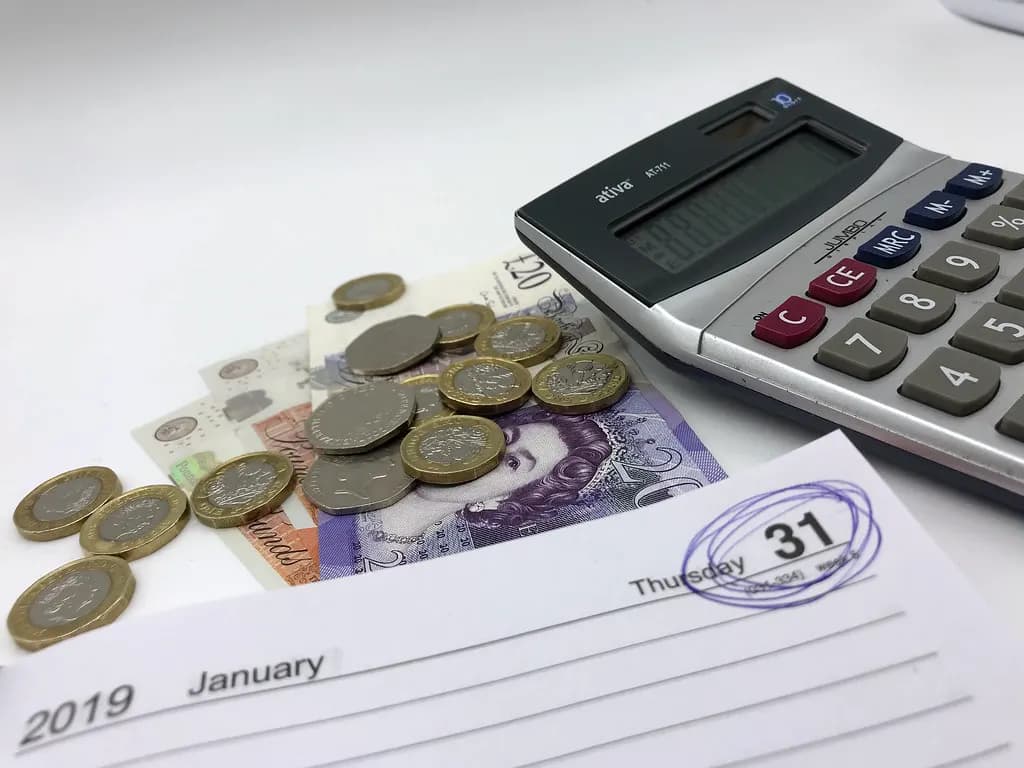
If your last Self Assessment bill was £1,000 or more, and less than 80% of your tax was taken at source, HMRC asks you to pay towards next year's bill in two advance instalments, each half of the latest bill. These are payments on account. They catch new sole traders out, because the first January payment covers a full year's tax plus half of the next.
Worked example. Priya started freelancing in 2025-26 and made a £40,000 profit, with no other income. Her 2025-26 bill (England, 2025-26 rates):
| Item | Calculation | Amount |
|---|---|---|
| Income Tax | (£40,000 − £12,570) × 20% | £5,486.00 |
| Class 4 National Insurance | (£40,000 − £12,570) × 6% | £1,645.80 |
| 2025-26 bill | £7,131.80 | |
| Due 31 January 2027 | £7,131.80 + first payment on account £3,565.90 | £10,697.70 |
| Due 31 July 2027 | Second payment on account | £3,565.90 |
In January 2028 she pays whatever her 2026-27 bill comes to above the £7,131.80 already paid (the balancing payment), plus the first payment on account for 2027-28. If her income drops, she can ask HMRC to reduce the payments on account online or on form SA303. If she reduces them too far, HMRC charges interest on the shortfall.
Set aside roughly a quarter to a third of each invoice in a separate account; the budget planner helps you plan around the January and July payments.
How to file your Self Assessment tax return online
Filing online in six steps
- 1
Gather your figures
Business income and expenses, P60 or P45 from any job, P11D for benefits, bank interest, dividend vouchers, rent, pension contributions, Gift Aid donations and any assets sold.
- 2
Sign in to HMRC online services
File your tax return onlineUse your sign-in details and your UTR. First-timers may need to prove their identity with a passport or driving licence.
- 3
Choose the sections that apply
Answer the questions about your income types; the service adds the self-employment, property or capital gains pages you need.
- 4
Enter income, expenses and reliefs
Use totals from your records. Self-employed people with turnover under the VAT threshold can enter expenses as a single total.
Tip: Claim the £1,000 trading allowance instead of actual expenses only if your real costs were lower.
- 5
Check the calculation and submit
Review the tax calculation, then submit. Save or print the submission receipt.
- 6
Pay by 31 January
Pay by bank transfer, debit card or online banking using your UTR followed by the letter K as the reference. Allow time for the payment to clear.
HMRC's own online service can't be used in some cases, such as partnership returns, trusts and estates, some non-resident returns, and multiple chargeable event gains. In those cases you'll need commercial software or a paper return. Anyone already in Making Tax Digital files through MTD-compatible software.
What to include on your return
Income and claims to check before you submit
0/10Keep the records behind these numbers for at least five years after the 31 January deadline. For the 2025-26 return filed by 31 January 2027, that's until at least the end of January 2032. If you register as a limited company director, your company has its own separate returns; your personal return covers only the salary and dividends you take.

Self Assessment penalties and interest
Penalties for filing late and paying late are separate. You can get both.
| How late | Late filing penalty | Late payment penalty |
|---|---|---|
| 1 day | £100 | Interest starts |
| 30 days | — | 5% of tax unpaid |
| 3 months | £10 a day (up to £900) | — |
| 6 months | 5% of the tax due or £300, whichever is greater | Another 5% |
| 12 months | 5% of the tax due or £300, whichever is greater again | Another 5% |
Interest runs on top of the penalties at the late payment rate, currently Bank of England base rate plus 4% a year (Bank of England base rate plus 4 percentage points since 6 April 2025). It changes when base rate moves.
Worked example. Tom owes £2,000 for 2025-26 and files and pays seven months late, in late August 2027. Late filing: £100 + £900 daily penalties + £300 (5% of £2,000 is only £100, so the £300 minimum applies) = £1,300. Late payment: two 5% penalties = £200. Then add about seven months' interest on £2,000 at 7.75%, roughly £90. A £2,000 bill ends up costing about £3,590.
If you had a reasonable excuse, such as serious illness, a bereavement or an HMRC system failure, you can appeal a penalty. If you can't pay in full, contact HMRC early. You can usually set up a payment plan online if you've filed your return, owe up to £30,000 and do it within 60 days of the due date.
Making Tax Digital for Income Tax from 6 April 2026
Making Tax Digital (MTD) for Income Tax started on 6 April 2026. It applies to sole traders and landlords whose qualifying income, meaning gross self-employment and property income before expenses, was over £50,000 on their 2024-25 return. HMRC says more than 864,000 people are in scope this year.
Standard Self Assessment vs Making Tax Digital
| Standard Self Assessment | Making Tax Digital for Income Tax | |
|---|---|---|
Who | Everyone else who files | Qualifying income over £50,000 (2026-27), £30,000 (2027-28), £20,000 (2028-29) |
Records | Any method | Digital records in MTD-compatible software |
During the year | Nothing to send | Quarterly updates by 7 Aug, 7 Nov, 7 Feb and 7 May |
Annual return | By 31 January | Still by 31 January, through software |
Late filing | £100, then daily and percentage penalties | 1 point per missed deadline; £200 penalty at 4 points |
Late payment | 5% at 30 days, 6 and 12 months | 3% at day 15, 3% at day 30, then 10% a year (first year: 30 days' grace) |
Who
- Standard Self Assessment
Everyone else who files
- Making Tax Digital for Income Tax
Qualifying income over £50,000 (2026-27), £30,000 (2027-28), £20,000 (2028-29)
Records
- Standard Self Assessment
Any method
- Making Tax Digital for Income Tax
Digital records in MTD-compatible software
During the year
- Standard Self Assessment
Nothing to send
- Making Tax Digital for Income Tax
Quarterly updates by 7 Aug, 7 Nov, 7 Feb and 7 May
Annual return
- Standard Self Assessment
By 31 January
- Making Tax Digital for Income Tax
Still by 31 January, through software
Late filing
- Standard Self Assessment
£100, then daily and percentage penalties
- Making Tax Digital for Income Tax
1 point per missed deadline; £200 penalty at 4 points
Late payment
- Standard Self Assessment
5% at 30 days, 6 and 12 months
- Making Tax Digital for Income Tax
3% at day 15, 3% at day 30, then 10% a year (first year: 30 days' grace)
Quarterly updates only send running totals of income and expenses. They don't create a tax bill, and you still make your claims and pay on 31 January. HMRC has confirmed it won't apply penalty points for late quarterly updates during 2026-27, but the updates are still compulsory and late tax returns still earn points. The first quarterly deadline was 7 August 2026, and the next is 7 November 2026 for the period to 5 October.
Common Self Assessment mistakes
- Registering late. Starting a side business in 2025-26 and not telling HMRC by 5 October 2026 risks a failure-to-notify penalty.
- Forgetting payments on account. Budget for the January figure, not just the year's tax.
- Paying with the wrong reference. Use your 10-digit UTR plus "K", or the payment may be misallocated.
- Mixing personal and business spending. Only claim the business share of phones, vehicles and home costs.
- Leaving it to January. Sign-in and identity checks can take time. File in the autumn and you'll know the bill months ahead.
- Missing income. Interest, dividends, small rental income or a share sale all count, not just your main business.
Official links
- Check if you need to send a tax returnHMRC's interactive checker
- Register for Self AssessmentNew registrations and reactivations
- File your Self Assessment tax return onlineSign in, file and view your calculation
- Self Assessment deadlinesPaper, online and payment dates
- Pay your Self Assessment tax billPayment methods and reference
- Payments on accountHow they work and how to reduce them
- Making Tax Digital for Income TaxQuarterly updates and software
What to do next
If you're new, register now and keep your UTR safe. Then set up a simple system for income, receipts and a tax savings pot. Our invoice generator gives you numbered invoices that make the turnover figure easy to total. If your sales are approaching the VAT threshold, read how to register for VAT next.
This is general information, not legal or tax advice — confirm on the official source or with a professional.
Frequently asked questions
You must file if, in the last tax year, you were self-employed with gross income over £1,000, a partner in a business partnership, owed Capital Gains Tax, or owed the High Income Child Benefit Charge and don't pay it through PAYE. Untaxed income such as rent, tips, foreign income or larger savings and dividends can also bring you in. HMRC's online checker gives a definite answer.
For the 2025-26 tax year, register by 5 October 2026, file a paper return by 31 October 2026 or an online return by 31 January 2027, and pay what you owe by 31 January 2027. If you make payments on account, the second one is due by 31 July 2027. All deadlines are 11:59pm.
An automatic £100 as soon as you miss the deadline, even if you owe no tax. After three months you add £10 a day (up to £900); after six months, 5% of the tax due or £300, whichever is greater; and the same again after 12 months. Late payment adds 5% penalties at 30 days, six months and 12 months, plus interest at Bank of England base rate plus 4%.
Advance payments towards next year's bill, each worth half of last year's Self Assessment tax. They're due by 31 January and 31 July. You don't make them if last year's bill was under £1,000 or more than 80% of your tax was already taken at source, for example through PAYE. You can ask HMRC to reduce them if your income has fallen.
No. From 6 April 2026 sole traders and landlords with qualifying income over £50,000 keep digital records and send quarterly updates through software, but they still submit an annual tax return and pay by 31 January. The threshold falls to £30,000 from April 2027 and £20,000 from April 2028.
No. You need to register for Self Assessment first, which gives you a 10-digit Unique Taxpayer Reference. You also need sign-in details for HMRC online services. If you register late in the year, leave time for HMRC's letters, or you risk missing the 31 January deadline.
Sources & verification
Figures on this page were checked against the sources below when it was last reviewed on 7 October 2026. Each rate and limit is stored once with its own official source and review date, and official update channels are monitored daily so changes are picked up. How we verify
- 1.Self Assessment tax returns: deadlines — HMRC / GOV.UK · accessed 7 October 2026
- 2.Self Assessment tax returns: who must send a tax return — HMRC / GOV.UK · accessed 7 October 2026
- 3.Self Assessment tax returns: penalties — HMRC / GOV.UK · accessed 7 October 2026
- 4.Register for Self Assessment — HMRC / GOV.UK · accessed 7 October 2026
- 5.File your Self Assessment tax return online — HMRC / GOV.UK · accessed 7 October 2026
- 6.Understand your Self Assessment bill: payments on account — HMRC / GOV.UK · accessed 7 October 2026
- 7.Pay your Self Assessment tax bill through your tax code — HMRC / GOV.UK · accessed 7 October 2026
- 8.HMRC interest rates for late and early payments — HMRC · accessed 7 October 2026
- 9.Use Making Tax Digital for Income Tax: send quarterly updates — HMRC / GOV.UK · accessed 7 October 2026
- 10.Penalties for Making Tax Digital for Income Tax — HMRC / GOV.UK · accessed 7 October 2026
- 11.Deadline approaches for first Making Tax Digital quarterly update — HMRC press release · accessed 7 October 2026
- 12.Business records if you're self-employed: how long to keep records — HMRC / GOV.UK · accessed 7 October 2026
- 13.Income Tax rates and Personal Allowances — HMRC / GOV.UK · accessed 7 October 2026
- 14.Self Assessment customers use online tax payment plans to help spread the cost — HMRC press release · accessed 7 October 2026
- 15.Pay your Self Assessment tax bill: bank details — HMRC / GOV.UK · accessed 7 October 2026
MSMETOOLS is an independent platform and is not affiliated with any government agency, ministry or department.
Tools for this
Invoice Generator
Create professional invoices with tax, logo and custom details.
Freelance Hourly Rate Calculator
Work out the hourly rate you need to charge.
Budget Planner
Plan and track your business budget easily.
Related guides
 Self Assessment Late Filing Penalty 2026: £100 and BeyondRead guide
 Making Tax Digital 2026: Thresholds, Deadlines & PenaltiesRead guide
 Payments on Account 2026: Dates, Rules & ExamplesRead guide
 HMRC Mileage Allowance 2026: 55p Rate, Fuel Rates & ClaimsRead guide
Official links open the government site in a new tab.