 VAT
VAT Flat Rate Scheme (2026): Rates, the Limited Cost Test and Whether It Pays
VAT Flat Rate Scheme 2026: flat rates by sector, the £150,000 joining limit, the 16.5% limited cost trader test with examples, the 1% discount and leaving.
 Edited by Sumeet YadavFounder & editor, MSMETOOLS · fact-checked against official sources
Contents (11)
- 1. How the Flat Rate Scheme works
- 2. Who can join and who can't
- 3. Flat rates by sector in 2026
- 4. The 16.5% limited cost trader test
- 5. The 1% first-year discount
- 6. Hairdresser example: where the scheme pays
- 7. Capital assets over £2,000
- 8. Leaving the scheme
- 9. Records, returns and Making Tax Digital
- 10. Common mistakes
- 11. What to do next
The VAT Flat Rate Scheme swaps the usual output-minus-input VAT sum for one percentage of your turnover. It suits some small businesses well: low-cost service firms with mainly non-VAT-registered customers, or anyone who wants simpler bookkeeping. For many contractors, though, it costs money because of the 16.5% limited cost trader rate. This guide is for UK sole traders, partnerships and small limited companies already registered for VAT, or about to register. It covers the 2026 flat rates by sector, the £150,000 joining limit, the limited cost test with worked examples, the first-year discount, capital purchases, leaving the scheme and Making Tax Digital.
Quick answer
On the Flat Rate Scheme you charge VAT as normal but pay HMRC a fixed percentage of your VAT-inclusive turnover, set by your trade. You can join if you expect VAT taxable turnover of £150,000 or less (excluding VAT) in the next 12 months, and must leave once turnover passes £230,000 including VAT.
Sector rates run from 4% (food retail) to 14.5% (IT consultancy, accountancy, legal)
Limited cost traders, those spending under 2% of turnover or under £1,000 a year on goods, pay 16.5%
Take 1% off your rate until the day before the first anniversary of your VAT registration
No VAT reclaim on purchases, except single capital purchases of £2,000 or more
How the Flat Rate Scheme works
Under normal VAT accounting you add up the VAT you charged customers (output tax), subtract the VAT you paid on business costs (input tax), and pay HMRC the difference. The Flat Rate Scheme replaces that sum. You still put VAT on your invoices at the normal rate, usually 20%. At the end of each VAT period you take your flat rate turnover, which is everything you received or invoiced including VAT, and multiply it by your flat rate percentage. That figure is what you pay HMRC.
HMRC's own example: a photographer bills £1,000 plus 20% VAT, so £1,200 in total. The photography rate is 11%, so the photographer pays 11% of £1,200, which is £132, and keeps the other £68 of the VAT charged. In return, they can't reclaim VAT on their costs. The flat rate has an allowance for typical input tax built in.
Flat rate turnover includes standard-rated, reduced-rated and zero-rated sales and, unusually, exempt income too. On the scheme you're treated as fully taxable, so partly exempt businesses don't do partial exemption calculations. Sales outside the scope of UK VAT, such as many services supplied to overseas business customers, are left out. So are supplies under the domestic reverse charge, including construction services caught by the CIS reverse charge, which are dealt with outside the scheme.
You can't combine the Flat Rate Scheme with the Cash Accounting Scheme. The flat rate scheme has its own cash-based turnover method, which works the same way, so you pay VAT only when customers pay you. You can combine it with the Annual Accounting Scheme.
Your VAT bill on the Flat Rate Scheme
Step 1
Invoice at normal VAT rate
Step 2
Total VAT-inclusive turnover for the period
Step 3
× flat rate %
sector rate or 16.5%
Step 4
Pay HMRC
keep the difference
Who can join and who can't
You can apply if you're registered for VAT (or registering at the same time), expect your VAT taxable turnover in the next 12 months to be £150,000 or less excluding VAT, and your business isn't associated with another. You may forecast turnover in any reasonable way. HMRC won't penalise a forecast that turns out too low, as long as it had a reasonable basis, so keep a note of how you worked it out.
You can't join if, in the 12 months before applying, you left the Flat Rate Scheme, accepted a compound penalty offer or were convicted of a VAT offence, or were assessed with a penalty for dishonest conduct. You also can't join if you've been registered as, or eligible to join, a VAT group or division in the last 24 months, or if you're "associated" with another business through financial, economic or organisational links. Businesses using the second-hand margin scheme or auctioneers' scheme, those that must use the Tour Operators' Margin Scheme, and those that must operate the Capital Goods Scheme are also excluded.
Joining is straightforward. If you're not yet VAT-registered, tick the option when you register for VAT. If you're already registered, apply online or by post on form VAT600FRS. If you apply close to your registration date, you can start from the date you registered.
Flat rates by sector in 2026
Pick the sector that most closely describes what your business will do in the coming year. The sector names use ordinary English. If nothing fits, use "Business services not listed elsewhere", "Retailing not listed elsewhere" or "Manufacturing not listed elsewhere". Only as a last resort use "Any other activity not listed elsewhere" (12%). HMRC won't change your choice later as long as it was reasonable, so write down why you chose it.
| Type of business (selected) | Flat rate |
|---|---|
| Computer and IT consultancy or data processing | 14.5% |
| Accountancy or book-keeping | 14.5% |
| Lawyer or legal services | 14.5% |
| Architect, civil and structural engineer or surveyor | 14.5% |
| Labour-only building or construction services | 14.5% |
| Management consultancy | 14% |
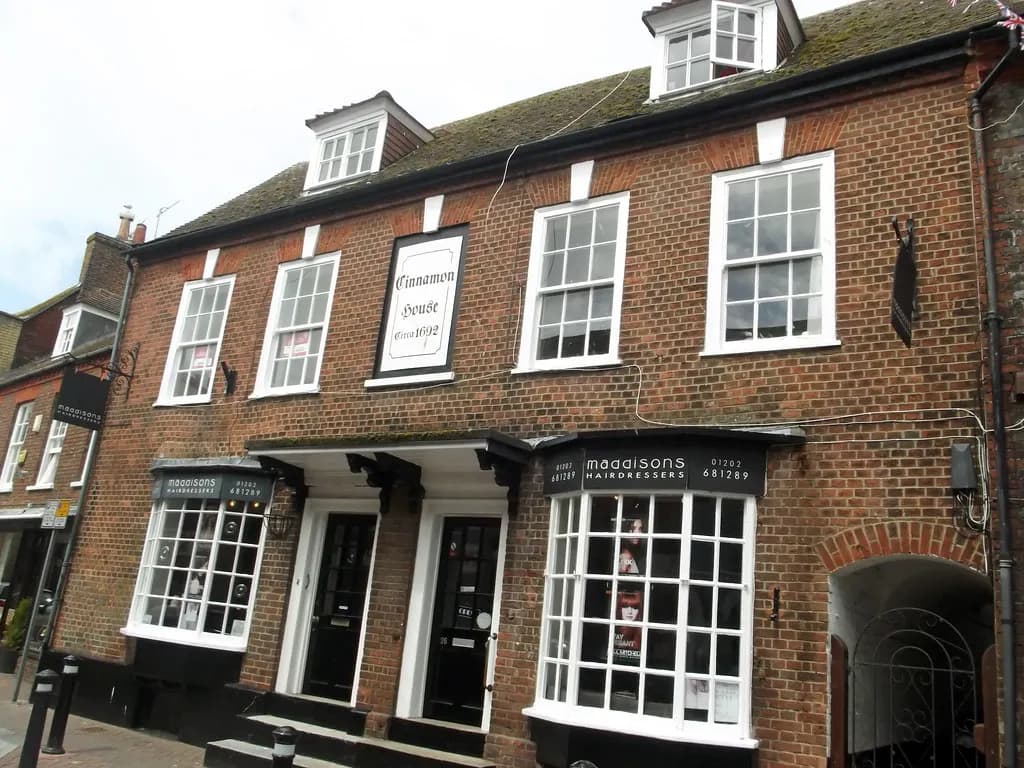
| Hairdressing or other beauty treatment services | 13% |
| Catering services including restaurants and takeaways | 12.5% |
| Business services not listed elsewhere | 12% |
| Advertising | 11% |
| Photography | 11% |
| Hotel or accommodation | 10.5% |
| Transport or storage, including couriers and taxis | 10% |
| General building or construction services | 9.5% |
| Retailing not listed elsewhere | 7.5% |
| Pubs | 6.5% |
| Retailing food, confectionery, tobacco, newspapers or children's clothing | 4% |
| Any limited cost business, whatever the sector | 16.5% |
The full list on GOV.UK has around 55 sectors. Construction has a split: if the materials you supply are under 10% of turnover for the work, you're "labour-only" at 14.5%; otherwise you're general building at 9.5%. If you run two activities, use the sector for the larger part of your expected turnover and review the balance each year on your scheme anniversary. If you change sector because the business changes, tell HMRC in writing within 30 days.
The 16.5% limited cost trader test
Since 1 April 2017, businesses that spend very little on goods have had to use 16.5%, whatever their sector. You're a limited cost business for a VAT period if what you spend on relevant goods, including VAT, is either:
- less than 2% of your flat rate turnover, or
- more than 2% but less than £1,000 a year, which is £250 for a quarterly return.
You do the test for each return, so a business near the line can move between 16.5% and its sector rate from one quarter to the next.
Worked examples from HMRC's notice
The quarterly test in practice (£250 = a quarter of £1,000)
| Flat rate turnover | Relevant goods | 2% of turnover | Rate to use |
|---|---|---|---|
£10,000 | £260 | £200 | Sector rate (over 2% and over £250) |
£20,000 | £325 | £400 | 16.5% (under 2%) |
£10,000 | £225 | £200 | 16.5% (under £250) |
£10,000
- Relevant goods
£260
- 2% of turnover
£200
- Rate to use
Sector rate (over 2% and over £250)
£20,000
- Relevant goods
£325
- 2% of turnover
£400
- Rate to use
16.5% (under 2%)
£10,000
- Relevant goods
£225
- 2% of turnover
£200
- Rate to use
16.5% (under £250)
What counts as relevant goods
Relevant goods are goods used only for your business. HMRC's examples include stationery and office supplies, gas and electricity used only for the business, stock for a shop, cleaning products, hair products used to provide hairdressing, food used in meals for customers, fuel for a taxi owned by a taxi firm, and goods supplied by a subcontractor and itemised separately.
These don't count: any services (accountancy, advertising, rent, phone and broadband, software you download, bespoke software, postage); capital items, including laptops and phones; food and drink for you or your staff; vehicle costs and fuel, unless you're in the transport sector; goods for resale or hire unless that's your main business; promotional items, gifts and donations; and anything bought just to pass the test. For most IT contractors and consultants, that leaves very little.
Contractor example: is the scheme worth it?
Priya is a sole-trader IT contractor. In one quarter she invoices £24,000 plus VAT, so £28,800 including VAT. Her only goods are £180 of stationery and printer ink including VAT. She pays for software, an accountant and a co-working desk, but those are services. Her VAT on business costs for the quarter totals £420.
Priya's quarterly VAT bill three ways
| Method | Calculation | VAT to HMRC |
|---|---|---|
Standard accounting | £4,800 output VAT − £420 input VAT | £4,380 |
Flat rate, limited cost trader | £28,800 × 16.5% | £4,752 |
Flat rate, limited cost, first year | £28,800 × 15.5% | £4,464 |
Flat rate if she passed the goods test | £28,800 × 14.5% | £4,176 |
Standard accounting
- Calculation
£4,800 output VAT − £420 input VAT
- VAT to HMRC
£4,380
Flat rate, limited cost trader
- Calculation
£28,800 × 16.5%
- VAT to HMRC
£4,752
Flat rate, limited cost, first year
- Calculation
£28,800 × 15.5%
- VAT to HMRC
£4,464
Flat rate if she passed the goods test
- Calculation
£28,800 × 14.5%
- VAT to HMRC
£4,176
Her £180 of goods is under both 2% of turnover (£576) and £250, so she's a limited cost trader. At 16.5% she pays £372 a quarter more than under standard accounting, about £1,500 a year. Even with the first-year discount she pays £84 more. The scheme only beats standard accounting if her goods spending passes the test, and buying goods she doesn't need to pass it isn't allowed. For Priya, the right move is to leave, or not join.
The 1% first-year discount
In your first year of VAT registration you take 1% off your flat rate. The discount runs from your VAT registration date until the day before its first anniversary. It doesn't run from the date you join the scheme. So a business that registered on 1 March and joined the scheme on 1 July gets the discount only until the following 28 February. A business that joins more than a year after registering gets no discount at all. You also lose it if you registered 12 months or more after you should have.
The discount applies to the limited cost rate too: a newly registered limited cost business uses 15.5%. For a café on the 12.5% catering rate it means 11.5% for the first year. It's a useful saving, but don't let it decide whether the scheme suits you over the long run.
Hairdresser example: where the scheme pays
Jade runs a salon with sales of £100,000 plus VAT a year, so £120,000 including VAT. She buys £9,600 of hair products including VAT, well over 2% of her turnover, so she uses the sector rate of 13%. Her clients are members of the public, who can't reclaim VAT anyway.
Under standard accounting she'd pay £20,000 output VAT minus about £2,400 of input VAT on products, equipment and other VAT-bearing costs, which is £17,600. On the scheme she pays 13% × £120,000 = £15,600, saving £2,000 a year with simpler records. In her first year at 12% she'd pay £14,400. Run your own figures both ways before you apply, and check again whenever your costs or prices change.
Capital assets over £2,000
On the scheme you normally can't reclaim VAT on purchases. The exception is capital expenditure goods bought as a single purchase costing £2,000 or more including VAT. You claim that VAT outside the scheme, in box 4 of your return, while still paying your flat rate on turnover.
"Single purchase" follows the normal VAT rules. A computer package of base unit, monitor, printer and scanner bought together from one supplier is one purchase. Kitchen equipment bought from three suppliers, or at three different times, is three purchases, and each must reach £2,000 by itself. A van bought on hire purchase counts as goods, because ownership will pass to you. A leased van is a service, and so is an extension built by a builder who supplies the materials. Goods bought to resell, to hire out, or to use up within a year don't count.
If you later sell an asset you reclaimed VAT on, charge VAT at the normal rate on the sale, not your flat rate. In HMRC's example, a van bought for £6,000 including £1,000 VAT is reclaimed, and when it's later sold for £2,000, VAT is due at 20% on that sale. If you expect to buy assets covered by the Capital Goods Scheme (computer equipment of £50,000 or more excluding VAT, or land and buildings of £250,000 or more), you must leave the Flat Rate Scheme first.
| Purchase (including VAT) | VAT reclaimable on the scheme? |
|---|---|
| £2,300 computer package from one supplier, one order | Yes, outside the scheme in box 4 |
| £1,400 laptop | No, under £2,000 |
| Three £900 kitchen items from three suppliers | No, three separate purchases |
| Van on hire purchase, £18,000 | Yes, goods (ownership passes) |
| Leased van | No, it's a service |
| Marquee bought to hire out | No, bought to generate hire income |
Leaving the scheme
You can leave voluntarily at any time by contacting HMRC by email, phone or post with your name, signature, VAT number, and business name and address. HMRC confirms the leaving date. Most businesses leave at the end of a VAT period. If you leave mid-period, you do two calculations on the next return: one under the scheme and one under normal rules. After leaving, you can't rejoin for 12 months.
You must leave if:
- on the anniversary of joining, your total income in the last 12 months, including VAT and excluding sales of capital assets, was more than £230,000, or you expect it to be over that in the next 12 months. The leaving date is usually the end of the VAT period containing the anniversary;
- you expect your income in the next 30 days alone to exceed £230,000, in which case you leave from the start of those 30 days;
- you become associated with another business, become eligible for a VAT group, become a tour operator, start using a margin scheme, or expect to buy Capital Goods Scheme assets.
If you go over £230,000 because of a one-off spike, HMRC may let you stay if you can show income in the next 12 months won't exceed £191,500. You have to apply in writing.
Two adjustments are worth knowing about when you leave. If your stock of standard-rated goods has grown while you were on the scheme, you can claim a stock adjustment: VAT on the increase in stock that you couldn't reclaim. If you used the cash-based method and don't move straight to the Cash Accounting Scheme, you must account for VAT on sales made while on the scheme that customers haven't paid yet.
Flat Rate Scheme checkpoints
Joining
Forecast next 12 months' VAT taxable turnover ≤ £150,000 (excl. VAT); keep your workings
Every VAT return
Do the limited cost test on relevant goods; pick sector rate or 16.5%
Day before 1st anniversary of VAT registration
1% discount ends
Each scheme anniversary
Check last 12 months' income including VAT against £230,000; review your sector
Any time
If the next 30 days alone will exceed £230,000, leave from the start of that 30 days
Records, returns and Making Tax Digital
The scheme simplifies records but doesn't remove them. You must keep a record of each flat rate calculation, showing turnover, percentage and tax due, with your VAT account. You still issue proper VAT invoices at the normal VAT rate to VAT-registered customers. Never show your flat rate percentage on an invoice. Your customers reclaim the full 20% as normal.
All VAT-registered businesses have had to follow Making Tax Digital for VAT since April 2022, including those below the £90,000 registration threshold. That means keeping digital records and filing returns through MTD-compatible software, unless HMRC has given you an exemption on grounds such as age, disability or location. Returns and payments are due 1 calendar month and 7 days after the end of each VAT period. Late returns earn penalty points, and late payment brings penalties and interest, exactly as for standard VAT accounting. Our Making Tax Digital guide explains the software side.
On the return itself, box 1 shows your flat rate VAT (plus any VAT due outside the scheme, such as on the sale of a reclaimed asset). Box 4 is normally zero unless you're reclaiming VAT on a capital purchase of £2,000 or more. Box 6 shows your flat rate turnover including VAT.
For income tax or corporation tax, the VAT you keep under the scheme is extra taxable income. Include your gross takings minus the flat rate VAT paid as turnover. The self-employed tax guide covers the income tax side.
Common mistakes
Joining without doing the limited cost test. Most consultants, developers and other low-cost service businesses are limited cost traders, so check the 16.5% rate against standard accounting before you apply.
Counting the wrong costs as goods. Laptops, software subscriptions, phone bills, rent and fuel don't count. Neither does stock bought just to pass the test.
Applying the rate to net turnover. The percentage applies to the VAT-inclusive figure. Using net sales underpays by about a sixth and is an easy error for HMRC to spot.
Keeping the 1% discount too long. It ends the day before the anniversary of your VAT registration, which may be well before your scheme anniversary.
Ignoring the exit test. Check income against £230,000 on every scheme anniversary, and monthly if you're growing fast.
Official links
- VAT Flat Rate Scheme (GOV.UK)Overview, eligibility, rates, joining and leaving
- Flat rates for types of businessFull sector list and limited cost calculator
- VAT Notice 733Detailed rules, examples and relevant goods
- Register for VATJoin the scheme when you register
- Submit your VAT ReturnDeadlines and MTD software
What to do next
Take your last four quarters of figures and work out your VAT three ways: standard, your sector rate and 16.5%. If the scheme wins after the limited cost test, apply on VAT600FRS or when you register for VAT. If it doesn't, stay on standard accounting and look at cash accounting instead. Then use the VAT calculator and invoice generator to keep your invoices right.
This is general information, not legal or tax advice — confirm on the official source or with a professional.
Frequently asked questions
You still charge customers VAT at the normal rate, usually 20%. Instead of paying HMRC the difference between VAT charged and VAT paid on costs, you pay a fixed percentage of your VAT-inclusive turnover. The percentage depends on your trade. You keep the difference, but you can't reclaim VAT on purchases except single capital purchases of £2,000 or more.
VAT-registered businesses that expect VAT taxable turnover of £150,000 or less, excluding VAT, in the next 12 months. You can't join if you left the scheme in the last 12 months, committed a VAT offence in that time, were in or eligible for a VAT group in the last 24 months, are closely associated with another business, or use a margin or capital goods scheme.
A business whose spending on relevant goods, including VAT, is less than 2% of its flat rate turnover, or more than that but under £1,000 a year (£250 a quarter). Services, capital items, food and drink for staff, and most vehicle costs don't count as goods. Limited cost traders must use 16.5%, whatever their sector.
Usually not, if you're a limited cost trader. At 16.5% of gross turnover you pay almost all the VAT you charge, and you lose the right to reclaim VAT on most costs. It can still suit a contractor whose goods spending passes the test, so they use their sector rate, or one who values simpler records over a small saving.
Email, phone or write to HMRC with your name, signature, VAT number, and business name and address. HMRC confirms your leaving date. You can leave at any time and must leave if you become ineligible, for example when turnover tops £230,000 including VAT. You can't rejoin for 12 months.
Only if it's a single purchase of capital goods costing £2,000 or more including VAT. A £1,400 laptop isn't reclaimable; a £2,300 computer package bought as one purchase from one supplier is. You claim that VAT outside the scheme in box 4 of your return, and charge VAT at the normal rate if you later sell the item.
Sources & verification
Figures on this page were checked against the sources below when it was last reviewed on 8 October 2026. Each rate and limit is stored once with its own official source and review date, and official update channels are monitored daily so changes are picked up. How we verify
- 1.VAT Flat Rate Scheme — HMRC / GOV.UK · accessed 8 October 2026
- 2.VAT Flat Rate Scheme: how much you pay — HMRC / GOV.UK · accessed 8 October 2026
- 3.VAT Flat Rate Scheme: who can join — HMRC / GOV.UK · accessed 8 October 2026
- 4.VAT Flat Rate Scheme: if your circumstances change and leaving the scheme — HMRC / GOV.UK · accessed 8 October 2026
- 5.Flat Rate Scheme for small businesses (VAT Notice 733) — HMRC · accessed 8 October 2026
- 6.VAT rates — HMRC / GOV.UK · accessed 8 October 2026
- 7.Register for VAT — HMRC / GOV.UK · accessed 8 October 2026
- 8.Submit your VAT Return — HMRC / GOV.UK · accessed 8 October 2026
- 9.Apply for an exemption from Making Tax Digital for VAT — HMRC / GOV.UK · accessed 8 October 2026
MSMETOOLS is an independent platform and is not affiliated with any government agency, ministry or department.
Tools for this
VAT Calculator (UK)
Add or remove VAT at 20%, 5% or 0%.
Invoice Generator
Create professional invoices with tax, logo and custom details.
Profit Margin Calculator
Calculate profit, markup and margin for your products or services.
Related guides
 Register for VAT UK 2026: £90,000 Threshold & How to ApplyRead guide
 VAT Cash Accounting Scheme 2026: £1.35m Limit & How It WorksRead guide
 UK VAT Registration Number 2026: Format, Find & Check OneRead guide
 Construction VAT Reverse Charge 2026: CIS, Invoices & BoxesRead guide
Official links open the government site in a new tab.