 Government schemes & funding
ASPIRE Scheme in 2026: Livelihood Business Incubator Grants, Eligibility and Where It Stands
ASPIRE scheme in 2026: ₹1 crore machinery and ₹1 crore running-cost grants for rural Livelihood Business Incubators, who can apply, the closed TBI part and status.
 Edited by Sumeet YadavFounder & editor, MSMETOOLS · fact-checked against official sources
Contents (8)
- 1. What the ASPIRE scheme is
- 2. Is ASPIRE open in 2026? Where the scheme stands
- 3. LBI grants: how much a host institution can get
- 4. Who can set up an LBI and how to apply
- 5. How an entrepreneur can benefit from ASPIRE
- 6. The TBI and Fund of Funds components
- 7. Alternatives while ASPIRE waits for renewal
- 8. What to do next
ASPIRE is one of the Ministry of MSME's less understood schemes. Many websites describe it as if a small business owner could apply for an ASPIRE loan or subsidy. You can't. The scheme funds institutions that set up rural incubators, and those incubators train local people and help them start micro enterprises. This guide is for colleges, NGOs, industry bodies and government training centres thinking of setting up an incubator, and for rural entrepreneurs who want to use one. It covers the grants, who qualifies, how money is released, what happened to the scheme's other parts, and where ASPIRE stands in 2026.
Quick answer
ASPIRE (A Scheme for Promotion of Innovation, Rural Industry and Entrepreneurship) funds Livelihood Business Incubators (LBIs). A host institution gets up to ₹1 crore for machinery (government bodies, 100% of cost) or ₹75 lakh (private not-for-profits, 75% of cost), plus up to ₹1 crore for running costs. The scheme's current plan covered 2021-22 to 2025-26, and the 2026-27 Budget gives it only ₹0.01 crore, so new sanctions are on hold in practice until it is renewed.
Individuals don't get ASPIRE money directly; they train at an LBI
Applications go through a Mentor Institute on aspire.msme.gov.in
109 LBIs approved, 82 running (portal, October 2026)
The Technology Business Incubator part closed to new approvals after 31 March 2021
What the ASPIRE scheme is
The Ministry of MSME launched ASPIRE in 2015 to promote entrepreneurship and jobs in agro-rural industries. The 2026-27 Budget papers say it began with three components:
- Livelihood Business Incubators (LBIs). These are training-cum-production centres, usually in rural or underserved districts. They teach people a trade on real machines and help them set up formal micro enterprises.
- Technology Business Incubators (TBIs). These were meant to nurture technology-led startups in agro-rural sectors.
- A Fund of Funds with SIDBI. This invested in venture capital funds that back early-stage agro-rural enterprises.
Only the first is still taking new projects. The ministry's revised guidelines, effective from 21 November 2023, focus almost entirely on LBIs. They describe the TBI part as discontinued and the Fund of Funds as a fixed corpus with SIDBI.
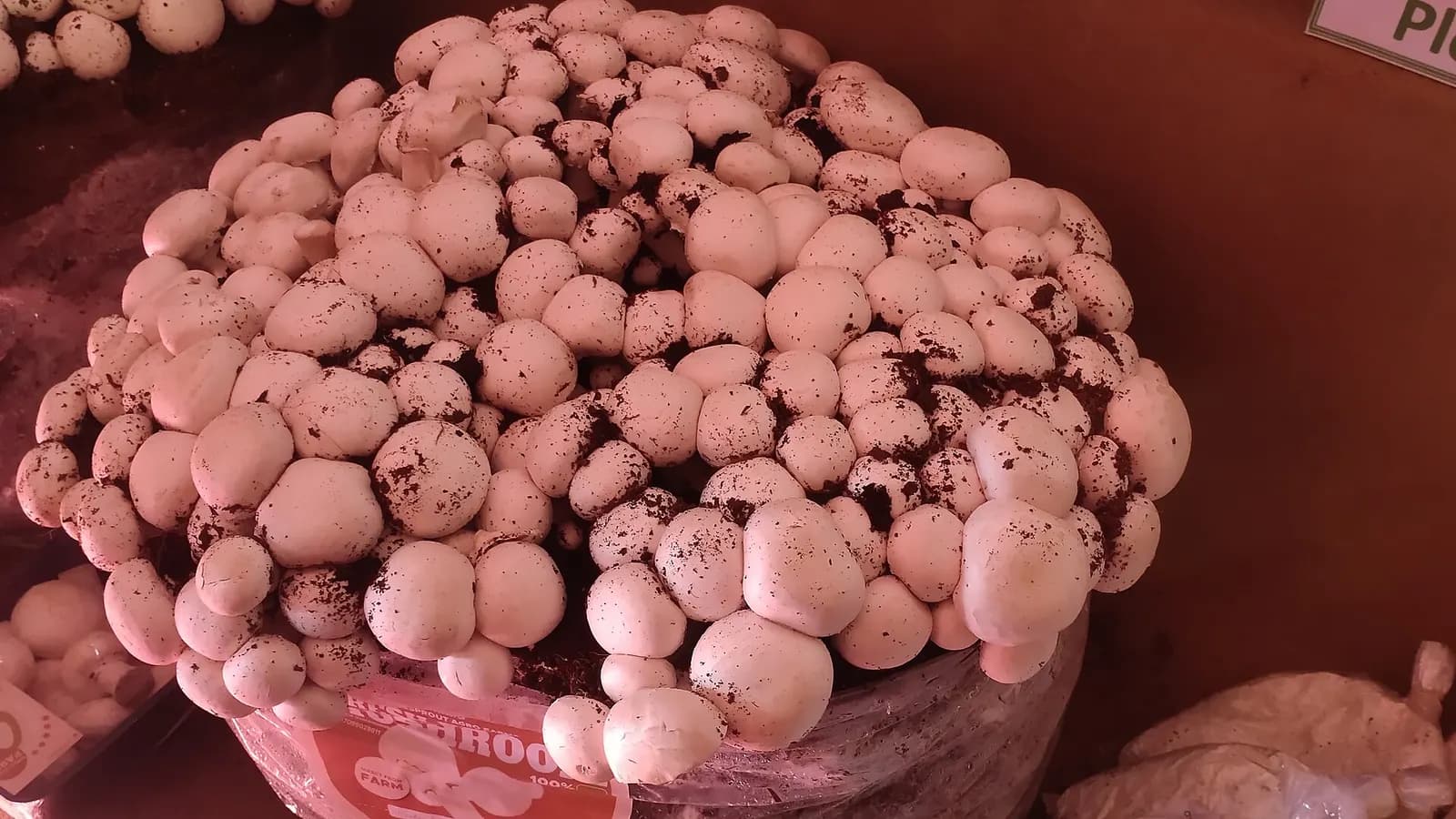
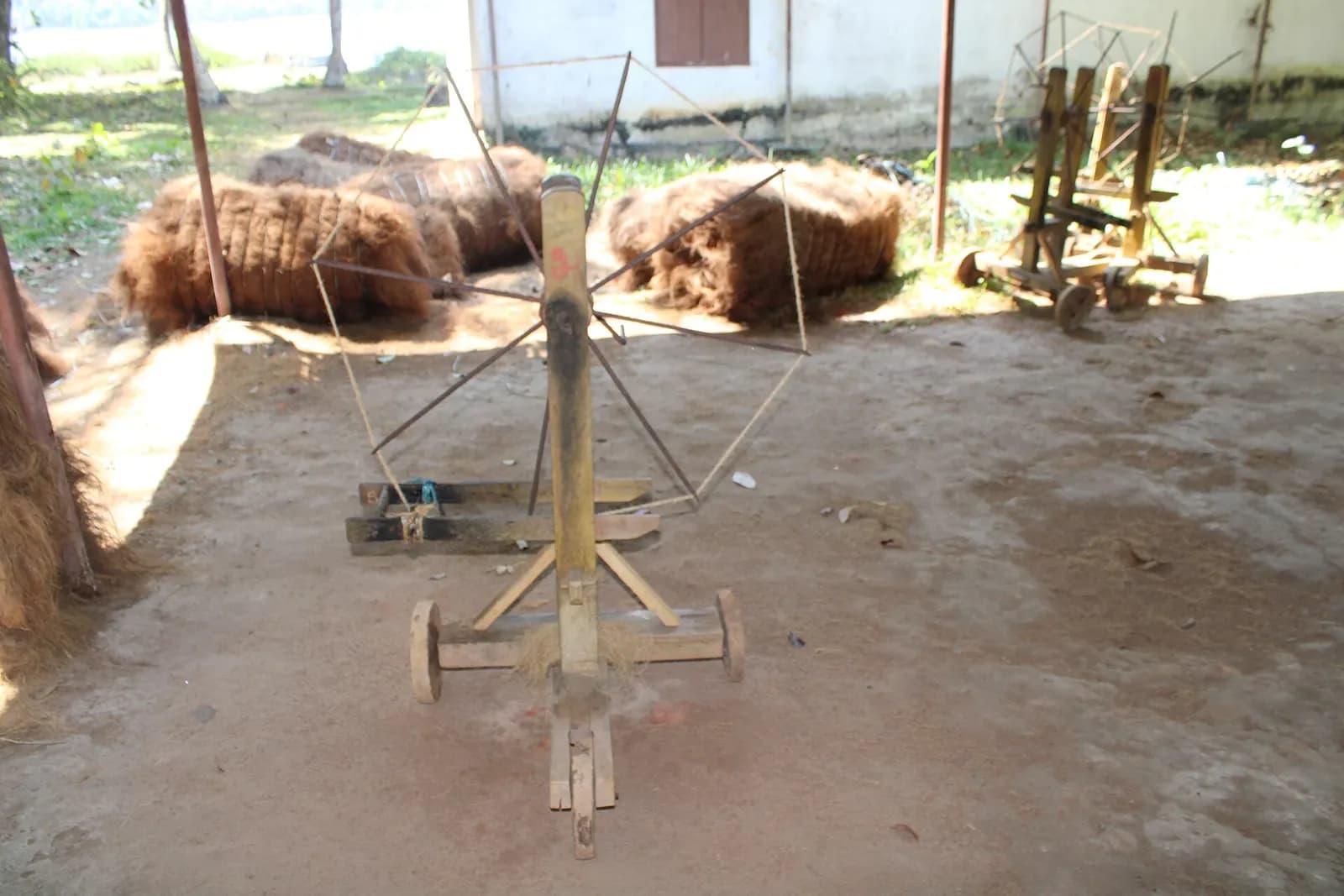
An LBI picks one or more "thrust areas" that suit its region. Common ones are food processing, honey, bamboo, mushroom growing, spices, coir and handicrafts. It installs the machines for those trades and runs courses, mostly aligned to national skill standards. It then hand-holds the trainees through registration, compliance (FSSAI, GST, design, trademarks) and finance. The guidelines also ask LBIs to advise existing informal units on how to formalise, to let local entrepreneurs use the machines to build product prototypes, and to link trainees with nearby industry for jobs. Each LBI's project report sets a target of 300–500 incubatees a year.
Is ASPIRE open in 2026? Where the scheme stands
ASPIRE's position in 2026 is mixed, and most websites have not caught up with it.
The approval period has ended. The 2023 guidelines targeted 125 new LBIs between 2021-22 and 2025-26, matching the 15th Finance Commission cycle that ended on 31 March 2026. Like other ministry schemes, ASPIRE needs a fresh appraisal to continue into the 2026-31 cycle. As of October 2026 we found no published renewal.
The money has almost stopped. ASPIRE spent ₹7.55 crore in 2024-25. Its 2025-26 budget of ₹20 crore was cut to ₹9 crore at the revised stage. For 2026-27 the Budget provides only ₹0.01 crore. A token line like this keeps a scheme alive on paper so the ministry can pay committed instalments to existing LBIs. It does not leave room for new incubators.
The portal is still live. On October 2026, aspire.msme.gov.in still carried the line "Eligible applicants may now apply for new Livelihood Business Incubators". It showed 109 LBIs approved, 82 functional, and zero proposals under examination at either the ministry or the Scheme Steering Committee. The dashboard counts 1,15,437 people skilled, 32,085 placed in work and 1,006 micro enterprises set up or supported. In a June 2026 statement reported by IANS, the ministry said the 109 LBIs are spread over 27 states and union territories and have trained more than 1.23 lakh people since 2022-23.
What this means for you:
- If you run an approved LBI, keep filing utilisation certificates and progress reports. Your remaining operational instalments depend on them, and they are what the token budget is for.
- If you are an institution planning a new LBI, you can talk to a Mentor Institute and prepare a project report. But don't buy machinery or hire staff on the expectation of a grant until the scheme is renewed and your project is approved by the Steering Committee.
- If you are an entrepreneur, the 82 running LBIs are still training people. Use them.
ASPIRE at a glance (October 2026)
109
LBIs approved
82
LBIs functional
1,15,437
People skilled
ASPIRE portal
₹0.01 crore
Budget 2026-27
₹9 crore in RE 2025-26
LBI grants: how much a host institution can get
The 2023 guidelines set two grants for a new LBI. Both are one-time.
| Grant | Government / MSME-ministry body | Private not-for-profit institution |
|---|---|---|
| Plant and machinery | 100% of cost, up to ₹1 crore | 75% of cost, up to ₹75 lakh |
| Operational expenditure | Up to ₹1 crore | Up to ₹1 crore |
| Own contribution | Nil on machinery | 25% of machinery cost, deposited before each release |
| Land and building | Not funded; host provides about 5,000 sq ft | Not funded; host provides about 5,000 sq ft |
The machinery grant excludes land and infrastructure. The operational grant covers a dedicated team, outreach and enrolment, running the incubation programmes, support services such as FSSAI and GST registration and design, advisory work for informal units, raw materials for hands-on training, and machine maintenance. The Mentor Institute that sponsors the LBI gets an administrative fee of 5% of the project cost from the ministry, on top of the grants. It does not come out of the LBI's money.
Worked example: a private institution's LBI
Say a not-for-profit society in a district of Odisha proposes an LBI for spices and millet processing. Its project report lists machines costing ₹90 lakh and operational costs of ₹80 lakh over the project period.
- Machinery grant: 75% of ₹90 lakh is ₹67.5 lakh. That is below the ₹75 lakh cap, so the grant is ₹67.5 lakh. The society puts in the other ₹22.5 lakh.
- Release of the machinery grant: 50% (₹33.75 lakh) after Steering Committee approval, and the remaining 50% after the LBI has used two-thirds of the first instalment and filed a utilisation certificate. Before each release, the society must deposit its 25% share for that instalment in the dedicated ASPIRE bank account.
- Operational grant: ₹80 lakh, within the ₹1 crore cap. It is released as 40% (₹32 lakh) once the machinery order is placed, 30% (₹24 lakh) after 70% of the first instalment is used, and the final 30% (₹24 lakh) after the first instalment is fully used and two-thirds of the second is used, each with a utilisation certificate and progress report.
- Total from the ministry: ₹1.475 crore. If the same LBI were run by a state government institution, the machinery grant would be the full ₹90 lakh.
Two deadlines catch institutions out. The complete utilisation certificate for buying and commissioning machinery is due within 18 months of approval, and the Steering Committee can penalise delays. Operational instalments are also tied to output and outcome targets, such as people trained and enterprises formed. An LBI that trains fewer people than its project report promised can find its later instalments held back.
Who can set up an LBI and how to apply
The guidelines allow two kinds of applicant:
- any agency or institution of the central or a state government, including existing training centres under central or state ministries, industry associations and academic institutions; and
- not-for-profit private institutions with experience of successfully running incubation or skill development programmes.
Commercial companies are not on the list. Applying is a three-tier process.
How an LBI proposal moves
Step 1
Host Institute prepares DPR
Step 2
Mentor Institute's screening committee
Step 3
Ministry of MSME
Step 4
Scheme Steering Committee approves
chaired by Secretary (MSME)
Step 5
Funds via Mentor Institute
in milestone instalments
Pick a Mentor Institute. Mentor Institutes are national or state institutions with at least five years of experience in incubation and skill development. The current list on the portal names the Entrepreneurship Development Institute of India (EDI), Ahmedabad and the Indian Institute of Entrepreneurship (IIE), Guwahati, with nodal officers' contacts. The Mentor Institute helps you prepare the Detailed Project Report (DPR), checks you have the space and documents, signs the contribution agreement if you are a private applicant, and later passes funds to you and monitors you.
Prepare the DPR in the prescribed format. It needs a study of your region's industries and economic strengths, a skill-gap analysis based on nearby industries, the thrust areas you chose, the machines and their costs, the courses with duration, batch size and fee, and your yearly target of incubatees. It also needs milestones you can realistically meet. Proposals are judged on how well they use local resources and meet local needs.
Screening and approval. A Project Screening Committee at the Mentor Institute evaluates the DPR and forwards it to the ministry. The Scheme Steering Committee, chaired by the Secretary (MSME), makes the final decision. Proposals are uploaded on aspire.msme.gov.in through the Mentor Institute.
Why LBI proposals stall
From the guidelines, these are the points where proposals most often run into trouble:
- No dedicated space. The Mentor Institute has to confirm you have about 5,000 sq ft set aside for the LBI before it forwards the DPR. Shared classrooms don't count.
- A thrust area that doesn't match the district. A food-processing LBI in an area with no local raw material, or a trade with no nearby buyers, is hard to justify.
- Private contribution not arranged. A private applicant must deposit 25% of each machinery instalment before the money is released. Societies that plan to raise it later get stuck.
- Outsourcing and duplication. Training under the LBI must be run by the host itself, and you must not take funding for the same activity from another scheme.
- Weak reporting. Each LBI must keep its own website updated every quarter with incubatee details, and file monthly and quarterly reports through the Mentor Institute.
How an entrepreneur can benefit from ASPIRE
If you are a farmer, a rural youth or a woman in a self-help group who wants to start a small processing or craft unit, ASPIRE reaches you through the incubator, not through a cheque.
Using an ASPIRE incubator as an individual
- 1
Find an approved LBI near you
Open the ASPIRE portalThe ASPIRE portal lists approved and functional LBIs. Your nearest MSME Development and Facilitation Office or district industries centre can also tell you.
- 2
Join a course in a trade that suits your area
Ask about the course length, the fee (if any) and whether you can use the machines afterwards to make samples.
- 3
Register your enterprise
The LBI helps with Udyam, FSSAI, GST and labelling. Udyam registration is free.
- 4
Get finance through other schemes
LBIs help you prepare a project report for a PMEGP or Mudra loan; a CGTMSE guarantee removes the need for collateral.
The real value of an LBI lies in what comes after the course. A trainee who learns honey processing and gets help with an FSSAI licence, a label and a bank loan application is far more likely to start a unit than one who only attends classes. That is why the ministry measures LBIs on enterprises formed and people placed in work, and not only on training numbers. If the LBI near you only offers classes, ask it directly about loan and registration support.
For a new unit, the loan usually comes from PMEGP. It pays a 15–35% margin-money subsidy on projects of up to ₹50 lakh in manufacturing. Smaller needs can be met by Mudra. Khadi and village-industry trades can also use KVIC's schemes.
The TBI and Fund of Funds components
Technology Business Incubators. Under the original scheme, TBIs at technical institutions were funded to incubate technology-led agro-rural startups. The 2023 guidelines say the TBI component "has been discontinued due to convergence with the Incubation scheme". TBIs approved up to 31 March 2021 keep getting machinery support under their old terms and are still monitored. The incubation scheme it merged into is now the MSME Innovative component of the MSME Champions Scheme. That component funds host institutes to support ideas through incubation, design and IPR, in any sector. If you are a technical institute or an innovator, that is where to look now, along with the Atal Innovation Mission.
Fund of Funds. ASPIRE's Fund of Funds started at ₹60 crore with SIDBI and was topped up by ₹250 crore to a corpus of ₹310 crore. SIDBI invests it in SEBI-registered Category I and II Alternative Investment Funds. Each fund must invest at least twice what it receives from ASPIRE in MSME startups and early-stage enterprises, and at least half of that in agro-rural ones. One fund can get up to ₹30 crore, and no more than 25% of its size. The guidelines set the fund's tenure up to 31 March 2025, with a SIDBI committee able to extend it by six years. We found no public decision on an extension. A rural startup cannot apply to the Fund of Funds. You approach the venture funds it backs, and SIDBI is asked to arrange meetings between those funds and LBI incubatees.
ASPIRE milestones
2015
ASPIRE launched with LBI, TBI and Fund of Funds components
31 Mar 2021
Last date for TBI approvals; component later merged with the incubation scheme
21 Nov 2023
Revised LBI guidelines take effect (OM of 12 Dec 2023)
31 Mar 2025
Fund of Funds tenure ends unless extended
31 Mar 2026
End of the 2021-26 period targeting 125 LBIs
2026-27
Budget provides a token ₹0.01 crore
Alternatives while ASPIRE waits for renewal
If you need incubation support or training money now, these schemes are funded in 2026-27:
- MSME Innovative (incubation, design, IPR) under the MSME Champions Scheme (₹54.72 crore for all three Champions components). It supports host institutes and idea-stage innovators.
- ESDP (₹96 crore) for entrepreneurship and skill courses run by MSME-DFOs and technology centres. See our ESDP guide.
- SFURTI (₹197.49 crore) for common facility centres in traditional artisan clusters, which do some of what an LBI does for a cluster.
- Atal Innovation Mission for incubation centres at universities and institutions.
- MSME Technology Centres for subsidised skill courses on industrial machines.
- State incubation policies. Many states fund incubators at colleges and NGOs.
What to do next
If you are an institution, contact a Mentor Institute now so your DPR is ready when the scheme is renewed for 2026-31, but don't commit money until you have Steering Committee approval. If you are an entrepreneur, find a running LBI and use its training and loan support, then read our PMEGP guide and work out your start-up budget with the startup cost calculator. For every other scheme open to small businesses, see our list of government schemes for MSMEs.
Frequently asked questions
ASPIRE stands for A Scheme for Promotion of Innovation, Rural Industry and Entrepreneurship. It is a Ministry of MSME scheme that funds Livelihood Business Incubators (LBIs), mostly in rural and underserved areas, to train people in agro-rural trades and help them start micro enterprises. It originally also had Technology Business Incubators and a Fund of Funds with SIDBI.
Partly. The portal still invites proposals for new LBIs, and approved incubators keep training people. But the current guidelines target LBIs only up to 2025-26, and the 2026-27 Budget gives ASPIRE just ₹0.01 crore, a token amount, down from ₹9 crore in 2025-26. Until a renewal for 2026-31 is announced, expect few or no new LBI sanctions.
A government institution or a Ministry of MSME body can get 100% of plant and machinery cost up to ₹1 crore. A private not-for-profit institution can get 75% up to ₹75 lakh and must put in the other 25%. Both can also get a one-time operational grant of up to ₹1 crore for staff, outreach, training and raw materials.
No. ASPIRE grants go to host institutions that run incubators, not to individuals. As an individual you benefit by joining training at an LBI near you. The LBI then helps you register your enterprise and apply for loans under schemes such as PMEGP or Mudra. Anyone offering an 'ASPIRE loan' or 'ASPIRE subsidy' to an individual is misdescribing the scheme.
Central or state government agencies and their training centres, industry associations, academic institutions, and not-for-profit private institutions with a track record in incubation or skill development. The applicant needs about 5,000 sq ft of space and must apply through one of the ministry's Mentor Institutes, such as EDI Ahmedabad or IIE Guwahati.
The TBI component was discontinued because it overlapped with the ministry's incubation scheme, now part of MSME Innovative under the MSME Champions Scheme. TBIs approved up to 31 March 2021 are still supported for their machinery under the old rules. Innovators should now look at MSME Innovative or the Atal Innovation Mission.
Sources & verification
Figures on this page were checked against the sources below when it was last reviewed on 9 October 2026. Each rate and limit is stored once with its own official source and review date, and official update channels are monitored daily so changes are picked up. How we verify
- 1.Revised Operational Guidelines for ASPIRE (OM of 12 Dec 2023, effective 21 Nov 2023) — Ministry of MSME (ARI Division) · accessed 9 October 2026
- 2.ASPIRE portal — dashboard and application — Ministry of MSME · accessed 9 October 2026
- 3.Details of Mentor Institutes — ASPIRE — Ministry of MSME · accessed 9 October 2026
- 4.Notes on Demands for Grants 2026-27, Demand No. 68 — Ministry of MSME — Ministry of Finance (Union Budget) · accessed 9 October 2026
- 5.A Scheme for Promotion of Innovation, Rural Industries and Entrepreneurship (ASPIRE) — NI-MSME (Ministry of MSME) · accessed 9 October 2026
- 6.Govt's ASPIRE scheme supports rural entrepreneurs, 109 incubators (IANS, 26 Jun 2026) — IANS via NewKerala · accessed 9 October 2026
MSMETOOLS is an independent platform and is not affiliated with any government agency, ministry or department.
Tools for this
Startup Cost Calculator
Estimate how much capital you need to launch.
Business Plan Generator (US)
Create a professional business plan for US investors and banks.
Related guides
 Atal Innovation Mission 2026: AIM 2.0, ATL, AIC & GrantsRead guide
 Startup India Seed Fund 2026: ₹20L Grant, Eligibility & StatusRead guide
 KVIC Schemes 2026: Khadi & Village Industries, PMEGP, SFURTIRead guide
 Entrepreneurship Development Programme 2026: EDP & ESDPRead guide
Official links open the government site in a new tab.