 Government schemes & funding
Atal Innovation Mission (AIM) in 2026: AIM 2.0, Tinkering Labs, Incubators and Grants for Startups and MSMEs
Atal Innovation Mission in 2026: AIM 2.0's ₹2,750 crore plan to 2028, Atal Tinkering Labs, incubators, the ₹1 crore ANIC grant for MSMEs, and how to apply.
 Edited by Sumeet YadavFounder & editor, MSMETOOLS · fact-checked against official sources
Contents (9)
- 1. What the Atal Innovation Mission is
- 2. AIM 2.0: what changed in November 2024
- 3. Atal Tinkering Labs for schools
- 4. Atal Incubation Centres and Community Innovation Centres
- 5. The Atal New India Challenge: the direct grant for startups and MSMEs
- 6. How founders and MSMEs can use AIM, step by step
- 7. How AIM fits with other startup and MSME schemes
- 8. Common mistakes
- 9. What to do next
The Atal Innovation Mission (AIM) is the Government of India's main programme for building innovation from school classrooms to startup incubators. If you are a founder, an MSME owner with a new product, a school principal or a university looking to host an incubator, this guide explains what AIM funds in 2026, which parts you can apply to directly, what the money looks like, and how AIM 2.0 has changed the mission since late 2024.
Quick answer
The Atal Innovation Mission is run by NITI Aayog. It funds Atal Tinkering Labs in schools, Atal Incubation Centres (AICs) and Atal Community Innovation Centres (ACICs) that support startups, and challenge grants. The Cabinet approved AIM 2.0 with ₹2,750 crore until 31 March 2028.
Schools: ₹20 lakh over five years for a tinkering lab
Incubators: up to ₹10 crore per AIC; up to ₹2.5 crore per ACIC
Startups and MSMEs: up to ₹1 crore under the Atal New India Challenge
Founders don't apply to AIM for incubation — they apply to an individual AIC
What the Atal Innovation Mission is
AIM was set up under NITI Aayog in 2016 as the government's flagship initiative to create and promote a culture of innovation and entrepreneurship. Its programmes cover schools, colleges, universities, research institutions, startups and the MSME sector, and they are designed to link up: a child who builds a gadget in a school tinkering lab can, years later, join an AIM-funded incubator and apply for an AIM challenge grant.
The mission doesn't run labs or incubators itself. It selects host institutions — a school, an engineering college, a corporate, a research body — gives them grant-in-aid, and monitors their performance through dashboards and reviews. That is the single most important thing to understand if you're a founder: your application usually goes to the incubator, not to AIM.
Atal Innovation Mission in numbers
₹2,750 crore
AIM 2.0 outlay
till 31 March 2028
10,000+
Atal Tinkering Labs
1.1 crore students, Nov 2025
6,782
Startups incubated
83 AICs + 20 ACICs, Mar 2026
₹1 crore
ANIC grant
per startup or MSME
AIM 2.0: what changed in November 2024
On 25 November 2024, the Union Cabinet approved continuing the mission with an enhanced scope and a budget of ₹2,750 crore for the period till 31 March 2028. The government described AIM 2.0 as a qualitative shift: the first phase built new infrastructure — labs and incubators — for a young ecosystem, while the second phase pilots programmes to fill gaps and scales what works through states, industry and academia.
The Cabinet note groups AIM 2.0 into three aims: bring more people into innovation, help more startups survive, and improve the quality of what comes out.
More innovators. The Language Inclusive Program of Innovation (LIPI) will set up 30 Vernacular Innovation Centres inside existing incubators so founders who don't work in English can get support in India's 22 scheduled languages. The Frontier Program will create 2,500 new tinkering labs and custom models for Jammu and Kashmir, Ladakh, the North-East, and aspirational districts and blocks.
Better survival. A Human Capital Development Program aims to train 5,500 incubator managers, teachers and trainers. At least one Deeptech Reactor will pilot ways to commercialise research-based startups that need years of development. A State Innovation Mission will help states build ecosystems around their strengths, and an international programme covers a Global Tinkering Olympiad, ten bilateral or multilateral partnerships and work with WIPO.
Better output. At least ten Industrial Accelerators will be set up with industry in critical sectors to scale advanced startups, and at least ten Atal Sectoral Innovation Launchpads — modelled on the defence ministry's iDEX — will help central ministries buy from startups. In June 2026, AIM described the industrial accelerator initiative as AACESS (Atal Acceleration Centres for Scale-up of Startups), still upcoming at the time.
Atal Innovation Mission — key dates
2016
AIM set up under NITI Aayog; first ATL and AIC calls
25 Nov 2024
Cabinet approves AIM 2.0 with ₹2,750 crore
1 Feb 2025
Budget 2025-26 announces 50,000 ATLs in government schools over five years
May 2026
Updated Atal New India Challenge guidelines published
June 2026
AACESS industrial accelerator announced as upcoming
31 March 2028
AIM 2.0 approval period ends
Atal Tinkering Labs for schools
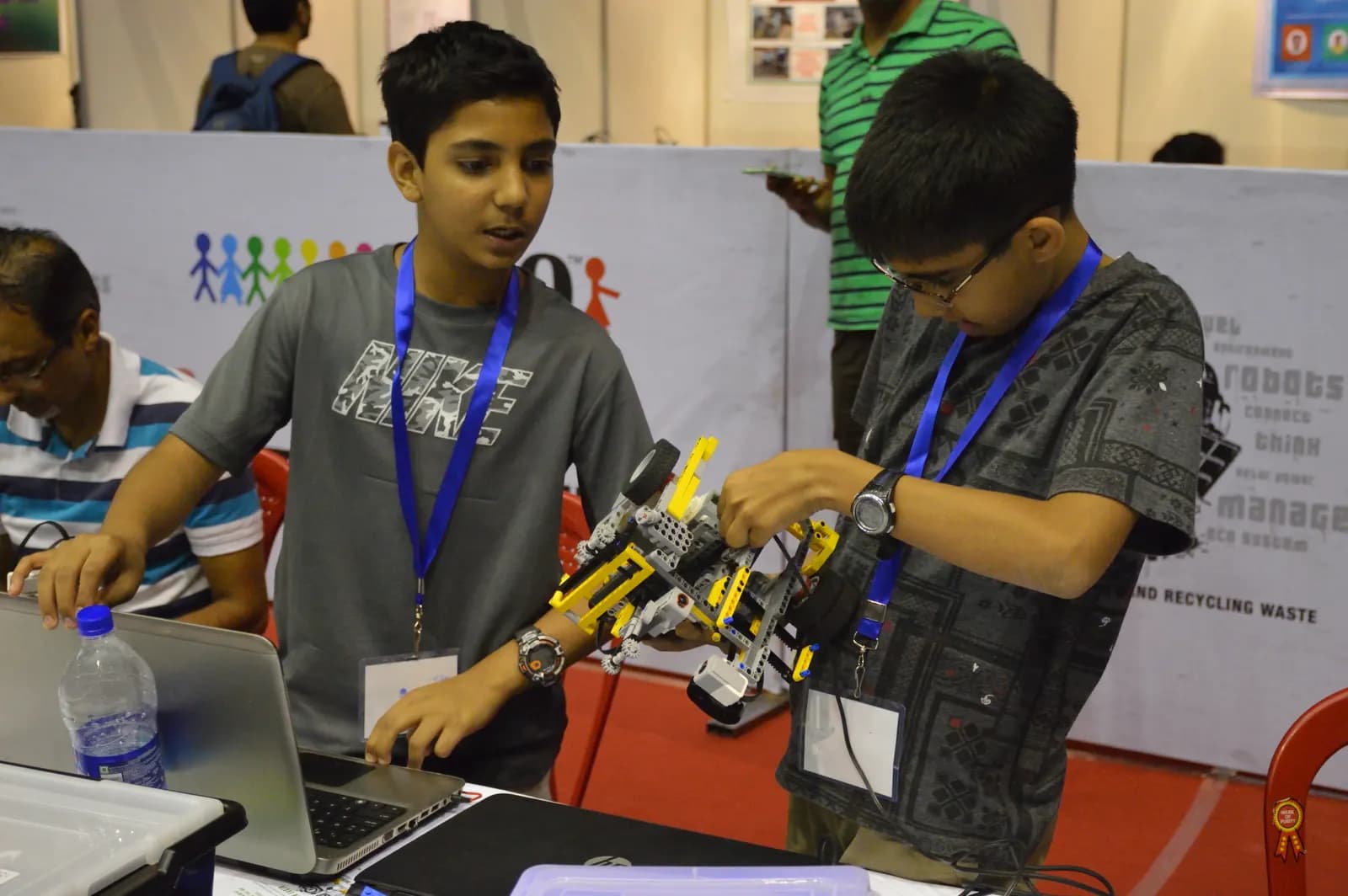
Atal Tinkering Labs (ATLs) are makerspaces inside schools where students in classes 6 to 12 use DIY electronics kits, 3D printers, sensors, robotics sets and hand tools to build prototypes. According to a PIB backgrounder, more than 10,000 ATLs had been set up by November 2025, with over 1.1 crore students engaged across 35 states and union territories and 722 districts, supported by more than 6,200 volunteer "Mentors of Change".
The Budget 2025-26 announced 50,000 new ATLs in government schools over five years, so that every government secondary school gets access to one. This expansion runs alongside AIM's own selection rounds for government and private schools.
Who can apply. Any government or private school that runs classes 6 to 12 and has a valid UDISE code can apply when AIM opens a call on its ATL application portal. Schools need dedicated space, a teacher who will run the lab, and the commitment to open it to students from nearby schools.
The money. A selected school receives ₹20 lakh over five years: ₹12 lakh in the first year for equipment and setting up, and the remaining ₹8 lakh in equal instalments over the next four years for running costs, consumables and events. AIM publishes procurement and fund-utilisation guidelines, and later instalments depend on the school reporting how the money was used.
What students do. Beyond everyday tinkering, ATL students take part in the annual ATL Marathon innovation challenge and in the Student Innovator Programme, where the best ideas get mentoring from Atal Incubation Centres.
Atal Incubation Centres and Community Innovation Centres
Atal Incubation Centres (AICs) are startup incubators set up with AIM grants at universities, research institutions, corporates and other organisations. They give startups workspace, labs, mentors, investor connections, help with IP and regulation, and sometimes seed money. According to a Rajya Sabha reply reported in March 2026, 6,782 startups had been incubated across 83 AICs and 20 ACICs, more than 2,000 of them women-led or socially inclusive, with another 48 centres awaiting set-up. Uttar Pradesh had the most incubated startups (945), followed by Tamil Nadu, Telangana, Maharashtra and Karnataka.
Atal Community Innovation Centres (ACICs) do a similar job in unserved and underserved areas — smaller towns, tier-2 and tier-3 cities, the North-East and aspirational districts — with a focus on community and grassroots innovation. Each ACIC can get up to ₹2.5 crore over five years, with partners matching the grant.
Grants for institutions that want to host an AIC
If your university, company or research body wants to set up an AIC, the November 2023 guidelines set the rules. Applicants must have existed for at least three years. The AIM grant covers capital and operating costs over five years: up to ₹5 crore if no lab facility is set up, and up to ₹10 crore if the AIC builds a sector-specific lab.
AIC grant and matching contribution by applicant type
| Applicant | Matching contribution | Max AIM grant |
|---|---|---|
Government academic / R&D | None | ₹5 crore (no lab) / ₹10 crore (lab) |
Government non-academic | None | ₹5 crore / ₹10 crore |
Private academic | At least 25% of the AIM grant | ₹5 crore / ₹10 crore |
Private non-academic (e.g. corporate) | At least 100% of the AIM grant | ₹5 crore / ₹10 crore |
Private R&D | At least 100% of the AIM grant | ₹5 crore / ₹10 crore |
Government academic / R&D
- Matching contribution
None
- Max AIM grant
₹5 crore (no lab) / ₹10 crore (lab)
Government non-academic
- Matching contribution
None
- Max AIM grant
₹5 crore / ₹10 crore
Private academic
- Matching contribution
At least 25% of the AIM grant
- Max AIM grant
₹5 crore / ₹10 crore
Private non-academic (e.g. corporate)
- Matching contribution
At least 100% of the AIM grant
- Max AIM grant
₹5 crore / ₹10 crore
Private R&D
- Matching contribution
At least 100% of the AIM grant
- Max AIM grant
₹5 crore / ₹10 crore
Up to 10% of the budget can be set aside as seed support for incubated startups, with the AIM-funded seed pool capped at ₹1 crore per AIC and ₹12.5 lakh per startup. The seed money can only be used after the AIC has run for a year, can be given as debt, equity or both, and must be matched by co-investment raised from non-government sources. Institutions apply only during AIM's calls, through its online portal.
The Atal New India Challenge: the direct grant for startups and MSMEs
The Atal New India Challenge (ANIC) is the AIM programme most relevant to small businesses, because it gives money directly to companies. It targets what AIM calls the second "valley of death" — the stage where a working prototype exists but the company lacks the money to test, pilot and find its first customers. AIM published updated programme guidelines in May 2026.
Who can apply. Any Indian company incorporated under the Companies Act, any Indian company that is primarily a micro, small or medium enterprise under the MSMED Act, or a DPIIT-recognised startup — as long as it has a working prototype for one of the challenge areas AIM announces, and more than 51% of the company is held in India. Past challenge areas have included e-mobility, road transport, space applications, sanitation, medical devices, waste management and agriculture.
What you get. Up to ₹1 crore as grant-in-aid, released in three tranches of 30%, 40% and 30% as you meet agreed goals and deliverables. Each tranche lasts four to eight months, so a project runs for 12 to 24 months. You must use at least 80% of one tranche and meet its goals before asking for the next.
How selection works. Applications are accepted only on AIM's online portal during an open call. AIM shortlists, then a Screening-cum-Selection Committee of sector experts, officials and industry hears presentations. Selected companies go through due diligence — submitting 27 signed documents covering identity, financials and the project — before receiving a sanction letter.
How an ANIC grant moves
Step 1
Call for applications on AIM portal
Step 2
Shortlisting by AIM
Step 3
Pitch to selection committee
Step 4
Due diligence
27 documents
Step 5
Sanction letter
Step 6
Tranches 30% / 40% / 30%
milestone-based, 12–24 months
A worked example for an MSME
Say a small engineering firm in Coimbatore, registered on Udyam as a micro enterprise, has built a working prototype of a low-cost sensor that alerts farmers when irrigation pump motors overheat. ANIC opens a challenge in agriculture. The firm budgets ₹1.4 crore to finish field trials, get certification and make a first batch of 500 units, and asks AIM for ₹1 crore.
If selected, it would receive about ₹30 lakh in the first tranche to run trials on 50 farms, ₹40 lakh in the second for certification and tooling after showing the trial results, and ₹30 lakh in the third for the first production batch and market launch. The other ₹40 lakh must come from the firm's own money, a bank term loan or an investor — and the guidelines ask applicants to show how they will meet the balance. A CGTMSE-backed MSME loan is one way to fund the gap.
How founders and MSMEs can use AIM, step by step
Engaging with the Atal Innovation Mission
- 1
Get your registrations in place
Startup India recognition guideIncorporate the company, get DPIIT recognition if you qualify as a startup, and register on Udyam if you are an MSME. Both are free.
- 2
Shortlist incubators in your sector
AIM — Atal Incubation CentresUse AIM's published list of AICs and ACICs. Choose ones with labs, mentors and portfolio companies in your field, near where you work.
- 3
Apply to the incubator's cohort
Each AIC runs its own call. Prepare a pitch deck, team profile, prototype demo and any traction. Read the terms on fees, equity and residency period.
- 4
Watch for ANIC challenge calls
ANIC guidelines (May 2026)If you have a working prototype, check AIM's website and social channels for open ANIC challenges in your sector.
- 5
Use the wider ecosystem
Offer to mentor at a nearby tinkering lab, sponsor a challenge, or take part in AIM industry events — this is how many MSMEs find partners and early users.
Getting into an Atal Incubation Centre
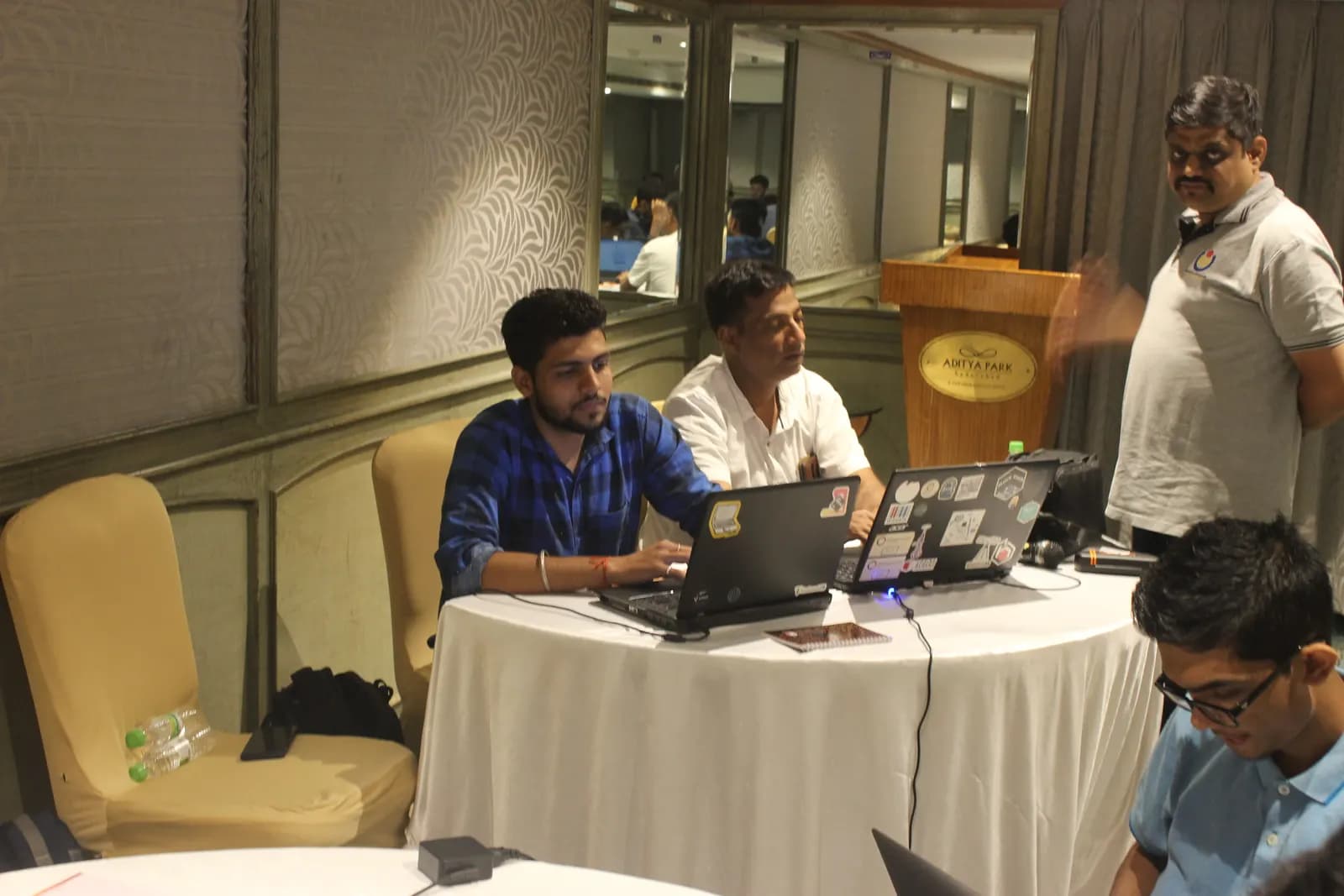
Because each AIC sets its own selection process, there is no single AIM form for founders. Most AICs open one or two cohorts a year. A typical application asks for the problem you're solving, your product or prototype, your team, your market size and how far you have got. Shortlisted founders pitch to a panel of the incubator's staff, mentors and investors.
Read the incubation agreement carefully before you sign. AIM's guidelines require AICs to have a transparent selection system and a written agreement with each startup covering mentoring support, facilities, the residency period and the exit policy. Many AICs charge a monthly fee for space, take a small equity stake in exchange for services or seed money, or both. Compare these terms across incubators the way you would compare investor term sheets.
Pick the incubator for its sector strength, not its brand. A medtech startup will get more from an AIC with clinical partners and a device-testing lab than from a general-purpose incubator in a bigger city. Ask the AIC to introduce you to two or three founders currently in residence, and ask them what support they actually received.
How AIM fits with other startup and MSME schemes
AIM is one piece of a larger set of support, and founders often combine it with others. DPIIT recognition under Startup India brings tax and compliance benefits and access to the Startup India Seed Fund and the Fund of Funds; many AICs are also approved incubators for the Seed Fund, so getting into one can open both doors. For MSMEs, the Ministry of MSME's technology centres offer tooling, testing and training that complement an AIC's mentoring, and the District Industries Centre can point you to state incentives for new products. Once a product is selling, ordinary bank finance — a term loan for machinery, or working capital backed by a CGTMSE guarantee — takes over from grants. Think of AIM as the bridge from prototype to first customers, not as long-term funding.
Common mistakes
Applying to AIM for a startup grant that doesn't exist. Outside ANIC challenges, AIM doesn't fund individual startups directly. Websites that promise "AIM funding" for a fee are not official.
Applying to ANIC with only an idea. The guidelines require a working prototype. If you're still at idea stage, an incubator programme or the Startup India Seed Fund, which offers grants of up to ₹20 lakh for proof of concept through approved incubators, is a better first step.
Under-budgeting the balance cost. ANIC grant money comes in tranches after milestones. If your plan depends on receiving the full ₹1 crore on day one, you'll run short. Line up your own funds or a loan for the gap before you apply.
Treating tinkering labs as only for children. For MSMEs, a nearby ATL is a pipeline of curious students and teachers. Mentoring as a Mentor of Change, or setting a real problem from your factory as a student challenge, costs little and builds local goodwill and future hires.
Ignoring the end date. AIM 2.0 is approved until 31 March 2028. Programmes, calls and grant rules may change after that, so time multi-year plans with that date in mind.
Official links
- Atal Innovation Mission — homeProgrammes, calls for applications, lists of AICs and ACICs
- PIB — Cabinet approves AIM 2.0₹2,750 crore till 31 March 2028; programme list
- AIC guidelines (November 2023)Grants, matching and seed support rules
- ANIC guidelines (May 2026)Eligibility for startups and MSMEs, tranches
- ATL FAQsSchool eligibility and application
- Startup IndiaDPIIT recognition and Seed Fund Scheme
What to do next
If you're a founder, shortlist three AICs in your sector and note their next cohort dates; if you're an MSME with a working prototype, read the ANIC guidelines and prepare your budget and milestones now, so you can apply as soon as a matching challenge opens. Get DPIIT recognition or Udyam registration first, and model your funding gap with the startup cost calculator.
This is general information, not legal or financial advice — confirm current calls and terms on the Atal Innovation Mission website.
Frequently asked questions
The Atal Innovation Mission is NITI Aayog's flagship programme, launched in 2016, to build a culture of innovation and entrepreneurship. It funds Atal Tinkering Labs in schools, Atal Incubation Centres and Atal Community Innovation Centres for startups, and challenge grants for startups and MSMEs. The Cabinet extended it as AIM 2.0 with ₹2,750 crore until 31 March 2028.
Mostly not. AIM funds institutions — schools, incubators and community innovation centres — which then support startups. The main direct route is the Atal New India Challenge, which gives selected startups and MSMEs with a working prototype up to ₹1 crore in milestone-based tranches. Incubated startups can also get seed support of up to ₹12.5 lakh from their AIC's AIM-funded seed pool.
Any government or private school with classes 6 to 12 and a valid UDISE code can apply when AIM opens a call on its ATL portal. Selected schools get ₹20 lakh over five years — ₹12 lakh in the first year and the rest in four instalments. The Budget 2025-26 also announced 50,000 new ATLs in government schools over five years.
Each AIC runs its own selection. Find an AIC that specialises in your sector on AIM's list, watch for its cohort call, and apply with your pitch deck, team details and prototype or traction data. Shortlisted founders usually present to a panel. Expect the incubator to charge fees or take a small equity stake; terms vary by AIC.
Yes. The Atal New India Challenge explicitly accepts Indian companies that are MSMEs under the MSMED Act, alongside DPIIT-recognised startups, if they have a working prototype for a listed challenge. MSMEs can also use AIC labs and mentoring, partner with tinkering labs, or become corporate partners of incubators.
AIM 2.0 is the mission's second phase, approved by the Cabinet on 25 November 2024 with ₹2,750 crore till 31 March 2028. Instead of mainly building new infrastructure, it pilots programmes to fill gaps — vernacular innovation centres, frontier-region tinkering labs, a deeptech reactor, state innovation missions, industry accelerators and startup launchpads in ministries.
Sources & verification
Figures on this page were checked against the sources below when it was last reviewed on 7 October 2026. Each rate and limit is stored once with its own official source and review date, and official update channels are monitored daily so changes are picked up. How we verify
- 1.Cabinet approves continuation of the Atal Innovation Mission (25 November 2024) — PIB — Cabinet · accessed 7 October 2026
- 2.From Classrooms to Creation Labs: Catalysing School-Level Innovation (PIB backgrounder, December 2025) — PIB · accessed 7 October 2026
- 3.Union Education Minister lauds Budget 2025-26 (1 February 2025) — PIB — Ministry of Education · accessed 7 October 2026
- 4.AIM — Guidelines for setting up Atal Incubation Centres (24 November 2023) — Atal Innovation Mission, NITI Aayog · accessed 7 October 2026
- 5.AIM — Atal New India Challenge Program Guidelines (May 2026) — Atal Innovation Mission, NITI Aayog · accessed 7 October 2026
- 6.AIM — Atal Community Innovation Centre overview — Atal Innovation Mission, NITI Aayog · accessed 7 October 2026
- 7.AIM — Grant-in-Aid Fund Utilization Guideline for ATL schools — Atal Innovation Mission, NITI Aayog · accessed 7 October 2026
- 8.ATL FAQs — Atal Innovation Mission, NITI Aayog · accessed 7 October 2026
- 9.AIM and STPI convene GCC Conclave on Innovation 2026 (30 June 2026) — PIB — NITI Aayog · accessed 7 October 2026
- 10.National Capital incubates 566 startups under Atal Innovation Mission (12 March 2026) — The Tribune (reporting a Rajya Sabha reply) · accessed 7 October 2026
MSMETOOLS is an independent platform and is not affiliated with any government agency, ministry or department.
Tools for this
Startup Cost Calculator
Estimate how much capital you need to launch.
Business Plan Generator (US)
Create a professional business plan for US investors and banks.
Business Valuation Calculator
Estimate what your business is worth.
Related guides
 Startup India Registration 2026: DPIIT Rules, Steps, BenefitsRead guide
 Startup India Seed Fund 2026: ₹20L Grant, Eligibility & StatusRead guide
 MSME Champions Scheme 2026: ZED, LEAN, Innovative & StatusRead guide
 ASPIRE Scheme 2026: LBI Grants, Eligibility & Current StatusRead guide
Official links open the government site in a new tab.