 Government schemes & funding
Startup India Registration in 2026: DPIIT Recognition Eligibility, Process and Benefits
Startup India registration in 2026: new ₹200 crore DPIIT limit, Deep Tech category, NSWS steps, documents, tax holiday via IMB, angel tax status and funding.
 Edited by Sumeet YadavFounder & editor, MSMETOOLS · fact-checked against official sources
Contents (9)
- 1. What DPIIT recognition is and what changed in 2026
- 2. Who is eligible for Startup India registration
- 3. Documents you need
- 4. How to apply for DPIIT recognition: step by step
- 5. Benefits of DPIIT recognition
- 6. Funding schemes recognition unlocks
- 7. Common rejection reasons and how to fix them
- 8. After you are recognised
- 9. What to do next
Startup India registration — formally, recognition by the Department for Promotion of Industry and Internal Trade (DPIIT) — is the entry ticket to most central government support for new businesses: the startup tax holiday, government-backed venture funds, collateral-free credit guarantees, cheaper patents and easier government tenders. This guide is for founders of companies, LLPs, partnership firms and cooperatives who want to know whether they qualify under the rules notified in February 2026, how to apply, what to write so the application isn't rejected, and which benefits are real once you have the certificate. Everything was checked against Startup India, DPIIT and PIB sources as of October 2026.
Quick answer
You can get DPIIT startup recognition free on the National Single Window System (nsws.gov.in) if your entity is a private limited company, LLP, registered partnership or cooperative society, is up to 10 years old, has never crossed ₹200 crore turnover in a year, and is working on an innovative or scalable product, service or process.
Deep Tech startups: up to 20 years old and ₹300 crore turnover (new in 2026)
Recognition is free — there are no official agents
Tax holiday is separate: apply to the Inter-Ministerial Board; companies and LLPs incorporated before 31 March 2030 only
Angel tax no longer exists for new share issues (section 56(2)(viib) omitted from AY 2025-26)
Unlocks FFS/FoF 2.0 venture funding, CGSS loans up to ₹20 crore guarantee, SIPP patent help and GeM tender relaxations
What DPIIT recognition is and what changed in 2026
The Startup India initiative began on 16 January 2016. Its core legal instrument is a DPIIT notification that defines who counts as a "startup" for government purposes. That definition matters well beyond the certificate: income-tax law, the Companies Act exemptions, public procurement rules, SEBI-registered funds and even BIS fee concessions refer back to it.
On 4 February 2026, DPIIT issued a new notification, G.S.R. 108(E), replacing the February 2019 definition. Three changes matter most. The turnover ceiling doubled from ₹100 crore to ₹200 crore. A new Deep Tech Startup category gets a longer runway — up to 20 years from incorporation and turnover up to ₹300 crore. And cooperative societies, both multi-state and state-registered, can now be recognised alongside companies, LLPs and partnerships. The notification also lets DPIIT revoke recognition obtained with false information.
The programme is large. PIB reported on 17 March 2026 that 2,12,283 entities had been recognised as of 31 January 2026, and more than one lakh of them had at least one woman director or partner. That volume is why DPIIT reads applications quickly and rejects vague ones.
Startup India in numbers (2026)
₹200 crore
Turnover ceiling, regular startups
was ₹100 crore
20 years
Recognition window, Deep Tech
₹300 crore turnover
2,12,283 (31 Jan 2026)
Entities recognised
PIB
₹0
Government fee for recognition
Who is eligible for Startup India registration
All of the following must be true on the day you apply.
Entity type. You must be a private limited company under the Companies Act, 2013, a partnership firm registered under the Partnership Act, 1932, a limited liability partnership, or a cooperative society (multi-state or state/UT). A sole proprietorship, an HUF, a trust or an unregistered partnership cannot be recognised. Public limited companies are also outside the definition.
Age. Up to 10 years from the date of incorporation or registration for a regular startup, and up to 20 years for a recognised Deep Tech startup. Once you cross the limit, recognition lapses even if your certificate is still on file.
Turnover. Turnover must not have exceeded ₹200 crore in any financial year since incorporation (₹300 crore for Deep Tech). It is a lifetime test: a single bad-for-this-purpose year above the line ends eligibility.
Innovation or scalability. The entity must work towards innovation, development or improvement of products, processes or services, or have a scalable business model with high potential for employment or wealth creation. A plain trading business, a franchise outlet, a consultancy reselling time or a traditional manufacturing unit without anything new will usually be rejected.
Not a spin-off. An entity formed by splitting up or reconstructing an existing business is not eligible. If you moved an existing proprietorship's business into a new company, explain clearly what is new; simply transferring a running business doesn't qualify.
Who counts as a Deep Tech startup
The 2026 notification defines Deep Tech by attributes rather than a list of sectors. DPIIT looks for solutions built on new scientific or engineering knowledge, a high share of spending on R&D relative to revenue or funding, ownership or development of significant novel intellectual property with steps towards commercialisation, and long development timelines with high capital needs and real technical uncertainty. Semiconductor design, space hardware, advanced materials, biotech platforms and similar ventures fit the description; an app built on off-the-shelf cloud tools generally won't, however clever its business model.

Worked eligibility examples in ₹
- A Pune SaaS company incorporated in June 2019 with turnover of ₹38 crore in 2023-24 and ₹71 crore in 2025-26 — never above ₹200 crore — qualifies for recognition until June 2029.
- A Hyderabad food-processing LLP formed in 2023 that crossed ₹120 crore turnover in 2025-26 would have failed the old ₹100 crore test but qualifies under the new ₹200 crore ceiling. It cannot, however, claim the tax holiday for that year, because the tax law still uses ₹100 crore.
- A Bengaluru space-components company incorporated in 2012 is past ten years, but if DPIIT recognises it as Deep Tech it can stay recognised to 2032 as long as turnover stays under ₹300 crore.
- A Jaipur proprietor running a handicraft export business cannot apply until the business is incorporated as a company or LLP, and even then needs to show what is innovative or scalable about the model.
Documents you need
Recognition is document-light compared with most registrations, but the description you write carries the application. Have these ready as PDFs before you open the form.
Documents for DPIIT recognition
0/8An incubator letter or patent filing is not mandatory, but applications that rely only on a short paragraph are the ones most often sent back. If you have filed a trade mark, include it — our trademark registration guide explains the startup fee rate.
How to apply for DPIIT recognition: step by step
Applications now go through the National Single Window System, which pulls entity data from MCA and links to the Startup India portal. There is no fee at any stage.
Startup India registration on NSWS
- 1
Create an NSWS account
Open NSWS — startup recognitionSign up as an investor/entity on nsws.gov.in using the authorised person's email and mobile number, and add your entity using its PAN/CIN or LLPIN.
- 2
Add the approval
Go to Add Approvals → Central Approvals, search for Registration as a Startup under DPIIT, and add it to your dashboard.
- 3
Fill in entity and founder details
Incorporation date, registered address, sector, industry, directors or partners, team size and current stage (idea, validation, early traction, scaling).
- 4
Explain the innovation
Answer the questions on the problem, the solution, uniqueness, revenue model and scalability in your own words, with numbers where you have them.
Tip: Avoid generic phrases such as 'disruptive platform'. Say exactly what you built and why it is better or cheaper.
- 5
Upload documents and submit
Attach the incorporation certificate and supporting material, accept the self-declaration and submit. Track status and queries on the NSWS dashboard.
- 6
Download the certificate
Once DPIIT approves, the recognition certificate with a DIPP/DPIIT number can be downloaded and verified online.
DPIIT may raise a clarification instead of rejecting outright. Reply on the dashboard with specifics — a product link, a demo video, customer numbers, a patent filing — rather than repeating the original text. If rejected, you can apply again with a better case; there is no cooling-off fee.
Picking the right structure before you apply
Because recognition and the tax holiday have different entity rules, the structure you choose at incorporation decides which benefits you can ever use. A private limited company is the default for anyone planning to raise equity: venture funds, including those backed by FFS and FoF 2.0, invest by subscribing to shares, it can claim the tax holiday, and it can issue ESOPs to staff. An LLP also qualifies for recognition and the tax holiday and has lighter compliance, but most institutional investors avoid LLPs because they cannot hold shares in them, and converting later costs time and stamp duty. A registered partnership firm can be recognised but cannot claim the tax holiday or raise equity easily, so it suits founders who want recognition mainly for procurement relaxations or IP fee support. Cooperative societies, newly eligible from February 2026, will mostly use recognition for scheme access rather than venture funding.
If you are still a proprietorship, incorporate first and then apply; recognition cannot be transferred from a proprietor to a new company, and the age clock starts from the new entity's incorporation date.
Benefits of DPIIT recognition
Recognition itself pays nothing. Its value is in what it unlocks, and some benefits need a separate application.
| Benefit | What you get | How to claim |
|---|---|---|
| Startup tax holiday | 100% deduction of profits for 3 consecutive years out of the first 10 | Apply to the Inter-Ministerial Board for a certificate (companies and LLPs only) |
| No angel tax | Share premium no longer taxed under s.56(2)(viib) | Automatic since AY 2025-26 — applies to all companies, not just startups |
| Fund of Funds (FFS and FoF 2.0) | Equity from SEBI-registered AIFs backed by SIDBI | Approach funds that hold FFS commitments |
| CGSS credit guarantee | Guarantee up to ₹20 crore per borrower for loans from banks, NBFCs and AIFs | Through your lender or the Jan Samarth portal |
| SIPP | Facilitator fees for patents, designs and trade marks borne by the government; lower statutory fees | IP India facilitator list |
| Public procurement | Relaxation of prior turnover, prior experience and EMD conditions | GeM Startup Runway and tender documents |
| Easier exit | Fast-track insolvency process for eligible startups | Under the Insolvency and Bankruptcy Code |
The tax holiday through the Inter-Ministerial Board
The best-known benefit, long called "80-IAC", lets an eligible startup deduct 100% of its business profits for any three consecutive years out of its first ten. Since the Income-tax Act, 2025 took effect on 1 April 2026, the same deduction sits in section 140 of the new Act; the conditions carried over. You need a company or LLP incorporated on or after 1 April 2016 and before 31 March 2030 (the Finance Act 2025 extended the earlier 2025 cut-off by five years), turnover not exceeding ₹100 crore in the year you claim, and a certificate from the Inter-Ministerial Board (IMB).
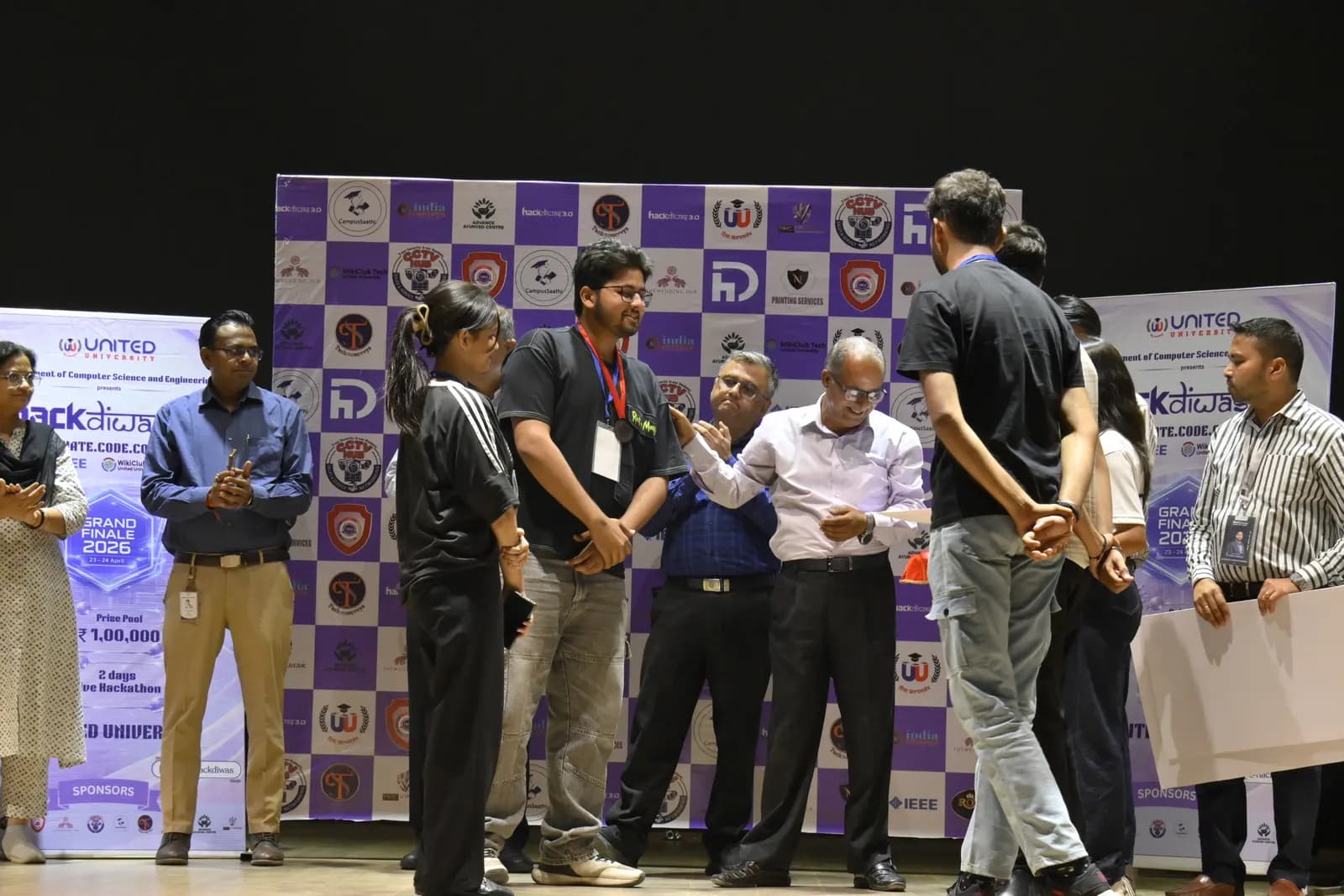
The IMB application is a separate form on the Startup India portal, much more demanding than recognition. It asks for three years of audited accounts and income-tax returns (or since incorporation), the shareholding pattern, a CA certificate that the business wasn't formed by splitting or reconstruction, evidence of scalability such as revenue growth, IP filings, employment data including the diversity of hires, and funding details. The Board scores applications on innovation, wealth generation and employment. Plan the three years you claim carefully: you want them to be profitable years, and the clock started on incorporation.
Two practical points. Companies that opt for the concessional corporate tax regime cannot claim this deduction, and Minimum Alternate Tax (or Alternate Minimum Tax for LLPs) can still apply on book profits, so the saving is smaller than "zero tax". Ask your CA to model the three candidate years before you file.
Angel tax: gone for new raises
Until 2024, section 56(2)(viib) taxed share premium received by a closely held company above fair market value, which caught many startups raising angel rounds. DPIIT recognition plus a filing was the escape route. The Finance (No. 2) Act, 2024 omitted the clause with effect from assessment year 2025-26, for all investors, resident and non-resident. New rounds no longer need the exemption filing. Valuation reports still matter for FEMA pricing rules on foreign investment and for other tax provisions, and assessments of earlier years can still raise the old issue, so keep past valuation reports safe.
Recognition vs IMB certificate vs Udyam
| DPIIT recognition | IMB certificate (tax holiday) | Udyam registration | |
|---|---|---|---|
Who can get it | Company, LLP, partnership, cooperative | Recognised company or LLP only | Any enterprise, incl. proprietorship |
Turnover test | ≤ ₹200 crore every year | ≤ ₹100 crore | MSME investment and turnover limits |
Main benefit | Access to startup schemes, procurement relaxations | 100% profit deduction for 3 of first 10 years | MSME credit, CGTMSE, payment protection |
Fee | Free | Free | Free |
Who can get it
- DPIIT recognition
Company, LLP, partnership, cooperative
- IMB certificate (tax holiday)
Recognised company or LLP only
- Udyam registration
Any enterprise, incl. proprietorship
Turnover test
- DPIIT recognition
≤ ₹200 crore every year
- IMB certificate (tax holiday)
≤ ₹100 crore
- Udyam registration
MSME investment and turnover limits
Main benefit
- DPIIT recognition
Access to startup schemes, procurement relaxations
- IMB certificate (tax holiday)
100% profit deduction for 3 of first 10 years
- Udyam registration
MSME credit, CGTMSE, payment protection
Fee
- DPIIT recognition
Free
- IMB certificate (tax holiday)
Free
- Udyam registration
Free
Funding schemes recognition unlocks
Fund of Funds for Startups (FFS). The government does not invest directly. SIDBI commits money from a ₹10,000 crore corpus to SEBI-registered alternative investment funds, which must invest at least twice that amount in startups. PIB reported that FFS-backed funds had invested about ₹25,859 crore in startups by 31 January 2026. To benefit, you pitch to those funds like any other investor.
Startup India Fund of Funds 2.0. A second ₹10,000 crore fund of funds, with DPIIT's gazette notification and operational guidelines published in April 2026. It targets priority segments: deep tech, early-growth startups backed by smaller funds, technology-driven manufacturing and sector-agnostic funds.
Credit Guarantee Scheme for Startups (CGSS). Run by NCGTC, CGSS guarantees loans from banks, NBFCs and AIFs to DPIIT-recognised startups. The May 2025 revision raised the per-borrower cap from ₹10 crore to ₹20 crore and, as reported at the time, covers 85% of the default amount on loans up to ₹10 crore and 75% above, with a lower guarantee fee for champion sectors. About ₹925 crore of loans had been guaranteed by January 2026, so ask lenders directly whether they are CGSS members.
Startup India Seed Fund Scheme (SISFS). It offered up to ₹20 lakh as a grant for proof of concept and up to ₹50 lakh as debt or convertible investment through incubators. The last date for new applications was 31 May 2026; disbursements to already-selected startups continue. Watch the Startup India portal for a successor scheme.
Common rejection reasons and how to fix them
DPIIT's most common reason for returning an application is a weak description of innovation. "We are an online platform connecting buyers and sellers" tells the reviewer nothing. Describe the specific problem, who has it, what you built, what is technically or commercially new, and evidence — users, pilots, revenue, a prototype video. Numbers beat adjectives.
Startup India dates founders should know
16 Jan 2016
Startup India launched
1 Apr 2016
Earliest incorporation date for the startup tax holiday
AY 2025-26
Angel tax (s.56(2)(viib)) no longer applies
8 May 2025
CGSS revised — guarantee cap raised to ₹20 crore
4 Feb 2026
New startup definition: ₹200 crore limit, Deep Tech category, cooperatives
1 Apr 2026
Income-tax Act, 2025 in force — tax holiday now in section 140
31 May 2026
Last date for new Seed Fund (SISFS) applications
31 March 2030
Last incorporation date to qualify for the tax holiday
Other frequent problems: the entity type isn't eligible (a proprietorship applying in its own name), incorporation is older than ten years, turnover has crossed the limit in some year, the business is a straightforward trading or service operation, or documents don't match the MCA record. Directors listed on the form must match the MCA master data, and the authorised signatory should be a director or designated partner. If you restructured from an older business, attach a note explaining what is genuinely new; an unexplained transfer looks like reconstruction.
For the IMB certificate, rejections usually come from thin evidence of scalability or innovation, missing CA certificates, or unaudited accounts. Many startups apply for recognition early and for the IMB certificate only once they are profitable and have audited figures that show growth.
After you are recognised
Recognition is a status you must protect. Keep MCA filings and income-tax returns current, because DPIIT and the IMB rely on them. Track turnover each year against ₹200 crore and your age limit. If you change your name, address or constitution, update the record on the portal. Use the certificate when you bid on GeM — see our GeM registration guide — and when you apply to incubators and funds.
Get your Udyam registration too if you qualify as an MSME, since the two registrations open different doors. If you make physical products, recognised startups get the same 80% concession on BIS minimum marking fees as micro units — see our BIS certification guide.
Official Startup India links
- NSWS — startup recognition by DPIITApply and track recognition
- Startup India — recognition and tax exemptionEligibility under G.S.R. 108(E)
- Startup India — 80-IAC / IMB applicationDocuments and form for the tax holiday certificate
- Playbook of schemes for startups (June 2026)FFS, FoF 2.0, CGSS, SISFS, SIPP and more
- NCGTC — Credit Guarantee Scheme for StartupsGuarantee terms and member lenders
- Startup India Seed Fund portalStatus of existing applications
What to do next
If you haven't incorporated yet, choose a structure that keeps the tax holiday open — a private limited company or LLP. Build a realistic budget with the startup cost calculator, write a short business plan with the business plan generator so your innovation write-up has numbers behind it, and if you are raising money, sanity-check your round with the valuation calculator. Then apply for recognition on NSWS — it is free and usually the fastest win on this list.
This is general information, not legal or tax advice — confirm on the official source or with a professional.
Frequently asked questions
Yes. DPIIT charges no fee for recognition and says it has not appointed any agency, representative or franchise to issue certificates. You apply yourself on the National Single Window System (NSWS) using the entity's details. Any money you pay goes to a consultant or CA for help with the write-up, not to the government.
Under the February 2026 notification (G.S.R. 108(E)), turnover must not have exceeded ₹200 crore in any financial year since incorporation, and the entity must be up to 10 years old. A recognised Deep Tech startup can be up to 20 years old with turnover up to ₹300 crore. Earlier, the limit was ₹100 crore for all.
No. Recognition is available only to a private limited company, a registered partnership firm, an LLP or, since February 2026, a cooperative society. A sole proprietorship or a one-person business without one of these structures must first convert or incorporate. Note that the income-tax holiday is narrower still: only companies and LLPs can claim it.
No. The Finance (No. 2) Act, 2024 removed section 56(2)(viib) of the Income-tax Act, 1961 with effect from assessment year 2025-26, so share premium received from any investor, resident or foreign, is no longer taxed as income under that clause. The old DPIIT angel-tax exemption filing is therefore no longer needed for new raises. Past years' assessments can still be open.
No. Recognition is step one. For the 100% profit deduction for three consecutive years out of ten, a company or LLP incorporated before 31 March 2030 must apply separately to the Inter-Ministerial Board and get its certificate. The deduction also has a lower turnover limit of ₹100 crore and now sits in section 140 of the Income-tax Act, 2025.
They are separate. DPIIT recognition unlocks startup schemes and tax benefits; Udyam registration classifies you as a micro, small or medium enterprise and unlocks MSME benefits such as priority-sector loans, CGTMSE cover, payment protection and BIS fee concessions. Most eligible startups hold both, and Udyam is free and takes minutes.
Sources & verification
Figures on this page were checked against the sources below when it was last reviewed on 7 October 2026. Each rate and limit is stored once with its own official source and review date, and official update channels are monitored daily so changes are picked up. How we verify
- 1.DPIIT Startup Recognition & Tax Exemption — Startup India (DPIIT) · accessed 7 October 2026
- 2.80-IAC tax exemption — eligibility, documents and form — Startup India (DPIIT) · accessed 7 October 2026
- 3.Playbook of Government Schemes and Initiatives for Startups (June 2026) — Startup India (DPIIT) · accessed 7 October 2026
- 4.Over 1 lakh startups have at least one woman director among 2.12 lakh recognised by DPIIT — PIB (DPIIT), 17 Mar 2026 · accessed 7 October 2026
- 5.Startup recognition by DPIIT — approval details — National Single Window System · accessed 7 October 2026
- 6.Tax deduction for startups under section 140 of the Income-tax Act, 2025 — TaxGuru · accessed 7 October 2026
- 7.India's revised startup recognition framework 2026 — Treelife · accessed 7 October 2026
- 8.Angel tax abolished — Section 56(2)(viib) omitted — Legal 500 · accessed 7 October 2026
- 9.Govt rolls out bigger, better CGSS to boost startup loans — YourStory, May 2025 · accessed 7 October 2026
MSMETOOLS is an independent platform and is not affiliated with any government agency, ministry or department.
Tools for this
Startup Cost Calculator
Estimate how much capital you need to launch.
Business Valuation Calculator
Estimate what your business is worth.
Business Plan Generator (US)
Create a professional business plan for US investors and banks.
Related guides
 Startup India Seed Fund 2026: ₹20L Grant, Eligibility & StatusRead guide
 Credit Guarantee Scheme for Startups 2026: CGSS ExplainedRead guide
 How to Apply for Government Tenders in India (2026 Guide)Read guide
 GeM Bid Process 2026: Direct Purchase, L1, Bids & RARead guide
Official links open the government site in a new tab.