 Finance & accounting
PNB Digi MSME Loan in 2026: Digi MSME, DIGI MSME PRIME and GST Express Explained
PNB Digi MSME loan in 2026: up to ₹10 lakh (₹25 lakh on bank credits), DIGI MSME PRIME up to ₹10 crore on GST sales — eligibility, 0.30% fee, RLLR rate, steps.
 Edited by Sumeet YadavFounder & editor, MSMETOOLS · fact-checked against official sources
Contents (10)
- 1. PNB's three GST- and Udyam-based MSME journeys
- 2. Digi MSME Loan: eligibility, limit and repayment
- 3. Costs: the unified fee and what sits outside it
- 4. How the interest rate is set
- 5. DIGI MSME PRIME: GST-based limits up to ₹10 crore
- 6. GST Express Scheme for firms and companies
- 7. How to apply online
- 8. Why applications get rejected — and fixes
- 9. After sanction: renewal and prepayment
- 10. What to do next
Punjab National Bank runs two fully digital loan journeys for small businesses — the Digi MSME Loan for small overdrafts and term loans, and DIGI MSME PRIME, a GST-based cash credit that goes up to ₹10 crore — plus a branch-led GST Express Scheme for larger firms. This guide explains each one using only what PNB publishes on pnb.bank.in, read on 9 October 2026: who can apply, how the limit is worked out, what it costs, how the rate is set after the October 2026 repo hike, and how to apply. It also covers the reasons applications commonly fail and what to do about them.
Quick answer
The PNB Digi MSME Loan gives individuals and sole proprietors with Udyam registration an overdraft or term loan of up to ₹10 lakh — or up to ₹25 lakh when assessed on current-account credits — without collateral (CGTMSE-backed). DIGI MSME PRIME gives GST-registered proprietors a cash credit of ₹10 lakh–₹10 crore at 25% of GST sales. Both charge a unified fee of 0.30% + 18% GST and are priced off PNB's RLLR, now 8.35%.
Apply online at digimsme.pnb.bank.in (Digi MSME) or egstxp.pnb.bank.in (PRIME), via internet banking or the PNB One app
Not for borrowers already enjoying a cash credit or overdraft with another bank
Digi MSME limit = 25% of 12 months' bank credits, 20% of projected turnover, or 75% of asset cost
No prepayment penalty on floating-rate MSE loans sanctioned from 1 January 2026
PNB's three GST- and Udyam-based MSME journeys
PNB groups several products under its MSME schemes. Three matter for anyone searching for a "PNB digi MSME loan".
The Digi MSME Loan is the entry product: a small overdraft or term loan for micro and small enterprises owned by individuals or sole proprietors, decided digitally on your bank statements or projections. DIGI MSME PRIME is its larger, GST-driven sibling — a cash credit sized on your GST sales, again for individuals and proprietorships, and also applied for online. The GST Express Scheme is a branch-processed working-capital loan for any type of business, from proprietors to companies and co-operatives, that also uses GST returns but expects collateral.
PNB's GST- and Udyam-based MSME loans at a glance
| Digi MSME Loan | DIGI MSME PRIME | GST Express Scheme | |
|---|---|---|---|
Who | Individuals, sole proprietors | Individuals, proprietorships | Individuals, firms, companies, LLPs, co-operatives |
Amount | Up to ₹10 lakh; up to ₹25 lakh on credit summation | ₹10 lakh–₹10 crore | above ₹20 lakh to ₹10 crore |
Facility | Overdraft or term loan | Cash credit | Cash credit and non-fund facilities |
Limit based on | Bank credits, projections or asset cost | 25% of GST sales | 25% of 12 months' GST sales |
Security | CGTMSE, no collateral | CGTMSE or 75% collateral | 75% collateral, or 50% with hybrid CGTMSE |
Fee | Nil to ₹50,000; 0.30% + GST above | 0.30% + GST | 25% concession on applicable charges |
Channel | Online / internet banking / PNB One | Online / internet banking / PNB One | Branch |
Who
- Digi MSME Loan
Individuals, sole proprietors
- DIGI MSME PRIME
Individuals, proprietorships
- GST Express Scheme
Individuals, firms, companies, LLPs, co-operatives
Amount
- Digi MSME Loan
Up to ₹10 lakh; up to ₹25 lakh on credit summation
- DIGI MSME PRIME
₹10 lakh–₹10 crore
- GST Express Scheme
above ₹20 lakh to ₹10 crore
Facility
- Digi MSME Loan
Overdraft or term loan
- DIGI MSME PRIME
Cash credit
- GST Express Scheme
Cash credit and non-fund facilities
Limit based on
- Digi MSME Loan
Bank credits, projections or asset cost
- DIGI MSME PRIME
25% of GST sales
- GST Express Scheme
25% of 12 months' GST sales
Security
- Digi MSME Loan
CGTMSE, no collateral
- DIGI MSME PRIME
CGTMSE or 75% collateral
- GST Express Scheme
75% collateral, or 50% with hybrid CGTMSE
Fee
- Digi MSME Loan
Nil to ₹50,000; 0.30% + GST above
- DIGI MSME PRIME
0.30% + GST
- GST Express Scheme
25% concession on applicable charges
Channel
- Digi MSME Loan
Online / internet banking / PNB One
- DIGI MSME PRIME
Online / internet banking / PNB One
- GST Express Scheme
Branch
All three are floating-rate and linked to PNB's Repo Linked Lending Rate. Partnerships, LLPs and companies can't use the two digital products; for them, the GST Express Scheme or a regular MSME loan at the branch is the route.
Digi MSME Loan: eligibility, limit and repayment
PNB describes the Digi MSME Loan as hassle-free digital finance for micro and small enterprises. Eligible borrowers are individuals and sole proprietors in manufacturing, trading or services. Three conditions apply:
- a valid Udyam Registration Certificate;
- you must not be availing any fund-based revolving business loan — a cash credit or overdraft — from any bank or financial institution;
- if your limit is to be based on credit summation, an active, KYC-compliant operative account for the last 12 months.
You can take the money in two forms. An overdraft covers day-to-day working capital, runs for 12 months and is renewable every year. A term loan pays for plant, machinery, equipment, vehicles or other business assets, and can be repaid over up to seven years, including a moratorium of up to six months. There's no collateral: the facility is covered by a CGTMSE guarantee.
How PNB sizes the loan. The page sets out three assessment methods:
- Credit summation: 25% of the total credits into your bank account over the last 12 months.
- Projection-based: 20% of your realistic, accepted projected turnover.
- Term loan: 75% of the value of the asset you're buying — so you bring 25% yourself.
The overall ceiling is ₹10 lakh. If the limit is assessed on credit summation in a current account, it can go up to ₹25 lakh. In practice, that means a proprietor who routes sales through a current account can get a bigger limit than one whose business money flows through a savings account or in cash.
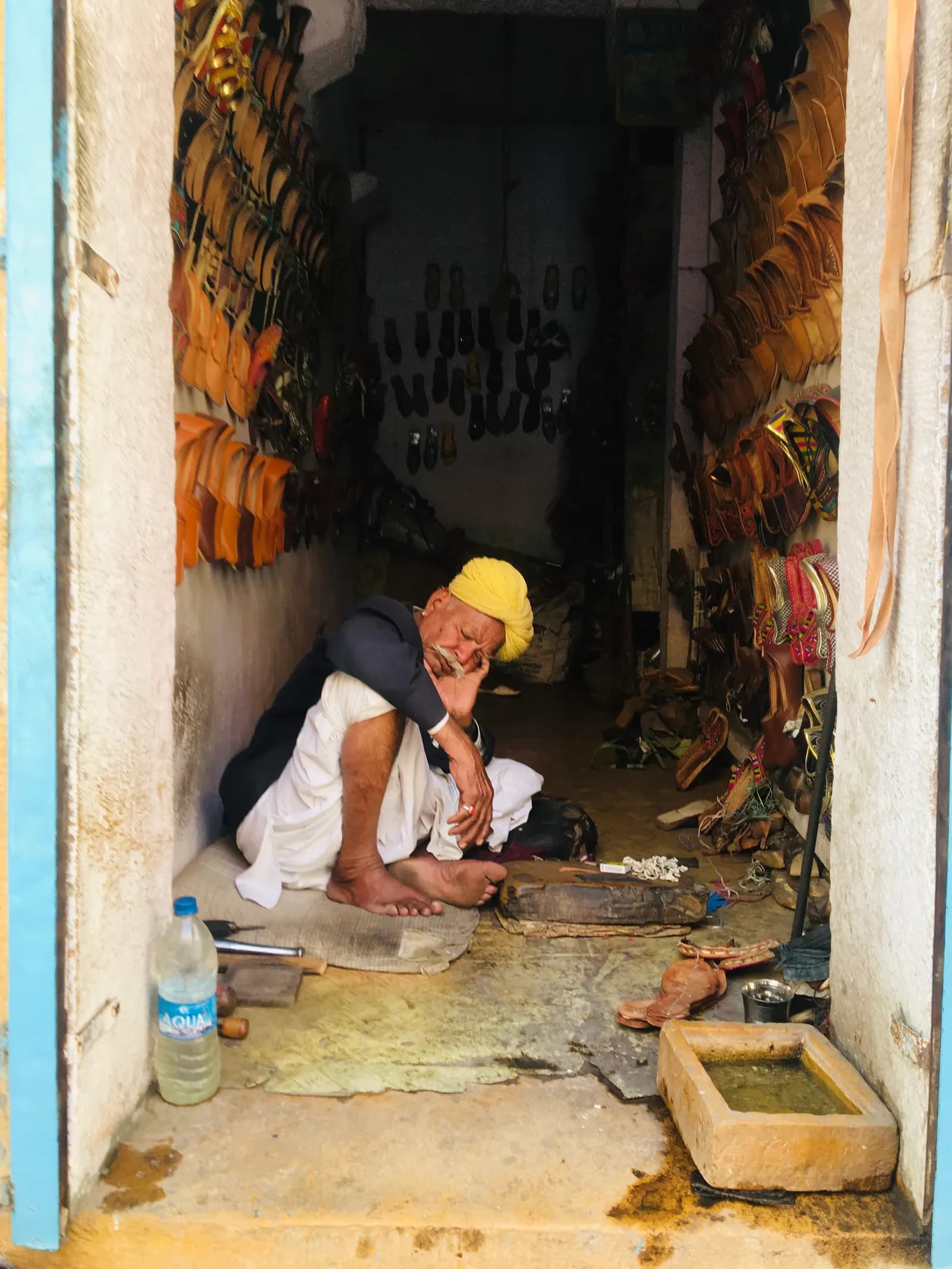
Worked example. A Jaisalmer leather-footwear maker, a sole proprietor with Udyam registration and no existing overdraft anywhere, has ₹60 lakh of credits in her current account over the last 12 months. On credit summation, 25% gives ₹15 lakh — within the ₹25 lakh ceiling for current-account assessment. If instead she wanted a term loan for a ₹6 lakh stitching and cutting machine, PNB would lend 75%, or ₹4.5 lakh, and she'd fund ₹1.5 lakh herself. Had her business run only through a savings account and she relied on projections of ₹40 lakh turnover, 20% would give ₹8 lakh.
Costs: the unified fee and what sits outside it
PNB uses a single "unified" fee for the Digi MSME Loan: nil for loans up to ₹50,000, and 0.30% of the loan amount plus 18% GST above that. The fee rolls in all the usual line items — processing, upfront, CERSAI registration, inspection, documentation, NeSL and vendor charges — so you shouldn't see them separately.
What sits outside it, at actual cost: the credit information company (credit report) charge, stamp duty, insurance, the CGTMSE guarantee fee and any other out-of-pocket expenses. The CGTMSE fee is the one to budget for, because it recurs every year. CGTMSE's current annual fees run from 0.37% to 1.20% depending on the size of the loan, with the lowest band for loans up to ₹10 lakh.
Digi MSME Loan — costs on a ₹15 lakh overdraft
₹5,310
Unified fee (0.30% + 18% GST)
nil if the loan is ₹50,000 or less
≈ ₹8,250 a year
CGTMSE guarantee fee at 0.55%
charged at actuals, outside the unified fee
8.35%
PNB RLLR from 8 Oct 2026
plus BSP and risk spread
Nil
Prepayment penalty
floating-rate MSE loans from 1 Jan 2026
On the ₹15 lakh overdraft in our example, the unified fee is ₹4,500 plus ₹810 GST, or ₹5,310. If the guarantee fee for her loan size is 0.55% a year, add about ₹8,250 a year while the limit is in force. Those amounts should appear in the Key Facts Statement, along with the annual percentage rate (APR), which includes every charge; RBI's digital-lending rules require PNB to send the signed KFS and loan documents to your registered email or phone when the loan is executed.
How the interest rate is set
PNB's Digi MSME page says the rate is "competitive, linked to RLLR (Repo Rate)", and DIGI MSME PRIME promises a "concessional rate linked to RLLR". Neither page publishes a number, so here is how PNB builds MSME rates from its own published rate cards.
The base is the Repo Linked Lending Rate. PNB revised it to 8.35% with effect from 8 October 2026, up from 8.10%, after RBI raised the repo rate to 5.50% on 7 October. PNB's rate-card page for other advances says that for MSMEs the benchmark is RLLR plus a business strategy premium (BSP), and a spread is then added according to your internal risk rating. For comparison, PNB's one-year MCLR, which applies to non-MSME borrowers, is 8.80% from 1 October 2026.
How your PNB MSME rate is built
Step 1
RBI repo 5.50%
Step 2
PNB RLLR 8.35% (from 8 Oct 2026)
Step 3
+ business strategy premium
Step 4
+ spread for your risk rating
Step 5
Your rate, reset with RLLR
APR in the KFS adds fees
The same rate card lists two concessions worth asking about. Enterprises in which women hold at least 51% get 0.50% off under priority-sector lending, and loans up to ₹7.5 crore sourced through internet banking, PNB One or PNB's WebLenS get 0.25% off — although neither applies where a scheme already has a concession built in, and the rate can never fall below RLLR plus BSP. Because the loan is floating, every future repo change flows through at the next reset; on a ₹15 lakh overdraft used fully, each 0.25% rise adds about ₹3,750 a year in interest.
To see what an EMI would look like on the term-loan route, assume an illustrative 10.35% — RLLR plus 2%. The ₹4.5 lakh machine loan over five years would cost about ₹9,639 a month, with total interest of about ₹1.28 lakh. Your actual figure depends on your rating; the KFS will show it.
Try it — ₹4.5 lakh machine loan over five years
DIGI MSME PRIME: GST-based limits up to ₹10 crore
DIGI MSME PRIME is for businesses that have outgrown the ₹25 lakh ceiling but are still run as a proprietorship. PNB lists its purpose as hassle-free digital credit for working capital or business expansion.
Eligibility. You must be an individual or proprietorship; you must not be availing any active working-capital facility from any bank or financial institution other than PNB; you need an active current account with any bank for the past 12 months; your unit must be GST-registered and have filed GST returns for at least the last 12 months; and Udyam registration is mandatory.
Limit. A cash credit of ₹10 lakh–₹10 crore, set at 25% of GST sales, provided at least 75% of your sales are routed through the account. If less than 75% passes through, the limit is restricted to 25% of GST sales or the credit summation, whichever is less. No financial statements are required and no benchmark ratios are applied — the GST data does the work.

Tenure, security and fee. The cash credit runs for one year and is renewed annually. Security is either the CGTMSE guarantee or collateral of at least 75% in SARFAESI-compliant immovable property or bank-approved liquid security. The unified fee is 0.30% of the loan amount plus 18% GST, covering processing, documentation, CERSAI, inspection, NeSL and vendor charges; credit-report, stamp duty, insurance, valuation, NEC and any CGTMSE charges are extra. RTGS, NEFT and IMPS charges on the account are waived.
A Moradabad brassware proprietor with ₹1.6 crore of GST sales in the last year, almost all banked through her current account, would be assessed at 25%, or ₹40 lakh. If only 60% of her sales passed through the account, the limit would drop to the lower of ₹40 lakh and her credit summation — which is why routing receipts through one account before applying pays off.
GST Express Scheme for firms and companies
If your business is a partnership, LLP, company or co-operative society, the two digital products aren't open to you, but the GST Express Scheme uses the same idea at the branch. PNB's scheme note offers cash credit and non-fund-based facilities of above ₹20 lakh to ₹10 crore to any lawful business entity that has filed GST returns for at least the last six months. The limit is 25% of the sales reported in GST returns over the last 12 months.
Security is heavier: 75% collateral in immovable property or approved liquid securities, or 50% collateral with a hybrid CGTMSE guarantee covering the rest. Interest is a concessional rate linked to your internal risk rating, with concessions for young and women entrepreneurs and for ZED-certified MSMEs, and the processing fee carries a 25% concession on the usual charges. Note that RBI's rule against taking collateral on loans to micro and small enterprises up to ₹20 lakh still applies — and this scheme starts above ₹20 lakh, so it isn't the right product for a smaller need.
How to apply online
PNB lists the Digi MSME Loan and DIGI MSME PRIME as its own (self-owned) digital lending apps, available on its website, through internet banking and on the PNB One app for Android and iOS. The product pages carry an "Apply Now" button that takes you to the right portal.
Applying for a PNB Digi MSME loan
- 1
Check you qualify
Get a Udyam certificate (free)Individual or sole proprietor; valid Udyam certificate; no CC/OD with any other bank; 12 months' operative account (Digi MSME) or 12 months' GST returns and current account (PRIME).
- 2
Open the right portal
PNB — Digi MSME LoanDigi MSME Loan: digimsme.pnb.bank.in. DIGI MSME PRIME: egstxp.pnb.bank.in. Or use PNB internet banking or the PNB One app.
- 3
Share your data
Keep PAN, Aadhaar-linked mobile, Udyam number, GSTIN and 12 months' bank statements ready; the limit is computed from them.
- 4
Review the offer and KFS
Check the limit, rate (RLLR + spread), unified fee, CGTMSE fee and APR before e-signing.
- 5
Accept and draw
Funds go straight to your account; use the cooling-off period if you change your mind.
Cooling-off and complaints. Under RBI's Digital Lending Directions, 2025, every digital loan has a cooling-off period — at least 1 day, set by the bank's board — during which you can exit by repaying the principal and proportionate APR, with only a disclosed one-time processing fee retained. PNB's list of digital lending apps names a grievance officer for these MSME products with the functional email [email protected]. If a complaint isn't resolved within 30 days, you can approach the RBI Ombudsman at cms.rbi.org.in.
Other routes in. Public sector bank loans including PNB's can also be started on PSB Loans in 59 Minutes, which gives an in-principle approval digitally for business loans up to ₹5 crore, and PNB lists e-Mudra among its MSME schemes for very small loans — see our Mudra loan guide.
Why applications get rejected — and fixes
Most failures come from the eligibility filters rather than credit scores. The most common is an existing cash credit or overdraft with another bank: both digital products exclude borrowers who already have a revolving working-capital limit elsewhere (PRIME allows one only with PNB). If you have a small unused OD at another bank, closing it before you apply is often the fix; a term loan elsewhere doesn't trigger the rule.
The second is constitution. Partnership firms, LLPs and companies are outside both digital products, and the portal will stop them. Use the GST Express Scheme or a regular branch MSME loan instead.
The third is a thin or split banking record. If your sales are spread across several accounts or collected in cash, the 25% credit-summation figure — or PRIME's 75% routing test — will produce a small limit or none. Consolidating receipts into one current account for a few months before applying makes a real difference. A missing or outdated Udyam certificate is the fourth; registration is free and takes minutes on the government portal, and the details (PAN, GSTIN, activity) should match what the bank fetches. Finally, an overdue loan or card in your own name — even a personal one — can block an otherwise eligible proprietor, so check your credit report first; see our MSME loan eligibility guide.
Before you apply — avoid the common rejections
0/5After sanction: renewal and prepayment
Overdraft and cash credit limits under both products are for 12 months and are renewed each year, so keep routing sales through the account and file GST returns on time — the renewal relies on the same data. Draw only what you need: interest is charged on the amount used, not the limit.
Prepaying costs nothing on these loans. Under RBI's Pre-payment Charges Directions, 2025, commercial banks such as PNB cannot charge any pre-payment penalty on floating-rate business loans to micro and small enterprises sanctioned or renewed from 1 January 2026, whether you repay part or all of the loan and wherever the money comes from. Our EMI guide shows how much a part-prepayment saves.
Official links
- PNB — Digi MSME LoanEligibility, limits, fee
- PNB — DIGI MSME PRIMEGST-based cash credit up to ₹10 crore
- PNB — GST Express Scheme (PDF)Branch scheme for all constitutions
- PNB — RLLR and MCLRRLLR 8.35% from 8 Oct 2026
- PNB — List of digital lending appsOfficial portals and grievance contacts
- RBI — Digital Lending Directions, 2025Cooling-off, KFS, disbursal rules
- RBI Complaint Management SystemOmbudsman complaints
What to do next
Confirm your Udyam certificate is current, pull 12 months of bank statements and work out 25% of your credits — that's roughly the Digi MSME limit you can expect. If you're GST-registered with steady sales, compare that with 25% of your GST turnover under DIGI MSME PRIME. Then apply through PNB's portal or PNB One, read the KFS carefully, and compare it with an offer from another public sector bank such as SBI. Our working capital calculator helps you size the limit you actually need.
This is general information, not financial or legal advice — confirm the terms on the official source or with your bank.
Frequently asked questions
It is Punjab National Bank's fully digital loan for micro and small enterprises run by individuals and sole proprietors. It offers an overdraft for working capital or a term loan for machinery, vehicles or other assets, up to ₹10 lakh — or up to ₹25 lakh when assessed on credits in your current account — with no collateral, because the loan is covered by CGTMSE.
Individuals and sole proprietors in manufacturing, trading or services with a valid Udyam Registration Certificate, who are not already taking a cash credit or overdraft from any bank or financial institution. If the limit is to be based on credit summation, you need an active, KYC-compliant operative account for the last 12 months.
PNB uses three methods: 25% of the total credits in your bank account over the last 12 months, 20% of your realistic projected turnover, or 75% of the cost of the asset for a term loan. The ceiling is ₹10 lakh, rising to ₹25 lakh when the limit is assessed on credit summation in a current account.
PNB says the rate is competitive and linked to its Repo Linked Lending Rate. The RLLR is 8.35% from 8 October 2026, after RBI raised the repo rate. Your rate is the RLLR plus a business strategy premium and a spread based on your risk rating, which PNB fixes at sanction and shows in the Key Facts Statement.
There is a unified fee of nil for loans up to ₹50,000 and 0.30% of the loan amount plus 18% GST above that. It covers processing, upfront, CERSAI, inspection, documentation, NeSL and vendor charges. Credit-report, stamp duty, insurance and CGTMSE charges are extra, at actual cost.
Digi MSME Loan is for smaller needs — up to ₹10 lakh, or ₹25 lakh on credit summation — as an overdraft or term loan. DIGI MSME PRIME is a GST-based cash credit of ₹10 lakh to ₹10 crore for GST-registered individuals and proprietorships with 12 months of returns, set at 25% of GST sales and backed by CGTMSE or 75% collateral.
Sources & verification
Figures on this page were checked against the sources below when it was last reviewed on 9 October 2026. Each rate and limit is stored once with its own official source and review date, and official update channels are monitored daily so changes are picked up. How we verify
- 1.PNB — Digi MSME Loan — Punjab National Bank · accessed 9 October 2026
- 2.PNB — DIGI MSME PRIME — Punjab National Bank · accessed 9 October 2026
- 3.PNB — GST Express Scheme (PDF) — Punjab National Bank · accessed 9 October 2026
- 4.PNB — Interest rate on advances (MCLR w.e.f. 01.10.2026; RLLR w.e.f. 08.10.2026) — Punjab National Bank · accessed 9 October 2026
- 5.PNB — Other advances interest rates (w.e.f. 01.07.2025) — Punjab National Bank · accessed 9 October 2026
- 6.PNB — List of Digital Lending Apps — Punjab National Bank · accessed 9 October 2026
- 7.RBI (Digital Lending) Directions, 2025 — Reserve Bank of India · accessed 9 October 2026
- 8.RBI (Pre-payment Charges on Loans) Directions, 2025 — Reserve Bank of India · accessed 9 October 2026
- 9.Master Direction – Lending to MSME Sector — Reserve Bank of India · accessed 9 October 2026
- 10.CGTMSE — Guarantee fee structure — CGTMSE · accessed 9 October 2026
MSMETOOLS is an independent platform and is not affiliated with any government agency, ministry or department.
Tools for this
EMI Calculator
Calculate loan EMIs for business and personal loans.
Working Capital Calculator
Check working capital, current and quick ratios.
Loan Eligibility Calculator
Check your business loan eligibility based on income and existing loans.
Related guides
 Canara Bank MSME Loan 2026: Rates, Fees & SchemesRead guide
 How to Calculate EMI for a Business Loan (2026 Guide)Read guide
 SIDBI Loan for MSME 2026: Schemes, Limits & How to ApplyRead guide
 Axis Bank Business Loan 2026: Rates, Eligibility & ApplyRead guide
Official links open the government site in a new tab.