 Finance & accounting
Loan Against Property for Business in 2026: LTV, Rates, Charges and the Rules That Protect You
Loan against property for business in 2026: LTV norms, repo-linked rates, bank-disclosed APRs, stamp duty, foreclosure rules, SARFAESI and a worked EMI.
 Edited by Sumeet YadavFounder & editor, MSMETOOLS · fact-checked against official sources
Contents (11)
- 1. What a loan against property is — and what "loan for business property" can mean
- 2. How much you can borrow: loan-to-value and income limits
- 3. Commercial vs residential vs industrial property
- 4. Interest rates: repo-linked pricing and what banks actually charge
- 5. A worked EMI: ₹50 lakh against a shop
- 6. Fees, stamp duty and registration of the mortgage
- 7. Foreclosure and part-prepayment: the 2026 RBI rules
- 8. How to apply
- 9. If repayments go wrong: SARFAESI basics
- 10. Common mistakes with loans against property
- 11. What to do next
If your business needs a large sum at a lower rate than an unsecured loan can offer, pledging property is the usual route. A loan against property (LAP) lets a proprietor, partner or company borrow against a house, shop, office or factory they already own, and use the money for the business. This guide explains how much you can borrow, how banks price LAP off the repo rate, the rates banks themselves disclosed for the latest quarter, the stamp duty on the mortgage, the RBI rules on foreclosure that changed on 1 January 2026, and what SARFAESI means if repayments go wrong. All figures were read on lenders' and regulators' own pages on 9 October 2026.
Quick answer
A loan against property is a secured loan, usually for up to 15 years, against residential, commercial or industrial property you own. Banks lend a share of the market value — up to 65% of market value at HDFC Bank and up to 80% of market value at Kotak — and price it as the repo rate (5.50%) plus a spread. HDFC's spread is repo rate + 3.05% to 7.50%, and individual borrowers actually paid 7.50%–12.00% (average 8.33%) in April–June 2026.
Floating-rate LAP to individuals and micro/small enterprises can be foreclosed free if sanctioned on or after 1 January 2026
Budget for a processing fee (up to 1–2%), valuation and legal fees, GST on fees and state stamp duty on the mortgage
The bank caps both the loan-to-value and the EMI against your income — the lower limit wins
Default can lead to a SARFAESI notice with 60 days to repay before the lender can take the property
What a loan against property is — and what "loan for business property" can mean
People searching for a loan for business property usually want one of three things. The first, and most common, is a loan against property: you already own a house, shop or factory, you mortgage it to a bank, and you spend the money on the business — stock, machinery, expansion or repaying costlier debt. The second is a loan to buy commercial property, such as a shop or office for the business; HDFC Bank, for example, prices its Loan for Commercial Property in the same rate table as its LAP. The third is lease rental discounting, where a bank lends against the rent a commercial property already earns — HDFC calls its version Loan Against Rent Receivables and lends up to 50% of the property's value, depending on the net rent and how long the lease has left to run.
All three are secured by a mortgage, so the bank looks at two things: the property and your ability to repay. That is what makes LAP cheaper than an unsecured business loan. It also makes it slower, because the bank must value the property, check the title going back years and create the mortgage before it pays out. Kotak Mahindra Bank, for instance, says it disburses within 25 working days of receiving documents.
LAP can be taken as a term loan with fixed EMIs, or as an overdraft secured on the property, where you draw and repay as needed and pay interest only on what you use. HDFC's Dropline Overdraft Against Property reduces the limit every year, while Kotak offers both forms under the same product. If your need is stock that turns over, an overdraft usually costs less; if it's a one-time purchase, a term loan is simpler to plan.
Loan against property at a glance (bank pages read 9 October 2026)
up to 65% of market value
HDFC Bank maximum loan-to-value
₹10 lakh–₹5 crore
Kotak LAP amount range
5.50%
RBI repo rate after the 7 October MPC
7.50%–12.00% (average 8.33%)
HDFC mortgage rates actually charged, Apr–Jun
individual borrowers
How much you can borrow: loan-to-value and income limits
The loan-to-value ratio (LTV) is the share of the property's value a bank will lend. RBI's LTV ceilings in its housing-finance rules apply to home loans; for loans against property, each bank sets its own ratio under its board-approved credit policy. On their official pages, HDFC Bank lends up to up to 65% of market value and Kotak Mahindra Bank says up to up to 80% of market value. Both figures are maximums. In practice banks give the highest ratio to a self-occupied house with clean title and a lower one to commercial or industrial property, older buildings, or anything in a location that is harder to sell.
The value the bank uses is its own valuer's estimate of the market value, not the price you paid or the circle rate. If you bought a shop for ₹40 lakh ten years ago and it is now worth ₹1.2 crore, a 65% LTV gives a ceiling of ₹78 lakh. If two valuers disagree, many banks take the lower figure. Kotak charges a valuation fee of up to ₹5,000 plus taxes, payable whatever the outcome.
The second limit is your income. Banks cap total EMIs — including existing loans — at a share of your assessed monthly income, often called the fixed-obligation-to-income ratio. Lenders don't publish one standard number; it varies with income level and risk. For a business owner, income is taken from your ITRs, audited or CA-certified financials and bank statements, so a business that declares low profit to save tax will find its LAP eligibility capped well below what the property could support. Our loan eligibility calculator shows how existing EMIs eat into the limit.
Kotak's eligibility page asks self-employed applicants to be at least 21 when they apply and under 65 when the loan ends, to show at least three years of business record, and to have two years of profits. HDFC lists salaried, self-employed, professionals and NRIs as eligible. Tenure at HDFC runs up to 15 years, which keeps the EMI low on a large loan but adds a lot of interest — see the worked example below.
Commercial vs residential vs industrial property
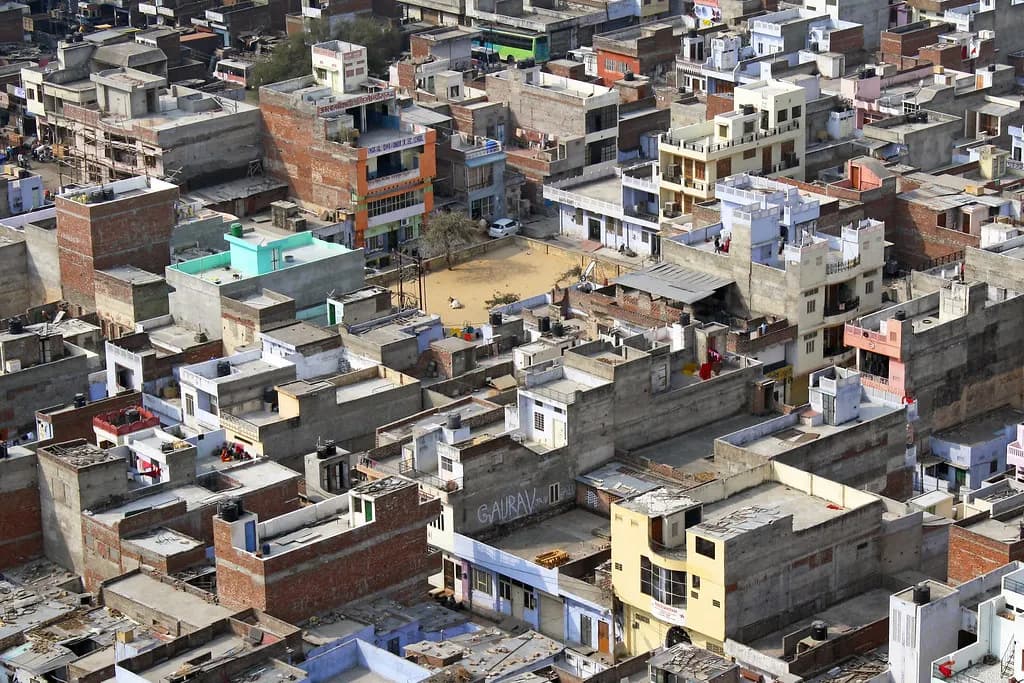
Banks accept all three, but they treat them differently. A house is the easiest asset for a bank to sell if things go wrong, so it usually gets the best LTV and rate. Commercial property — shops and offices — sells more slowly and its value depends on the location's footfall, so lenders tend to lend a lower share. Industrial property, such as a factory shed on a state industrial-estate plot, can need consent from the industrial development corporation before it is mortgaged, because many such plots are leasehold. HDFC and Kotak both also mention "special" or "specialized" properties, which are assessed case by case.
Check three things before you pick which property to pledge. First, whether it is freehold or leasehold; a leasehold plot needs the lessor's no-objection to mortgage. Second, whether the building has an approved plan and occupancy or completion certificate; banks often refuse unauthorised floors. Third, who owns it. If the property is in a family member's name, that person must join the loan as a co-borrower or guarantor and sign the mortgage, which many families find harder than the paperwork itself.
Which property gets the best terms?
| Self-occupied house | Shop or office | Factory or industrial plot | |
|---|---|---|---|
How banks see the risk | Lowest — easy to sell | Moderate — depends on location | Higher — specialised buyers |
Typical LTV position | Top of the bank's range | Usually lower than residential | Usually lowest; case by case |
Extra paperwork | Society NOC for flats | Society or association NOC; occupancy certificate | Industrial corporation consent if leasehold; factory approvals |
Rent-based option | — | Lease rental discounting (HDFC LARR up to 50% of value) | Possible if leased to a tenant |
How banks see the risk
- Self-occupied house
Lowest — easy to sell
- Shop or office
Moderate — depends on location
- Factory or industrial plot
Higher — specialised buyers
Typical LTV position
- Self-occupied house
Top of the bank's range
- Shop or office
Usually lower than residential
- Factory or industrial plot
Usually lowest; case by case
Extra paperwork
- Self-occupied house
Society NOC for flats
- Shop or office
Society or association NOC; occupancy certificate
- Factory or industrial plot
Industrial corporation consent if leasehold; factory approvals
Rent-based option
- Self-occupied house
—
- Shop or office
Lease rental discounting (HDFC LARR up to 50% of value)
- Factory or industrial plot
Possible if leased to a tenant
Interest rates: repo-linked pricing and what banks actually charge
Since 1 October 2019, RBI has required banks to link new floating-rate loans to micro and small enterprises, and new floating-rate retail loans, to an external benchmark; from 1 April 2020 the rule was extended to medium enterprises. Most banks chose the RBI repo rate. Your rate is the repo rate plus a spread fixed at sanction, and RBI requires the rate to be reset at least once every three months. The spread can change only if your credit profile changes substantially, as set out in your loan agreement.
That means the repo rate, now 5.50% after the Monetary Policy Committee raised it on 7 October 2026, flows straight into your rate at the next reset. HDFC's October 2026 rate page shows its LAP, commercial-property loan and rent-receivables loan priced at repo rate + 3.05% to 7.50%; at the current repo that is 8.55% to 13.00%. The page's own worked line still uses the earlier 5.25% repo, giving 8.30% to 12.75%, so expect the higher range at your next reset. HDFC also offers a fixed rate of 11.80%–13.30%.
Kotak's interest-rate page lists LAP at 9.15%–16% (repo + 2.9 to 8.75 points), under a table headed with a repo rate of 5.25%, so that range is also likely to move up by the October increase. Kotak's LAP product page also offers a hybrid rate: fixed for the first 39, 52 or 65 months and then repo plus a spread that it tells you at onboarding.
The most useful figures are the rates banks disclose they actually charged in the last quarter, published on their rate pages. They are a better guide than "starting from" headlines. HDFC disclosed that individual mortgage borrowers paid 7.50%–12.00% (average 8.33%) between April and June 2026, with an APR including fees of 7.54%–13.62% (average 8.47%). Kotak disclosed contracted rates on its LAP and Vishwas LAP of 7.55%–13.15% (mean 8.82%) for the quarter ended 30 June. If your offer is far above the average, ask what's driving it.
| HDFC Bank (LAP / LCP / LARR) | Kotak Mahindra Bank (LAP) | |
|---|---|---|
| Amount | Calculator range ₹11 lakh–₹10 crore | ₹10 lakh–₹5 crore |
| Maximum LTV | up to 65% of market value (rent-receivables loan up to 50%) | up to 80% of market value |
| Floating rate | repo rate + 3.05% to 7.50% | 9.15%–16% (repo + 2.9 to 8.75 points) |
| Fixed / hybrid | Fixed 11.80%–13.30% | Hybrid: fixed 39, 52 or 65 months, then repo-linked |
| Disclosed rates, latest quarter | 7.50%–12.00% (average 8.33%) | 7.55%–13.15% (mean 8.82%) |
| Processing fee | up to 1% of the loan (minimum ₹7,500) | up to 2% of the loan (product page says up to 1%) |
| Tenure | Up to 15 years | Not stated on the product page |
A worked EMI: ₹50 lakh against a shop
Suppose a Pune distributor owns a shop valued at ₹90 lakh and wants ₹50 lakh to fund a new warehouse lease and stock. At HDFC's 65% ceiling the property supports up to ₹58.5 lakh, so the request fits. Assume the bank offers 9.30% floating — the 5.50% repo plus a 3.80% spread, within HDFC's published band — over 10 years.
The EMI works out to about ₹64,153 a month, and total interest over 120 months is about ₹26.98 lakh. Stretch the tenure to 15 years and the EMI drops to about ₹51,610, but total interest rises to about ₹42.9 lakh — ₹16 lakh more for a lower monthly outgo. Take the same ₹50 lakh as an unsecured loan at HDFC's disclosed Business Loan average of 16.73% over five years, and the EMI is about ₹1.24 lakh, with about ₹24.1 lakh of interest packed into a much shorter period.
Now add the costs. A 1% processing fee is ₹50,000, plus 18% GST (₹9,000); a ₹5,000 valuation fee carries another ₹900 of GST. Those fees lift the effective annual cost — the APR — from 9.30% to roughly 9.61%, before stamp duty. That is why RBI requires the APR to be shown in the Key Facts Statement: it is the only number that compares offers fairly. Our business loan EMI guide walks through the formula and the KFS line by line.
Finally, the reset. If the repo rate rises by another 0.25 percentage points, a 9.30% loan becomes 9.55% and the EMI on the full ₹50 lakh over ten years becomes about ₹64,836 — around ₹680 more a month. Banks often extend the tenure instead of raising the EMI, so ask which they'll do and check your statement after each reset.
EMI on ₹50 lakh against property at 9.30% over 10 years
Fees, stamp duty and registration of the mortgage
Most of the cost of a LAP beyond interest comes up front. HDFC charges up to 1% of the loan (minimum ₹7,500). Kotak's fees page lists up to 2%, with ₹5,000 collected at login and adjusted later, even though its product page and FAQ say 1% — ask for the figure in writing. Expect legal and technical fees, GST on every fee, and in some cases a charge for a property insurance policy the bank requires.
Stamp duty. Most LAPs are created as an equitable mortgage: you deposit the original title deeds with the bank, and a memorandum records the deposit. That document — or a registered mortgage deed, if the bank asks for one — attracts stamp duty under your state's Stamp Act, at a percentage of the loan amount. Rates and caps differ by state, and both HDFC and Kotak list stamp duty simply as "as per applicable laws of the state".
Maharashtra is a useful example of how it works. Its 2021 amendments made the duty on a mortgage by deposit of title deeds the same as on a simple mortgage deed — 0.3% of the amount secured where the amount secured exceeds ₹5 lakh — and raised the maximum duty to ₹20 lakh. On the ₹50 lakh loan above, 0.3% is ₹15,000. Maharashtra also requires the bank or borrower to file a notice of intimation of a mortgage by deposit of title deeds with the sub-registrar; the state's IGR portal lets you enter the details online, pay the stamp duty and filing fee, and complete the filing at the sub-registrar's office.
Other states set their own rates, and some charge a flat amount for small loans. Check the current schedule on your state's registration department site before signing, and pay through e-stamping or the state's online challan so the stamp certificate is genuine. Separately, the bank registers its security interest with the central registry, CERSAI, so anyone who searches the property will see the charge.

Foreclosure and part-prepayment: the 2026 RBI rules
RBI's Pre-payment Charges on Loans Directions, 2025 apply to loans sanctioned or renewed on or after 1 January 2026. They say a lender cannot charge for prepaying a floating-rate loan taken by an individual for non-business purposes. For floating-rate loans taken by individuals or micro and small enterprises for business, commercial banks (other than small finance, regional rural and local area banks), the largest NBFCs and all-India financial institutions cannot charge at all; small finance banks, regional rural banks, some co-operative banks and middle-layer NBFCs cannot charge on loans up to ₹50 lakh. The exemption applies to part or full prepayment, from any source of funds, with no lock-in.
Fixed-rate loans and loans to medium enterprises, companies and other non-individual borrowers fall outside that protection. For them, the lender's board-approved policy applies, but the charge must be stated in the sanction letter, the loan agreement and the Key Facts Statement — anything not disclosed there can't be levied. And if the bank itself asks you to prepay, it can't charge you.
The banks' schedules reflect this. HDFC's table shows nil charges on floating-rate LAP for individuals and Udyam-certified MSEs sanctioned from 1 January 2026, 2.5% plus GST of the principal prepaid for other non-individual borrowers, and nothing after 60 months from the last disbursement. Kotak's fees page shows nil for individuals and MSEs on floating-rate loans and 2% for others; on fixed-rate loans it charges individuals 1% for each remaining year (capped at 3%) and MSEs nil only up to ₹50 lakh. So register on Udyam before you borrow and give the bank the certificate — it decides which row of the table you fall in.
Late payment. Under RBI's penal-charges rules, a lender can't add penal interest to your rate; it must levy a disclosed penal charge, with no interest on that charge. Kotak's LAP page lists 8% a year on overdue amounts. HDFC charges contracted interest on the overdue EMI for the days it is late.
How to apply
Applying for a loan against property
- 1
Pick the property and check the title
Use freehold property in your own name if you can. Gather the full chain of title deeds, the latest tax receipt, the approved plan and the occupancy certificate.
- 2
Get offers from two or three banks
Ask each for the Key Facts Statement, with the spread over repo, APR, fees and pre-payment terms. For loans of seven days or more, a bank must keep its KFS offer open for at least three working days, so compare quickly.
- 3
Submit KYC and income documents
Business loan documents checklistPAN and Aadhaar, business proof, two or three years' ITRs and financials, 6–12 months' bank statements and GST returns. Kotak accepts financials pulled through its partner portal.
- 4
Valuation and legal check
The bank's valuer visits the property and its lawyer searches title records. Answer queries fast — most delays happen here.
- 5
Sign, deposit deeds and pay stamp duty
Sign the sanction letter and loan agreement, hand over the original deeds, pay stamp duty and complete any notice-of-intimation filing your state requires.
- 6
Disbursal and after
Keep a list of the deeds you deposited. When you close the loan, collect every original deed and a no-dues certificate, and make sure the CERSAI charge is satisfied.
Expect the bank to keep your original deeds for the life of the loan. RBI requires lenders to return all original property documents and remove registered charges within 30 days of full repayment or settlement. If it misses that deadline for reasons of its own, it must pay you ₹5,000 for each day of delay. Keep a signed list of documents handed over, because a missing deed can make the property hard to sell later.
If repayments go wrong: SARFAESI basics
Because LAP is secured, a bank that isn't paid doesn't need to go to court first. The SARFAESI Act, 2002 lets a secured lender enforce its security once your account has been classified as a non-performing asset — usually after 90 days overdue. The Act doesn't apply to loans where the financial asset is below ₹1 lakh, to security created on agricultural land, or where the amount due is less than 20% of the principal and interest. NBFCs with assets of ₹100 crore or more can use it only for secured debts of ₹20 lakh or more.
The SARFAESI process, step by step
Account becomes NPA
Usually after 90 days of non-payment
Section 13(2) notice
Demand to pay the full dues within 60 days
Your objection
You can object in writing; the lender must reply with reasons within 15 days
Section 13(4) action
Lender takes possession and can sell or lease the property
Before the auction notice
Paying all dues plus costs stops the sale (section 13(8))
Within 45 days
Apply to the Debts Recovery Tribunal against the action (section 17)
The practical lessons: talk to the bank before the account turns NPA, because restructuring options narrow sharply afterwards. If a notice arrives, reply in writing within the 60 days with any genuine objection — wrong amounts, or a property the Act excludes. Once the auction is notified, redemption gets harder, so a one-time settlement or a takeover by another lender is best arranged before then. Micro and small enterprises can also ask for help under RBI's framework for revival and rehabilitation of MSMEs through their bank's committee.
Common mistakes with loans against property
Borrowing the maximum for the longest term. A 15-year tenure on money you'll repay in three years costs nothing extra on a floating-rate MSE loan if you prepay, but it does if your loan is fixed-rate or you are a company outside the MSE protection. Pick a tenure that matches your use of the money.
Ignoring the reset. Floating rates move with repo. October's increase reaches most LAPs at the next quarterly reset. Ask whether the bank will raise the EMI or extend the tenure, and choose the EMI option if you can afford it — extending the term quietly raises total interest.
Comparing headline rates. "Starting from" rates go to a handful of borrowers. Compare the APR in each KFS and the bank's disclosed average for the last quarter.
Skipping title problems. Missing link documents, unregistered agreements or unauthorised floors are the commonest reasons for rejection. Fix them first, or pledge another property.
Using LAP for losses. Pledging the family home to cover running losses puts the house at risk without fixing the business. If the need is working capital, compare a working capital limit or a CGTMSE-backed loan first.
Interest on a loan used for the business is generally an allowable business expense, while interest on money used personally is not; keep the loan account and its use clean, and confirm the treatment with your CA.
Official links
- RBI — Pre-payment Charges on Loans Directions, 2025Foreclosure rules from 1 January 2026
- RBI — Penal charges in loan accountsNo penal interest; disclosure in KFS
- SARFAESI Act, 2002 (India Code)Sections 13, 17 and 31
- IGR Maharashtra — eFiling of notice of intimationMortgage by deposit of title deeds
- HDFC Bank — LAP rates and chargesSpread, fees, disclosed IRR/APR
- Kotak Mahindra Bank — LAP fees and chargesPre-payment and penal charges
- RBI Complaint Management SystemOmbudsman complaints
What to do next
List the properties you could pledge and check each title, then ask two or three banks for a Key Facts Statement on the same loan amount and tenure. Compare the APR, the spread over repo and the pre-payment terms, run the EMI in our EMI calculator, and if you only need a smaller sum quickly, weigh it against an unsecured business loan. Our guides to HDFC Bank and Kotak Mahindra Bank business loans cover each bank's other products.
This is general information, not financial or legal advice — confirm the terms on the official source or with your bank.
Frequently asked questions
It depends on the lender's loan-to-value policy and your income. HDFC Bank lends up to 65% of a property's market value and Kotak Mahindra Bank says up to 80%, but commercial and industrial property usually gets a lower ratio than a self-occupied house. The bank also caps the EMI at a share of your income, so the smaller of the two limits applies.
Most banks price LAP as the RBI repo rate plus a spread. HDFC Bank's October 2026 page shows repo plus 3.05% to 7.50%, and it disclosed that individual mortgage borrowers paid 7.50% to 12.00% (average 8.33%) in April–June 2026. Kotak's rate card shows 9.15% to 16% for LAP. With repo at 5.50%, your rate depends on your profile and property.
Not on floating-rate loans to individuals or to micro and small enterprises at commercial banks, if sanctioned or renewed on or after 1 January 2026 — RBI's 2025 pre-payment directions bar them. Fixed-rate loans and loans to medium enterprises, companies and other non-individuals can carry charges, typically 2% to 2.5% at HDFC and Kotak, as disclosed in the Key Facts Statement.
Yes, at most private banks. HDFC Bank and Kotak Mahindra Bank both accept residential, commercial and industrial property and allow business use. State Bank of India's personal LAP is different: SBI says loans under it are not permitted for business purposes, so business borrowers there go through its SME loans instead.
Once the account turns NPA, the lender can send a SARFAESI demand notice giving you 60 days to repay. You can object in writing, and the lender must reply within 15 days. If you don't pay, it can take possession and auction the property, but you can apply to the Debts Recovery Tribunal within 45 days of that action.
Yes. The mortgage — usually created by depositing title deeds with the bank — attracts stamp duty under your state's Stamp Act, and some states also require a notice of the mortgage to be filed with the sub-registrar. In Maharashtra the rate is 0.3% of the amount secured for loans above ₹5 lakh, capped at ₹20 lakh.
Sources & verification
Figures on this page were checked against the sources below when it was last reviewed on 9 October 2026. Each rate and limit is stored once with its own official source and review date, and official update channels are monitored daily so changes are picked up. How we verify
- 1.HDFC Bank — Loan against Property Interest Rate (October 2026) — HDFC Bank · accessed 9 October 2026
- 2.HDFC Bank — Loan Against Property — HDFC Bank · accessed 9 October 2026
- 3.Kotak Mahindra Bank — Loan Against Property — Kotak Mahindra Bank · accessed 9 October 2026
- 4.Kotak Mahindra Bank — LAP eligibility — Kotak Mahindra Bank · accessed 9 October 2026
- 5.Kotak Mahindra Bank — LAP fees and charges — Kotak Mahindra Bank · accessed 9 October 2026
- 6.Kotak Mahindra Bank — Interest rates (loans table) — Kotak Mahindra Bank · accessed 9 October 2026
- 7.SBI — P-LAP (Personal Loan Against Property) — State Bank of India · accessed 9 October 2026
- 8.RBI (Pre-payment Charges on Loans) Directions, 2025 — Reserve Bank of India · accessed 9 October 2026
- 9.RBI — Fair Lending Practice: Penal Charges in Loan Accounts — Reserve Bank of India · accessed 9 October 2026
- 10.RBI press release — External benchmark linked lending (4 September 2019) — Reserve Bank of India · accessed 9 October 2026
- 11.The Securitisation and Reconstruction of Financial Assets and Enforcement of Security Interest Act, 2002 — India Code (Ministry of Law and Justice) · accessed 9 October 2026
- 12.Maharashtra Stamp (Amendment) Act, 2021 — Government Gazette — Government of Maharashtra (via PRS Legislative Research) · accessed 9 October 2026
- 13.AZB & Partners — Recent amendments to the Maharashtra Stamp Act — AZB & Partners · accessed 9 October 2026
- 14.IGR Maharashtra — eFiling of notice of intimation — Department of Registration and Stamps, Maharashtra · accessed 9 October 2026
- 15.RBI — Release of Movable / Immovable Property Documents — Reserve Bank of India · accessed 9 October 2026
- 16.Business Standard — Govt lowers SARFAESI threshold for NBFCs to ₹20 lakh — Business Standard · accessed 9 October 2026
MSMETOOLS is an independent platform and is not affiliated with any government agency, ministry or department.
Tools for this
EMI Calculator
Calculate loan EMIs for business and personal loans.
Loan Eligibility Calculator
Check your business loan eligibility based on income and existing loans.
Rental Yield Calculator
Calculate gross and net rental yield.
Related guides
 HDFC Business Loan 2026: Rates, Fees & EligibilityRead guide
 Kotak Business Loan 2026: Rates, Fees, Eligibility & ProductsRead guide
 How to Calculate EMI for a Business Loan (2026 Guide)Read guide
 Gold Loan for Business 2026: RBI LTV Rules, Rates & RisksRead guide
Official links open the government site in a new tab.