 Finance & accounting
Documents Needed for a Business Loan in 2026: The Complete Checklist by Loan and Business Type
Documents needed for a business loan in 2026: KYC, Udyam, GST returns, ITRs, bank statements, CMA data and project report — by loan type and by business type.
 Edited by Sumeet YadavFounder & editor, MSMETOOLS · fact-checked against official sources
Contents (10)
- 1. The core set every lender asks for
- 2. Documents by type of business: proprietor, partnership, LLP or company
- 3. Documents by type of loan
- 4. ITRs, financial statements, GST returns and bank statements in detail
- 5. CMA data and project reports, explained
- 6. Account aggregators: sharing bank and GST data digitally
- 7. What RBI requires banks to do with your application
- 8. Why loan files get stuck — and how to fix them
- 9. New businesses without ITRs
- 10. What to do next
Most business loans that stall do so over paperwork, not credit. A bank can't approve a file that's missing a partnership deed, shows a different turnover in the GST returns and the ITR, or has bank statements that don't open. This guide lists the documents needed for a business loan in India, organised the way lenders actually ask for them: the core set everyone needs, the extra papers for a proprietorship, partnership, LLP or company, and the add-ons for working capital, term loans, Mudra and property-backed loans. It also explains CMA data and project reports, how account aggregators now share your bank and GST data, and the RBI rules on how banks must handle your application. Lists were checked against RBI and bank pages on 9 October 2026.
Quick answer
For most business loans you need KYC of the owners (PAN plus Aadhaar or another valid ID), proof the business exists (Udyam, GST certificate or shop licence), two to three years' ITRs with computation and financial statements, six to twelve months' bank statements and recent GST returns. Working capital limits and term loans add CMA data or a project report; secured loans add property or asset documents.
Proprietors give two business proofs; partnerships add the deed and firm PAN; companies add incorporation papers and a board resolution
Udyam registration is Free and unlocks MSE protections and fee waivers
Banks must give MSMEs an indicative document checklist and decide loans up to ₹25 lakh within 14 working days
Bank statements and GST returns can now be shared digitally through an account aggregator
The core set every lender asks for
Whatever the loan, lenders need to answer three questions: who you are, whether the business is real, and whether it earns enough to repay. The core documents map to those questions.
Who you are. Your PAN, and an "officially valid document" for identity and address. Under RBI's KYC rules, those are a passport, driving licence, proof of possession of an Aadhaar number, voter ID, a NREGA job card or a National Population Register letter. Most banks now verify Aadhaar electronically — Kotak lists e-KYC-authenticated Aadhaar first — so make sure the mobile number linked to your Aadhaar works. If your current address differs from the one on your ID, a recent utility bill or property tax receipt can serve as address proof.
That the business is real. Banks want to see that the business has existed for a while, usually from registration documents. Kotak asks for proof of business continuity of at least three years and accepts Udyam, a GST registration certificate, a certificate of incorporation or a shop and establishment licence. HDFC calls this "proof of continuation" and accepts ITRs, trade licences and establishment or sales-tax certificates.
That it earns enough. This is the heaviest part of the file: ITRs, financial statements, bank statements and GST returns. HDFC asks for the latest ITR with computation of income and two years' balance sheet and profit and loss account, CA-certified with a UDIN or audited, plus six months' bank statements and six months' GST returns. Public-sector banks typically want more history on larger loans — Union Bank's checklist for proposals above ₹2 crore asks for three years of audited balance sheets.
The core business-loan file
0/10Documents by type of business: proprietor, partnership, LLP or company
The KYC part of the file depends on how your business is constituted. RBI's KYC rules set these lists. On 28 November 2025, RBI repealed its 2016 KYC Master Direction and moved its contents into the Reserve Bank of India (Commercial Banks – Know Your Customer) Directions, 2025, with similar directions for other types of lenders; the consolidation largely carried the earlier lists over.
Sole proprietorship. The bank does KYC on you as an individual, and on top of that asks for any two documents proving the business or activity. The accepted list includes a Udyam Registration Certificate, a shop and establishment licence, a GST certificate, an Importer Exporter Code, sales and income-tax returns, a complete ITR in the proprietor's name that reflects the business income, and utility bills for the business premises. If you can produce only one, the bank may accept it at its discretion but must visit or otherwise verify your place of business. A proprietor who registers on Udyam and GST has two strong documents in hand.
Partnership firm. The bank takes the firm's registration certificate, the partnership deed, the firm's PAN, the names of all partners, the registered office and principal place of business, and identity documents of the partners or any person holding a power of attorney to act for the firm. An unregistered firm will find the registration certificate a problem — banks often ask unregistered firms to register before lending, so see our guide to partnership firm registration. Banks also commonly ask for a letter signed by all partners authorising the borrowing.
Company. The certificate of incorporation, memorandum and articles of association, company PAN, a board resolution and power of attorney for the people who will sign, identity documents of beneficial owners and attorney holders, the names of senior managers, and the registered office address. Bank of Maharashtra specifically asks for a board resolution certifying borrowing powers and the company's CIN and directors' DINs.
LLP. Banks usually treat an LLP like a company for paperwork: the certificate of incorporation, the LLP agreement, the LLP's PAN and KYC of the designated partners, with a resolution of the partners authorising the borrowing. Ask your bank for its exact list.
KYC documents by business type
| Proprietorship | Partnership firm | Private limited company | |
|---|---|---|---|
Entity proof | Any two business proofs (Udyam, GST, shop licence, IEC, ITR, utility bill) | Registration certificate and partnership deed | Certificate of incorporation, MoA and AoA |
Entity PAN | Proprietor's own PAN | Firm's PAN | Company's PAN |
People KYC | Proprietor | Partners and authorised signatories | Beneficial owners, signatories and senior managers |
Authority to borrow | Not needed | Letter or resolution signed by partners | Board resolution with borrowing powers |
Income proof | Proprietor's ITR (business income) | Firm's ITR plus partners' ITRs | Company ITR, audited accounts, directors' ITRs |
Entity proof
- Proprietorship
Any two business proofs (Udyam, GST, shop licence, IEC, ITR, utility bill)
- Partnership firm
Registration certificate and partnership deed
- Private limited company
Certificate of incorporation, MoA and AoA
Entity PAN
- Proprietorship
Proprietor's own PAN
- Partnership firm
Firm's PAN
- Private limited company
Company's PAN
People KYC
- Proprietorship
Proprietor
- Partnership firm
Partners and authorised signatories
- Private limited company
Beneficial owners, signatories and senior managers
Authority to borrow
- Proprietorship
Not needed
- Partnership firm
Letter or resolution signed by partners
- Private limited company
Board resolution with borrowing powers
Income proof
- Proprietorship
Proprietor's ITR (business income)
- Partnership firm
Firm's ITR plus partners' ITRs
- Private limited company
Company ITR, audited accounts, directors' ITRs
Documents by type of loan
The loan you want decides what goes on top of the core file. An unsecured term loan, a cash credit limit, a machinery loan and a loan against property each test different things, so the extra documents differ.
| Loan type | Extra documents usually asked for |
|---|---|
| Unsecured business loan (HDFC, Kotak, Axis and others) | Two years' CA-certified financials, latest ITR with computation, six months' bank statements, GST returns, three-year vintage proof |
| Mudra (up to ₹20 lakh) | Simple application, KYC, business proof, quotations for items to be bought; past ITRs only for larger amounts |
| Working capital (cash credit, overdraft) | CMA data or projections for the next two years, stock and debtor statements, month-wise sales and purchases, GST returns |
| Term loan for machinery or expansion | Project report with projections for the whole loan period, supplier quotations or proforma invoices, CA certificate of your own contribution |
| Loan against property | Full chain of title deeds, approved plan, occupancy certificate, latest property tax receipt, society or authority NOC |
| CGTMSE-backed loan | Udyam certificate (micro and small enterprises only), plus the working capital or term loan documents above |
| Government-scheme loans (PMEGP, Stand-Up India) | Project report, EDP training certificate where required, caste or category certificate where relevant |
Two points about the table. First, document lists are each bank's own: RBI tells banks to publish indicative checklists but not what to put in them. Second, thresholds for the heavier documents vary widely. Union Bank asks for CMA data with projections on proposals above ₹2 crore; Bank of Maharashtra asks for CMA or projections for at least the next two years on working capital proposals and a techno-economic viability report above ₹15 crore. For a loan against property, the title deeds matter more than anything else in the file.
ITRs, financial statements, GST returns and bank statements in detail
ITRs. Lenders want the full return with the acknowledgement and the computation of income, not just the acknowledgement page. For partnerships and companies they usually want the business's returns and those of the partners or directors. Banks read these together with your financials, so file on time — a return filed a week before you apply, for a year that ended 18 months ago, raises questions.
Financial statements. Audited accounts where the business is liable to audit; otherwise CA-certified statements. HDFC asks for a UDIN — the unique number every CA must generate for a certificate — so the bank can check the document is genuine. Bank of Maharashtra asks for a CA-certified net worth statement with a valid UDIN for every borrower and guarantor. If the year has moved on, add provisional financials up to the latest quarter.
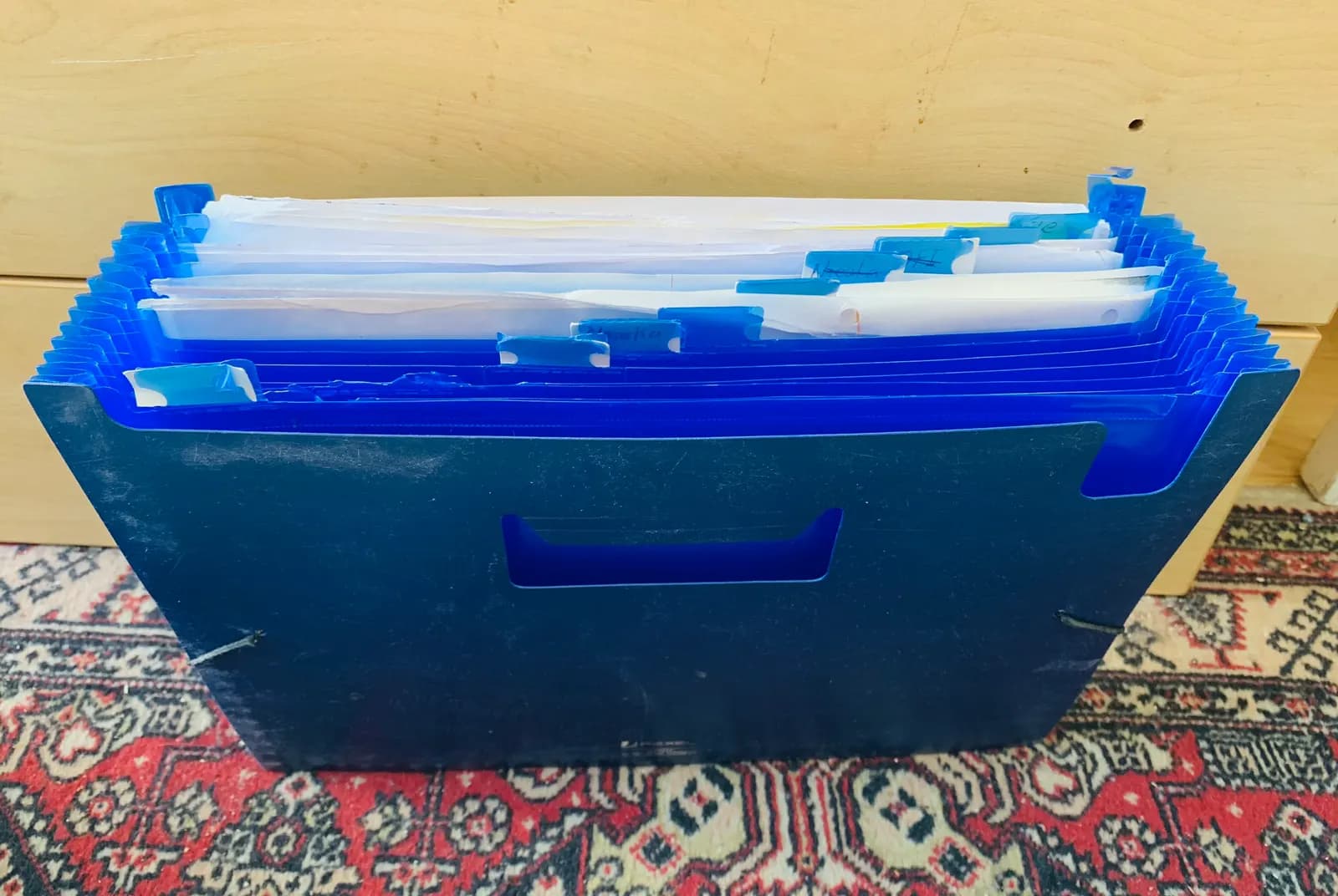
GST returns. Banks use GSTR-3B for turnover and tax paid, and GSTR-1 for sales and who you sell to. Bank of Maharashtra asks for returns verified from the GST portal for the last completed year and up to the latest month, and Union Bank asks for the previous and current year's returns plus your last GST assessment order. If your turnover is below the GST threshold and you are not registered, say so and offer the alternatives — Udyam and the ITR.
Bank statements. Six to twelve months of the main current account, and of every other account the business uses. Download them from net banking as original PDFs or share them through an account aggregator; banks run them through analysis software that flags edited files, cash deposits just before the application, bounced cheques and EMIs to lenders you didn't declare.
CMA data and project reports, explained
CMA data — short for Credit Monitoring Arrangement — is a standard set of tables banks use to assess working capital and test larger loans. It typically covers the last two years' actual results, the current year's estimate and projections for the next one or two years: sales, costs and profit; the balance sheet; current assets such as stock and debtors and current liabilities such as creditors; and a funds-flow statement. From these the bank calculates how much working capital the business needs and how much of it the bank should fund.
When banks ask for the heavier documents (published checklists)
Above ₹2 crore
Union Bank: CMA data with projections
credit proposals
2 years
Bank of Maharashtra: minimum CMA projections
working capital
Above ₹15 crore
Bank of Maharashtra: TEV report
Above ₹25 crore
Bank of Maharashtra: external credit rating
Union Bank's checklist shows how detailed it can get: CMA data with projections, plus breakups of debtors by age (over and under six months), export and domestic sales, import and domestic purchases, loans to sister concerns or promoters, unsecured loans and non-current assets. Most CAs prepare CMA data in the bank's format; ask your branch for its template before your CA starts, because each bank's layout differs slightly. Sign and stamp every page, as Bank of Maharashtra requires.
A project report is the document for a new unit, an expansion or a large machinery purchase. Union Bank's list of contents is a useful template: background of the promoters and the project, cost of the project and how it will be funded, machinery details with supplier quotations, installed capacity and how it was calculated, raw-material availability, marketing and competition, statutory clearances, location, the implementation and drawdown schedule, and financial projections with assumptions for the full term of the loan. Projections should show the debt service coverage ratio (DSCR) for each year — the cash available to repay divided by the instalments due. If the projections say your machine will run three shifts but the capacity calculation assumes one, the credit officer will notice.
Keep projections honest. A report showing sales doubling in year one with no change in staff or stock invites rejection or a smaller sanction. Show the assumptions — price per unit, units per month, credit period to buyers — and tie them to your past results or signed orders. Our working capital calculator helps you sanity-check the stock and debtor figures before they go into the CMA.
Account aggregators: sharing bank and GST data digitally
An account aggregator (AA) is an RBI-licensed entity that moves your financial data from where it sits — a bank, GSTN, an insurer — to a lender, only after you give consent in an app. The AA can't read or store the data; it carries it encrypted. You choose what to share (for example, one current account for twelve months), for what purpose and for how long, and you can revoke consent.
On 23 November 2022, RBI added GSTN as a "financial information provider" under the AA framework so that lenders could do cash-flow-based lending to MSMEs, and named GSTR-1 and GSTR-3B as the GST data that can be shared. In practice this lets a lender pull your filed returns directly instead of asking for PDFs. Kotak Mahindra Bank, for example, uses the Anumati AA to let existing customers share bank statements in a few clicks to increase a pre-approved business loan.
Sharing your data through an account aggregator
- 1
Start from the lender's link or app
The lender sends an AA link by SMS or email, or offers 'share via account aggregator' in its application.
- 2
Create or log in to your AA handle
Use your mobile number registered with your bank. First-time users create an AA ID (for example, yourname@anumati).
- 3
Discover and link accounts
The AA finds bank accounts linked to your mobile; link the business account with an OTP. GST data may need your GSTIN and GST portal OTP.
- 4
Review the consent
Check the purpose, the data (statements, GST returns), the period covered and how long the lender can fetch it.
- 5
Approve
Approve once. The lender receives the data directly from the bank or GSTN, so there's nothing to upload.
AA sharing is optional — you can still upload statements or hand over printouts. But it removes the commonest technical problem in a loan file: a statement PDF that is incomplete, password-protected or suspected of editing.
What RBI requires banks to do with your application
RBI's Master Direction on lending to the MSME sector puts obligations on banks, not just on you. Banks must give MSME applicants an indicative checklist of documents at the time of applying, and publish credit information — including timelines and checklists — on their websites. Applications must be tracked in a system that issues an acknowledgement with a unique application number and updates you on status. For loans to micro and small enterprises up to ₹25 lakh, the credit decision must be taken within 14 working days once the application is complete. If the bank rejects you, it must tell you the reasons in writing.
The same direction says banks must not take collateral on loans to micro and small enterprises up to ₹20 lakh. So if a bank asks for property documents on a small MSE loan, ask why; if the loan is within the collateral-free limit, you can decline and quote the rule.
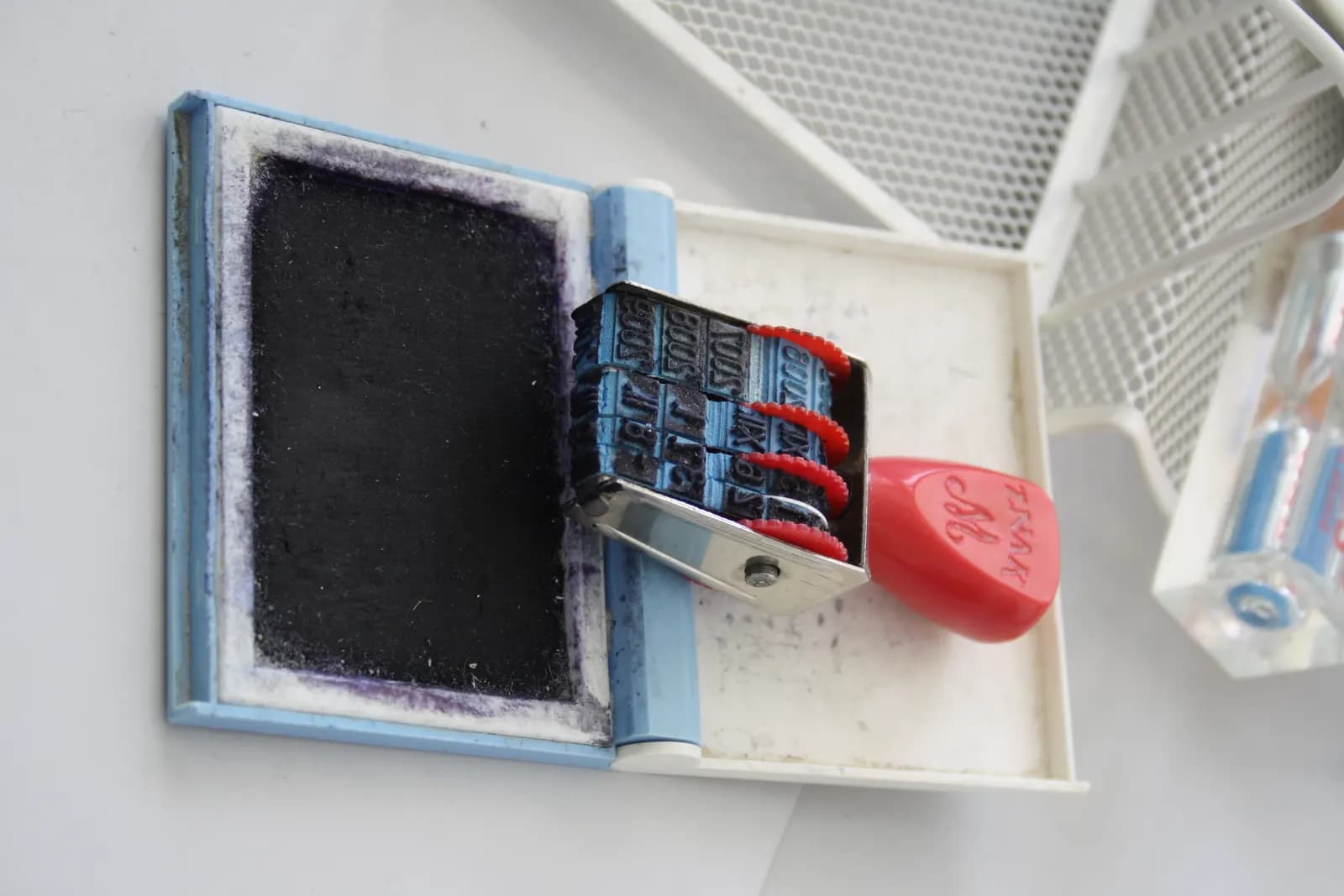
Use these rules. Keep the acknowledgement number, note the date your file was complete, and if a small loan has been sitting for weeks with no decision, write to the branch manager quoting the 14-working-day rule. If that fails, escalate through the bank's grievance channel and then to the RBI Ombudsman at cms.rbi.org.in.
Why loan files get stuck — and how to fix them
Turnover that doesn't match. The bank compares the turnover in your GST returns, your ITR and the credits in your bank statement. Differences are common — cash sales, sales through another account, timing of year-end invoices — but unexplained ones look like hidden income or inflated sales. Write a one-page reconciliation with your application.
Name and address mismatches. A firm name spelt differently on the GST certificate and the bank account, or an old address on Udyam, triggers extra checks. Update Udyam and the GST registration before applying; both are free.
Unsigned or uncertified financials. Statements without a CA's signature, stamp and UDIN, or a provisional balance sheet presented as final, get sent back. Ask your CA to generate the UDIN when certifying.
Undeclared loans. Banks see every loan on your credit report and in your statements. Declare all of them, including gold loans, vehicle loans and digital credit lines. Check your report first — our guide to the CIBIL score explains the commercial report and the CIBIL MSME Rank.
Missing pages and passwords. Send complete statements for every month requested, without passwords, or share them through an AA.
How a credit officer reads your file
Step 1
KYC and business proof
Step 2
Credit report of business and owners
Step 3
Income: ITR, financials, GST
do the numbers match?
Step 4
Bank statement conduct
Step 5
Repayment capacity
EMI vs cash flow, DSCR
Step 6
Security and sanction
New businesses without ITRs
A business in its first year doesn't have the history most loans ask for. The usual routes are a Mudra loan, where small amounts need only KYC, business proof and quotations; PMEGP, built around a project report and training; and Stand-Up India for SC, ST and women entrepreneurs setting up a new unit. Banks will still want your personal ITRs if you have them, a solid project report, quotations for what you'll buy and proof of your own contribution.
Private banks' unsecured loans aren't designed for new businesses: HDFC asks for three years in the current business and Kotak for a three-year record with a year of profit. Start building the documents banks will want from day one — open a current account in the business name, register on Udyam and GST if you qualify, keep sales going through the bank and file ITRs on time.
Official links
- RBI — Lending to MSME Sector (Master Direction)Checklist, acknowledgement, 14-day decision, collateral-free limit
- RBI — KYC norms circular, 28 November 2025Commercial Banks – KYC Directions, 2025
- RBI — GSTN as financial information providerAccount aggregator framework
- Udyam Registration portalFree MSME registration
- GST portalDownload filed returns
- Income Tax e-filing portalDownload ITR-V and filed returns
- RBI Complaint Management SystemOmbudsman complaints
What to do next
Build your file before you approach a lender: download two or three years of ITRs, the last year of GST returns and twelve months of bank statements, get your CA to certify the financials with a UDIN, and register on Udyam if you haven't. Then check how much your income supports with our loan eligibility calculator and read our MSME loan eligibility guide to pick the right product. When you apply, ask the bank for its checklist and a dated acknowledgement.
This is general information, not financial or legal advice — confirm the requirements with your lender or a professional.
Frequently asked questions
Almost every lender asks for PAN and Aadhaar or another valid ID of the owners, proof that the business exists (Udyam, GST or shop licence), two to three years' income-tax returns with computation, financial statements, six to twelve months' bank statements and recent GST returns. Larger loans add CMA data or a project report, and secured loans need property or asset documents.
Not for every loan, but it is worth having. Udyam is free and proves that you are a micro, small or medium enterprise, which unlocks RBI protections — collateral-free loans up to ₹20 lakh for micro and small units and a credit decision within 14 working days for loans up to ₹25 lakh — plus many banks' fee and foreclosure waivers. Some MSME products and CGTMSE-backed loans require it.
CMA (Credit Monitoring Arrangement) data is a set of tables showing your past results, current-year estimate and projections — sales, profit, current assets and liabilities, and funds flow. Banks use it to size working capital limits and test term loans. Thresholds vary by bank; Union Bank of India, for instance, asks for CMA data with projections on proposals above ₹2 crore.
Sometimes. Small Mudra loans, PMEGP loans for new units and some lenders' GST- or bank-statement-based products can work without past ITRs, using a project report, GST returns and account statements instead. But most bank term loans and unsecured business loans need at least two years of ITRs, and lenders such as HDFC Bank and Kotak require a three-year business record.
Usually six to twelve months of the business current account, and sometimes the owner's savings account too. HDFC Bank lists six months for its Business Loan, while its Dukandar Overdraft page mentions twelve months of personal and business statements. Share statements through an account aggregator or download them from net banking as PDFs — edited PDFs are a common reason for rejection.
Under RBI's KYC rules, banks take the firm's registration certificate, partnership deed and PAN, the names of all partners, the registered and business addresses, and identity documents of the partners or people authorised to act for the firm. On top of that come the firm's ITRs, financials, GST returns and bank statements, and personal ITRs of the partners.
Sources & verification
Figures on this page were checked against the sources below when it was last reviewed on 9 October 2026. Each rate and limit is stored once with its own official source and review date, and official update channels are monitored daily so changes are picked up. How we verify
- 1.RBI — Master Direction on KYC, 2016 (as updated to 14 August 2025) — Reserve Bank of India · accessed 9 October 2026
- 2.RBI — Compliance with KYC norms (RBI/2025-26/101, 28 November 2025) — Reserve Bank of India · accessed 9 October 2026
- 3.RBI — Master Direction: Lending to Micro, Small & Medium Enterprises (MSME) Sector — Reserve Bank of India · accessed 9 October 2026
- 4.RBI — Inclusion of GSTN as a Financial Information Provider under the Account Aggregator framework (23 November 2022) — Reserve Bank of India · accessed 9 October 2026
- 5.HDFC Bank — Business Loan documentation — HDFC Bank · accessed 9 October 2026
- 6.Kotak Mahindra Bank — Documents required for Business Loan — Kotak Mahindra Bank · accessed 9 October 2026
- 7.Kotak Mahindra Bank — Account Aggregator for Business Loan — Kotak Mahindra Bank · accessed 9 October 2026
- 8.Union Bank of India — Checklist for submitting credit proposals above ₹2 crore — Union Bank of India · accessed 9 October 2026
- 9.Bank of Maharashtra — Documents for MSME loan — Bank of Maharashtra · accessed 9 October 2026
MSMETOOLS is an independent platform and is not affiliated with any government agency, ministry or department.
Tools for this
Loan Eligibility Calculator
Check your business loan eligibility based on income and existing loans.
EMI Calculator
Calculate loan EMIs for business and personal loans.
Working Capital Calculator
Check working capital, current and quick ratios.
Related guides
 How to Open a Current Account in 2026: Documents & RBI RulesRead guide
 What is CIBIL Score? Range, Good Score & Free Check 2026Read guide
 Loan Against Property 2026: LTV, Rates, Fees & RBI RulesRead guide
 What Is a Profit and Loss Statement? Format & Example 2026Read guide
Official links open the government site in a new tab.