 Starting & growing a business
Transport Business Plan (2026): Trucks, Permits, GTA GST and a Worked Per-km P&L
Transport business plan for India in 2026: truck cost, national permit, fitness and PUC, GST on GTA (5% or 18%), e-way bills, truck loans and a per-km break-even.
 Edited by Sumeet YadavFounder & editor, MSMETOOLS · fact-checked against official sources
Contents (11)
- 1. Pick your transport business model
- 2. Setup cost for a one-truck start
- 3. Permits, fitness and compliance
- 4. GST on transport: GTA vs truck owner
- 5. E-way bills and documents on the road
- 6. Per-km costing: the number that runs the business
- 7. Financing trucks and working capital
- 8. Income tax for transporters
- 9. Transport business plan checklist
- 10. Mistakes that sink new transporters
- 11. What to do next
Trucking looks like a simple business — buy a truck, find loads, collect freight — but the money is made or lost in a few rupees per kilometre. Diesel, tyres, tolls and the EMI keep running whether your truck comes back loaded or empty, and a client who pays in 60 days can stall a one-truck operator. This transport business plan is for first-time fleet owners and transporters in India: a driver buying his own truck, a family adding vehicles to a trading business, or someone starting a goods transport agency (GTA) that books loads and hires trucks. It covers the vehicle choice and cost, permits and fitness, GST on GTA services after GST 2.0, e-way bills, financing, presumptive tax and a worked per-km profit-and-loss with break-even. Rules were checked against GST Council, MoRTH, transport-department and Income Tax Department sources in October 2026.
Quick answer
A transport business plan sets out your model (own trucks, attached trucks or a booking agency), the routes and clients you will serve, the vehicle and finance you need, the permits that let you run, and a per-km cost that tells you which loads are worth taking. One new 16-tonne truck needs roughly ₹7–10 lakh of your own money (our estimate). A GTA charges 5% without ITC or opts for 18% with ITC since 22 September 2025.
Permits: home-state goods permit, national permit authorisation at ₹16,500 a year, fitness, PUC and insurance
GST on new trucks cut to 18% from 28%; input tax credit is available to transporters
Goods worth more than ₹50,000 need an e-way bill; Part B carries the vehicle number
Worked example: a 16-tonne truck breaks even at about 8,000 km a month
Pick your transport business model
There are three common ways to run a goods transport business in India, and they differ in capital, risk and tax:
- Fleet owner (own trucks) — you buy and run vehicles, hire drivers and carry loads for clients or for a larger transporter. Highest capital and fixed cost, but you control the asset and keep the full freight.
- Goods transport agency (GTA) / booking office — you book loads from factories and traders, issue consignment notes (lorry receipts) and hire trucks from owners. Low capital, but you live on the margin between the freight you charge and the hire you pay, and you carry the claim risk if goods are damaged.
- Attached vehicles or contract logistics — you attach your trucks to an e-commerce, FMCG or cement company's transport contract, usually on a fixed monthly or per-trip rate. Steady work, thinner margins, and strict service standards.
Most successful small transporters combine the first two: they own two or three trucks on their best routes, and book extra loads through their own GTA desk using hired vehicles. Decide which you are before you buy anything, because a GTA's GST position is very different from a truck owner's.
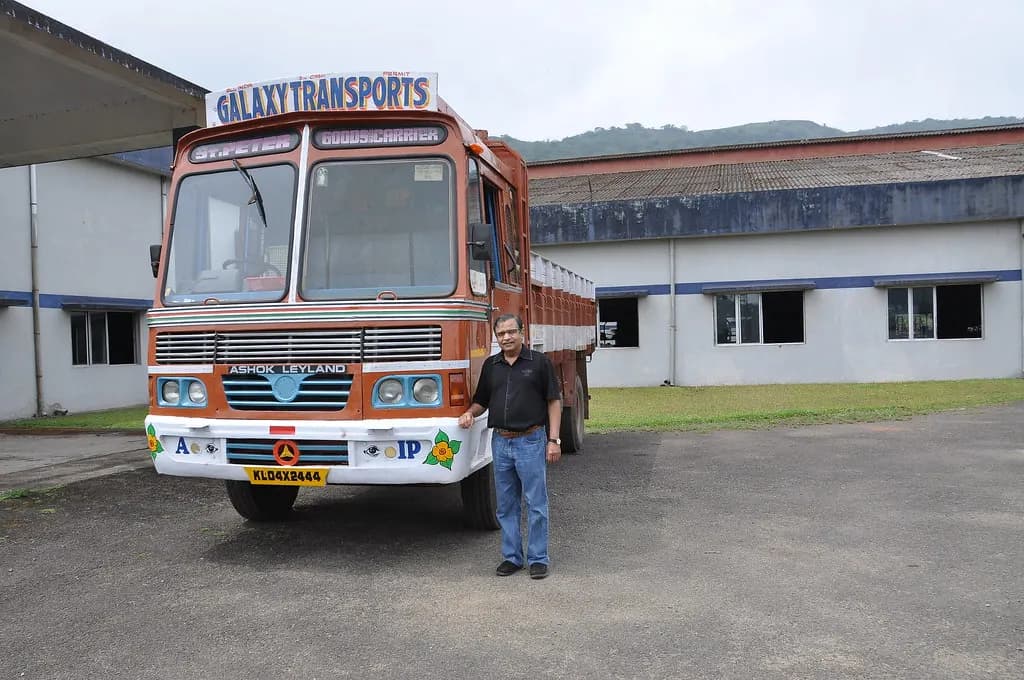
Which truck? Match the vehicle to the cargo and route, not to the biggest loan you can get. Intra-city and short-haul FMCG work suits small commercial vehicles of 2–7 tonnes; regional trade between nearby districts suits 10–16 tonne trucks; long-haul trade on national highways suits multi-axle trucks and trailers. Ask existing transporters on the route what payloads clients actually ship and how often trucks return empty.
Setup cost for a one-truck start
The table is a MSMETOOLS estimate for one new 16-tonne truck (gross vehicle weight about 16,200 kg, payload about 10 tonnes) in 2026. The vehicle line is based on listed ex-showroom prices for trucks in this class, such as the Tata 1512 LPT at roughly ₹23–27 lakh before body building; insurance, road tax and body costs vary by state and dealer, so take on-road quotes.
| Item | Estimated range | Worked plan | Basis / notes |
|---|---|---|---|
| Truck chassis (ex-showroom, incl. 18% GST) | ₹22,00,000 – ₹27,00,000 | ₹24,00,000 | Listed prices for 16-tonne trucks |
| Body building (open, high-side or container) | ₹1,50,000 – ₹4,00,000 | ₹2,00,000 | Container bodies cost more |
| Registration, road tax, permits, fitness | ₹60,000 – ₹1,50,000 | ₹90,000 | State-wise; national permit extra |
| First-year insurance (comprehensive) | ₹60,000 – ₹1,00,000 | ₹72,000 | Third-party cover is compulsory |
| GPS tracker, FASTag, tarpaulins, tools | ₹15,000 – ₹40,000 | ₹25,000 | |
| Working capital: 2–3 months of diesel, tolls, salaries | ₹2,00,000 – ₹4,00,000 | ₹3,00,000 | Covers client credit periods |
| Total project cost | ₹27,00,000 – ₹38,00,000 | ₹30,87,000 | |
| Your contribution (20–25% down + working capital) | ₹7,00,000 – ₹10,00,000 | ₹8,87,000 | Loan of about ₹22 lakh |
A used truck three to five years old can halve the down payment, but check the fitness history, tyre condition, accident record and whether the permit and tax are transferable. Remember that an old vehicle reaches the yearly fitness-testing stage sooner, and its fitness fees climb with age. Since November 2025 the fitness certificate fee for a heavy goods vehicle is ₹1,000 once it is over 10 years old, ₹5,000 over 13 years, ₹12,500 over 15 years and ₹25,000 over 20 years, on top of a higher testing fee after 15 years.
Permits, fitness and compliance
Every goods carriage needs the following before it earns a rupee:
- Registration as a transport vehicle (yellow plate) with your Regional Transport Office (RTO), and road tax paid to your home state.
- Goods carriage permit from the Regional Transport Authority for your home state. To run across India, you add a national permit authorisation, issued electronically, with a consolidated fee of ₹16,500 a year per vehicle paid on the Vahan national permit portal. A draft amendment to the Central Motor Vehicles Rules notified on 10 August 2026 (G.S.R. 728(E)) proposes letting operators choose an authorisation of one to five years at the same yearly rate; until it is final, pay year by year.
- Fitness certificate — commercial vehicles are tested every two years for their first eight years and every year after that. MoRTH is moving all fitness testing to Automated Testing Stations (ATS) with machine-based brake, emission and suspension tests; check whether your district's ATS is operational and book a slot online. A vehicle without valid fitness is treated as unregistered, which attracts heavy fines.
- Pollution Under Control (PUC) certificate, renewed on schedule.
- Insurance — third-party cover is compulsory; comprehensive cover protects your loan asset. A goods-in-transit policy protects you against claims from consignors.
- Driver licence with a transport (commercial) endorsement for the vehicle class, and police verification of drivers is a good habit.
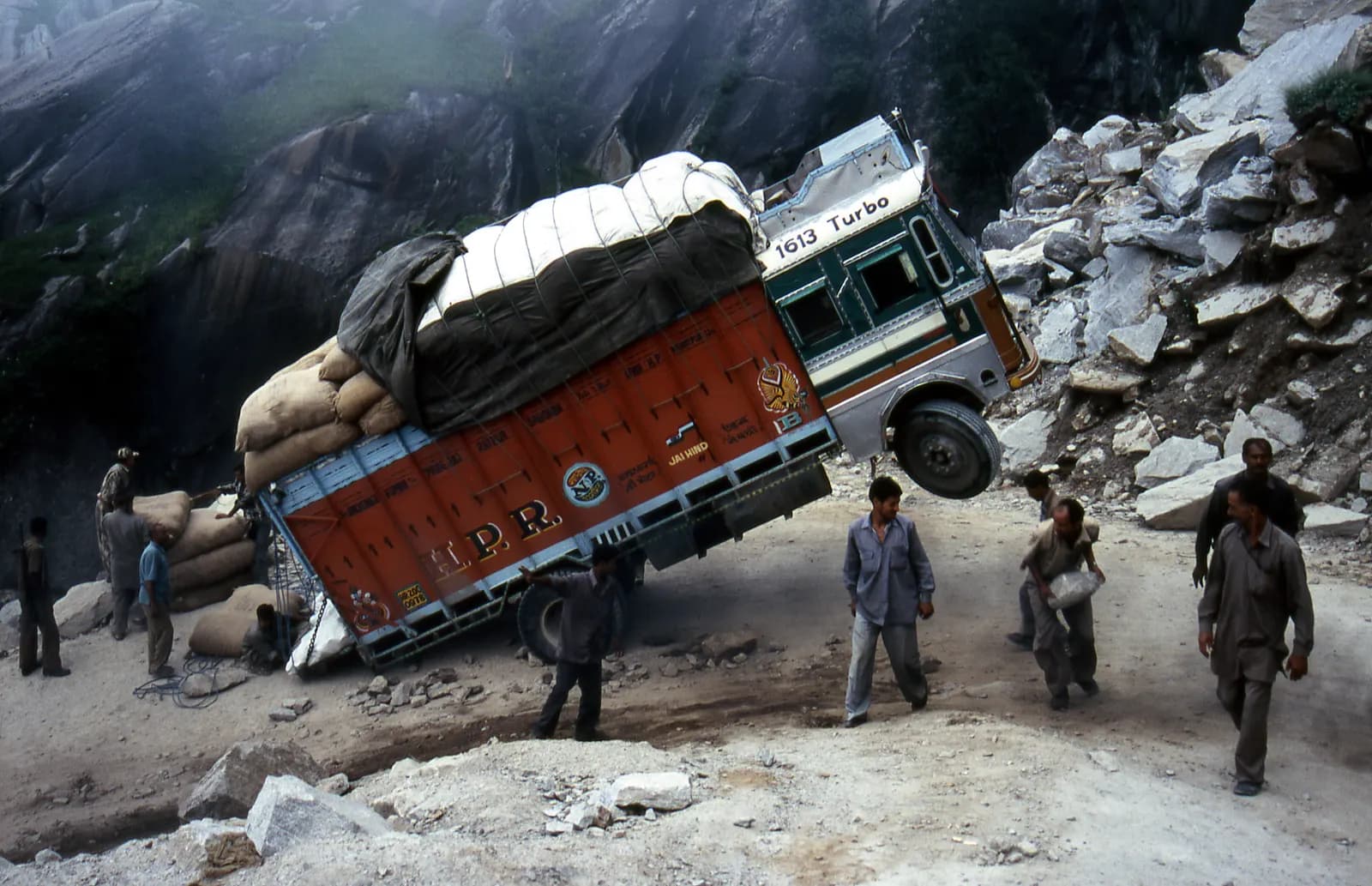
Overloading is the most common and most expensive compliance failure: it voids insurance claims, draws large fines at weighbridges and checkposts, and destroys tyres and suspension. Price your freight on the legal payload, not on what the truck can physically carry.
GST on transport: GTA vs truck owner
Whether you charge GST at all depends on who you are in law. A goods transport agency is a person who provides road transport of goods and issues a consignment note, by whatever name (lorry receipt, bilty). Road transport of goods by anyone other than a GTA or a courier agency is exempt. So a truck owner who simply hires out a vehicle to a GTA, without issuing consignment notes, usually charges no GST — while the GTA that books the load does.
For GTAs, GST 2.0 changed the options from 22 September 2025:
| GTA option | GST rate | Who pays | Input tax credit |
|---|---|---|---|
| Reverse charge (default) | 5% without ITC | The recipient, if it is a factory, company, firm, registered person or other specified recipient | Not for the GTA |
| Forward charge at 5% | 5% without ITC | The GTA | Not allowed |
| Forward charge at 18% (replaced 12%) | 18% with ITC | The GTA | Full ITC on trucks, tyres, repairs |
How to opt for forward charge. You make the choice on the GST portal in Annexure V. Since Notification 08/2023-Central Tax (Rate), once you opt, the choice continues into later years automatically; to go back to reverse charge you file Annexure VI between 1 January and 31 March, for the next financial year. Your invoices must carry the declaration that matches your option.
Do you need to register? A GTA whose clients all pay tax under reverse charge does not have to register, because it has no output tax of its own. You must register if you opt for forward charge, if your other taxable supplies cross ₹20 lakh, or if you want input tax credit. For a fleet owner buying several new trucks at 18% GST, the 18% forward-charge option can make sense because the credit on vehicles, tyres and spares offsets your output tax — run the numbers with your CA.
Hiring a goods carriage with driver where the cost of fuel is included in the hire is taxed separately: since 22 September 2025 it is 5% with credit of input services in the same line of business, or 18% with full ITC. Small consignments are exempt too — for example, where the freight on a single carriage is up to ₹1,500, or freight for a single consignee up to ₹750. For the full rules — reverse charge, specified recipients and invoicing — read our guide to GST on freight.
E-way bills and documents on the road
When goods worth more than ₹50,000 move by road, the consignor, consignee or transporter must generate an e-way bill before the movement starts. The supplier usually fills Part A (invoice details), and the transporter fills Part B with the vehicle number. If you change vehicles mid-route, update Part B. The bill is valid for one day for every 200 km of distance, and can be extended within 8 hours of expiry if a truck breaks down. An unregistered transporter can enrol on the e-way bill portal to get a transporter ID (TRANSIN) so that consignors can assign bills to them. Read our full e-way bill guide.
Every truck should carry the registration certificate, permit, fitness, insurance, PUC, the driver's licence, the consignment note, the tax invoice or delivery challan, and the e-way bill (or its number). Missing papers at a checkpost cost hours, and hours cost money.
Per-km costing: the number that runs the business
Before you quote a single load, work out your cost per kilometre. Split it into running costs, which rise with every kilometre, and fixed costs, which you pay every month even if the truck stands still.
Running cost per km (16-tonne truck, MSMETOOLS estimate): diesel at about 5 km/l loaded and roughly ₹90 a litre = ₹18; tyres (a set of six replaced every 60,000–80,000 km) = ₹2; repairs and servicing = ₹2; tolls averaged across highway and state roads = ₹6; driver's trip allowance (bhatta) and loading charges = ₹1.50 — about ₹29.50 per km.
Fixed cost per month:
| Fixed monthly cost | Amount (estimate) |
|---|---|
| EMI on a ₹22 lakh loan (10%, 5 years) | ₹46,700 |
| Insurance (₹72,000 a year) | ₹6,000 |
| Driver and cleaner salaries | ₹35,000 |
| Road tax, permits, national authorisation, fitness | ₹4,000 |
| GPS, phone, parking, accountant | ₹3,000 |
| Owner's salary | ₹30,000 |
| Total fixed costs | ₹1,24,700 |
Revenue assumption: freight averaging ₹45 per kilometre run (loaded and empty kilometres together — for example ₹60 per loaded km with a quarter of the running empty). Contribution = ₹45 − ₹29.50 = ₹15.50 per km.
- At 9,000 km a month: contribution = 9,000 × ₹15.50 = ₹1,39,500
- Profit after owner's salary = ₹1,39,500 − ₹1,24,700 = about ₹14,800 a month
- Break-even = ₹1,24,700 ÷ ₹15.50 = about 8,050 km a month, or roughly 270 km a day over 30 days
The lesson: empty running is your biggest enemy. If the return trip comes back empty, your effective freight per km run collapses. A truck that does 9,000 km with 40% empty running instead of 25% can turn a small profit into a loss. Build return loads into your plan — through a booking agent, a freight marketplace app or a GTA on the far end — and quote one-way loads with the empty return priced in.
Try it — truck break-even in kilometres
Financing trucks and working capital
- Commercial vehicle loans from banks and NBFCs typically finance 75–90% of the on-road cost over three to five years, secured by hypothecation of the truck. Compare the EMI in the EMI calculator and ask whether the lender allows a moratorium for body building.
- Mudra — loans up to ₹10 lakh (Tarun Plus up to ₹20 lakh for repeat borrowers) without collateral can fund a small commercial vehicle or the working capital of a GTA. See the Mudra loan guide.
- Stand-Up India — women and SC/ST founders of a first enterprise can borrow ₹10 lakh to ₹1 crore, enough for a small fleet.
- CGTMSE — banks can lend to Udyam-registered micro and small enterprises without collateral under the credit guarantee scheme.
- Working capital — factories and e-commerce clients often pay in 30–60 days, while diesel and tolls are paid daily. A fuel card with credit, an overdraft, or bill discounting on invoices to large clients keeps trucks moving.
See also our business loan guide.
Income tax for transporters
If you own up to 10 goods carriages at any time in the year, you can use the presumptive scheme — section 44AE of the 1961 Act, carried into section 58 of the Income-tax Act, 2025 from 1 April 2026. Your income is taken as ₹1,000 per tonne of gross vehicle weight per month for each heavy goods vehicle (gross vehicle weight above 12,000 kg) and ₹7,500 per vehicle per month for each other goods carriage, for every month or part-month you own it. You can declare a higher figure if you actually earn more. For our 16.2-tonne truck that is about ₹16,200 a month, or ₹1.94 lakh a year — no further expenses are deducted, and you don't need detailed books for this income. Companies and LLPs can't use the scheme.
Clients who pay you freight usually deduct income-tax TDS on contract payments (1% for individuals and HUFs, 2% for others, now under section 393 of the Income-tax Act, 2025). Small transporters who own ten or fewer goods carriages and give the client a declaration with their PAN can usually be paid without TDS — ask your CA for the current form of declaration. See what is TDS.
Transport business plan checklist
Fill-in transport business plan
0/11Mistakes that sink new transporters
- Quoting without a per-km cost. If you don't know your cost per kilometre, you can't tell a good load from a bad one.
- Ignoring empty return trips. Price one-way loads to cover the empty run, or arrange return cargo before you leave.
- Overloading for short-term gain. Fines, tyre damage and rejected insurance claims cost far more than the extra freight.
- Wrong GST option. A GTA that charges 5% forward charge can't take input credit on a new truck; one that wants credit needs the 18% option, chosen in time. A truck owner who isn't a GTA shouldn't charge GTA tax at all.
- Letting papers lapse. Fitness, PUC, insurance and permits expire on different dates — keep a calendar for every vehicle.
- Collecting PODs late. Clients pay against proof of delivery; a lost POD can delay payment by weeks.
Official links
- Vahan — national permit authorisationPay the national permit fee online
- Parivahan SewaVehicle registration, permits, fitness and PUC services
- E-way bill portalGenerate e-way bills, update Part B, enrol as transporter
- GST Council — 56th meeting press releaseGTA and truck rate changes
- GST portalRegistration and Annexure V / VI for GTAs
- Income Tax Department — presumptive taxationGoods carriage scheme
What to do next
Write down your two or three main lanes and the freight clients pay on them today, then fill your own diesel, toll and EMI numbers into the break-even calculator to see the kilometres you need each month. Check the EMI for your shortlisted truck in the EMI calculator, decide your GST position before your first consignment note, and set up GST registration if you will opt for forward charge. Keep the e-way bill guide handy for your drivers.
This is general information, not legal or tax advice — confirm on the official source or with a professional. Permit fees, road tax and fitness rules differ by state, so check with your RTO before you buy.
Frequently asked questions
For one new 16-tonne truck, our estimate is about ₹7 lakh to ₹10 lakh of your own money: a 20–25% down payment on a vehicle costing roughly ₹26–30 lakh with body, plus insurance, road tax, permits and two to three months of diesel, tolls and salaries. A used truck or a smaller commercial vehicle costs less. These are estimates based on listed ex-showroom prices, not quotes.
A goods transport agency — a transporter who issues a consignment note — can charge 5% without ITC (usually paid by a business recipient under reverse charge) or opt to pay 18% with ITC itself under forward charge. The 18% option replaced the old 12% option from 22 September 2025. A truck owner who hires out a vehicle without issuing consignment notes is generally exempt.
Not always. A GTA whose clients all pay GST under reverse charge does not have to register, and transport of goods by road by someone who is not a GTA is exempt. You must register if you opt for forward charge, cross the services threshold of ₹20 lakh on taxable supplies, or want to claim input tax credit on trucks, tyres and repairs.
A national permit needs a home-state goods carriage permit plus a national authorisation, for which the consolidated fee is ₹16,500 a year per vehicle, paid online on the Vahan national permit portal. A draft amendment of August 2026 proposes letting operators pay for one to five years at a time. State road tax and permit fees are extra.
If you own up to 10 goods vehicles, you can declare income on a presumptive basis: ₹1,000 per tonne of gross vehicle weight per month for heavy goods vehicles (above 12 tonnes gross weight) and ₹7,500 per vehicle per month for others. This was section 44AE and is section 58 of the Income-tax Act, 2025 from 1 April 2026. You may declare more if you actually earn more.
Sources & verification
Figures on this page were checked against the sources below when it was last reviewed on 14 October 2026. Each rate and limit is stored once with its own official source and review date, and official update channels are monitored daily so changes are picked up. How we verify
- 1.Recommendations of the 56th GST Council meeting (press release) — GST Council / PIB · accessed 7 October 2026
- 2.CBIC notifies GTA exemption from yearly GST declaration (Notification 08/2023-CT(R)) — TaxGuru · accessed 7 October 2026
- 3.Goods Transport Agency under GST — ClearTax · accessed 7 October 2026
- 4.Vehicle Fitness Testing at Automated Testing Stations — guidelines for vehicle owners — Ministry of Road Transport and Highways · accessed 7 October 2026
- 5.Central Motor Vehicles (Fifth Amendment) Rules, 2025 — G.S.R. 850(E), 11 November 2025 — Ministry of Road Transport and Highways · accessed 14 October 2026
- 6.Implementation of New National Permit and Composite Fee — Transport Department, Andhra Pradesh · accessed 7 October 2026
- 7.CMVR Draft Amendment 2026: registration, permits and vehicle forms (G.S.R. 728(E)) — Corpseed · accessed 7 October 2026
- 8.Section 44AE presumptive taxation — Income Tax Department FAQ — Income Tax Department · accessed 7 October 2026
- 9.Section 58 (old 44AE) — presumptive taxation for transport under ITA 2025 — TaxClue · accessed 7 October 2026
- 10.Tata 1512 LPT truck price, specs and mileage — 91Trucks · accessed 7 October 2026
MSMETOOLS is an independent platform and is not affiliated with any government agency, ministry or department.
Tools for this
Break Even Calculator
Find your break even point and units.
EMI Calculator
Calculate loan EMIs for business and personal loans.
Working Capital Calculator
Check working capital, current and quick ratios.
Invoice Generator
Create professional invoices with tax, logo and custom details.
Related guides
 Taxi Cab Business in India 2026: Permits, GST & ProfitRead guide
 Logistics Business Management 2026: 3PL, GST & Setup in IndiaRead guide
 GST on Freight 2026: SAC/HSN Code, GTA Rate & RCMRead guide
 Mobile Repair Business 2026: Setup Cost, Tools, GST & RulesRead guide
Official links open the government site in a new tab.