 Starting & growing a business
Taxi Cab Business in India (2026): Permits, Aggregator Rules, GST and a Worked ₹ Plan
Start a taxi cab business in India in 2026: yellow-board permits, All India Tourist Permit fees, 2025 aggregator rules, GST 5% or 18%, insurance and a ₹ plan.
 Edited by Sumeet YadavFounder & editor, MSMETOOLS · fact-checked against official sources
Contents (10)
- 1. Taxi business models: which one fits you
- 2. Registration, permits and documents
- 3. The All India Tourist Permit
- 4. Running on Uber, Ola and other apps: the 2025 guidelines
- 5. GST on taxi services: 5% or 18%
- 6. Electric cabs: permits, fees and subsidy
- 7. Insurance for a taxi
- 8. Worked ₹ plan: one owner-driven CNG sedan
- 9. Common mistakes new taxi owners make
- 10. What to do next
India's taxi market has split into two businesses that share the same yellow number plate. One is app-based city rides, where a driver-owner or small fleet plugs into Uber, Ola, Rapido or a state app and lives on volume. The other is the traditional tour-and-travel cab — airport runs, outstation trips, wedding bookings and monthly corporate contracts — where you find your own customers and set your own prices. This guide is for anyone starting a taxi cab business in either model: the permits and paperwork, the Motor Vehicle Aggregator Guidelines 2025, All India Tourist Permit fees, GST, insurance, electric cabs, and a worked rupee plan.
Quick answer
To run a taxi you need a commercially registered car (yellow plate), a contract carriage or tourist permit from your state transport authority, a fitness certificate, commercial insurance and a GPS tracking device with a panic button. Interstate tours need an All India Tourist Permit — ₹20,000 a year for a sedan. On apps, the 2025 aggregator guidelines guarantee a car-owning driver at least 80% of the fare.
Direct bookings: GST at 5% (ITC only of input services in the same line of business), or 18% with full ITC
App rides: the platform pays GST under section 9(5), not the driver
Aggregators can't onboard cars older than eight years
Electric cabs need no permit and pay no AITP fee — but PM E-DRIVE gives no subsidy for e-cars
Taxi business models: which one fits you
Before you buy a car, decide how it will earn. The three common models have very different economics.
| Model | How you earn | Strengths | Weak points |
|---|---|---|---|
| Owner-driver on apps | Per-ride fares, minus the aggregator's share | Instant demand, no marketing | Low per-km rates, long hours, rating pressure |
| Small fleet attached to apps | Hire drivers or lease cars to drivers | Scales with capital | Driver churn, thin margins, idle cars |
| Independent tour and travel | Airport, outstation, packages, weddings | Better rates, repeat clients | You find the customers; seasonal |
| Corporate contracts | Monthly fixed rate per car, plus extra km | Predictable income | Long payment cycles, GST paperwork |
Most successful operators blend at least two. A common pattern is to run the car on apps on weekdays, keep weekends and holidays for outstation bookings at higher rates, and chase one or two monthly corporate contracts that cover the EMI. Fleet owners with five or more cars usually move away from pure app work because, after paying a driver, the per-car margin on city rides is very thin.

Registration, permits and documents
A car that carries passengers for hire is a "transport vehicle" under the Motor Vehicles Act, 1988, and it is licensed very differently from a private car. Your regional transport office (RTO) handles most of it through the Vahan portal.
Commercial registration. Register the car as a transport vehicle (motor cab or maxi cab, depending on seats). Commercial vehicles carry black letters on a yellow plate; electric commercial vehicles carry yellow letters on a green plate. You will pay the state's commercial road tax, which differs widely between states and is often charged quarterly or annually rather than once at purchase. If you are converting an existing private car, the RTO will need a fresh fitness inspection and a change of category.
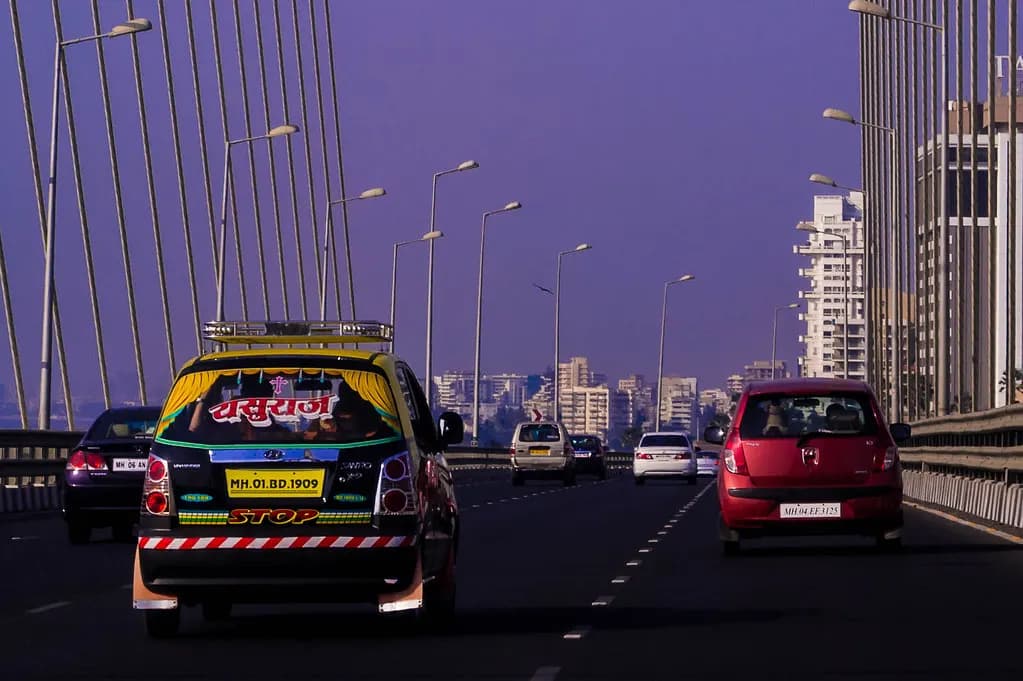
Permit. Section 66 of the Act says a transport vehicle cannot carry passengers for hire without a permit. For a taxi, that usually means a contract carriage permit for local work or a tourist permit. Many cities cap the number of taxi permits or impose their own fuel rules — Delhi-NCR and Mumbai, for example, have CNG or clean-fuel requirements for city cabs — so check what your state transport authority will actually issue before you buy the car. One important exemption: under S.O. 5333(E) of 18 October 2018, battery-operated vehicles and vehicles running on methanol or ethanol are exempt from the permit requirement altogether.
Fitness certificate. Transport vehicles need a certificate of fitness. Under rule 62 of the Central Motor Vehicles Rules as amended in 2018, it is renewed every two years up to 8 years old; one year after that. Fitness testing is moving to automated testing stations in phases, so expect a machine test rather than a quick look by an inspector.
Tracking device and panic button. Public service vehicles must have an AIS-140-compliant vehicle location tracking device with an emergency button under rule 125H, connected to the state's command and control centre. Aggregators are told to check this before onboarding a car.
Driver. The driver needs a valid driving licence for the vehicle class, and most states and all aggregators run police verification. Some states still insist on a badge or public service vehicle endorsement, so ask your RTO.
Business registration. A sole proprietor can start with PAN, a current account and Udyam registration, which is free and helps with vehicle loans. Fleet owners often form a partnership, LLP or private company. GST registration depends on how you bill — see the GST section below.
The All India Tourist Permit
If you want to take customers across state borders — Delhi to Jaipur, Bengaluru to Mysuru and Ooty, Mumbai to Goa — you need either separate permits for each state or an All India Tourist Permit (AITP). The All India Tourist Vehicles (Permit) Rules, 2023, in force since April 2023, made the AITP a single online permit valid across India, applied for on the Vahan portal and granted in electronic form.
The fee depends on how many passengers the vehicle seats, excluding the driver:
| Seating (excluding driver) | Typical vehicles | Annual fee | Quarterly fee |
|---|---|---|---|
| Fewer than 5 | Dzire, Aura, Etios sedans | ₹20,000 a year | ₹6,000 a quarter |
| 5 to 9 | Ertiga, Innova, Carens | ₹30,000 a year | ₹9,000 a quarter |
| 10 to 22 | Tempo Traveller | ₹80,000 | ₹24,000 |
| Electric, methanol or ethanol | Any | No fee | No fee |
The permit is valid for 90 days or multiples of it, up to five years at a time. If the transport authority does not decide within seven days, the permit is deemed granted and generated automatically. It cannot be granted once the vehicle is more than 15 years (10 for diesel in Delhi) old. The vehicle must show "All India Tourist Permit" in white letters on a blue background on the rear left, and you must carry a list of passengers with their origin and destination. An AITP vehicle cannot pick up passengers on the way like a bus.
What changed in April 2026. The All India Tourist Vehicles (Permit) Amendment Rules, 2026 (G.S.R. 131(E)), in force from 1 April 2026, raised the vehicle age limit from 12 to 15 years and added conditions. You apply only to the transport authority of the state where the vehicle is registered, and must show that you live or do business there (Aadhaar for an individual, CIN for a company, otherwise GSTIN). The authority also checks that there is no unpaid FASTag user fee on the vehicle. Every trip must start or end in the home state, and the vehicle may not stay outside it for more than 60 days. It must not run as a stage carriage, must have the tracking device and panic button, and must not have challans pending beyond the 45-day limit unless you have contested them on the state portal. You must also carry the origin, destination and the states on the route, on paper or on your phone; you can change these any time before the trip starts.
Running on Uber, Ola and other apps: the 2025 guidelines
On 1 July 2025 the Ministry of Road Transport and Highways issued the Motor Vehicle Aggregator Guidelines, 2025, replacing the 2020 version. They are addressed to the platforms, but several clauses decide what you as a driver-owner earn. States are expected to adopt them in their own rules, so the exact numbers in your city may differ.
Aggregator rules that affect your earnings
80%
Minimum fare share — your own car
clause 17.4; settled daily, weekly or fortnightly
60%
Minimum share — aggregator's car
clause 17.5
2×
Peak fare cap
two times the base fare; floor 50% below the base fare
eight years
Maximum car age on apps
from first registration
Fares. The base fare is the one your state government notifies for that class of vehicle, and it must cover at least 3 km so drivers are compensated for dead mileage on the way to pick-up. Apps may charge from 50% below the base fare up to two times the base fare. Passengers are not charged for dead mileage except on very short trips.
Your share. If you bring your own car, you must receive at least 80% of the fare, including all driver-side costs; the app keeps the rest. On an aggregator-owned car, the driver gets at least 60%. Aggregators cannot stop you from working with more than one app.
Cancellations. A driver who cancels an accepted ride without a valid reason pays 10% of the fare, up to ₹100, and a passenger who cancels without a valid reason pays the same fee.
Insurance and training. The aggregator must arrange health insurance of at least ₹5 lakh and term insurance of at least ₹10 lakh for every onboarded driver, plus induction training that combines in-person and online sessions, with refresher training for drivers whose ratings fall into the bottom 5%.
Tips and safety. A 2026 amendment added clause 14.15: tips may only be offered after the trip ends and go entirely to the driver. On 11 August 2026 the ministry wrote to all aggregators telling them to remove pre-ride prompts such as "advance tip" or "add a tip for faster confirmation". The same amendment requires apps to let passengers choose a driver of the same gender where available — an opportunity for women drivers.
Vehicle conditions. Apps must check that your car has valid registration, fitness, insurance, PUC and permit, no unpaid challans, the AIS-140 tracker and panic button, disabled child locks, a manual override for central locking, a fire extinguisher and a first-aid kit, and that it is not older than eight years. Budget for an older car to be pushed off the apps.
GST on taxi services: 5% or 18%
How GST works depends on who books the ride. Our GST on transport services guide has the full detail; here is what matters to a cab owner.
Rides booked through an app. For passenger transport by motor cab booked through an electronic commerce operator, the platform pays the GST under section 9(5) of the CGST Act. You don't charge GST on those rides and they don't push you towards registration.
Your own bookings. Since 22 September 2025, a cab operator billing customers directly — airport transfers, outstation trips, packages — can charge 5% (ITC only of input services in the same line of business), or choose 18% with full ITC. Renting a cab with a driver to a company works the same way: 5% (ITC only of input services in the same line of business) or 18% with full ITC. The old 12% option no longer exists. You must register once your direct taxable turnover crosses ₹20 lakh in most states (₹10 lakh in the special-category states).
Which option is better? The 18% option lets you claim input tax credit on the car itself — normally blocked for passenger cars, but allowed under section 17(5) when the vehicle is used to transport passengers — as well as on servicing and tyres. That only pays off if your customers are businesses that can claim the 18% back.
Worked example. A fleet owner buys a sedan for ₹7,60,000 plus 18% GST of ₹1,36,800 to run a corporate contract worth ₹6 lakh a year. Under the 5% option, she charges ₹30,000 GST a year and the ₹1,36,800 on the car is a cost. Under the 18% option, she charges ₹1,08,000 a year, but sets off the ₹1,36,800 credit on the car plus credit on servicing — so for the first year or so she pays little or no cash GST, and her corporate client claims the 18% back in full. For individual passengers who can't claim credit, 5% keeps your prices lower. See our GST on cars guide for the rate on the vehicle.
GST options for a cab operator's direct bookings
| 5% option | 18% option | |
|---|---|---|
Rate charged | 5% (ITC only of input services in the same line of business) | 18% with full ITC |
Credit on the car | No | Yes — passenger transport is excepted from the s.17(5) block |
Credit on servicing, tyres | No (only input services in the same line, e.g. hired cabs) | Yes |
Best for | Individual passengers and tourists | Corporate clients who claim credit |
App-booked rides | Platform pays under s.9(5) | Platform pays under s.9(5) |
Rate charged
- 5% option
5% (ITC only of input services in the same line of business)
- 18% option
18% with full ITC
Credit on the car
- 5% option
No
- 18% option
Yes — passenger transport is excepted from the s.17(5) block
Credit on servicing, tyres
- 5% option
No (only input services in the same line, e.g. hired cabs)
- 18% option
Yes
Best for
- 5% option
Individual passengers and tourists
- 18% option
Corporate clients who claim credit
App-booked rides
- 5% option
Platform pays under s.9(5)
- 18% option
Platform pays under s.9(5)
Electric cabs: permits, fees and subsidy
Electric cabs have three regulatory advantages: no permit is needed under S.O. 5333(E), the All India Tourist Permit is issued without any fee, and GST on the electric car itself is 5% instead of 18% for a small petrol or CNG car. Several states also waive road tax and registration fees on EVs. The 2025 aggregator guidelines also let states set targets for the share of EVs in aggregator fleets.
What there isn't is a central purchase subsidy. PM E-DRIVE, the Ministry of Heavy Industries scheme running until 31 March 2028 with an outlay of ₹11,900 crore, supports electric two-wheelers, three-wheelers, e-ambulances, e-trucks, e-buses and charging infrastructure — not electric cars. Any EV taxi incentive you see comes from a state EV policy, so check your state transport or industries department.
The economics depend on charging. An EV sedan costs more upfront but very little per kilometre if you charge at home overnight. If you rely on public fast chargers, the per-km cost rises and you lose earning time waiting, so EVs suit city app work with predictable daily distances better than long outstation runs.
Insurance for a taxi
Third-party motor insurance is compulsory under section 146 of the Motor Vehicles Act, and a taxi needs a commercial (passenger-carrying) policy — a private-car policy will not pay a claim if the car was carrying a paying passenger. Most operators buy a comprehensive commercial policy covering own damage, third-party liability and legal liability to passengers and the paid driver. Add-ons worth considering are zero depreciation for a new car, engine protection in flood-prone cities and roadside assistance for outstation work. GST on motor insurance premiums is 18%.
Insurance is a large fixed cost and varies with the car's value, city and claim history, so get quotes from at least three insurers before you finalise the car loan. If you hire drivers, also think about personal accident cover for them; the aggregator's mandatory health and term cover applies only while they are onboarded to that app.
Worked ₹ plan: one owner-driven CNG sedan
Here is a simple taxi cab business plan for an owner-driver running a new CNG sedan on aggregator apps in a metro. All figures are MSMETOOLS estimates based on typical 2026 on-road prices, CNG at about ₹85 a kg, app fare levels and loan rates; they are not official. Use your own city's numbers.
| Item | Estimate |
|---|---|
| On-road price of a commercial CNG sedan | ₹9,00,000 |
| Down payment (20%) | ₹1,80,000 |
| Loan of ₹7,20,000 at 11% for 5 years — EMI | ₹15,650 a month |
| Distance driven a month (paid ~6,000 km) | 7,500 km |
| Fares at an average ₹15 per paid km | ₹90,000 |
| Driver's share after aggregator (80%) | ₹72,000 |
| CNG (7,500 km ÷ 25 km/kg × ₹85) | ₹25,500 |
| EMI | ₹15,650 |
| Insurance (about ₹42,000 a year) | ₹3,500 |
| Servicing and tyres | ₹4,000 |
| Road tax, permit, fitness and miscellaneous | ₹1,500 |
| Phone, data, cleaning | ₹1,000 |
| Left for the owner-driver | about ₹20,850 a month |
That is a modest income for 10–12 hours a day, which is why many owner-drivers add outstation trips (our estimate: ₹11–14 per km for a sedan, with a daily minimum and driver allowance) and why the second car is where a fleet usually starts to struggle: a hired driver costs ₹18,000–25,000 a month or a revenue share, wiping out most of the surplus. After the loan is repaid in year six, the same car leaves roughly ₹36,000 a month — but by then it is close to the eight years app limit.
Check the EMI on your cab loan
Vehicle loans for commercial cabs come from banks, NBFCs and manufacturers' finance arms; a Mudra loan can fund a used car or a small fleet's working capital. Our transport business plan guide walks through a full multi-vehicle plan and the documents lenders ask for.
Common mistakes new taxi owners make
Running a private car for hire. It is the most common shortcut and the most expensive: the car is unlicensed for the work, the insurer can reject any claim, and the RTO can seize it. Convert to commercial registration before the first paid trip.
Buying the wrong car for the permit. Some cities only permit CNG or electric cabs, cap the number of new permits or bar older vehicles. Check with the transport authority first, then choose the model.
Ignoring utilisation. A cab earns only while it moves with a passenger. Two days off the road a week, long waits at airports or a car stuck at a workshop can turn the plan above negative. Track paid kilometres as a share of total kilometres every week.
Mixing GST options. If you register and choose 18% for corporate clients, you cannot casually bill a retail customer at 5% without understanding the credit rules. Decide your billing model with your accountant and issue proper tax invoices — our invoice generator can help.
Letting compliance lapse. An expired fitness certificate, a lapsed permit, an unpaid challan or a disconnected tracker can get you suspended from apps and fined on the road. Keep a renewals calendar.
What to do next
Decide your model first — app work, tour and travel, or corporate contracts — then check permit availability and fuel rules at your RTO before choosing the car. Price the loan in our EMI calculator, test your numbers in the break-even calculator, and read our transport business plan guide before you approach a lender.
Official links
- Motor Vehicle Aggregator Guidelines, 2025 (PDF)Fares, driver share, vehicle conditions
- 2026 amendment — tipping and same-gender driver (PDF)Clauses 14.15, 14.16, 15.6
- All India Tourist Vehicles (Permit) Rules, 2023 (PDF)AITP fees and conditions
- AITP Amendment Rules, 2026 — G.S.R. 131(E) (PDF)15-year age limit and home-state conditions from 1 April 2026
- Vahan citizen servicesRegistration, permits, fitness, tax
- S.O. 5333(E) — EV permit exemption (PDF)No permit for battery-operated vehicles
- PM E-DRIVE portalCovered vehicle categories
This is general information, not legal or tax advice — confirm on the official source or with a professional.
Frequently asked questions
The car must be registered as a transport vehicle (yellow plate, or green with yellow letters for an EV) and carry a contract carriage or tourist permit from the state transport authority, a fitness certificate, commercial insurance and a VLT device with panic button. For interstate tours you need an All India Tourist Permit. Battery-operated vehicles are exempt from the permit requirement under S.O. 5333(E) of 2018.
Under the All India Tourist Vehicles (Permit) Rules, 2023, a cab seating fewer than five passengers (excluding the driver) pays ₹20,000 a year or ₹6,000 a quarter, and a 5–9 seater such as an Ertiga or Innova pays ₹30,000 a year or ₹9,000 a quarter. Electric, methanol and ethanol vehicles pay no permit fee. The permit is deemed granted if the authority doesn't decide within seven days.
A cab operator billing passengers directly can charge 5% (ITC only of input services in the same line of business), or opt for 18% with full ITC. Rides booked through apps like Uber or Ola are taxed in the hands of the platform under section 9(5) of the CGST Act, so the driver does not charge GST on them. Registration is needed once your own direct-billing turnover crosses ₹20 lakh in most states.
Under clause 17.4 of the Motor Vehicle Aggregator Guidelines, 2025, a driver who brings their own car must get at least 80% of the fare; on an aggregator-owned car the floor is 60%. These guidelines apply once your state adopts them, so check your state's aggregator rules — several states have their own fare and commission caps.
Our estimate for an owner-driven CNG sedan on aggregator apps in a metro, running about 7,500 km a month, is roughly ₹20,000 a month after fuel, EMI, insurance and upkeep — more once the loan is repaid. A hired driver cuts that sharply, which is why fleet owners rely on corporate contracts and outstation trips with better rates. Your result depends on utilisation, fuel price and fares.
Not under the 2025 guidelines. Clause 13.2 bars aggregators from onboarding vehicles registered more than eight years ago and requires them to remove vehicles that cross that age. Older cars can still run as independent tourist taxis within the permit age limits — 15 years (10 for diesel in Delhi) for an All India Tourist Permit.
Sources & verification
Figures on this page were checked against the sources below when it was last reviewed on 14 October 2026. Each rate and limit is stored once with its own official source and review date, and official update channels are monitored daily so changes are picked up. How we verify
- 1.Motor Vehicle Aggregator Guidelines, 2025 — Ministry of Road Transport & Highways · accessed 9 October 2026
- 2.Amendment in MV Aggregators Guidelines 2025 (clauses 14.15, 14.16, 15.6) — Ministry of Road Transport & Highways · accessed 9 October 2026
- 3.Letter to aggregators on clause 14.15 tipping feature (11 August 2026) — Ministry of Road Transport & Highways · accessed 9 October 2026
- 4.All India Tourist Vehicles (Permit) Rules, 2023 — G.S.R. 302(E) — Ministry of Road Transport & Highways · accessed 9 October 2026
- 5.All India Tourist Vehicles (Permit) Amendment Rules, 2026 — G.S.R. 131(E), 13 February 2026 — Ministry of Road Transport & Highways · accessed 14 October 2026
- 6.S.O. 5333(E) — exemption of battery-operated transport vehicles from permits (18 October 2018) — Ministry of Road Transport & Highways · accessed 9 October 2026
- 7.G.S.R. 1081(E) — amendment to CMVR rules 62 and 90 (2 November 2018) — Ministry of Road Transport & Highways · accessed 9 October 2026
- 8.GST rate changes for services — 56th GST Council (PIB) — Press Information Bureau · accessed 9 October 2026
- 9.Notification 15/2025-Central Tax (Rate) — Ministry of Finance (Department of Revenue) · accessed 9 October 2026
- 10.PM E-DRIVE gazette notification on outlay enhancement (10 August 2026) — Ministry of Heavy Industries · accessed 9 October 2026
MSMETOOLS is an independent platform and is not affiliated with any government agency, ministry or department.
Tools for this
EMI Calculator
Calculate loan EMIs for business and personal loans.
Break Even Calculator
Find your break even point and units.
Startup Cost Calculator
Estimate how much capital you need to launch.
Invoice Generator
Create professional invoices with tax, logo and custom details.
Related guides
 Transport Business Plan 2026: Permits, GTA GST & Per-km CostRead guide
 Logistics Business Management 2026: 3PL, GST & Setup in IndiaRead guide
 How to Start a Tuition Centre in 2026: Rules, GST & ProfitRead guide
 GST Rate on Transport Services 2026: Bus, Cab, Rail & HireRead guide
Official links open the government site in a new tab.