 Starting & growing a business
EV Charging Station Business in India (2026): Rules, Tariff Caps, Land Models, PM E-DRIVE and a Worked ₹ Plan
Start an EV charging station business in India in 2026: no licence needed, MoP tariff and service-charge caps, land models, PM E-DRIVE subsidy, 18% GST and ₹ maths.
 Edited by Sumeet YadavFounder & editor, MSMETOOLS · fact-checked against official sources
Contents (10)
- 1. Is an EV charging station a good business?
- 2. What the 2024 Ministry of Power guidelines say
- 3. Tariff and service-charge caps: how pricing works
- 4. Land and site models
- 5. PM E-DRIVE support for charging stations
- 6. GST on charging and on equipment
- 7. Worked ₹ plan: a small public DC station
- 8. How to set up, step by step
- 9. Common mistakes and how to avoid them
- 10. What to do next
India's electric vehicle numbers are rising fast — two- and three-wheelers first, cars and buses close behind — and every one of them needs somewhere to charge. That has made the EV charging station business one of the most talked-about small-business ideas, and also one of the most oversold. This guide is for petrol-pump and dhaba owners, hotel and mall operators, fleet owners, electrical contractors and investors weighing a charge point franchise. It explains what the Ministry of Power's 2024 guidelines actually allow, the tariff and service-charge caps that limit what you can earn per unit until 2028, the land and host models, what PM E-DRIVE does and doesn't fund, GST, and a worked rupee plan showing why utilisation decides everything.
Quick answer
Setting up an EV charging station is a de-licensed activity — no licence is needed, only an electricity connection, BIS-compliant chargers and safety compliance. The DISCOM must supply power at a single-part tariff not above the Average Cost of Supply (ACoS) until 31 March 2028, and public stations can add a service charge of at most ₹11.00 per unit–₹13.00 per unit for DC fast charging. Customers pay 18% GST on the whole charging fee.
Connections within 3 days in metros, 7 days in other towns, 15 days in rural areas
Government land on revenue share at ₹1 per kWh for an initial 10 years
PM E-DRIVE: ₹2,000 crore for public chargers, routed through government nodal agencies
A small public DC station costs about ₹20 lakh (MSMETOOLS estimate); payback depends on utilisation
Is an EV charging station a good business?
The demand story is real. PM E-DRIVE alone had supported about 29.5 lakh electric vehicles by September 2026, mostly two- and three-wheelers, and the Ministry of Heavy Industries reports electric three-wheelers making up over 40% of L5 three-wheeler sales in the first months of 2026-27. Cities, highways and housing societies all need more chargers, and the 2024 guidelines set a target of at least one public charging station in every 1 km × 1 km grid in notified urban areas by 2030, and stations every 20 km along highways.
The business problem is utilisation. Most private car owners charge at home overnight, so a public charger earns only when someone stops for a top-up, a long trip or because they have no home parking. A DC fast charger that sits idle 90% of the day earns very little service charge against a large capital cost. The operators who make money pick sites where vehicles must stop anyway — highway food plazas, hotels, malls, taxi and delivery fleet hubs, bus and truck depots — or run captive charging for a fleet whose vehicles they know will plug in every day.
It also helps to be clear about what the guidelines cap. You can't price freely: the electricity cost is a pass-through, and the service charge — your margin — has a ceiling until 31 March 2028. That makes this a volume business, closer to a fuel station than to a premium service.
What the 2024 Ministry of Power guidelines say
The Ministry of Power's "Guidelines for Installation and Operation of Electric Vehicle Charging Infrastructure-2024", issued on 17 September 2024, replaced the 2018 guidelines and their amendments. The Bureau of Energy Efficiency is the central nodal agency, and each state names a state nodal agency. The key points for a business are:
No licence. Setting up and operating EV charging stations is a de-licensed activity, and any entity is free to establish charging infrastructure by following the guidelines. Charging an EV is treated as a service, not a sale of electricity, so you don't need a distribution licence.
Connections on a deadline. Charge point operators apply to the DISCOM for a connection, which must be provided within the timelines in the Electricity (Rights of Consumers) Rules, 2020: 3 days in metropolitan areas, 7 days in other municipal areas, 15 days in rural areas, 30 days in hilly rural areas, and 90 days where mains extension or a new substation is needed. DISCOMs must give a separate LT connection up to 150 kW for an EV charging station, and state regulators must pre-specify connection charges in that range. Public stations can also buy power through open access, approved within 15 days.
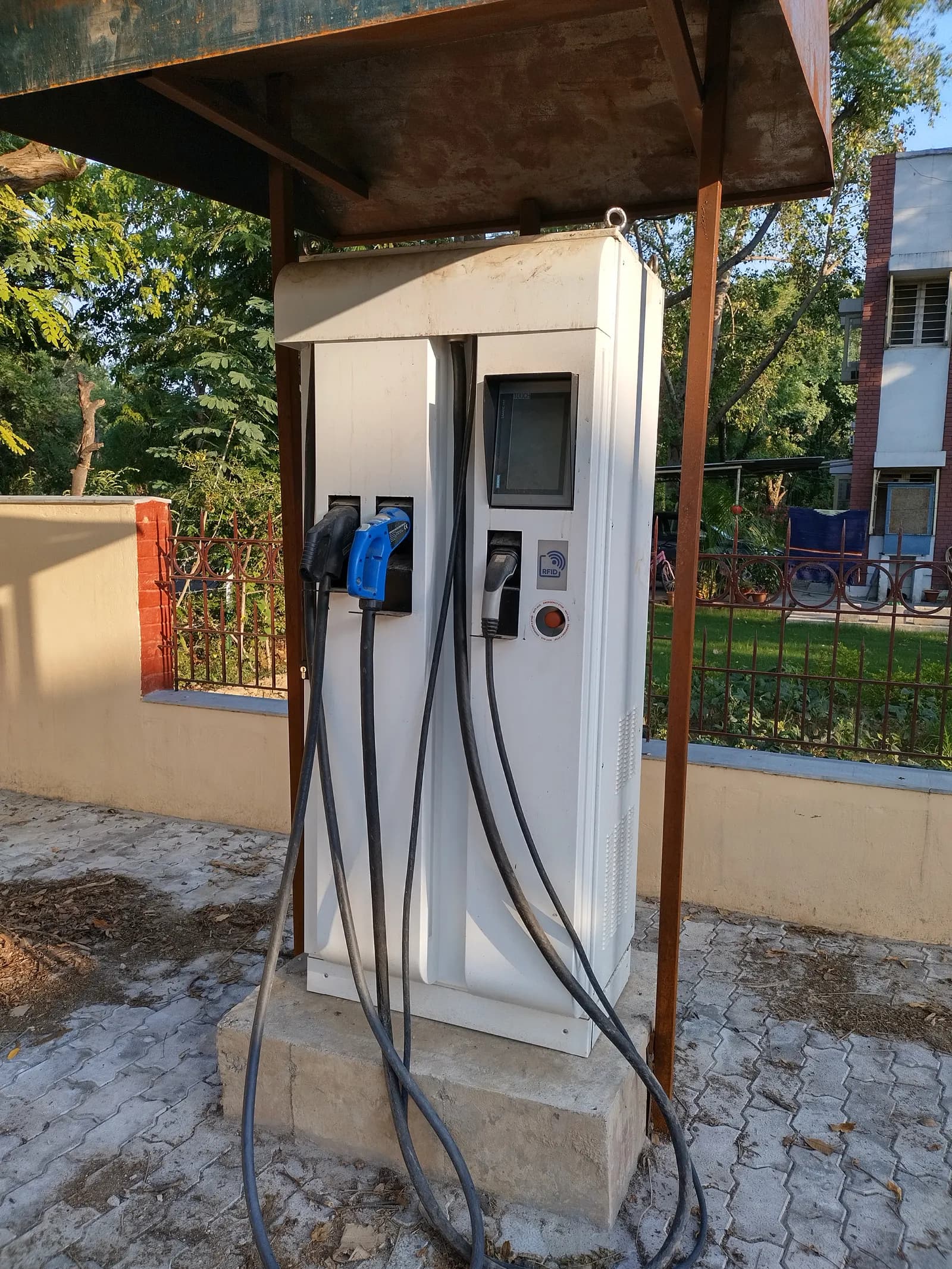
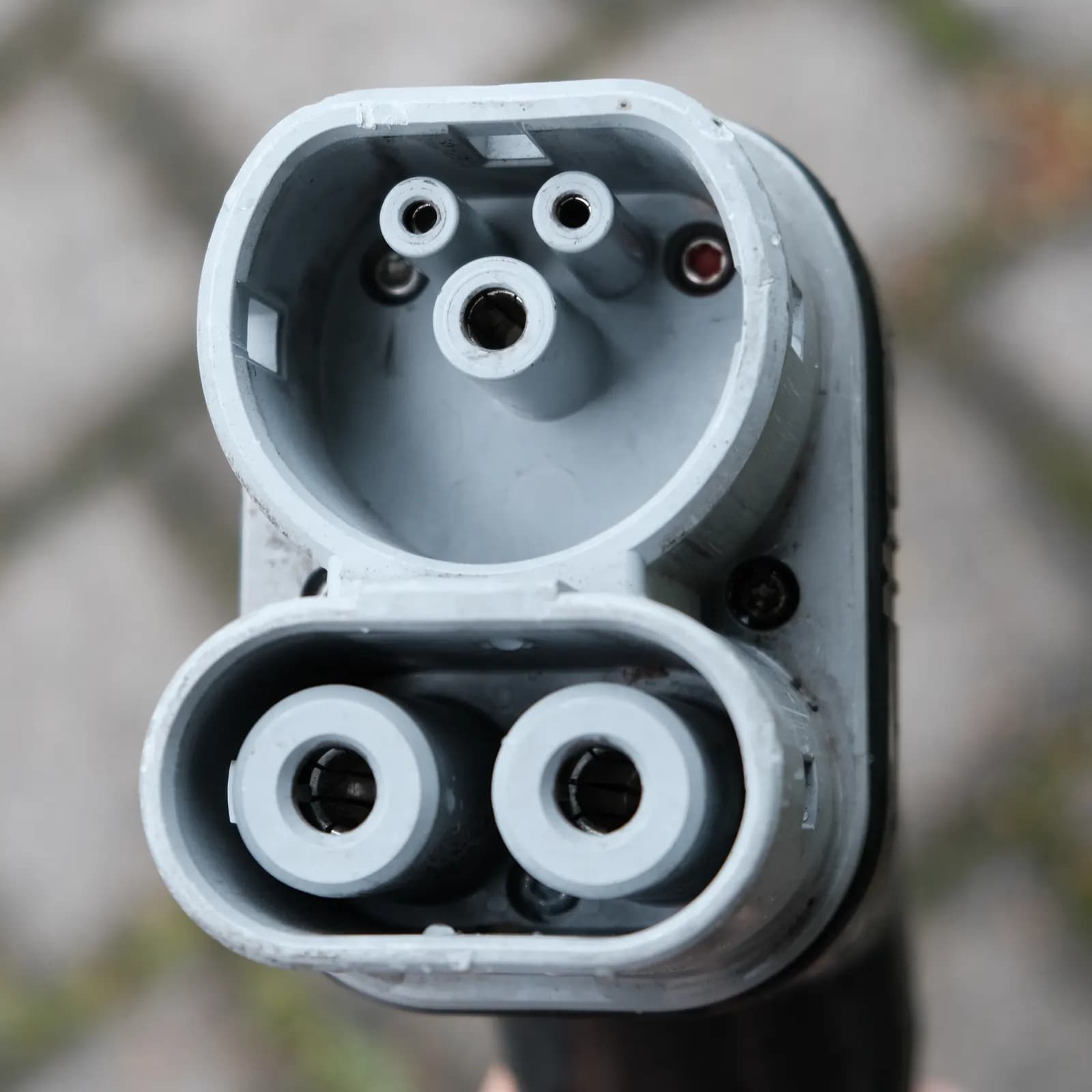
Standards and safety. Chargers must meet the BIS standards listed in the guidelines, and safety and connectivity must follow the CEA safety regulations of 2023 — which also means the electrical installation must be done by a state-licensed electrical contractor. Public stations must display location, charger types and capacities, availability, charging rates and any additional fees, offer prepaid or postpaid payment, and are encouraged to use open protocols such as OCPP. For small vehicles, operators should preferably provide chargers of at least 7.4 kW.
The numbers that shape your revenue (MoP guidelines 2024)
≤ ACoS
Electricity tariff cap
single-part, till 31 March 2028
0.7 × ACoS
Tariff 9 am–4 pm
1.3 × ACoS at other hours
₹11.00 per unit
DC service-charge cap (solar hours)
₹13.00 per unit at other hours
₹3.00 per unit
AC service-charge cap (solar hours)
₹4.00 per unit at other hours
Tariff and service-charge caps: how pricing works
The guidelines split the fee a customer pays into four parts: the electricity supply tariff (a pass-through), a service charge, a land cost (a pass-through as per the registered land deed), and GST.
Electricity. The DISCOM's tariff for EV charging stations must be single-part — no fixed demand charge — and must not exceed the Average Cost of Supply (ACoS) until 31 March 2028. Within that, DISCOMs charge 0.7 × ACoS during solar hours (9 am to 4 pm) and 1.3 × ACoS during the rest of the day. ACoS differs by state, so the same charging session costs different amounts in different states. Each station needs separate metering.
Service charge. For public and community charging stations on public or private land, the service charge (excluding GST and land cost) can't exceed ₹3.00 per unit in solar hours and ₹4.00 per unit otherwise for AC charging, or ₹11.00 per unit and ₹13.00 per unit for DC fast charging, until 31 March 2028. The ceilings are subject to annual review, and a CEA committee will recommend changes.
Worked example. Suppose your state's ACoS is ₹7 a unit (an assumption — check your DISCOM's tariff order). A car takes 30 units from your DC charger at 2 pm. Electricity at 0.7 × ₹7 = ₹4.90 a unit costs ₹147; the maximum service charge of ₹11 a unit adds ₹330; the subtotal is ₹477, and 18% GST on the whole amount adds ₹85.86, so the customer pays about ₹563, or ₹18.76 a unit. The same session at 8 pm costs electricity at 1.3 × ₹7 = ₹9.10 a unit and a service charge of up to ₹13, so about ₹782 with GST. Your gross margin is the service charge — ₹330 to ₹390 on that session — before rent, staff, software, maintenance and payment fees.
Land and site models
Land is usually the make-or-break cost. The guidelines and the market offer four main routes.
Ways to secure a charging site
| Model | How it works | Suits | Watch out for |
|---|---|---|---|
Government land on revenue share | Land-owning agency gets ₹1 per kWh of electricity used, paid quarterly; initial 10 years agreement | Public stations at govt/PSU sites | Usually allotted to public entities; private operators bid with a floor of ₹1 per kWh |
Private lease | Fixed monthly rent for a plot or parking bays | Highway plots, town-edge sites | Rent is due even when chargers sit idle |
Host partnership | Hotel, mall, dhaba, hospital or petrol pump hosts chargers for a revenue share | Low-capex starters | Host controls access and hours; get a written term |
Captive / fleet | Chargers at a depot for your own or a client's fleet | Taxi, delivery and bus operators | Revenue depends on one customer |
Government land on revenue share
- How it works
Land-owning agency gets ₹1 per kWh of electricity used, paid quarterly; initial 10 years agreement
- Suits
Public stations at govt/PSU sites
- Watch out for
Usually allotted to public entities; private operators bid with a floor of ₹1 per kWh
Private lease
- How it works
Fixed monthly rent for a plot or parking bays
- Suits
Highway plots, town-edge sites
- Watch out for
Rent is due even when chargers sit idle
Host partnership
- How it works
Hotel, mall, dhaba, hospital or petrol pump hosts chargers for a revenue share
- Suits
Low-capex starters
- Watch out for
Host controls access and hours; get a written term
Captive / fleet
- How it works
Chargers at a depot for your own or a client's fleet
- Suits
Taxi, delivery and bus operators
- Watch out for
Revenue depends on one customer
Revenue sharing on public land. To cut land costs, the guidelines ask government and public entities to offer land for public charging stations to other government or public entities on a revenue-sharing basis, with the land-owning agency receiving ₹1 per kWh of electricity used for charging, paid quarterly, under an agreement initially for 10 years. A model agreement is annexed. Public land-owning agencies may also offer land to private operators through bidding, with ₹1 per kWh as the floor price. Watch your state nodal agency and municipal corporation for such tenders.
Host partnerships are the most common route for small operators. The host gets footfall and a share of the service charge; you supply and run the chargers. The guidelines specifically list housing societies, malls, office complexes, restaurants and hotels, educational institutions and hospitals as locations, with chargers open to visitors and placed near entrances or well-lit areas. Large stations with more than 10 car chargers may add amenities like washrooms, drinking water and waiting areas.
PM E-DRIVE support for charging stations
PM E-DRIVE, run by the Ministry of Heavy Industries, has an outlay of ₹11,900 crore and runs until 31 March 2028. It sets aside ₹2,000 crore for EV public charging stations in selected cities with high EV penetration and on selected highways. As of 21 September 2026, MHI had approved ₹729.34 crore for 7,254 public chargers to 10 states and 3 oil marketing companies. It is fund-limited: if the money runs out before the end date, that component closes.
The operational guidelines, issued in September 2025, tie the subsidy to location, as reported by PTI:
| Location | Upstream infrastructure | Charging equipment |
|---|---|---|
| Government premises (offices, hospitals, educational institutions, residential complexes) with free public access | 100% | 100% |
| Govt/PSU-controlled transit sites — railway stations, airports, metro and bus stations, municipal parking, NHAI and state toll plazas | 80% | 70% |
| Streets, malls, market complexes, highways and expressways | 80% | — |
| Battery swapping and battery charging stations (any location) | 80% | — |
"Upstream infrastructure" means the transformer, cables, protection equipment, civil works and similar items up to the charger. Subsidy is a percentage of benchmark or actual costs, whichever is lower. Crucially, proposals come from central ministries and state or UT governments through nodal agencies, with BHEL as the project implementation agency. A private charge point operator can't apply directly; the realistic route is to partner with a state agency, PSU or oil marketing company that is installing subsidised chargers, or to bid for operation and maintenance contracts. Several states also offer their own capital or tariff incentives for charging stations under state EV policies — check yours.
GST on charging and on equipment
On your charging fee: 18%. Electricity itself is exempt from GST under Notification 10/2025, but charging an EV at a public station has been held to be a supply of service. The Karnataka Authority for Advance Ruling held that a charging operator without a distribution licence provides a service and the whole consideration, including the electricity component, is taxable at 18%. In September 2024 a GST Fitment Committee rejected industry's plea for an exemption. So GST is charged on the electricity pass-through as well as on your service charge.
On your equipment: 5%. Chargers or charging stations for electrically operated vehicles are in the 5% schedule after GST 2.0. Cables, switchgear, civil work and installation services are generally 18%. Because your output is taxed at 18%, you can normally use all this credit — see our input tax credit guide. You'll need GST registration from the start, since EV charging is a taxable service and even small operators usually want the credit on their chargers.
Worked ₹ plan: a small public DC station
Here is a plan for a host-partnership station at a highway hotel on the edge of a tier-2 city: one 60 kW DC fast charger (CCS2) and two 7.4 kW AC chargers, run for five years. All figures are MSMETOOLS estimates based on typical 2026 equipment and installation quotes; they are not official figures, and no PM E-DRIVE subsidy is assumed.
| Item | Estimate |
|---|---|
| 60 kW DC charger | ₹13,00,000 |
| Two 7.4 kW AC chargers | ₹1,40,000 |
| LT connection charges and security deposit | ₹2,00,000 |
| Cabling, protection panel, earthing, civil work, canopy, signage | ₹3,00,000 |
| Software, OCPP integration, payment set-up, contingency | ₹60,000 |
| Total set-up | ₹20,00,000 |
Revenue is the service charge on each unit sold. At 10% utilisation, the DC charger sells about 144 units a day and the AC chargers about 36; at an average DC service charge of ₹12 and AC of ₹3.50, service income is about ₹6.8 lakh a year. Running costs — the host's revenue share or rent (₹1.2 lakh), an attendant shared with the host (₹1.5 lakh), maintenance and AMC (₹80,000), software and payment fees (₹50,000), insurance and miscellaneous (₹40,000) — total about ₹4.4 lakh.
| Utilisation (all chargers) | Units sold a year (all chargers) | Service income | Operating profit | Simple payback |
|---|---|---|---|---|
| 5% | ~33,000 | ₹3.4 lakh | about −₹1.0 lakh | Never |
| 10% | ~66,000 | ₹6.8 lakh | ₹2.4 lakh | ~8 years |
| 15% | ~99,000 | ₹10.2 lakh | ₹5.8 lakh | ~3.5 years |
| 20% | ~1,31,000 | ₹13.6 lakh | ₹9.2 lakh | ~2 years |
The lesson is stark: below about 10% utilisation a DC station barely covers its costs, and above 15% it pays back well within the charger's life. That is why site choice, fleet tie-ups and visibility on charging apps matter more than the charger brand. Run your own scenarios in the break-even calculator and ROI calculator. If you borrow, a CGTMSE-backed loan or term loan from your bank can fund the chargers; check the EMI with our EMI calculator.
Cheaper ways in. A two- and three-wheeler charging point at a shop, auto stand or e-rickshaw hub needs only AC chargers and costs a fraction of a car DC station. Captive charging for a delivery or taxi fleet — see our taxi business guide — gives predictable utilisation. And adding rooftop or carport solar lets you charge in solar hours at the lowest tariff; our solar installation business guide covers the rules.
How to set up, step by step
Start with the site and the model: study traffic, dwell time and nearby EV fleets, then sign a written lease or host agreement covering access hours, revenue share and term. Size the chargers to the vehicles that actually stop there — AC chargers for two- and three-wheelers and long stays, DC fast chargers for cars and fleets on the move.
Next, apply to the DISCOM for a separate metered EV connection, and ask for the EV tariff category explicitly, because a general commercial tariff costs more. LT supply up to 150 kW is available and the connection timelines are fixed by the Rights of Consumers Rules. Install BIS-compliant chargers through a state-licensed electrical contractor and obtain any fire, municipal or electrical inspectorate approvals your site needs. Finally, connect the chargers to a management platform, list them on the main charging apps, put up a rate board showing tariff, service charge and other fees, and accept both prepaid and postpaid payments before you open.
Common mistakes and how to avoid them
Buying a franchise without checking the numbers. Many charging "franchise" offers sell equipment at a markup and promise utilisation that public chargers rarely reach. Ask for real utilisation data from the franchisor's existing stations and run the sensitivity table above with your own assumptions.
Charging above the caps. The service-charge ceilings apply to public and community stations until 31 March 2028. Overcharging invites complaints and action; display your rates clearly as the guidelines require.
Forgetting GST on the electricity. Quoting customers "₹X per unit plus GST on the service charge" understates the price — the 18% applies to the whole fee.
Choosing the wrong tariff. A station on a general commercial connection pays more than the EV tariff and may face demand charges. Insist on a separate EV connection and metering.
Ignoring uptime. A broken charger listed on an app destroys trust quickly. Budget for an AMC, remote monitoring and spare connectors.
Before you commission
0/8What to do next
Shortlist two or three sites, count the vehicles that stop there, and run the utilisation maths before talking to charger vendors. Ask your state nodal agency about PM E-DRIVE locations and land tenders, and check your state EV policy for extra incentives. For the vehicle side of the market, see our electric scooter subsidy guide.
Official links
- MoP EV charging guidelines 2024 (PDF)De-licensing, tariff, service charges, land
- Ministry of Heavy Industries — PM E-DRIVEScheme guidelines and EVPCS guidelines
- PM E-DRIVE booklet, October 2026 (PDF)Charging station allocation and approvals
- Notification 9/2025-CT(Rate) (PDF)Entry 438 — 5% on EV chargers
- CEA Safety Regulations 2023 (PDF)Safety and licensed contractors
This is general information, not legal or tax advice — confirm on the official source or with a professional.
Frequently asked questions
No. The Ministry of Power's 2024 guidelines say setting up and operating an EV charging station is a de-licensed activity — any person or company can do it by following the guidelines. You still need an electricity connection from the DISCOM, chargers that meet BIS standards, safety compliance under the CEA regulations, GST registration, and local permissions for the site such as municipal or fire approvals where they apply.
The fee has four parts: electricity (passed through), a service charge, land cost and GST. Until 31 March 2028, the service charge at public and community stations is capped at ₹11.00 per unit (solar hours) and ₹13.00 per unit (other hours) for DC fast charging, and ₹3.00 per unit / ₹4.00 per unit for AC charging.
PM E-DRIVE has ₹2,000 crore for public charging stations. As reported from MHI's guidelines, government premises with free public access get 100% of upstream infrastructure and chargers, transit hubs get 80% of upstream infrastructure + 70% of chargers, and streets, malls and highways 80% of upstream infrastructure only. Proposals come through government nodal agencies, so private operators usually benefit as partners, not as direct applicants.
Charging an EV at a public station is treated as a supply of service and taxed at 18% on the whole amount, including the electricity component — the Karnataka Authority for Advance Ruling held this and a GST Fitment Committee refused an exemption in 2024. Chargers themselves carry 5% GST, and the operator can claim input tax credit.
The DISCOM must charge a single-part tariff of not above the Average Cost of Supply (ACoS) until 31 March 2028. Within that, the tariff is 0.7 × ACoS during solar hours (9 am to 4 pm) and 1.3 × ACoS at other times, so daytime charging is cheapest. Each station needs separate metering so the EV tariff can be applied.
Our estimate for a small public station with one 60 kW DC fast charger and two 7.4 kW AC chargers on a leased or host site is about ₹20 lakh in 2026, including civil work, cabling, connection charges and software. A two- and three-wheeler charging point at a shop can start under ₹1 lakh. Profit depends almost entirely on utilisation.
Sources & verification
Figures on this page were checked against the sources below when it was last reviewed on 11 October 2026. Each rate and limit is stored once with its own official source and review date, and official update channels are monitored daily so changes are picked up. How we verify
- 1.Guidelines for Installation and Operation of Electric Vehicle Charging Infrastructure-2024 (MoP OM No. 12/2/2018-EV, 17 Sep 2024) — Ministry of Power (hosted by Bureau of Energy Efficiency) · accessed 11 October 2026
- 2.PM E-DRIVE booklet (October 2026) — Ministry of Heavy Industries · accessed 11 October 2026
- 3.Centre releases guidelines for setting up EV charging stations under PM E-DRIVE (PTI) — The Tribune (secondary) · accessed 11 October 2026
- 4.Notification No. 9/2025-Central Tax (Rate) — Ministry of Finance (Gazette of India) · accessed 11 October 2026
- 5.Notification No. 10/2025-Central Tax (Rate) — Ministry of Finance (Gazette of India) · accessed 11 October 2026
- 6.No exemption from GST on electric vehicle charging at public charging stations — Business Today (secondary) · accessed 11 October 2026
- 7.18% GST payable on service of charging of battery of electrical vehicle: AAR — LiveLaw (secondary) · accessed 11 October 2026
- 8.Central Electricity Authority (Measures relating to Safety and Electric Supply) Regulations, 2023 — Central Electricity Authority (hosted by KSEB) · accessed 11 October 2026
MSMETOOLS is an independent platform and is not affiliated with any government agency, ministry or department.
Tools for this
Break Even Calculator
Find your break even point and units.
ROI Calculator
Calculate return on investment for your business projects.
EMI Calculator
Calculate loan EMIs for business and personal loans.
GST Calculator (India)
Calculate GST for your sales and purchases with current rates.
Related guides
 Solar Panel Installation Business 2026: Vendor Rules & ProfitRead guide
 Taxi Cab Business in India 2026: Permits, GST & ProfitRead guide
 Goat Farming Business Plan 2026: Costs, NLM Subsidy & ProfitRead guide
 Beekeeping Business 2026: Subsidy, Registration & ProfitRead guide
Official links open the government site in a new tab.