 Starting & growing a business
Beauty Parlour Business Plan (2026): Setup Cost, Licences, GST and a Worked P&L
Beauty parlour business plan for 2026: setup cost table, licences, 5% GST on salon services, Mudra/PMEGP funding, a worked ₹ monthly P&L and break-even.
 Edited by Sumeet YadavFounder & editor, MSMETOOLS · fact-checked against official sources

Contents (11)
- 1. Who a beauty parlour suits — and which format to choose
- 2. Market research: answer these before you sign a lease
- 3. How much does it cost to open a beauty parlour?
- 4. Licences and registrations for a beauty parlour
- 5. GST on beauty parlour and salon services in 2026
- 6. Services, pricing and staffing
- 7. Worked example: monthly P&L for a three-chair parlour
- 8. Funding a beauty parlour: Mudra, PMEGP and Stand-Up India
- 9. Beauty parlour business plan template
- 10. Mistakes that sink new parlours
- 11. What to do next
A beauty parlour is one of the most common first businesses for women in India, and one of the most common to close in year one — usually because the rent and salaries were never compared with how many clients the chairs can actually serve. This guide gives you a complete beauty parlour business plan that also works as a hair salon business plan: who it suits, an estimated setup cost table with its basis, the licences you need, the current GST rate, funding through Mudra, PMEGP and Stand-Up India, a worked monthly profit and loss, break-even in clients per day, and a fill-in plan template. Tax and scheme rules were checked against official sources in October 2026.
Quick answer
A beauty parlour business plan needs five numbers: setup cost, monthly fixed costs, average bill per client, product cost per client and clients per day. A small 200–300 sq ft parlour costs roughly ₹4–10 lakh to open (our estimate), and salon services carry 5% (no ITC) GST since 22 September 2025.
Licences: Shops and Establishments registration or intimation, municipal trade licence, GST above ₹20 lakh turnover
GST on salon services is 5% (no ITC) — you cannot claim input tax credit on products or rent
Funding: Mudra up to ₹10 lakh without collateral; PMEGP for service projects up to ₹20 lakh with a subsidy
Worked example: a three-chair parlour breaks even at about 12 clients a day
Who a beauty parlour suits — and which format to choose
A parlour suits you if you are a trained beautician (or will hire one), you live in or near a dense residential area, and you are comfortable with long Saturdays, festive rushes and the wedding season. It's a repeat-visit business: eyebrows every three weeks, waxing monthly, facials and hair colour every month or two. Your plan should be built on regulars, not walk-ins.
There's no national licence to practise as a beautician, but customers and lenders trust a recognised certificate. Courses aligned to the Beauty & Wellness Sector Skill Council under Skill India are the usual route. Barbers in the traditional naai trade can also register under PM Vishwakarma for a toolkit voucher of up to ₹15,000 and loans at 5% — see our PM Vishwakarma guide.
Choose one of three formats before you price anything:
- Home parlour — one room at home, one chair, threading, waxing, facials, mehndi and bridal on call. Lowest cost, but growth stops when your own hours are full.
- Neighbourhood ladies' parlour (200–300 sq ft) — two or three stations, one or two beauticians, a facial bed and a hair-wash station. This is the format in our worked plan.
- Unisex hair salon (400–800 sq ft) — four to eight chairs, haircuts and colour as the core, skin services as add-ons. Higher rent and staff costs, higher ticket size, more marketing.
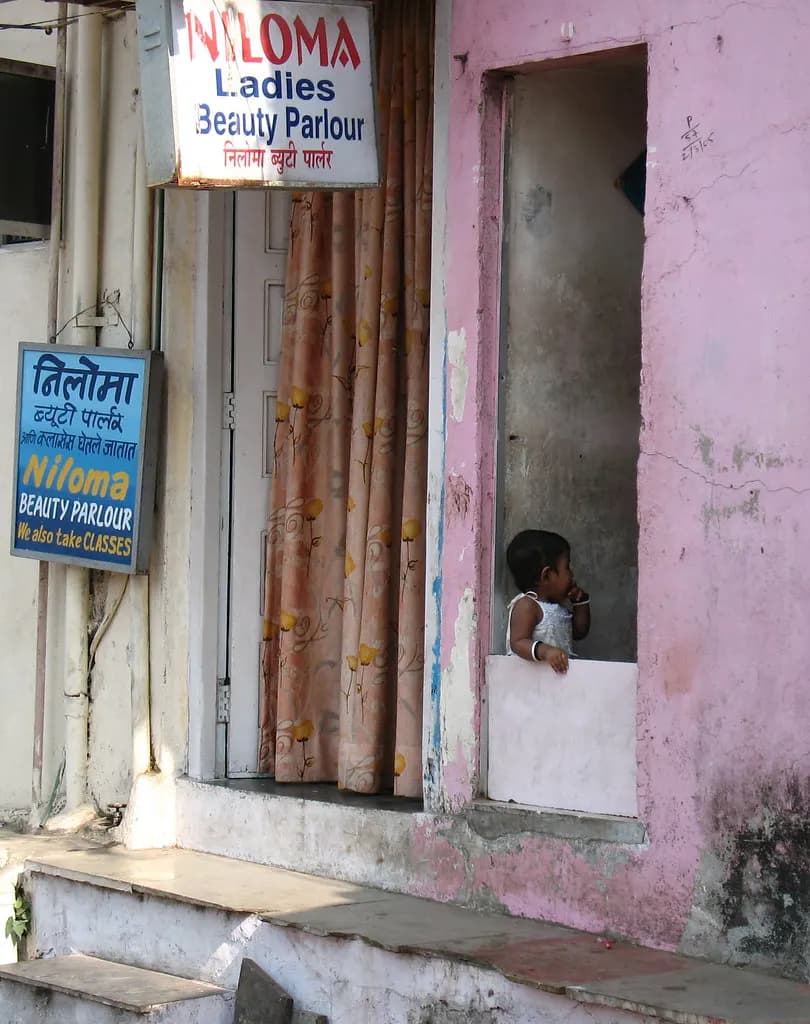
Market research: answer these before you sign a lease
A plan that a bank will read seriously starts with your catchment, not your menu. Walk the area at 11 am, 5 pm and on a Sunday and write down:
- Households within a 1–1.5 km radius. A ladies' parlour lives on women who will walk or take a short auto ride.
- Competitors and their price lists. Note the price of eyebrows, full-arm waxing, a basic facial, a haircut and a bridal package at the three nearest parlours. You'll price within 10–15% of them unless you offer something clearly better.
- Your edge. Examples: evening hours for working women, a trained bridal makeup artist, hygiene you can show (disposable kits, sterilised tools), or doorstep service for older clients.
- Rent per square foot for a ground-floor shop on a main lane versus a first-floor unit one street back. A first-floor unit can halve rent if your clients come by referral.
How much does it cost to open a beauty parlour?
The figures below are MSMETOOLS estimates for a 200–300 sq ft neighbourhood parlour in a tier-2 or tier-3 city in 2026. The equipment lines are based on current B2B listings — for example, most hydraulic salon chairs on IndiaMART sit between about ₹7,000 and ₹17,500. Rent deposits and interiors vary most by city, so replace each line with three local quotes.
| Setup item | Estimated range | Worked plan | Basis / notes |
|---|---|---|---|
| Shop deposit and advance rent | ₹50,000 – ₹1,50,000 | ₹72,000 | 3–6 months' rent is common; negotiate |
| Interiors: flooring, mirrors, lighting, wiring, plumbing | ₹1,00,000 – ₹3,00,000 | ₹1,50,000 | Biggest swing item; reuse existing fittings |
| 3 hydraulic chairs + 1 hair-wash station | ₹35,000 – ₹1,00,000 | ₹55,000 | Listed B2B prices |
| Facial bed, steamer, wax heater, sterilizer, trolleys, dryers, straighteners | ₹40,000 – ₹1,00,000 | ₹60,000 | Mid-range brands |
| Air-conditioner (1–1.5 ton) and geyser | ₹35,000 – ₹60,000 | ₹45,000 | Clients expect AC for facials |
| Opening stock of products and disposables | ₹40,000 – ₹80,000 | ₹50,000 | Waxes, facial kits, hair colour, threads |
| Licences, signboard, billing software, launch marketing | ₹20,000 – ₹50,000 | ₹38,000 | Trade licence fees differ by city |
| Working capital (about 2 months of rent and salaries) | ₹80,000 – ₹1,50,000 | ₹1,30,000 | Covers the slow first months |
| Total | ₹4,00,000 – ₹10,00,000 | ₹6,00,000 |
A home parlour can start for about ₹50,000–₹1.5 lakh (our estimate): one chair, a facial bed, a steamer, a wax heater and opening stock, with no deposit or interiors. Use the startup cost calculator to build your own list.
Licences and registrations for a beauty parlour
No single "salon licence" exists at the national level. Instead, you collect a few local and tax registrations. Here's what applies to most parlours and when:
Registrations a beauty parlour typically needs
| Registration | Who issues it | When you need it | Cost |
|---|---|---|---|
Shops and Establishments registration or intimation | State labour department (online) | Within the time your state allows after opening; in Maharashtra, fewer than 20 workers file an online intimation (Form F) | Nil to a small state fee |
Trade licence / health trade licence | Municipal corporation, municipality or panchayat | Before opening in most cities | Set by the local body |
GST registration | GST portal | When turnover crosses ₹20 lakh a year (₹10 lakh in special category states) | Free |
Udyam registration | Ministry of MSME portal | Optional, but needed for MSME benefits and many loans | Free |
Fire NOC | State or local fire department | Larger premises or malls, as the local rules require | Varies |
Professional tax | State commercial tax department | In states that levy it, once you employ staff | Small fixed amounts |
Shops and Establishments registration or intimation
- Who issues it
State labour department (online)
- When you need it
Within the time your state allows after opening; in Maharashtra, fewer than 20 workers file an online intimation (Form F)
- Cost
Nil to a small state fee
Trade licence / health trade licence
- Who issues it
Municipal corporation, municipality or panchayat
- When you need it
Before opening in most cities
- Cost
Set by the local body
GST registration
- Who issues it
GST portal
- When you need it
When turnover crosses ₹20 lakh a year (₹10 lakh in special category states)
- Cost
Free
Udyam registration
- Who issues it
Ministry of MSME portal
- When you need it
Optional, but needed for MSME benefits and many loans
- Cost
Free
Fire NOC
- Who issues it
State or local fire department
- When you need it
Larger premises or malls, as the local rules require
- Cost
Varies
Professional tax
- Who issues it
State commercial tax department
- When you need it
In states that levy it, once you employ staff
- Cost
Small fixed amounts
Two practical points. First, the landlord's consent and a rent agreement are needed for almost every registration, so get the agreement in your name (or the business's name) before you apply. Second, keep your trade licence and Shops and Establishments certificate displayed — inspectors and lenders both ask. Our guides to Udyam registration and GST registration walk through each portal step by step.
GST on beauty parlour and salon services in 2026
Under GST 2.0, beauty and physical well-being services (Group 99972 — hairdressing, barbers, cosmetic treatment, manicure, pedicure, beauty parlours, spas, health clubs and yoga centres) moved from 18% to 5% (no ITC) with effect from 22 September 2025. The rate in Notification 15/2025-Central Tax (Rate) carries a condition: you cannot take input tax credit on the goods and services used to provide the service.
What that means for your plan:
- Price your services GST-inclusive or exclusive — decide early. Once registered, you charge 5% on the bill. If your competitors aren't registered yet, an all-inclusive price list avoids a visible 5% jump.
- The GST you pay on products, rent and equipment is a cost, not a credit. Budget products at their full GST-inclusive price.
- Product retail is different. Shampoos and creams you sell over the counter are goods with their own rates, and the no-ITC condition is attached to the service, so get your billing set up to separate the two.
- Composition doesn't help. The composition scheme for service providers charges 6% of turnover — more than the 5% you'd charge as a regular taxpayer. Most parlours are better off registering normally once they cross the threshold.
Check the maths with the GST calculator — a ₹1,000 bill becomes ₹1,050 with GST added, or ₹952.38 plus ₹47.62 GST if your list price includes it.
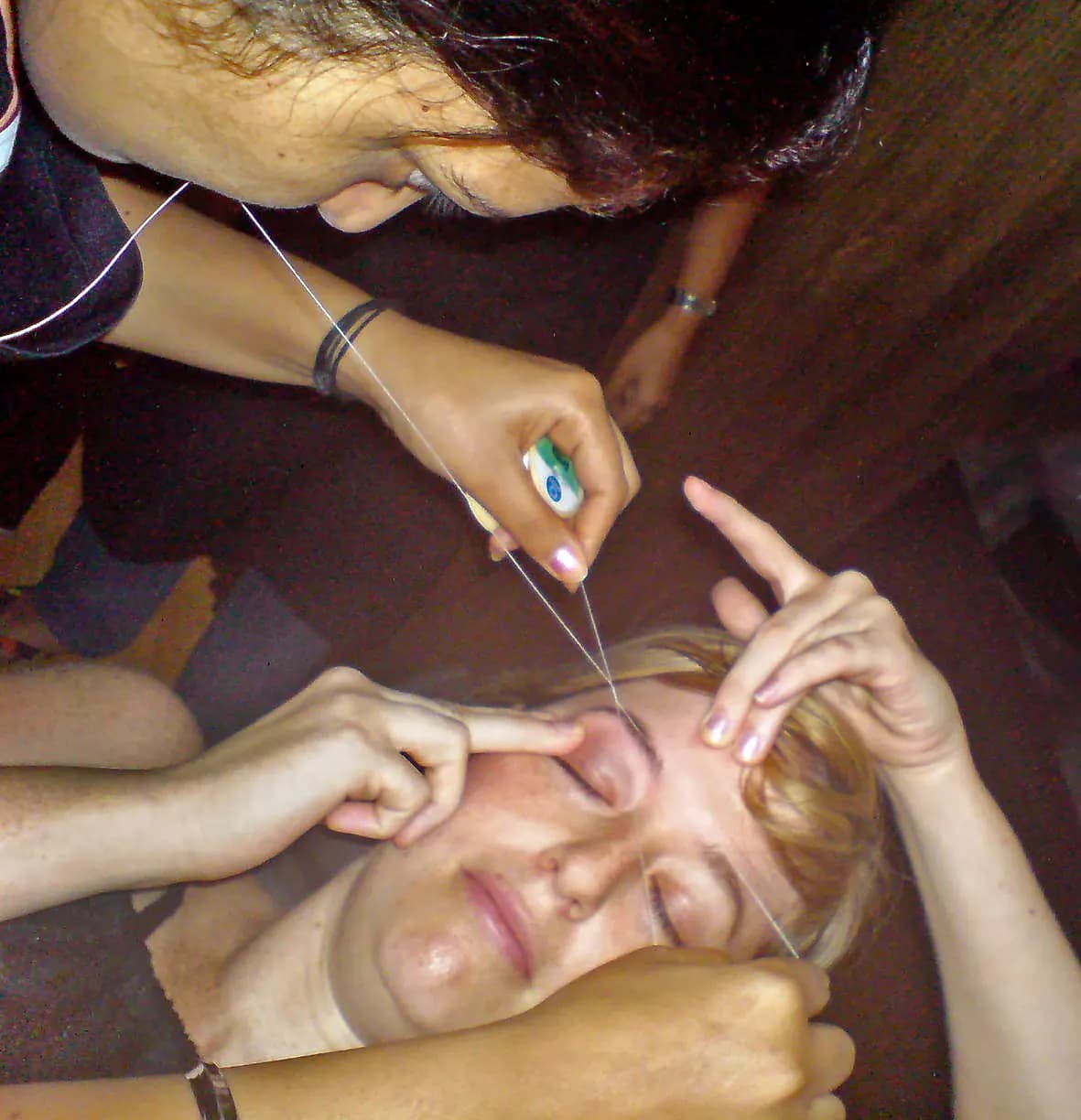
Services, pricing and staffing
Build your service menu in three layers, because each does a different job in the P&L:
- Traffic services (threading, upper lip, basic waxing, haircut): low ticket, 10–25 minutes, very low product cost. They fill gaps and bring clients back every few weeks.
- Margin services (facials, clean-ups, hair spa, hair colour, keratin and smoothening): higher ticket, 45–120 minutes, product cost matters. This is where most of your profit comes from.
- Event services (bridal and party makeup, mehndi, saree draping): high ticket, seasonal, often outside the parlour. Price them as packages and take an advance.
For staffing, plan one beautician per active station during peak hours, and pay attention to retention: in this trade, clients often follow a good beautician to her next job. A fixed salary plus a small incentive on facials and packages above a monthly target is a common structure.
Worked example: monthly P&L for a three-chair parlour
Here is a sample plan for "Roop Beauty Parlour", a 250 sq ft ladies' parlour on a first-floor unit in a tier-2 city, run by the owner with two beauticians and a helper. All figures are illustrative estimates — swap in your own.
Revenue assumption: 15 clients a day × ₹400 average bill × 26 working days = ₹1,56,000 a month (about ₹18.7 lakh a year, so just under the GST threshold for now). The ₹400 average blends ₹50 eyebrows with ₹1,200 facials and a couple of bridal packages a month.
Variable cost: products and disposables at about 13% of revenue = ₹52 per client, or ₹20,280 a month.
| Fixed monthly cost | Amount (estimate) |
|---|---|
| Rent (250 sq ft, first floor) | ₹18,000 |
| Two beauticians | ₹28,000 |
| Helper (cleaning, towels, reception) | ₹8,000 |
| Electricity (AC, geyser, steamers, dryers) | ₹6,000 |
| Water, laundry and towels | ₹3,000 |
| Marketing (Google Business Profile, Instagram, referral offers) | ₹4,000 |
| Phone, internet, booking/billing software | ₹1,500 |
| Repairs and equipment reserve | ₹2,000 |
| Mudra Kishore loan EMI (₹4 lakh, 11%, 5 years) | ₹8,700 |
| Owner's salary | ₹25,000 |
| Total fixed costs | ₹1,04,200 |
- Contribution per client = ₹400 − ₹52 = ₹348
- Monthly contribution = 390 clients × ₹348 = ₹1,35,720
- Profit after the owner's salary = ₹1,35,720 − ₹1,04,200 = about ₹31,500 a month
Break-even = ₹1,04,200 ÷ ₹348 = about 300 clients a month, or 11–12 a day. Below that, the owner's salary is not fully covered. That gap between 12 and 15 clients a day is your safety margin — lose three regulars a day and profit falls by roughly ₹27,000.
Once revenue crosses ₹20 lakh a year you must register and charge 5%. If you keep prices the same and absorb the tax, about 4.8% of revenue goes to GST — roughly ₹7,400 a month at this volume — so plan a price revision for when you cross the line.
Try it — beauty parlour break-even
Funding a beauty parlour: Mudra, PMEGP and Stand-Up India
Most parlours are funded by savings plus a small collateral-free loan. Choose the scheme by project size and your profile:
- Mudra (PMMY) — the default for parlours. Shishu up to ₹50,000, Kishore up to ₹5 lakh, Tarun up to ₹10 lakh, and Tarun Plus up to ₹20 lakh for those who have repaid a Tarun loan. No collateral, no subsidy; the rate is set by the lender. Our worked plan uses a ₹4 lakh Kishore loan plus ₹2 lakh of savings. See the Mudra loan guide.
- PMEGP — for a new service unit with project cost up to ₹20 lakh, with a margin-money subsidy of 15% (urban, general) up to 35% (rural, special categories including women). Your own contribution is 10%, or 5% for special categories. Applications go through the KVIC portal and need a project report and a short entrepreneurship training. See the PMEGP guide.
- Stand-Up India — for women and SC/ST founders opening their first enterprise, with composite loans from ₹10 lakh to ₹1 crore. Fits a larger unisex salon rather than a small parlour.
Compare EMIs before you commit — the EMI calculator shows how a longer tenure eases monthly cash flow at the cost of more interest.
Beauty parlour business plan template
Use this checklist as your plan. Each tick is a line or a paragraph in the document you'll show a bank; the business plan generator can turn it into a formatted plan.
Fill-in beauty parlour business plan
0/11Mistakes that sink new parlours
- Choosing the shop before doing the numbers. A ground-floor shop on the main road can cost twice the rent of a first-floor unit nearby. Put both into the break-even calculator before you decide.
- Quoting 18% GST from old templates. Salon services have been taxed at 5% (no ITC) since September 2025. Price and invoice accordingly once you register.
- Over-spending on interiors. Clients judge cleanliness and skill more than marble. Keep interiors under a third of your budget.
- No working capital. The first three months are usually slow. Without a reserve, owners cut staff just as word of mouth starts.
- Ignoring hygiene records. Disposable kits, sterilised tools and a client card with allergies protect your reputation and your liability.
Official links
- GST Council — 56th meeting press releaseSalon and beauty services cut to 5% from 22 Sep 2025
- CBIC — CGST Act section 22GST registration threshold
- GST portal — new registrationApply once you cross the threshold
- Udyam Registration portalFree MSME registration
- MUDRA — FAQsLoan categories and lenders
- PMEGP e-portal (KVIC)Apply for PMEGP with subsidy
- Stand-Up IndiaLoans for women and SC/ST founders
What to do next
Shortlist two or three premises and run each through the break-even calculator with your expected rent and staff costs. Then register on the Udyam portal, apply for your trade licence, and take your plan to a bank for a Mudra loan. Set a reminder to register for GST as your turnover approaches the threshold.
This is general information, not legal or tax advice — confirm on the official source or with a professional. Local licence requirements and fees differ by state and city, so check with your municipal body before you open.
Frequently asked questions
Our estimate for a 200–300 sq ft neighbourhood parlour in a tier-2 or tier-3 town is roughly ₹4 lakh to ₹10 lakh, covering deposit, interiors, two or three stations, an AC, opening stock, licences and three months of working capital. A home-based parlour can start for about ₹50,000 to ₹1.5 lakh. These are estimates from listed equipment prices — get local quotes before you finalise your plan.
Since 22 September 2025, beauty and physical well-being services — salons, parlours, barbers, spas, gyms and yoga centres — are taxed at 5% (no ITC), under Notification 15/2025-Central Tax (Rate). The catch is that you cannot claim input tax credit on products, rent or equipment used to provide the service. GST registration is needed once turnover crosses ₹20 lakh a year.
Usually a registration or intimation under your state's Shops and Establishments Act, a trade or health trade licence from the municipal corporation or panchayat, and GST registration once you cross the threshold. Udyam registration is free and optional but unlocks MSME benefits. Larger salons may also need a fire NOC from the local fire department. Rules differ by state and city, so confirm with your local body.
It can be, mainly because product cost is low — typically around a tenth of revenue in our example. In the worked plan below, a three-chair parlour seeing 15 clients a day at ₹400 average earns about ₹31,500 a month after paying the owner a ₹25,000 salary, and breaks even at about 12 clients a day. Rent and staff salaries decide whether you make money.
Yes. Beauty parlours are service micro-enterprises, which Mudra covers. Shishu loans go up to ₹50,000, Kishore up to ₹5 lakh and Tarun up to ₹10 lakh, without collateral, from banks, NBFCs and MFIs. Lenders will ask for a short business plan with costs and expected monthly income, plus KYC and quotes for the equipment you plan to buy.
Sources & verification
Figures on this page were checked against the sources below when it was last reviewed on 7 October 2026. Each rate and limit is stored once with its own official source and review date, and official update channels are monitored daily so changes are picked up. How we verify
- 1.Recommendations of the 56th GST Council meeting (press release) — GST Council / PIB · accessed 7 October 2026
- 2.Notification No. 15/2025-Central Tax (Rate), 17 September 2025 — Ministry of Finance (copy hosted by IIT Hyderabad) · accessed 7 October 2026
- 3.CGST Act 2017, section 22 — persons liable for registration — CBIC · accessed 7 October 2026
- 4.Maharashtra Shops and Establishments (Regulation of Employment and Conditions of Service) Rules, 2018 — Labour Department, Government of Maharashtra · accessed 7 October 2026
- 5.MUDRA — Frequently Asked Questions — MUDRA Ltd · accessed 7 October 2026
- 6.Stand-Up India — scheme features — SIDBI / Department of Financial Services · accessed 7 October 2026
- 7.Continuation of PMEGP over the 15th Finance Commission cycle — PIB · accessed 7 October 2026
- 8.Salon hydraulic chair — latest price listings — IndiaMART · accessed 7 October 2026
MSMETOOLS is an independent platform and is not affiliated with any government agency, ministry or department.
Tools for this
Break Even Calculator
Find your break even point and units.
Startup Cost Calculator
Estimate how much capital you need to launch.
Profit Margin Calculator
Calculate profit, markup and margin for your products or services.
Business Plan Generator (US)
Create a professional business plan for US investors and banks.
Related guides
 Bakery Business Plan 2026: Costs, FSSAI, GST & ProfitRead guide
 Catering Business Plan 2026: Per-Plate Cost, FSSAI & GSTRead guide
 Restaurant Business Plan India (2026): Costs, Licences & P&LRead guide
 Xerox and Printing Shop Business 2026: Cost, GST & ProfitRead guide
Official links open the government site in a new tab.