 Business registration & legal
Business License in Los Angeles (2026): How the City BTRC Works, What It Costs and What Else You Need
Business license Los Angeles 2026: how the city BTRC works, rates by class, the $100,000 exemption, back tax and seller's permits.
 Edited by Sumeet YadavFounder & editor, MSMETOOLS · fact-checked against official sources
Contents (13)
- 1. What a "business license" means in Los Angeles
- 2. Who needs a BTRC (and who doesn't)
- 3. What it costs: tax classes and rates
- 4. The $100,000 small business exemption
- 5. Worked examples in dollars
- 6. The first-year "back tax" explained
- 7. How to register for a BTRC
- 8. Renewals, penalties and catching up if you're late
- 9. City vs county vs state: which registration does what
- 10. Running a business from home in Los Angeles
- 11. Other permits LA businesses commonly need
- 12. Common mistakes and how to avoid them
- 13. What to do next
If you're opening a shop, freelancing or running a trade business inside the City of Los Angeles, the "business license" you need is the City's Business Tax Registration Certificate (BTRC) from the Office of Finance. It's really a registration for an annual tax on your gross receipts. This guide explains who needs one, what it costs by tax class, how the $100,000 small business exemption works, the first-year "back tax" that surprises new owners, and the other permits that sit alongside it: the county license, the state seller's permit and home-business rules.
Quick answer
Every person or company engaged in business in the City of Los Angeles must register for a Business Tax Registration Certificate with the Office of Finance, online at latax.lacity.org, and then file an annual renewal and pay the city business tax or claim an exemption.
Applies if you're based in the City or physically work there seven or more days a year
Tax depends on your class: retail $1.27 per $1,000, professions $4.25 per $1,000 of gross receipts
No tax if worldwide gross receipts are $100,000 or less and you renew on time
Annual renewal must be filed by the last day of February
Selling taxable goods also needs a free CDTFA seller's permit; LA's sales tax rate is 10.25%
What a "business license" means in Los Angeles
Los Angeles doesn't hand out a general business license the way some cities do. Section 21.03 of the Los Angeles Municipal Code (LAMC) requires everyone engaged in "any trade, calling, occupation, vocation, profession or other means of livelihood" in the City to obtain a Tax Registration Certificate and pay the business tax set out in the Business Tax Ordinance. The certificate proves you're registered for that tax. Because the City calls it a Business Tax Registration Certificate, you'll see it shortened to BTRC on every form and letter.
That distinction matters for two reasons. First, the cost isn't a flat fee. It's a tax measured by your gross receipts, with different rates for different kinds of business. Second, the BTRC doesn't make your business legal on its own. The Office of Finance says plainly that paying the tax doesn't authorize an illegal business, or a legal one run in an illegal way. You still have to meet zoning, building and safety, fire, police, health and sanitation rules, and some of those come with their own permits.
The Office of Finance treats "business" broadly. It covers any activity carried on for gain, benefit or advantage, including sole proprietors, freelancers, landlords and businesses run through online platforms such as short-term rentals and ride-share driving. Earning only dividends or interest from passive investments isn't treated as doing business.
Who needs a BTRC (and who doesn't)
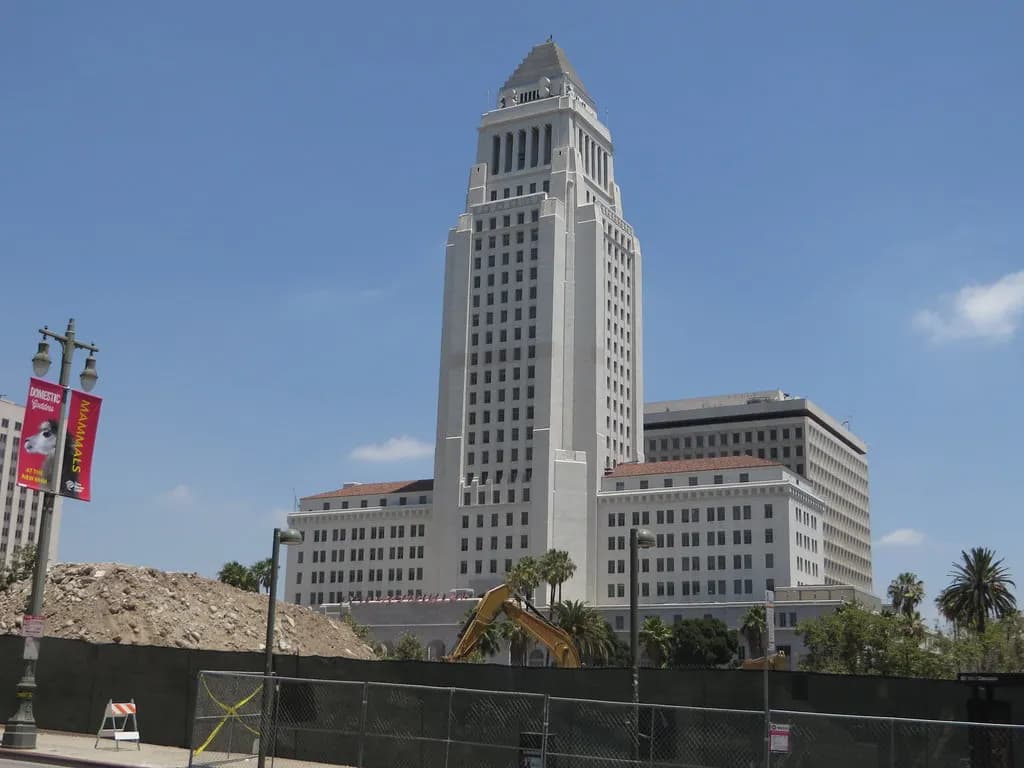
You need a BTRC if your business is located in the City of Los Angeles, whether that's a storefront, an office, a warehouse or your home. You also need one if you're based elsewhere but physically perform work inside City limits on seven or more days a year. That second rule catches a lot of people. A plumber from Glendale, a photographer from Long Beach or a consultant from Orange County who works on site for LA clients for a week or more a year counts as doing business in the City.
Location also has to be checked carefully, because "Los Angeles" on a mailing address doesn't mean you're inside the City. Neighborhoods such as Hollywood, Van Nuys and San Pedro are part of the City, while Santa Monica, Beverly Hills, Burbank, Culver City and Pasadena are separate cities with their own business tax or license rules. Unincorporated areas such as East Los Angeles and Marina del Rey fall under the County.
Some activities aren't subject to the City business tax at all. The Office of Finance's enforcement letter lists examples: childcare for fewer than eight children, 501(c)(3) non-profits that apply for the exemption, notaries public, owners renting out three or fewer residential units, real estate agents, religious leaders acting in that role, small residential care facilities for six or fewer elderly residents, licensed bail bond agents and financial institutions. Charitable and religious organizations can apply for a tax-exempt registration certificate instead.
A business located in Los Angeles whose work all happens outside the City isn't let off the registration. But the City's guidance says that if all activity is outside the City and you don't take a home office deduction on your federal and state returns, your tax measure is $0.
What it costs: tax classes and rates
Your annual business tax depends on your classification and your gross receipts from the previous year. Most classes are taxed per $1,000, or fraction of $1,000, of gross receipts. The table shows the most common classes the Office of Finance lists.
| Business type | City business tax rate | Typical examples |
|---|---|---|
| Retail sales | $1.27 per $1,000 of gross receipts | Clothing stores, groceries, restaurants, hardware |
| Wholesale sales | $1.01 per $1,000 | Distributors selling for resale |
| Professions and occupations | $4.25 per $1,000 | Consultants, architects, engineers, designers |
| Miscellaneous services | $3.56 per $1,000 | Ad agencies, PR, travel agencies, music teachers |
| Multimedia | $1.01 per $1,000 | Software developers, web design, video production |
| Commission merchant or broker | $3.15 per $1,000 | Independent sales agents |
| Personal property rental | $2.55 per $1,000 | Equipment and party rentals |
| Commercial and residential rentals | $1.27 per $1,000 | Landlords with four or more units, commercial space |
| Child care providers | $1.01 per $1,000 | Daycare centers |
| Contractors | $153 for the first $60,000, then $1.01 per $1,000 | Builders, remodelers, demolition |
If you do two kinds of business, such as selling both at retail and at wholesale, you report each stream separately and pay each class's rate. Professionals who do several kinds of service work combine their receipts on a single certificate. Retailers and wholesalers can leave out sales shipped directly to buyers outside California, sales tax they collected, refunds for returned goods and cash discounts.
Businesses based outside the City, or with work both inside and outside it, don't pay on every dollar. The City apportions receipts so that tax reflects LA activity, using City Clerk Ruling 14 for sales and Ruling 15 for services. Apportionment can cut a bill sharply, and it's worth asking an accountant who knows LA rules to check your classification and apportionment before you file.
Los Angeles BTRC at a glance (2026)
$100,000
Small business exemption
Worldwide gross receipts, timely renewal
$1.27 per $1,000
Retail sales tax class
$4.25 per $1,000
Professions and occupations
the last day of February
Annual renewal deadline
$300,000
Creative artist exemption ceiling
The $100,000 small business exemption
Under LAMC Section 21.29, a registered business with $100,000 or less of taxable and nontaxable gross receipts in the prior year pays no business tax, provided it files its annual renewal on time. The exemption was raised to this level in 2006 and has applied since the 2007 renewal period. For most new freelancers, side businesses and small shops, it means the BTRC costs nothing in a typical year.
Three conditions trip people up. The first is that the test uses worldwide receipts, inside and outside the City, taxable and nontaxable. The Office of Finance gives an example of a retailer with only $5,000 of in-City sales, $100,000 of other California sales and $2,000 of interstate sales. Its apportioned taxable measure was just $45,000, but its total receipts of $107,000 were over the line, so it paid tax.
The second is that you must be registered. An unregistered business that later gets caught can't reach back and claim the exemption for years it never filed. The third is timely filing. Taxpayers who miss the renewal deadline are treated as delinquent and lose the exemption for that year, paying the full tax their receipts would produce. You still report every dollar of gross receipts on the renewal, even when you're claiming the exemption.
Individual creative artists, such as writers, actors, musicians and visual artists performing creative activities for entertainment or aesthetic purposes, have a separate exemption on up to $300,000 of receipts from that creative work. It also requires a timely renewal and isn't available in the first year of a new business.
Worked examples in dollars
These examples assume a business located wholly inside the City with no apportionment, using the rates above. Each rate applies per $1,000 or fraction of $1,000.
A boutique with $250,000 of retail sales. $250,000 ÷ $1,000 = 250 units × $1.27 = $317.50 of city business tax for the year. Because receipts exceed $100,000, the small business exemption doesn't apply.
A marketing consultant with $85,000 of fees. Worldwide receipts are under $100,000. If the consultant renews by the last day of February and ticks the exemption box, the tax is $0. If the renewal goes in late, the consultant pays 85 × $4.25 = $361.25 plus penalties and interest.
A consultant with $150,000 of fees. 150 × $4.25 = $637.50.
A contractor with $200,000 of in-City receipts. $153 covers the first $60,000. The remaining $140,000 is 140 × $1.01 = $141.40, for a total of $294.40.
These are business tax figures only. Sales tax you collect from customers on taxable goods is a separate state tax that goes to CDTFA, covered below.

The first-year "back tax" explained
The most common complaint new LA business owners have is that their second-year bill looks doubled. That's the back tax, and it's built into the ordinance. The first year of a new business activity in the City isn't exempt. Some classes must pay a minimum tax when they register. At the end of the first calendar year, you file a statement of that year's full gross receipts and pay any tax above what you paid at registration.
Here's the part that causes the shock: the tax for the first and second calendar years are both measured by your first year's gross receipts, so the two amounts are always the same. At your first renewal, you pay the first year's tax (the back tax) and the second year's tax together.
Take the boutique above, opened in 2026 with $250,000 of first-year sales. At the renewal due by the end of February 2027, it pays $317.50 for 2026 and another $317.50 for 2027, a total of $635. From the following year on, it pays once a year based on the prior year's receipts. Budget for this from day one. Note that the City's old new business exemption, which used to soften this, expired on December 31, 2017.
If your first-year receipts are $100,000 or less and you renew on time, the small business exemption can wipe out the back tax too, which is another reason to register promptly and never miss the first renewal.
How to register for a BTRC
The fastest route is the Office of Finance's online registration at latax.lacity.org. You can also download the paper Business Tax Application, in English or Spanish, and email it or bring it to a public counter. When you finish online, you get a temporary certificate or registration number straight away, and the permanent certificate arrives by mail in 4 to 6 weeks.
How to get your Los Angeles BTRC
- 1
Confirm you're inside the City of Los Angeles
Check that your business address is in the City, not a neighboring city or unincorporated county area. If you're based elsewhere, count the days you work inside City limits.
- 2
Get your entity and tax IDs in place
EIN application guideSole proprietors can register with a Social Security number. Partnerships, corporations, LLCs and trusts need an EIN, and entities must be registered with the California Secretary of State first.
- 3
Register online with the Office of Finance
Enter your legal name, any DBA, business start date in the City, business and mailing addresses, a description of your activity and contact details. The form asks whether your business address is residential.
Tip: Describe what you actually do in plain words. The description drives your tax class and rate.
Open LA business registration - 4
Pay any minimum tax due and save the temporary certificate
Some classes owe a minimum payment at registration. The online system also flags whether you need police, fire or tobacco permits.
- 5
Diary your first renewal
Your renewal is due January 1 and must be filed by the last day of February. Tick the small business exemption box if your worldwide receipts qualify.
Have your Social Security number or EIN, legal business name, fictitious business name if you use one, start date, addresses and a short activity description ready. If you've already been operating, the paper form asks for gross receipts for each prior calendar year back to 2018, so pull your past tax returns before you start.
Renewals, penalties and catching up if you're late
Every registered business must file the annual renewal, whether or not it earned anything that year. The renewal is due January 1 and must be filed by the last day of February; it becomes delinquent on the first business day of March. Separate permits run on other calendars: police and fire permits, police alarm permits and tobacco retailer permits renew by December 31.
Late filing costs you twice. You pay penalties and interest on the tax, and you lose the small business and creative artist exemptions for that year. If you get a penalty, the City considers written waiver requests case by case once the tax and interest are paid in full.
If you've been operating without a BTRC, expect to hear from the City eventually. Under California's AB 63 data-sharing law, the Franchise Tax Board passes the City information about people who reported Schedule C business income, Schedule E rental or royalty income, or 1099 income. The Office of Finance then sends a letter asking you to register and report past receipts, and gives you 20 business days to reply before it may assess tax on estimated receipts. Its FAQ says liability can reach back eight prior calendar years of operation. Registering voluntarily, reporting accurately and asking for a penalty waiver usually costs far less than waiting for an estimated assessment.
City vs county vs state: which registration does what
Los Angeles sits inside a layered system, and owners often confuse the three levels. The City's BTRC is a tax registration. Los Angeles County runs a separate business license program through its Treasurer and Tax Collector, but it only covers businesses in unincorporated county areas and in the cities of Malibu, Santa Clarita and Westlake Village. The county license is regulatory, aimed at around 110 activities that affect public health, safety or welfare, and its fees cover the cost of administering the program rather than taxing your receipts.
Who issues what in Los Angeles
| Registration | Issued by | Who needs it | Cost basis |
|---|---|---|---|
Business Tax Registration Certificate | City of LA Office of Finance | Anyone doing business in the City | Annual tax on gross receipts by class |
County business license | LA County Treasurer and Tax Collector | Regulated activities in unincorporated areas, Malibu, Santa Clarita, Westlake Village | Application and license fees |
Seller's permit | CDTFA (state) | Anyone selling or leasing taxable goods at retail | Free; you collect and remit sales tax |
Fictitious business name | LA County Registrar-Recorder/County Clerk | Anyone trading under a name other than their legal name | Filing fee |
Health permit | LA County Department of Public Health | Food businesses and other regulated premises | Annual permit fee |
Business Tax Registration Certificate
- Issued by
City of LA Office of Finance
- Who needs it
Anyone doing business in the City
- Cost basis
Annual tax on gross receipts by class
County business license
- Issued by
LA County Treasurer and Tax Collector
- Who needs it
Regulated activities in unincorporated areas, Malibu, Santa Clarita, Westlake Village
- Cost basis
Application and license fees
Seller's permit
- Issued by
CDTFA (state)
- Who needs it
Anyone selling or leasing taxable goods at retail
- Cost basis
Free; you collect and remit sales tax
Fictitious business name
- Issued by
LA County Registrar-Recorder/County Clerk
- Who needs it
Anyone trading under a name other than their legal name
- Cost basis
Filing fee
Health permit
- Issued by
LA County Department of Public Health
- Who needs it
Food businesses and other regulated premises
- Cost basis
Annual permit fee
The state level is the seller's permit from the California Department of Tax and Fee Administration (CDTFA). If you sell or lease tangible goods that are subject to sales tax, you need one before you make sales, and you must display it at your place of business. Registration is free online. If you'll sell at one location for 90 days or less, such as a holiday pop-up, CDTFA issues a temporary seller's permit instead. The City's BTRC application even asks for your seller's permit number.
Once you have a permit, you collect sales tax at the rate where the sale happens. Within the City of Los Angeles that's 10.25%, made up of the 7.25% statewide rate plus county and district taxes. Neighboring cities differ: Santa Monica is 11.25% and Long Beach 11%. Our California sales tax guide covers filing, district taxes and resale certificates in depth.
Try it — sales tax on a $1,000 sale in the City of Los Angeles
Running a business from home in Los Angeles
Home-based businesses need a BTRC just like storefronts. The application asks whether your business address is residential, and the City's FAQ notes that residential information becomes subject to public disclosure if the location is used for business. If privacy matters to you, consider using a separate mailing address for correspondence, but the business address itself must be a real location, not a P.O. box.
Zoning is the other piece. The City's zoning code permits home occupations in residential zones only under conditions that keep the activity secondary to the home. Those conditions limit things such as signs, outdoor displays, non-resident employees, customer visits and storage of stock. A freelance designer working at a laptop rarely has trouble. A home bakery, salon chair or workshop that brings in customers or deliveries needs a closer look, and food made at home has its own county health rules. Check the current home occupation conditions with LA City Planning before you sign up customers, and check your lease or HOA rules too.
If you rent a commercial unit instead, confirm the space has the right certificate of occupancy for your use with the Department of Building and Safety before signing. A change of use, such as turning a shop into a café, can trigger permits and inspections that take months.
Other permits LA businesses commonly need
The BTRC is the floor, not the ceiling. Depending on what you do, add these:
- Police permits for activities the City regulates through the Police Commission. The Office of Finance's online registration tells you whether your activity needs one.
- Fire permits from the LA Fire Department for hazardous materials, assembly occupancies and some equipment.
- Tobacco retailer permit if you sell any tobacco products, renewed every year by December 31.
- Health permits from the LA County Department of Public Health for restaurants, food trucks, markets and cottage food operations. Our food truck license guide walks through the LA County health permit process.
- State professional licenses, for example from the Contractors State License Board for construction work over the minor-work limit or the Board of Barbering and Cosmetology for salons.
Your Los Angeles business registration checklist
0/9Common mistakes and how to avoid them
Assuming a home business is exempt. The location doesn't change the rule. If you do business in the City, you register. The $100,000 exemption is the way to pay nothing, and it only works if you're registered and file on time.
Measuring the exemption on LA receipts only. The test is worldwide gross receipts. An LA-based seller with large out-of-state or online sales can owe tax even if only a small slice of sales is in the City.
Missing the first renewal. New owners often don't realize a renewal is due in their first winter. Miss it and you lose the exemption and face penalties on top of the back tax.
Picking the wrong tax class. A software developer filed under professions pays $4.25 per $1,000 per $1,000 when the multimedia class at $1.01 per $1,000 may fit the activity. Describe your work precisely, and ask the Office of Finance to review the classification if it looks wrong.
Confusing the BTRC with a seller's permit. They're separate registrations with separate agencies, and retailers need both. Collecting sales tax without a CDTFA permit, or selling without one, creates a state problem the City registration doesn't fix.
Official links
- LA Office of Finance — register a new businessOnline BTRC application
- How to register for a BTRCChecklist and back tax rules
- Know Your RatesBusiness tax rates by class
- Small Business Exemption FAQWorldwide $100,000 test
- Renewal deadlines and online servicesAnnual renewal and permit dates
- LA County business licenseUnincorporated areas, Malibu, Santa Clarita, Westlake Village
- CDTFA permits and licensesSeller's permit and temporary permits
What to do next
Confirm your address is inside the City, register for your BTRC online, and put the end-of-February renewal in your calendar today. If you sell goods, apply for your free CDTFA seller's permit at the same time and read our California sales tax guide. Still choosing a structure? Our LLC registration guide and DBA guide cover the state and county steps, and the business licenses overview explains how other cities compare.
This is general information, not legal or tax advice — confirm on the official source or with a professional.
Frequently asked questions
Not in the usual sense. What people call an LA business license is the Business Tax Registration Certificate (BTRC) from the City's Office of Finance. Anyone engaged in business in the City must register and then pay the city business tax each year or claim an exemption. Some activities also need separate police, fire or tobacco permits, plus zoning and health approvals.
The cost is the annual business tax, which depends on your tax class and gross receipts. Retail sellers pay $1.27 per $1,000 of gross receipts, most professionals $4.25 per $1,000 and contractors a $153 minimum on the first $60,000. If your worldwide gross receipts are $100,000 or less and you renew on time, you owe no tax at all.
A registered business whose taxable and nontaxable gross receipts from everywhere, inside and outside the City, were $100,000 or less in the previous year. You must file the annual renewal on time, by the last day of February, and tick the exemption box. File late and you lose the exemption and pay the tax that would otherwise be due.
The annual renewal is due January 1 and must be filed by the last day of February; it becomes delinquent on the first business day of March. Every registered business files, even with no revenue, because exemptions such as the small business and creative artist exemptions only apply to timely renewals.
Only if your business is in unincorporated Los Angeles County or in Malibu, Santa Clarita or Westlake Village, and only for the activities the county regulates. The county license is a regulatory license, not a tax on receipts. A business located inside the City of Los Angeles deals with the City's Office of Finance instead, plus any other city where it works.
Yes, if they are engaged in business in the City. That includes self-employed people based outside LA who physically work inside City limits for seven or more days a year. The Office of Finance receives Franchise Tax Board data on Schedule C and 1099 income and writes to people who have not registered, so it is better to register first and claim the exemption if you qualify.
Sources & verification
Figures on this page were checked against the sources below when it was last reviewed on 9 October 2026. Each rate and limit is stored once with its own official source and review date, and official update channels are monitored daily so changes are picked up. How we verify
- 1.Business Tax Information FAQ — City of Los Angeles Office of Finance · accessed 9 October 2026
- 2.Know Your Rates — City of Los Angeles Office of Finance · accessed 9 October 2026
- 3.Small Business Exemption FAQ — City of Los Angeles Office of Finance · accessed 9 October 2026
- 4.Renewal Deadlines, Forms and Online Services — City of Los Angeles Office of Finance · accessed 9 October 2026
- 5.How to Register for a BTRC — City of Los Angeles Office of Finance · accessed 9 October 2026
- 6.Tax Incentives and Exemptions — City of Los Angeles Office of Finance · accessed 9 October 2026
- 7.AB63 notice for independent contractors, self-employed or business owners — City of Los Angeles Office of Finance · accessed 9 October 2026
- 8.Business License General Information — Los Angeles County Treasurer and Tax Collector · accessed 9 October 2026
- 9.Permits & Licenses — California Department of Tax and Fee Administration · accessed 9 October 2026
MSMETOOLS is an independent platform and is not affiliated with any government agency, ministry or department.
Tools for this
Sales Tax Calculator (US)
Calculate sales tax for all US states and cities.
Startup Cost Calculator
Estimate how much capital you need to launch.
Invoice Generator
Create professional invoices with tax, logo and custom details.
Related guides
 Business License San Diego 2026: Cost, Steps & RenewalRead guide
 California Sales Tax Rate 2026: City Rates, Permit & FilingRead guide
 Montana Business License 2026: State & City Rules ExplainedRead guide
 Iowa Business License 2026: Permits, Contractors & Des MoinesRead guide
Official links open the government site in a new tab.