 Business registration & legal
Trade License in Uttar Pradesh (2026): Nagar Nigam Fees for Lucknow and Ghaziabad, e-NagarSewa Steps and the Noida Question
Trade licence in Uttar Pradesh for 2026: official 2026-27 Nagar Nigam fees for Lucknow, Ghaziabad, Kanpur and Agra, e-NagarSewa and Nivesh Mitra steps, and Noida.
 Edited by Sumeet YadavFounder & editor, MSMETOOLS · fact-checked against official sources
Contents (11)
- 1. Which businesses need a trade licence in UP
- 2. Official 2026-27 fees: Lucknow
- 3. Official 2026-27 fees: Ghaziabad, Kanpur and Agra
- 4. How to apply: e-NagarSewa or Nivesh Mitra
- 5. Documents and conditions to prepare
- 6. Worked example: opening a café in Lucknow and a gym in Ghaziabad
- 7. Smaller towns: Nagar Palika Parishads and Nagar Panchayats
- 8. Noida, Greater Noida and other special areas
- 9. Renewal, changes and the Shops Act
- 10. Common mistakes and how to fix them
- 11. What to do next
If you're opening a restaurant in Lucknow, a gym in Ghaziabad or a clinic in Kanpur, you'll probably need a licence from the Nagar Nigam — but in Uttar Pradesh, not every shop does, and the fee depends entirely on what you do. This guide is for owners and managers setting up or renewing in UP. It covers which trades need a licence under the state's municipal law, the official 2026-27 fees that e-NagarSewa publishes city by city for Lucknow, Ghaziabad, Kanpur and Agra, how to apply through e-NagarSewa or Nivesh Mitra, the 30-day guarantee, renewal, and what applies in Noida and Greater Noida, which aren't run by a Nagar Nigam. Everything was checked against the state portals in October 2026.
Quick answer
In UP, apply on e-NagarSewa (e-nagarsewaup.gov.in) or Nivesh Mitra. Your Nagar Nigam, Nagar Palika Parishad or Nagar Panchayat must decide within 30 days. Fees are fixed per trade by each city and licences are yearly (financial year). In Lucknow a restaurant pays ₹6,000 a year; in Ghaziabad a retail goods business pays ₹10,000 a year.
Only trades in the city's bye-laws (and dangerous or offensive trades) need a licence — check your city's list
Documents online: identity proof and address proof, each a PDF under 200 KB
Machinery: Lucknow charges a power permission from ₹500 a year for 5 HP
Noida and Greater Noida are development authorities, not Nagar Nigams
Shops Act registration is separate — compulsory from 20 or more workers after the 2025 amendment
Which businesses need a trade licence in UP
Uttar Pradesh's 17 municipal corporations — Lucknow, Kanpur, Ghaziabad, Agra, Varanasi, Prayagraj, Meerut, Bareilly, Aligarh, Moradabad, Gorakhpur, Saharanpur, Jhansi, Firozabad, Mathura-Vrindavan, Ayodhya and Shahjahanpur — license trades under the Uttar Pradesh Municipal Corporation Act, 1959. Section 438 says that, except under a licence from the Municipal Commissioner, nobody may keep articles specified in the bye-laws above the quantities allowed, keep animals for sale or hire, carry on any trade specified in the bye-laws, or carry on any trade that is dangerous to life, health or property or likely to create a nuisance. Section 452 lets the commissioner charge a fee, fixed by bye-law, for any licence the Act requires.
That wording matters. In 2017, in a case brought by Nagar Nigam Allahabad against the Life Insurance Corporation, the Supreme Court held that the licence fee under section 438 relates to premises where goods or animals are kept for sale or where goods are manufactured, and to trades specified in the bye-laws. LIC's insurance offices, which did none of those things, couldn't be charged. In practice, then, whether your business needs a licence depends on what your city's bye-laws list.
That's why the official rate lists look so different. Lucknow's 2026-27 list covers eating houses, hotels, clinics, nursing homes, diagnostic centres, liquor shops, bars, ice factories, brick kilns and power permissions for machinery — but not general retail shops. Ghaziabad's list, by contrast, includes retail goods, wholesale goods, CA offices, coaching institutes, gyms, beauty parlours, e-commerce and warehouses. Smaller towns — Nagar Palika Parishads and Nagar Panchayats — license trades through their own bye-laws under the UP Municipalities Act, 1916.
Official 2026-27 fees: Lucknow
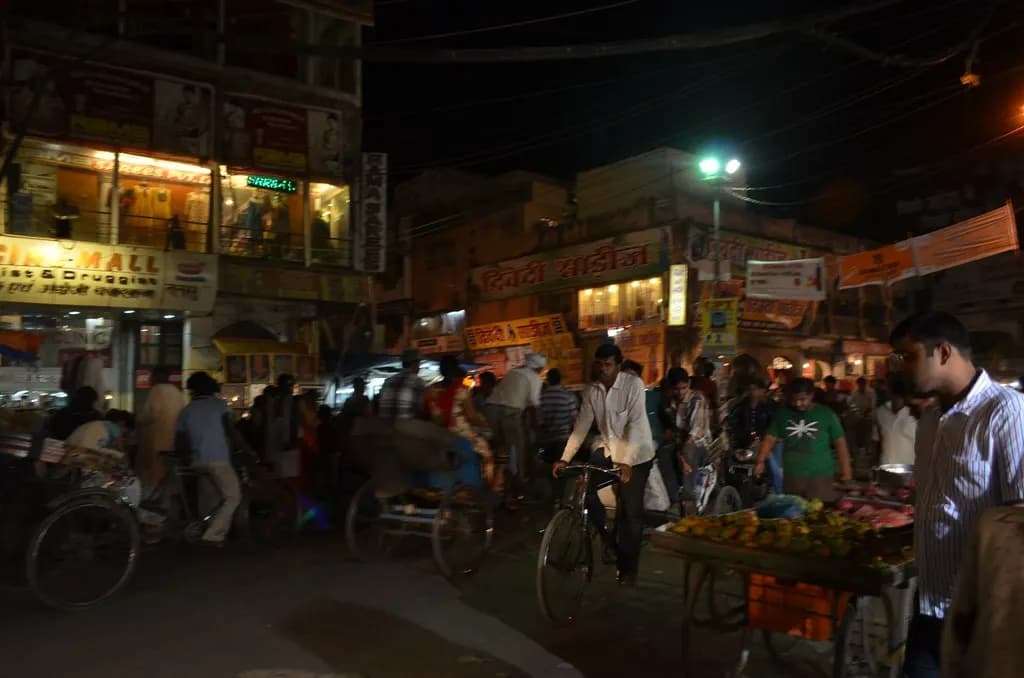
e-NagarSewa, the Directorate of Urban Local Bodies' portal, publishes a licence rate list for each corporation. Lucknow's list for financial year 2026-27 shows every licence as yearly. The main business categories are below.
| Lucknow Nagar Nigam licence (2026-27) | Yearly fee |
|---|---|
| Restaurant / jalpan grah / eating house | ₹6,000 a year |
| Hotel / guest house up to 20 beds | ₹8,000 a year |
| Clinic / dental clinic (consultant) | ₹10,000 a year |
| Nursing home / maternity home / hospital up to 50 beds | ₹15,000 a year |
| Cold drink / ice cream | ₹500 a year |
| Vidyut (power) permission, 5 HP | ₹500 a year |
The list also covers hotels above 20 beds (₹10,000), three- or four-star hotels (₹40,000), five-star hotels (₹1,00,000), Ayurvedic, Unani and homeopathic clinics (₹8,000), pathology labs and collection centres (₹10,000 each), diagnostic and imaging centres (₹20,000), blood banks (₹20,000), larger hospitals (₹30,000 to ₹70,000 by beds), ice and ice-cream factories (₹5,000) and brick kilns (₹12,000). Power permissions for machinery rise from ₹500 for 5 HP to ₹3,000 above 20 HP. Liquor outlets pay the highest rates, from ₹30,000 for a country liquor shop to ₹85,000 for a model shop.
If your trade isn't on the list. A kirana store, a garment shop or an IT office in Lucknow won't find a category. That doesn't automatically mean you're exempt — bye-laws can cover storage of specified articles, and a trade can still be treated as dangerous or offensive — but there is no published fee to pay. Ask the zonal office of Lucknow Nagar Nigam in writing whether your trade needs a licence, and keep the reply. The Nagar Nigam's own website didn't publish a trade licence bye-law when we checked.
Cantonment areas. Premises inside Lucknow Cantonment are licensed by the Cantonment Board, not the Nagar Nigam, through the eChhawani portal.
Official 2026-27 fees: Ghaziabad, Kanpur and Agra
Ghaziabad Nagar Nigam's list is the broadest of the large corporations and covers many ordinary businesses.
| Ghaziabad Nagar Nigam licence (2026-27) | Yearly fee |
|---|---|
| Retail goods | ₹10,000 a year |
| Wholesale goods | ₹25,000 a year |
| Beauty parlour | ₹2,000 (general) / ₹4,000 (AC) |
| Gym | ₹2,000 (general) / ₹5,000 (AC) |
| CA office / private clinic | ₹4,000 a year |
| Coaching / training institute | ₹2,000 a year |
| Hotel lodging, guest house, marriage hall | ₹3,000 a year |
| E-commerce | ₹20,000 a year |
| Warehouse (up to 200 / 200–500 / above 500 sq m) | ₹15,000 / ₹25,000 / ₹30,000 |
Ghaziabad also lists general and branded jewellery shops (₹3,000 and ₹5,000), branded clothing and shoe showrooms (₹4,000), retail sale of cold drinks (₹1,500), meat shops, nursing and maternity homes by beds, finance companies and insurance branches (₹12,000), sports academies, liquor shops and vehicles such as autos, buses and carts. The fee structure traces back to a December 1997 government order that the corporation didn't enforce for years; its executive committee approved revised rates in 2021, and the 2026-27 list is the current version.
Kanpur and Agra. Kanpur Nagar Nigam charges ₹2,000 a year for a jalpaan grah, restaurant or eating house, ₹5,000 for a hotel up to 20 beds and ₹8,000 above, and ₹5,000 for private and dental clinics. Agra Nagar Nigam charges ₹1,800 a year for a restaurant, ₹3,000 for a clinic, and grades hotels by rooms — ₹1,000 for up to 10 rooms, rising to ₹9,000 above 51 rooms. For Varanasi and Prayagraj, the portal returned no rate list when we checked, so ask the corporation directly.
Restaurant licence fee by Nagar Nigam, 2026-27
| City | Restaurant / eating house | Small hotel | Clinic |
|---|---|---|---|
Lucknow | ₹6,000 a year | ₹8,000 (up to 20 beds) | ₹10,000 a year |
Kanpur | ₹2,000 a year | ₹5,000 (up to 20 beds) | ₹5,000 |
Agra | ₹1,800 a year | ₹1,000 (1–10 rooms) | ₹3,000 |
Ghaziabad | Not listed separately | ₹3,000 a year | ₹4,000 a year |
Lucknow
- Restaurant / eating house
₹6,000 a year
- Small hotel
₹8,000 (up to 20 beds)
- Clinic
₹10,000 a year
Kanpur
- Restaurant / eating house
₹2,000 a year
- Small hotel
₹5,000 (up to 20 beds)
- Clinic
₹5,000
Agra
- Restaurant / eating house
₹1,800 a year
- Small hotel
₹1,000 (1–10 rooms)
- Clinic
₹3,000
Ghaziabad
- Restaurant / eating house
Not listed separately
- Small hotel
₹3,000 a year
- Clinic
₹4,000 a year
How to apply: e-NagarSewa or Nivesh Mitra
There are two official routes, and both end at your local body.
e-NagarSewa is the urban local bodies' citizen portal. Its trade licence menu has the process, a document checklist, the city-wise rate list, the guaranteed timeline, the online application, application tracking, payment status and certificate download. Trade licence is one of the portal's live services along with property tax and mutation.
Nivesh Mitra is the state's single-window system for businesses. Its process note for the Urban Development Department's trade licence lists it as a pre-operation approval with a 30-day service level. You register, fill in the common application form and create your unit, choose "Urban Development Department" and the "Trade License" service, select the licence type and validity, upload documents and submit. The fee is calculated automatically and paid online through the consolidated fee menu. The ULB's verifying officer checks the application and forwards it to the approving officer, who issues the licence; you download it from the dashboard and anyone can verify it using the certificate number. If you're already using Nivesh Mitra for other approvals — fire, pollution, factory — it's simplest to add the trade licence there.
Getting a trade licence in a UP city
- 1
Check your city's rate list
e-NagarSewa portalOn e-NagarSewa, open Online Trade Licence → Fees (Licence Rate List), choose Nagar Nigam, Nagar Palika Parishad or Nagar Panchayat and your city. Find your trade.
- 2
Register and apply
Apply for Trade Licence on e-NagarSewa, or through Nivesh Mitra if you're using the single window. Enter business, owner and premises details and the trade.
- 3
Upload documents
Upload identity proof and address proof (voter ID, driving licence, passport, Aadhaar or PAN), each as a PDF under 200 KB. Add trade-specific certificates if asked.
- 4
Pay the fee online
The fee is calculated from your inputs and paid online. Part of the fee may depend on power load for machinery.
- 5
Verification and approval
The ULB's verifying officer checks and forwards; the approving officer issues the licence within the guaranteed 30 days.
- 6
Download and display
Download the certificate from the portal and display it at the premises. Use Track Application if it's delayed.
When the 30 days run out. e-NagarSewa lists the Janhit Guarantee timeline for the online trade licence as 30 days for all three types of urban body. If your application sits beyond that without a reason recorded, use the tracking page and escalate to the designated appeal officer of your Nagar Nigam or Nagar Palika, citing the Janhit Guarantee entry.
Documents and conditions to prepare
Documents for a UP trade licence
0/7The portal's checklist only asks for identity and address proof at upload, but it notes that additional certificates may be needed. For an eatery, that means FSSAI. For a hotel, marriage hall or hospital, expect a fire NOC. For a clinic or diagnostic centre, health department registrations. Have them ready so the verifying officer doesn't send the file back.
Worked example: opening a café in Lucknow and a gym in Ghaziabad
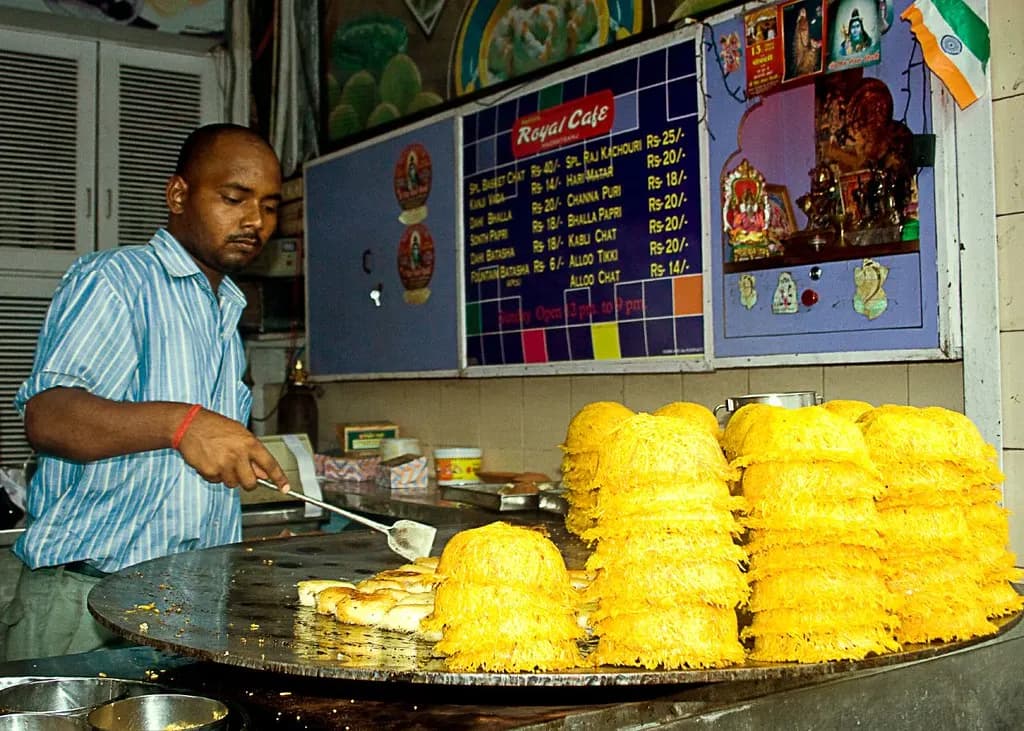
A café in Gomti Nagar, Lucknow. Aisha opens a 40-seat café. On Lucknow's 2026-27 list it falls under restaurant / jalpan grah / eating house: ₹6,000 for the year. Because her kitchen runs on small appliances rather than motorised machinery, she checks with the zonal office whether the separate power permission applies before paying. She registers with FSSAI first, applies on e-NagarSewa with her Aadhaar and address proof, pays ₹6,000 online and gets the licence within the 30-day window. The licence runs to 31 March, so she renews in March for the next year.
A gym in Ghaziabad. Rohit's air-conditioned gym falls under "GYM with AC" on Ghaziabad's list: ₹5,000 a year. His sister's beauty parlour next door, also air-conditioned, pays ₹4,000. If the gym also sold supplements over the counter, Rohit would ask the zonal office whether a separate retail goods licence (₹10,000) was expected; it's better to settle that on paper before the inspection than to pay a demand later.
A garment shop in Lucknow's Aminabad. Garment retail isn't on Lucknow's 2026-27 list, so there's no published licence fee for it. The owner still needs GST registration above the threshold, Shops Act registration if 20 or more people work there, and the usual fire safety for the building. She writes to the zonal office to confirm no trade licence is required for her trade and keeps the reply on file.
Smaller towns: Nagar Palika Parishads and Nagar Panchayats
Outside the 17 corporations, most of Uttar Pradesh's towns are run by Nagar Palika Parishads (municipal councils) and Nagar Panchayats (town areas). They license trades through their own bye-laws, and their fee lists can be very different from a big city's — often shorter and cheaper, sometimes covering trades that a corporation doesn't. The e-NagarSewa rate list lets you choose either type of body and then your town, so start there. If your town returns no list, as happened for some cities when we checked, visit the executive officer's office with your identity proof and ask for the current bye-law schedule in writing.
The process and the guaranteed timeline are the same as in a corporation: the application goes online through e-NagarSewa or Nivesh Mitra, a verifying officer checks it, and the executive officer or an authorised licence officer approves it, all within 30 days. If you run branches in several towns, each one needs its own licence from its own local body — a Lucknow licence doesn't cover a branch in Barabanki.
Who licenses your premises in UP?
| Where your premises are | Who handles trade licensing | Where to apply |
|---|---|---|
Inside one of the 17 Nagar Nigams | Municipal Commissioner, under the 1959 Act and city bye-laws | e-NagarSewa or Nivesh Mitra |
Inside a Nagar Palika Parishad or Nagar Panchayat | Executive officer, under the 1916 Act and local bye-laws | e-NagarSewa or Nivesh Mitra |
Noida / Greater Noida | Industrial development authority — lease and use conditions | The authority's offices |
Cantonment area | Cantonment Board | eChhawani |
Inside one of the 17 Nagar Nigams
- Who handles trade licensing
Municipal Commissioner, under the 1959 Act and city bye-laws
- Where to apply
e-NagarSewa or Nivesh Mitra
Inside a Nagar Palika Parishad or Nagar Panchayat
- Who handles trade licensing
Executive officer, under the 1916 Act and local bye-laws
- Where to apply
e-NagarSewa or Nivesh Mitra
Noida / Greater Noida
- Who handles trade licensing
Industrial development authority — lease and use conditions
- Where to apply
The authority's offices
Cantonment area
- Who handles trade licensing
Cantonment Board
- Where to apply
eChhawani
Noida, Greater Noida and other special areas
Noida and Greater Noida are planned and governed by industrial development authorities created under the UP Industrial Area Development Act, 1976 — not by a Nagar Nigam. Neither appears in e-NagarSewa's list of corporations, councils or town areas, and we found no published general trade licence schedule from either authority. Agency websites that quote a "Noida trade licence fee" don't cite one.
In practice, a business in Noida or Greater Noida should check three things: the conditions of the allotment, lease or sub-lease for its plot or shop, which often restrict what activities are allowed; any permission the authority requires for changing use or running a specific trade from the premises; and the state and central registrations that apply everywhere — Shops Act, FSSAI, fire, pollution consent, GST. Ask the authority's commercial or property department in writing if you're unsure.
Ghaziabad, next door, is a Nagar Nigam and does publish a list — so businesses within Ghaziabad's corporation limits should check the Ghaziabad rates above. Some localities on the city's edge have moved between the development authority and the corporation over the years, so confirm with the zonal office which body your premises falls under.
Cantonments in Lucknow, Kanpur, Agra, Meerut, Prayagraj, Varanasi, Bareilly and elsewhere license trades through their Cantonment Boards on eChhawani.
Renewal, changes and the Shops Act
Every licence on the 2026-27 lists is yearly and priced for the financial year, so plan to renew in March for the year from 1 April. Renewal follows the same portal route: search your licence, check the demand, pay and download the renewed certificate. If you change the trade, the premises or the owner, apply afresh or update the licence, because the fee category may change.
The trade licence isn't your employment registration. Uttar Pradesh amended its Shops and Commercial Establishments Act in 2025: registration is now compulsory for establishments with 20 or more workers, smaller establishments can register voluntarily, applications are online with automatic registration if complete, and fines were raised. Also check UP minimum wages for your staff.
Common mistakes and how to fix them
Assuming every shop must pay. The licence covers trades in your city's bye-laws. Check the rate list; don't pay an agent for a licence that has no category.
Using another city's fee. Rates vary widely — a restaurant pays ₹1,800 in Agra and ₹6,000 in Lucknow. Use your own corporation's list.
Applying in the Nagar Nigam for a Noida or cantonment address. Find out who governs your premises first.
Forgetting the power permission. Lucknow lists a separate yearly vidyut (power) permission for machinery, starting at ₹500 a year for 5 HP.
Missing the March renewal. Licences are for the financial year; renew before 1 April.
Official links
- e-NagarSewa — urban local bodies portalApply, track, pay, download
- Licence rate list by cityChoose Nagar Nigam / Palika / Panchayat and city
- Janhit Guarantee timeline — trade licence30 days
- Nivesh Mitra single windowTrade licence with other business approvals
- Nivesh Mitra trade licence process (UPS_107)Steps and documents
- Cantonment Board Lucknow — trade licenceFor cantonment premises
What to do next
Look up your city and trade on the e-NagarSewa rate list, confirm who governs your premises, and apply with your ID and address proof. If your trade isn't listed, get the zonal office's answer in writing. Then sort out the rest of your setup: FSSAI for food, a fire NOC where needed, GST registration and Udyam registration. Our startup cost calculator helps you budget the year's licence fees.
This is general information, not legal or tax advice — confirm on the official source or with a professional.
Frequently asked questions
Apply online through e-NagarSewa (e-nagarsewaup.gov.in), the urban local bodies portal, or through Nivesh Mitra, the state single-window system. Both route the application to your Nagar Nigam, Nagar Palika Parishad or Nagar Panchayat, which verifies and approves it. You upload identity and address proof, pay the auto-calculated fee online and download the certificate. The guaranteed timeline is 30 days.
Lucknow Nagar Nigam's 2026-27 rate list on e-NagarSewa charges yearly fees by trade: ₹6,000 a year for a restaurant or eating house, ₹8,000 a year for a hotel or guest house up to 20 beds, ₹10,000 a year for a consultant's clinic and ₹15,000 a year for a nursing home up to 50 beds. A 5 HP power permission is ₹500 a year.
Not necessarily. Licensing under the UP Municipal Corporation Act, 1959 applies to trades specified in the corporation's bye-laws and to dangerous or offensive trades. Lucknow's published 2026-27 list covers eateries, hotels, clinics, hospitals, liquor shops, bars, factories and power permissions, but not general retail. Check the list for your trade, and ask the zonal office if your trade isn't on it.
Ghaziabad Nagar Nigam's 2026-27 list includes retail goods at ₹10,000 a year, wholesale goods at ₹25,000 a year, beauty parlours at ₹2,000 (general) / ₹4,000 (AC), gyms at ₹2,000 (general) / ₹5,000 (AC), CA offices and private clinics at ₹4,000 a year, and hotels, guest houses and marriage halls at ₹3,000 a year.
Noida and Greater Noida are governed by industrial development authorities, not by a Nagar Nigam, and they don't appear in the e-NagarSewa licence rate lists. We found no published general trade licence schedule from either authority. Businesses there should check their allotment or lease conditions with the authority and register under the Shops Act, FSSAI and fire rules as applicable.
The Nagar Nigam rate lists on e-NagarSewa show every licence as yearly, priced for the financial year 2026-27. So a licence runs to 31 March and must be renewed for the next financial year. Renew through the same portal before 1 April.
Sources & verification
Figures on this page were checked against the sources below when it was last reviewed on 12 October 2026. Each rate and limit is stored once with its own official source and review date, and official update channels are monitored daily so changes are picked up. How we verify
- 1.e-NagarSewa UP — Licence Rate List (Nagar Nigam Lucknow, Ghaziabad, Kanpur, Agra; FY 2026-27) — Directorate of Urban Local Bodies, Uttar Pradesh (NIC) · accessed 12 October 2026
- 2.e-NagarSewa UP — Online Trade Licence: Janhit Guarantee timeline and document checklist — Directorate of Urban Local Bodies, Uttar Pradesh (NIC) · accessed 12 October 2026
- 3.Nivesh Mitra — Urban Development Department: Trade License (UPS_107) — Invest UP / Nivesh Mitra, Government of Uttar Pradesh · accessed 12 October 2026
- 4.Nagar Nigam, Allahabad v. Life Insurance Corporation of India (Supreme Court, 3 August 2017) — Supreme Court of India · accessed 12 October 2026
- 5.Cantonment Board Lucknow — Trade Licence — Cantonment Board Lucknow · accessed 12 October 2026
- 6.Lucknow Nagar Nigam — official website — Lucknow Nagar Nigam · accessed 12 October 2026
- 7.Uttar Pradesh updates Shops & Establishments law — India Briefing · accessed 12 October 2026
- 8.Gzb civic body's executive panel okays hike in licence fee — Hindustan Times · accessed 12 October 2026
MSMETOOLS is an independent platform and is not affiliated with any government agency, ministry or department.
Tools for this
Startup Cost Calculator
Estimate how much capital you need to launch.
Invoice Generator
Create professional invoices with tax, logo and custom details.
Related guides
 Trade License Jaipur 2026: Rajasthan Fees & How to ApplyRead guide
 Shop Act Registration UP 2026: 20-Employee Rule, Fees, HoursRead guide
 Trade License Dehradun 2026: Nagar Nigam Fees, Bye-Laws, ApplyRead guide
 UP Minimum Wages October 2026: Rates by District, VDA & PDFRead guide
Official links open the government site in a new tab.