 Business registration & legal
Trade License in Chennai and Tamil Nadu (2026): GCC Fee Slabs, Three-Year Validity, Online Steps and the Rules for Other Towns
Trade licence in Chennai for 2026: GCC fee slabs by trade and floor area, the three-year licence under the 2023 Rules, online steps, Tamil name boards and TN rules.
 Edited by Sumeet YadavFounder & editor, MSMETOOLS · fact-checked against official sources
Contents (11)
- 1. What the trade licence covers in Tamil Nadu
- 2. The legal change in Chennai: from the 1919 Act to the 2023 Rules
- 3. GCC trade licence fees by trade and floor area
- 4. Worked examples in ₹
- 5. How long a licence lasts and how renewal works
- 6. How to apply for a new trade licence
- 7. Tamil name boards and other licence conditions
- 8. Other corporations, municipalities and town panchayats
- 9. Changes, transfers, home businesses and closure
- 10. Common mistakes and how to fix them
- 11. What to do next
Every shop, eatery, salon, workshop or office trading from premises in a Tamil Nadu city or town needs a trade licence from its urban local body — and in Chennai both the law and the fees changed recently. This guide is for owners and managers setting up or renewing in Tamil Nadu. It covers the move of Chennai's licence from its 1919 city Act to the statewide Urban Local Bodies Act and 2023 Rules, the Greater Chennai Corporation (GCC) fee slabs by trade and floor area, the licence now valid until 31 March of the third year, the online steps and documents, the Tamil name board condition, and how other corporations and municipalities handle it. Figures were checked against GCC's resolution and the state gazette in October 2026.
Quick answer
In Chennai, apply on the GCC trade licence service (Online Services → Trade License on chennaicorporation.gov.in). The fee depends on your trade and floor area — shops fall within ₹1,000 to ₹20,000 a year, eateries within ₹2,000 to ₹25,000 a year. A licence is valid up to 31 March of the third year, and you can pay for one, two or three years, as the licensee chooses.
Grocery store: ₹3,500 / ₹7,000 / ₹10,000 (up to 1,000 / 1,001–5,000 / above 5,000 sq ft)
Restaurant: ₹5,000 / ₹15,000 / ₹20,000; salon: ₹2,500 / ₹5,000 / ₹10,000
Other towns: apply on tnurbanepay.tn.gov.in — the portal guide says 15 to 30 days
Name board: Tamil first, then English and others, in a 5:3:2 font ratio
Separate from Shops Act registration, FSSAI, fire NOC and professional tax
What the trade licence covers in Tamil Nadu
A trade licence is the municipal permission to use specific premises for a specific trade or business. The local body uses it to check land-use zoning, sanitation, safety and nuisance, and to charge a fee for regulating the trade. It isn't a business registration: it doesn't create a firm or company, and it doesn't replace GST, Udyam or the Labour Department's registration under the Tamil Nadu Shops and Establishments Act.
The licence is tied to the premises and the trade. If you move, the new address needs its own licence. If you add a different activity — a tea stall that starts selling cooked meals, or a textile shop that adds tailoring with machines — the licence category has to be updated, and the fee may change.
Tamil Nadu groups licensed trades into schedules. Under the Tamil Nadu Urban Local Bodies Rules, 2023, Schedule I covers industries and enterprises producing goods that aren't licensed under the Factories Act or other central laws; Schedule II covers shops and commercial establishments, including their store rooms and godowns; Schedule III covers eating houses, canteens and restaurants with a demarcated kitchen and seating, plus lodging houses, hostels, mansions, service apartments and kalyana mandapams. Some categories are excluded from Schedule II, such as companies registered under the Companies Act, banks and financial institutions, gyms and browsing centres licensed under their own laws, and clinical establishments.
The legal change in Chennai: from the 1919 Act to the 2023 Rules
For about a century, Chennai licensed trades under its own law, the Chennai City Municipal Corporation Act, 1919. GCC's 2024 fee resolution records the shift: the Tamil Nadu Urban Local Bodies Act, 1998, as recast in 2022, now applies across the state's urban bodies, and the Tamil Nadu Urban Local Bodies Rules, 2023 were notified by G.O. No. 124 on 12 April 2023. Because renewals for 2023-24 had already run in February and March 2023 under the old procedure, Chennai couldn't apply the new fee system immediately; the council took that step in 2024.
Rule 289 of the 2023 Rules lets the council fix the trade licence fee for each trade within a minimum and a maximum set by the state in five schedules. In March 2025, the government added provisos so that the commissioner can also license, and the council can also fix fees for, trades that aren't listed in Schedules I to III. The resolution notes that licences are linked to the land-use zones of the Tamil Nadu Combined Development and Building Rules, 2019 — primary residential, mixed residential, commercial, industrial and so on — so a trade that isn't permitted in your zone can be refused regardless of the fee.
GCC trade licence fees by trade and floor area
GCC Council Resolution 232/2024, which the corporation publishes as its trade licence fee structure, set fees for about a hundred trades. For shops and eateries, the fee depends on three floor-area tiers: up to 1,000 sq ft, 1,001 to 5,000 sq ft, and above 5,000 sq ft.
| Trade (GCC category) | Annual fee: up to 1,000 / 1,001–5,000 / above 5,000 sq ft |
|---|---|
| Provisions and groceries | ₹3,500 / ₹7,000 / ₹10,000 |
| Bakeries | ₹2,000 / ₹5,000 / ₹10,000 |
| Hair-cutting saloons | ₹2,500 / ₹5,000 / ₹10,000 |
| Medical shops | ₹1,500 / ₹6,000 / ₹10,000 |
| Sale of jewellery | ₹1,500 / ₹6,000 / ₹20,000 |
| Tea stalls | ₹2,000 / ₹5,000 / ₹10,000 |
| Restaurants | ₹5,000 / ₹15,000 / ₹20,000 |
For bands across categories, Chennai's limits are ₹1,000 to ₹20,000 a year for shops and commercial establishments, ₹2,000 to ₹25,000 a year for eating houses, canteens and restaurants, and ₹5,000 to ₹50,000 a year for lodging houses, mansions, guest houses, service apartments and kalyana mandapams. Most manufacturing trades in Schedule I are priced by enterprise size rather than area — ₹3,500 / ₹7,000 / ₹10,000 / ₹15,000 for micro, small, medium and large units — with some trades such as fabrication starting higher.
How much did fees rise? A lot, for small shops. A provision store that paid ₹500 for up to 500 sq ft under the old schedule now pays ₹3,500 for anything up to 1,000 sq ft. A non-air-conditioned salon that paid ₹200 now pays ₹2,500. A restaurant up to 1,000 sq ft moved from ₹2,500 to ₹5,000. Press reports from 2024 quoting fees "up to ₹30,000" referred to the draft proposal; check the published resolution for your trade, not a headline.
Where to find your trade. The resolution lists each old trade name next to its new category. If your exact trade isn't listed, the March 2025 proviso lets the council fix a fee for it, so ask the zonal revenue office which category it has been mapped to.
Worked examples in ₹
Example 1 — a grocery store in Mylapore. Lakshmi runs a 600 sq ft provisions store. Her fee is the lowest tier for groceries: ₹3,500 a year. She chooses to pay for three years at once, ₹10,500, so her licence runs to 31 March of the third year and she doesn't have to think about it again until then.
Example 2 — a salon in Anna Nagar. Arjun's AC salon is 1,200 sq ft, so it falls in the middle tier: ₹5,000 a year. Under the old schedule he paid ₹500. He pays for one year while he decides whether to renew the lease, and sets a reminder to renew in February.
Example 3 — a 3,000 sq ft restaurant in Velachery. The restaurant category's middle tier applies: ₹15,000 a year, or ₹45,000 for three years. It also needs an FSSAI licence, a fire safety certificate for its size and occupancy, and Shops Act registration for its 25 staff. Inspectors check kitchen hygiene, waste disposal and staff health records against GCC's conditions for hotels and restaurants.
How long a licence lasts and how renewal works
The March 2025 amendment to rule 290 says a licence is valid up to 31 March of the third year, and new rule 300-A lets the licensee pay the fee for one, two or three years, whichever they prefer. In practice, that means a licence taken in, say, August 2026 runs to 31 March 2029 at most, and you choose how much of that to pay up front. If you pay for one year, you'll be asked to pay again before the next financial year starts.
How Tamil Nadu's trade licence rules changed
Before 2023
Chennai licences under the Chennai City Municipal Corporation Act, 1919; annual renewal
12 April 2023
Tamil Nadu Urban Local Bodies Rules, 2023 notified (G.O. No. 124)
July 2024
GCC Council Resolution 232/2024 fixes new fees by trade and floor area
17 March 2025
Rule 290 amended: licence valid to 31 March of the third year; rule 300-A allows 1/2/3-year payment
Each February–March
Renew before the financial year your paid period ends
What we couldn't verify. We found no separate late-renewal penalty in GCC's fee resolution. The Commissionerate of Municipal Administration's guide for other urban bodies says renewal must be completed by 1 March and that late renewal costs 25% of the licence fee, but the same guide describes an annual licence, which the 2023 Rules have since replaced. Treat 1 March as the safe date to renew for any period you haven't paid for, and ask your corporation or municipality whether the 25% late fee still applies.
Renewing in Chennai. Use the trade licence status/renewal link on GCC's Trade License page. Search by licence number, check the demand for the new fee and the years selected, pay, and download the renewed licence. If the trade, area or owner has changed, correct the details before paying, since the fee depends on them.
How to apply for a new trade licence
New trade licence in Chennai
- 1
Check land use and the building
Confirm that your trade is allowed in that land-use zone and that the building has the approvals your trade needs. Machinery-heavy trades are restricted in residential zones.
- 2
Open GCC's trade licence page
GCC trade licence pageGo to chennaicorporation.gov.in → Online Services → Trade License → New Trade License, which opens GCC's ERP application.
- 3
Enter business and premises details
Give the owner and business details, address, zone and ward, trade category and floor area.
Tip: Measure the area carefully — it decides your fee tier.
- 4
Upload documents
Upload identity and address proof and proof of occupancy (sale deed, lease or rent agreement), plus any NOC your trade needs.
- 5
Inspection and approval
The licence inspector or sanitary inspector verifies the premises; senior officers approve. A demand is generated on approval.
- 6
Pay and download
Pay the demand online for one, two or three years and download the licence. Display it at the premises.
For trades that need several approvals — larger restaurants, lodging houses, kalyana mandapams, units with machinery — expect officers from health, fire and sometimes pollution control to be involved. The state's single-window system also routes some trade licence applications for new enterprises; if you're setting up a factory or a larger unit, check whether your single-window application already covers the municipal licence before applying separately.
Documents for a Tamil Nadu trade licence
0/8Tamil name boards and other licence conditions
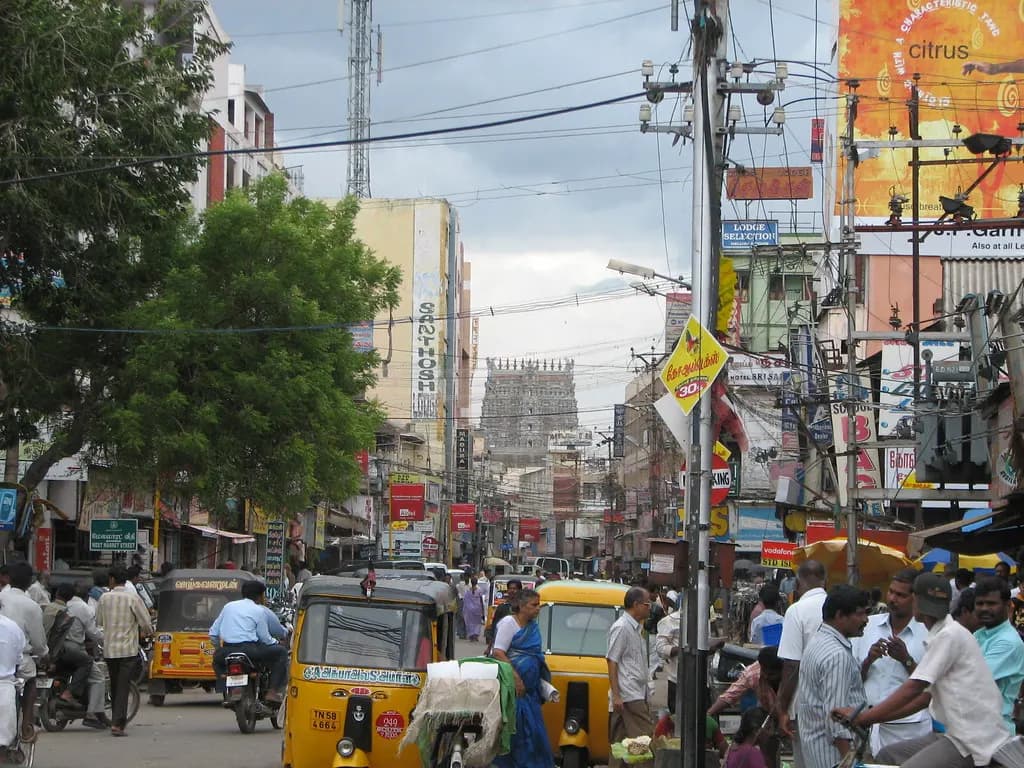
GCC trade licences carry a condition that the shop's name board must be in Tamil, with English and other languages below, in font sizes in the ratio 5:3:2. The rule goes back to a 1977 government order, but enforcement stepped up in 2025: the Mayor announced a survey to identify shops that don't comply, and reports said the corporation would give a seven-day notice before suspending or revoking a licence. Separately, the Labour Department can act under the Tamil Nadu Shops and Establishments Rules, with a fine of up to ₹2,000. Repainting the board costs far less than a suspended licence.
Health conditions also come with licences for food and lodging trades. GCC's conditions for hotels and restaurants include masonry, non-inflammable construction and impervious flooring, regular whitewashing, and periodic medical examination of cooks and workers. Bakeries can't be used as residences, and workers must be medically examined. These are checked during inspection, so it's worth reading the conditions for your trade before the inspector arrives.
Other corporations, municipalities and town panchayats
Outside Chennai, the same Urban Local Bodies Act and 2023 Rules apply to the other municipal corporations — Coimbatore, Madurai, Tiruchirappalli, Salem, Tirunelveli, Erode, Tiruppur, Vellore and the rest — and to municipalities. Each council fixes its own fees within the state bands for the schedules, so the same trade can cost a different amount in Coimbatore than in Chennai. Ask for your local body's fee resolution, or look at the demand the portal shows once your application is inspected.
Chennai vs other Tamil Nadu urban local bodies
| Greater Chennai Corporation | Other corporations and municipalities | |
|---|---|---|
Law | TN Urban Local Bodies Act 1998 and Rules 2023 | Same |
Where to apply | GCC trade licence service (ERP) | tnurbanepay.tn.gov.in |
Fees | Resolution 232/2024 — by trade and floor area | Fixed by each council within state bands |
Validity | up to 31 March of the third year | up to 31 March of the third year |
Payment period | one, two or three years, as the licensee chooses | one, two or three years, as the licensee chooses |
Timeline | Not published | 15 to 30 days per the CMA guide |
Law
- Greater Chennai Corporation
TN Urban Local Bodies Act 1998 and Rules 2023
- Other corporations and municipalities
Same
Where to apply
- Greater Chennai Corporation
GCC trade licence service (ERP)
- Other corporations and municipalities
tnurbanepay.tn.gov.in
Fees
- Greater Chennai Corporation
Resolution 232/2024 — by trade and floor area
- Other corporations and municipalities
Fixed by each council within state bands
Validity
- Greater Chennai Corporation
up to 31 March of the third year
- Other corporations and municipalities
up to 31 March of the third year
Payment period
- Greater Chennai Corporation
one, two or three years, as the licensee chooses
- Other corporations and municipalities
one, two or three years, as the licensee chooses
Timeline
- Greater Chennai Corporation
Not published
- Other corporations and municipalities
15 to 30 days per the CMA guide
The CMA portal process. The Commissionerate of Municipal Administration's guide describes the process on tnurbanepay.tn.gov.in. You register, fill in the application and upload documents with no fee at this stage. The sanitary inspector of your division picks an inspection date, inspects the premises and machinery, and enters the details used to calculate the fee — horsepower, rent, area, production volume and other factors set by the council. The sanitary officer or municipal health officer checks the file, and the commissioner approves. A demand notice then appears under "My Dues"; once you pay, you download the certificate. The guide puts the whole process at 15 to 30 days.
Machinery. If your trade uses machinery of more than 5 HP, you need an installation licence: you submit the machine specifications and an installation diagram, the application goes to the council, and machinery above that level is allowed only in commercial zones under the master plan. Below 5 HP, no installation licence is needed.
Town panchayats. The Directorate of Town Panchayats describes its trade licences as issued under section 249 of the Tamil Nadu District Municipalities Act, 1920, for the trades in Schedule V of that Act. Ask the executive officer of your town panchayat for its current form and fee. In villages, the panchayat issues licences under the Tamil Nadu Panchayats Act.
Trade licence on tnurbanepay — who handles your file
Step 1
Online application
no fee at this stage
Step 2
Sanitary Inspector
inspection + fee details
Step 3
Sanitary / Health Officer
super check
Step 4
Commissioner
approval
Step 5
Demand in My Dues
pay, download certificate
Changes, transfers, home businesses and closure
Change of owner or name. When a business is sold or its constitution changes — a proprietorship becoming a partnership, for example — the new owner should apply for the licence in their own name promptly. Trading on the seller's licence leaves the buyer without a licence of their own if anything goes wrong at inspection.
Change of premises or trade. A move to a new address needs a fresh application, because the fee tier, zone and inspection all depend on the premises. Adding a different trade at the same address means updating the category and paying any difference in fee.
Home-based businesses. Running a trade from a house doesn't remove the need for a licence if the trade is a licensed one, but the land-use zone matters. Low-impact services in a mixed residential zone are treated very differently from machinery or food production in a primary residential zone, so check the zone before you invest in fit-out.
Closure. If you shut the business or move out of the area, inform the local body and surrender the licence, so that demands for later years don't keep building against your name.
Common mistakes and how to fix them
Budgeting with the old fees. Many renewal shocks in 2025 came from shops expecting their old ₹200–₹500 fee. Check your category in Resolution 232/2024 first.
Under-declaring the area. Moving just under 1,000 sq ft on paper may cut the fee tier, but the inspector measures the premises. Declare honestly; a revised demand and a delayed licence cost more.
Paying only one year without a reminder. The option to pay for three years exists to save you renewals. If you pay for one, put February in your diary.
English-only boards. Fix the board before the inspector visits.
Assuming the trade licence covers employment law. It doesn't. See our guides to the Tamil Nadu Shops and Establishments Act, Tamil Nadu professional tax and Tamil Nadu minimum wages.
Official links
- GCC — Trade LicenseNew licence, renewal, status and fee structure
- GCC trade licence fee resolution 232/2024Fees by trade and floor area
- TN Urban e-Pay portalTrade licences for other corporations and municipalities
- CMA trade licence user guideSteps, documents and timelines
- G.O.Ms.No.35 (2025) — amendments to the 2023 RulesValidity and payment period
What to do next
Find your trade in GCC's resolution (or your local body's fee schedule), measure the premises, and decide whether to pay for one, two or three years. Fix the name board to Tamil-first before inspection. Then complete the rest of your Tamil Nadu setup: Shops and Establishments registration, professional tax, FSSAI for food, a fire NOC where needed and GST registration. Our startup cost calculator helps you add up the year's licence fees.
This is general information, not legal or tax advice — confirm on the official source or with a professional.
Frequently asked questions
It depends on the trade and the floor area. Under GCC Council Resolution 232/2024, a provision or grocery store pays ₹3,500 / ₹7,000 / ₹10,000 for up to 1,000, 1,001–5,000 and above 5,000 sq ft, a bakery ₹2,000 / ₹5,000 / ₹10,000, a salon ₹2,500 / ₹5,000 / ₹10,000 and a restaurant ₹5,000 / ₹15,000 / ₹20,000. Shops generally fall within ₹1,000 to ₹20,000 a year.
Under rule 290 of the Tamil Nadu Urban Local Bodies Rules, 2023, as amended in March 2025, a licence is valid up to 31 March of the third year. The licensee can pay the fee for one, two or three years, as the licensee chooses. Before these rules, Chennai and other towns issued licences for a single financial year, and some portal guides still describe annual renewal.
Greater Chennai Corporation handles new licences, renewals and status checks through its ERP trade licence service, linked from the Trade License page under Online Services on chennaicorporation.gov.in. The same page links the fee structure resolution. Other corporations and municipalities in Tamil Nadu use the Commissionerate of Municipal Administration's portal, tnurbanepay.tn.gov.in.
Yes. GCC trade licences carry a condition that the name board must be in Tamil, with English and other languages below in font sizes in the ratio 5:3:2. In 2025 the corporation said it can suspend or revoke licences after a seven-day notice for non-compliance. Separately, the Tamil Nadu Shops and Establishments Rules carry a fine of up to ₹2,000.
No. The trade licence comes from the urban local body and covers the use of the premises for a trade. Registration under the Tamil Nadu Shops and Establishments Act comes from the Labour Department and covers employment conditions; it applies to establishments with 10 or more workers (including contract workers) and costs ₹100. Most businesses with staff need both.
The Commissionerate of Municipal Administration's portal guide says renewing after the deadline costs a penalty of 25% of the licence fee. That guide predates the three-year licence under the 2023 Rules, and we couldn't find a separate late-fee rule for Chennai, so confirm the current charge with your corporation or municipality before the licence expires.
Sources & verification
Figures on this page were checked against the sources below when it was last reviewed on 12 October 2026. Each rate and limit is stored once with its own official source and review date, and official update channels are monitored daily so changes are picked up. How we verify
- 1.GCC Council Resolution No. 232/2024 — trade licence fee structure under the TN Urban Local Bodies Act 1998 and Rules 2023 — Greater Chennai Corporation · accessed 12 October 2026
- 2.GCC — Online Services: Trade License (status/renewal, new licence, fee structure resolution) — Greater Chennai Corporation · accessed 12 October 2026
- 3.Amendments to the Tamil Nadu Urban Local Bodies Rules, 2023 — G.O.Ms.No.35, MAWS (MA.IV), 17 March 2025 — Tamil Nadu Government Gazette Extraordinary No. 122 · accessed 12 October 2026
- 4.Trade License — Procedures and Documents required for Online Application — Commissionerate of Municipal Administration, Tamil Nadu · accessed 12 October 2026
- 5.TN Urban e-Pay — citizen portal — Commissionerate of Municipal Administration, Tamil Nadu · accessed 12 October 2026
- 6.Directorate of Town Panchayats — Trade License — Directorate of Town Panchayats, Tamil Nadu · accessed 12 October 2026
- 7.Amid language policy row, Chennai Corporation reinforces Tamil name boards in shops — The News Minute · accessed 12 October 2026
- 8.Chennai Corporation hikes trade licence fee, professional tax — DT Next · accessed 12 October 2026
- 9.Govt. of TN issued amendments to the Tamil Nadu Urban Local Bodies Rules, 2023 — TeamLease RegTech · accessed 12 October 2026
MSMETOOLS is an independent platform and is not affiliated with any government agency, ministry or department.
Tools for this
Startup Cost Calculator
Estimate how much capital you need to launch.
Invoice Generator
Create professional invoices with tax, logo and custom details.
Related guides
 Fire NOC in India 2026: Who Needs It, Documents & FeesRead guide
 Tamil Nadu Professional Tax 2026: Slabs, Due Dates & PaymentRead guide
 Trade License Bangalore 2026: GBA Renewal, Penalty & RulesRead guide
 Shop and Establishment Act Tamil Nadu 2026: RegistrationRead guide
Official links open the government site in a new tab.