 Business registration & legal
Trade License in Goa (2026): Trade and Occupation Licences in Panaji and the Councils, and the New Panchayat Fee Rules
Trade licence in Goa for 2026: Panaji and Margao trade and occupation licence fees, renewal by 31 May, sealing under section 265A, and the 2026 panchayat fee rules.
 Edited by Sumeet YadavFounder & editor, MSMETOOLS · fact-checked against official sources

Contents (9)
- 1. Who issues trade licences in Goa
- 2. Panaji and Margao: the published fee table
- 3. Documents and how to apply
- 4. Renewal and late fines
- 5. Sealing: the 2022 amendment
- 6. Village panchayats: the 2026 draft fee rules
- 7. The NOCs behind a Goa trade licence
- 8. Common mistakes and how to fix them
- 9. What to do next
In Goa the first question isn't how much a trade licence costs but who issues it. Panaji has a municipal corporation. Margao, Mapusa, Vasco (Mormugao), Ponda and the other towns have municipal councils. The tourist belt — Calangute, Candolim, Anjuna, Colva, Palolem — is mostly run by village panchayats under a different law. Each one licenses businesses, and each sets its own fees. This guide is for shop owners, restaurateurs, hoteliers and homestay hosts, shack operators, professionals and accountants anywhere in Goa. It covers the trade and occupation licence in Panaji and the councils, the published fees, renewal and late fines, the 2022 power to seal unlicensed premises, and the draft panchayat fee rules published in September 2026. We checked the official pages and Gazette notices in October 2026.
Quick answer
In Panaji and Goa's municipal councils you need a trade and occupation (T&O) licence from the corporation or council under the Goa Municipalities Act, 1968 and local bye-laws; in villages, a panchayat licence under the Goa Panchayat Raj Act, 1994. Licences run for a year and are renewed between 1 April to 31 May. Since 2022, premises trading without a licence can be sealed (section 265A).
Panaji: grocery ₹1,221 a year, guest house up to 20 rooms ₹3,220 a year, professionals ₹5,000 a year a year
Late renewal: 25% for six months, then 50%
Trading without a licence: fine ₹5,000 and possible sealing
Panchayats: draft 2026 ceilings, e.g. beach shack ₹15,000 a season in Category A
Apply at the taxation section (Form B) or via Goa Online
Who issues trade licences in Goa
Goa has three tiers of local government that license businesses:
- Corporation of the City of Panaji (CCP) — Panaji (Panjim) city. Licences are decided by the CCP Commissioner, and the corporation publishes its documents list, procedure and fee table online.
- Municipal councils — Margao, Mapusa, Mormugao (Vasco), Ponda, Bicholim, Curchorem-Cacora, Cuncolim, Canacona, Pernem, Quepem, Sanguem, Sanquelim and Valpoi. They work under the Goa Municipalities Act, 1968 and the Directorate of Municipal Administration. Licences are granted under sections 252 and 265 of the Act and the councils' Trade and Occupation Licensing Bye-laws.
- Village panchayats — the rest of Goa, including most beach villages and many industrial and commercial areas. They issue permissions for factories and workshops and licences for trades, hotels, restaurants and shops under sections 68 to 71 of the Goa Panchayat Raj Act, 1994.
So a café in Panaji, one in Mapusa and one in Calangute deal with three different bodies and three different fee schedules. Find out whose jurisdiction your premises fall in before you do anything else. The house tax receipt usually tells you: it's issued by the same body that licenses your trade.
Margao's bye-laws show how council licensing developed. The council adopted the model Trade and Occupation Licensing Bye-laws, 1989, and amended them in 1997 and again in 2003. The 2003 amendment, published in January 2004, says the licence fees are deemed revised by 20% every alternate year. Automatic revisions like this help explain why council fee tables show uneven figures such as ₹1,221 or ₹16,105 rather than round numbers — and why a fee you paid a few years ago may not be today's fee.
Panaji and Margao: the published fee table
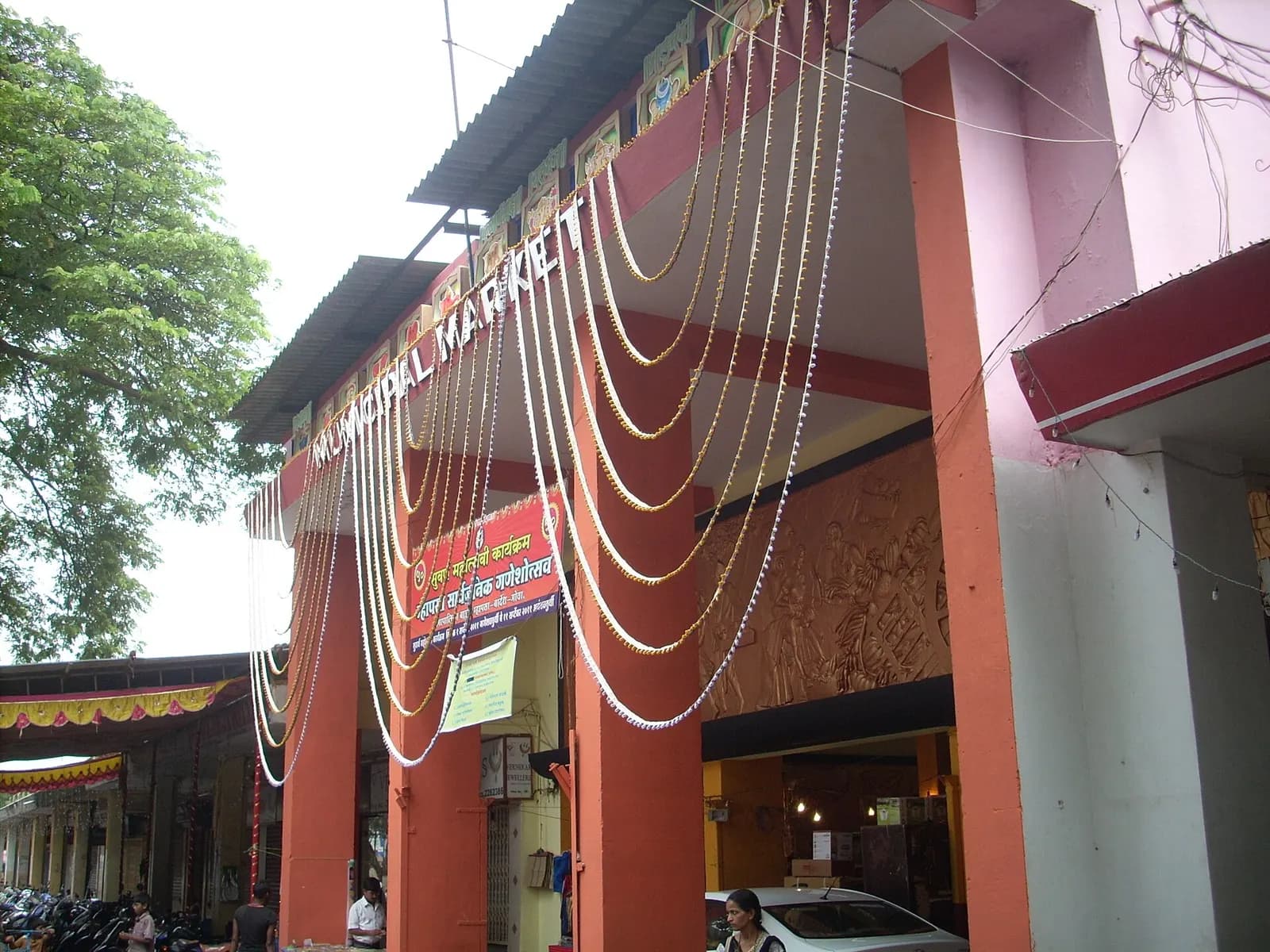
The Corporation of the City of Panaji publishes a single annual fee table for trades, with separate rates for signboards. Margao Municipal Council's official website carries the same table, word for word — including a note that licences are "decided by Commissioner, Corporation of the City Panjim". That suggests Margao copied CCP's page. Treat the figures as Panaji's, and confirm Margao's own current rates at its taxation section. The table doesn't carry a date; CCP's page was posted in 2021. Both councils add that rates may change.
Panaji (CCP) trade and occupation licence — selected annual fees
| Activity | Fee per year |
|---|---|
General store / grocery; pharmacy or chemist | ₹1,221 a year |
Electrical, garment, optical, hardware, furniture shops; garages; photo studios; any other unlisted trade | ₹1,221 a year |
Traditional hair-cutting saloon | ₹1,331 a year |
Commercial establishment (KTC) not listed elsewhere | ₹2,420 a year |
Hotel / lodging / guest house — up to 20 rooms | ₹3,220 a year |
Hotel — 21 to 40 rooms | ₹7,320 a year |
Hotel — above 40 rooms | ₹14,641 a year |
3-star hotel / 5-star hotel | ₹33,275 a year / ₹1,28,840 a year |
Supermarket below 100 sq m / 100 sq m and above | ₹3,993 a year / ₹9,317 a year |
Beauty parlour | ₹4,392 a year |
Hospital / maternity nursing home | ₹6,655 a year |
Professionals — lawyers, doctors, architects, engineers | ₹5,000 a year |
Coaching for CA, CAT, IIT, NEET etc. / classes with fewer than 3 teachers | ₹50,000 a year / ₹10,000 a year |
Bank | ₹16,105 a year |
General store / grocery; pharmacy or chemist
- Fee per year
₹1,221 a year
Electrical, garment, optical, hardware, furniture shops; garages; photo studios; any other unlisted trade
- Fee per year
₹1,221 a year
Traditional hair-cutting saloon
- Fee per year
₹1,331 a year
Commercial establishment (KTC) not listed elsewhere
- Fee per year
₹2,420 a year
Hotel / lodging / guest house — up to 20 rooms
- Fee per year
₹3,220 a year
Hotel — 21 to 40 rooms
- Fee per year
₹7,320 a year
Hotel — above 40 rooms
- Fee per year
₹14,641 a year
3-star hotel / 5-star hotel
- Fee per year
₹33,275 a year / ₹1,28,840 a year
Supermarket below 100 sq m / 100 sq m and above
- Fee per year
₹3,993 a year / ₹9,317 a year
Beauty parlour
- Fee per year
₹4,392 a year
Hospital / maternity nursing home
- Fee per year
₹6,655 a year
Professionals — lawyers, doctors, architects, engineers
- Fee per year
₹5,000 a year
Coaching for CA, CAT, IIT, NEET etc. / classes with fewer than 3 teachers
- Fee per year
₹50,000 a year / ₹10,000 a year
Bank
- Fee per year
₹16,105 a year
Several activities are charged "as per area in sq. mt" without a published rate: bars, bar-and-restaurants, branded jewellery, exclusive electronics, mobile and garment showrooms, spas, gyms and meat shops. For those you'll get the figure only after inspection. At the top end, the table lists ₹1,50,000 for insurance and stock-broking offices and ₹2,00,000 for a casino office. Transferring a licence costs ₹2,000 within the family and ₹10,000 to anyone else.
Signboards are separate. Shop signs need their own permission and fee. A basic 1 sq m board starts at ₹220, glow signs and LED boards cost more, and a signboard without a licence attracts its own ₹5,000 fine. Budget for both when you open.
Professionals pay too. Unlike many states, Panaji's table expressly covers lawyers', doctors', architects' and engineers' offices at ₹5,000 a year a year, and online trading or marketing offices at the same rate.
Worked examples
A 25 sq m grocery on 18th June Road, Panaji. The fee is ₹1,221 a year a year. If you miss the 31 May renewal deadline and pay in July, add the 25% late fine — about ₹305 — so roughly ₹1,526.
A 12-room guest house in Fontainhas. The fee is ₹3,220 a year a year. Expect the inspector to check the occupancy certificate, fire NOC and health NOC, and the house tax may be revised to commercial if it isn't already.
A chartered accountant's office in Patto. The fee is ₹5,000 a year a year as a professional's office, plus a signboard fee for the nameplate if it counts as a board.
Documents and how to apply
Documents for a new T&O licence in Panaji or Margao
0/10That's a long list for a small shop, and the occupancy certificate is the usual stumbling block in older buildings. If your premises lack one, ask the taxation section before applying what it will accept. Don't start trading on the assumption that it'll be sorted out later — since 2022 that can lead to sealing.
Getting a trade and occupation licence in Panaji or a council town
- 1
Collect Form B and check jurisdiction
Get Form B from the taxation section of the corporation or council that issues your house tax bill. Ask whether the premises already hold a T&O licence.
Tip: If a licence already exists for the premises, the old one must be cancelled — original licence surrendered and dues cleared — before a fresh one is issued.
- 2
Apply at the entry section, or online
Goa Online — Trade LicenseSubmit Form B with the documents at the entry section. Goa Online also lists a Trade License service under Municipal Administration: register, fill the form and keep the acknowledgement number.
- 3
Site inspection
A municipal inspector visits with you and sends a report for approval.
- 4
Approval and house tax revision
After approval the file goes to the T&O counter. If needed, it's sent for revision of the house tax to commercial use.
- 5
Pay and collect
Pay the fee and collect the licence. Display it at the premises and diary the 1 April–31 May renewal window.
Renewal and late fines
A T&O licence is valid for one year. Renew it every year between 1 April to 31 May. After that, CCP charges a fine of 25% for six months and 50% for the remaining months. Its page doesn't spell out the base, but read in context it's a percentage of the licence fee.
Margao's renewal checklist shows what an inspector looks for each year. It asks for a renewed food and drugs licence, a fire NOC, a water sample report from the Health Department, renewed sanitary (health) cards for staff, the last T&O receipt and a copy of the licence. The renewal also involves a site inspection by a municipal or sanitary inspector. Restaurants and food shops should keep staff health cards and the water report current through the year, not scramble in May.
Selling, moving or closing
A T&O licence belongs to the premises and the trade, so plan changes in advance. If you sell the business and the new owner keeps the same trade at the same address, the licence can be transferred for ₹2,000 within the family or ₹10,000 to anyone else. If you move, you need a new licence for the new premises. Before anyone can get a fresh licence for your old address, the existing licence has to be cancelled, with the original handed back and dues settled. A former tenant who walks away without cancelling can hold up the next business for weeks, so if you're taking over a shop, ask the landlord for proof that the previous licence was cancelled.
Sealing: the 2022 amendment
In July 2022 the Goa Legislative Assembly passed the Goa Municipalities (Amendment) Act, 2022, which inserted section 265A. If anyone carries on a trade or occupation within a municipal area without a licence under section 252 or 265, the chief officer can seal the premises after giving the person a hearing.
There are two safeguards. Premises can't be sealed while a licence application is pending — only after it's rejected on merit. And they can't be sealed before the period given to fix any defect has run out. Appeals against the chief officer's order go to the Director of Municipal Administration, whose decision is final; the Director can't grant interim relief without hearing the chief officer. Alongside sealing, the councils' fee tables list a fine of ₹5,000 for trading without a licence.
The practical lesson: apply before you open, and keep proof that you applied. A pending application is your protection against sealing.
If you receive a notice. Section 265A requires a hearing before sealing, so attend it with your papers. If you've already applied, bring the acknowledgement: the chief officer can't seal while the application is pending. If the council has pointed out defects — a missing NOC, a mismatch in the plan — ask for the period to fix them in writing, because sealing can't happen before it expires. If the premises are sealed anyway, the appeal lies to the Director of Municipal Administration. Meanwhile, apply for the licence and pay any arrears so you have grounds to ask for the seal to be removed.
Village panchayats: the 2026 draft fee rules
Most of Goa's tourism economy sits in panchayat areas, where fees have varied widely from village to village. On 11 September 2026 the Department of Panchayati Raj notified draft Goa Panchayat Raj (Grant of permission/trade license and levying of permission fees/trade license fees) Rules, 2026. The draft was published in the Gazette on 17 September 2026 for objections within 15 days. The rules will apply once they're finally published.
The draft sorts panchayats into Category A (VP1 status in the Regional Plan, or areas with high commercial, industrial or tourism potential) and Category B (VP2 and others). It sets a maximum annual fee for each kind of business. Each panchayat must then publish its proposed rates, invite objections for 15 days, and fix its own rates by resolution within the ceilings. Exceeding a ceiling needs the government's prior approval.
| Business (draft Schedule) | Max fee, Category A | Max fee, Category B |
|---|---|---|
| Retail shop up to 15 sq m | ₹50 per sq m | ₹30 per sq m |
| Retail shop 15–50 sq m | ₹80 per sq m | ₹50 per sq m |
| Retail shop 50–100 sq m | ₹120 per sq m | ₹80 per sq m |
| Retail shop over 100 sq m | ₹150 per sq m | ₹100 per sq m |
| Non-AC restaurant, café, fast food | ₹100 per sq m | ₹70 per sq m |
| AC restaurant with bar | ₹200 per sq m | ₹150 per sq m |
| Starred hotel or luxury resort | ₹2,000 per room | ₹1,500 per room |
| Non-starred AC hotel or guest house | ₹800 per room | ₹500 per room |
| Non-AC lodge or homestay | ₹400 per room | ₹250 per room |
| Seasonal beach shack | ₹15,000 a season | ₹10,000 a season |
| Mobile gaada, kiosk or food truck | ₹1,200 per sq m | ₹600 per sq m |
| Any other trade | ₹60 per sq m | ₹40 per sq m |
Other features of the draft: you can choose a validity of one, three, five or ten years and pay the multiple upfront. Renewal is due 30 days before expiry, and a late fee of 10% of the annual fee a month applies, capped at 50% of the annual fee. Traditional artisans, weavers and small farmers selling their own produce are exempt if they don't occupy a permanent RCC structure. Disputes over category or floor area go to the Director of Panchayats within 30 days. Trading without a licence can bring a fine up to ₹5,000 plus up to ₹500 a day.
Worked example (draft). A 40 sq m non-AC café in a Category A beach village would face a ceiling of 40 × ₹100 = ₹4,000 a year. A 10-room non-AC homestay would face 10 × ₹400 = ₹4,000. The panchayat's actual rate could be lower, but not higher without government approval. A seasonal beach shack faces a flat ceiling of ₹15,000 a season a season in a Category A village and ₹10,000 a season in Category B. A 4 sq m food truck in a Category A village could be charged up to 4 × ₹1,200 = ₹4,800 a year. Kiosks and gaadas pay the highest per-square-metre ceiling of any ordinary trade, which reflects how panchayats want to control temporary structures along busy roads and beaches.
The NOCs behind a Goa trade licence
The NOC list is what makes a Goa licence slow, so start on it first. CCP's list names four departments besides the municipality itself.
- Directorate of Fire and Emergency Services checks exits, extinguishers and electrical safety. Expect a fire NOC requirement for restaurants, hotels, guest houses and anything with a kitchen or large footfall.
- Health Services looks at hygiene, water and waste. Margao's renewal list adds a water sample report from the Health Department and sanitary (health) cards for staff, which food businesses in particular must keep renewed.
- PWD (sewerage) confirms the premises' connection to the sewer line or an approved alternative.
- Goa State Pollution Control Board consent is needed for activities with emissions, effluent or noise, from bakeries and garages to larger kitchens.
On top of these, the trade itself may need a licence from another law. That includes an FSSAI licence or registration for food, a drug licence for pharmacies, an excise licence for bars and tavernas, and tourism registration for hotels and homestays. Margao's renewal checklist asks for the renewed food and drugs licence each year, so these renewals are linked in practice. A lapsed FSSAI licence can hold up your T&O renewal.
Panaji and councils vs village panchayats
| Panaji / municipal councils | Village panchayats (2026 draft) | |
|---|---|---|
Law | Goa Municipalities Act, 1968 (ss.252, 265) and bye-laws; CCP for Panaji | Goa Panchayat Raj Act, 1994 (ss.68–71) |
Validity | One year | 1, 3, 5 or 10 years, paid upfront |
Renewal | 1 April to 31 May | 30 days before expiry |
Late renewal | 25% for 6 months, then 50% | 10% of the annual fee a month, capped at 50% of the annual fee |
No licence | Fine ₹5,000; sealing under s.265A | Fine up to ₹5,000 + up to ₹500 a day |
Law
- Panaji / municipal councils
Goa Municipalities Act, 1968 (ss.252, 265) and bye-laws; CCP for Panaji
- Village panchayats (2026 draft)
Goa Panchayat Raj Act, 1994 (ss.68–71)
Validity
- Panaji / municipal councils
One year
- Village panchayats (2026 draft)
1, 3, 5 or 10 years, paid upfront
Renewal
- Panaji / municipal councils
1 April to 31 May
- Village panchayats (2026 draft)
30 days before expiry
Late renewal
- Panaji / municipal councils
25% for 6 months, then 50%
- Village panchayats (2026 draft)
10% of the annual fee a month, capped at 50% of the annual fee
No licence
- Panaji / municipal councils
Fine ₹5,000; sealing under s.265A
- Village panchayats (2026 draft)
Fine up to ₹5,000 + up to ₹500 a day
Common mistakes and how to fix them
Applying to the wrong body. Check which authority issues your house tax bill — corporation, council or panchayat — and apply there.
Opening before applying. Since section 265A, an unlicensed shop in a municipal area can be sealed. Apply first; a pending application protects you.
Missing 31 May. The late fine starts at 25% and rises to 50%. Renew in April.
Forgetting the signboard. The sign needs its own permission and fee, with a separate fine.
Assuming the panchayat rules are final. The 2026 rules were a draft when we checked. Until your panchayat passes its resolution, ask for the current rate in writing.
Confusing licences. The T&O licence doesn't replace FSSAI, the fire NOC, excise licences or shop act registration with the Labour Department. Employers must also pay at least the Goa minimum wages.
Official links
- CCP — Trade and Occupation LicencePanaji documents, procedure and fee table
- Margao Municipal Council — T&O LicenceNew licence
- Margao Municipal Council — RenewalRenewal documents
- Goa Online — Trade LicenseOnline application under Municipal Administration
- Goa Municipalities (Amendment) Act, 2022Section 265A sealing
- Draft panchayat trade licence fee rules, 2026Gazette of 17 Sep 2026
What to do next
Work out whether your premises are in Panaji, a municipal council or a village panchayat, and collect the occupancy certificate, ownership or lease papers and NOCs before applying. Apply before you open, keep the acknowledgement, and renew between 1 April and 31 May. Food businesses need FSSAI registration, most hotels and restaurants a fire NOC, and Udyam registration unlocks MSME benefits. Use our startup cost calculator to budget licence and signboard fees together. For the neighbouring states, see our Maharashtra and Karnataka trade licence guides.
This is general information, not legal or tax advice — confirm on the official source or with a professional.
Frequently asked questions
It depends on where you trade. In Panaji, the Corporation of the City of Panaji's published table charges ₹1,221 a year for a grocery or general store, ₹3,220 a year for a hotel or guest house of up to 20 rooms and ₹5,000 a year for professionals' offices. Each municipal council sets its own fees, and village panchayats will fix theirs within state ceilings once the 2026 draft rules are final.
Renew every year between 1 April to 31 May. Late renewals attract a fine of 25% for the first six months and 50% after that. Margao asks for your last receipt, a copy of the licence, and renewed food, drugs and fire papers where they apply.
Yes. Section 265A, added to the Goa Municipalities Act in 2022, lets the chief officer seal premises used for a trade or occupation without a licence after giving a hearing. Premises can't be sealed while a licence application is pending or before the deadline to fix defects expires. Appeals go to the Director of Municipal Administration.
Yes. Under the Goa Panchayat Raj Act, 1994, panchayats license trades, hotels, restaurants and shops. Draft rules published on 11 September 2026 propose state-wide maximum fees — for example ₹80 per sq m for a 15–50 sq m shop and ₹15,000 a season for a beach shack in Category A panchayats.
Goa Online (goaonline.gov.in) lists a Trade License service under Municipal Administration: register, choose the service, fill the form and keep the acknowledgement number. Panaji and Margao also take applications on Form B at their taxation sections, followed by a site inspection.
The Corporation of the City of Panaji lists the occupancy certificate, attested sale or lease deed, latest house tax receipt, the owner's NOC on affidavit, the approved plan of the premises, and NOCs from the fire services, health services, PWD (sewerage) and the Goa State Pollution Control Board.
Sources & verification
Figures on this page were checked against the sources below when it was last reviewed on 13 October 2026. Each rate and limit is stored once with its own official source and review date, and official update channels are monitored daily so changes are picked up. How we verify
- 1.Trade and Occupation Licence — documents, procedure and fee structure — Corporation of the City of Panaji · accessed 13 October 2026
- 2.Trade and Occupation Licence — Margao Municipal Council — Margao Municipal Council · accessed 13 October 2026
- 3.Renewal for Trade and Occupation Licence — Margao Municipal Council — Margao Municipal Council · accessed 13 October 2026
- 4.The Goa Municipalities (Amendment) Bill, 2022 (Bill No. 8 of 2022), as passed and assented — Goa Legislative Assembly · accessed 13 October 2026
- 5.Official Gazette, Series I No. 25 (Supplement), 17 September 2026 — draft Goa Panchayat Raj (Grant of permission/trade license and levying of fees) Rules, 2026 — Department of Panchayati Raj, Government of Goa · accessed 13 October 2026
- 6.Official Gazette, Series I No. 41, 8 January 2004 — Margao Municipal Council T&O Licensing (Amendment) Bye-Laws, 2003 — Government of Goa · accessed 13 October 2026
- 7.Goa Online — Trade License (Municipal Administration) — Government of Goa · accessed 13 October 2026
- 8.Govt proposes uniform trade licence fee framework for village panchayats — Digital Goa (21 September 2026) · accessed 13 October 2026
MSMETOOLS is an independent platform and is not affiliated with any government agency, ministry or department.
Tools for this
Startup Cost Calculator
Estimate how much capital you need to launch.
Invoice Generator
Create professional invoices with tax, logo and custom details.
Related guides
 Trade License Bangalore 2026: GBA Renewal, Penalty & RulesRead guide
 Trade License Mumbai 2026: BMC Section 394 Fees & RenewalRead guide
 Fire NOC in India 2026: Who Needs It, Documents & FeesRead guide
 Trade License Kerala 2026: K-SMART, D&O Fees & RenewalRead guide
Official links open the government site in a new tab.