 Business registration & legal
APEDA Registration (2026): RCMC for Agri and Processed Food Exporters — Products, Fee, Documents and Process
APEDA registration in 2026: which food and farm exports need an APEDA RCMC, the ₹5,900 fee, documents, the e-RCMC process on DGFT, 5-year validity and renewal.
 Edited by Sumeet YadavFounder & editor, MSMETOOLS · fact-checked against official sources
Contents (12)
- 1. What APEDA is and what its RCMC does
- 2. Which products need APEDA registration
- 3. APEDA registration fee
- 4. Documents you need
- 5. How to apply: e-RCMC on the DGFT portal
- 6. Validity and renewal
- 7. Worked example: a mango pulp maker in Ratnagiri
- 8. Benefits of APEDA registration
- 9. Penalties and compliance
- 10. Where APEDA registration fits with your other export approvals
- 11. Common mistakes and how to fix them
- 12. What to do next
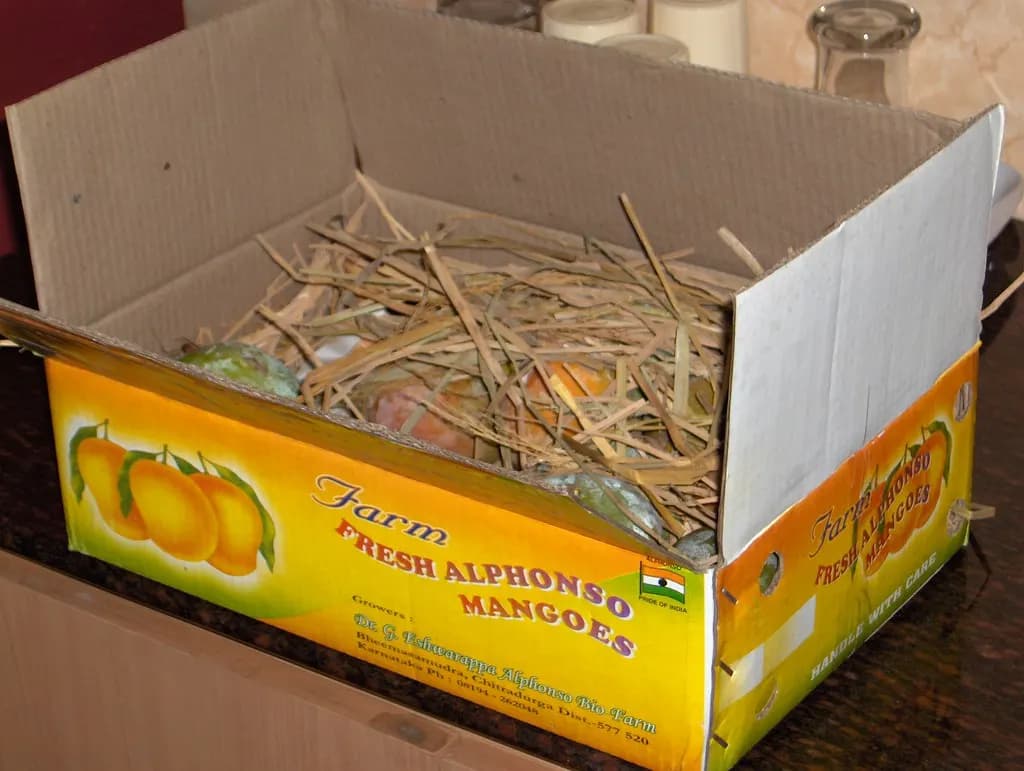
If you plan to export mangoes, rice, processed foods, honey, pickles, meat, dairy products, flowers or beverages from India, you will hear one name before your first shipment: APEDA. The Agricultural and Processed Food Products Export Development Authority registers exporters of the products in its Schedule and issues their Registration-cum-Membership Certificate (RCMC). This guide is for first-time food and farm exporters, FPOs and food manufacturers. It explains which products need APEDA registration, what it costs, the documents, the online process on the DGFT portal, how long it lasts, and what else you need around it.
Quick answer
Anyone exporting a product in APEDA's Schedule (fruits and vegetables, cereals and rice, meat, dairy, bakery, honey, beverages, pickles, floriculture and more) must register with APEDA within one month of the first export and hold an APEDA RCMC. Apply on the DGFT e-RCMC portal after getting your IEC. The fee is ₹5,900 (₹5,000 + GST) and the RCMC is valid for 5 years.
Merchant exporters upload only the IEC; manufacturers also upload FSSAI, Udyam or other manufacturing proof
Applications only through dgft.gov.in since 17 July 2023
Renewal ₹5,900; amendments no fee
RCMC is required for Foreign Trade Policy benefits and APEDA's export assistance
What APEDA is and what its RCMC does
APEDA was set up under the Agricultural and Processed Food Products Export Development Authority Act, 1985, which came into force on 13 February 1986, replacing the Processed Food Export Promotion Council. It works under the Department of Commerce and has two roles that matter to an exporter: it registers exporters of scheduled products, and it develops and promotes those exports through quality standards, traceability systems, market information and financial assistance.
Registration with APEDA takes the form of an RCMC. Under the Foreign Trade Policy, every exporter who wants an authorisation or any FTP benefit must hold an RCMC from the export promotion council, commodity board or development authority that covers its main line of business. DGFT's list of registering authorities (Appendix 2T) names APEDA as the authority for its scheduled products. So for a mango or basmati exporter, the APEDA RCMC does two jobs at once: it satisfies the APEDA Act's registration duty and it serves as the RCMC the FTP asks for.
The legal duty. Section 12 of the APEDA Act says every person exporting one or more scheduled products must apply to be registered within one month of undertaking the export, though APEDA can extend that time for good reason. The Act says a registration stays in force until APEDA cancels it; in practice, the RCMC that evidences it is issued for five years and renewed, as explained below. Registered exporters must also file the returns APEDA asks for under section 14.
Which products need APEDA registration
The Schedule to the APEDA Act lists the product groups. The Central Government can add or remove products by notification, and has done so several times: non-basmati rice was added in 1991 and cereals and cereal products in 2008, while cashew nuts were omitted in 1988. DGFT's current Appendix 2T places cashew kernels under APEDA again, so check the latest list for your exact product.
| APEDA Schedule — product groups |
|---|
| Fruits, vegetables and their products |
| Meat and meat products; poultry and poultry products |
| Dairy products |
| Confectionery, biscuits and bakery products |
| Honey, jaggery and sugar products |
| Cocoa and its products, chocolates of all kinds |
| Alcoholic and non-alcoholic beverages |
| Cereals and cereal products (added 2008) and non-basmati rice (added 1991) |
| Groundnuts, peanuts and walnuts (and cashew kernels under Appendix 2T) |
| Pickles, chutneys and papads |
| Guar gum |
| Floriculture and floriculture products |
| Herbal and medicinal plants |
APEDA's product catalogue on its website lets you search by HS code. Products outside the Schedule usually belong to another registering authority: spices to the Spices Board, tea to the Tea Board, coffee to the Coffee Board, marine products to MPEDA, and processed products such as essential oils to the relevant export promotion council. Our export promotion councils guide has the full list.
Main line of business. An exporter declares its main line of business in the RCMC application and gets the RCMC from the authority for that line. If you export several product types, pick the one that is your main line; a multi-product exporter whose products are spread across councils can take its RCMC from FIEO, except where a product is reserved to a specific board or authority.
APEDA registration fee
APEDA's circular on e-RCMC sets one flat fee, whatever your turnover:
APEDA RCMC at a glance (2026)
₹5,900
Registration fee
₹5,000 + 18% GST
₹5,900
Renewal fee
every five years
Nil
Amendment fee
add products, change address
5 years
Validity
1 April to 31 March
That is cheaper than many export promotion councils, which charge an annual membership fee that rises with export turnover. There is no separate annual subscription in APEDA's circular. Your real costs are elsewhere: the IEC (₹500 on DGFT), FSSAI licensing for food manufacturers, a digital signature certificate if you do not have one, and product-specific certification such as phytosanitary or health certificates for each shipment.
Documents you need
APEDA's list is short and depends on whether you make the goods or only trade them.
Merchant exporter. A signed and sealed copy of your Importer-Exporter Code (IEC) issued by DGFT. That is all APEDA lists.
Manufacturer, or manufacturer-cum-merchant exporter. The IEC, plus a signed and sealed copy of proof that you manufacture the product. APEDA specifies which document counts for each product group:
Manufacturing proof APEDA accepts
0/7Keep your IEC details, PAN, bank account and registered address consistent across DGFT, GST and FSSAI. The DGFT system pulls company details from your IEC profile, so mismatches there are the usual reason an application is returned.
How to apply: e-RCMC on the DGFT portal
Since 17 July 2023, APEDA has issued RCMCs only through DGFT's e-RCMC module, following DGFT Trade Notice 35/2021-22. You cannot file on APEDA's own website any more.
APEDA RCMC on the DGFT portal
- 1
Get your IEC first
IEC registration guideApply for the Importer-Exporter Code on dgft.gov.in if you do not have one; it is issued online for ₹500. Our IEC guide walks through it.
- 2
Log in and open e-RCMC
DGFT e-RCMCLog in to dgft.gov.in with the account linked to your IEC, go to Services, then e-RCMC, then Apply for e-RCMC.
- 3
Choose APEDA and your products
Select APEDA as the registering authority, declare your main line of business, and pick your products and the countries you plan to export to. State whether you are a merchant or a manufacturer exporter.
- 4
Upload the documents
Signed and sealed IEC copy and, for manufacturers, the manufacturing proof for each product group.
- 5
Sign and pay
Sign the application with your digital signature certificate or Aadhaar e-sign, and pay ₹5,900 online.
- 6
Track and download
APEDA scrutinises the application on the portal and may raise queries. Once approved, download the e-RCMC from the DGFT dashboard.
Changes after issue. If your address, name, ownership or constitution changes, report it to APEDA within one month through the e-RCMC amendment option; amendments are free. Adding new products or markets is also an amendment.
Refusal or cancellation. If APEDA refuses, suspends or cancels your RCMC, you can appeal to DGFT within 45 days under the Handbook of Procedures.
Validity and renewal
APEDA's circular gives the RCMC a validity of five years. DGFT's Handbook adds the detail that trips people up: an RCMC is treated as valid from 1 April of the licensing year in which it was issued, and runs to 31 March five years later. An RCMC issued in October 2026 therefore counts from 1 April 2026, and you lose the months already gone in that year. Plan renewals for the first quarter of the expiry year. If you are close to the end of a financial year and not shipping yet, there is a case for waiting until April to apply, since the certificate will then run for the full five years; but do not let that push you past the one-month deadline after your first export.
Renewal is filed through the same e-RCMC module, with the same ₹5,900 fee. Check that your IEC has been updated on the DGFT portal for the year, because DGFT requires IEC holders to confirm or update their details annually, and an IEC that is not updated can be deactivated, which blocks RCMC services too.
Worked example: a mango pulp maker in Ratnagiri
Sawant Foods runs an FSSAI-licensed mango pulp unit near Ratnagiri and has its first export order, for canned Alphonso pulp to a buyer in the Gulf.
Registrations. The company already has GST and Udyam registration. It applies for an IEC on the DGFT portal, then, in October 2026, files an e-RCMC application choosing APEDA (processed fruit products) as its main line, as a manufacturer exporter. It uploads the signed IEC copy and its FSSAI licence as manufacturing proof, signs with the director's DSC and pays ₹5,900.
Validity. The RCMC is issued in October but counts from 1 April 2026, so it runs to 31 March five years later. The company diarises renewal for January of that final year.
Around the RCMC. For each shipment it arranges the health certificate the importing country asks for, files a Letter of Undertaking so it can export without paying IGST, and prepares the shipping bill, invoice and packing list (see our export documentation guide). It also checks the RoDTEP rate for its tariff line and keeps its RCMC handy for APEDA's export assistance when a scheme is open.
| Item | Sawant Foods |
|---|---|
| Registering authority | APEDA (processed fruit products) |
| Exporter type | Manufacturer exporter |
| Documents uploaded | IEC (signed and sealed) + FSSAI licence |
| Fee paid | ₹5,900 |
| RCMC valid | 1 April 2026 to 31 March, five years on |
| Next steps | Health certificate per shipment, LUT for zero-rated export, RoDTEP rate check |
Benefits of APEDA registration
Beyond being a legal requirement, the RCMC opens several doors:
- Foreign Trade Policy benefits. Paragraph 2.57 of the FTP requires an RCMC for authorisations and other benefits, with an exception only for consignments up to ₹10,000 in FOB value.
- APEDA assistance. APEDA gives financial assistance to registered exporters under its Financial Assistance Schemes; the last cycle ran for 2021–26, so check its website for the current guidelines and what they cover.
- Traceability systems. APEDA operates online traceability platforms that importing countries rely on, including Hortinet for fresh fruits and vegetables, Peanut.Net for groundnuts, Meat.Net for meat, TraceNet for organic products and Basmati.Net for basmati rice. Registration lets you use them.
- Market information and trade fairs. APEDA's AgriExchange portal, buyer-seller meets and India pavilions at international food fairs are open to registered exporters.
- Organic exports. Organic produce for export must be certified under the National Programme for Organic Production, for which APEDA is the secretariat; see our organic farming guide.

Penalties and compliance
The APEDA Act originally made failing to file returns, obstructing APEDA's officers or breaking the Act punishable through the courts with small fines and, for some offences, short jail terms. Amendments added section 25A, under which penalties are now decided by an adjudicating officer appointed by APEDA's Chairman. The procedure was notified on 19 August 2026 in the APEDA (Adjudication of Penalties) Rules, 2026: the officer issues a show-cause notice giving at least seven days to reply, holds an inquiry, and must finish within six months; an aggrieved exporter can appeal to the Chairman within 30 days.
The commoner risks are practical. Exporting a scheduled product without registering breaks section 12 of the Act and leaves you without the RCMC that FTP benefits and APEDA assistance depend on. An RCMC that has lapsed, or that still shows an old address, causes the same problem when you apply.
Where APEDA registration fits with your other export approvals
New exporters often ask which comes first. The order that works is: business registration (GST, and Udyam if you are an MSME), then FSSAI if you make or handle food, then the IEC, then the APEDA RCMC, and only then the shipment-level documents. APEDA cannot issue an RCMC without an IEC, and a manufacturer cannot show manufacturing proof without FSSAI or Udyam, so trying to do these in parallel usually means resubmitting.
FPOs and farmer groups. A farmer producer organisation that aggregates and exports fresh produce registers like any other exporter. If it only buys and sells, it applies as a merchant exporter with its IEC. If it grades, packs or processes the produce in its own facility, it can apply as a manufacturer exporter and upload its FSSAI or Udyam certificate, or a horticulture department certificate for fresh fruit and vegetables.
Product-specific requirements. The RCMC is the entry ticket, not the whole journey. APEDA's website lists recognised pack houses for fresh fruit and vegetables, recognised abattoirs and meat processing plants, maximum residue limits for rice and importing countries' regulations, because many markets accept only produce handled through these recognised facilities or traced through APEDA's systems. Before you sign a contract, read the APEDA page for your product and the importing country's rules, which may require an extra registration or a pre-shipment check.
E-commerce and small parcels. If you sell scheduled products to overseas buyers in small consignments, remember that the FTP exemption for consignments up to ₹10,000 only affects FTP benefits. Once you export regularly, register with APEDA within a month of your first export, as the Act requires.
From product to first shipment
Step 1
GST and Udyam
Step 2
FSSAI
food manufacturers
Step 3
IEC
dgft.gov.in
Step 4
APEDA e-RCMC
₹5,900
Step 5
Shipment documents
LUT, invoice, certificates
Common mistakes and how to fix them
Applying on the APEDA website. Old guides point to APEDA's own registration form. Use the DGFT e-RCMC module.
Uploading the wrong manufacturing proof. Each product group has its own accepted document. A pickle maker should upload its FSSAI licence or Udyam certificate, not a trade licence.
Ignoring the validity calendar. Because validity counts from 1 April, an RCMC taken late in the year is shorter than five full years. Note the expiry date shown on the certificate.
Not reporting changes. A new office address or a change from proprietorship to company must be reported within a month through an amendment, and it is free.
Letting the IEC go stale. The e-RCMC is linked to your IEC profile. If you skip the annual IEC update on the DGFT portal, the IEC can be deactivated and your RCMC renewal or amendment will stall until you update it. Make the IEC update part of your April checklist, alongside the LUT for the new financial year.
Choosing the wrong authority. Products like spices, tea, coffee and marine products have their own boards. Check Appendix 2T before applying.
Official links
- DGFT e-RCMC — apply, amend, renewAll APEDA RCMC applications since 17 July 2023
- APEDA — Register as Exporter (RCMC)APEDA's notice on e-RCMC
- APEDA e-RCMC circular — documents and fees (PDF)₹5,000 + GST, five-year validity
- APEDA product catalogueSearch scheduled products by HS code
- APEDA Act, 1985 with Schedule (PDF)Section 12 registration duty
- e-RCMC user guide for exporters (PDF)Screen-by-screen steps
What to do next
Check that your product is in APEDA's Schedule, get your IEC and, if you manufacture food, your FSSAI licence. Then apply for the APEDA RCMC on the DGFT portal before your first shipment. Our proforma invoice generator helps you quote your first buyer, and the currency converter helps you price in dollars or dirhams. For the paperwork that follows, read the export documentation guide.
This is general information, not legal or tax advice — confirm on the official source or with a professional.
Frequently asked questions
Yes, if you export any product in APEDA's Schedule, such as fruits and vegetables, cereals and rice, meat, dairy, bakery products, honey, pickles, beverages or floriculture products. Section 12 of the APEDA Act requires you to apply within one month of your first export. The RCMC is also needed to claim Foreign Trade Policy benefits and APEDA's financial assistance.
APEDA charges ₹5,000 plus 18% GST, so ₹5,900 in total, paid online when you file the e-RCMC application. Renewal costs the same ₹5,900. Amending an RCMC after it is issued, for example to add products or change the address, carries no fee.
APEDA's circular gives a validity of five years. Under DGFT's rules an RCMC runs from 1 April of the licensing year in which it was issued to 31 March five years later, so an RCMC issued in October 2026 counts from 1 April 2026. Renew it online on the DGFT portal before it expires.
A merchant exporter needs only a signed and sealed copy of its Importer-Exporter Code (IEC). A manufacturer exporter also needs signed and sealed proof of manufacturing for the product: FSSAI licence or Udyam registration for food products, a horticulture department certificate for floriculture and seeds, and an excise certificate for alcoholic beverages.
No. Since 17 July 2023, APEDA issues RCMCs only through the e-RCMC module on the DGFT portal (dgft.gov.in, under Services). You log in with your IEC-linked account, select APEDA as the registering authority, upload documents, sign digitally and pay online.
For Foreign Trade Policy purposes, DGFT does not insist on an RCMC for consignments with an FOB value up to ₹10,000. That relaxation is about FTP benefits; it does not change the APEDA Act's own registration duty for regular exporters, so register before you start shipping commercially.
Sources & verification
Figures on this page were checked against the sources below when it was last reviewed on 9 October 2026. Each rate and limit is stored once with its own official source and review date, and official update channels are monitored daily so changes are picked up. How we verify
- 1.Circular for issuance of e-RCMC (requisite documents and fee structure) — APEDA, Ministry of Commerce and Industry · accessed 9 October 2026
- 2.Registration Procedure — filing/issuance of APEDA RCMC (21 July 2023) — APEDA · accessed 9 October 2026
- 3.Agricultural and Processed Food Products Export Development Authority Act, 1985 (Gazette text with Schedule) — APEDA / Gazette of India · accessed 9 October 2026
- 4.APEDA (Adjudication of Penalties) Rules, 2026 — G.S.R. 741(E), 19 August 2026 — Ministry of Commerce and Industry · accessed 9 October 2026
- 5.APEDA — Frequently Asked Questions — APEDA · accessed 9 October 2026
- 6.Foreign Trade Policy 2023 — Chapter 2 — Directorate General of Foreign Trade · accessed 9 October 2026
- 7.Handbook of Procedures 2023 — Chapter 2 (July 2026 version) — Directorate General of Foreign Trade · accessed 9 October 2026
- 8.e-RCMC Customer Portal User Help File — Directorate General of Foreign Trade · accessed 9 October 2026
MSMETOOLS is an independent platform and is not affiliated with any government agency, ministry or department.
Tools for this
Proforma Invoice Generator
Send advance invoices before supply.
Currency Converter
Convert between 180+ currencies with live exchange rates.
Related guides
 FSSAI Registration 2026: New Limits, Fees & FoSCoS StepsRead guide
 IEC Code Registration 2026: DGFT Process, ₹500 Fee & DocumentsRead guide
 Export Promotion Councils in India 2026: List, RCMC & FeesRead guide
 BIS Certification 2026: ISI vs CRS, QCOs, Fees & ProcessRead guide
Official links open the government site in a new tab.