 Export & import
Export Documentation in India (2026): Every Document, Who Issues It, and When
Export documentation in India for 2026: invoice, packing list, shipping bill, bill of lading, certificate of origin, LUT, EDPMS, e-BRC and the 9-month rule.
 Edited by Sumeet YadavFounder & editor, MSMETOOLS · fact-checked against official sources
Contents (10)
- 1. The export documents at a glance
- 2. One-time registrations before your first shipment
- 3. Commercial documents: proforma invoice, commercial invoice and packing list
- 4. The shipping bill on ICEGATE
- 5. Transport documents: bill of lading and airway bill
- 6. Certificate of origin on DGFT's eCoO 2.0 platform
- 7. Post-shipment: bank submission, EDPMS, realisation and e-BRC
- 8. Worked example: a first sea shipment of handloom cushion covers
- 9. Common documentation mistakes and how to fix them
- 10. What to do next
Export documentation decides whether your goods clear customs on time, whether your buyer can collect them and claim lower duty, whether your bank releases payment, and whether you get your GST refund and incentives. This guide is for first-time exporters, small manufacturers and merchant exporters in India who want to know exactly which documents an export needs, who issues each one, at what stage, and what changed in 2025–2026 — the new FEMA export regulations from 1 October 2026, the eCoO 2.0 certificate of origin platform, and self-certified e-BRCs.
Quick answer
Every Indian export needs one-time registrations (IEC, GST with an LUT, AD code on ICEGATE) and a shipment set: commercial invoice, packing list, shipping bill filed on ICEGATE, bill of lading or airway bill, and usually a certificate of origin and insurance. After shipment, your bank tracks the shipping bill in EDPMS until payment arrives — within nine months under the FEMA 2026 rules — and you self-certify an e-BRC on the DGFT portal.
IEC costs ₹500 and must be updated every year (1 April – 30 June)
LUT is valid for one financial year (1 April – 31 March); goods must leave within three months from the invoice date of the invoice
Certificates of origin are issued only online on DGFT's eCoO 2.0 platform
Shipments up to ₹10 lakh can be closed in EDPMS on your own declaration
The export documents at a glance
Indian export paperwork falls into four stages. The one-time registrations come first; the commercial documents are yours to prepare; the regulatory documents are filed with customs, DGFT and your bank; and the post-shipment documents close the loop on payment, refunds and incentives.
| Document | Stage | Issued or filed by | Purpose |
|---|---|---|---|
| IEC (Importer Exporter Code) | One-time | DGFT, online | Identifies you as an exporter in every customs and bank record |
| GST registration + LUT (Form RFD-11) | One-time / yearly | GST portal | Export without paying IGST; claim input tax credit refund |
| AD code registration | One-time per port system | Your bank's letter, registered on ICEGATE | Links your bank account to shipping bills |
| RCMC | One-time (5 years) | Export promotion council via DGFT | Needed for most Foreign Trade Policy benefits |
| Proforma invoice and purchase order | Pre-shipment | You and the buyer | Agree price, Incoterm, payment and delivery terms |
| Commercial invoice | Pre-shipment | You | Value, HS code and terms for customs, bank and buyer |
| Packing list | Pre-shipment | You | Contents, weights and marks of every package |
| Shipping bill (includes EDF at EDI ports) | Customs | Customs broker on ICEGATE | Customs declaration; IGST refund claim; RoDTEP claim |
| Bill of lading / airway bill | Shipment | Shipping line, NVOCC or airline | Receipt for goods, contract of carriage, title document (B/L) |
| Certificate of origin | Shipment | Agency or EPC via DGFT eCoO 2.0 | Proves Indian origin; preferential duty under trade agreements |
| Insurance certificate | Shipment | Insurer | Covers transit risk under CIF/CIP terms |
| Bank submission / bill of exchange | Post-shipment | You via AD bank | Collects payment (LC or collection) |
| EDPMS closure and e-BRC | Post-shipment | AD bank; DGFT portal | Proves realisation; supports refunds and incentives |
Product-specific documents come on top of these — phytosanitary certificates for plants and fresh produce, health certificates for food and marine products, an APEDA or Spices Board registration for scheduled products, or pre-shipment inspection certificates where the buyer or the destination requires them.
One-time registrations before your first shipment
IEC. The Importer Exporter Code is PAN-based and issued online by DGFT for ₹500. It must be updated on the DGFT portal every year between 1 April – 30 June, even if nothing has changed, or it is de-activated. See our IEC registration guide.
GST registration and LUT. Exports are zero-rated supplies. A registered exporter can either pay IGST and claim it back, or file a Letter of Undertaking in Form GST RFD-11 and export without paying IGST. Rule 96A of the CGST Rules says that goods supplied under an LUT must be exported within three months from the invoice date of the invoice date; otherwise you must pay the IGST with interest within 15 days. For services, payment must arrive within the FEMA period. The LUT is filed online, is free, and is valid for one financial year (1 April – 31 March) — file a fresh one before the first export of each year.
AD code on ICEGATE. Your bank (the authorised dealer) gives you an AD code letter. You register the code and your bank account through your ICEGATE login. Customs uses it to link your shipping bills to your bank — without it, your customs broker cannot generate a shipping bill, and IGST refunds and drawback cannot be paid.
RCMC. A Registration-cum-Membership Certificate from the right export promotion council or commodity board is needed for most Foreign Trade Policy benefits and is valid for 5 years. See our export promotion councils guide.
Commercial documents: proforma invoice, commercial invoice and packing list
Proforma invoice. Before the order is confirmed, you send a proforma invoice setting out the goods, quantity, price, Incoterm (FOB, CIF, etc.), payment terms, delivery time and your bank details. Buyers use it to open a letter of credit or arrange import licences. Our proforma invoice guide and proforma invoice generator cover the format.
Commercial invoice. This is the core document, and every other document must agree with it. Include:
- Exporter's name, address, IEC and GSTIN; buyer's (consignee's) name and address, and notify party if different
- Invoice number and date, buyer's order reference
- Description of goods, eight-digit HS code (ITC-HS), quantity, unit price, total value and currency
- Incoterm and named place (for example, "FOB Nhava Sheva"), freight and insurance where included
- Country of origin, port of loading, port of discharge and final destination
- Payment terms (advance, LC, documents against payment or acceptance)
- For LUT exports, the declaration "Supply meant for export under LUT without payment of IGST" with the LUT reference; for IGST-paid exports, the IGST amount
For GST, the export invoice is also your tax invoice: the same invoice number, value and HS code go into your GSTR-1, and mismatches with the shipping bill are the most common reason IGST refunds stop.
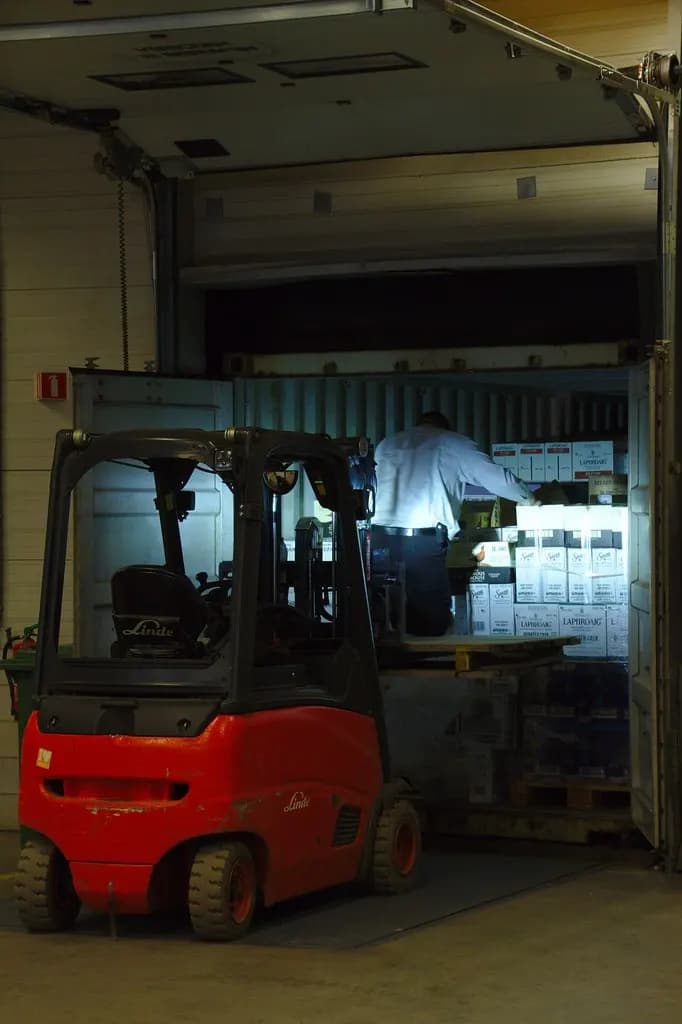
Packing list. It lists every package: number, marks, contents, net and gross weight, dimensions and the total number of packages. Customs uses it to select packages for examination; the buyer uses it to check delivery; and banks under a letter of credit check it against the invoice and bill of lading. Weights on the packing list, shipping bill and bill of lading must match.
From order to payment — the document trail
Step 1
Proforma invoice + PO
Step 2
Commercial invoice + packing list
Step 3
Shipping bill on ICEGATE
Step 4
Let Export Order
customs
Step 5
Bill of lading / AWB
Step 6
Bank submission
Step 7
EDPMS closed + e-BRC
after payment
The shipping bill on ICEGATE
The shipping bill is your customs declaration. It is filed electronically on ICEGATE, almost always by a licensed customs broker using the invoice, packing list and your registrations. It records the exporter, buyer, HS code, value, quantity, port, and the schemes you are claiming — duty drawback, RoDTEP, Advance Authorisation, EPCG or IGST refund.
Under regulation 3 of the FEMA (Export and Import of Goods and Services) Regulations, 2026, an exporter of goods must declare the full export value in the Export Declaration Form (EDF), and at EDI ports the EDF is deemed to be submitted as part of the shipping bill. Exporters of services file an EDF with their bank within within 30 days from the end of the month of invoice.
The customs flow. Once the shipping bill is filed, the goods arrive at the port, container freight station or air cargo complex. Customs may assess the shipping bill and examine the cargo; then the proper officer gives the Let Export Order (LEO), after which the goods can be loaded. The LEO date is the date that matters for incentives and, with the shipping date, for your payment clock.
IGST refunds. If you exported on payment of IGST, rule 96 of the CGST Rules treats the shipping bill itself as your refund application. It is deemed filed once the carrier files the export manifest and you file a valid GSTR-3B. If the shipping bill and GSTR-1 data don't match, the refund application is deemed filed only when you fix the mismatch. If you exported under LUT, you instead claim a refund of unused input tax credit under section 54(3) of the CGST Act on the GST portal.
RoDTEP. RoDTEP is claimed by declaring it in the shipping bill. The scheme is currently extended to 31 December 2026; see our RoDTEP guide for rates and scrip use.
Transport documents: bill of lading and airway bill
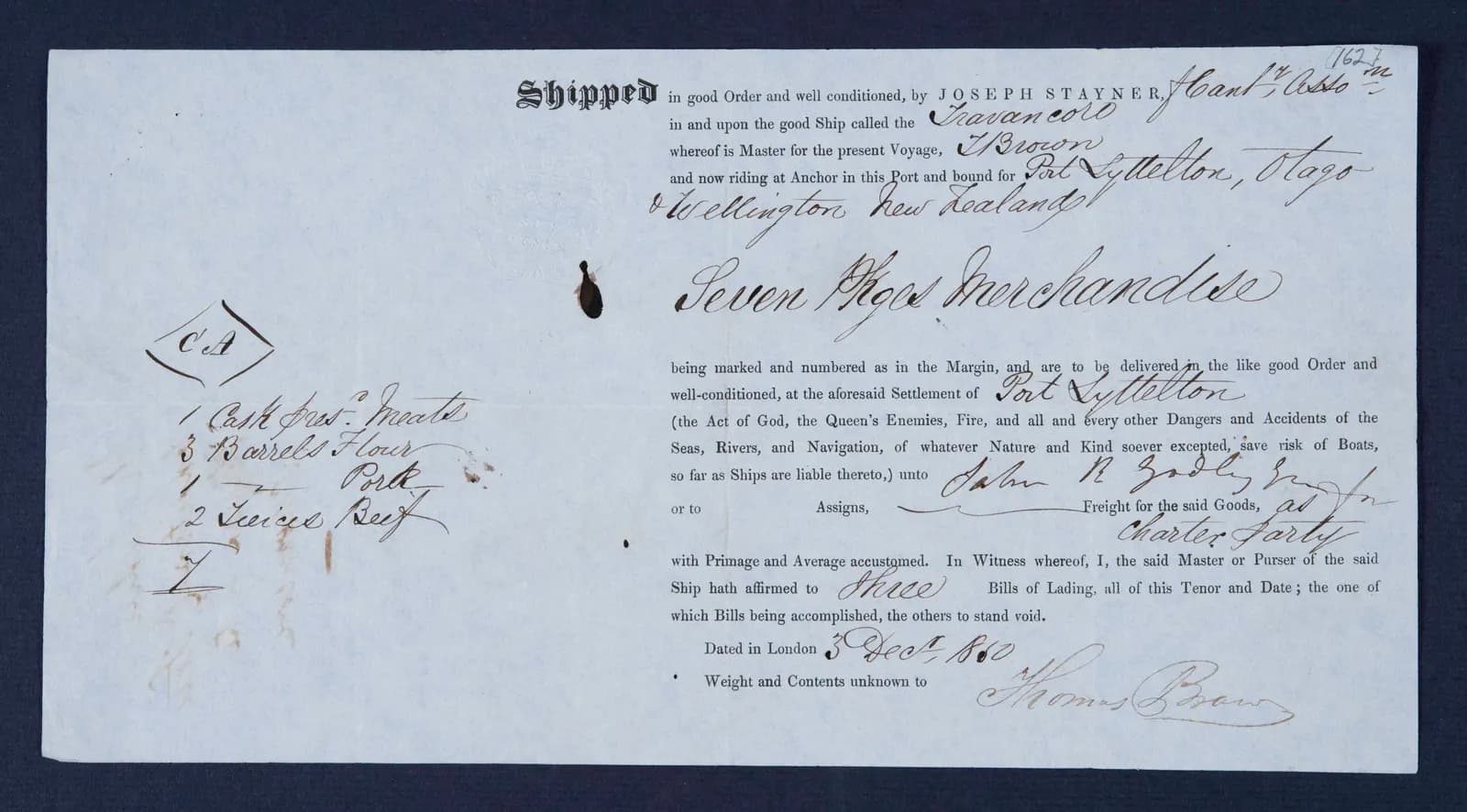
Bill of lading (B/L). For sea shipments, the shipping line (or an NVOCC acting as carrier) issues a bill of lading once the goods are loaded. It does three jobs: it is a receipt for the goods, evidence of the contract of carriage, and — if issued "to order" — a document of title that the buyer must surrender to collect the cargo. That is why banks under a letter of credit or a documentary collection want the full set of original bills. A "clean, shipped on board" B/L, with no notes about damaged packages, is what LCs usually require. Check the consignee, notify party, description, weights and number of packages against your invoice and packing list before the B/L is released.
Many shippers now use a telex release or seaway bill, where no original B/L travels; the carrier releases the goods to the named consignee. That suits advance-payment or trusted-buyer sales, but it gives you no control over the goods if the buyer hasn't paid.
Airway bill (AWB). For air shipments, the airline or freight forwarder issues an airway bill. It is a receipt and contract of carriage but not a document of title — the goods are released to the consignee named on it. For air shipments on credit terms, consider naming the buyer's bank as consignee or using an LC.
Shipment document checklist
0/8Certificate of origin on DGFT's eCoO 2.0 platform
A certificate of origin (CoO) proves where the goods were made. There are two kinds:
- Preferential CoO — lets your buyer claim reduced or zero customs duty under a trade agreement India has with their country (for example, with the UAE, ASEAN, Japan, Korea, Australia or the EFTA states). The goods must meet that agreement's rules of origin, and you submit a cost sheet showing how they qualify. Issued by the agency designated for that agreement — for example, EIC, EPCs or DGFT regional offices.
- Non-preferential CoO — simply certifies Indian origin, when a buyer, bank or destination customs asks for it. Issued by chambers of commerce and other agencies listed in Appendix 2E of the Foreign Trade Policy.
Since the move to DGFT's eCoO 2.0 platform at trade.gov.in, both kinds are applied for and issued only online. DGFT made electronic filing of non-preferential CoOs mandatory from 1 January 2025 (Trade Notice 24/2024-25) and launched the revamped preferential system on 17 January 2025. The platform lets several users file under one IEC, accepts Aadhaar-based e-signatures as well as digital signature tokens, and digitises the cost sheet. Certificates issued manually by agencies after the deadline are treated as invalid, and destination customs may reject them.
Apply before the goods sail so the certificate can travel with the shipping documents. If the buyer's customs later finds a mistake, the platform's in-lieu certificate feature lets you request a corrected certificate rather than starting again.
Post-shipment: bank submission, EDPMS, realisation and e-BRC
Bank submission. After shipment, you submit the documents to your AD bank. Under a letter of credit, the bank checks them strictly against the LC terms before paying or forwarding them. Under a documentary collection (documents against payment or acceptance), the bank sends them to the buyer's bank, which releases them only against payment or the buyer's acceptance of a bill of exchange. With advance payment, you simply send copies and inform the bank so it can match the remittance.
EDPMS. Every shipping bill flows into the RBI's Export Data Processing and Monitoring System, and your AD bank must follow up until the export value arrives. Under regulation 4 of the FEMA 2026 regulations, the bank closes the entry when it receives payment. For shipping bills of up to ₹10 lakh, the entry can be closed on your declaration that payment has been received in full or otherwise, either bill by bill or quarterly in bulk. Open, overdue entries in EDPMS can lead your bank to put you on a caution list, which makes every future shipment harder.
Realisation and closure rules (FEMA 2026 regulations)
nine months
To realise export value
from shipment date
twelve months
If invoiced or settled in INR
₹10 lakh
EDPMS closure on your declaration
per shipping bill
within 30 days from the end of the month of invoice
EDF for services exports
Realisation period. The full export value must be realised and repatriated within nine months from the date of shipment for goods (and from the invoice date for services). If the export is invoiced or settled in Indian rupees, the period is twelve months. The regulations as first notified in January 2026 allowed longer periods, but an RBI amendment of 22 September 2026 set the current periods before they took effect on 1 October 2026. Your AD bank can extend the period, or allow a reduced realisation, if you give reasons — keep the buyer's correspondence. Banks can also allow set-off of export receivables against import payables with the same overseas party.
e-BRC. DGFT's electronic Bank Realisation Certificate system now runs on inward remittance messages (IRMs) that banks send directly to the DGFT portal. You log in, see the IRMs received against your PAN, and self-certify e-BRCs by linking each remittance to its shipping bills or invoices. Services exporters must state the mode of export of services in each e-BRC. You need e-BRCs to claim many Foreign Trade Policy benefits and to support GST refunds and audits.
Key deadlines for one export shipment
Before first export of the year
File LUT in Form RFD-11 (valid one financial year (1 April – 31 March))
Within three months from the invoice date of invoice
Goods must leave India under LUT, or IGST is payable with interest
Shipment day
Let Export Order and bill of lading or airway bill issued
Within days of shipment
Submit documents to AD bank; send originals to buyer or buyer's bank
Within nine months of shipment
Full export value realised (twelve months if invoiced in INR)
After payment
EDPMS entry closed; e-BRC self-certified on DGFT
Worked example: a first sea shipment of handloom cushion covers
These figures are illustrative. A merchant exporter in Panipat ships one 20-foot container of cushion covers to a buyer in Germany, sold FOB Nhava Sheva for €24,000 (about ₹22 lakh) on 30% advance and 70% against documents (documents against payment).
The document trail for this shipment
- 1
Order
The exporter sends a proforma invoice in euros with HS code, FOB terms and bank details; the buyer confirms with a purchase order and remits the 30% advance. The bank credits it as an inward remittance with an IRM.
- 2
Invoice and packing
The exporter buys the goods from a local weaver under an invoice with GST, then issues an export invoice under LUT — no IGST — and a packing list for 420 cartons.
- 3
Customs
The customs broker files the shipping bill on ICEGATE, declaring RoDTEP, and moves the container with an e-way bill. Customs gives the LEO; the shipping line issues a full set of three original bills of lading.
- 4
Origin
The exporter applies on eCoO 2.0 for a non-preferential certificate of origin, which the buyer's customs broker has asked for.
- 5
Bank
The exporter submits invoice, packing list, bills of lading and CoO to the AD bank, which sends them to the buyer's bank in Germany on D/P terms. The buyer pays the 70% (€16,800) and receives the B/Ls to collect the container.
- 6
Close-out
The bank closes the shipping bill in EDPMS; the exporter self-certifies e-BRCs against the two remittances, claims the GST refund of input tax credit on the goods purchased, and uses the RoDTEP credit.
The payment clock started on the shipment date, and the full value arrived within six weeks — well inside the nine months limit. Had the buyer not paid against documents, the exporter would still hold the bills of lading and therefore control of the goods.
Common documentation mistakes and how to fix them
Mismatched details. A different HS code, value or quantity on the invoice, shipping bill and GSTR-1 blocks IGST refunds; a misspelt consignee or wrong port on the B/L can make LC documents discrepant. Use one master invoice and copy every field from it, then check the broker's draft shipping bill and the carrier's draft B/L before they are final.
Forgetting the LUT. Shipping without a current LUT means IGST was payable on the export. If you missed it, talk to your CA quickly — the fix may be to pay IGST and claim a refund.
Wrong certificate of origin. A non-preferential certificate cannot be used to claim FTA duty benefits. Ask the buyer which certificate and agreement they need before applying.
Letting EDPMS entries age. Follow up with the buyer well before the realisation deadline, and if payment will be short or late, apply to your bank for an extension or reduction with documents.
Ignoring the annual IEC update. An IEC that was not updated between 1 April – 30 June is de-activated and shipping bills will fail until you update it.
Official links
- ICEGATEAD code registration, shipping bill status, IGST refund status
- DGFT portalIEC, RCMC, RoDTEP
- DGFT eBRC servicesSelf-certify e-BRCs from IRMs
- eCoO 2.0 — certificate of originPreferential and non-preferential CoO
- RBI — FEMA Export and Import Regulations, 2026
- GST portalLUT (RFD-11) and refunds (RFD-01)
What to do next
If you are setting up, start with the IEC registration guide and our step-by-step guide to starting an import export business. For your first order, prepare the proforma with the proforma invoice generator, agree payment terms — read the letter of credit guide if the buyer offers an LC — and check your margin in euros or dollars with the currency converter.
This is general information, not legal or tax advice — confirm on the official source or with a professional.
Frequently asked questions
Before shipping you need an IEC, GST registration and a Letter of Undertaking (or IGST payment), and an AD code registered on ICEGATE. For each shipment: a commercial invoice, packing list, shipping bill filed on ICEGATE, bill of lading or airway bill, and usually a certificate of origin and insurance certificate. After shipment, the bank tracks the shipping bill in EDPMS until payment arrives, and you generate an e-BRC on the DGFT portal.
Under the FEMA (Export and Import of Goods and Services) Regulations, 2026, in force from 1 October 2026, the full export value must be realised and repatriated within nine months from the date of shipment for goods, or twelve months where the export is invoiced or settled in Indian rupees. Your AD bank can extend the period if you give reasons.
The exporter, usually through a licensed customs broker, files the shipping bill electronically on ICEGATE. At EDI ports the shipping bill also serves as the Export Declaration Form under FEMA. After customs examination and the Let Export Order, the goods can be loaded. For IGST-paid exports, the shipping bill is also treated as the refund application.
No. You need a preferential certificate of origin only if your buyer wants to claim lower duty under a trade agreement India has with their country, and a non-preferential one if the buyer, bank or destination customs asks for proof of Indian origin. Both are applied for online on DGFT's eCoO 2.0 platform at trade.gov.in; manual certificates are no longer valid.
A Letter of Undertaking in Form GST RFD-11 lets a registered exporter ship goods or services without paying IGST and then claim a refund of input tax credit. It is filed online on the GST portal, is free, and is valid for one financial year (1 April – 31 March). Goods supplied under an LUT must be exported within three months from the invoice date, or IGST becomes payable with interest.
An electronic Bank Realisation Certificate proves that export proceeds were received. Under DGFT's current system, banks send inward remittance messages to the DGFT portal and exporters self-certify their e-BRCs against them, linking each remittance to shipping bills or invoices. You need e-BRCs for many Foreign Trade Policy benefits and to support GST refund claims.
Sources & verification
Figures on this page were checked against the sources below when it was last reviewed on 9 October 2026. Each rate and limit is stored once with its own official source and review date, and official update channels are monitored daily so changes are picked up. How we verify
- 1.Foreign Exchange Management (Export and Import of Goods and Services) Regulations, 2026 (as amended) — Reserve Bank of India · accessed 9 October 2026
- 2.RBI Notification FEMA 23(R)/(1)/2026-RB amending the realisation period (22 September 2026) — Reserve Bank of India · accessed 9 October 2026
- 3.DGFT Trade Notice 23/2024-25 — launch of revamped preferential eCoO 2.0 system (6 December 2024) — DGFT (copy circulated by EEPC India) · accessed 9 October 2026
- 4.DGFT Trade Notice 24/2024-25 — rescheduling of preferential eCoO 2.0 launch (20 December 2024) — DGFT (copy circulated by EEPC India) · accessed 9 October 2026
- 5.eBRC — DGFT services page — DGFT · accessed 9 October 2026
- 6.CGST Rules, rule 96 — refund of IGST paid on exports — CBIC · accessed 9 October 2026
- 7.CGST Rules, rule 96A — export under bond or LUT — CBIC · accessed 9 October 2026
- 8.CGST Act, 2017 — section 54 (refund of tax) — CBIC · accessed 9 October 2026
- 9.Online registration of AD code and bank accounts on ICEGATE — TaxGuru · accessed 7 October 2026
MSMETOOLS is an independent platform and is not affiliated with any government agency, ministry or department.
Tools for this
Proforma Invoice Generator
Send advance invoices before supply.
Invoice Generator
Create professional invoices with tax, logo and custom details.
Currency Converter
Convert between 180+ currencies with live exchange rates.
Profit Margin Calculator
Calculate profit, markup and margin for your products or services.
Related guides
 RoDTEP Scheme 2026: Rates, Validity, Scrips & How to ClaimRead guide
 What Is a Letter of Credit? LC Types, UCP 600 & Charges (2026)Read guide
 Export Promotion Councils in India 2026: List, RCMC & FeesRead guide
 EPCG Scheme 2026: Zero-Duty Machinery, 6× EO & How to ApplyRead guide
Official links open the government site in a new tab.