 Sales tax
Sales Tax Exemption Certificates in 2026: Nonprofit, Government, Manufacturing and Farm Exemptions
Sales tax exemption certificates in 2026: nonprofit, government, manufacturing and farm exemptions, state forms, and how sellers collect and verify them.
 Edited by Sumeet YadavFounder & editor, MSMETOOLS · fact-checked against official sources
Contents (11)
- 1. What an exemption certificate is, and how it differs from a resale certificate
- 2. Nonprofit exemptions: not automatic, and different in every state
- 3. Government purchases: federal, state and local
- 4. Manufacturing exemptions
- 5. Agricultural exemptions
- 6. How to collect and validate exemption certificates as a seller
- 7. Audits: what auditors look for
- 8. Worked examples
- 9. Common mistakes and how to avoid them
- 10. Official forms and guidance
- 11. What to do next
Some buyers don't pay sales tax at all, and others pay less, because of who they are or how they use what they buy. A sales tax exemption certificate is how they prove it. This guide is for nonprofits, government buyers, manufacturers and farmers who want to buy tax-free, and for the businesses that sell to them and carry the audit risk. It covers the main exemption types, the forms in Texas, California, New York, Florida and the Streamlined states, how to collect and check certificates, and what happens in an audit, with dollar examples. Rules were checked against state revenue departments in October 2026.
Quick answer
A sales tax exemption certificate is a form the buyer gives the seller to buy without tax because the buyer is exempt (entity-based: qualifying nonprofits, governments) or the goods are used in an exempt way (use-based: manufacturing, farming). Exemptions are set state by state, and the buyer usually has to qualify with each state first. The seller must keep a complete certificate on file or owe the tax itself.
501(c)(3) status alone does not exempt sales tax; California has no general nonprofit exemption
Federal purchases billed to the government are exempt in every state
California's manufacturing partial exemption cuts 3.9375% off the rate until June 30, 2030
Streamlined states protect sellers that get a complete certificate within 90 days
Texas Ag/Timber numbers currently expire December 31, 2027
What an exemption certificate is, and how it differs from a resale certificate
Every sale of taxable goods is presumed taxable. A seller that doesn't charge tax has to be able to show why. For sales to other businesses that will resell the goods, the proof is a resale certificate. For buyers that will use the goods themselves but are exempt, the proof is an exemption certificate.
Exemptions come in two kinds, and the difference matters for how sellers handle them.
Entity-based exemptions depend on who the buyer is. A state may exempt purchases by its own agencies, by the federal government, by qualifying charities, schools, churches or hospitals. The exemption usually applies to most of what the organization buys for its exempt purpose, whatever the item.
Use-based exemptions depend on what the buyer does with the item. Machinery used in manufacturing, seed and fertilizer used to grow crops, or fuel used in a farm tractor may be exempt, while the same buyer pays tax on its office furniture. Here the certificate has to describe the exempt use, and the seller should check that the item fits it.
Some forms handle both. The Streamlined Sales Tax Certificate of Exemption lists 13 reasons, from federal government (A) through resale (G), agricultural production (H) and industrial production or manufacturing (I) to educational organization (M). The Texas Form 01-339 is a resale certificate on the front and an exemption certification on the back. New York uses separate forms for each type.
Is this purchase exempt?
Step 1
Buying to resell? → resale certificate
Step 2
Buyer is an exempt entity in this state? → entity exemption certificate
Step 3
Item used in an exempt way (manufacturing, farming)? → use exemption certificate
Step 4
None of these → charge tax
or buyer owes use tax
Nonprofit exemptions: not automatic, and different in every state
The most common misunderstanding about sales tax is that a 501(c)(3) letter from the IRS makes a charity tax-free everywhere. It doesn't. Federal status deals with federal income tax. Sales tax is a state tax, and each state decides which organizations, if any, are exempt.
California is the clearest example of a state that says no. The CDTFA's Publication 18 states there is no broad sales and use tax exemption for nonprofit and religious organizations, even though many are exempt from income tax. California charities generally pay tax on what they buy, and they can't use resale certificates to buy merchandise tax-free. There are narrow exemptions for some sales, such as certain charitable thrift stores, but not a general purchase exemption.
Texas exempts 501(c)(3), (4), (8), (10) and (19) organizations, but only after the Comptroller approves them. The organization files Form AP-204 with a copy of its IRS determination letter. The name on the letter must match the legal name in the organization's governing documents, and a letter more than four years old needs a current IRS verification letter too. Organizations applying under the charitable category use Form AP-205 instead. Once approved, the organization gives sellers a completed Form 01-339. The exemption covers purchases related to the exempt purpose. It does not let the organization sell tax-free; it still needs a permit to collect tax on taxable items it sells.
Florida issues a Consumer's Certificate of Exemption (Form DR-14) after a nonprofit applies on Form DR-5. The certificate is valid for five years. Before it expires, the Department of Revenue reviews whether the organization still qualifies and issues a new one, writing for documents if it can't tell. Sellers verify the DR-14 number through the same system they use for resale certificates.
New York grants Exempt Organization status and issues an Exempt Organization Certificate. To buy tax-free, the organization gives sellers Form ST-119.1, which the Tax Department provides and which can't be used as a blanket certificate; it covers one purchase at a time.
If your nonprofit buys in several states, apply in each one where you buy goods delivered to you. In the 24 Streamlined states, you then use the SST certificate with each state's ID number. Elsewhere, use each state's own form.

Government purchases: federal, state and local
Federal government. States can't tax the United States government directly, so purchases billed to and paid by a federal agency are exempt everywhere. How the agency pays decides whether that applies. The GSA's SmartPay guidance says centrally billed accounts (CBAs), where the government pays the card bill, are exempt from state sales tax in all 50 states and the territories. All SmartPay purchase cards and fleet cards are centrally billed. Individually billed accounts (IBAs), usually travel cards where the employee pays and is reimbursed, are exempt only where the state chooses to allow it. GSA's state pages show Texas exempts IBAs from state sales tax while Virginia does not. A federal employee paying with a personal card gets no exemption at all.
Sellers should record the card type and, where the state asks for it, a form or the agency's tax ID. GSA notes that it can't dictate documentation; each state sets its own.
State and local government. Most states exempt purchases by their own agencies and political subdivisions, such as cities, counties and school districts. Many do not exempt purchases by other states' governments. The SST form has separate reasons for federal (A), state or local (B) and tribal (C) governments, and asks for the agency's details. New York lets state and federal agencies use their own purchase orders or a signed contract as proof, instead of a certificate.
Government contractors are a separate case. A contractor building a road for a county usually pays tax on materials, because the contractor, not the county, is the buyer. Some states have special rules for contractors on exempt projects, so check before quoting a job tax-free.
Manufacturing exemptions
Most states exempt, fully or partly, machinery and equipment used directly in manufacturing, and often the raw materials that become part of the product. The details vary a lot: what counts as "manufacturing", whether repair parts and utilities qualify, and whether the exemption is full or partial.
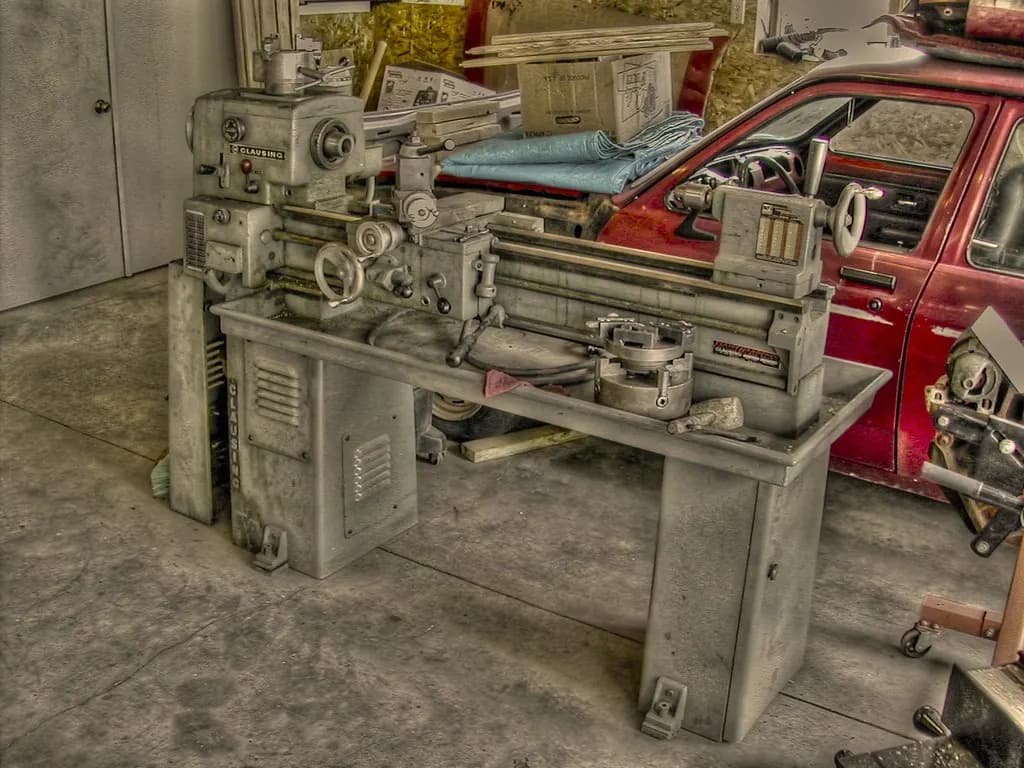
California has a partial exemption. Qualifying manufacturers (NAICS codes 3111 to 3399) and certain research and development businesses pay tax at a reduced rate on qualifying equipment. The partial exemption is 3.9375%, so the state portion falls from 7.25% to 3.3125%, plus any district taxes, which still apply in full. The exemption runs until June 30, 2030, and qualifying purchases are capped at $200 million per year per qualified person or combined reporting group. The property must be used primarily in manufacturing, R&D or maintaining, repairing, measuring or testing that equipment. The buyer doesn't apply to the CDTFA; it gives the seller Form CDTFA-230-M.
Texas exempts tangible personal property that becomes part of a manufactured product and equipment used in actual manufacturing, among other items. The buyer claims it on the exemption side of Form 01-339, describing the items and the exempt use.
New York handles production exemptions on Form ST-121, the Exempt Use Certificate, which covers many use-based exemptions. A Certificate of Authority may be needed depending on the exemption claimed.
In Streamlined states, a manufacturer uses reason I (industrial production or manufacturing) on the SST certificate, with each state's ID number.
Agricultural exemptions
Farm exemptions usually cover feed, seed, fertilizer, and machinery and equipment used exclusively or primarily in producing crops or livestock for sale. They rarely cover items with obvious non-farm uses unless the buyer certifies a farm use.
Texas requires farmers and timber producers to register for an Ag/Timber Number before buying tax-free. They apply online or on Form AP-228, then give sellers an exemption certificate quoting the number. Numbers must be renewed every four years, whenever they were first issued, and current numbers expire December 31, 2027. The Comptroller lets retailers accept a certificate with an Ag/Timber Number in good faith only if the item is of a type or quantity normally used on a farm or ranch or in timber production. A feed store can accept a certificate for fencing wire. It can't claim good faith for a television.
New York farmers use Form ST-125, the Farmer's and Commercial Horse Boarding Operator's Exemption Certificate. Farmers don't need a Certificate of Authority to use it, and it can be used as a blanket certificate.
In Streamlined states, farmers use reason H (agricultural production). Some states also require a separate farm ID number.
Exemption types at a glance
| Exemption | Who qualifies | Typical form | Watch for |
|---|---|---|---|
Nonprofit (entity) | Organizations approved by the state | TX 01-339 after AP-204/205; FL DR-14; NY ST-119.1; SST reason E/F/M | Not automatic from 501(c)(3); none in CA |
Federal government (entity) | Agencies paying directly or with centrally billed cards | Purchase order, card record or state form; SST reason A | Individually billed travel cards vary by state |
State/local government (entity) | In-state agencies, cities, schools | State form or purchase order; SST reason B | Other states' agencies often not exempt |
Manufacturing (use) | Producers using items in production | CA CDTFA-230-M; NY ST-121; TX 01-339; SST reason I | CA is partial (3.9375%), capped |
Agriculture (use) | Farmers, ranchers, timber producers | TX Ag/Timber Number; NY ST-125; SST reason H | Item must suit farm use |
Nonprofit (entity)
- Who qualifies
Organizations approved by the state
- Typical form
TX 01-339 after AP-204/205; FL DR-14; NY ST-119.1; SST reason E/F/M
- Watch for
Not automatic from 501(c)(3); none in CA
Federal government (entity)
- Who qualifies
Agencies paying directly or with centrally billed cards
- Typical form
Purchase order, card record or state form; SST reason A
- Watch for
Individually billed travel cards vary by state
State/local government (entity)
- Who qualifies
In-state agencies, cities, schools
- Typical form
State form or purchase order; SST reason B
- Watch for
Other states' agencies often not exempt
Manufacturing (use)
- Who qualifies
Producers using items in production
- Typical form
CA CDTFA-230-M; NY ST-121; TX 01-339; SST reason I
- Watch for
CA is partial (3.9375%), capped
Agriculture (use)
- Who qualifies
Farmers, ranchers, timber producers
- Typical form
TX Ag/Timber Number; NY ST-125; SST reason H
- Watch for
Item must suit farm use
How to collect and validate exemption certificates as a seller
As the seller, your protection depends on the certificate. In the Streamlined states, you are not liable for tax if the buyer claims an exemption improperly, provided you received a fully completed certificate at the time of sale or within 90 days after it, you didn't fraudulently fail to collect tax, and you didn't encourage customers to claim exemptions they don't have. New York uses the same 90 days window and defines good faith as having no knowledge that the certificate was false or fraudulent.
Collect, check and file an exemption certificate
- 1
Ask before the first invoice
Make a completed certificate a condition of tax-free billing. Send new customers the form your state or the SST board publishes.
- 2
Check that every field is complete
Buyer name and address, exemption reason, the state ID number where required, description of use, signature (not needed on electronic SST forms) and date.
- 3
Check the exemption fits the sale
An entity exemption should match the buyer type. A use exemption should match the item: a tractor part for a farm, not a sofa.
Tip: Under the SST rules, you can't accept an entity-based exemption at your own location in a state that doesn't allow it.
- 4
Verify the number where the state offers a lookup
Florida, Texas and others offer online verification. Georgia requires sellers in its Streamlined system to verify the buyer's ID.
- 5
File it by customer and set a review date
Keep it for the audit period after the last sale it covers, and refresh it on the state's cycle.
Most states don't require the seller to confirm that the buyer is truly eligible, only that the certificate is complete and plausible. The SST form says the seller need not verify the buyer's ID number or registration status, except in Georgia. The buyer carries the risk of claiming an exemption it doesn't have: the SST form warns that an ineligible buyer is liable for the tax, interest and possibly civil and criminal penalties.
You can refuse a certificate you aren't comfortable with and charge tax. The buyer then claims a refund from the state. Texas lets the seller sign an Assignment of Right to Refund so the exempt buyer can claim directly from the Comptroller; New York buyers file Form AU-11.
Audits: what auditors look for
Sales tax auditors almost always test exempt sales. They pull a sample of tax-free invoices, often a full month or quarter, and ask for the certificate behind each. A missing, late or incomplete certificate turns that sale into a taxable one. In a sample audit, the error rate is then projected across the whole audit period, which can multiply a few missing forms into a large assessment.
Auditors also look for patterns that suggest a certificate shouldn't have been accepted: a nonprofit certificate used for items unrelated to its purpose, a manufacturing exemption claimed on office furniture, an agricultural number on consumer electronics, or a federal exemption claimed with an individually billed travel card in a state that doesn't allow it.
Some states let a seller cure gaps during the audit by obtaining a certificate after the fact. Don't count on it. Buyers close, move, or refuse to sign years later, and the auditor isn't obliged to wait.
Keep certificates for at least the audit period. New York requires three years after the due date of the last return the certificate relates to. Texas expects four years. Store them electronically and link them to customer accounts so your invoicing system won't issue a tax-free invoice without one.
Worked examples
Example 1: a Texas nonprofit buying laptops. An Austin food bank approved under Form AP-204 buys $2,500 of laptops for its warehouse staff. The combined Austin rate is 8.25%. With a completed Form 01-339 on file at the store, it saves $2,500 × 0.0825 = $206.25. If a staff member buys a laptop for personal use with the same certificate, the organization owes the tax and the person risks penalties.
Example 2: a California manufacturer buying a CNC machine. A Fresno metal fabricator in NAICS 332 buys a $400,000 CNC machine for its production line. Fresno's rate is 8.35%. Without the partial exemption, tax would be $400,000 × 0.0835 = $33,400. With Form CDTFA-230-M on file, the rate falls by 3.9375% to 4.4125%, so tax is $400,000 × 0.044125 = $17,650. The saving is $15,750. If the fabricator later moves the machine into its office or a non-qualifying use within a year, it may owe the difference.
Try it — tax on a $400,000 machine in Fresno before the partial exemption
Example 3: a California nonprofit that assumed it was exempt. A Los Angeles charity buys $10,000 of furniture from an out-of-state online seller that doesn't charge California tax, believing its 501(c)(3) status makes it exempt. It isn't: California has no general nonprofit exemption. It owes use tax at 10.25%, or $1,025, and should report it. Our use tax guide explains how.
Example 4: the seller's audit bill. A New York industrial supplier made $240,000 of tax-free sales in one sample quarter. Certificates are missing for $18,000 of them, a 7.5% error rate. Projected over a three-year audit with $2.9 million of exempt sales, the auditor finds $217,500 of unsupported sales. At New York City's 8.875%, that is $19,303 in tax before interest and penalties, for paperwork the supplier could have collected at the time of sale.
Common mistakes and how to avoid them
Treating 501(c)(3) status as a sales tax exemption. Apply to each state. In California, budget for sales tax.
Using an exemption certificate for personal or unrelated purchases. The exemption follows the exempt purpose or use. A manufacturer's certificate doesn't cover the break-room refrigerator.
Letting certificates lapse. Texas Ag/Timber numbers renew every four years and Florida DR-14 certificates every five years. Blanket SST certificates lapse if purchases are more than 12 months apart.
Accepting another state's exemption. A Florida county's exemption doesn't exempt its purchases in Georgia unless Georgia law says so. Check the state where the sale is sourced.
Forgetting partial exemptions are partial. A California manufacturer still pays district tax and the remaining state rate. Set up the invoice to charge the reduced rate, not zero.
Exemption certificate controls for sellers
0/8Official forms and guidance
Exemption certificate forms and rules
- Streamlined Sales Tax Certificate of Exemption (F0003)24 member states
- Texas — 501(c) organizations and Form AP-204
- Texas — Agricultural and timber exemptions
- California — Publication 18, Nonprofit Organizations
- California — Manufacturing and R&D partial exemption
- New York — Exemption certificates for sales tax
- Florida — Consumer's Certificate of Exemption (DR-5 instructions)
- GSA SmartPay — State tax guidance
What to do next
If you are an exempt buyer, confirm your status in each state where you buy and keep a set of current certificates ready for new suppliers. If you sell to exempt buyers, audit your own files now: pull a month of tax-free invoices and check that each has a complete, current certificate. Fix the gaps while customers are still easy to reach. For buyers who buy for resale, see our resale certificate guide, and for state rates, the Texas, California, New York and Florida guides. The sales tax calculator shows the tax on any purchase.
This is general information, not legal or tax advice — confirm on the official source or with a professional.
Frequently asked questions
It is a signed form a buyer gives a seller to buy taxable goods without paying sales tax, because the buyer is an exempt organization (such as a qualifying nonprofit or a government agency) or will use the goods in an exempt way (such as manufacturing or farming). The seller keeps it on file as proof. Without it, an auditor treats the sale as taxable and the seller owes the tax.
No. Federal 501(c)(3) status exempts an organization from federal income tax, not state sales tax. Each state decides. California has no general sales tax exemption for nonprofits. Texas exempts 501(c)(3) organizations once the Comptroller approves an application. Florida issues a Consumer's Certificate of Exemption valid for five years. Apply to each state where you buy.
Purchases billed directly to the federal government are exempt from state sales tax in every state. GSA SmartPay purchase and fleet cards are centrally billed, so they should be exempt. Travel cards billed to the employee (individually billed accounts) are exempt only in states that choose to allow it: Texas does, Virginia doesn't. Exemption follows the payment method, not the employee's agency.
It varies. A blanket Streamlined certificate stays valid while purchases are no more than 12 months apart. Florida's Consumer's Certificate of Exemption runs five years. Texas agricultural and timber registration numbers currently expire December 31, 2027. Many sellers ask for fresh certificates every two or three years to stay safe.
The auditor treats the sale as taxable and the seller owes the tax, plus interest and often a penalty. Some states let the seller obtain a certificate during the audit or prove the sale was exempt another way, but the burden is on the seller. A complete certificate received on time and accepted in good faith shifts liability to the buyer.
Yes. A seller can choose to charge tax rather than accept a certificate it isn't comfortable with. The buyer can then ask the state for a refund. In Texas the seller can sign an Assignment of Right to Refund so the buyer claims directly. In New York the buyer uses Form AU-11.
Sources & verification
Figures on this page were checked against the sources below when it was last reviewed on 9 October 2026. Each rate and limit is stored once with its own official source and review date, and official update channels are monitored daily so changes are picked up. How we verify
- 1.Streamlined Sales Tax Certificate of Exemption (SSTGB Form F0003, rev. 12/21/2021) — Streamlined Sales Tax Governing Board (hosted by Nevada Department of Taxation) · accessed 9 October 2026
- 2.501(c)(3), (4), (8), (10) or (19) exemptions — Texas Comptroller of Public Accounts · accessed 9 October 2026
- 3.Agricultural and Timber Exemptions — Texas Comptroller of Public Accounts · accessed 9 October 2026
- 4.Publication 18, Nonprofit Organizations — California Department of Tax and Fee Administration · accessed 9 October 2026
- 5.Tax Guide for Manufacturing and R&D Equipment Exemption — Sellers — California Department of Tax and Fee Administration · accessed 9 October 2026
- 6.CDTFA-230-M Partial Exemption Certificate — California Department of Tax and Fee Administration · accessed 9 October 2026
- 7.Exemption Certificates for Sales Tax (TB-ST-240) — New York State Department of Taxation and Finance · accessed 9 October 2026
- 8.Application for a Consumer's Certificate of Exemption — Instructions (DR-5) — Florida Department of Revenue · accessed 9 October 2026
- 9.What You Need to Know About State Taxes (Smart Bulletin 020) — U.S. General Services Administration · accessed 9 October 2026
MSMETOOLS is an independent platform and is not affiliated with any government agency, ministry or department.
Tools for this
Sales Tax Calculator (US)
Calculate sales tax for all US states and cities.
Invoice Generator
Create professional invoices with tax, logo and custom details.
Related guides
 Resale Certificate (2026): How It Works, by StateRead guide
 Texas Sales Tax Rate 2026: 6.25% State + Local up to 8.25%Read guide
 Economic Nexus by State (2026): Thresholds TableRead guide
 Sales Tax Audit (2026): Process, Sampling and How to PrepareRead guide
Official links open the government site in a new tab.