 HR, payroll & labor
Form I-9 in 2026: Current Edition, Acceptable Documents, Deadlines and Penalties
Form I-9 in 2026: the current 01/20/25 edition, Sections 1 and 2, List A, B and C documents, the 3-day deadline, retention, remote checks, penalties and examples.
 Edited by Sumeet YadavFounder & editor, MSMETOOLS · fact-checked against official sources
Contents (10)
- 1. What Form I-9 is and who needs one
- 2. Which edition to use in 2026
- 3. The sections of Form I-9
- 4. Acceptable documents: Lists A, B and C
- 5. Automatic EAD extensions ended for new renewals
- 6. Remote examination for E-Verify employers
- 7. Retention, storage and inspections
- 8. Penalties for Form I-9 violations
- 9. Common I-9 mistakes
- 10. What to do next
Form I-9 is the one hiring form every US employer must complete for every employee, and it's the one most often filled in wrong. It isn't a tax form and you never send it to anyone, but immigration inspectors can ask to see it, and errors carry fines per form. This guide is for owners, office managers and HR staff who onboard new hires. It covers the edition you must use in 2026, who fills in each section and when, which documents are acceptable, how long to keep the forms, remote document checks, the recent change to automatic EAD extensions, and the current penalties, with worked examples.
Quick answer
Form I-9 verifies that each new employee is who they say they are and is allowed to work in the US. Use the edition dated 01/20/25 (expires 05/31/2027). The employee completes Section 1 by their first day of paid work; you examine their documents and complete Section 2 within 3 business days. Keep the form for 3 years after hire or 1 year after they leave, whichever is later.
Employee chooses one List A document, or one List B plus one List C
Required for every employee hired after November 6, 1986, citizens included
Don't send it to the government; produce it within 3 business days if inspected
Paperwork fines run $288 to $2,861 per form
What Form I-9 is and who needs one
Form I-9, Employment Eligibility Verification, comes from the Immigration Reform and Control Act of 1986. It requires employers to verify the identity and employment authorization of everyone they hire, whether a US citizen or not. You complete one for every employee hired after November 6, 1986, including part-time and seasonal staff, family members on payroll and remote workers.
You don't complete one for genuine independent contractors, for people who aren't paid (true volunteers), or for workers supplied by a staffing agency that is their employer; the agency completes the I-9. You also don't need a new one for an employee who returns from leave or an approved absence, because they never stopped being employed.
The form is a USCIS form, but enforcement is shared. Immigration and Customs Enforcement (ICE) carries out inspections and issues fines; the Department of Justice handles discrimination complaints connected to the verification process; and the Department of Labor can also inspect forms. None of them receive the form routinely. You complete it, keep it, and produce it if asked.
The I-9 is separate from the tax paperwork you collect at hiring. Form W-4 sets federal income tax withholding and your state's new-hire report goes to the state; the I-9 is about the right to work. Our hiring checklist shows how they fit together on day one.
Which edition to use in 2026
USCIS publishes the form with an edition date and an expiration date. The current form has the edition date 01/20/25 and expires on 05/31/2027. The 01/20/25 edition changed little from the previous one: it updated the wording of the fourth citizenship checkbox in Section 1, revised the descriptions of two List B documents, and revised the instructions and privacy notice.
USCIS also accepts the 08/01/23 edition with the 05/31/2027 expiration date. There was a second 08/01/23 version with a 07/31/2026 expiration date, and electronic I-9 systems had to move to the 05/31/2027 version by July 31, 2026. If your onboarding software or a stack of printed forms in a drawer still shows 07/31/2026, replace it now. Using an outdated edition for a new hire is itself a paperwork violation.
Form I-9 at a glance (2026)
01/20/25
Current edition date
Expires 05/31/2027
3 business days
Deadline for Section 2
Counting from the first day of paid work
3 years
Minimum retention after hire
Or 1 year after leaving, if later
3 business days
Notice before an inspection
To produce the forms
The sections of Form I-9
The 01/20/25 form is a single page for the employee and employer, plus two supplements used only when needed.
Section 1: employee information and attestation
The employee completes Section 1 no later than their first day of work for pay. They can complete it any time after accepting the job offer. They give their legal name, other last names used, address, date of birth and, optionally, their Social Security number (it's required if you use E-Verify), email and phone. They then tick one box to state that they are a US citizen, a noncitizen national, a lawful permanent resident, or a noncitizen authorized to work, and sign.
You must review Section 1 for completeness, but you can't fill it in for the employee or insist on details beyond what the form asks for. You also can't ask about citizenship or immigration status in a way that leads to different treatment, and you shouldn't ask for the I-9 before you've made a job offer.
Supplement A: preparer and translator
If someone helps the employee complete Section 1, such as a translator or a family member, that person completes Supplement A. If no one helped, you don't need it.
Section 2: employer review and attestation
You, or an authorized representative acting for you, complete Section 2 within 3 business days of the first day of work for pay. If the job will last fewer than three business days, Section 2 is due on the first day. You must examine the employee's original documents in person, unless you use the remote procedure described below, decide whether they reasonably appear genuine and relate to the person in front of you, and record the document title, issuing authority, number and expiration date. Then you enter the first day of employment and sign.
Supplement B: reverification and rehire
Supplement B replaced the old Section 3. Use it to reverify an employee whose employment authorization is expiring, to record a rehire within three years of the original form, or to record a legal name change. You don't reverify US citizens, noncitizen nationals or lawful permanent residents who presented a Permanent Resident Card, and you never reverify List B identity documents.
Acceptable documents: Lists A, B and C
The employee decides what to show you. They may present one document from List A, which proves both identity and work authorization, or one document from List B (identity) plus one from List C (work authorization). If they bring a List A document, you can't ask for anything else.
Common I-9 documents
| List A: identity and work authorization | List B: identity only | List C: work authorization only |
|---|---|---|
U.S. passport or passport card | Driver's license or state ID card | Unrestricted Social Security card |
Permanent Resident Card (Form I-551) | Federal, state or local government ID with photo | Original or certified birth certificate with an official seal |
Employment Authorization Document with photo (Form I-766) | School ID with photo; voter registration card | Certification of report of birth (DS-1350, FS-545, FS-240) |
Foreign passport with temporary I-551 stamp or MRIV | U.S. military card or draft record; military dependent's ID | Native American tribal document |
Foreign passport with Form I-94 endorsed for work | Canadian driver's license; Native American tribal document | U.S. Citizen ID Card (Form I-197); DHS employment authorization document |
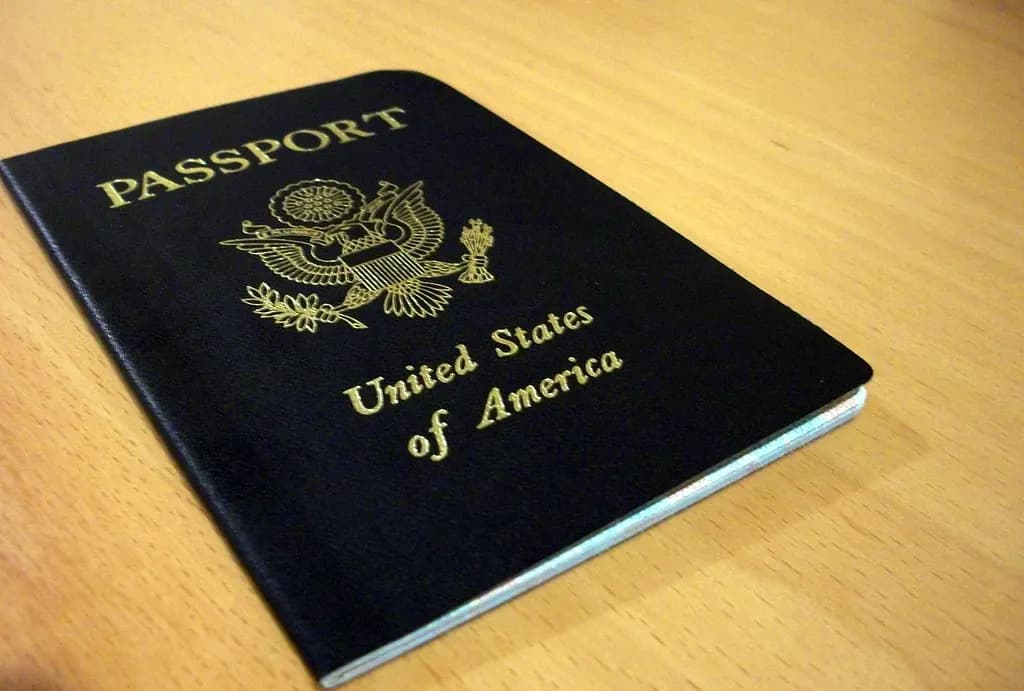
U.S. passport or passport card
- List B: identity only
Driver's license or state ID card
- List C: work authorization only
Unrestricted Social Security card
Permanent Resident Card (Form I-551)
- List B: identity only
Federal, state or local government ID with photo
- List C: work authorization only
Original or certified birth certificate with an official seal
Employment Authorization Document with photo (Form I-766)
- List B: identity only
School ID with photo; voter registration card
- List C: work authorization only
Certification of report of birth (DS-1350, FS-545, FS-240)
Foreign passport with temporary I-551 stamp or MRIV
- List B: identity only
U.S. military card or draft record; military dependent's ID
- List C: work authorization only
Native American tribal document
Foreign passport with Form I-94 endorsed for work
- List B: identity only
Canadian driver's license; Native American tribal document
- List C: work authorization only
U.S. Citizen ID Card (Form I-197); DHS employment authorization document
The full lists include a few rarer items, such as passports from the Federated States of Micronesia and the Marshall Islands with Form I-94, the US Coast Guard Merchant Mariner Card, and for minors under 18, school, clinic or day-care records as List B documents. The lists printed on the last page of the form are the definitive version.
A few rules trip employers up:
- Documents must be unexpired. An expired driver's license isn't acceptable. Some Permanent Resident Cards and EADs carry extensions shown on a USCIS notice or sticker; the M-274 handbook explains which ones count.
- Originals only. Photocopies aren't acceptable, except for a certified copy of a birth certificate.
- Receipts work for a limited time. A receipt showing the employee applied to replace a lost, stolen or damaged document is acceptable temporarily, and they must show the replacement later.
- E-Verify users need a photo. If the employee presents List B plus List C and you use E-Verify, the List B document must have a photograph.
- Don't over-document. Asking for more or different documents than the form requires, or rejecting a document that looks genuine, can be unlawful discrimination even when the intent is to be careful.
Copying documents is optional unless you use E-Verify for certain photo documents or the remote procedure. If you choose to copy, do it for every employee, not selectively, and keep the copies with the form.
Automatic EAD extensions ended for new renewals
Until late 2025, many workers who filed on time to renew an Employment Authorization Document got an automatic extension of up to 540 days, letting them keep working on an expired card plus a receipt notice. A DHS interim final rule ended that for renewal applications filed on or after October 30, 2025. Extensions still apply where the law provides them or a Federal Register notice grants them, mainly for Temporary Protected Status, and extensions already in place before that date remain valid until they run out.
For employers, this changes reverification planning. An employee whose EAD is about to expire and who filed a renewal after October 30, 2025 can't rely on the receipt notice to keep working. New receipt notices say they aren't evidence of work authorization on their own. Track expiration dates in Supplement B well in advance, remind affected employees early, and reverify on or before the expiry date, without treating them differently from other workers.
Remote examination for E-Verify employers
The pandemic-era flexibility to check documents by video ended in 2023, and was replaced by a permanent DHS-authorized alternative procedure. You can use it only if you're enrolled in E-Verify and in good standing at the hiring site where you use it.
How the remote alternative procedure works
- 1
Get copies
The employee sends you copies of their documents, front and back for two-sided documents.
- 2
Review the copies
Check that the documents reasonably appear genuine and relate to the employee.
- 3
Hold a live video call
The employee shows the same documents on camera during a live video interaction.
- 4
Record and keep
Tick the alternative procedure box in Section 2's Additional Information field and keep clear copies of every document with the form.
- 5
Create the E-Verify case
USCIS: remote examinationOpen a case no later than 3 business days after the employee starts work for pay.
If you offer the remote option at a hiring site, you must offer it consistently to all employees at that site. You may limit it to fully remote hires, but you can't use it for some people and not others based on citizenship, immigration status or national origin. Employers outside E-Verify must still examine originals in person, but they can appoint anyone, such as a notary or a manager near the employee, as an authorized representative to do it. You remain liable for that person's mistakes.
E-Verify itself is voluntary for most private employers under federal law, but required for some federal contractors and, under state law, for all or some employers in several states. Check your state's rules before you decide; our hiring guide summarises them.
Retention, storage and inspections
Keep each Form I-9 for the later of 3 years after the date of hire or 1 year after employment ends. While someone works for you, keep their form. You can store forms on paper, microfilm or electronically, on-site or off-site, as long as you can produce them within 3 business days of an inspector's request. Keep I-9s separate from personnel files so you can hand them over without exposing unrelated records.
Worked retention examples
- Short tenure: An employee starts on March 2, 2026 and leaves on August 14, 2026. Three years after hire is March 2, 2029; one year after leaving is August 14, 2027. Keep the form until March 2, 2029.
- Long tenure: An employee hired on June 1, 2018 leaves on November 30, 2026. Three years after hire was June 1, 2021; one year after leaving is November 30, 2027. Keep the form until November 30, 2027.
When the date passes, destroy the form securely. Keeping forms you no longer need only enlarges what inspectors can review.
Penalties for Form I-9 violations
Most I-9 fines come from paperwork errors found during an inspection: missing forms, late Section 2s, missing signatures, blank fields, outdated editions or failure to reverify. Under 8 CFR 274a.10, as last adjusted in January 2025, the ranges are:
| Violation | Penalty range |
|---|---|
| Paperwork (verification) violation, per form | $288 to $2,861 |
| Knowingly hiring or continuing to employ an unauthorized worker, first offense | $716 to $5,724 per worker |
| Second offense | $5,724 to $14,308 per worker |
| Third or later offense | $8,586 to $28,619 per worker |
| Pattern or practice of knowing violations (criminal) | Up to $3,000 per unauthorized worker and up to six months in prison |
Federal agencies normally raise civil penalties for inflation each January. For 2026, the Office of Management and Budget told agencies to cancel the adjustment and keep using 2025 amounts, because the inflation data needed for the calculation wasn't produced; the regulation as of October 2026 still shows the January 2025 figures above.
Within each range, the amount depends on the size of the business, good faith, the seriousness of the violation, whether unauthorized workers were involved, and past violations. For a sense of scale: an inspection of a 40-employee restaurant that finds 12 forms with uncorrected Section 2 errors could produce paperwork fines of 12 × $288 = $3,456 at the bottom of the range and 12 × $2,861 = $34,332 at the top. Discrimination in the verification process, such as demanding specific documents from noncitizens, carries separate penalties enforced by the Justice Department.
Fixing mistakes before an inspection
You can't backdate an I-9, but you can correct one. Draw a line through the wrong entry, write the correct information, and initial and date the change; the employee corrects Section 1 errors the same way. If Section 2 was never completed, complete it now with the current date and attach a short signed note explaining why it's late. A form that was never completed at all should be completed now with the actual dates. Good-faith corrections made before you receive a Notice of Inspection count in your favour.
Common I-9 mistakes
I-9 onboarding checklist
0/8Missing the three-day deadline. Build Section 2 into the first-day checklist rather than leaving it for payroll at the end of the week.
Asking for specific documents. "Bring your Social Security card and driver's license" sounds helpful but may be discriminatory. Give new hires the lists and let them choose.
Reverifying people you shouldn't. Don't reverify US citizens or green card holders, and never reverify an identity document.
Losing track of expiry dates. With automatic EAD extensions gone for new renewals, a missed reverification can mean employing someone without authorization.
Completing I-9s for contractors. It's not required, and doing it can blur the line between contractors and employees. See 1099 vs W-2.
What to do next
Put the current form and the document lists in your onboarding pack, assign one person to complete Section 2 on time, and audit your existing forms once a year. Once the I-9 is done, set up the employee's pay and withholding as described in payroll taxes for small business; their Form W-2 closes the year.
Official links
This is general information, not legal or tax advice — confirm on the official source or with a professional.
Frequently asked questions
The current Form I-9 has the edition date 01/20/25 and an expiration date of 05/31/2027, both printed at the bottom or top of the form. USCIS also still accepts the 08/01/23 edition that shows the 05/31/2027 expiration date. The version of the 08/01/23 form that expired on 07/31/2026 can no longer be used for new hires.
The employee must complete Section 1 no later than the first day of work for pay. You must examine their documents and complete Section 2 within 3 business days of that first day; a Monday start means a Thursday deadline. If the job lasts fewer than three business days, Section 2 is due on the first day of work.
The employee chooses either one document from List A, which proves both identity and work authorization (such as a U.S. passport or a Permanent Resident Card), or one from List B for identity (such as a driver's license) plus one from List C for work authorization (such as an unrestricted Social Security card or a birth certificate). You can't tell them which documents to bring.
Keep each Form I-9 for 3 years after the date of hire or 1 year after employment ends, whichever is later. For current employees, keep it for as long as they work for you. You must be able to produce forms within 3 business days of a request from an inspecting agency.
Only if you use E-Verify and are in good standing at that hiring site. You then examine copies of the documents, hold a live video call where the employee shows the same documents, keep clear copies, and tick the alternative procedure box in Section 2. Employers who don't use E-Verify must examine original documents in person, though an authorized representative can do it for them.
Paperwork violations cost $288 to $2,861 per form. Knowingly hiring or keeping an unauthorized worker costs $716 to $5,724 per worker for a first offense, rising to $8,586 to $28,619 for a third. A pattern or practice of knowing violations can bring criminal fines of up to $3,000 per unauthorized worker and up to six months in prison.
Sources & verification
Figures on this page were checked against the sources below when it was last reviewed on 13 October 2026. Each rate and limit is stored once with its own official source and review date, and official update channels are monitored daily so changes are picked up. How we verify
- 1.I-9, Employment Eligibility Verification — U.S. Citizenship and Immigration Services · accessed 13 October 2026
- 2.Completing Section 2, Employer Review and Attestation — U.S. Citizenship and Immigration Services · accessed 13 October 2026
- 3.Form I-9 Acceptable Documents — U.S. Citizenship and Immigration Services · accessed 13 October 2026
- 4.Remote Examination of Documents — U.S. Citizenship and Immigration Services · accessed 13 October 2026
- 5.Retention and Storage — U.S. Citizenship and Immigration Services · accessed 13 October 2026
- 6.8 CFR 274a.10 — Penalties — Electronic Code of Federal Regulations · accessed 13 October 2026
- 7.DHS Ends Automatic Extension of Employment Authorization — U.S. Citizenship and Immigration Services · accessed 13 October 2026
- 8.Verification Process — E-Verify (DHS/USCIS) · accessed 13 October 2026
- 9.Civil Monetary Penalties Inflation Adjustments for 2026 (DOJ, FR Doc. 2026-14236) — U.S. Department of Justice (Federal Register) · accessed 13 October 2026
MSMETOOLS is an independent platform and is not affiliated with any government agency, ministry or department.
Tools for this
Salary Slip Generator
Create professional salary slips in seconds.
Freelance Hourly Rate Calculator
Work out the hourly rate you need to charge.
Related guides
 Form W-2 (2026): Boxes, Deadline, Penalties & W-2cRead guide
 How to Hire Your First Employee (2026): 10-Step ChecklistRead guide
 Payroll Taxes for Small Business (2026): Rates & MathRead guide
 Form 941 (2026): Due Dates, Deposit Rules & PenaltiesRead guide
Official links open the government site in a new tab.