 HR, payroll & labor
Form W-2 in 2026: What Goes in Each Box, When It's Due and How to Fix Errors
Form W-2 for 2026 wages: every box explained, new codes TT and TP, the February 1, 2027 deadline, the 10-form e-file rule, penalties, W-2c and a worked example.
 Edited by Sumeet YadavFounder & editor, MSMETOOLS · fact-checked against official sources
Contents (9)
Every employer that pays wages has to close out the year with a Form W-2 for each employee. It's the document employees wait for in January, the one SSA uses to credit their earnings, and the one the IRS matches against your quarterly Forms 941. This guide is for small-business owners and bookkeepers preparing W-2s for 2026 wages, whether in payroll software or by hand. It explains every box, the new overtime and tip codes on the 2026 form, the deadlines and e-file rule, penalties, how to correct a W-2, and a worked example.
Quick answer
Form W-2 reports an employee's yearly wages and the taxes withheld. For 2026 wages, give Copies B, C and 2 to each employee and file Copy A with the Social Security Administration (with Form W-3) by February 1, 2027, because January 31, 2027 is a Sunday. If you file 10 or more information returns in total, you must file electronically.
New for 2026: box 12 codes TT (qualified overtime), TP (cash tips) and TA (Trump account contributions); box 14 split into 14a and 14b
Late or wrong W-2s cost $60 to $340 per form, twice if both copies are late
Fix errors with Form W-2c and W-3c
Keep copies for at least 4 years
What Form W-2 is and who gets one
Form W-2, Wage and Tax Statement, is an information return. It reports to the employee, to SSA and, through SSA, to the IRS, how much you paid one employee in a calendar year and how much tax you withheld. You file one for every employee you paid wages to during the year, including part-time and seasonal staff, people who left in February, and family members on the payroll. There's no minimum: if you withheld any income, Social Security or Medicare tax, or would have withheld income tax but for the employee's W-4, a W-2 is required.
Independent contractors don't get a W-2. They get a Form 1099-NEC, under a different set of rules. Owners of sole proprietorships, partners and LLC members taxed as partnerships aren't employees and don't get W-2s for their draws. S corporation owner-employees and C corporation officers do get them for their salaries. If you aren't sure how someone should be treated, read 1099 vs W-2 first.
The form comes in copies. Copy A goes to SSA. Copy 1 goes to the state, city or local tax department if they ask for it. Copies B, C and 2 go to the employee: B for the federal return, C for their records, 2 for state or local returns. Copy D is yours to keep. Form W-3 is the transmittal that totals all your W-2s and goes to SSA with paper Copy A; when you e-file, the system creates it.
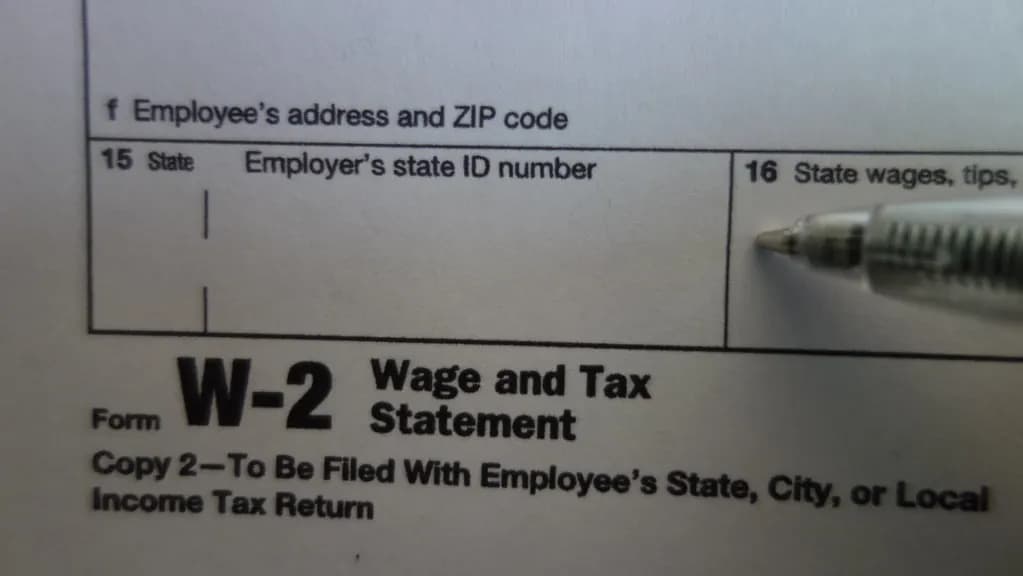
Every box on Form W-2 explained
The lettered boxes identify the employer and employee; the numbered boxes carry the money. The three wage boxes often show different amounts, because different deductions are pre-tax for different taxes.
| Box | What it shows | What to watch |
|---|---|---|
| a–f | Employee SSN, employer EIN, employer and employee names and addresses, control number | Name and SSN must match the Social Security card exactly |
| 1 | Wages, tips, other compensation (federal income tax) | Excludes pre-tax 401(k), cafeteria-plan health premiums and other excludable pay |
| 2 | Federal income tax withheld | Must agree with what you reported on Forms 941 |
| 3 | Social Security wages | Capped at $184,500; includes 401(k) deferrals |
| 4 | Social Security tax withheld | 6.2% of box 3 (plus box 7) |
| 5 | Medicare wages and tips | No cap; usually the largest wage box |
| 6 | Medicare tax withheld | 1.45% plus 0.9% on wages over $200,000 |
| 7 | Social Security tips | Tips the employee reported to you |
| 8 | Allocated tips | Large food and beverage employers only; not in boxes 1, 3, 5 or 7 |
| 10 | Dependent care benefits | Includes amounts over the exclusion |
| 11 | Nonqualified plans | Distributions from nonqualified deferred compensation |
| 12 | Coded amounts | Up to four codes per form |
| 13 | Checkboxes | Statutory employee, retirement plan, third-party sick pay |
| 14a / 14b | Other information / Treasury tipped occupation code | 14b is new for 2026 |
| 15–20 | State and local | State ID, state wages and tax, local wages and tax, locality |
Boxes 1, 3 and 5: why the wage figures differ
Box 1 is income-tax wages. It leaves out the employee's pre-tax retirement deferrals, health insurance premiums paid through a section 125 cafeteria plan, pre-tax commuter benefits and other excludable amounts. Box 3 and box 5 are FICA wages. Cafeteria-plan premiums are excluded from them too, but 401(k) and 403(b) deferrals are not: employees still pay Social Security and Medicare on the money they save for retirement. That's why a 401(k) saver's box 3 is higher than box 1. Box 3 also stops at the 2026 Social Security wage base of $184,500, so box 4 can never exceed $11,439. Box 5 has no cap.
Box 12 codes
Box 12 is where most errors happen. Each entry is a code and an amount, and each form has room for four; if you need more, issue a second W-2 with the same identifying details and only the extra codes. The codes small employers use most:
- D — elective deferrals to a 401(k), including SIMPLE 401(k)
- E — 403(b) salary reductions
- AA — designated Roth contributions to a 401(k)
- W — employer and employee pre-tax contributions to a health savings account
- C — taxable cost of group-term life insurance over $50,000
- DD — cost of employer-sponsored health coverage (for information only; optional if you filed fewer than 250 W-2s the previous year)
- L — substantiated employee business expense reimbursements (nontaxable part)
- TT — qualified overtime compensation, new for 2026
- TP — total cash tips reported to you, new for 2026
- TA — employer contributions to Trump accounts, new for 2026
New on the 2026 Form W-2
TT
Box 12 code: qualified overtime
Premium portion only
TP
Box 12 code: cash tips
All tips reported to you
TA
Box 12 code: Trump account contributions
Employer contributions
14b
New box for tipped occupation code
Box 14 split into 14a and 14b
The 2026 changes for overtime and tips
The 2025 tax law created federal income tax deductions for qualified overtime pay and qualified tips, available for 2025 through 2028. For 2025 wages, the IRS left the W-2 unchanged and gave employers penalty relief in Notice 2025-62 for not reporting the new amounts separately, encouraging them to share the figures in box 14 or another statement. That relief ended with 2025. For 2026 wages, the form carries dedicated codes.
Code TT reports only the premium part of overtime: the "half" in time-and-a-half paid under the Fair Labor Standards Act. If an employee earns $24 an hour and works 100 overtime hours in the year at $36, total overtime pay is $3,600, but the TT amount is $1,200. Code TP reports all cash tips the employee reported to you, and for tipped workers you enter their Treasury tipped occupation code in box 14b. None of this changes taxes: overtime and tips are still subject to income tax withholding, Social Security and Medicare. The codes simply let employees claim their deduction. Our guide on how to calculate overtime explains the FLSA rules behind the premium.
Box 13 checkboxes
Tick Statutory employee only for the specific categories the law treats that way, such as certain commission drivers and full-time traveling salespeople, never for ordinary employees. Tick Retirement plan if the employee was an active participant in your 401(k), SIMPLE or similar plan at any time during the year; it affects whether they can deduct an IRA contribution. Third-party sick pay is for insurers and employers reporting sick pay paid by a third party.
W-2 deadlines for 2026
Form W-2 dates for 2026 wages
December 2026
Check names, SSNs and addresses; confirm year-end pay, bonuses and fringe benefits
January 2027
File the fourth-quarter Form 941; reconcile its totals to your W-2 totals
February 1, 2027
Furnish Copies B, C and 2 to employees and file Copy A with SSA (paper or electronic)
Within 30 days
Of a request from a departed employee, or of their final pay, whichever is later
August 1, 2027
Last date for the reduced $130 penalty on late or corrected W-2s
The normal deadline is January 31 for both the employee copies and the SSA filing. When that falls on a weekend or legal holiday, the next business day counts, which is why 2026 W-2s are due February 1, 2027. There's no later date for e-filers: the old March deadline for electronic filing ended years ago.
If an employee leaves during the year, you can give them their W-2 any time after they go, up to the normal deadline. If they ask for it, you must provide it within 30 days of the request or of the final wage payment, whichever is later. If your business closes, the W-2s are due by the due date of your final Form 941.
Extensions are hard to get. You can request one 30-day extension to file with SSA on Form 8809, but the IRS grants it only for extraordinary circumstances or catastrophe. To get more time to furnish employee copies, you send a letter-style request on Form 15397 by the due date; approval isn't automatic and usually gives no more than 15 days, or up to 30 days if you show a clear need.
How to file: e-file or paper
You must e-file W-2s if you file 10 or more information returns in the calendar year. The count combines all types of information returns, including Forms W-2, 1099-NEC, 1099-MISC and others, and doesn't include corrections. A business with six employees and five contractors is over the line.
Most small employers file through SSA's Business Services Online (BSO). After registering for a user ID, you can either type W-2s into the W-2 Online form or upload a file in SSA's EFW2 format produced by payroll software. BSO creates the W-3 for you and gives you employee copies to print. Payroll providers usually file on your behalf; if they do, check their reconciliation report rather than assuming it's right.
If you're allowed to file on paper, Copy A must be the official red-ink scannable form. A copy printed from the PDF on IRS.gov isn't machine-readable and can't be filed as Copy A, though employee copies can be printed from it. Order paper forms from the IRS early in the autumn.
You can give employees their copies electronically only if they have consented to that, in a way that shows they can open the format you'll use. Otherwise post or hand them paper copies. On employee copies you may truncate the SSN to the last four digits; Copy A must show the full number, and the EIN can never be truncated.
Worked example: one employee's W-2
Maria works for a small dental practice in Ohio. In 2026 she earns a $58,000 salary plus $1,800 of overtime premium (the extra half on her overtime hours, so $5,400 of overtime pay in total). She defers $3,000 to the practice's 401(k), pays $2,400 of health premiums through the cafeteria plan, and the practice puts $500 into her HSA. Federal income tax withheld is $5,900; Ohio tax withheld is $1,100.
Maria's 2026 W-2, main boxes
$58,000
Box 1: wages
$63,400 − $3,000 401(k) − $2,400 premiums
$61,000
Boxes 3 and 5: SS and Medicare wages
$63,400 − $2,400 premiums
$3,782.00
Box 4: Social Security tax
6.2% of $61,000
$884.50
Box 6: Medicare tax
1.45% of $61,000
Total pay is $58,000 + $5,400 = $63,400. Box 1 takes off the 401(k) deferral and the cafeteria-plan premiums: $63,400 − $3,000 − $2,400 = $58,000. The employer's HSA contribution was never part of her taxable pay, so it doesn't change box 1; it shows in box 12 with code W.
Boxes 3 and 5 start from the same $63,400 but take off only the cafeteria-plan premiums, because 401(k) deferrals stay subject to Social Security and Medicare. That gives $61,000. The full W-2:
- Box 1: $58,000
- Box 2: $5,900
- Boxes 3 and 5: $61,000
- Box 4: $3,782.00 · Box 6: $884.50
- Box 12: D $3,000 · W $500 · TT $1,800 (DD optional for this small practice)
- Box 13: retirement plan box checked
- Boxes 15–17: OH, state ID, state wages and $1,100 withheld
A quick check catches most errors: box 4 should be box 3 times 6.2%, and box 6 should be box 5 times 1.45% unless wages passed $200,000. The W-3 totals for boxes 2, 3, 5 and the tax boxes should match the four Forms 941 you filed for the year.
Penalties for late or wrong W-2s
Penalties apply separately for failing to file correct W-2s with SSA and for failing to furnish correct copies to employees. For returns required to be filed after December 31, 2026, which includes 2026 W-2s, the amounts per form are:
W-2 penalties for 2026 forms (due 2027)
| When corrected | Per W-2 | Annual cap | Small-business cap |
|---|---|---|---|
Within 30 days of the due date | $60 | $698,500 | $244,500 |
31 days late through August 1 | $130 | $2,095,500 | $698,500 |
After August 1, or never filed | $340 | $4,191,500 | $1,397,000 |
Intentional disregard | $690 minimum | No cap | No cap |
Within 30 days of the due date
- Per W-2
$60
- Annual cap
$698,500
- Small-business cap
$244,500
31 days late through August 1
- Per W-2
$130
- Annual cap
$2,095,500
- Small-business cap
$698,500
After August 1, or never filed
- Per W-2
$340
- Annual cap
$4,191,500
- Small-business cap
$1,397,000
Intentional disregard
- Per W-2
$690 minimum
- Annual cap
No cap
- Small-business cap
No cap
A small business for this purpose has average annual gross receipts of $5 million or less over the three most recent years. A company that sends all 15 W-2s three weeks late to both SSA and employees could face 15 × $60 twice, or $1,800. Filing in September instead pushes it to 15 × $340 × 2 = $10,200.
There are ways out. No penalty applies if you can show reasonable cause and no willful neglect. Under a de minimis rule, if you filed on time and correct the errors by August 1, the IRS waives the penalty for the greater of 10 forms or half of 1% of your total returns. And a safe harbor for small dollar errors means you don't have to correct, and aren't penalised for, a W-2 where no amount is off by more than $100, or $25 for tax withheld, unless the employee asks for a corrected form. Willfully filing a fraudulent W-2 can expose you to an employee lawsuit for at least $5,000 in damages, on top of criminal penalties.
Correcting a W-2 with Form W-2c
Mistakes on W-2s are common: a misspelled name, a transposed SSN digit, a bonus left out of box 1. How you fix them depends on timing.
How to correct a W-2
- 1
Error caught before filing Copy A
If you've given the employee a W-2 but not yet sent Copy A to SSA, mark the wrong Copy A VOID, prepare a new correct W-2, and write CORRECTED on the employee's new Copies B, C and 2.
- 2
Error caught after filing
Prepare Form W-2c showing the previously reported and correct amounts for each box that changes. Enter -0- rather than leaving a box blank if a corrected amount is zero.
- 3
Name or SSN only
Complete boxes d through i of Form W-2c and leave the money boxes blank.
- 4
File with Form W-3c
SSA Business Services OnlineAlways send a W-3c with any W-2c, one per tax year and form type. E-filing through Business Services Online is encouraged.
- 5
Fix the payroll return too
If tax amounts changed, correct the matching Form 941 with Form 941-X for the quarter the error was found.
You don't need a W-2c for an address error on Copy A alone. If the employee's copy went to the wrong address, you can reissue it marked REISSUED STATEMENT (and not send another Copy A to SSA), or simply re-mail the original. A lost W-2 should be reissued the same way, not filed again with SSA.
Common W-2 mistakes
Using a name or SSN that doesn't match the Social Security card. SSA can't credit the employee's earnings, and you'll get mismatch notices. Ask employees to check their details in December and verify them through SSA's free SSN verification service if needed.
Leaving fringe benefits out of box 1. Personal use of a company car, gift cards and group-term life insurance over $50,000 are taxable wages. Add them before the final payroll of the year so they're included in withholding and the W-2.
Mixing up box 1 and box 3. Remember 401(k) deferrals reduce box 1 but not boxes 3 and 5.
Forgetting S corporation health insurance. Health premiums paid for a more-than-2% S corporation shareholder are added to box 1 but not to boxes 3 and 5.
Ignoring the new codes. For 2026 wages, employees claiming the overtime or tips deduction will look for codes TT and TP. Make sure your payroll system tracks the overtime premium separately during the year rather than trying to rebuild it in January.
Not reconciling to Forms 941. Differences between W-3 totals and your four Forms 941 trigger IRS letters. Reconcile before you file.
After you file
Keep copies of every W-2, W-3 and W-2c, plus undeliverable employee copies, for at least 4 years. W-2s are the last step of a year of payroll: Form 941 reports the same taxes quarterly, FUTA and SUTA cover unemployment tax, and Form I-9 starts the cycle for each new hire.
Use the salary slip generator to give employees clear pay stubs during the year, which makes the W-2 easier to check in January. This is general information, not legal or tax advice — confirm on the official source or with a professional.
Frequently asked questions
Form W-2, Wage and Tax Statement, is the yearly summary an employer gives each employee and files with the Social Security Administration. It shows the employee's taxable wages, the federal, state and local income tax withheld, and the Social Security and Medicare wages and taxes for the calendar year. Employees use it to file their tax returns; SSA uses it to credit their earnings record.
Normally January 31. Because January 31, 2027 is a Sunday, W-2s for 2026 must be given to employees and filed with SSA by February 1, 2027. The same date applies to paper and electronic filing. An extension to file with SSA is granted only in extraordinary circumstances, and an extension to furnish employee copies isn't automatic.
Yes, if you file 10 or more information returns in the calendar year. The count includes Forms W-2 and other information returns such as 1099s together. Most small employers file through SSA's free Business Services Online, which lets you key in W-2s or upload a file from payroll software.
For returns due in 2027, the penalty per W-2 is $60 if you file correctly within 30 days, $130 if you file by August 1, and $340 after that or if you never file. Intentional disregard costs at least $690 per form. The same scale applies separately to late or wrong employee copies, so one missed W-2 can be penalised twice.
File Form W-2c with SSA, together with Form W-3c, and give the employee a copy. Use it to fix wrong amounts, names or Social Security numbers. If you catch the mistake before sending Copy A to SSA, you can void the wrong form and issue a new one instead. Correct the related Form 941 with Form 941-X if tax amounts changed.
Starting with 2026 wages, code TT reports qualified overtime compensation, meaning only the premium part of overtime pay, and code TP reports total cash tips the employee reported to you. Employees use them to claim the new federal income tax deductions for overtime and tips. Tipped workers also need a Treasury occupation code in new box 14b. The pay is still subject to withholding and FICA.
Sources & verification
Figures on this page were checked against the sources below when it was last reviewed on 13 October 2026. Each rate and limit is stored once with its own official source and review date, and official update channels are monitored daily so changes are picked up. How we verify
- 1.General Instructions for Forms W-2 and W-3 (2026) — Internal Revenue Service · accessed 13 October 2026
- 2.Treasury, IRS provide penalty relief for tax year 2025 for information reporting on tips and overtime (IR-2025-110) — Internal Revenue Service · accessed 13 October 2026
- 3.Form W-2 reporting of employer-sponsored health coverage — Internal Revenue Service · accessed 13 October 2026
- 4.Publication 15 (2026), (Circular E), Employer's Tax Guide — Internal Revenue Service · accessed 13 October 2026
- 5.Questions and answers about the new deduction for qualified overtime compensation — Internal Revenue Service · accessed 13 October 2026
- 6.About Form W-2c, Corrected Wage and Tax Statement — Internal Revenue Service · accessed 13 October 2026
MSMETOOLS is an independent platform and is not affiliated with any government agency, ministry or department.
Tools for this
Salary Slip Generator
Create professional salary slips in seconds.
Federal Tax Calculator (US)
Estimate federal income tax for individuals and businesses.
Freelance Hourly Rate Calculator
Work out the hourly rate you need to charge.
Related guides
 Form I-9 (2026): Edition, Documents, Deadlines & FinesRead guide
 Form 941 (2026): Due Dates, Deposit Rules & PenaltiesRead guide
 How to Calculate Overtime Pay (2026): Rules & ExamplesRead guide
 SUTA Tax (2026): State Wage Bases, New Employer RatesRead guide
Official links open the government site in a new tab.