 Finance & accounting
Cost of Goods Sold (COGS) Meaning: Formula, Examples and How It Fits with Gross Revenue and Gross Profit
Cost of goods sold meaning, the COGS formula, FIFO vs LIFO, Schedule C Part III and the small business inventory rule, plus gross revenue vs gross profit (2026).
 Edited by Sumeet YadavFounder & editor, MSMETOOLS · fact-checked against official sources
Contents (10)
- 1. What cost of goods sold means
- 2. The COGS formula
- 3. Worked example: a small retailer from gross revenue to net profit
- 4. Gross revenue vs net revenue vs gross profit vs net income
- 5. Inventory methods: FIFO, LIFO, average cost and specific identification
- 6. Schedule C Part III, line by line
- 7. The small business inventory exception (section 471(c))
- 8. Taking the year-end inventory count
- 9. COGS for service, e-commerce and manufacturing businesses
- 10. Using COGS to run the business
If you sell physical products, cost of goods sold is the single biggest number between your sales and your profit, and it's the one owners most often get wrong. This guide explains the cost of goods sold meaning in plain English, gives the formula, and walks a small retailer from gross revenue all the way to net profit. It also covers the inventory methods (FIFO, LIFO and average cost), how COGS is reported on Schedule C Part III, and the section 471(c) rule that lets small businesses skip traditional inventory accounting. It's written for US sole proprietors, LLCs and small corporations that sell goods, online or in a store.
Quick answer
Cost of goods sold (COGS) is the direct cost of the products you sold in a period: what you paid to buy or make them. Gross revenue is total sales before any deductions. Subtract returns and discounts to get net revenue, then subtract COGS to get gross profit.
COGS = beginning inventory + purchases and direct costs − ending inventory
Included: product cost, freight-in, production labor and materials; excluded: rent, ads, office pay
Inventory is an asset until it sells, then its cost moves into COGS
Sole proprietors report COGS on Schedule C, Part III (lines 33–42), carried to line 4
Small businesses with average gross receipts up to $32 million can use the simpler section 471(c) methods
What cost of goods sold means
Cost of goods sold, often shortened to COGS and sometimes called cost of sales, is the cost of the merchandise or products that left your business as sales during the period. It's an expense, but a special one. It's matched to revenue, so you only count the cost of what you actually sold, not everything you bought.
That's the key idea. When you buy 500 units of stock, you haven't spent that money as an expense yet. You've swapped cash for an asset called inventory. The cost moves out of inventory and into COGS only when a unit is sold. If you buy $40,000 of stock in November and sell half by December 31, only about $20,000 shows up in that year's COGS. The other $20,000 sits on your balance sheet as ending inventory and becomes next year's COGS when it sells.
Because COGS is matched to sales, it lets you see your real margin on products. A business with $500,000 in sales and $300,000 of COGS keeps $200,000, or 40 cents of every sales dollar, to pay for rent, staff, marketing and profit. If that 40% slips to 33% because suppliers raised prices and you didn't, you'll see it in gross profit long before it shows up as a cash crunch.
The COGS formula
The standard formula, used in accounting textbooks and on the IRS form, works from your inventory counts:
COGS = beginning inventory + purchases + other direct costs − ending inventory
- Beginning inventory is the value of stock on hand on the first day of the period, which must equal last period's ending inventory.
- Purchases are the cost of goods bought for resale or for production during the period, net of trade discounts and returns to suppliers, and minus anything you took for personal use.
- Other direct costs include freight-in (shipping to get goods to you), production labor, raw materials and supplies used in making the product, and certain overhead for manufacturers.
- Ending inventory is the value of what's still on hand at the end of the period, based on a physical count or reliable perpetual records.
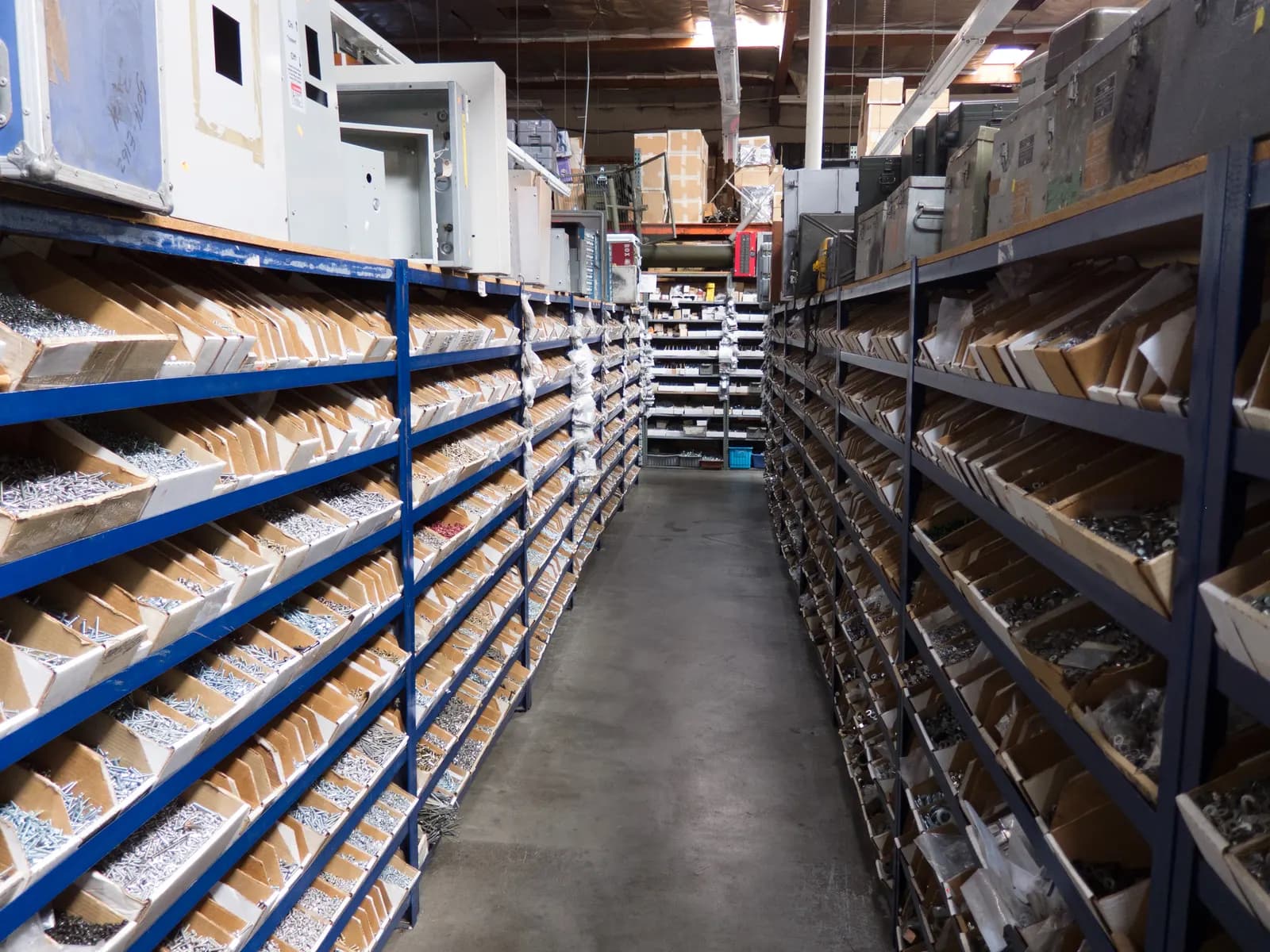
Beginning inventory plus purchases is called goods available for sale. Whatever of that pool isn't left at the end must have been sold, or lost, stolen or damaged. That's why inventory shrinkage ends up in COGS automatically when you take an honest year-end count.
What goes into COGS and what doesn't
| Usually in COGS | Usually not in COGS (operating expenses) |
|---|---|
Purchase price of goods for resale | Rent for a store or office |
Freight-in and import duties on stock | Shipping to customers (often treated as selling expense) |
Raw materials and parts used in production | Advertising and marketing |
Wages of production workers | Salaries of office, sales and admin staff |
Packaging that's part of the product | Credit card and marketplace fees |
Factory overhead (manufacturers) | Owner's pay — never on Schedule C line 37 |
Purchase price of goods for resale
- Usually not in COGS (operating expenses)
Rent for a store or office
Freight-in and import duties on stock
- Usually not in COGS (operating expenses)
Shipping to customers (often treated as selling expense)
Raw materials and parts used in production
- Usually not in COGS (operating expenses)
Advertising and marketing
Wages of production workers
- Usually not in COGS (operating expenses)
Salaries of office, sales and admin staff
Packaging that's part of the product
- Usually not in COGS (operating expenses)
Credit card and marketplace fees
Factory overhead (manufacturers)
- Usually not in COGS (operating expenses)
Owner's pay — never on Schedule C line 37
Worked example: a small retailer from gross revenue to net profit
Here's a full year for a home goods shop run as a single-member LLC, filing Schedule C. The numbers are illustrative.
Revenue. The shop rang up $420,000 in sales. That's its gross revenue, the figure for Schedule C line 1, gross receipts or sales. Customers returned or were refunded $8,000 (line 2), leaving net revenue of $412,000 (line 3).
Cost of goods sold. The owner counted $60,000 of stock on January 1. During the year she bought $240,000 of merchandise, but took $1,000 of it home for personal use, so net purchases were $239,000. She paid $6,000 in inbound freight and $3,000 for branded gift boxes that go out with products. IRS Publication 334 lists containers and freight-in among the "other costs" that belong in COGS. At the December 31 count, $70,000 of stock was left.
COGS = $60,000 + $239,000 + $3,000 + $6,000 − $70,000 = $238,000
Gross profit = $412,000 − $238,000 = $174,000, a gross margin of about 42.2%.
Operating expenses. Rent $48,000, part-time staff $60,000, utilities $9,000, card processing $11,000, insurance $4,000, depreciation on fixtures $6,000 and marketing $6,000 total $144,000.
Net profit = $174,000 − $144,000 = $30,000, before the owner's income and self-employment tax.
Notice two things. First, the $10,000 increase in inventory ($60,000 to $70,000) is cash spent but not yet an expense. If she'd assumed every dollar spent on stock was deductible, she'd have understated profit by $10,000. Second, a 42% gross margin turned into a 7% net margin. That's normal for small retail, and it's why a few points of gross margin matter so much.
Check the shop's gross margin
Gross revenue vs net revenue vs gross profit vs net income
These four terms get mixed up constantly, including on loan applications. Here's the order they appear on an income statement:
- Gross revenue (gross sales, gross receipts) is everything you invoiced or rang up, before subtracting anything. On Schedule C, it's line 1. Sales tax you collect for the state isn't your revenue if you're holding it to remit.
- Net revenue (net sales) is gross revenue minus returns, allowances and discounts. It's Schedule C line 3.
- Gross profit is net revenue minus COGS. On Schedule C it's line 5, and gross margin is gross profit as a percentage of net revenue.
- Net income (net profit, the bottom line) is what's left after operating expenses, interest and, for corporations, income tax. On Schedule C it's line 31, net profit or loss, before the owner's personal taxes.
"Turnover" in British English usually means revenue. In American usage, turnover more often refers to ratios such as inventory turnover or employee turnover. When a lender or grant asks for "gross revenue," give them line 1 (or the equivalent top line from your return or profit and loss statement), not gross profit.
From gross revenue to net income
Step 1
Gross revenue
Step 2
− returns, allowances, discounts
= net revenue
Step 3
− cost of goods sold
= gross profit
Step 4
− operating expenses
= operating income
Step 5
− interest and taxes
= net income
Inventory methods: FIFO, LIFO, average cost and specific identification
When prices change during the year, identical items in your stock may have cost you different amounts. Your inventory method decides which costs go to COGS and which stay in ending inventory. IRS Publication 538 recognizes specific identification, FIFO and LIFO, and the average cost method is a common, accepted approach as long as it's used consistently.
Take a shop that buys 100 units at $10, then 100 at $12, then 100 at $14, for $3,600 in total. It sells 200 units.
- FIFO (first in, first out) assumes the oldest units sell first. COGS = 100 × $10 + 100 × $12 = $2,200. Ending inventory = $1,400. When prices are rising, FIFO gives lower COGS and higher profit, and ending inventory close to current cost.
- LIFO (last in, first out) assumes the newest units sell first. COGS = 100 × $14 + 100 × $12 = $2,600. Ending inventory = $1,000. In inflationary periods, LIFO raises COGS and lowers taxable income. To adopt it, you file Form 970 with your return for the first LIFO year. If you use LIFO for tax, you generally must also use it in financial statements you give to owners and lenders.
- Weighted average cost spreads the total cost over all units: $3,600 ÷ 300 = $12 each. COGS = $2,400. Ending inventory = $1,200.
- Specific identification tracks the actual cost of each item. It's practical for unique, high-value goods such as cars, jewelry or furniture.
Most small businesses use FIFO or average cost, because they match how stock really moves and are easier to run in accounting software. Whatever you choose, use it consistently. Changing methods generally requires IRS consent, usually by filing Form 3115.
You also have to value what's left. Schedule C line 33 asks whether you used cost, lower of cost or market, or another IRS-approved method. Under lower of cost or market, you compare each item's current market value with its cost and use the lower figure, item by item. Damaged, obsolete or out-of-style goods can be written down to their realistic selling price, less the cost of disposing of them, if you can document it.
Schedule C Part III, line by line
Sole proprietors and single-member LLCs report COGS in Part III of Schedule C. The 2025 form is the current one in use in 2026:
| Line | What goes there | Retailer example |
|---|---|---|
| 33 | Inventory valuation method: cost, lower of cost or market, or other | Cost |
| 34 | Any change in how you counted or valued inventory? | No |
| 35 | Inventory at beginning of year (must match last year's line 41) | $60,000 |
| 36 | Purchases less cost of items withdrawn for personal use | $239,000 |
| 37 | Cost of labor (production or direct labor; never your own pay) | $0 |
| 38 | Materials and supplies (mainly for producers) | $0 |
| 39 | Other costs: containers, freight-in, overhead | $9,000 |
| 40 | Add lines 35 through 39 | $308,000 |
| 41 | Inventory at end of year | $70,000 |
| 42 | Cost of goods sold (line 40 minus line 41), carried to line 4 | $238,000 |
Partnerships and multi-member LLCs report COGS on Form 1125-A with Form 1065, and corporations attach Form 1125-A to Form 1120 or 1120-S. The calculation is the same.
Common mistakes on Part III:
- Line 35 doesn't match last year's line 41. The IRS form asks you to attach an explanation if they differ. Fix the error rather than leaving a gap.
- Wages counted twice. Production labor in line 37 must not also appear in Part II wages.
- Owner's draws in COGS. Line 37 says not to include amounts paid to yourself.
- Every purchase deducted. Only the cost of what sold belongs in COGS. Unsold stock stays in ending inventory.
The small business inventory exception (section 471(c))
Since 2018, small businesses that meet the gross receipts test don't have to keep inventories in the traditional way for tax. For tax years beginning in 2026, you qualify if your average annual gross receipts for the three prior tax years are $32 million or less and you aren't a tax shelter. The figure is indexed for inflation each year.
If you qualify, the Schedule C instructions say you can choose not to keep an inventory, but you must still use a method that clearly reflects income. There are two accepted options:
- Treat inventory as non-incidental materials and supplies. You deduct the cost of items in the year they're first used or consumed in your business. For goods you resell, that's generally the year you sell them. So this option simplifies the bookkeeping, but it doesn't let you deduct a pile of unsold stock just because you paid for it.
- Follow your books. If you have an applicable financial statement (such as audited statements), you follow its treatment. If not, you can follow the method in your books and records, as long as it's consistent and reflects income.
Small business taxpayers are also exempt from the uniform capitalization rules under section 263A, which otherwise force producers and larger resellers to add a share of indirect costs, such as warehousing and purchasing overhead, to inventory. And they can use the cash method of accounting even when they have inventory. Switching to any of these methods is a change in accounting method, generally made by filing Form 3115.

Taking the year-end inventory count
Whichever method you use, your COGS is only as good as your ending inventory figure, because every dollar you overstate in ending inventory is a dollar you understate in COGS, and the reverse. Most small businesses should do a full physical count on the last day of the tax year, or as close to it as possible, and adjust the books to match.
Count before you open or after you close, so sales don't move stock mid-count. Freeze receiving for the day, or keep goods that arrive during the count separate. Count in pairs, one person counting and one recording, and recount high-value items. Goods you've shipped to customers but haven't been paid for belong to the customer once title passes, so they're out. Goods in transit to you may be yours already, depending on the shipping terms. Consigned stock you hold for someone else isn't yours, while your products sitting on a marketplace's warehouse shelves still are.
Price each item using your chosen method, then look for problems: damaged, expired or obsolete stock that should be written down, and items with no sales in a year or more. Keep the count sheets. They support the line 41 figure if the IRS ever asks, and they're the starting point for next year's line 35.
Year-end inventory count checklist
0/7COGS for service, e-commerce and manufacturing businesses
Service businesses. A consultant, accountant or designer typically has no COGS. Contractors, landscapers and repair businesses that buy and bill out parts and materials can put those materials in COGS. Some service firms track cost of services internally, meaning the direct labor and subcontractor costs of delivering jobs, but on Schedule C most of those costs go in Part II expenses unless they're truly part of producing goods.
E-commerce sellers. Your COGS is the landed cost of products: supplier price plus inbound shipping, import duties and customs brokerage. Marketplace referral fees, fulfillment fees and ad spend are usually selling expenses, not COGS, though many sellers track them alongside COGS to see profit per unit. Our Amazon selling guide breaks down per-unit fees.
Manufacturers. COGS includes raw materials, direct labor and manufacturing overhead such as factory utilities and equipment depreciation. You'll track three inventory buckets, raw materials, work in process and finished goods, and only finished goods that sell move into COGS.
Using COGS to run the business
Once your COGS is accurate, three numbers become useful. Gross margin tells you whether pricing covers product costs with enough left for overhead. Inventory turnover (COGS ÷ average inventory) tells you how fast stock sells; the shop above turned its inventory about 3.7 times ($238,000 ÷ $65,000). Our inventory turnover guide explains what that means. And contribution margin, which subtracts every variable cost including card fees and commissions, tells you how much each extra sale is worth. See our contribution margin guide.
Take a physical count at least once a year, at year-end, and reconcile it with your books. Price new products from landed cost, not supplier price. And revisit prices whenever COGS per unit rises, because a 5% jump in product cost can erase a meaningful share of a small retailer's net margin.
Official links
- IRS — Schedule C (Form 1040)Part III cost of goods sold, lines 33–42
- IRS — Instructions for Schedule CGross receipts, inventory methods and small business options
- IRS — Publication 538, Accounting Periods and MethodsInventories, FIFO/LIFO, lower of cost or market, UNICAP
- IRS — Publication 334, Tax Guide for Small BusinessFiguring cost of goods sold
- IRS — Form 970 (LIFO election)Adopting LIFO
- IRS — Form 3115 (change in accounting method)Switching inventory methods
This is general information, not legal or tax advice — confirm on the official source or with a professional.
Frequently asked questions
Cost of goods sold is what the products you sold during a period cost you to buy or make. For a retailer, that's mainly the purchase price of the items sold plus inbound freight. For a manufacturer, it adds raw materials and production labor. It doesn't include rent, marketing or office salaries, which are operating expenses.
COGS = beginning inventory + purchases (and other direct costs such as production labor and freight-in) − ending inventory. The same logic appears in Schedule C Part III: line 35 beginning inventory, plus lines 36–39, gives line 40; subtract line 41 ending inventory to get line 42, cost of goods sold.
Gross revenue is the total amount you billed or collected from sales during a period before subtracting anything: no returns, discounts, cost of goods sold or expenses. On Schedule C it's line 1, gross receipts or sales. Net revenue subtracts returns, allowances and discounts. Gross profit then subtracts cost of goods sold.
Yes. COGS is an expense, but it's reported separately from operating expenses because it's directly tied to the products sold. Inventory you buy is an asset until it sells. Its cost moves into COGS only in the period the item is sold, which is why a big stock purchase in December doesn't automatically cut that year's tax.
Usually not, unless they sell products or materials as part of the job. A consultant or designer typically reports no COGS. Trades such as plumbers or landscapers who resell parts and materials can report the cost of those materials in COGS. Many service firms track a similar internal figure called cost of services or cost of revenue.
Not in the traditional way if they meet the gross receipts test, average annual gross receipts of $32 million or less for 2026. Under section 471(c) they can treat inventory as non-incidental materials and supplies or follow their books, but must still use a method that clearly reflects income. The cost is generally deducted when items are used or sold, not when bought.
Sources & verification
Figures on this page were checked against the sources below when it was last reviewed on 9 October 2026. Each rate and limit is stored once with its own official source and review date, and official update channels are monitored daily so changes are picked up. How we verify
- 1.26 U.S. Code § 472 — Last-in, first-out inventories (subsection (c) conformity requirement) — Legal Information Institute (Cornell Law School) · accessed 9 October 2026
- 2.Schedule C (Form 1040) 2025 — Profit or Loss From Business — IRS · accessed 9 October 2026
- 3.Instructions for Schedule C (Form 1040) (2025) — IRS · accessed 9 October 2026
- 4.Publication 538, Accounting Periods and Methods — IRS · accessed 9 October 2026
- 5.Questions and answers about the limitation on the deduction for business interest expense — IRS · accessed 9 October 2026
- 6.Publication 334 (2025), Tax Guide for Small Business — IRS · accessed 9 October 2026
- 7.10.2 Calculate the cost of goods sold and ending inventory using the periodic method — OpenStax (Rice University), Principles of Accounting Vol. 1 · accessed 9 October 2026
MSMETOOLS is an independent platform and is not affiliated with any government agency, ministry or department.
Tools for this
Profit Margin Calculator
Calculate profit, markup and margin for your products or services.
Markup Calculator
Turn cost and markup into a selling price.
Inventory Turnover Calculator
See how fast stock sells through.
Marketplace Profit Calculator
Profit after Amazon, Etsy, Shopify and Flipkart fees.
Related guides
 Gross Profit Margin (2026): Formula, Benchmarks & ExamplesRead guide
 How to Calculate Inventory Turnover (2026) + DIORead guide
 How to Calculate ROI (2026): Formula, Examples & MarginsRead guide
 EBITDA Meaning (2026): Formula, Margin & Worked ExampleRead guide
Official links open the government site in a new tab.