 Grants & funding programs
Grants for Women-Owned Businesses in 2026: Federal Programs, Private Grants and What to Avoid
Grants for women-owned businesses in 2026: what the federal government really offers (WOSB contracts, Women's Business Centers), verified private grants and scams.
 Edited by Sumeet YadavFounder & editor, MSMETOOLS · fact-checked against official sources
Contents (8)
- 1. Do grants for women-owned businesses really exist?
- 2. The federal WOSB program: contracts, not cash
- 3. Women's Business Centers: free help that leads to funding
- 4. Private grants for women: verified current terms
- 5. State and local programs: certification is changing
- 6. Loans and other funding that fill the gap
- 7. How to spot a grant scam
- 8. What to do next
Search for grants for women-owned businesses and you'll find long lists promising free money. The reality is more useful and less glamorous. Federal programs for women business owners are mostly about winning government contracts and getting free expert help, not cash grants. Private grants exist, but they're competitive and change often. This guide sorts what's real from what isn't as of October 2026: the federal WOSB contracting program, Women's Business Centers, private grants whose current rules we checked, state programs that are shifting, the loans that fill the gap, and the scams that target women founders.
Quick answer
There's no federal grant program that funds a business just because it's women-owned. The main federal benefits are the WOSB/EDWOSB contracting program, which helps women-owned firms win federal contracts, and free or low-cost help at Women's Business Centers. Cash grants mostly come from private funders such as WomensNet's Amber Grant, plus some local programs, and they're competitive.
WOSB: 51% owned and controlled by women who are US citizens; free certification with SBA
Federal goal: 5% of prime contract dollars to women-owned small businesses
Amber Grant (private): three $10,000 grants a month, three $50,000 year-end grants
SBIR research grants and SBA loans are open to women-owned firms on the same terms as others
Never pay a fee to someone who calls to say you've won a grant
Do grants for women-owned businesses really exist?
Yes, but mostly not where people look first. Federal grants go overwhelmingly to states, universities, nonprofits and researchers, not to for-profit businesses for start-up or operating costs. Grants.gov, the federal grants portal, is free to use, and for a typical small business the realistic federal grant option is a competitive research award such as SBIR rather than a women-specific grant. Our small business grants guide covers those programs in detail.
What the federal government does offer women business owners is just as valuable when used well: access to a share of federal contract spending reserved for women-owned firms, and a national network of business advisers paid for by SBA. Cash grants that are specifically for women come mainly from private companies, foundations and nonprofits. They're real, but each awards a handful of businesses from thousands of applicants, so they work best as one part of a funding plan that also includes revenue, savings and loans.
Before you apply to anything, note one rule of thumb: legitimate grant makers publish their rules, deadlines and judging criteria, and they never contact you to say you've won something you didn't apply for.
The federal WOSB program: contracts, not cash
The Women-Owned Small Business Federal Contract program helps women-owned firms compete for federal work in industries where they've been underrepresented. Contracting officers can set aside contracts for WOSB or EDWOSB firms, meaning only certified businesses can bid, and in some cases award contracts without competition. The government aims to award 5% of federal prime contracting dollars to women-owned small businesses each year.
For businesses that sell what agencies buy, such as construction, facilities maintenance, IT services, consulting, staffing, manufacturing and professional services, a federal contract can be worth far more than any grant. It's also recurring revenue rather than a one-off payment.
WOSB vs EDWOSB at a glance
| WOSB | EDWOSB | |
|---|---|---|
Ownership | At least 51% directly owned and controlled by women who are US citizens | Same |
Management | Women manage day-to-day operations and make long-term decisions | Same |
Size | Small under SBA size standards for your industry | Same |
Personal net worth | No limit | $850,000 or less per qualifying owner |
Average AGI (3 years) | No limit | $400,000 or less |
Total personal assets | No limit | $6.5 million or less |
Set-asides available | Industries where women are substantially underrepresented | Wider set of industries where women are underrepresented |
Ownership
- WOSB
At least 51% directly owned and controlled by women who are US citizens
- EDWOSB
Same
Management
- WOSB
Women manage day-to-day operations and make long-term decisions
- EDWOSB
Same
Size
- WOSB
Small under SBA size standards for your industry
- EDWOSB
Same
Personal net worth
- WOSB
No limit
- EDWOSB
$850,000 or less per qualifying owner
Average AGI (3 years)
- WOSB
No limit
- EDWOSB
$400,000 or less
Total personal assets
- WOSB
No limit
- EDWOSB
$6.5 million or less
Set-asides available
- WOSB
Industries where women are substantially underrepresented
- EDWOSB
Wider set of industries where women are underrepresented
How to get WOSB certified
Certification with SBA is free and handled online through the SBA Certifications portal. You'll need an active SAM.gov registration (allow up to up to 10 business days for activation), your business's governing documents, proof of the owners' citizenship and documents showing who controls the business. SBA says it aims to decide complete applications within 90 days calendar days. You can also be certified by one of four SBA-approved third-party certifiers and then upload that certificate to SBA's portal; third-party certifiers may charge fees.
After certification, keep your SAM.gov profile current every year. SBA performs a full program examination every three years. SBA's page currently says the annual attestation requirement is suspended, but that could change, so check the program page before your anniversary date.
From certification to your first set-aside bid
- 1
Confirm you're small for your NAICS code
Look up SBA's size standard for each industry code you'll bid under.
- 2
Register in SAM.gov
Free. Registration gives you a Unique Entity ID and can take up to up to 10 business days to activate.
Tip: Ignore companies that charge to 'register' you in SAM.gov; the government doesn't.
- 3
Apply in SBA Certifications
SBA WOSB programUpload ownership, control and citizenship documents for WOSB, and personal financial information for EDWOSB.
- 4
Find opportunities
Search SAM.gov contract opportunities filtered for WOSB and EDWOSB set-asides, and meet agency small business offices.
- 5
Get free help
Women's Business Centers and APEX Accelerators help with registrations, capability statements and bids.
The most common reasons WOSB applications are delayed or denied involve control rather than ownership. If a man holds veto rights in the operating agreement, if a male spouse holds the licence the business depends on and makes the key decisions, or if the woman owner works full-time elsewhere and can't show she runs the business, SBA can find that women don't control it even with 51% ownership. Fix the governing documents before you apply.
Women's Business Centers: free help that leads to funding
Women's Business Centers are SBA-funded nonprofits that provide free or low-cost counseling and training to women starting or growing a business. According to the Congressional Research Service, 168 centers were operating in 2024, and Congress provided $27 million for the program in fiscal 2026. Centers served about 94,600 clients in 2024, roughly two-thirds of them women, so men can use them too.
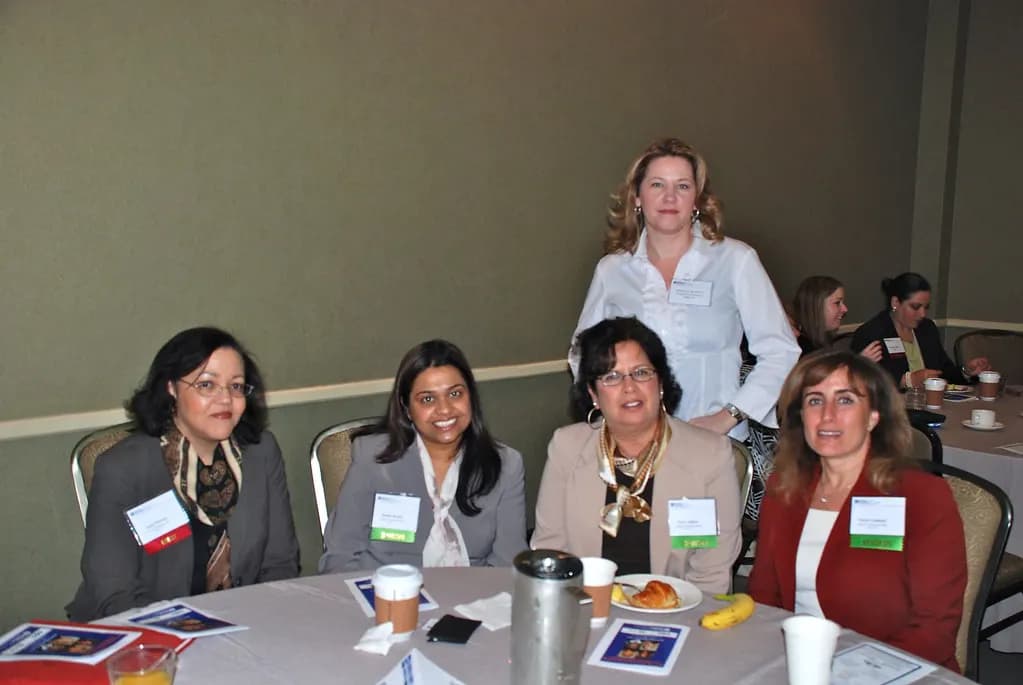
A WBC won't hand you a grant, but it's often the fastest route to money. Advisers help you write a business plan lenders take seriously, prepare grant applications, register in SAM.gov and get WOSB certified, and connect with local microlenders and CDFIs. Many WBCs also know about local grant rounds run by cities, utilities or foundations that never appear on national grant lists. Find your nearest center through SBA's local assistance directory by ZIP code.
Private grants for women: verified current terms
Private grants are the main source of cash awarded specifically to women-owned businesses. They're run by companies and foundations, not the government, and their rules change from year to year. We include only programs whose current terms we could confirm on the funder's own site in October 2026; always re-check before applying.
| Program (private) | Award | Who can apply | When |
|---|---|---|---|
| Amber Grant (WomensNet) | Three $10,000 grants monthly; three $50,000 year-end grants | Women 18+ owning at least 50% of a US or Canadian business, including idea-stage | Monthly entry period, 1st to last day of the month |
| Tory Burch Foundation Fellows | Fellowship with coaching, connections and resources; check current rules for any grant component | Women age 21+ who are US legal residents; business 51% women-owned with at least $75,000 annual revenue | Applications close November 17, 2026 |
The Amber Grant is one of the longest-running grants for women. Under its current rules, each month WomensNet awards three grants of $10,000: a general Amber Grant open to all eligible women-owned businesses, a startup grant for businesses in the idea stage or with under $10,000 in gross sales, and a business category grant that rotates monthly (for example, skilled trades in January, food and beverage in March and STEM in November). At year-end, one monthly winner from each of the three types receives an additional $50,000. Judges look at clarity of the business idea, the founder's story, market understanding and how the money will be used. There's an application fee, which WomensNet will waive for hardship if you ask before applying.
The Tory Burch Foundation Fellows program is better described as a fellowship than a pure grant. Its 2026–27 application window opened on September 22, 2026, and closes on November 17, 2026, with fellows selected in May 2027. It's aimed at established businesses with at least $75,000 of annual revenue rather than idea-stage founders.
Other names appear on most grant lists, including crowdfunding platforms such as IFundWomen that run partner-sponsored grant rounds, and corporate programs tied to banks, payment processors and consumer brands. These programs open and close throughout the year with different terms, so check the sponsor's own page for open rounds rather than relying on a list. If a "grant" requires you to buy a product, pay a large fee, or give up equity, it's a sales pitch or an investment, not a grant.
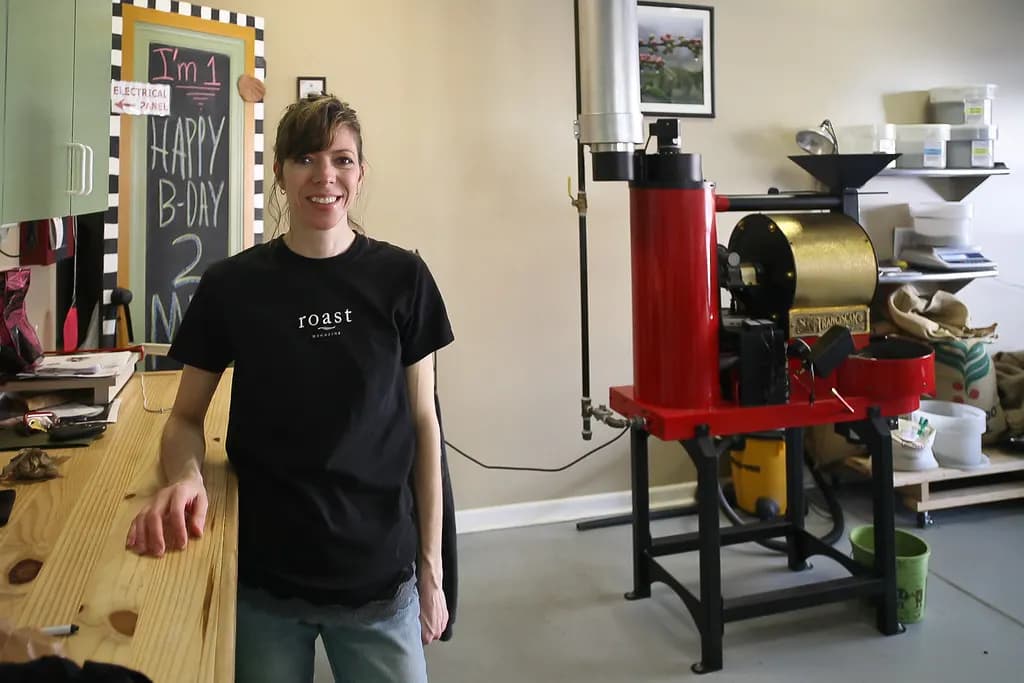
How to write a stronger private grant application
Private judges read hundreds of applications, so specifics win. State in one sentence what the business does and for whom. Explain what the grant would buy and what it would change, for example "$10,000 buys a second commercial dryer, which lets us take on two hotel laundry contracts worth $3,500 a month." Show traction, even small: pre-orders, a waiting list, repeat customers or a pilot. Keep your story honest and relevant; judges respond to why you're the right person to build this business, not to hardship alone. Reuse a well-drafted core application, but tailor the opening and the use-of-funds section to each funder's criteria.
State and local programs: certification is changing
Most state programs aimed at women-owned firms help with state contracting rather than providing cash. That landscape is shifting, so check current rules before you invest time in an application.
New York still certifies Women-owned Business Enterprises (WBEs) through Empire State Development. To qualify, a business must be at least 51% owned, operated and controlled by women who are US citizens or permanent residents; each qualifying owner's personal net worth must not exceed $15 million after allowable deductions (adjusted annually for inflation); the firm can't have more than 300 employees; and it generally must have operated for at least a year. Certified firms are listed in the state directory used by agencies and prime contractors looking to meet participation goals.
Texas went the other way. On December 2, 2025, the Texas Comptroller revoked Historically Underutilized Business certifications based on an owner's sex, race or ethnicity, and the program has been rebranded as VetHUB, now limited to businesses owned by veterans with a service-connected disability. Women-owned firms in Texas that relied on HUB status for state contracts no longer get that preference.
Elsewhere, cities, counties, state economic development agencies, utilities and community foundations occasionally run grant rounds open to women-owned or small businesses, often tied to a neighborhood, storefront improvements or recovery from a disaster. These are the cash grants most likely to fund a main-street business, and they're usually advertised locally. Ask your Women's Business Center, Small Business Development Center or local chamber which rounds are expected in the coming year.
Recent changes women owners should know
Dec 2, 2025
Texas revokes sex-, race- and ethnicity-based HUB certifications; program becomes VetHUB
Mar 1, 2026
SBA 7(a) and 504 loans limited to businesses 100% owned by US citizens or nationals
Mar 5, 2026
FTC warns again about government grant scams
Apr 1, 2026
Citizenship rule extended to SBA microloans
Sep 22, 2026
Tory Burch Foundation Fellows applications open (close November 17, 2026)
Loans and other funding that fill the gap
Because grants are scarce, most women-owned businesses are funded with revenue, savings and loans. SBA loans are open to women on the same terms as anyone else, with one important 2026 change: since March 1, 2026 for 7(a) and 504 loans, and April 1, 2026 for microloans, every owner must be a US citizen or US national living in the US.
SBA microloans of up to $50,000 come from nonprofit lenders, many of which focus on women and other underserved founders and pair the loan with coaching. CDFI loan funds offer flexible underwriting, and some run programs specifically for women entrepreneurs. SBA 7(a) loans fund larger projects; start-ups need an equity injection of at least 10% of total project cost. Our startup business loans guide compares these options with real rate ranges, and our SBA loan requirements guide lists every eligibility rule.
If your business does research and development, SBIR and STTR awards are the largest non-repayable funding available to small businesses, with Phase I awards of up to about $323,090 without a waiver. They aren't women-specific, but several agencies actively encourage applications from women-owned firms.
Example: a realistic funding stack
Consider a woman opening a small commercial cleaning company that needs about $30,000: $18,000 for a used van, $7,000 for equipment and supplies, and $5,000 of working capital. A grant-only plan would mean waiting months for awards that may never come. A more realistic stack looks like this: $6,000 of her own savings, a $20,000 SBA microloan from a local nonprofit lender to buy the van and equipment, and applications to the Amber Grant and one local grant round to cover the remaining $4,000 of working capital. If a grant comes through, she repays the microloan faster or keeps a larger cash cushion; if not, the business still opens on schedule.
| Source | Amount | Pays for |
|---|---|---|
| Owner savings | $6,000 | Deposits, licences, first supplies |
| SBA microloan (nonprofit lender) | $20,000 | Used van and equipment |
| Private or local grant (if awarded) | $4,000 | Working capital cushion |
| Total | $30,000 |
The same company would then register in SAM.gov and seek WOSB certification, because cleaning and facilities maintenance are services federal agencies buy constantly. One small federal or prime-contractor subcontract can bring in more revenue than every grant on the list combined.
Mistakes women founders make with grants
The most common mistake is spending months on grant applications while the business itself stalls. Set a time budget, such as two applications a month, and keep selling. The second is applying with a vague use of funds; "marketing and growth" loses to "a $4,000 booth at the regional trade show where our buyers meet." The third is ignoring tax: a business grant is generally taxable income to the business unless a specific exclusion applies, so set aside part of any award and ask your tax adviser how to report it. Finally, don't let a program's eligibility test change how you structure ownership. Giving yourself 51% on paper while a partner keeps real control can fail a WOSB review and, for a private grant, can disqualify an award.
How to spot a grant scam
Women founders are heavily targeted by grant scams, often through social media ads and messages that look like they come from a government agency or a well-known foundation. In March 2026 the FTC repeated its warning signs, and they apply to private "grants" as well as government ones.
Walk away if someone…
0/6Legitimate grant programs publish their rules, eligibility and judging criteria and announce winners publicly. A modest application fee on a private grant isn't automatically a scam, since some funders charge one to cover review costs, but the fee should be disclosed up front in the official rules, not demanded after you're told you've won. If you're unsure, search the program's name with "complaint" or "scam," and report suspicious offers at ReportFraud.ftc.gov.
Official links
- SBA — WOSB Federal Contract programEligibility and certification
- SBA Certifications portalApply for WOSB/EDWOSB
- SBA — Women's Business CentersFind free help near you
- SAM.govFree federal registration and contract opportunities
- Grants.govSearch federal grants
- Empire State Development — MWBE certificationNew York WBE rules
- FTC — Grant scam warningMarch 2026 alert
What to do next
Start with the moves that pay off regardless of grants: book a free session at your nearest Women's Business Center, register in SAM.gov, and if you sell to government, apply for WOSB certification. Then pick two or three private grants whose rules fit your business, and draft one strong core application with a specific use of funds. Build a business plan at the same time, because the same document will support a microloan or SBA loan application if grants don't come through.
This is general information, not legal or financial advice — confirm on the official source or with a professional.
Frequently asked questions
Not as a general rule. There's no federal program that hands out grants to businesses simply because they're women-owned. Federal support comes through contracting preferences (the WOSB and EDWOSB program, with a 5% government-wide goal), free training at Women's Business Centers, SBA-backed loans, and competitive research grants such as SBIR that any eligible small business can win.
WOSB certification confirms that a small business is at least 51% owned and controlled by women who are US citizens, which lets it compete for federal contracts set aside for women-owned firms. Certifying directly with SBA through its online SBA Certifications portal is free. Some businesses instead use one of four SBA-approved third-party certifiers, which may charge fees, and then upload that certificate to SBA.
The Amber Grant is a real private grant run by WomensNet. Its current rules describe three $10,000 grants each month, plus three $50,000 year-end grants, for women 18 or older who own at least 50% of a business in the US or Canada. There's an application fee, with a hardship waiver available on request. As with any private grant, odds are long, so treat it as a bonus, not a plan.
Both require at least 51% ownership and control by women who are US citizens. EDWOSB, the economically disadvantaged tier, adds personal financial limits for each qualifying owner: personal net worth of $850,000 or less, average adjusted gross income of $400,000 or less over three years, and total personal assets of $6.5 million or less. EDWOSB firms can compete for set-asides in more industries.
Real grant makers don't contact you out of the blue to say you've won, don't ask for your bank details or Social Security number to check eligibility, and don't charge processing fees paid by gift card, wire or cryptocurrency. Government grants aren't for personal bills. The FTC repeated these warnings in March 2026. Verify any program on its official site or on Grants.gov.
A few cities, states and economic development groups run grant rounds open to women, but most state programs for women-owned firms are certification for state contracting rather than cash. Rules are changing: Texas, for example, removed women- and minority-based certifications from its HUB contracting program on December 2, 2025. Check your state economic development agency for current programs.
Sources & verification
Figures on this page were checked against the sources below when it was last reviewed on 8 October 2026. Each rate and limit is stored once with its own official source and review date, and official update channels are monitored daily so changes are picked up. How we verify
- 1.Women-Owned Small Business Federal Contract program — U.S. Small Business Administration · accessed 8 October 2026
- 2.Women's Business Centers — U.S. Small Business Administration · accessed 8 October 2026
- 3.The SBA's Women's Business Centers Program (IF13312) — Congressional Research Service · accessed 8 October 2026
- 4.How to avoid government grant scams that offer free money for personal expenses — Federal Trade Commission · accessed 8 October 2026
- 5.Grant-Related Scams — Grants.gov · accessed 8 October 2026
- 6.MWBE Certification Eligibility Requirements — Empire State Development (New York) · accessed 8 October 2026
- 7.VetHUB — Veteran Heroes United in Business — Texas Comptroller of Public Accounts · accessed 8 October 2026
- 8.Texas removes women, minorities from Historically Underutilized Business program for state contracts — High Plains Public Radio / Texas Tribune · accessed 8 October 2026
- 9.Amber Grant Rules — WomensNet (private) · accessed 8 October 2026
- 10.Tory Burch Foundation Fellows Program — Tory Burch Foundation (private) · accessed 8 October 2026
MSMETOOLS is an independent platform and is not affiliated with any government agency, ministry or department.
Tools for this
Business Plan Generator (US)
Create a professional business plan for US investors and banks.
Startup Cost Calculator
Estimate how much capital you need to launch.
Break Even Calculator
Find your break even point and units.
Loan Eligibility Calculator
Check your business loan eligibility based on income and existing loans.
Related guides
 Small Business Grants 2026: Federal, State & How to ApplyRead guide
 Florida Small Business Grants (2026): What's Actually OpenRead guide
 Veteran Small Business Grants 2026: What VA & SBA OfferRead guide
 North Carolina Small Business Grants (2026): What's Open NowRead guide
Official links open the government site in a new tab.